
Best Views in Malta: Six Photo Spots and When to Stand There
Best views in Malta for photography: Upper Barrakka, Fort St Angelo, Mdina, Spinola Bay, Popeye Village and the Gozo salt pans.
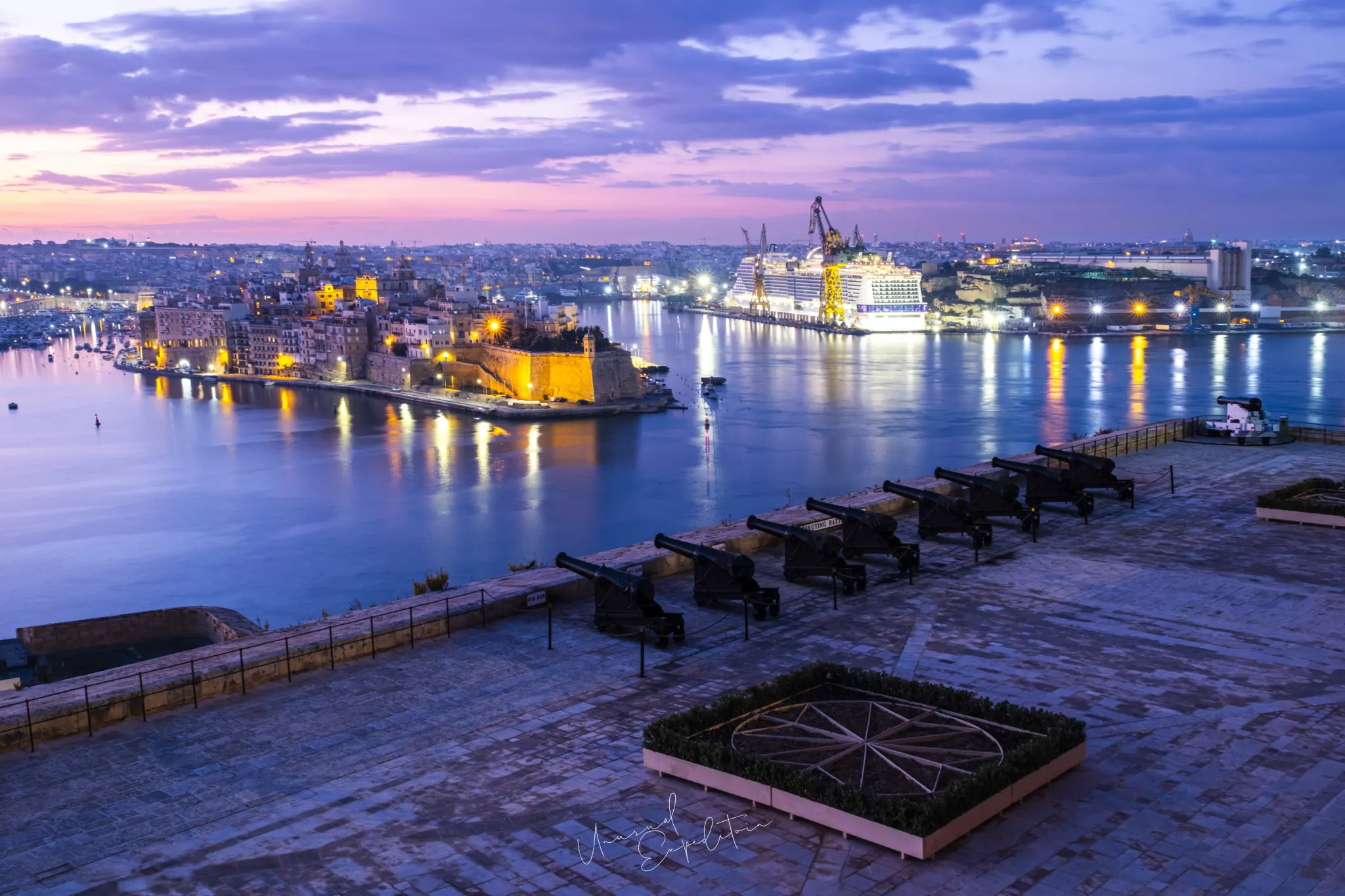
The best views in Malta are the Saluting Battery and the Upper Barrakka Gardens in Valletta looking across the Grand Harbour to the Three Cities, Fort St Angelo at the tip of Birgu, the walls of Mdina from the plain below, Spinola Bay in St Julian's after dark, Popeye Village above Anchor Bay, and the salt pans on the north coast of Gozo. Each one wants a particular part of the day, and most of them are best at the edges of it.
This list comes from our own photography in Malta over several autumn visits, and every picture here is our own. For the wider picture of how we run a trip on the islands, read our Malta private tour guide, and our Malta photography tours page shows how we run trips there.
Best views in Malta at a glance
| Viewpoint | Where | Subject | Best light |
|---|---|---|---|
| Saluting Battery and Upper Barrakka Gardens | Valletta | Grand Harbour, the Three Cities, the old cannons | Blue hour, early morning |
| Fort St Angelo | Birgu | The fort on its point, the creeks either side | Sunrise, sunset |
| Mdina from the plain | Mdina | Bastion walls and the cathedral dome | Afternoon, clear sky |
| Spinola Bay | St Julian's | Fishing boats, the waterfront at night | After dark |
| Popeye Village | Anchor Bay | The film-set village over a green cove | Morning to mid afternoon |
| Salt pans | North coast of Gozo | Square pans cut into the rock | Low side light |
Valletta and the harbour fill an evening on their own, so the island viewpoints work better on separate days.
Malta photography: the Saluting Battery and Upper Barrakka Gardens
For Malta photography, the Upper Barrakka Gardens are the first stop. The arcaded terrace sits on the bastions of Valletta, and the Saluting Battery below it is a row of black cannons pointing straight across the Grand Harbour at Birgu, Senglea and Cospicua, the Three Cities. The battery still fires the midday salute, which draws a crowd, so the photographs are better at the quiet ends of the day.
The harbour lies to the south and east of the gardens. At first light the sun comes up behind the Three Cities and the forts turn into a silhouette. At blue hour after sunset the lights come on along the waterfront and on any cruise ship in port, and the sky over the harbour holds colour for a long time. That is the frame we like best: the cannons as a dark line in the foreground and the lit fortifications across the water. A 24-70mm covers it; a tripod keeps the water smooth.
Valletta itself has been on the UNESCO World Heritage List since 1980, and the streets behind the gardens, with their enclosed wooden balconies, are worth an hour in soft light.
Fort St Angelo and the Three Cities
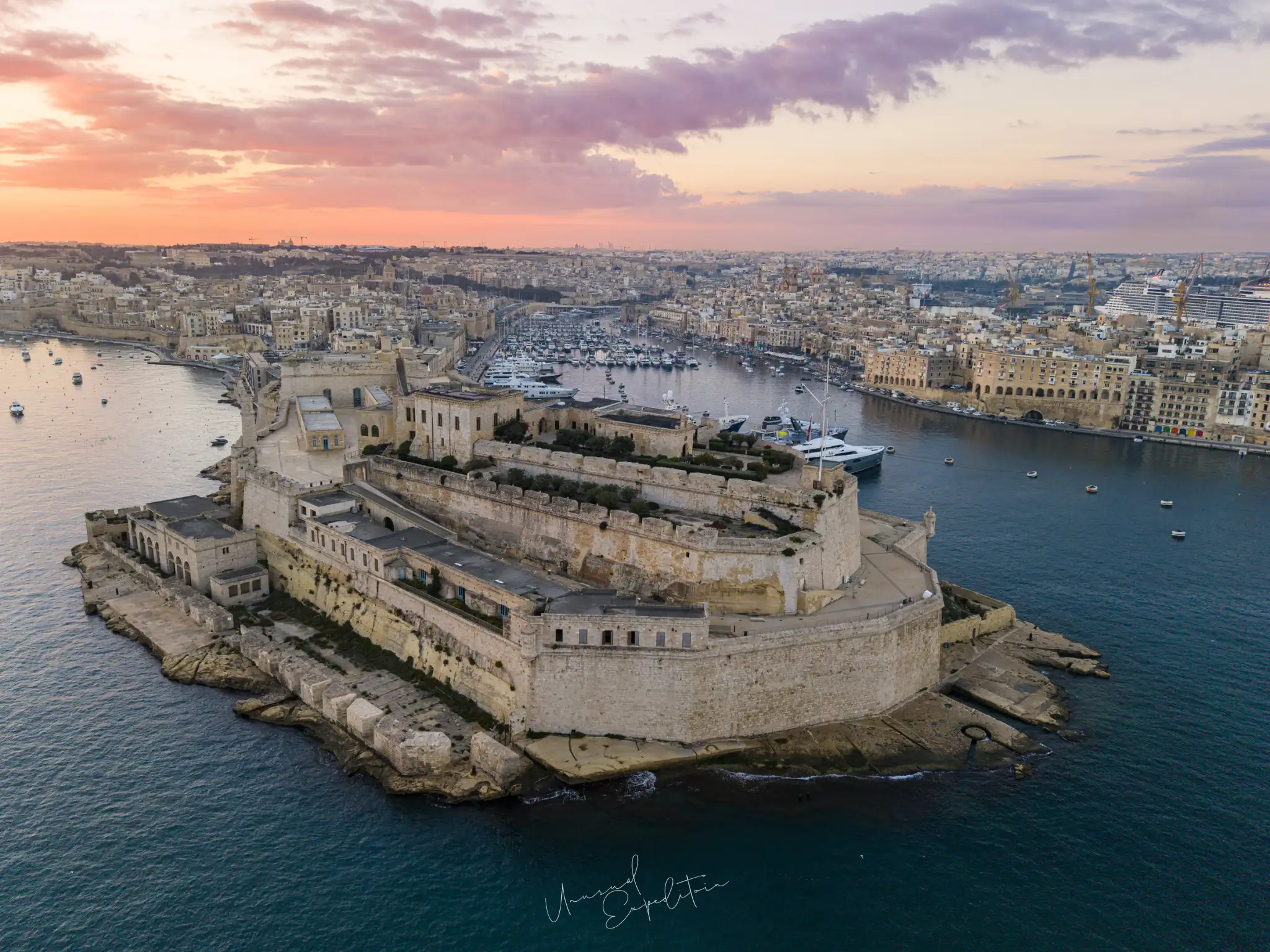
Fort St Angelo fills the point of Birgu, with Dockyard Creek on one side and Kalkara Creek on the other. From Valletta it is the low, honey-coloured mass at the centre of the harbour view. Close up, the classic view is from above, which shows the shape of the fort and the boats in the creeks, and this is the one place on our list where we photographed from the air.
Drone flying in Malta is regulated by Transport Malta, and the harbour area is busy with ferries, yachts and cruise traffic, so check the current rules and permissions before you put anything up. Without a drone, the waterfront of Birgu and the Senglea point give good ground-level views back towards Valletta and the fort, best when the low sun lights the walls side on.
Mdina from the plain
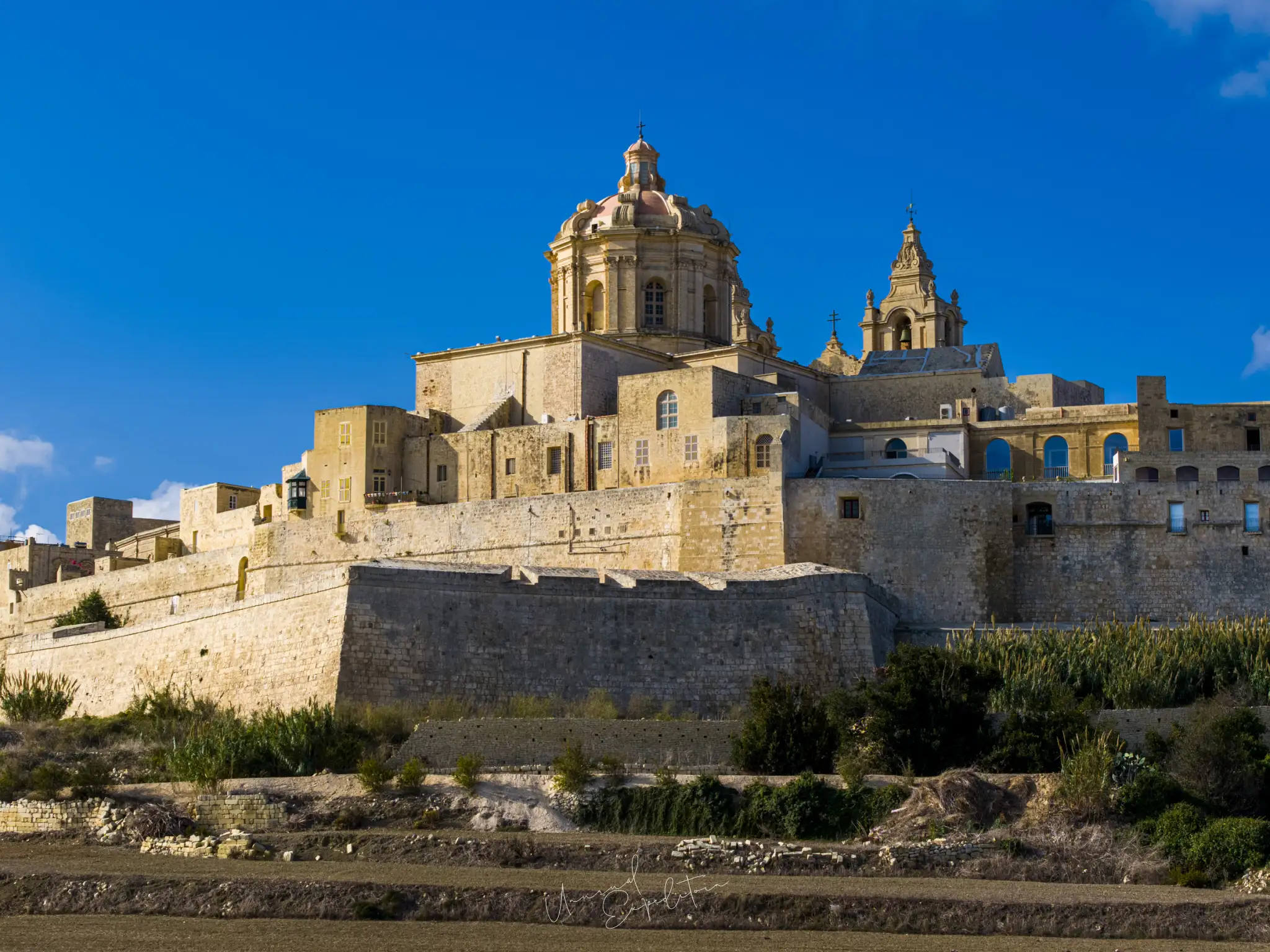
Mdina, the walled old capital on its ridge in the centre of the island, is a different kind of view. Inside the gates the lanes are narrow and shaded, and the pictures are details: doors, lamps, a horse-drawn carriage turning a corner. From outside, standing in the fields below the bastions, you get the whole silhouette: the high walls, the cathedral dome and its twin bell towers above them.
The walls face several ways, so pick your side by the light. We photographed the cathedral side under a hard blue sky, which suits the pale limestone. The lanes inside are at their best in the soft light of early morning, before day visitors arrive.
Spinola Bay and Balluta Bay after dark
St Julian's is the busiest stretch of coast in Malta, and in daylight it can look like a building site. At night it changes. Spinola Bay is a small curved harbour full of fishing boats, ringed by a road and by restaurant terraces, and from above or from the headland it makes a neat oval of light. A short walk away, the neo-gothic Carmelite church on Balluta Bay is floodlit over the water.
Shoot here after dark, with a tripod and a slow shutter to turn the traffic into light trails. The waterfront is also where many people eat in the evening; our guide to where to eat in St Julian's lists the restaurants close to these views.
Popeye Village above Anchor Bay
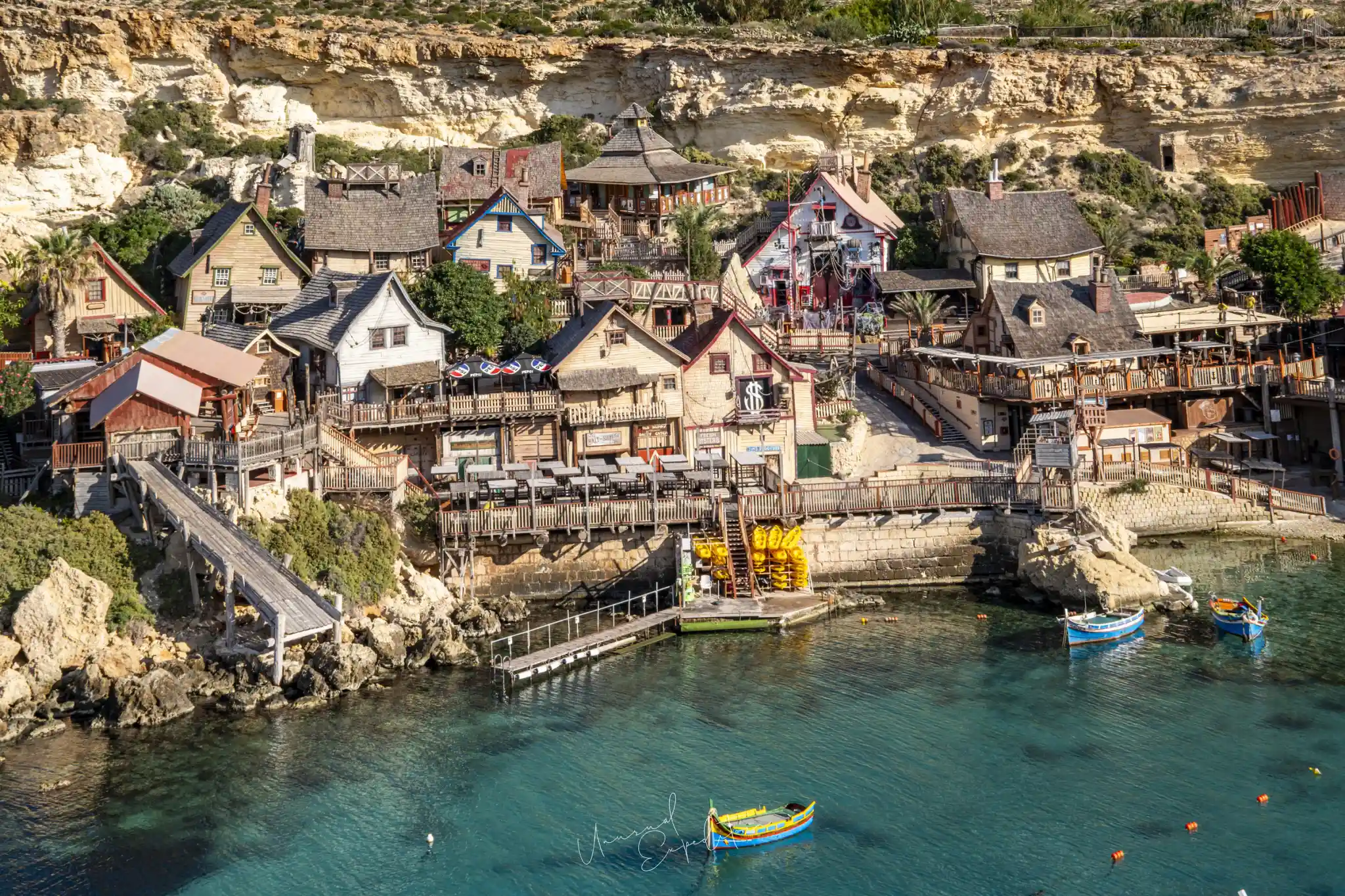
Popeye Village was built in 1980 as the film set for Robert Altman's Popeye, and it is still standing on the rocks of Anchor Bay in the north west of the island. The wooden houses, painted in bright colours and leaning at odd angles, sit over a small green cove where a luzzu, the traditional Maltese boat, was moored when we were there.
The village is a paid attraction, but the classic view is from the cliff on the opposite side of the bay, looking down across the water. The cove is sheltered, so the water stays clear and green while the sun is high. Late in the day the cliffs put the village in shade, so go in the morning or early afternoon.
The salt pans on Gozo
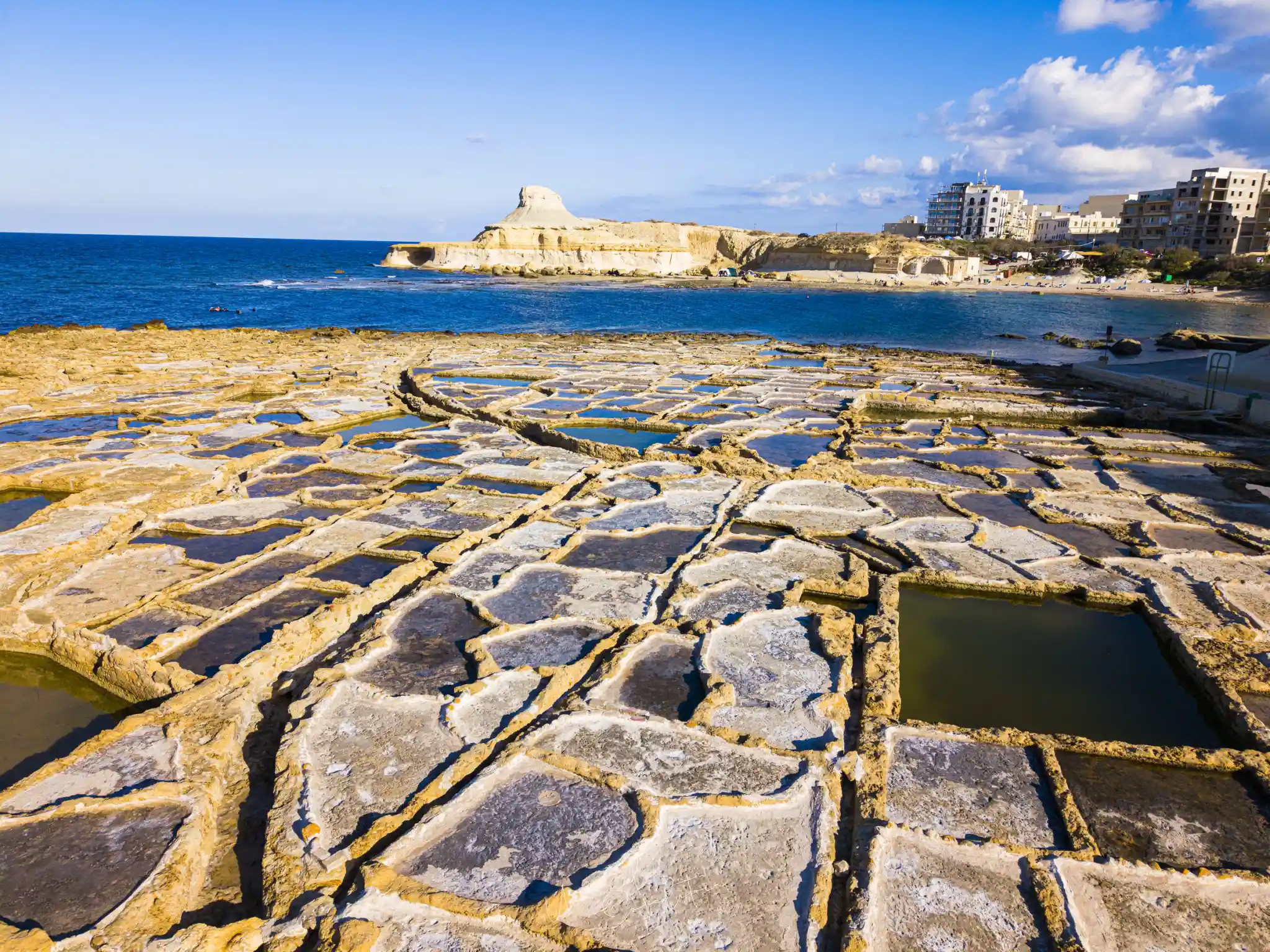
On the north coast of Gozo, shallow square salt pans are cut into the flat limestone shore. From ground level the pans make a grid that runs to the water's edge, with the sea and the cliffs behind; after rain or high waves they hold water and reflect the sky.
The rock surface is the subject, so side light matters most. Low sun early or late in the day brings out the texture of the dividing ridges; at midday the grid goes flat. Keep off the pans themselves and stay on the rock around them. The ferry to Gozo leaves from Cirkewwa at the north end of Malta, and the island also has the Basilica of Ta' Pinu and the Cittadella in Victoria to photograph while you are there.
"Malta is small enough that people try to see all of it in one day, and then they photograph everything at noon. I would rather give the harbour a whole evening. Stand by the cannons when the lights come on across the water and you will understand why the Knights built here."
Joseph Mak, tour leader, Unusual Expedition
Which lens and which season for Malta photography
A 24-70mm does nearly everything on this list. A 70-200mm helps to compress the harbour from Valletta and to pick out the cathedral at Mdina from far away, and a wide lens suits the salt pans and the lanes. Bring a tripod for the harbour and St Julian's at night.
Spring and autumn are the easier seasons: the light is softer, the sea is still warm in autumn, and the main sites are calmer than in high summer. Malta is in the Schengen Area, and our Malta private tour guide covers entry and how the islands fit together.
Photograph Malta with us
We photograph Malta as a private trip, timed for the light at each of these viewpoints. See our Malta photography tours or ask us about a private trip.
Malta photography tours
The next Malta departure is announced on the Malta photography tours page, with previous expeditions and all the planning guides.
Explore Malta in depth
Upcoming Photo Tours
- Egypt Photo Tour – EgyptEgypt 12 Dec 2026 To 20 Dec 2026
- Inner Mongolia Winter Owl Photo Tour – ChinaChina 01 Jan 2027 To 04 Jan 2027
- Inner Mongolia Winter Photo Tour – ChinaChina 05 Jan 2027 To 11 Jan 2027
- Mekong And Central Highland Vietnam Photo Tour - VietnamVietnam 16 Jan 2027 To 24 Jan 2027