
Camargue Horses Photography: Where to See Them and How
Camargue horses photography: where to see the white horses, how a session with the gardians works, settings, pink salt flats.
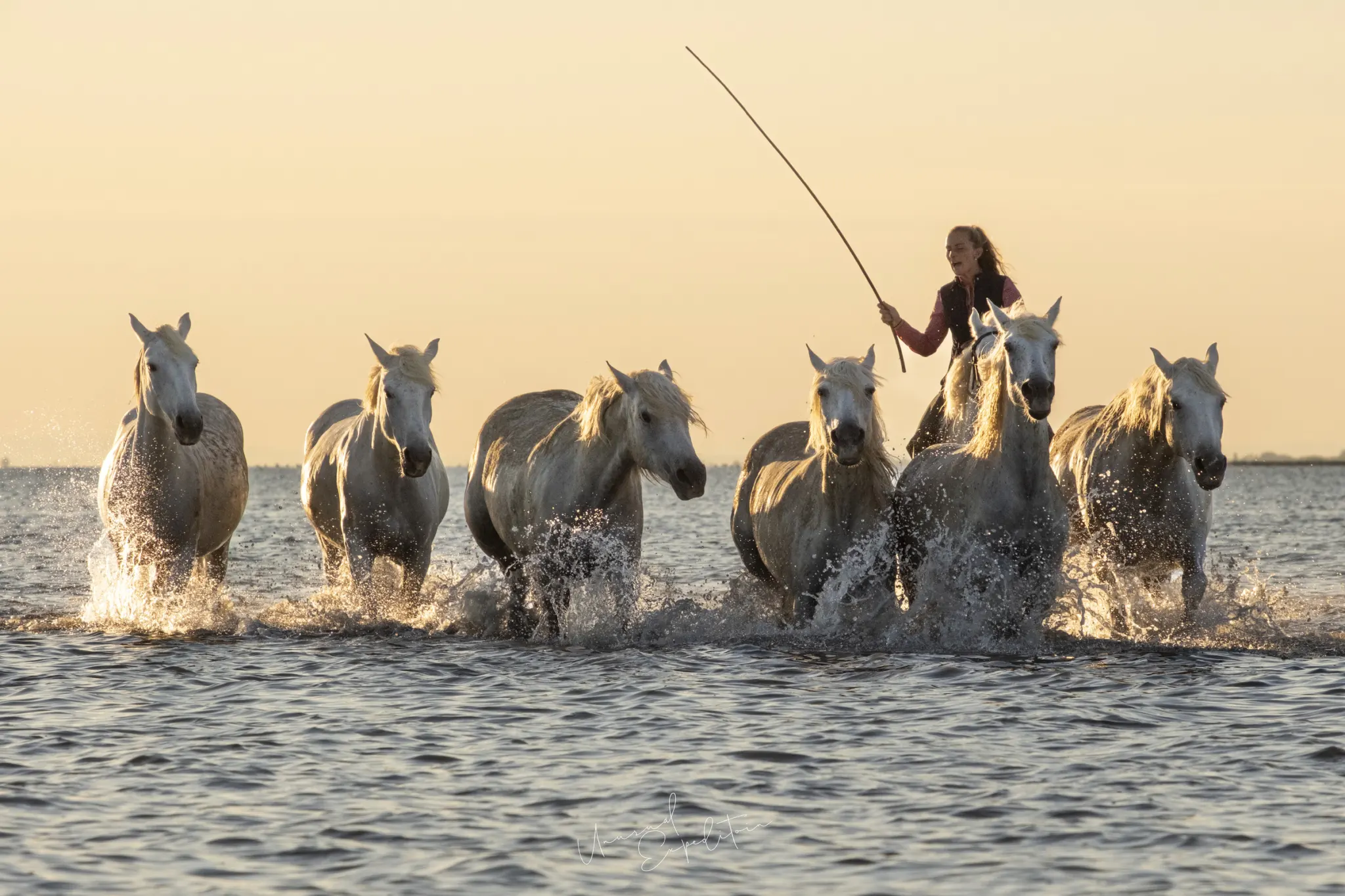
Camargue horses photography means the white horses of the Rhône delta running through shallow water at sunrise and sunset, ridden and guided by the gardians of a manade, a traditional breeding ranch. The famous splashing pictures are arranged sessions with a manade, so you stand in the water while the herd is brought past you. Bring a 70-200mm or longer, a fast shutter speed and shoes you can wade in.
The Camargue is one of the two great subjects of our Provence photography tour guide, alongside the lavender. Here is how the horses are photographed, where to see them, and the pink salt pans of the delta.
Camargue horses: where to see them
The Camargue is the delta between the two arms of the Rhône, south of Arles, where marsh, lagoons, rice fields and salt pans run down to the Mediterranean. Camargue horses live there in semi-wild herds belonging to the manades, which also raise the black bulls of the region. You can see horses from the roads around Saintes-Maries-de-la-Mer and the Étang de Vaccarès, in fields and on the marsh edges, and riding stables offer treks. But the photographs of herds running through water are not chance encounters: they are made with a manade that brings its horses to a lagoon for photographers.
Are all Camargue horses white?
No, and strictly speaking none of them is white. The Camargue horse is a grey breed: foals are born dark, black, brown or bay, and their coats lighten over the first years until most adults look white, usually by four to seven years of age, according to breed references. Under the pale coat the skin is black, and the eyes are dark. A herd in the water often includes a few darker young horses, which add contrast to a picture.
Who are the gardians?
The gardians are the mounted herdsmen of the Camargue, and the Camargue horse is their traditional mount for herding the black bulls raised for the courses camarguaises, the local bull games in which the bull is not killed. They ride with a long trident, the ficheiroun, and on photography sessions it is a gardian who leads the herd through the water, which gives the pictures a rider, a pole and a sense of a working landscape rather than a stable.
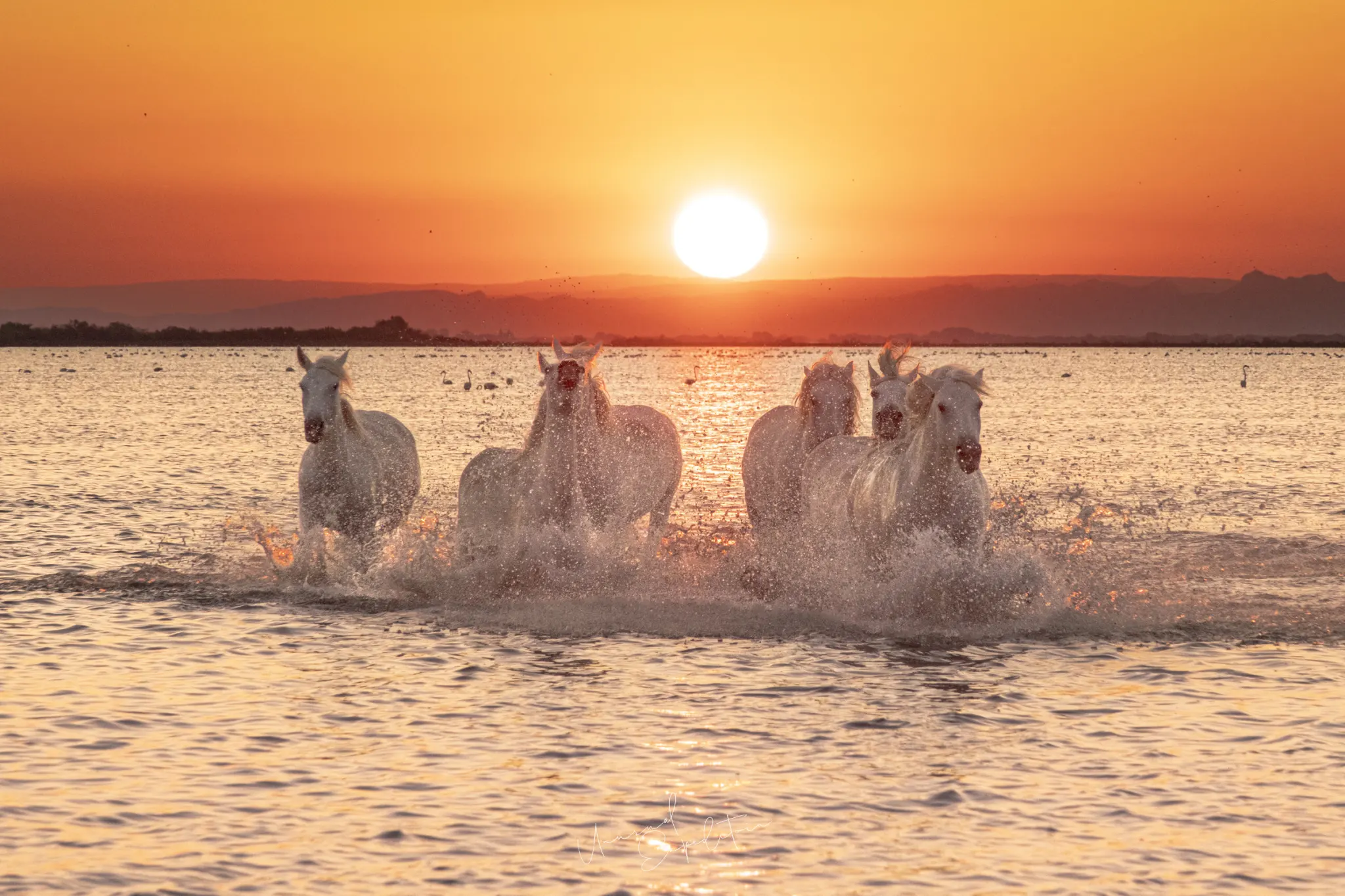
Camargue horses photography tour: how a session works
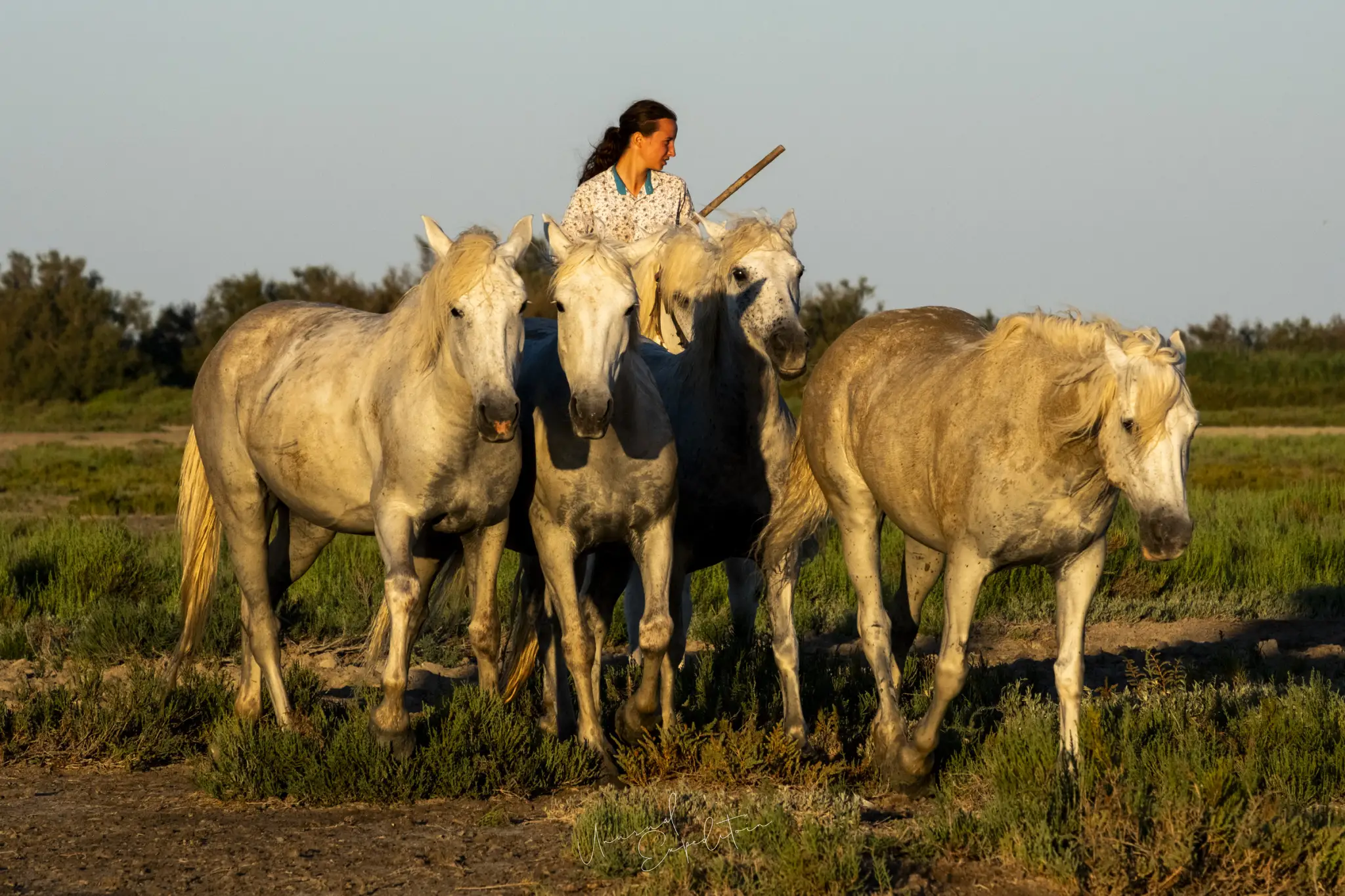
A session starts in the low light around sunrise or before sunset. Photographers stand in a line in a shallow lagoon, usually in knee-deep water, with the light behind or to the side of the herd. The gardians bring the horses past again and again, at a walk, a trot and a gallop, so everyone gets several passes at each light. Between runs the horses rest on the bank, which is when the quieter portraits of a horse and rider happen. Sessions are run by the manade, which decides how close you stand: follow its instructions, because a running herd is heavy and fast.
Camera settings for Camargue horses
| Shot | Lens | Shutter speed | Note |
|---|---|---|---|
| Freezing the splash | 70-200mm or 100-400mm | 1/1000 s or faster | Continuous autofocus, burst mode |
| Panning with the herd | 70-200mm | 1/30 to 1/60 s | Follow one horse's head; expect many misses |
| Into the sun | 70-200mm | 1/1000 s | Underexpose to keep the spray glowing |
| Horse and rider portrait | 24-70mm or 70-200mm | 1/500 s | On the bank between runs |
The fast shutter is the safe choice; the slow pan is the picture that stands out when it works.
"Stand still, keep both eyes open and trust the burst. The herd comes at you faster than you expect, and the first pass is always a mess. By the third pass you know where the spray will be and you start making pictures."
Joseph Mak, tour leader, Unusual Expedition
Camargue horses and flamingos
The Camargue is also one of the best places in Europe for greater flamingos, which feed in the lagoons and salt pans in large numbers. The Pont de Gau bird park near Saintes-Maries-de-la-Mer is the easiest place to photograph them close, and they are often seen from the roads across the delta. A long lens is again the tool. Flamingos and horses together in one frame is a rare chance, not something to plan for.
Pink salt flats in the Camargue
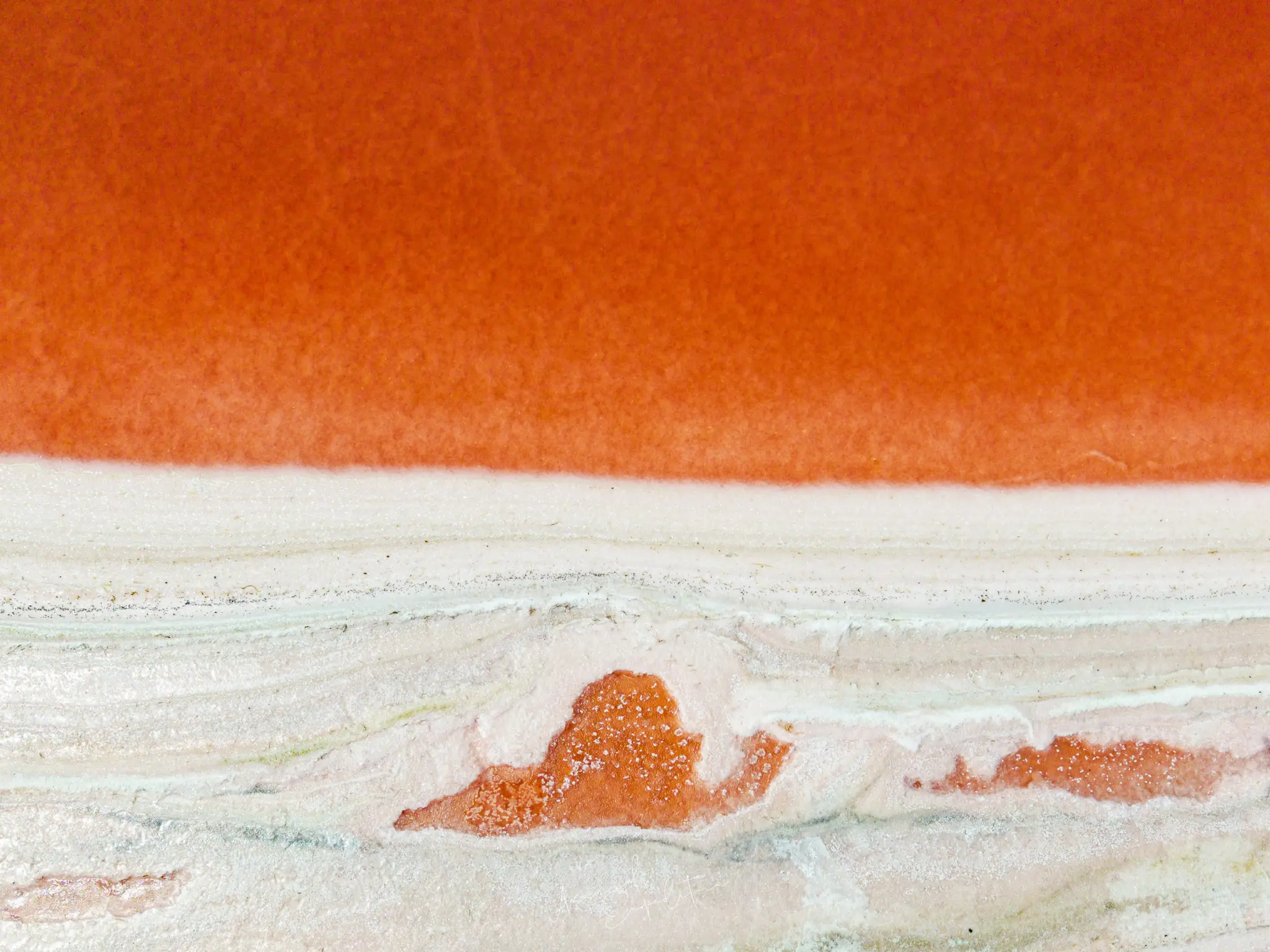
At the edges of the delta, the salt pans of Aigues-Mortes and Salin-de-Giraud turn pink, orange and red in summer. The colour comes from a microscopic alga, Dunaliella salina, which produces beta-carotene in very salty water, as NASA's Earth Observatory explains; the same pigment colours the flamingos that feed there. From the ground the pans are flat pink lagoons with white salt mounds; from above they become abstract patterns of colour. The salt works are private industrial sites: use public viewpoints, take the guided visits where offered, and check the drone rules and any nature reserve restrictions before flying.
Practical tips for the Camargue
- Mosquitoes. The marsh in summer has a lot of them, especially at dawn and dusk. Bring repellent and long sleeves.
- Water. Wear shoes or sandals you can wade in, and carry a towel and dry socks.
- Salt spray. Wipe your camera and lens with fresh water and a cloth after a session.
- Heat. Rest in the middle of the day: the horses are photographed at both ends of it.
Best time to photograph Camargue horses
The horses are photographed all year, at sunrise and sunset, but summer gives the warmest light and the longest days, and it is the season of the lavender a short way north, which is why we combine the two. The timing for the lavender is in when is lavender season in Provence, and the villages between the two are in Provence villages photo spots.
Photograph the Camargue horses with us
Our Provence and Camargue photo tour includes sunset and sunrise sessions with the horses in the water, arranged with a manade. The dates and the current rate are on our France photography tours page.
Join the Provence photography tour
Provence And Camargue Photo Tour – France departs 25 Jun 2027 To 03 Jul 2027, led by Joseph Mak. Small group, photography first. All Provence photography tours.
Explore Provence in depth
- Provence Photography Tour: The Complete GuideFrance
- Provence Village Photo Spots: Gordes, Roussillon, MoustiersFrance
- When Is Lavender Season in Provence?France
- Provence Lavender Fields: Valensole, Sault and SénanqueFrance
Upcoming Photo Tours
- Egypt Photo Tour – EgyptEgypt 12 Dec 2026 To 20 Dec 2026
- Inner Mongolia Winter Owl Photo Tour – ChinaChina 01 Jan 2027 To 04 Jan 2027
- Inner Mongolia Winter Photo Tour – ChinaChina 05 Jan 2027 To 11 Jan 2027
- Mekong And Central Highland Vietnam Photo Tour - VietnamVietnam 16 Jan 2027 To 24 Jan 2027