
Darajani Market Zanzibar: Photographing the Fish and Meat Halls
Darajani market Zanzibar: photographing the fish hall, auction floor, meat hall and harbour fish sellers in Stone Town, with etiquette.
Darajani market Zanzibar is Stone Town's main bazaar, and for a photographer its fish and meat halls are the most intense hour on the island. Under tin roofs and high barred windows, fishmongers cut tuna on tiled counters, men crowd around a ray laid on the floor while prices are called, and smoke and sunlight fill the meat hall. Go in the morning for the busiest auction or in the afternoon for low side light, keep your kit small, and ask before you photograph faces.
The market sits in Stone Town, which we cover with the rest of the island in our Zanzibar photography tour guide.
What is Darajani market?
Darajani Market, also called Marikiti Kuu, the great market, stands on Darajani Road in Stone Town and has been the town's commercial hub since the late nineteenth century. It sells fish and meat, fruit and vegetables, spices, household goods and almost everything else, spilling out from the covered halls into the surrounding streets. Lonely Planet and the Wikipedia entry for the market both describe it as the main bazaar of the old town. It is not a tourist market. People come here to buy dinner, and visitors are tolerated as long as they do not get in the way. That is exactly why it photographs well: nothing is arranged for you, and the scenes are the same whether you are there or not.
Zanzibar fish market: the fish hall
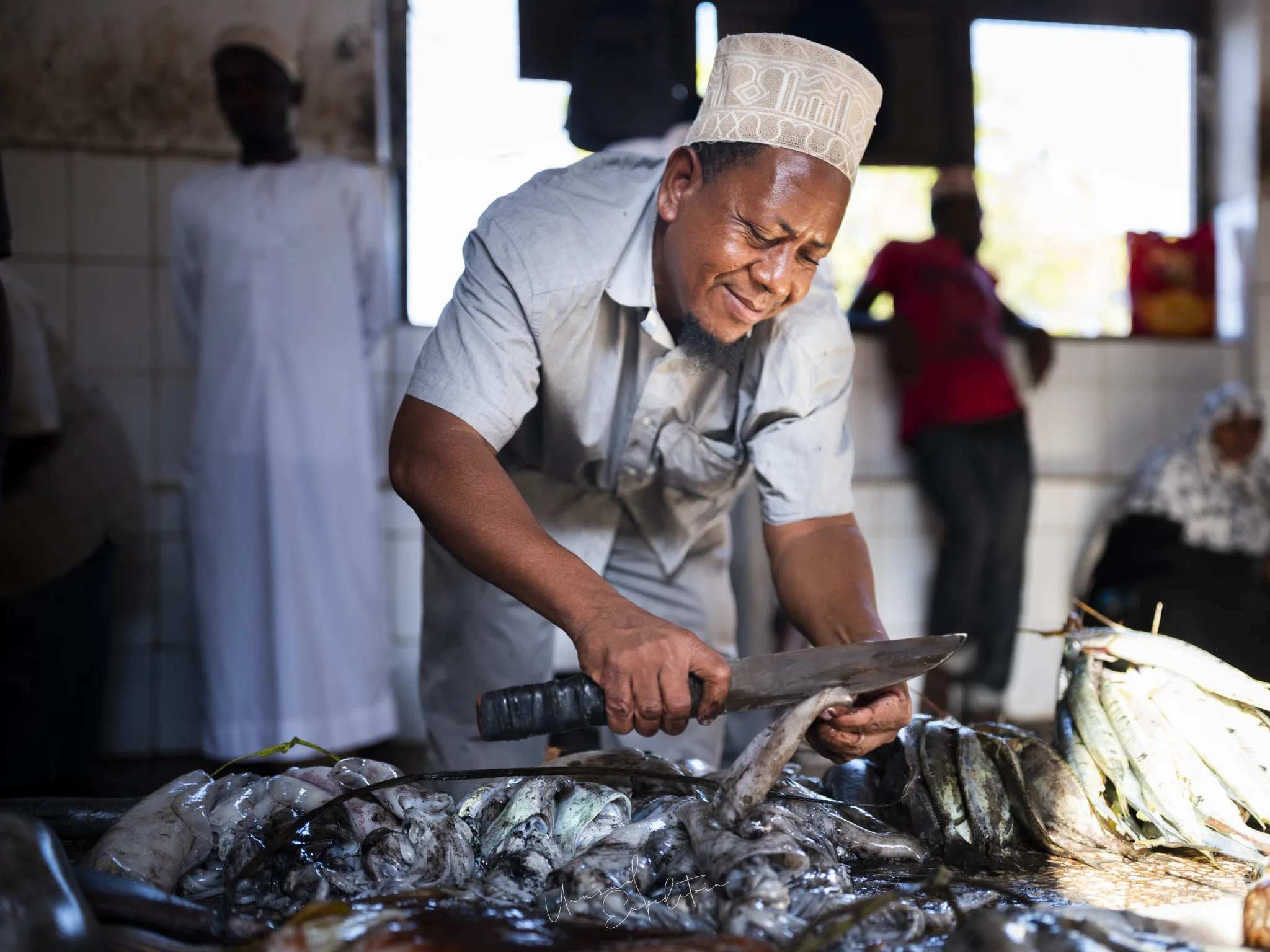
The Zanzibar fish market most visitors mean is the fish hall around Darajani. Writers such as Mark Wiens of Migrationology describe the biggest auction early in the morning, with smaller sales continuing through the day. Our own frames come from the fish and meat halls of Stone Town's market area in the late afternoon, when the auction was over but the selling was not. A fishmonger in a white kofia cap leaned over his counter cutting fish with a heavy knife, squid and smaller fish piled in front of him and the light from the windows falling across his hands. Stand at the end of a counter rather than in front of it, so you are out of the customers' way and see the work from the side.
The auction floor
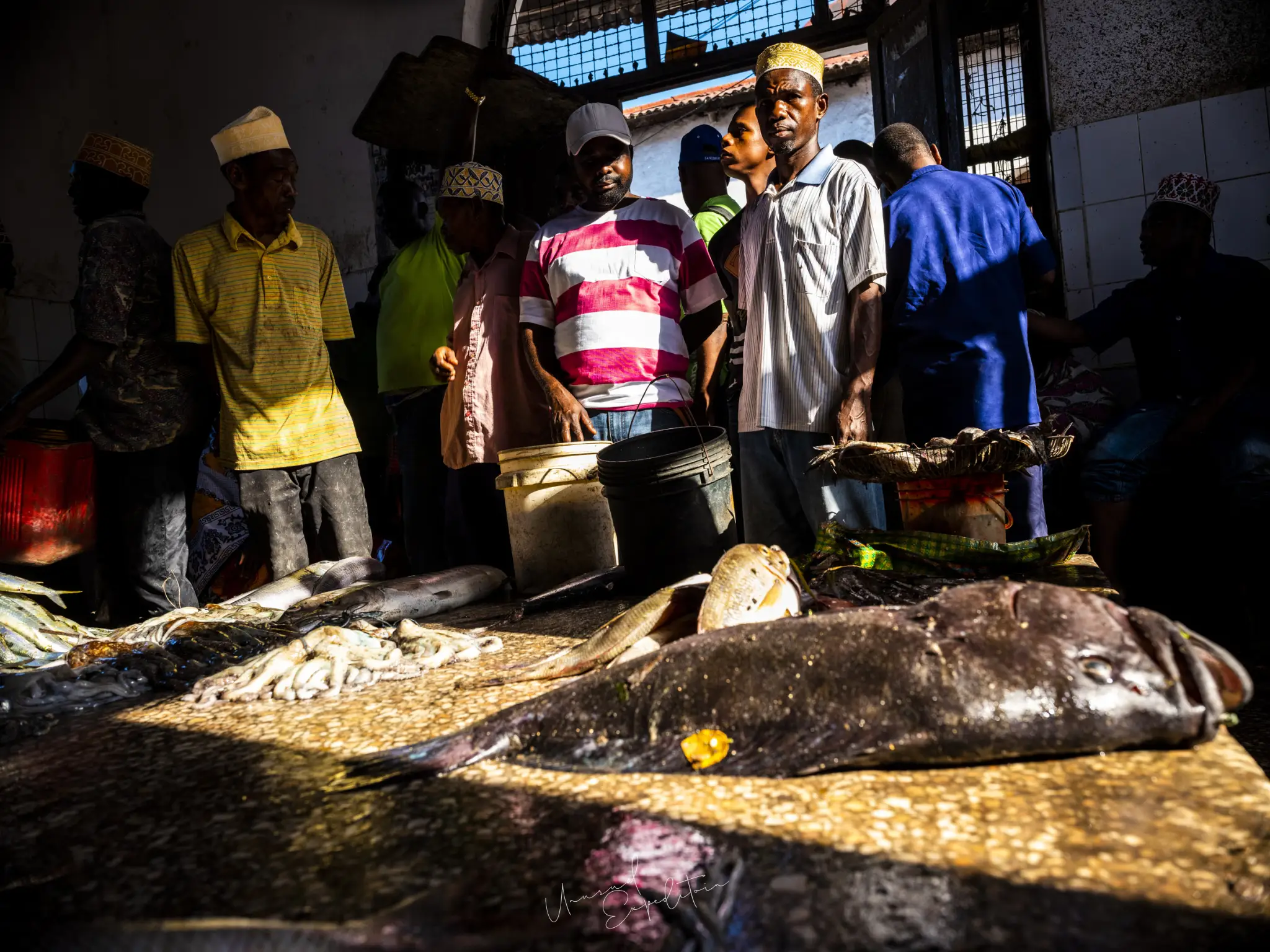
The most dramatic scene is the floor where the big fish are laid out. On our visit a group of men stood around a large ray and other fish on the tiles, waiting for the bidding, while a shaft of sun from a high window lit the floor and left the walls in shadow. Expose for that patch of light and let everything else go dark; the contrast is the picture. A 24-70mm lets you include the faces and the fish together without stepping into the circle. The floor is wet and slippery, porters carry heavy loads through the crowd, and nobody will wait for you, so watch your feet and keep moving.
Women selling fish
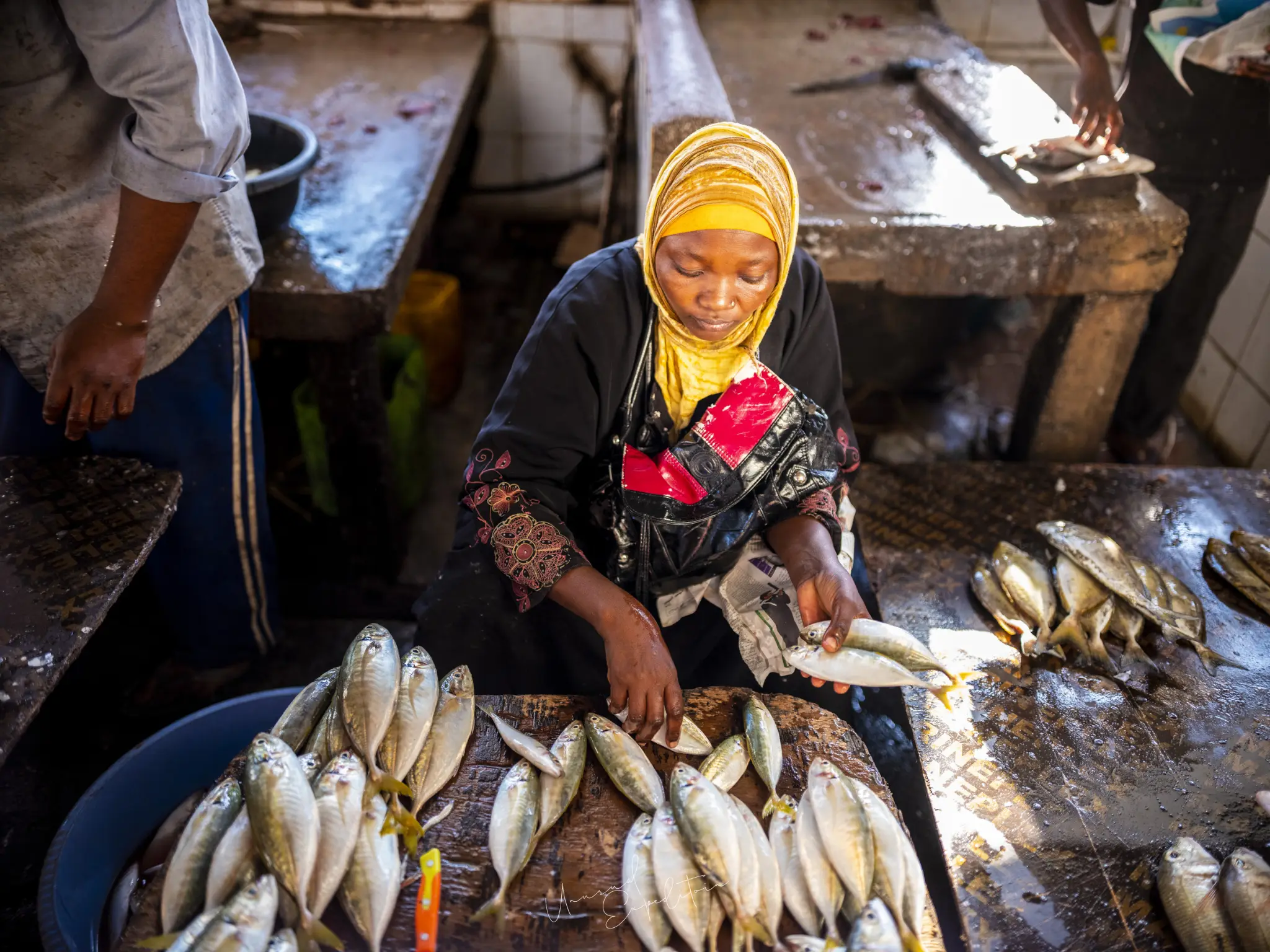
Not everyone in the hall is a man with a knife. A woman in a yellow headscarf sorted small fish into rows on her stall, a blue basin of fish at her side, too busy to look up. Photographing women in Zanzibar needs more care than photographing men: many prefer not to be photographed, and a polite gesture with the camera before you raise it saves embarrassment for both of you. If she shakes her head, move on. When someone is absorbed in work, a view from above, looking down at the hands and the fish, often makes a better picture than a face.
The meat hall
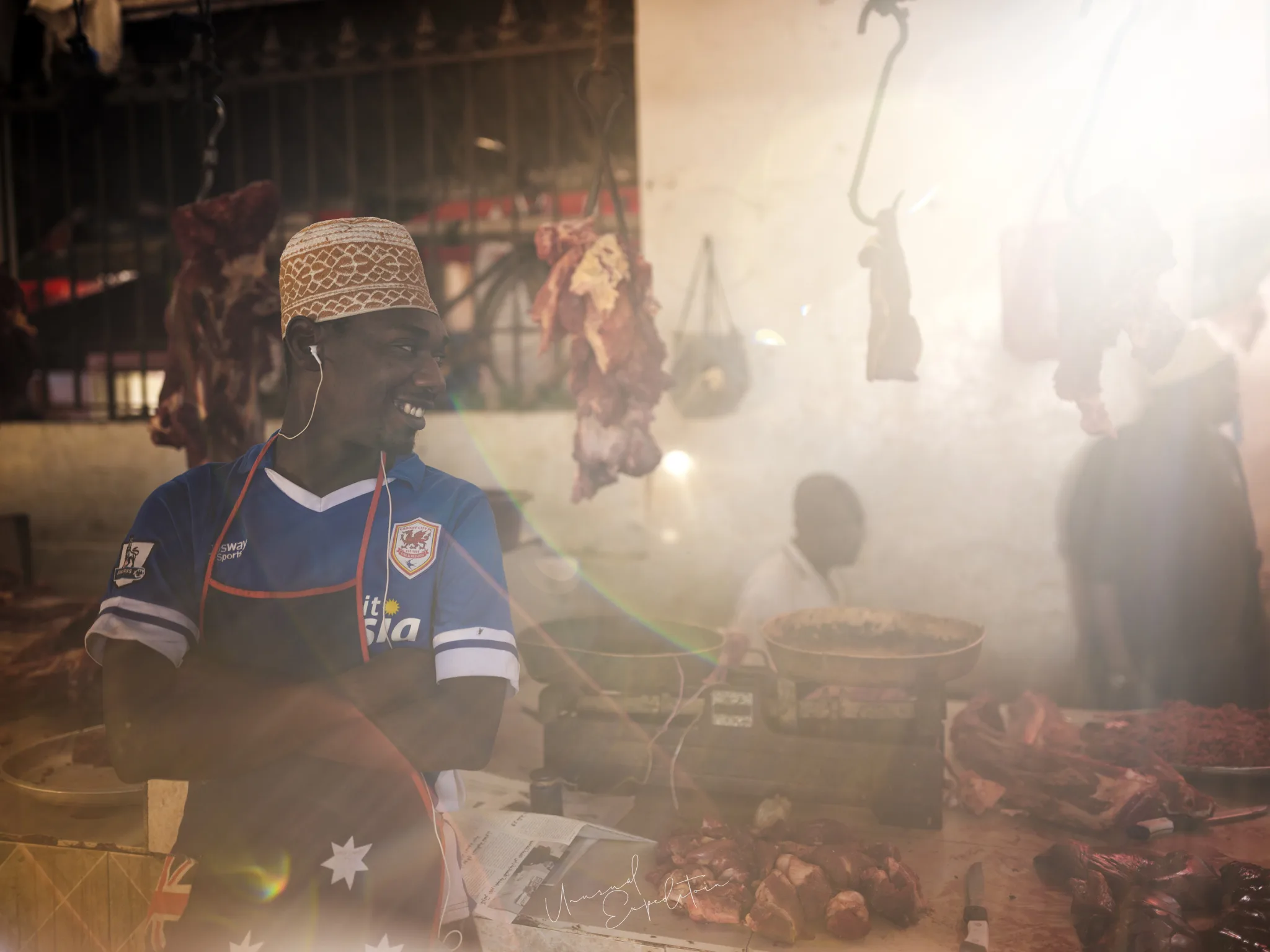
Next to the fish, the meat hall is darker and smokier. Carcasses hang from hooks, butchers weigh cuts on old scales, and in the afternoon the sun comes through the haze in beams. We photographed a butcher mid-laugh, with the backlight flaring across the frame. Shooting into the light like this needs a willingness to accept flare as part of the scene; expose for the face and let the background burn. If you are squeamish about meat, this part of the market is not for you, and nobody will mind if you skip it.
Darajani market Zanzibar: practical notes for photographers
| Part of the market | Subject | Light | Care needed |
|---|---|---|---|
| Fish hall counters | Fishmongers cutting and selling | Window light from the side | Stand at the end of a counter |
| Fish hall floor | Auction, large fish, buyers | Shafts of sun, deep shadow | Wet floor, porters moving fast |
| Meat hall | Butchers, scales, hanging meat | Smoky backlight | Not for the squeamish |
| Streets around the market | Fruit, spices, scooters, crowds | Open shade | Pickpockets in crowds |
| Fish sellers by the harbour | Small sellers on the ground | Low afternoon sun | Ask before faces |
The halls are working spaces, so small cameras and quiet manners get you further than a big lens.
The fish hall is where people stop posing. After ten minutes nobody looks at you any more, and that is when the pictures start.
Joseph Mak, tour leader, Unusual Expedition
Fish sellers by the harbour
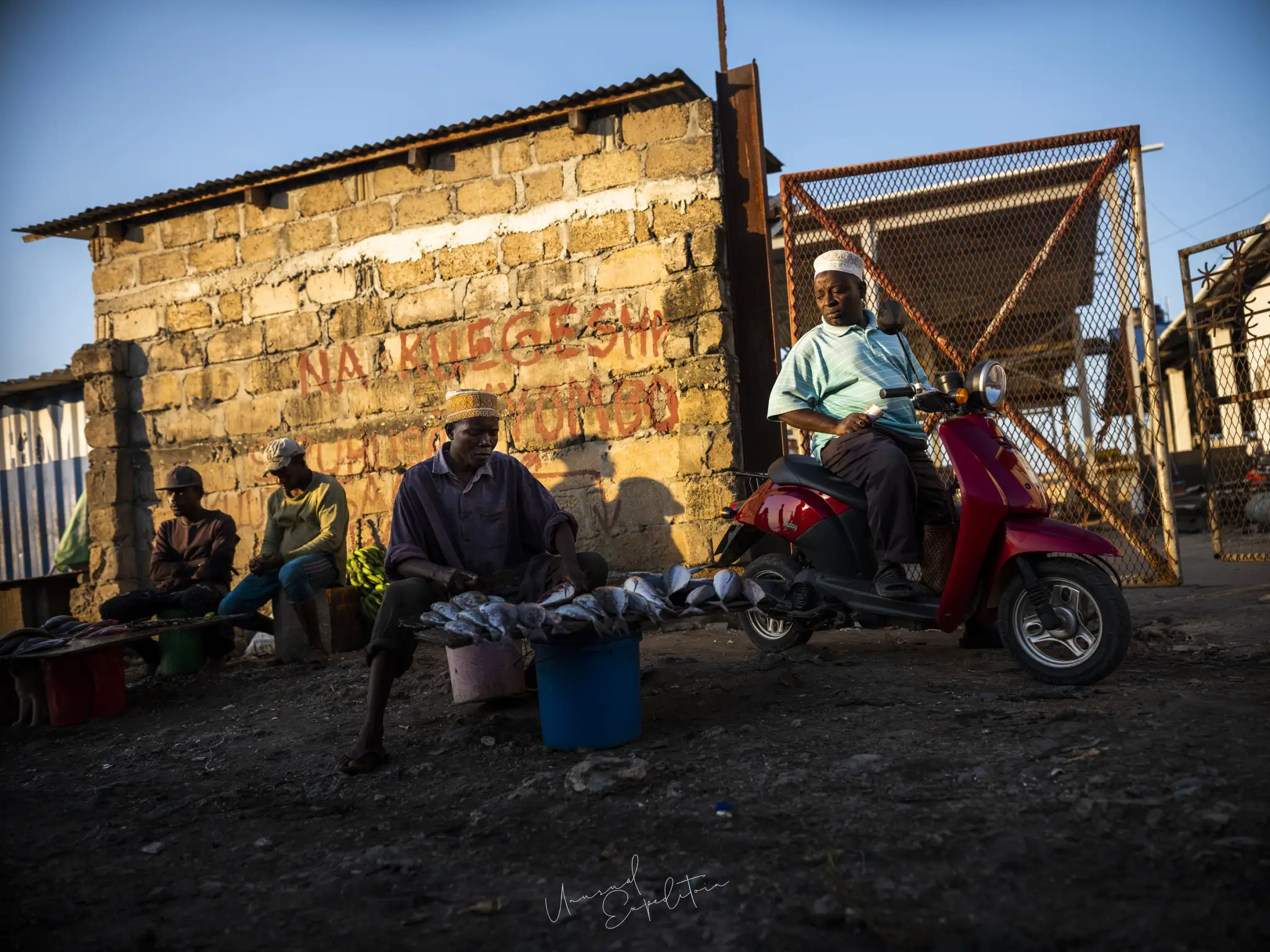
Not all the fish in Stone Town is sold in the halls. Near the harbour, men sit on the ground behind small heaps of fish and buckets, with a coral rag wall painted with Swahili lettering behind them and scooters coming and going. In the late afternoon the low sun lights the scene from the side and the shadows grow long. This is quieter than the market and easier for a first attempt at street portraits. Ask, buy something small if you like, and show people the picture. The harbour at sunset is close by; see Stone Town Zanzibar pictures for the lanes and best sunsets in Zanzibar for the harbour.
Respect and dress at the market
Darajani is in the heart of a conservative, mostly Muslim town. Cover shoulders and knees, keep voices down, and do not photograph anyone who signals no. Tour operators such as Asilia Africa give the same advice for Stone Town as a whole. A few words of Swahili help a great deal: a greeting and a thank you change how people respond to the camera.
Photograph Zanzibar's markets with us
We run Zanzibar as a private trip on request, timed so that you are in the market at the right hour. Read about our private tours, see the Tanzania photography tours page for scheduled departures, and read is Zanzibar worth visiting for the practical side.
Ask us about photographing Darajani
Join the Zanzibar photography tour
Serengeti Photo Tour – Tanzania 2027 departs 21 Aug 2027 To 01 Sep 2027. Small group, photography first. All Zanzibar photography tours.
Explore Zanzibar in depth
- Zanzibar Photography Tour Guide: Stone Town, Nungwi and the CoastTanzania
- Best Sunsets in Zanzibar, and the Sunrise Most People MissTanzania
- Zanzibar Photos: Pictures of Zanzibar Island and Where We Took ThemTanzania
- Stone Town Zanzibar Pictures: Lanes, Doors and the HarbourTanzania
- Nungwi Village Photos: Fishermen, Dhows and Daily LifeTanzania
- Is Zanzibar Worth Visiting? Getting There, Entry, Insurance and SafetyTanzania
- Best Time to Visit Zanzibar for Photography, Month by MonthTanzania
Upcoming Photo Tours
- Egypt Photo Tour – EgyptEgypt 12 Dec 2026 To 20 Dec 2026
- Inner Mongolia Winter Owl Photo Tour – ChinaChina 01 Jan 2027 To 04 Jan 2027
- Inner Mongolia Winter Photo Tour – ChinaChina 05 Jan 2027 To 11 Jan 2027
- Mekong And Central Highland Vietnam Photo Tour - VietnamVietnam 16 Jan 2027 To 24 Jan 2027