
Hang Mua Viewpoint: the Climb, the Dragon and the View over Tam Coc
The Hang Mua viewpoint in Ninh Binh: the stair hike, the dragon and shrine summits, sunrise or sunset, lenses and seasons.
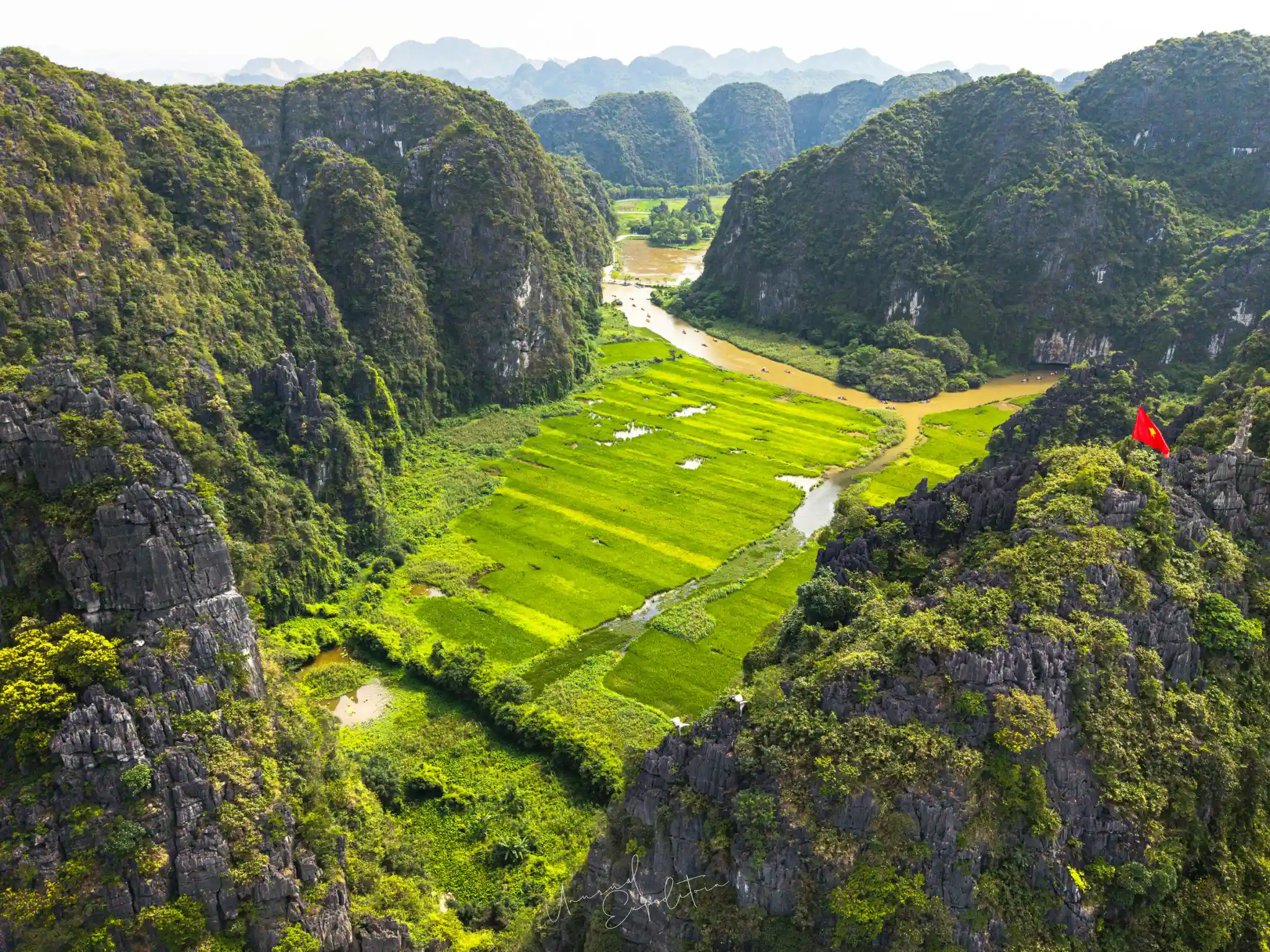
The Hang Mua viewpoint is a limestone summit beside Tam Coc in Ninh Binh, reached by a stone stair of about 500 steps, with a dragon statue on the ridge and the whole Tam Coc valley spread out below it: the Ngo Dong river looping through rice between karst towers. It is the most photographed view in the province. Climb for sunrise or the late afternoon, take a wide and a medium lens, and expect company at sunset.
Hang Mua is one of the places covered in our Ninh Binh photography tour guide, and the valley it looks down on is the subject of Tam Coc, Ninh Binh.
What is the Hang Mua viewpoint?
Hang Mua, also called Mua Cave, takes its name from a small cave at the foot of the hill; the cave itself is minor, and nobody comes for it. The reason to come is the stair. From the bottom, a stone staircase with low walls climbs the spine of a limestone spur known locally as Lying Dragon Mountain, and at the top a stone dragon coils along the rocks beside a small shrine with a white statue. Two branches of the stair lead to two summits, one with the dragon and one with the shrine, and each looks out over a different side of the valley. The site is a managed tourist area with a ticket gate and gardens and lotus ponds at the base, so check the current entry rules on site or with the Ninh Binh provincial tourism department.
Hang Mua hike: how hard is the climb?
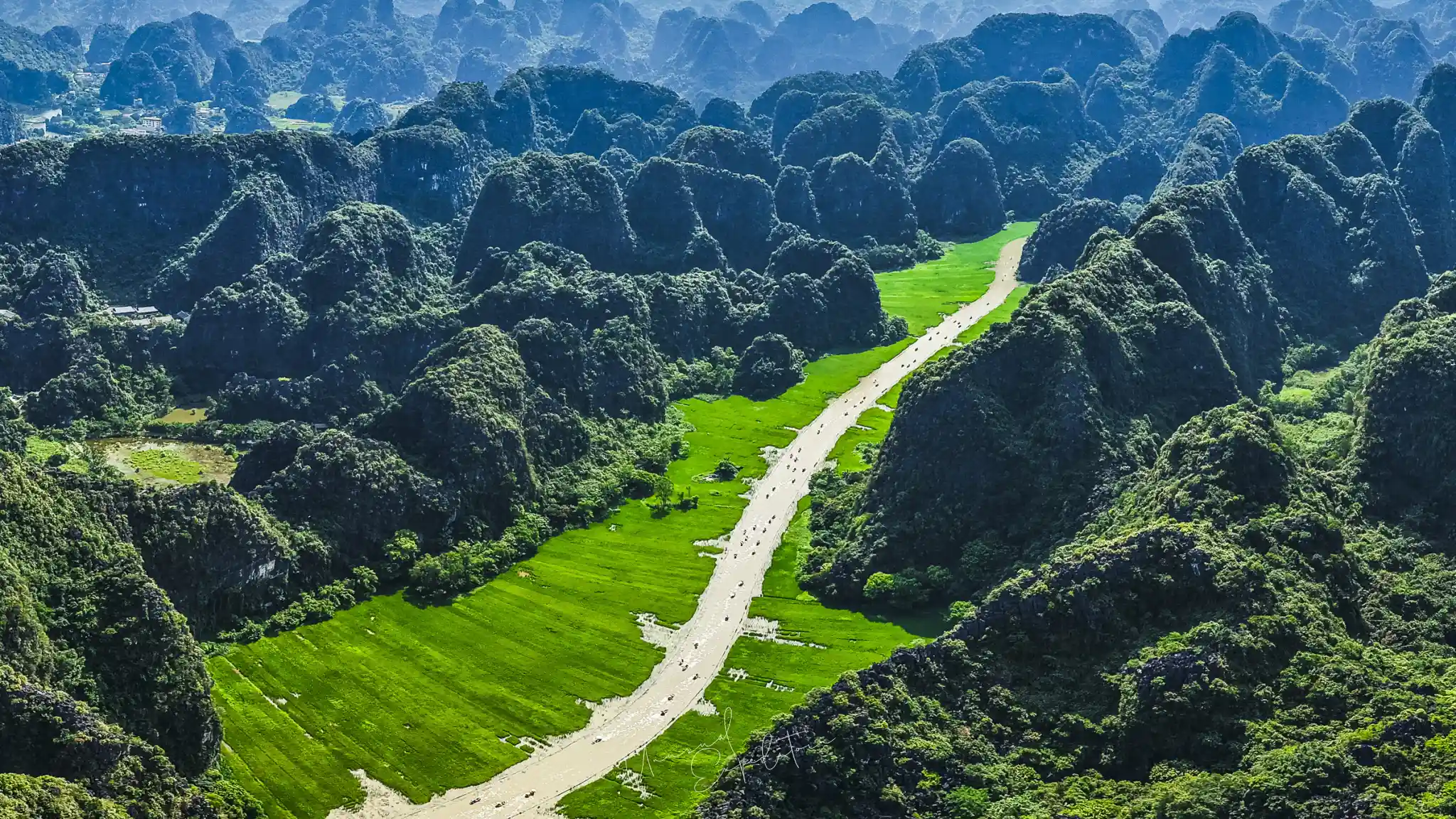
The Hang Mua hike is short and steep. Most guides put the stair at around 500 steps; a count published by the Vietnamese daily Lao Dong gives 486, split into two branches near the top. The steps are uneven stone, the upper section narrows between rocks, and the final scramble to the dragon is over sharp, polished limestone with no rail. Anyone reasonably fit manages it at a steady pace with stops. Wear shoes with grip, carry water, and climb in the cooler hours; in the heat of the day the stair is in full sun and the stone is hot. With a camera bag, keep both hands free on the last section and leave the tripod strapped on until you are on flat rock.
Hang Mua viewpoint: where to stand and what to shoot
| Spot | Picture | Lens | Best light |
|---|---|---|---|
| Dragon summit | The ridge and stair with the dragon, valley behind | 16-35mm | Sunrise |
| Shrine summit | The river loop and boats in the rice | 24-70mm, 70-200mm | Late afternoon |
| Middle of the stair | Climbers on the wall as scale against the towers | 24-70mm | Any soft light |
| Lotus ponds at the base | Flowers with the ridge behind, in season | 70-200mm | Early morning |
The dragon summit is the iconic frame; the shrine side is where the river pictures are.
Sunrise or sunset at Hang Mua?
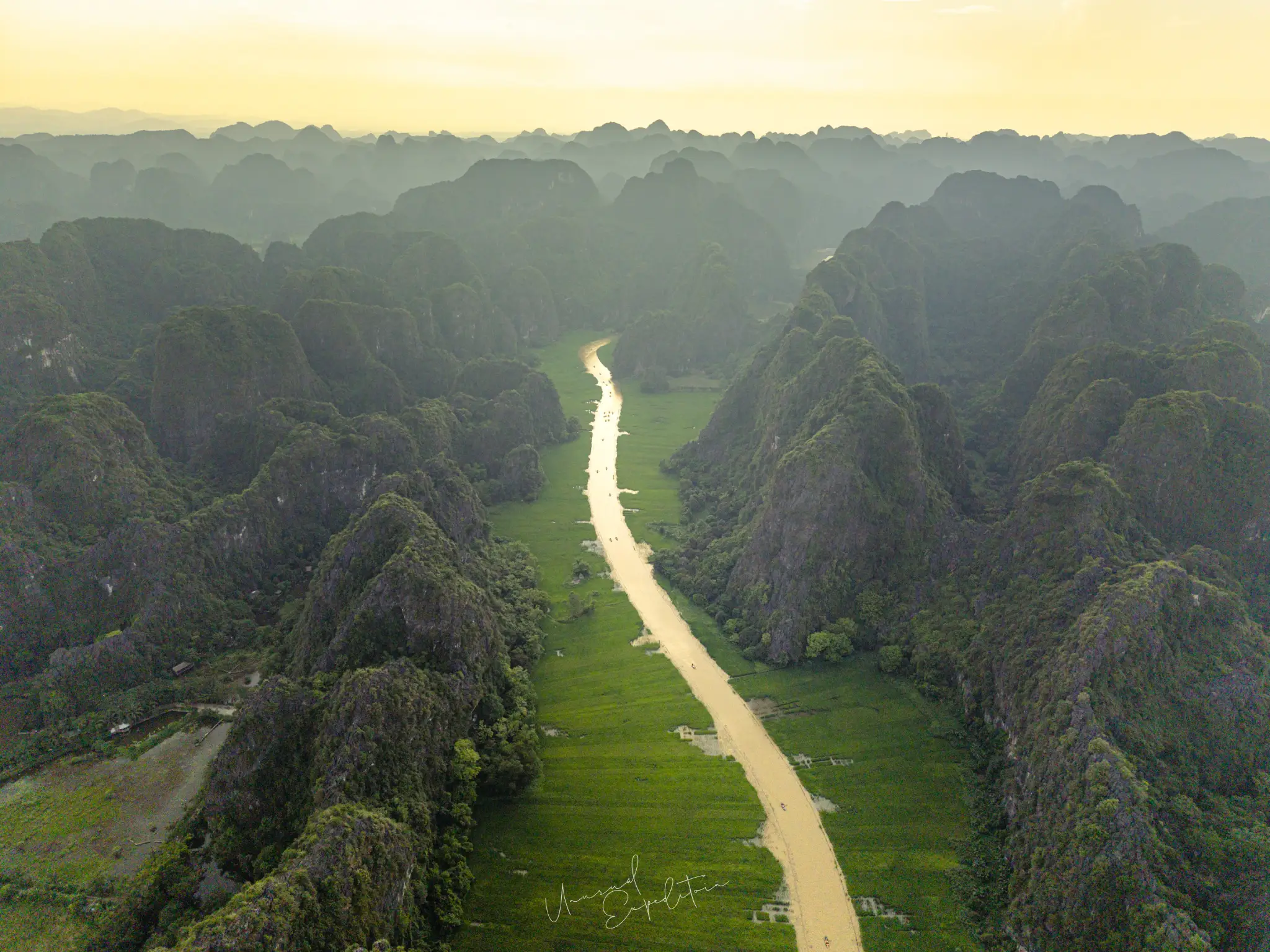
Hang Mua works at both ends of the day, but they are different shoots. At sunrise the ridge is quiet, mist often lies in the valley, and the light comes from behind the towers, giving you layers and silhouettes. At sunset the light falls across the valley and warms the rice and the river, which is the colour picture, and the summits are crowded; arrive early enough to hold a spot, and be patient with other photographers on narrow rock. In the middle of the day the light is flat and overhead, the stair is hot, and the valley looks like a map. In haze, a 70-200mm pulls single towers out of the murk better than a wide lens.
"Everyone points their lens at the dragon. Turn round. The river side of the ridge, with a boat or two in the rice, is the picture I keep from Hang Mua."
Joseph Mak, tour leader, Unusual Expedition
Hang Mua in the seasons
The view from Hang Mua changes with the rice in the Tam Coc valley below. In the spring the paddies are green, in early summer they turn gold toward the harvest, and the lotus ponds at the foot of the hill bloom in the hot months. After the harvest the fields are flooded and planted again, and the autumn crop brings back the green under clearer, drier skies. Winter mornings can be grey and cold on the summit, with mist that sometimes hides the valley entirely. Our frames on this page are from early May, with green rice and warm haze in the evening. The full calendar is in best time to visit Ninh Binh.
Combining Hang Mua with the rest of Ninh Binh
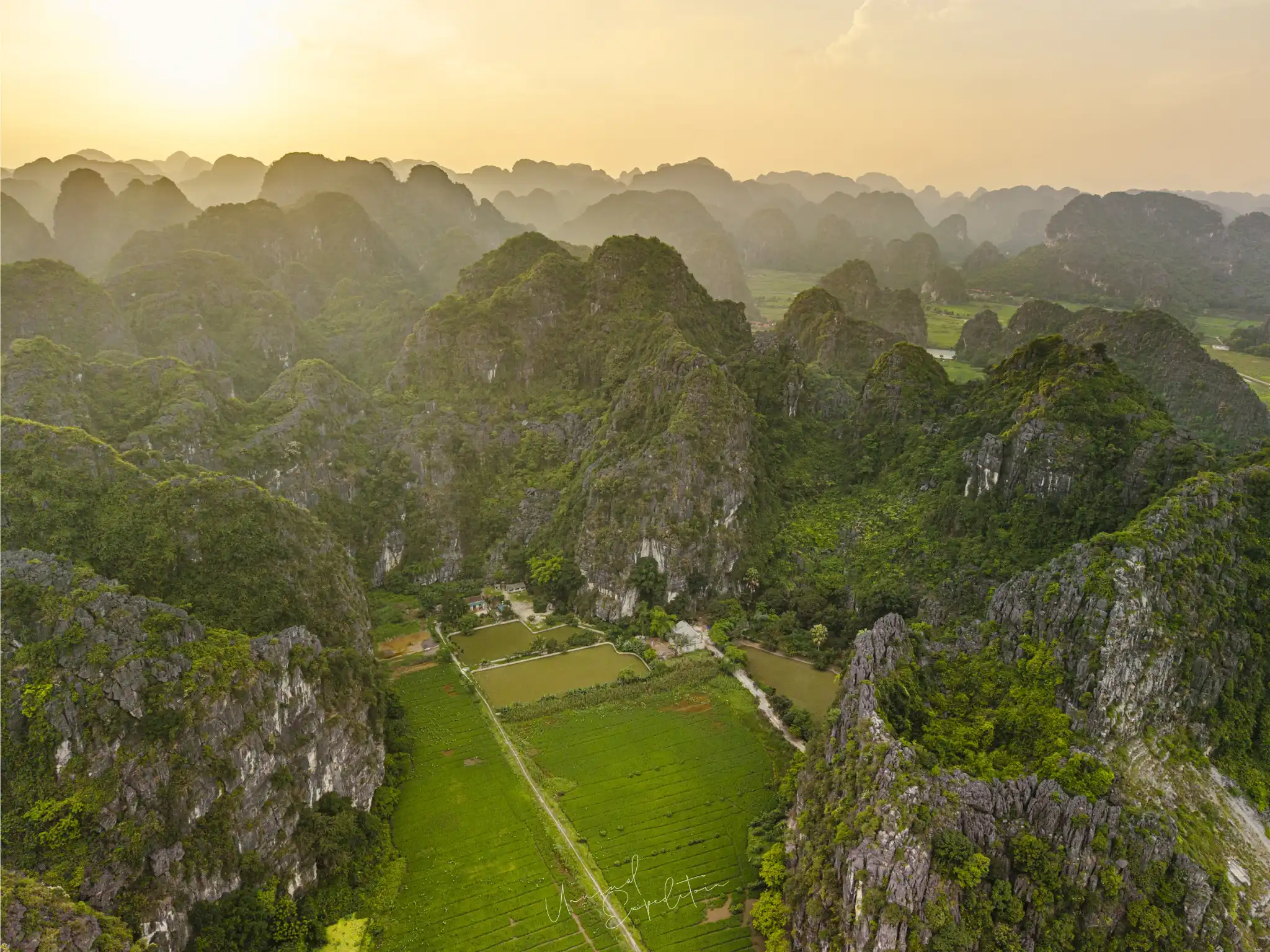
Hang Mua sits on the edge of the Tam Coc valley, so it pairs naturally with the Tam Coc boat or a bicycle ride along the dykes on the same day. Trang An is close by for a morning on the water, described in Trang An boat tour. After you come down, the light keeps going over the karst; we often finish the day at a lakeside pagoda, described in Ninh Binh at night. For more of our frames from the valley, see Ninh Binh photos.
Hang Mua viewpoint, Ninh Binh: practical notes
Hang Mua viewpoint in Ninh Binh is easy to reach: it lies a short bicycle or scooter ride from Tam Coc village along the valley road, and taxis and hotel drivers all know it. Pay at the gate, leave bicycles at the parking area, and walk through the gardens to the foot of the stair. There are drinks stalls at the bottom but little at the top, so carry water up with you. If you want to fly a drone, Vietnam requires a permit and the site has its own rules; ask before you launch, and expect a ranger to stop you if you do not. Bring a head torch if you plan to come down after sunset, because the stair is unlit and the stone is uneven.
Climb Hang Mua with us
Hang Mua is part of every private Ninh Binh trip we arrange, timed for the light you want. Scheduled northern departures, when we run them, appear on the Vietnam photography tours page. Tell us your season and we will plan the climb.
Join the Ninh Binh photography tour
Mekong And Central Highland Vietnam Photo Tour - Vietnam departs 16 Jan 2027 To 24 Jan 2027, led by Joseph Mak. Small group, photography first. All Ninh Binh photography tours.
Explore Ninh Binh in depth
- Ninh Binh Photography Tour Guide: Karst, Rivers, Rice and LightVietnam
- Van Long Nature Reserve: Wetland, Cliffs and Langurs in Ninh BinhVietnam
- Trang An Boat Tour: Caves, Temple Islands and Morning MistVietnam
- Tam Coc, Ninh Binh: the River, the Rice and the Boat TourVietnam
- Ninh Binh at Night: Sunset, Blue Hour and Lit PagodasVietnam
- Best Time to Visit Ninh Binh: Rice, Mist and Weather by MonthVietnam
- Ninh Binh Photos: Is It Worth Visiting and How to Get There from HanoiVietnam
Upcoming Photo Tours
- Egypt Photo Tour – EgyptEgypt 12 Dec 2026 To 20 Dec 2026
- Inner Mongolia Winter Owl Photo Tour – ChinaChina 01 Jan 2027 To 04 Jan 2027
- Inner Mongolia Winter Photo Tour – ChinaChina 05 Jan 2027 To 11 Jan 2027
- Mekong And Central Highland Vietnam Photo Tour - VietnamVietnam 16 Jan 2027 To 24 Jan 2027