
Havana Photo Spots and Viewpoints: Where to Stand and When
Havana photo spots: the Malecón at sunset, the Capitolio and its cars, Plaza Vieja from above, the cathedral square and the Morro view.
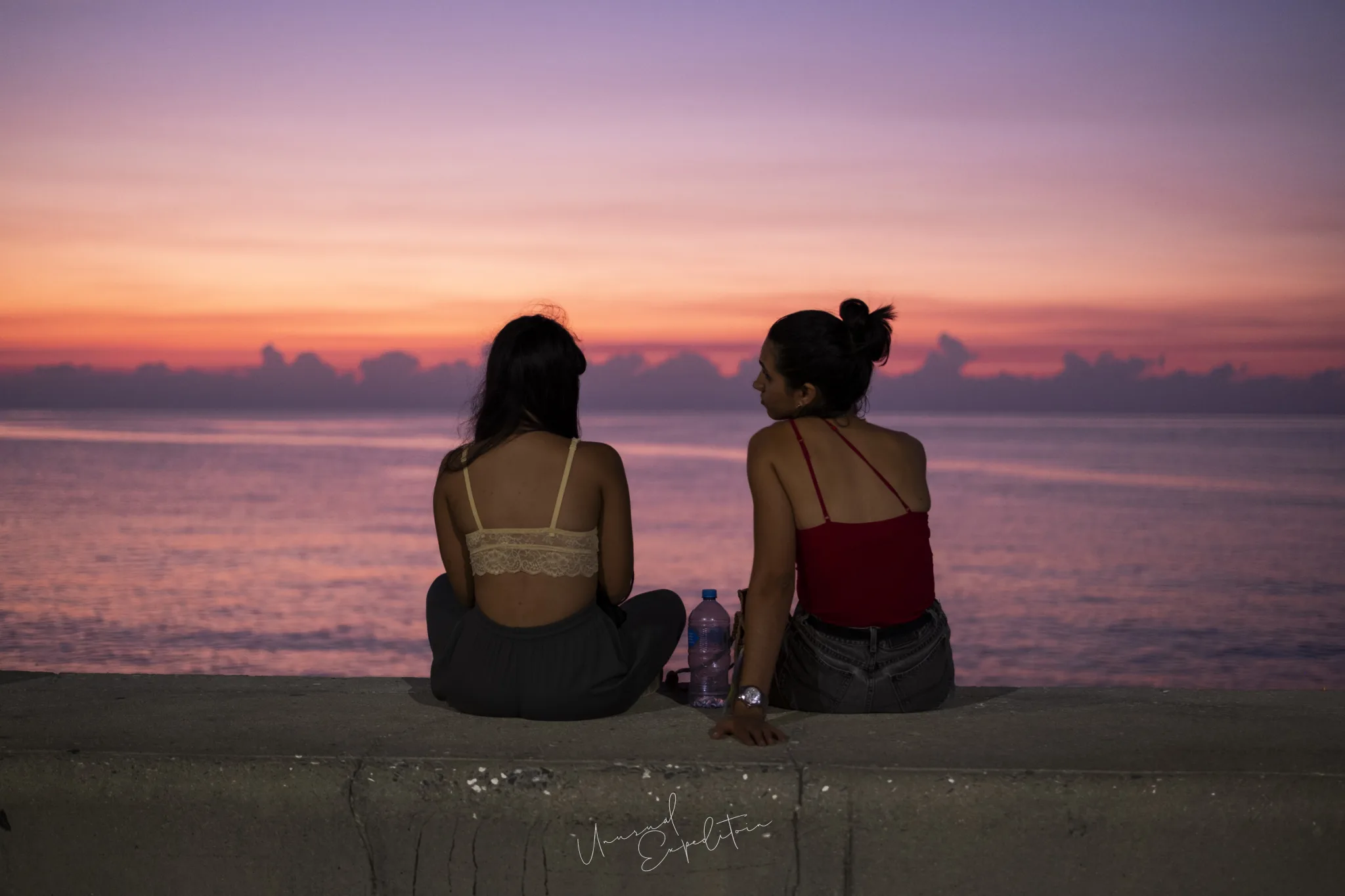
The best Havana photo spots are the Malecón seawall at sunset, the Capitolio with the classic cars lined up in front of it, Plaza Vieja seen from above, Plaza de la Catedral at first light, the Paseo del Prado and the view back across the harbour from the Morro side. All six sit within walking or short taxi distance of Old Havana, and each one works at a different part of the day, which is the real secret to photographing the city well.
We have photographed Havana on two trips, both in June, and the notes below come from standing in these places with a camera. For the wider country, from the tobacco barns of Viñales to the rooftops of Trinidad, start with our Cuba photography tour guide. For a picture essay of the city itself, see Havana photos: what Old Havana, the Malecón and the Capitolio really look like.
Havana photo spots and viewpoints at a glance
Old Havana, Habana Vieja, has been a UNESCO World Heritage Site since 1982, so most of the classic views are protected and still look much as they did a generation ago. The table sorts the spots by the light that suits them, because in Havana the light decides more than the place does. By mid-morning the sun is high and hard, the streets fall into deep shadow and the colours flatten, so plan the open views for the ends of the day and save the shaded lanes for the middle.
| Spot | Best light | Lens | Crowds |
|---|---|---|---|
| Malecón seawall | Sunset and blue hour | 24-70mm, 70-200mm | Busy on the wall in the evening, part of the picture |
| Capitolio and Parque Central | Morning and late afternoon | 16-35mm, 24-70mm | Car drivers and touts all day |
| Plaza Vieja from above | Morning | 16-35mm | Quiet early, cafe tables later |
| Plaza de la Catedral | First light | 24-70mm | Tour groups from mid-morning |
| Paseo del Prado | Late afternoon | 24-70mm | Locals, children, weekend art stalls |
| Morro and La Cabaña side | Sunset over the city | 70-200mm | Visitors for the evening ceremony |
If you only have one evening, give it to the Malecón; if you only have one morning, give it to the two plazas.
The Malecón: the best views in Havana at sunset
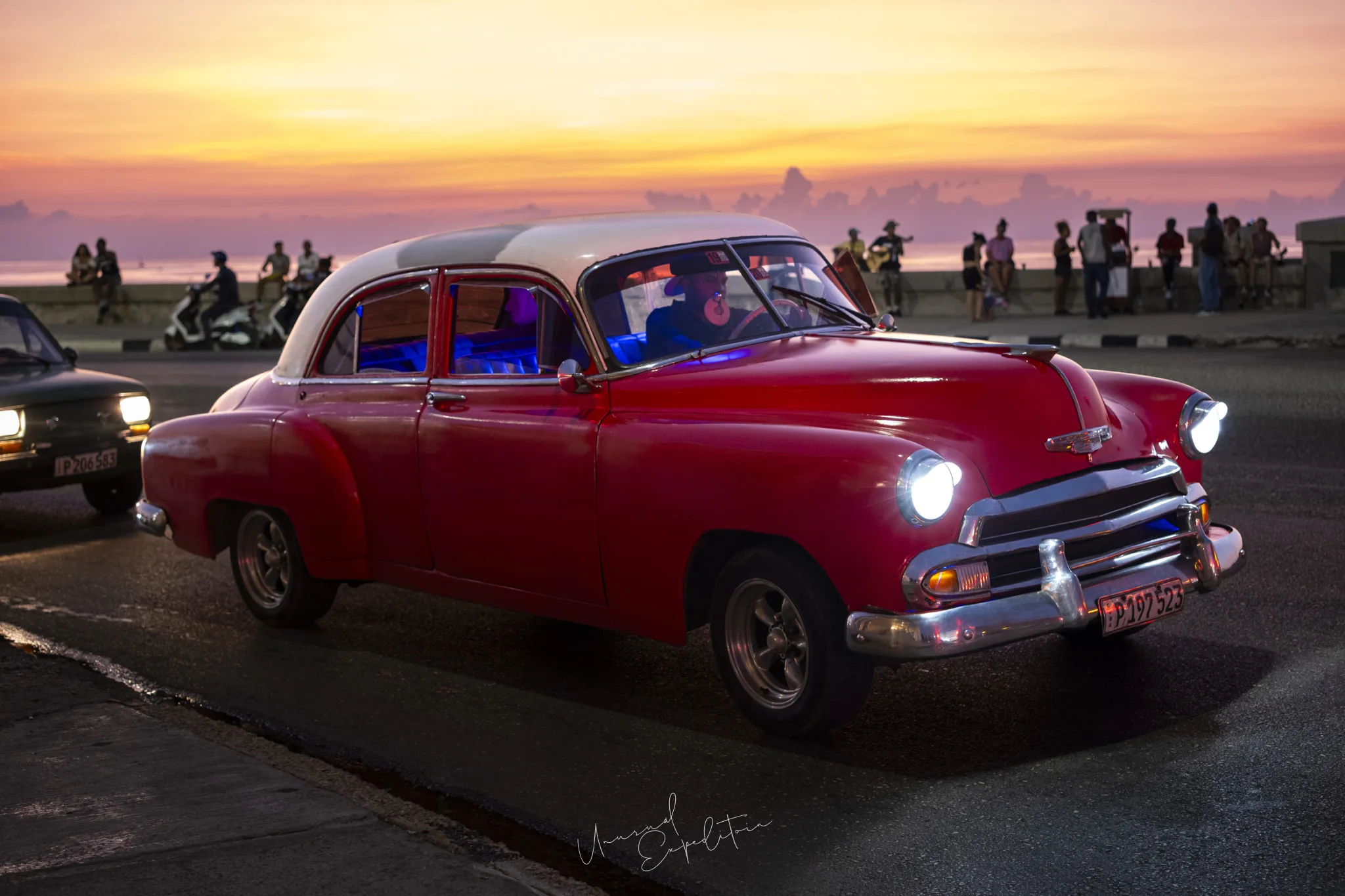
The Malecón is the seawall and coast road that runs for about eight kilometres along Havana's shore, and in the last hour of the day it becomes the city's living room. Couples, fishermen, musicians and groups of teenagers sit on the wall facing the sea, and the sun sets over the water to the west, so you can shoot them as silhouettes against the sky or turn around and catch the warm side light on the faded facades across the road. Stay through the blue hour: the classic cars switch on their headlights and drive the length of the seawall, and a slow shutter from the pavement turns them into colour against the darkening sea. A 70-200mm lets you pick out figures on the wall without walking into their evening. On rough days waves break over the wall near Centro Habana, which makes pictures and soaks cameras in equal measure.
The Capitolio and Parque Central
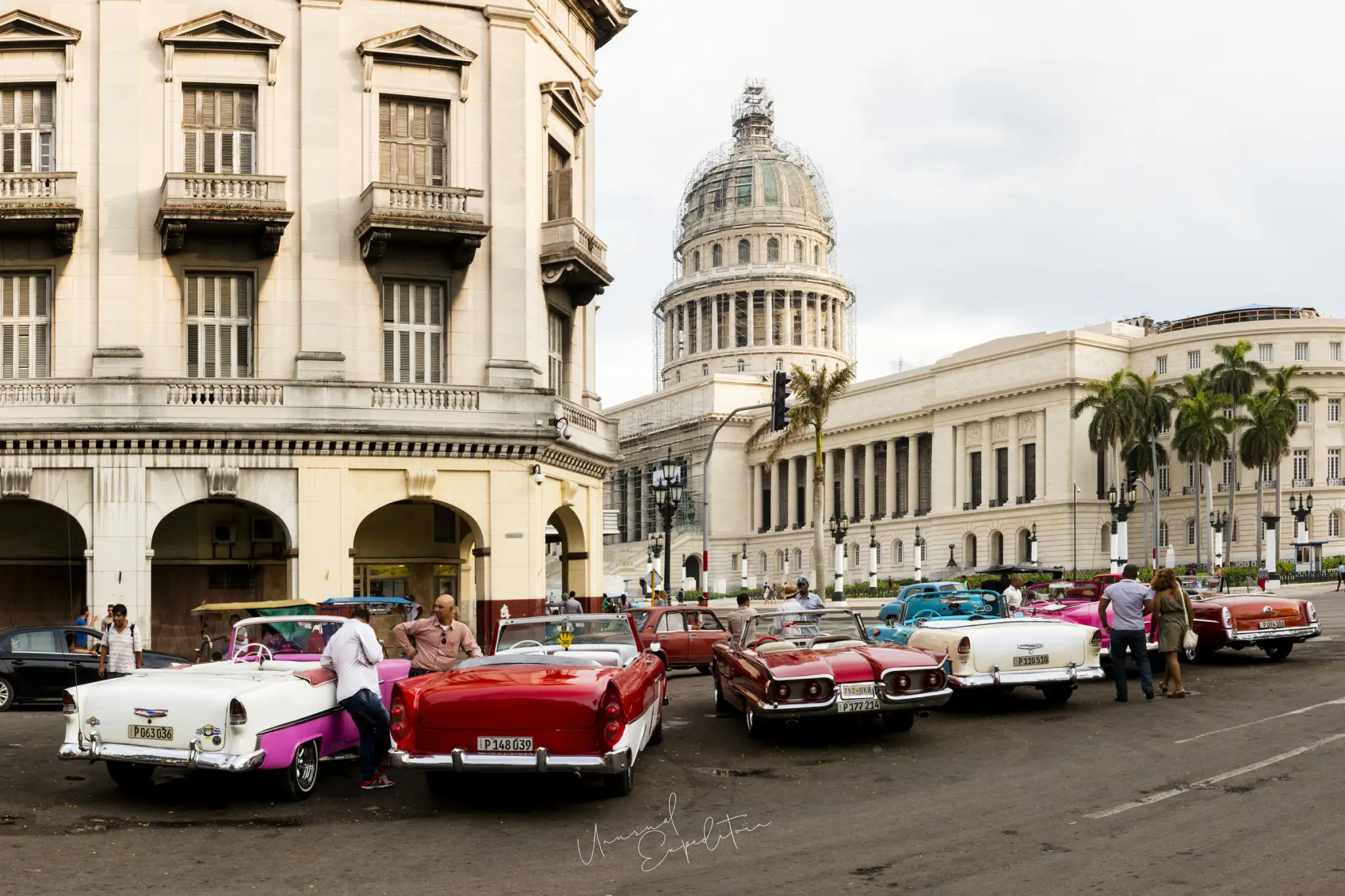
The Capitolio, restored and reopened in 2019 as the seat of the National Assembly, is the dome you use to find your way around Central Havana. The street in front of it and the edge of Parque Central are where the hire convertibles wait in rows, pink, red and turquoise, and the combination of dome and chrome is the most requested picture in the city. Stand on the Prado side with a 16-35mm and you can hold the cars, the arcades of the old hotels and the dome in one frame; come back in the late afternoon when the white stone warms up. The drivers are used to cameras and some will ask you to hire the car, which is a fair trade if you want a portrait of a driver at the wheel. Our Cuba classic cars photos guide covers the cars in more detail.
Places to visit in Havana Cuba from above: Plaza Vieja
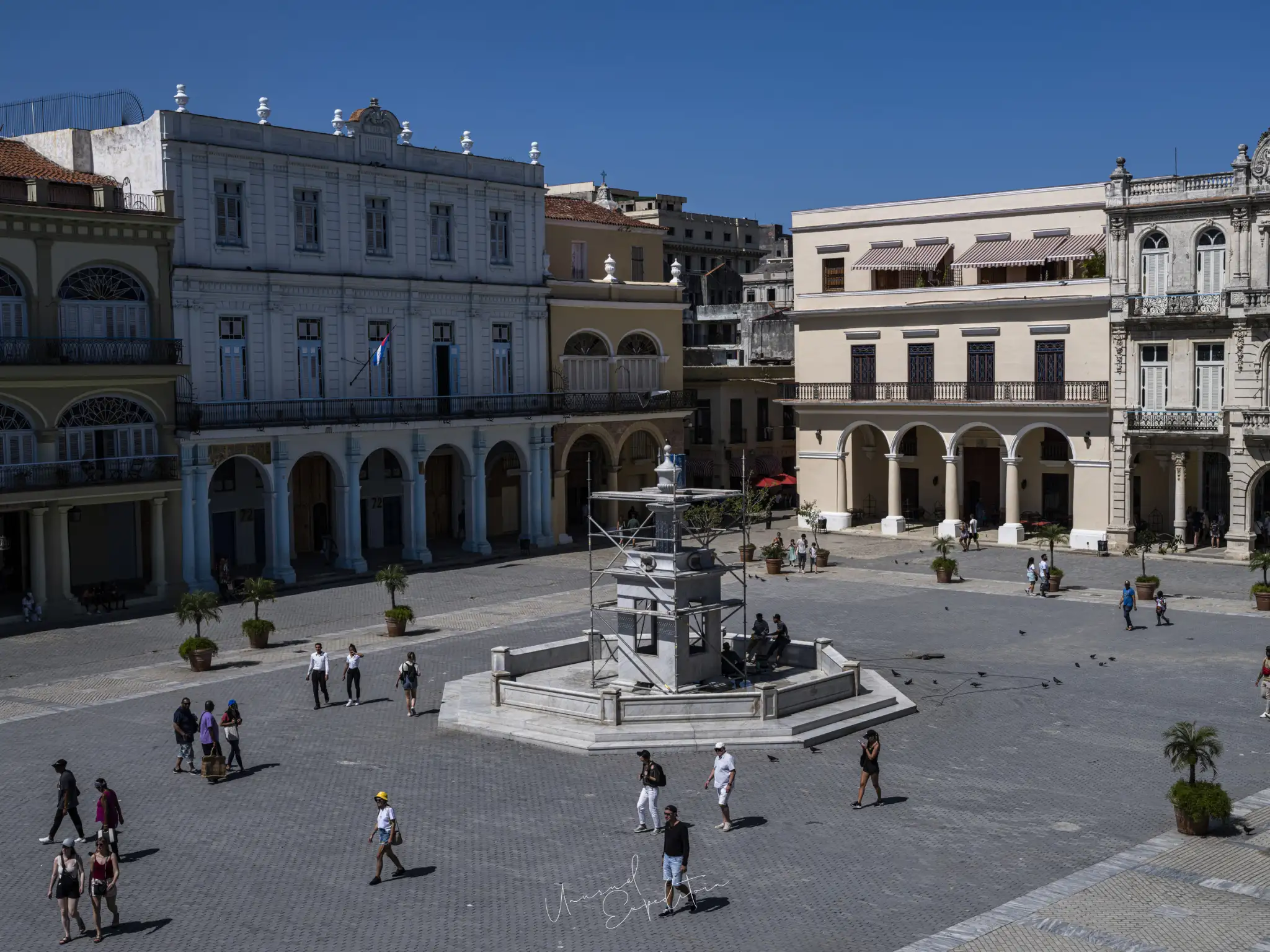
Plaza Vieja is the square in Old Havana where every building has been restored in a different colour, with a marble fountain in the middle and arcades on all four sides. At ground level it is pleasant; from above it becomes a pattern of stone, shadow and tiny figures crossing in every direction. The Cámara Oscura, a camera obscura in a tower on the corner of the square, and the upper terraces of the cafes give you that height. Go in the morning, when the square is evenly lit and the cafe tables are not yet out, and use a 16-35mm to take in the whole space. Midday leaves it bright and empty of shadow, which looks flat. Pigeons, schoolchildren and people on their way to work give you the scale you need.
Plaza de la Catedral at first light
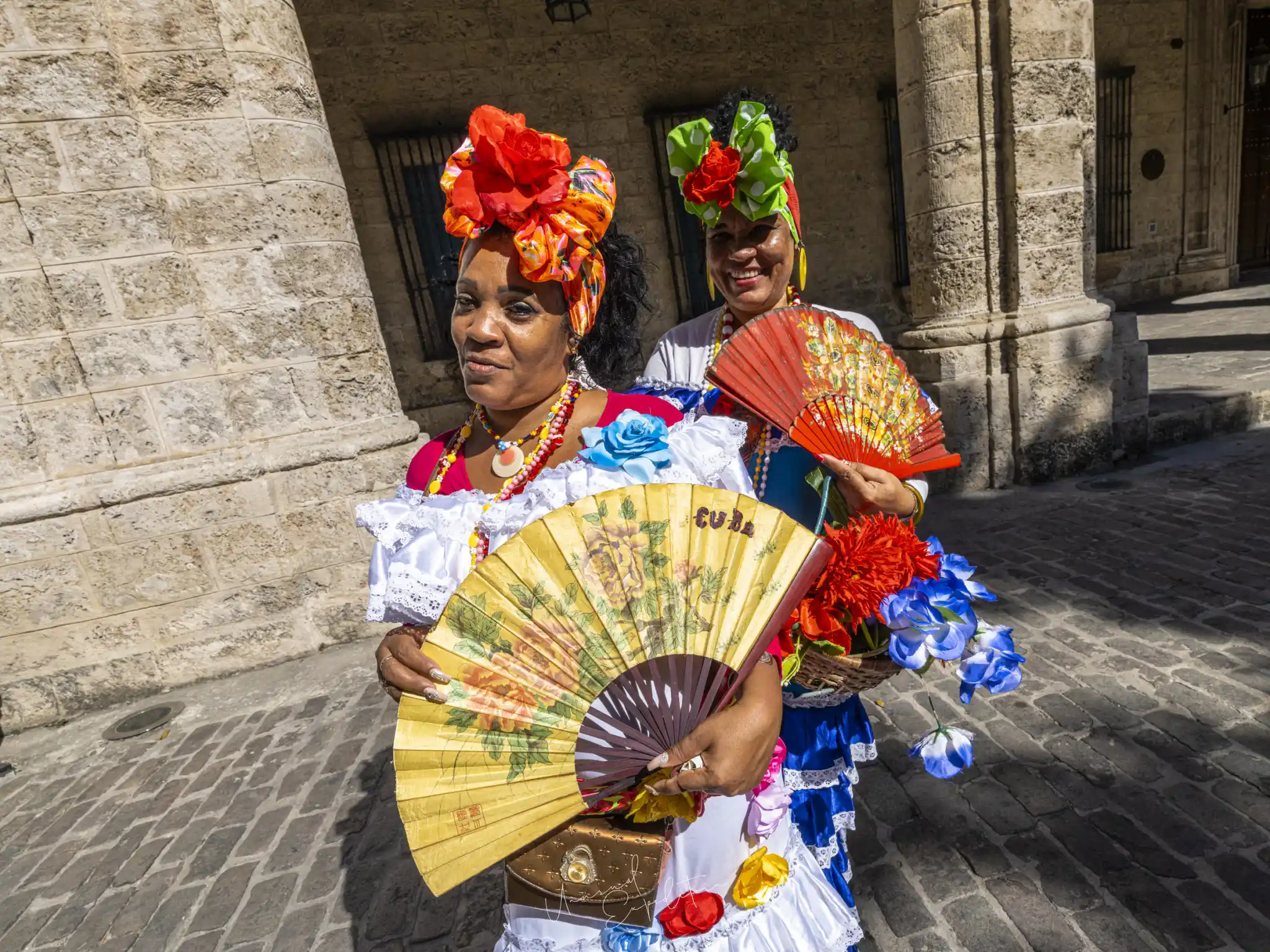
The baroque cathedral facade on Plaza de la Catedral is one of the most photographed fronts in Cuba, and it is at its best before the tour groups arrive. In the first hour after sunrise the square is almost empty and the coral stone is soft. Later in the morning the women in colonial dress, with flowers in their hair and large painted fans, take up their places around the square and in the lanes nearby. They pose for visitors and a tip is expected: agree it first, then take your time, and you will get a far better portrait than a snatched frame. A 24-70mm is enough for both the facade and the portraits.
Paseo del Prado
The Paseo del Prado runs from near the Capitolio down to the Malecón: a raised promenade with marble benches, bronze lions and a canopy of trees between two lanes of traffic. It is a local place first, with children playing, people sitting in the shade and, at weekends, artists selling paintings. The trees break up the light, so the late afternoon is best, when the sun comes in low under the canopy and lights the faces on the benches. Stand at the seaward end looking back and you have the long line of the promenade leading to the city. It is also the walk that joins two of the spots above, which is reason enough to carry the camera ready.
The view from the Morro side of the harbour
Across the harbour mouth from Old Havana stand the Castillo de los Tres Reyes del Morro and the fortress of La Cabaña, part of the same UNESCO listing as the old city. From the walls you look back across the water at the whole Havana waterfront, the Malecón curving away and the city skyline behind it, and at sunset the light falls on that skyline from the side. This is where a 70-200mm earns its place, compressing the old fort walls, the boats and the city. Visitors also come for the evening cannon ceremony at La Cabaña, so expect company. We have no frame of our own from here yet, so treat this as standard information rather than our experience.
"Havana is a people city first. The cars and the colour are the backdrop. Pick your spot for the light, then wait for somebody to walk into it."
Joseph Mak, tour leader, Unusual Expedition
Photos of Havana Cuba: crowds, access and courtesy
All of these spots are public and free to stand in, except the castle complex, which charges an entry fee, and the Cámara Oscura, which charges for the tower. Tripods are fine on the Malecón and in the plazas, but keep them out of the way of the restaurant terraces. Ask before you photograph people up close, and do not photograph police, the military or airport security. Leave the drone at home: drones are commonly confiscated at customs without a permit. Power cuts are a regular part of life in Cuba now, so charge batteries whenever there is power. For more on how to work with people in the streets, read our Cuba street photography guide, and for the city in one walk, the Havana travel guide and photo tour.
Photograph Havana with us
We run Cuba as a private photography trip on request, built around Havana, Viñales and Trinidad and timed for the light at each of these spots. Scheduled departures, when we announce them, appear on our Cuba photography tours page.
Cuba photography tours
The next Cuba departure is announced on the Cuba photography tours page, with previous expeditions and all the planning guides.
Explore Cuba in depth
- Cuba Photography Tour: The Complete GuideCuba
- Viñales Photos: the Valley at Sunrise and Sunset, and Is It Worth VisitingCuba
- Trinidad, Cuba: Photos, Things to Do and Is It Worth VisitingCuba
- Havana Photos: What Old Havana, the Malecón and the Capitolio Really Look LikeCuba
- How to Get to Cuba: Flights, Entry Rules and What to ExpectCuba
- Cuba Tobacco Farm Photos: the Drying Barns of ViñalesCuba
- Cuba Street Photos and People: Photographing Cubans with RespectCuba
- Cuba Photography Trip FAQ: Safety, Power Cuts, Cash and CamerasCuba
- Cuba Classic Cars Photos: Where to Find and Photograph ThemCuba
- The Best Time to Visit Cuba for Photography, Month by MonthCuba
Upcoming Photo Tours
- Egypt Photo Tour – EgyptEgypt 12 Dec 2026 To 20 Dec 2026
- Inner Mongolia Winter Owl Photo Tour – ChinaChina 01 Jan 2027 To 04 Jan 2027
- Inner Mongolia Winter Photo Tour – ChinaChina 05 Jan 2027 To 11 Jan 2027
- Mekong And Central Highland Vietnam Photo Tour - VietnamVietnam 16 Jan 2027 To 24 Jan 2027