
Lisbon Tram Photos: Where to Photograph Tram 28 and the Funiculars
Lisbon tram photo spots: Tram 28 bends in Alfama and Graça, the Bica funicular, trams at blue hour, composition, tickets and safety.
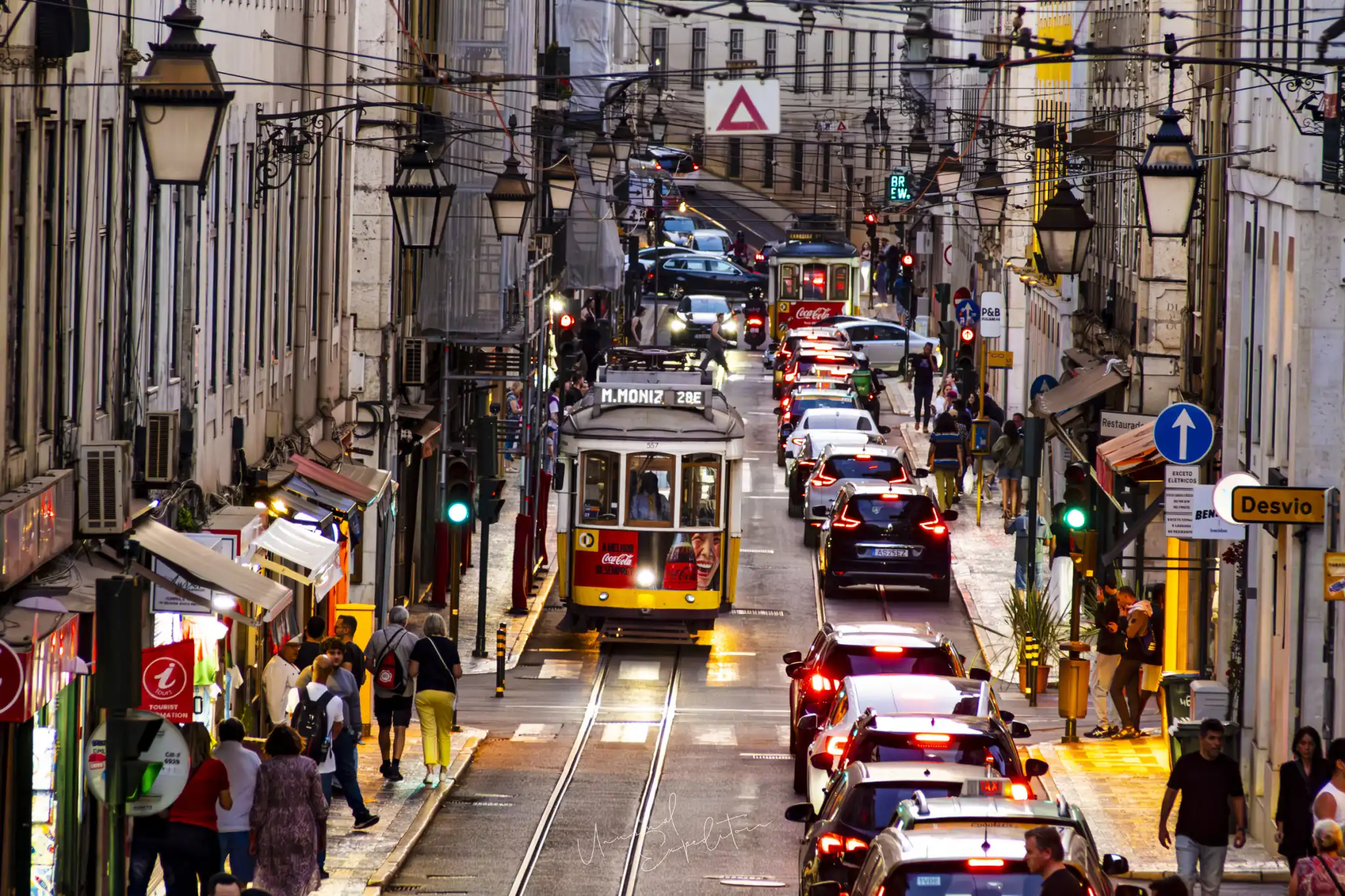
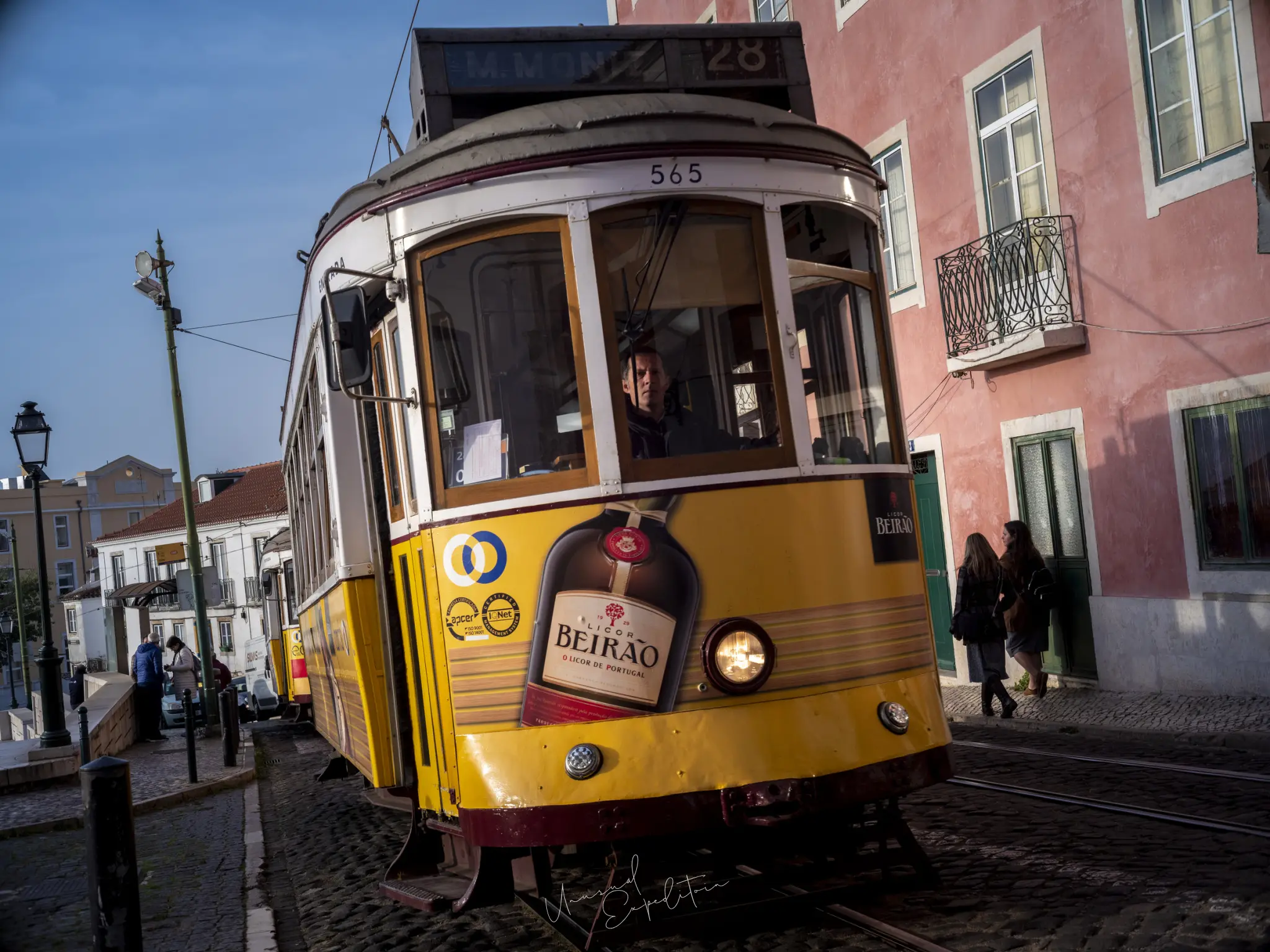
The best Lisbon tram photos are made on the steep, narrow stretches of the Tram 28 route through Graça and Alfama, on the bends below the cathedral, and on the Bica funicular lane, where the yellow car fills a single straight street. Stand still at a bend and let the trams come to you; shoot early in the morning or at blue hour, when the cars are lit from inside. Here is where and how we photograph them, part of our Portugal photography tour guide.
Lisbon's old trams are small, yellow and wooden, built to climb streets that buses cannot, and they have become the city's emblem. They are still public transport, which is what makes them photograph so well: real passengers, real streets, and a vehicle that has to slow to a crawl on every bend.
Lisbon tram photos: why Tram 28
Tram 28 runs from Martim Moniz to Campo de Ourique and passes through most of what visitors want to see: Graça, Alfama, the cathedral, the Baixa and Estrela, according to Visit Portugal and Turismo de Lisboa. It is also the most crowded line in the city, and riding it in the middle of the day is a queue, not a photograph. Photographers do better on foot along its route, choosing a bend or a narrow street and waiting. The cars come every few minutes, so you get several chances at the same composition with different light and different people at the windows.
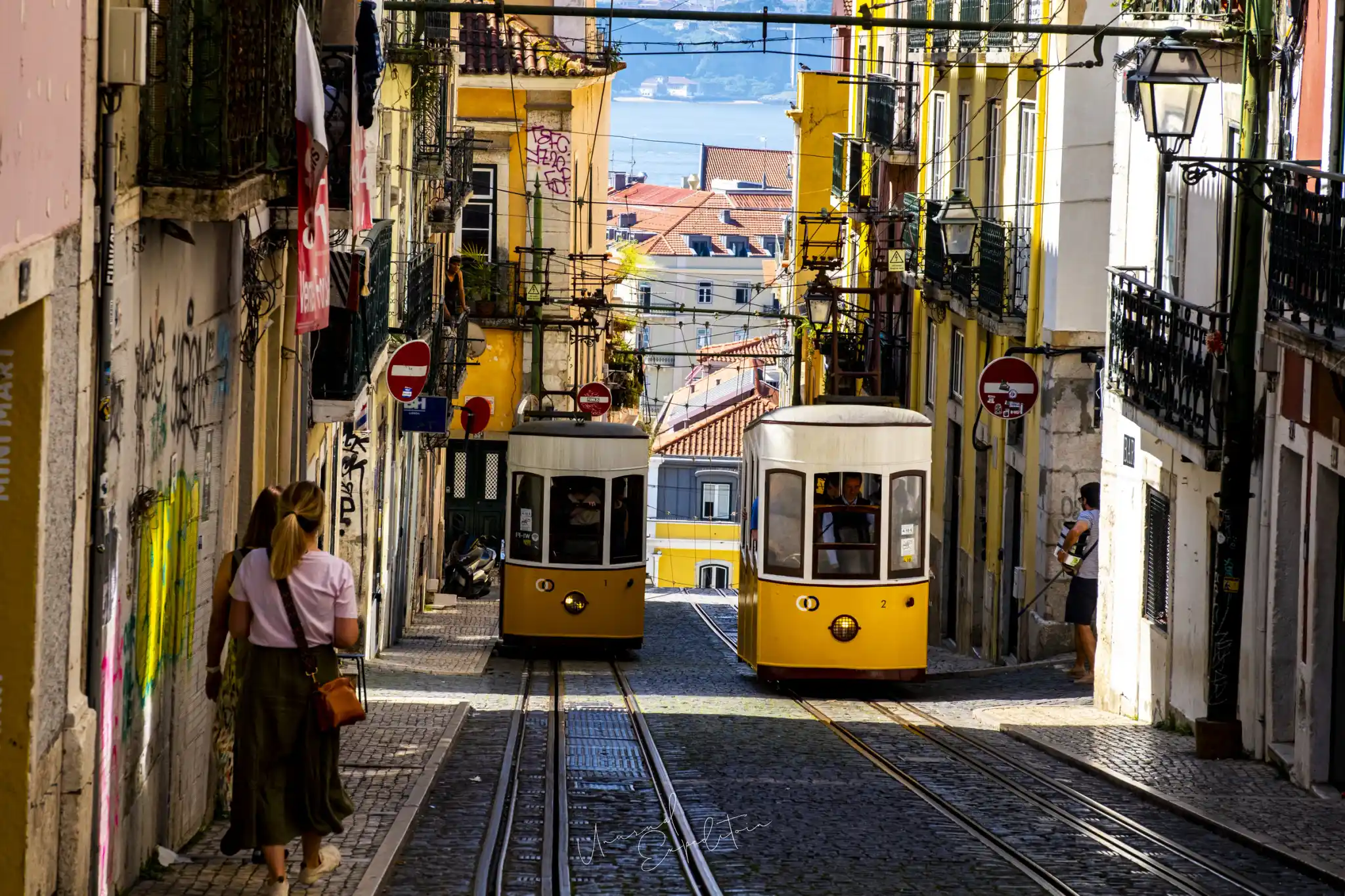
The best Lisbon tram photo spots
The classic spots are on the narrowest parts of the route. Below the Sé cathedral the track curves under the church, which puts a medieval facade behind a yellow tram. In Alfama, near Largo das Portas do Sol, the cars squeeze past the terrace railings with the river behind. On the climb to Graça, the street walls are so close that a tram and a pedestrian cannot pass at the same time, and that tension is the picture. In Estrela and around the Basilica the streets open up and the light is cleaner in the afternoon. Each of these works with a 24-70mm from the pavement; a 70-200mm from further back compresses the tram against the buildings.
The funiculars: Bica, Glória and Lavra
Lisbon's three funiculars are trams on rails pulled up the steepest streets. The Ascensor da Bica is the most photographed, because its street drops in a straight line to the river and the two cars pass in the middle. Stand at the top for the river view or at the bottom looking up, and wait for the car to come into the slot between the buildings. The Glória lift climbs from Restauradores to the Bairro Alto past a wall of street art, and Lavra is the oldest and quietest of the three.
Blue hour and night: trams lit from inside
The best tram light in Lisbon is after sunset. The cars are lit from inside, the street lamps come on, and the rails pick up the glow, which gives you a warm vehicle against a blue street. Shoot a few frames with a slower shutter as the tram passes to let it blur against sharp buildings, then a fast one as it stops at a halt. The Baixa grid and the cathedral bend both work at night and stay busy and safe.
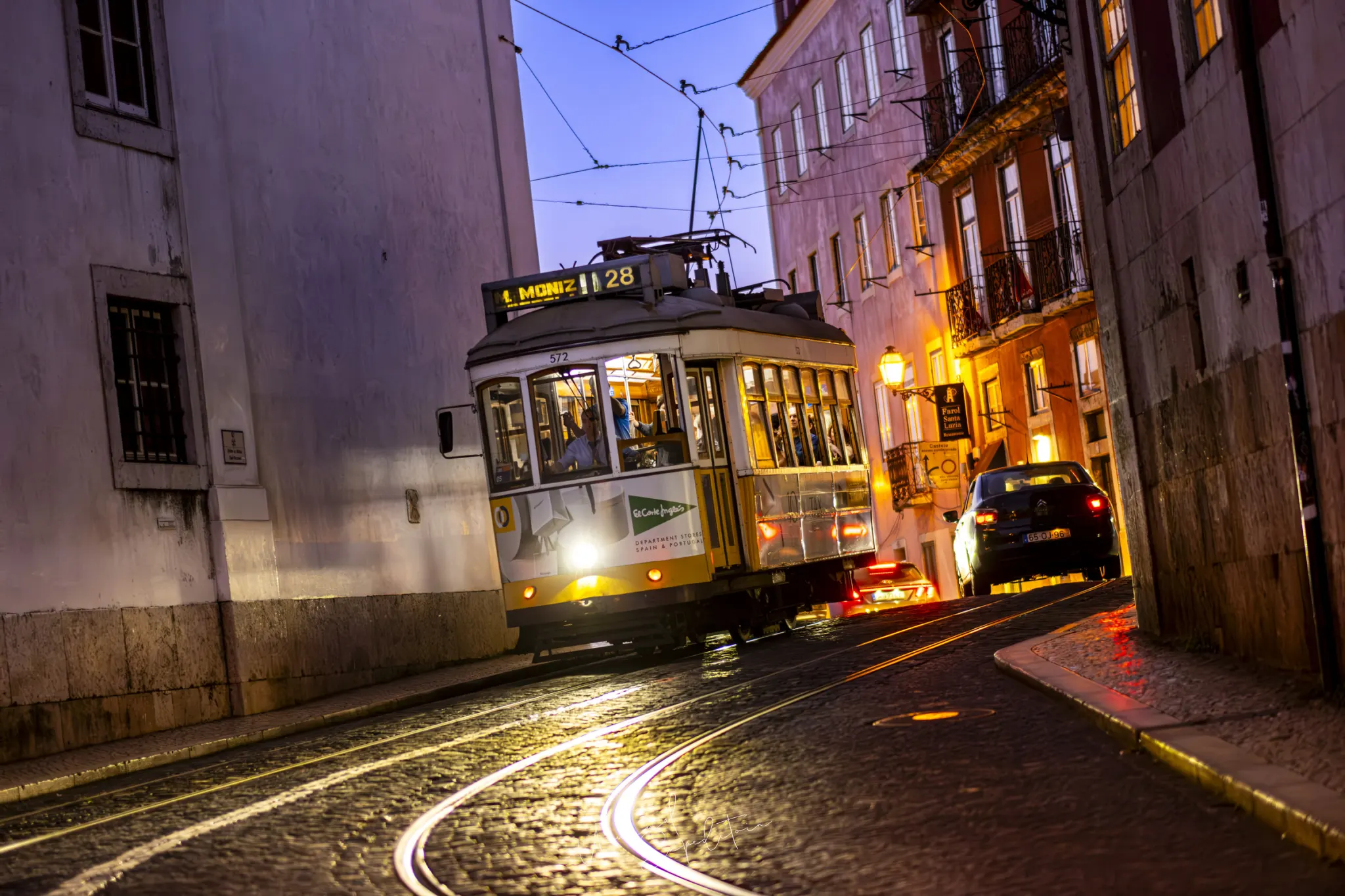
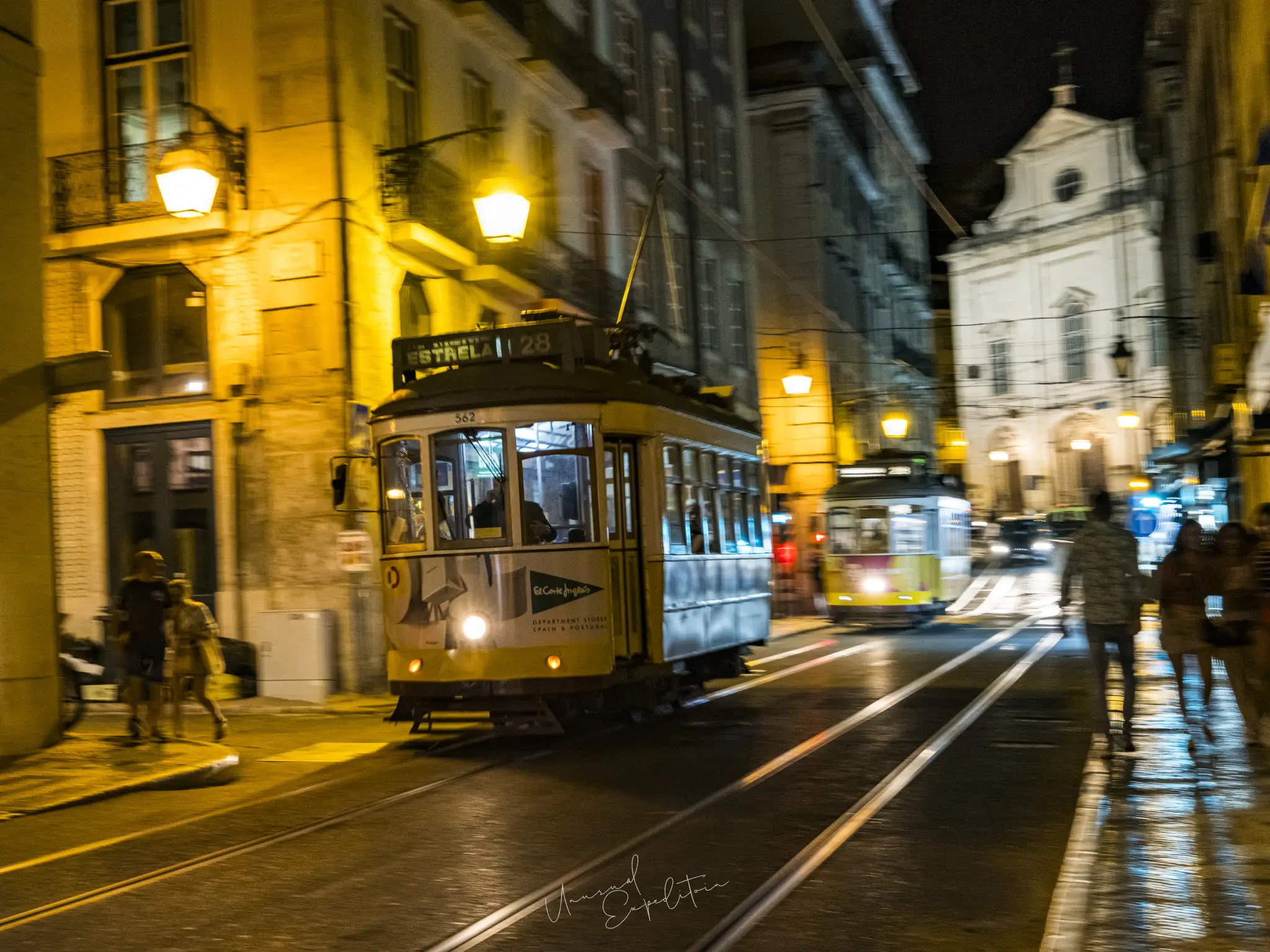
"I stop chasing the tram after the first morning. I pick one bend, stand there for half an hour and let a dozen trams come through. The good frame is the one where a passenger looks out of the window at exactly the right moment, and you only get that by waiting."
Joseph Mak, tour leader, Unusual Expedition
Composition: telling Lisbon in one frame
A tram on its own is a postcard. A tram with the street around it is Lisbon. Look for the details that place it: azulejo tiles on a facade, washing over the street, a cafe table in the gutter, a passenger leaning out. Get low to make the car loom, or step back and let it be small in a steep street. Shoot through the bends rather than the straights, because the car turns its face to you. Pay attention to the overhead wires; they cut across the sky and are easier to place than to remove.
Practical notes: tickets, crowds and safety
A single tram ride bought on board costs a few euros, and a day ticket or a rechargeable card is better value if you ride often; check current fares with the operator Carris. Board Tram 28 at the end of the line, Martim Moniz or Campo de Ourique, early or late in the day if you want a seat. The crowded trams are a known spot for pickpockets, so keep your camera bag closed and in front. On the pavement, stay on the inside of bends: the trams leave very little room.
Tram spots at a glance
| Spot | Line | Best light | Lens |
|---|---|---|---|
| Sé cathedral bend | Tram 28 | Morning, blue hour | 24-70mm |
| Portas do Sol, Alfama | Tram 28 | Late afternoon | 24-70mm, 70-200mm |
| Graça climb | Tram 28 | Morning | 24-70mm |
| Ascensor da Bica | Funicular | Late afternoon, blue hour | 70-200mm from the top |
| Baixa streets | Tram 28, 12 | Night | Fast prime |
A morning on the 28 route and an evening at Bica cover most of what the trams offer.
The trams sit inside a wider set of viewpoints and river spots, which we cover in Lisbon photo spots. For the season, see the best time to visit Portugal for photography.
Photograph Lisbon's trams with us
We include the trams in every Portugal trip we plan and walk the route with you at first light and blue hour. Portugal runs as a private photography trip on request; see the Portugal photography tours page for scheduled departures.
Portugal photography tours
The next Portugal departure is announced on the Portugal photography tours page, with previous expeditions and all the planning guides.
Explore Portugal in depth
- Portugal Photography Tour: The Complete GuidePortugal
- Sintra Photos: Pena Palace and Azenhas do MarPortugal
- Portugal Tour from Singapore: Flights, Entry and What to ExpectPortugal
- Portugal Photos: Villages, Coast and Countryside Beyond the CitiesPortugal
- Portugal Photography Trip FAQPortugal
- Porto Photo Spots: Ribeira, the Dom Luís I Bridge and the BookshopPortugal
- Lisbon Photo Spots: The Best Places to Take PicturesPortugal
- The Best Time to Visit Portugal for PhotographyPortugal
- Algarve Photo Spots: Benagil Cave, Ponta da Piedade and the Fishing TownsPortugal
Upcoming Photo Tours
- Egypt Photo Tour – EgyptEgypt 12 Dec 2026 To 20 Dec 2026
- Inner Mongolia Winter Owl Photo Tour – ChinaChina 01 Jan 2027 To 04 Jan 2027
- Inner Mongolia Winter Photo Tour – ChinaChina 05 Jan 2027 To 11 Jan 2027
- Mekong And Central Highland Vietnam Photo Tour - VietnamVietnam 16 Jan 2027 To 24 Jan 2027