
Sicily Photography Tour Guide: Cefalu, Taormina, Temples and Baroque Towns
Sicily landscape photography: Cefalu, Taormina and Etna, Ortigia, Ragusa Ibla, Agrigento, Scala dei Turchi and where the light is best.
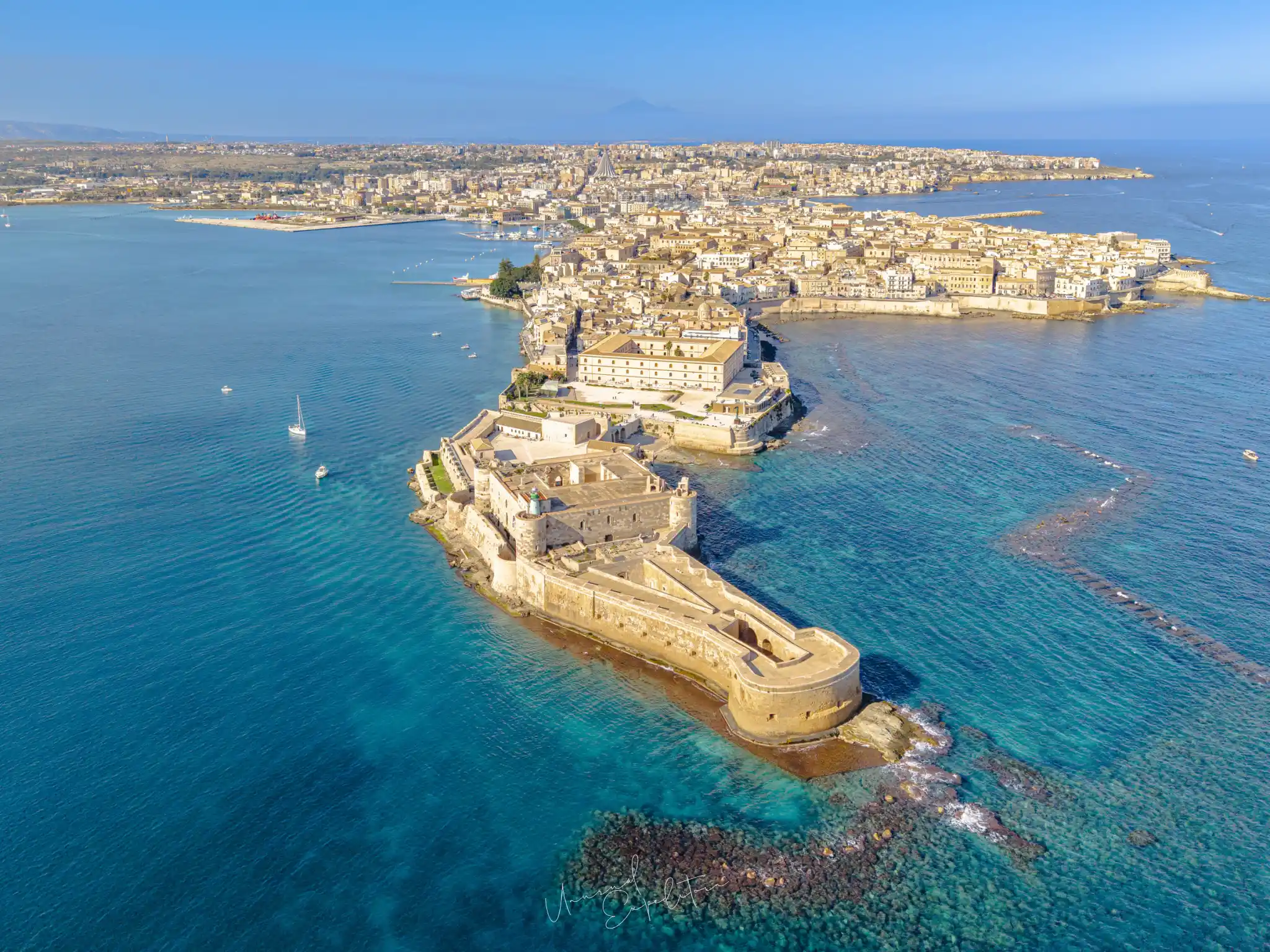
Sicily landscape photography covers more ground than almost any island in Europe: a Norman cathedral town under a limestone rock at Cefalu, Greek temples on a ridge at Agrigento, a white marl cliff at Scala dei Turchi, baroque hill towns in the south-east, the fortified island of Ortigia, and Mount Etna smoking above Taormina. The light is warm and low for much of the year, and the subjects change completely every hour you travel.
Sicily is one region in our Italy photography tour guide, which covers entry, money and flights from Singapore once for the whole country. The photographs in this guide are our own, taken on our trips around the island; we hold the rights to them, and the notes come from knowing these places first hand.
Sicily landscape photography: what the island gives you
Sicily is the largest island in the Mediterranean, and it photographs like three or four countries stitched together. The north coast is Tyrrhenian: Palermo's Arab-Norman monuments and Cefalu's beach under La Rocca. The east is volcanic, with Etna standing over Catania, Taormina and the bay of Giardini Naxos. The south-east is limestone and baroque, rebuilt after the earthquake of 1693 into towns of honey-coloured stone that glow at dusk. The south and west hold the Greek past: the Valley of the Temples at Agrigento and the unfinished temple at Segesta, with salt pans and windmills on the coast near Trapani and Marsala. UNESCO lists several of these places, which tells you how much is packed into one island, and also how many visitors share it in summer.
Photos of Sicily: the places in this guide
| Place | Main subject | Best light | Lens |
|---|---|---|---|
| Cefalu | Old town, cathedral and La Rocca over the sea | Sunset and blue hour | 24-70mm, drone |
| Palermo | Cathedral, Quattro Canti, street markets | Late afternoon | 16-35mm, 24-70mm |
| Taormina | Greek theatre, Etna, the bay at dusk | Early morning, dusk | 24-70mm, 70-200mm |
| Ortigia, Syracuse | Island old town, sea walls, Temple of Apollo | Dusk | 24-70mm, drone |
| Ragusa Ibla and Modica | Baroque hill towns | Blue hour | 24-70mm, 70-200mm |
| Agrigento and Segesta | Greek temples and theatre | Late afternoon, floodlit dusk | 16-35mm, 24-70mm |
| Scala dei Turchi | White marl cliff and turquoise sea | Afternoon sun, drone | 24-70mm, drone |
| Trapani and Marsala salt pans | Windmills and salt basins | Sunset | 24-70mm, 70-200mm |
Almost every place on the list has a dusk subject, so the island suits a slow trip with evenings planned around the light.
Palermo and Cefalu on the north coast
Palermo is loud, layered and generous to a street photographer. The cathedral, the baroque corners of the Quattro Canti and the produce stalls of the old markets sit within a short walk of each other, and the sun lights the cathedral's long side in the afternoon. UNESCO lists Arab-Norman Palermo together with the cathedrals of Cefalu and Monreale, inscribed in 2015 for their blend of Western, Islamic and Byzantine building. Our photos of Palermo, Sicily guide goes through the cathedral, the markets and the street food. Along the coast, Cefalu is the postcard: a beach town of tiled roofs packed under a huge rock, with the twin towers of its Norman cathedral rising out of the middle. The photos of Cefalu, Sicily guide covers the beach, the rock and where to stand at blue hour.
Taormina and Mount Etna
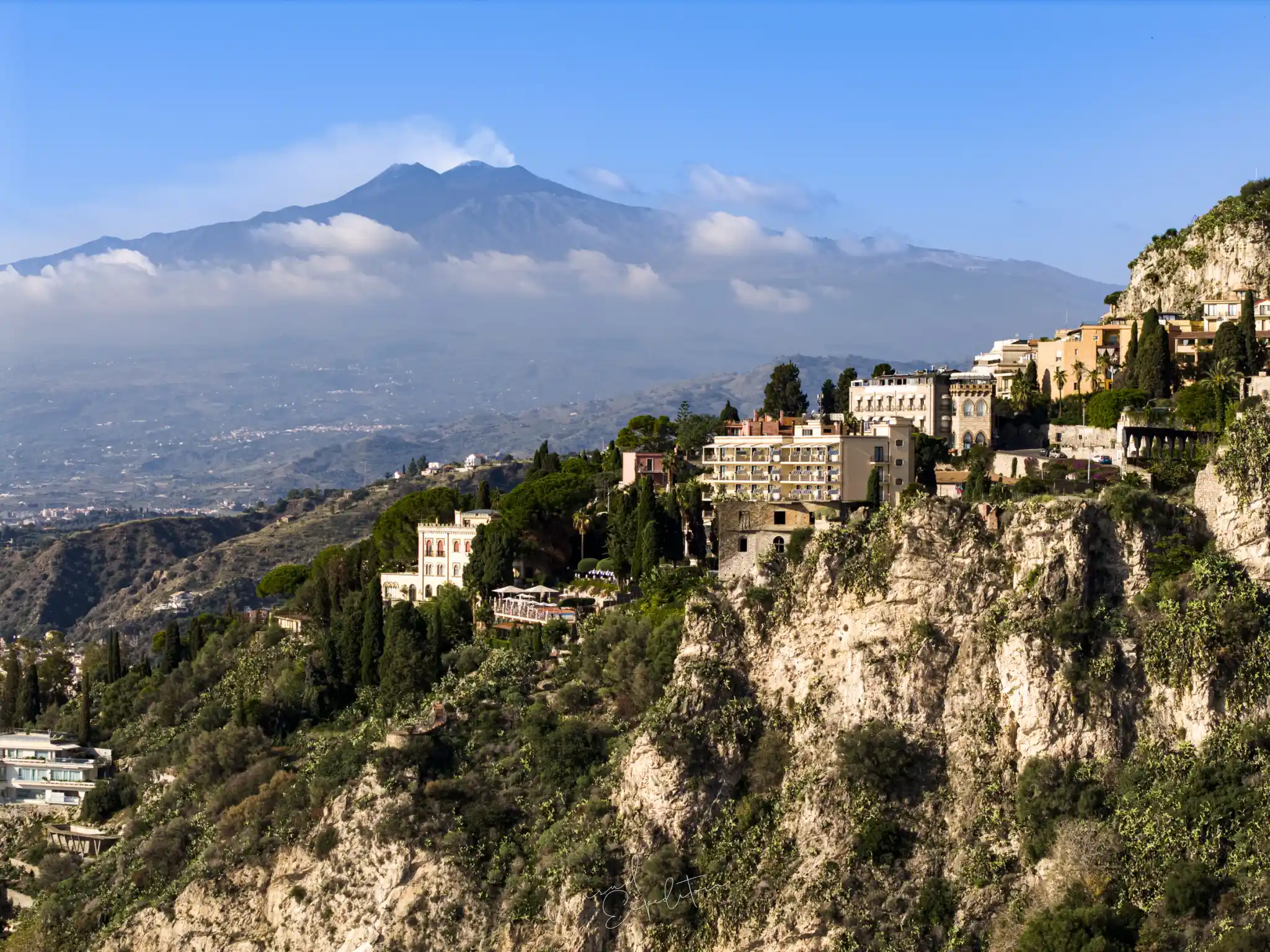
Taormina sits on a terrace high above the Ionian Sea, and almost every view from it has Etna in the background. The ancient theatre frames the volcano through its broken stage wall, the town squares open onto the sea, and at dusk the lights of Giardini Naxos curve around the bay below. Etna itself has been a UNESCO World Heritage site since 2013 and is closely watched by Italy's volcano institute, INGV; eruptions have closed Catania airport at times, so build some slack into any plan. The photos of Taormina, Sicily guide covers the theatre, the squares and the volcano.
Ortigia and the south-east corner
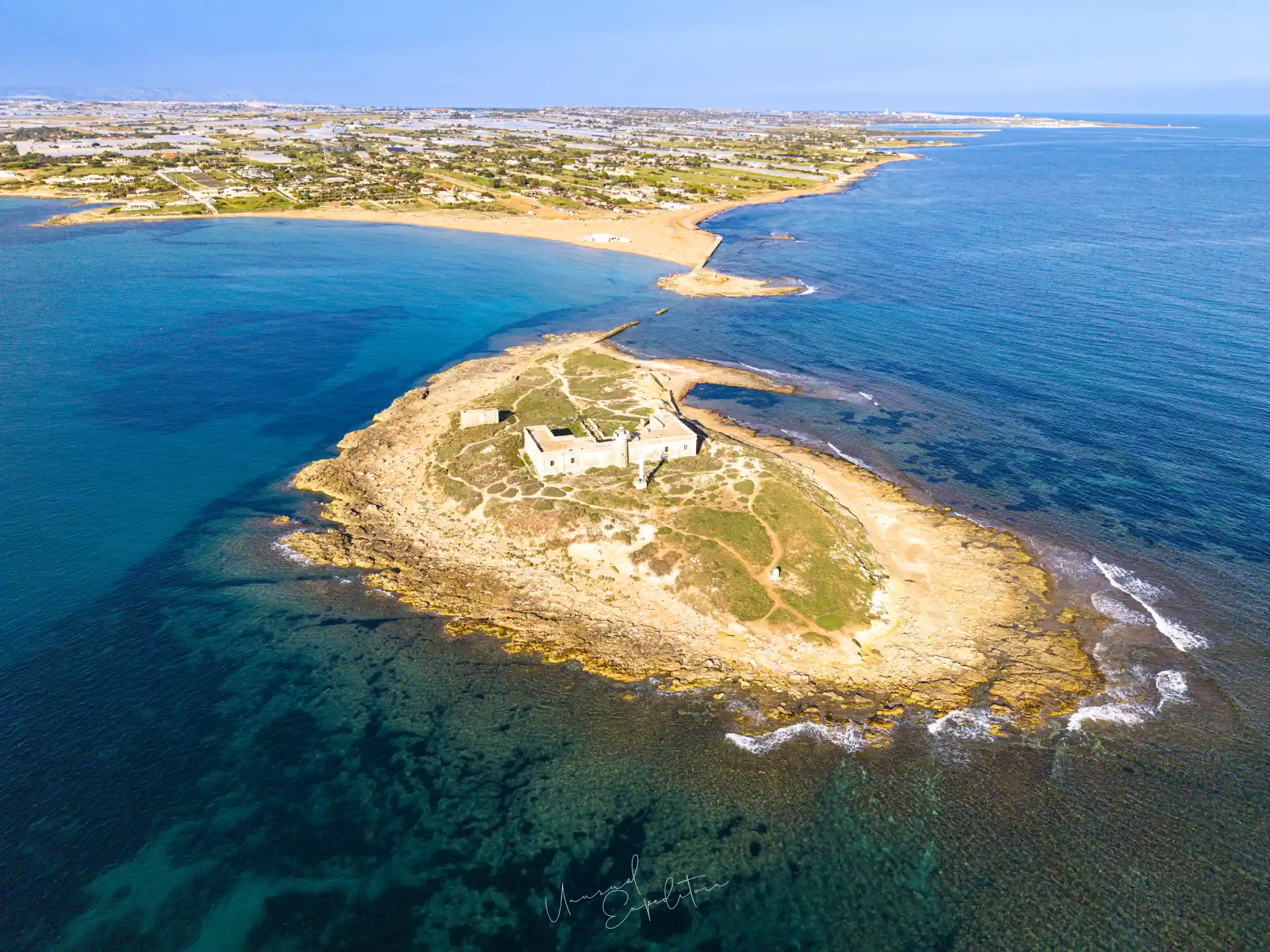
Ortigia is the island old town of Syracuse, joined to the mainland by bridges and ringed by sea walls. From the air it looks like a ship moored off the coast; at street level it is limestone lanes, the cathedral square and the Fountain of Arethusa, where papyrus grows in a freshwater pool just above the sea. UNESCO inscribed Syracuse with the rock tombs of Pantalica in 2005. Further south the coast flattens towards Capo Passero, where a small island with an old fort sits off the beach at the southern tip of Sicily, a good subject for a drone when the sea is calm.
Ragusa Ibla, Modica and the baroque towns
The earthquake of January 1693 flattened much of south-east Sicily, and the towns that were rebuilt afterwards are now on the UNESCO list as the Late Baroque Towns of the Val di Noto. Ragusa Ibla spills down its ridge in tiers of stone houses, with the dome of San Giorgio near the bottom, and at blue hour the road below draws light trails around the hill. Modica, its neighbour, is a town of staircases, church facades and a clock tower on the castle rock. The Ragusa Ibla and Modica guide explains where to stand for both.
Agrigento, Scala dei Turchi and the west
On the south coast, the Temple of Concordia at Agrigento is one of the best preserved Greek temples anywhere, and the Valley of the Temples is floodlit after sunset. A short way along the coast the white marl cliff of Scala dei Turchi drops into turquoise water; access to the rock itself has been closed and reopened several times, so check before you go. In the west, the Doric temple of Segesta stands alone on a green hill, and the salt pans between Trapani and Marsala turn pink and gold at sunset. Read Valley of the Temples, Agrigento for the Greek sites and Scala dei Turchi for the cliff.
Catania, the working city under Etna
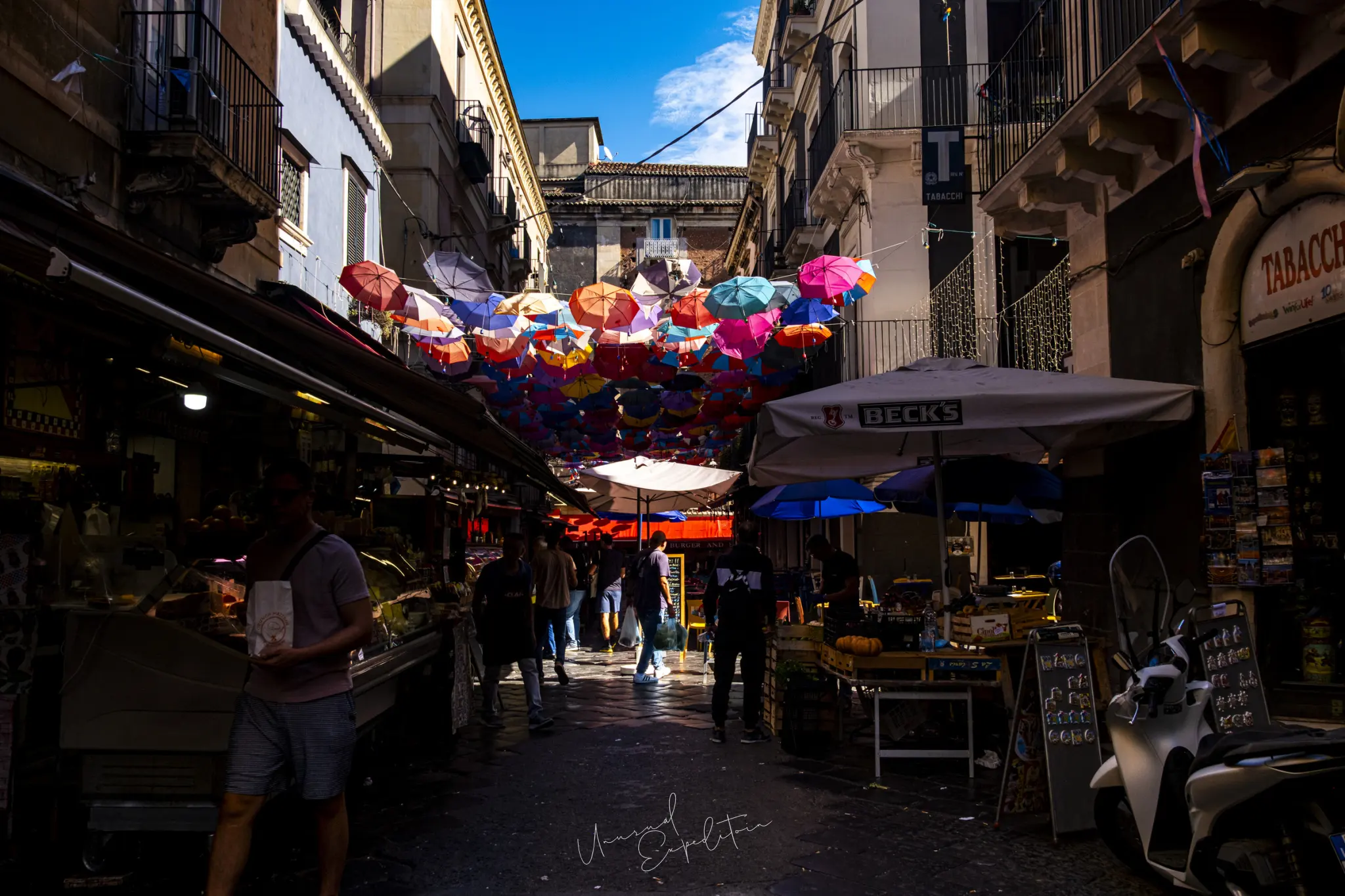
Catania is often treated as an airport, but it is one of the eight baroque towns on the UNESCO list, built largely of dark lava stone. Its market streets are some of the best street photography in Sicily: stallholders, fish on ice and, in one lane, a canopy of coloured umbrellas strung over the stalls. The opera house square and Via Etnea, with the cathedral at its end, are good in hard midday sun if you work with the shadows.
Sicily rewards the evening. Most days we kept the middle hours for markets and churches and saved our energy for the last hour of light, because the stone of these towns changes colour when the sun goes and the street lamps come on.
Joseph Mak, tour leader, Unusual Expedition
Is Sicily a good place to visit for photographers?
Sicily is a very good place to visit for photographers who like variety and evening light, and less suited to anyone who wants empty landscapes. The famous views are busy in summer, and some sites, Scala dei Turchi above all, have had their access limited to protect them. Spring and autumn are kinder: softer heat, lower crowds and sunsets that fall at a sensible hour. Our best time to visit Sicily guide compares the months, including Sicily in October.
Flying a drone in Sicily
Many of the views in these guides are drone views: Ortigia, Capo Passero, Cefalu and Scala dei Turchi all read better from above. Italy follows the European drone rules, and the aviation authority ENAC asks operators to register on the D-Flight portal and check the airspace map there before flying. Park and archaeological authorities can restrict flights over their sites, and the areas around Catania and Palermo airports are controlled airspace, so check each place on D-Flight and ask the site before you take off.
Explore Sicily in depth
- Best time to visit Sicily, and Sicily in October
- Photos of Cefalu, Sicily
- Photos of Palermo, Sicily
- Photos of Taormina, Sicily
- Ragusa Ibla and Modica
- Valley of the Temples, Agrigento, and Segesta
- Scala dei Turchi
Photograph Sicily with us
We have no scheduled Sicily departure at the moment, and we run the island as a private trip on request. Private tours suit individuals, couples, families and photographers who want their own pace; we arrange all the logistics to your needs, and the cost can be lower than a group tour because no tour leader travels with you. A photographer or photography coaching can be added at extra cost. Ask at least two months ahead if you can, although last-minute trips can be arranged. Current Italy departures and guides are on our Italy photography tours page.
Sicily photography tours
The next Sicily departure is announced on the Sicily photography tours page, with previous expeditions and all the planning guides.
Explore Sicily in depth
- Valley of the Temples, Agrigento, and the Temple of Segesta: A Photo GuideItaly
- Photos of Taormina, Sicily: The Greek Theatre, Etna and the Bay at DuskItaly
- Scala dei Turchi: How to See and Photograph the White Cliff of SicilyItaly
- Ragusa Ibla and Modica: Photographing Sicily's Late Baroque TownsItaly
- Photos of Palermo, Sicily: The Cathedral, Quattro Canti, Markets and Street FoodItaly
- Photos of Cefalu, Sicily: The Beach, the Rock and the Norman CathedralItaly
- Best Time to Visit Sicily: Seasons, Light and Sicily in OctoberItaly
Upcoming Photo Tours
- Egypt Photo Tour – EgyptEgypt 12 Dec 2026 To 20 Dec 2026
- Inner Mongolia Winter Owl Photo Tour – ChinaChina 01 Jan 2027 To 04 Jan 2027
- Inner Mongolia Winter Photo Tour – ChinaChina 05 Jan 2027 To 11 Jan 2027
- Mekong And Central Highland Vietnam Photo Tour - VietnamVietnam 16 Jan 2027 To 24 Jan 2027