
That Wanaka Tree: How to Photograph New Zealand's Most Famous Willow
That Wanaka Tree in Lake Wanaka: what it is, where to stand, sunrise and dusk, lenses, autumn poplars and how to respect it.
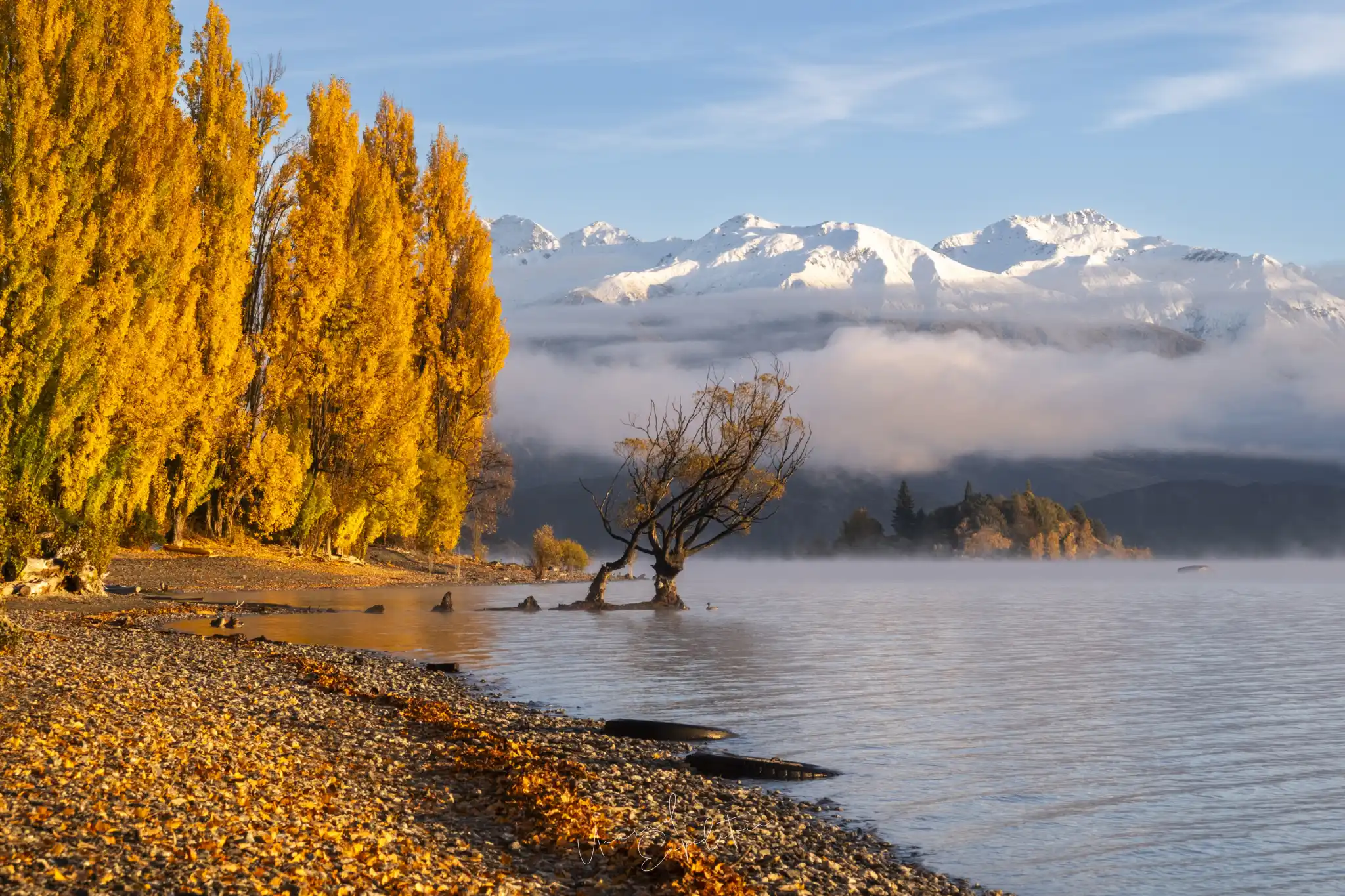
That Wanaka Tree is a lone crack willow growing in the shallow water of Roys Bay, on the edge of Lake Wanaka in New Zealand's South Island, and it is probably the most photographed tree in the country. It grew from an old fence post, stands a short walk from Wanaka's lakefront, and is best photographed at sunrise, when the lake is stillest, or at dusk as a silhouette. Photograph it from the shore: do not wade out, climb it or stand on its roots.
Wanaka is part of our Queenstown and Wanaka photography tour guide, which covers the Southern Lakes from Glenorchy to Arrowtown. Here is what we have learned photographing the tree in different light.
That Wanaka Tree, New Zealand: what it is
That Wanaka Tree is a crack willow, a fast-growing species with brittle wood, standing on its own in the water a few metres from the shore of Roys Bay. Local history holds that it sprouted from a willow fence post put in to keep stock out of the township, and the New Zealand Tree Register records it as planted around 1930; its exact age is reported differently by different sources. Its fame grew with social media and the hashtag that gave it its name, and the tree became one of the region's best known images. In 2020 vandals sawed branches off it, as the NZ Herald reported, and the damage drew anger across the country. It is still there, a little thinner, and it still draws photographers at every sunrise.
Lake Wanaka tree: where to stand
The tree stands off the beach at the western end of Wanaka's lakefront, at Roys Bay, and you can walk there along the lakeside path from the town. The usual view is from the shingle beach, looking out across the water with the tree in the middle distance and the mountains behind. Move along the beach to change the background: from one end the peaks of Mount Aspiring National Park line up behind the branches, from another the islands of the lake. A low position with the camera close to the water exaggerates the reflection on calm mornings. Leave space for others: at dawn there may be a line of tripods along the shore, and everyone gets the picture if nobody walks into the water.
Wanaka tree photos at sunrise
Sunrise is when Lake Wanaka is usually at its stillest, and the light behind you colours the sky and the mountains in soft pink while the tree stands dark in front. In autumn, when we photographed it, the tall poplars along the shore turn gold, and on cold mornings mist lifts off the lake around the base of the peaks. In winter there is often fresh snow on the mountains behind. Arrive in the dark, set up early and use a long exposure to smooth any ripples on the water.
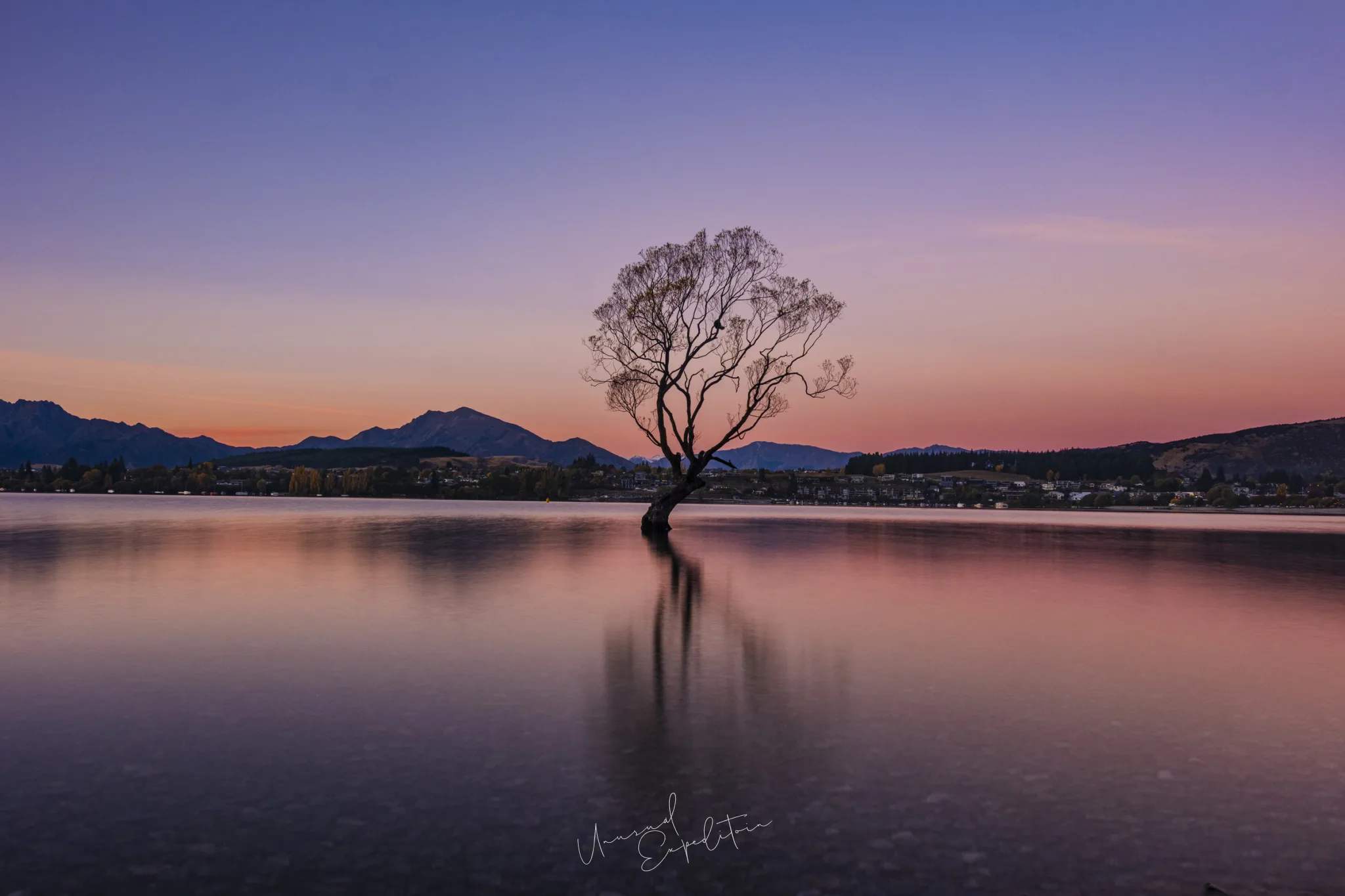
That Wanaka Tree at dusk
Dusk turns the tree into a silhouette against the afterglow, with the low hills across the lake dark and the water holding the colour of the sky. Fewer people come in the evening than at sunrise, especially in winter. Frame it simply: the tree, its reflection and a band of hills, with space around it. A 70-200mm from further back along the beach makes the hills larger behind the branches; a 24-70mm keeps more of the sky.
Lenses, settings and the light
| Light | What it gives | Lens | Settings |
|---|---|---|---|
| Before sunrise | Pink sky, still water, mountains in soft light | 24-70mm | Tripod, long exposure, low ISO |
| Early morning in autumn | Gold poplars, mist on the lake | 24-70mm | Expose for the bright mist |
| Dusk | Silhouette against the afterglow | 70-200mm | Tripod, bracket for the sky |
| Winter morning | Snow on the peaks behind | 70-200mm | Polariser off at low sun |
Whichever light you choose, the reflection only works on a calm day, so watch the wind as well as the sky.
Poplars and the Wanaka lakefront
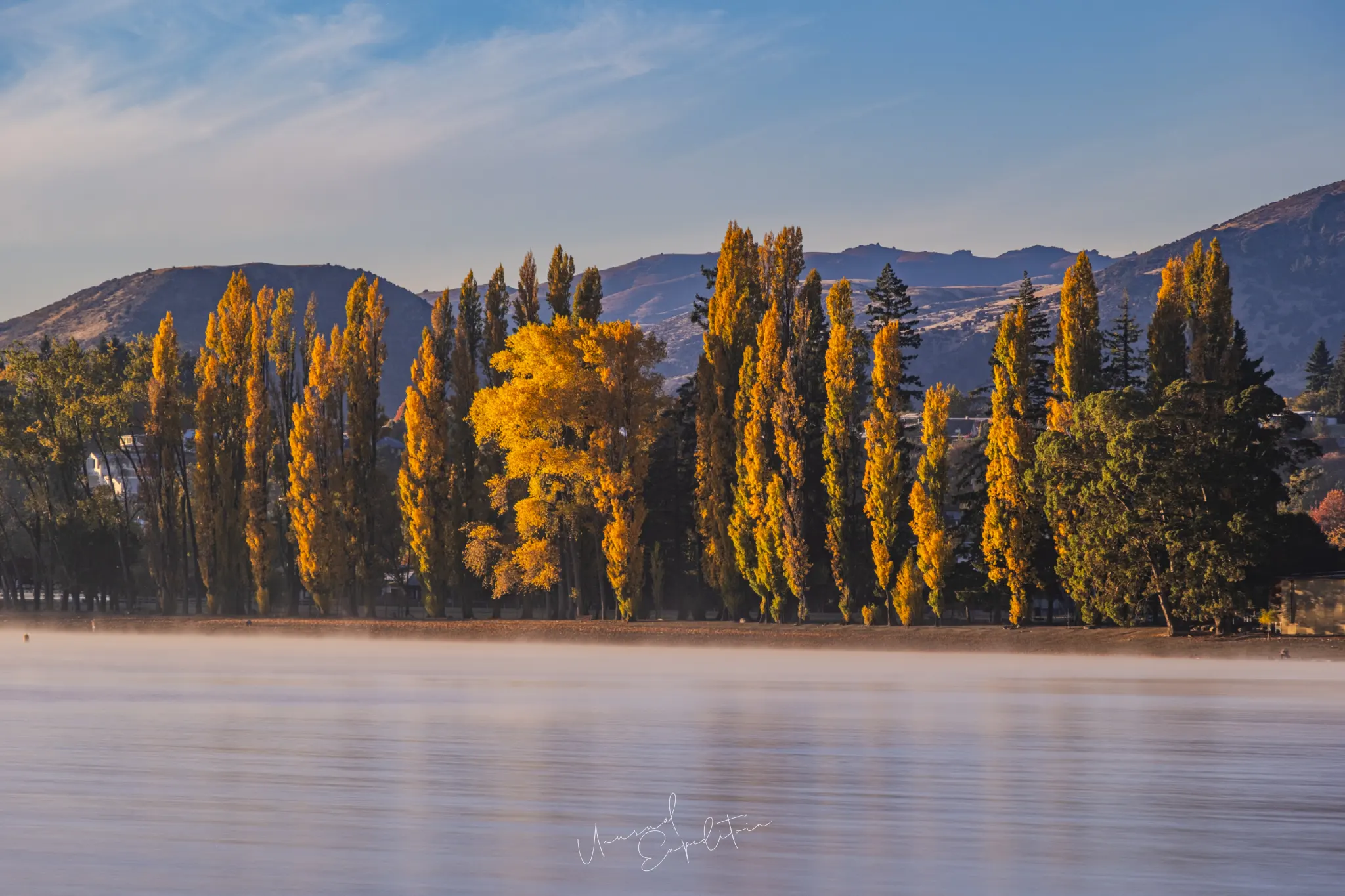
Do not leave once you have the tree. A little along the shore, rows of tall poplars stand at the water's edge, and in autumn they turn a deep gold that glows against the blue lake and the grey hills. On misty mornings the trees appear and disappear in the fog. They are a subject of their own and a good second picture when the tree is crowded.
Respect the tree
The willow is fragile. Its roots sit in cold water and it recovers slowly from damage, and visitors have broken branches by climbing it. Stay on the shore, do not wade out to touch it, do not stand on its roots and take your rubbish with you. Drones need the right permissions under the Civil Aviation Authority's rules, and the lakefront is busy, so we do not fly one here.
Getting to That Wanaka Tree
Wanaka lies over the Crown Range from Queenstown, or around through Cromwell when the pass is icy; in winter check the road report first, as the Crown Range is one of the highest sealed roads in the country. In Wanaka, the tree stands off the shore at the western end of the lakefront, within walking distance of the town centre along the lakeside path, and parking nearby fills quickly at sunrise. Lake Wanaka Tourism and the information centre in town can point you to it. Once there, the walk to the beach is flat and easy, which makes it a good subject for photographers who want a strong picture without a hike.
"Everyone has seen the tree before they arrive, so the challenge is to make your own picture of it. I wait for mist, or snow behind it, or a strange colour in the sky. And I keep my boots dry."
Joseph Mak, tour leader, Unusual Expedition
When to photograph That Wanaka Tree
Autumn and winter are the best seasons: gold poplars and mist in autumn, snow on the ranges and quieter mornings in winter. Summer brings long days but busy beaches and little snow behind. For the other evening and morning locations of the region, see Queenstown photography locations and the best time to visit Queenstown.
Photograph Wanaka with us
Our New Zealand South Island Winter Photography Tour 2027 photographs That Wanaka Tree in winter light, along with Queenstown, Glenorchy, Arrowtown, the Lindis Pass and Lake Tekapo. The current rate is on the New Zealand photography tours page, and private tours can be arranged in autumn.
Join the Queenstown and Wanaka photography tour
New Zealand South Island Winter Photography Tour 2027 departs 07 Aug 2027 To 16 Aug 2027, led by Joseph Mak. Small group, photography first. All Queenstown and Wanaka photography tours.
Explore Queenstown and Wanaka in depth
- Queenstown and Wanaka Photography Tour Guide: Lake Wakatipu, Glenorchy, Arrowtown and WanakaNew Zealand
- Queenstown Sunset: Where to Watch and Photograph ItNew Zealand
- Queenstown Photography Locations: Bob's Peak, Frankton Arm, Jack's Point and the WaterfrontNew Zealand
- Queenstown Autumn: Arrowtown Colour, the Shotover and the Gold ValleysNew Zealand
- Photos of Queenstown, New Zealand: The Town, the Lake and The RemarkablesNew Zealand
- Glenorchy, New Zealand: The Red Boatshed, the Jetty and Mist at the Head of the LakeNew Zealand
- Best Time to Visit Queenstown for Photography: Autumn Colour or Winter SnowNew Zealand
Upcoming Photo Tours
- Egypt Photo Tour – EgyptEgypt 12 Dec 2026 To 20 Dec 2026
- Inner Mongolia Winter Owl Photo Tour – ChinaChina 01 Jan 2027 To 04 Jan 2027
- Inner Mongolia Winter Photo Tour – ChinaChina 05 Jan 2027 To 11 Jan 2027
- Mekong And Central Highland Vietnam Photo Tour - VietnamVietnam 16 Jan 2027 To 24 Jan 2027