
Villages of Transylvania: Saxon Lanes, Shepherds and Smiths
Villages of Transylvania for photographers: Saxon streets and gates, shepherds, smiths, carts and how to photograph village life.
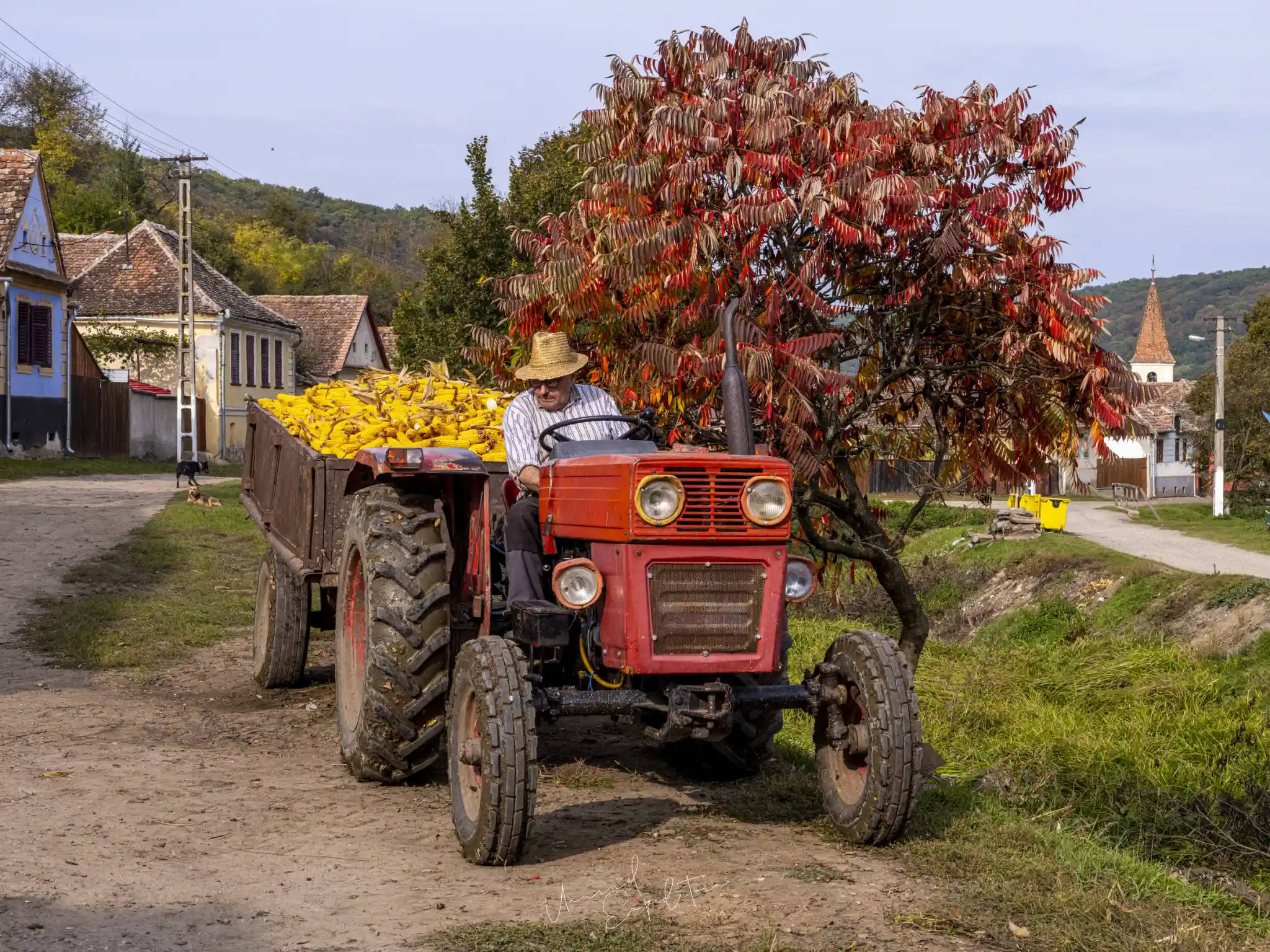
The villages of Transylvania that photographers love most are the old Saxon villages in the hills between Brasov, Sighisoara and Sibiu: one long street of coloured houses with tall gates, a fortified church at the top, geese and horse carts in the lane, and fields, orchards and sheep pastures around them. Walk one village slowly, early or late in the day, and photograph its people at work, a shepherd, a smith, a farmer on his tractor, with their permission.
This guide is part of our Transylvania photography tour guide. The churches at the heart of these villages are in fortified churches of Transylvania, and the season that suits them best in Transylvania autumn.
Villages of Transylvania: who built them
Transylvania has Romanian, Hungarian, Szekler, Roma and Saxon villages, each with its own look. The Saxon ones are the most distinctive. German-speaking settlers, known as the Transylvanian Saxons, arrived from the twelfth century and built compact villages along a single street, houses gable-end to the road with a big gate to the yard, and a fortified church on the high ground. Most Saxons left for Germany after 1990, and their houses are now home to Romanian and Roma families, some restored with help from heritage groups, others slowly falling down. That mix of old Saxon architecture and the life of the people who live there now is what you photograph.
Transylvania village: what to photograph
A Transylvania village gives you three kinds of picture. The street: a line of pastel house fronts in yellow, blue and green, gates, benches outside, and the church tower at the end. The work: farmers loading carts, shepherds bringing flocks off the hill, smiths and carpenters in their yards, beekeepers among painted hives. And the animals: geese on the grass verges, cows walking home in the evening, horses in harness. Morning and evening are best, for light and for activity, when people and animals are moving. A 24-70mm covers nearly everything; a 70-200mm lets you watch from a distance before you ask to come closer.
Shepherds and flocks
Sheep are everywhere in the hills of southern Transylvania, grazing the pastures above the villages with a shepherd and several big dogs. In autumn the flocks come down closer to the villages, and a shepherd with his crook and dogs against a golden hillside is one of the defining pictures of rural Romania. The dogs guard the sheep seriously: stay well back, let the shepherd see you and call them, and only then walk closer. Many shepherds are glad of the company and will stand for a portrait; a greeting and a few minutes of conversation, even without a shared language, are usually enough.
Smiths, carts and village crafts
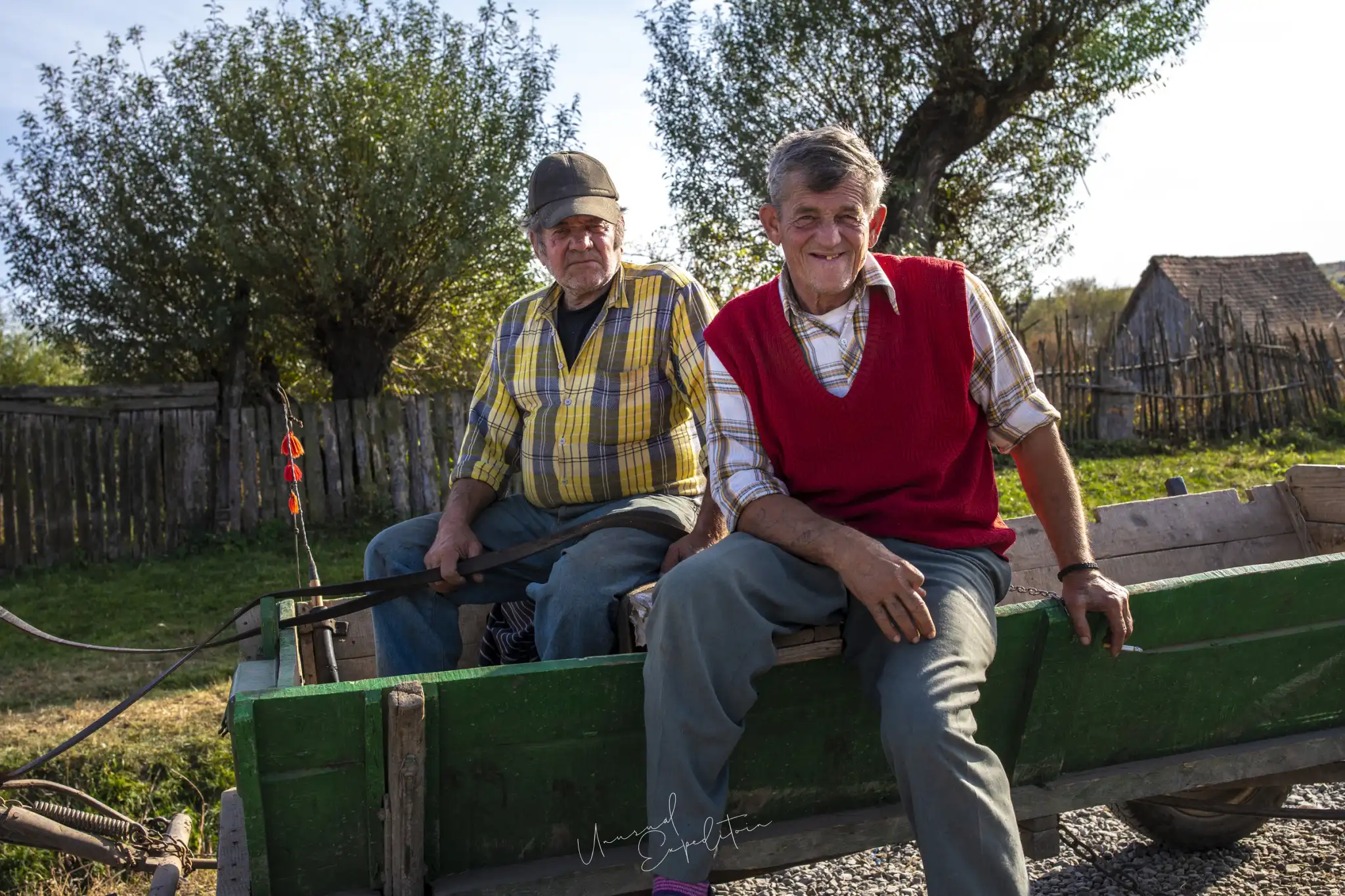
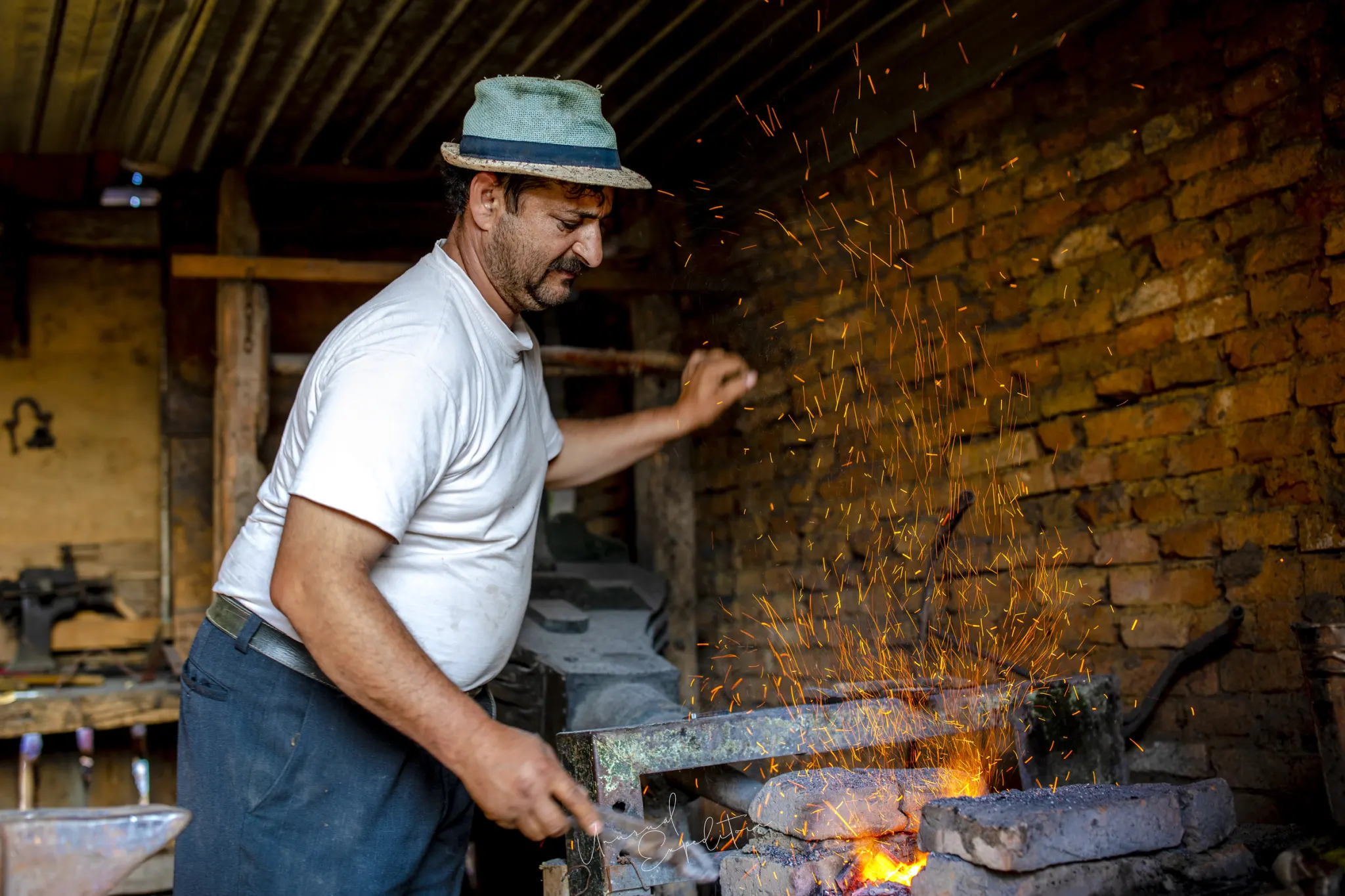
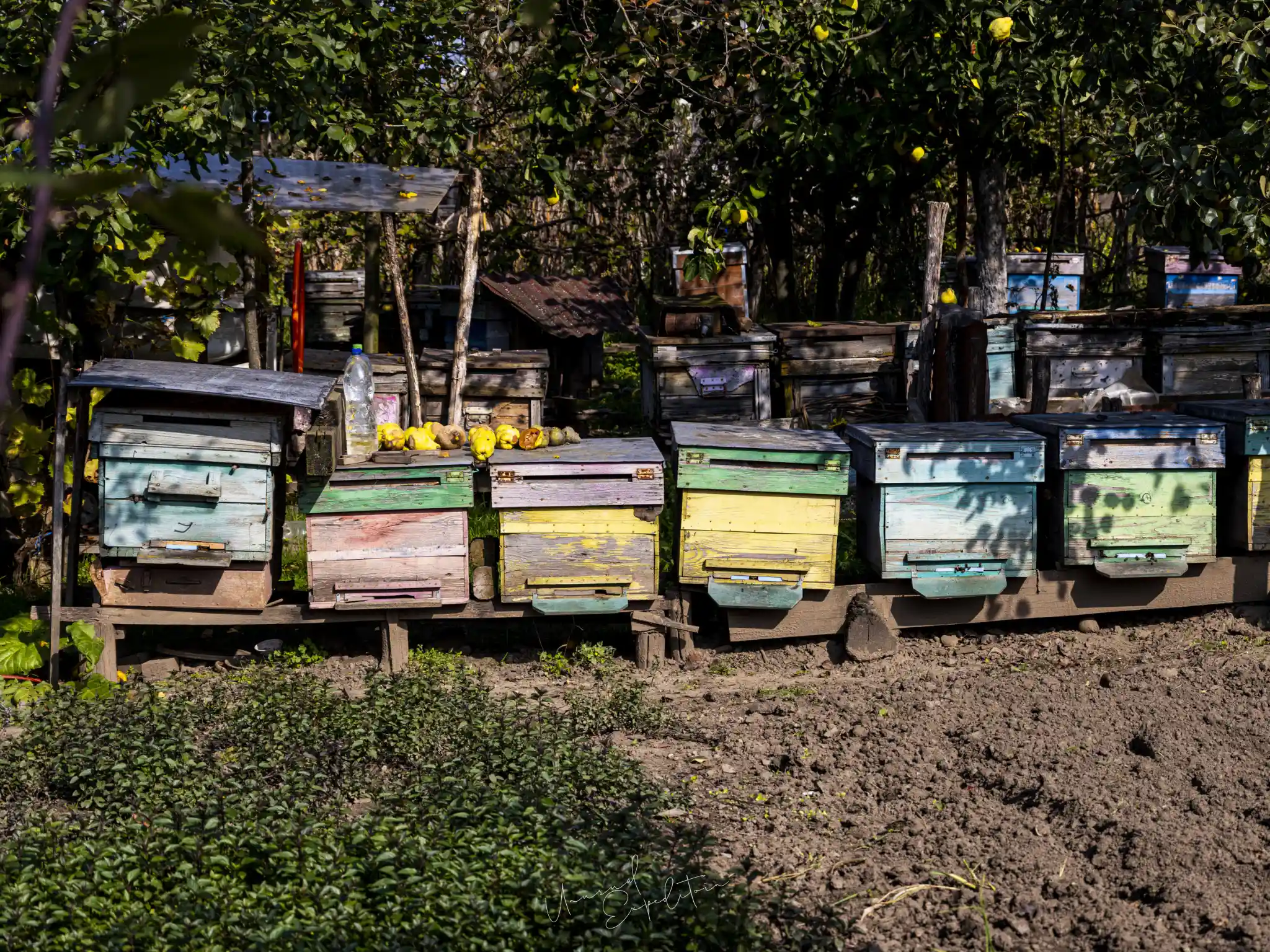
Horse carts still carry hay, firewood and people in many Saxon villages, and that keeps the village smith in work. A smithy is a dark shed with a forge and an anvil, and when the iron comes out of the fire the sparks light the whole scene. Ask before you step in, keep clear of the hammer, and expose for the glowing metal. Carpenters, wheelwrights and beekeepers are other subjects; colourful hive boxes stand in rows in orchards and yards, a reminder that honey is part of the village economy.
"In the Saxon villages I walk the street twice: once in the morning to say hello, and once in the evening when the cows and carts come home. The second walk is when the pictures happen, because people already know who you are."
Joseph Mak, tour leader, Unusual Expedition
Transylvania Saxons: the houses and gates
The Transylvanian Saxons left a recognisable architecture. Houses stand shoulder to shoulder along the street, each with its gable facing the road, painted in strong colours and often dated on the front. Between them, tall arched gates lead into long yards with barns at the back. Look for painted dates, carved inscriptions in German, old wooden doors and benches by the gate where neighbours sit in the evening. Photograph the street in raking morning or evening light, when the colours and the textures of the plaster come alive, and use a longer lens down the street to stack the houses together.
Village subjects and when to find them
| Subject | Where | When | Lens |
|---|---|---|---|
| Street of Saxon houses | Main village street | Morning or evening side light | 24-70mm, 70-200mm |
| Shepherds and flocks | Pastures above the village | Morning, autumn | 70-200mm |
| Cows and carts coming home | Village street | Evening | 24-70mm |
| Smiths and workshops | Yards and sheds | Daytime, with permission | 24-70mm, fast prime |
| Fortified church | Top of the village | Morning or dusk | 16-35mm, 70-200mm |
Stay in a village, rather than visiting from a town, if you want the evening and the morning.
Light and timing in the villages
The village day starts early. Farmers are out with carts and tractors soon after sunrise, the flocks move up to the pastures, and the light along the street is low and warm. Midday is quiet, a good time for interiors, workshops and a rest. In the evening the animals come home, people sit on the benches by their gates, and the church tower catches the last sun. Autumn stretches those good hours across the day; in summer, be out at both ends of it.
Respect in the villages
These are working villages and people's homes. Greet people, ask before portraits, and accept a no. Do not walk into yards without being invited, and close gates behind you on pastures. Leave children out of your pictures. Many Roma families live in the old Saxon houses today; photograph them with the same courtesy as anyone else, and never as a curiosity. Buying honey, cheese or a woven piece from the people you photograph is a good habit and much appreciated.
Photograph the villages of Transylvania with us
We run Transylvania as a private trip on request, with nights in a Saxon village for the morning and evening light. We arrange the logistics at your pace, for individuals, families, couples and photographers; with no tour leader travelling, a private trip can cost less than our group tours, and a photographer or photography coaching can be added at extra cost. Ask at least two months ahead. See the Romania photography tours page and our private tours.
Ask us about the villages of Transylvania
Transylvania photography tours
The next Transylvania departure is announced on the Transylvania photography tours page, with previous expeditions and all the planning guides.
Explore Transylvania in depth
- Transylvania Photography Tour Guide: What to See in TransylvaniaRomania
- Transylvania Autumn: When the Colour Comes and Where to Shoot ItRomania
- Sighisoara Photos: The Citadel, the Clock Tower and the Lower TownRomania
- Is Transylvania Worth Visiting? A Photographer's ViewRomania
- Fortified Churches of Transylvania: Biertan and ViscriRomania
- Brasov Old Town: Photo Spots and Things to See in BrasovRomania
- Bran Castle Photos: The Best Views, Night and AutumnRomania
Upcoming Photo Tours
- Egypt Photo Tour – EgyptEgypt 12 Dec 2026 To 20 Dec 2026
- Inner Mongolia Winter Owl Photo Tour – ChinaChina 01 Jan 2027 To 04 Jan 2027
- Inner Mongolia Winter Photo Tour – ChinaChina 05 Jan 2027 To 11 Jan 2027
- Mekong And Central Highland Vietnam Photo Tour - VietnamVietnam 16 Jan 2027 To 24 Jan 2027