
Zhangjiajie Photos: Photographing the Pillars of Wulingyuan in Cloud
Zhangjiajie photos: where the pillars look best, Yuanjiajie and Tianzi Mountain, weather, sunrise and sunset, and tips for the cloud.
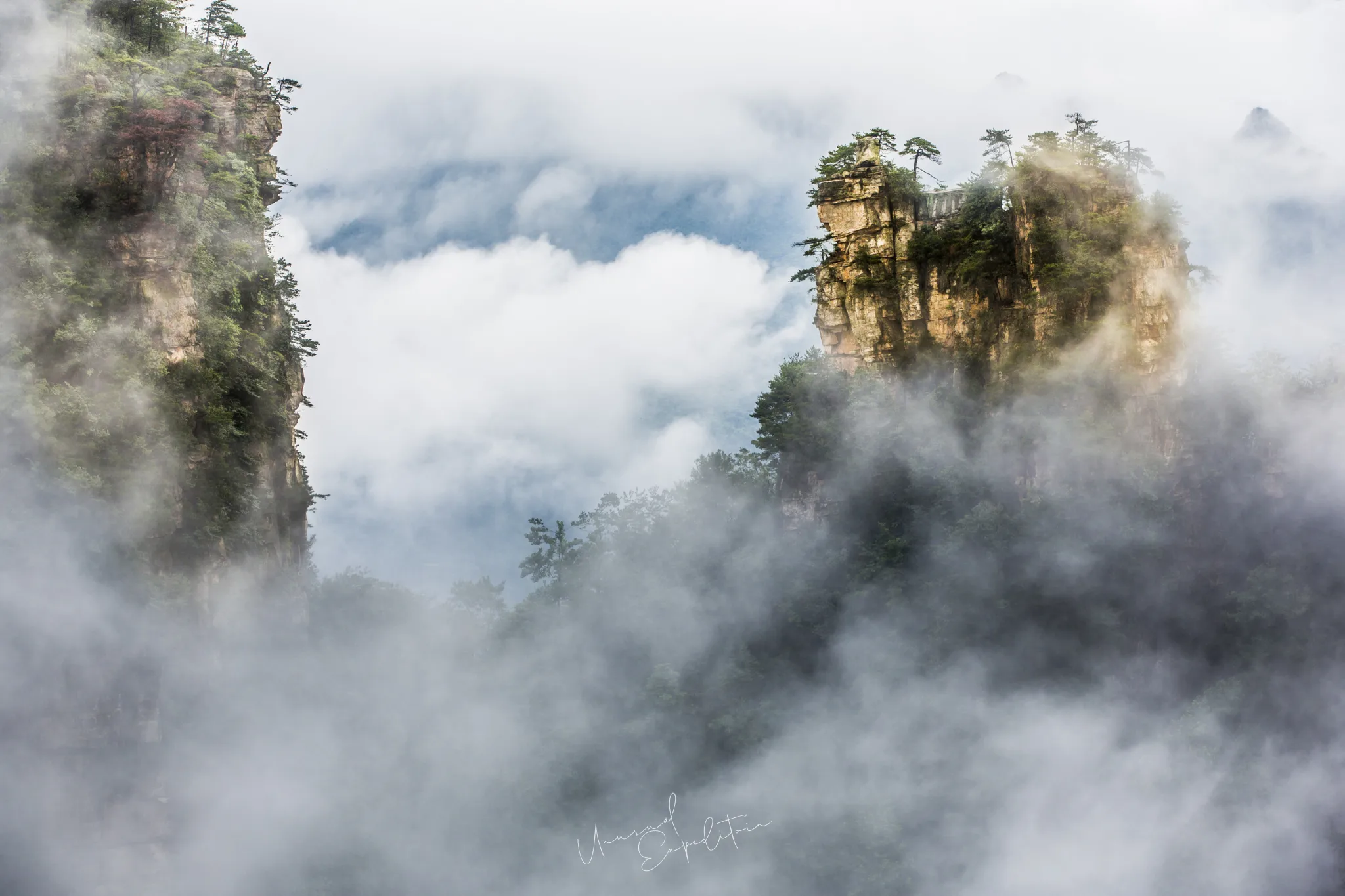
Zhangjiajie photos are pictures of stone pillars in cloud: thousands of narrow sandstone columns rising out of forest in north-west Hunan, with mist moving between them so that no two minutes look the same. The pillars belong to the Wulingyuan Scenic and Historic Interest Area, a UNESCO World Heritage site since 1992, and Zhangjiajie National Forest Park is its best-known part. Wet weather, which ruins most landscapes, is what makes this one.
Zhangjiajie is the second great landscape of Hunan. The first, the river mist of Xiaodongjiang in the south-east, is covered in our Xiaodongjiang photography tour guide, and we combined the two on an earlier private trip.
What makes Zhangjiajie photos different
UNESCO describes Wulingyuan as dominated by more than 3,000 narrow quartz sandstone pillars and peaks, many of them over 200 metres high, with ravines, streams and caves between them. In clear weather they read as a forest of rock. In cloud they become separate islands that appear and disappear, and that is the picture photographers travel for. The tallest single column, the Southern Sky Column, was renamed Avatar Hallelujah Mountain in 2010 after the film, and the comparison is fair: from the viewpoints the peaks really do seem to float.
Zhangjiajie National Forest Park: where the pictures are
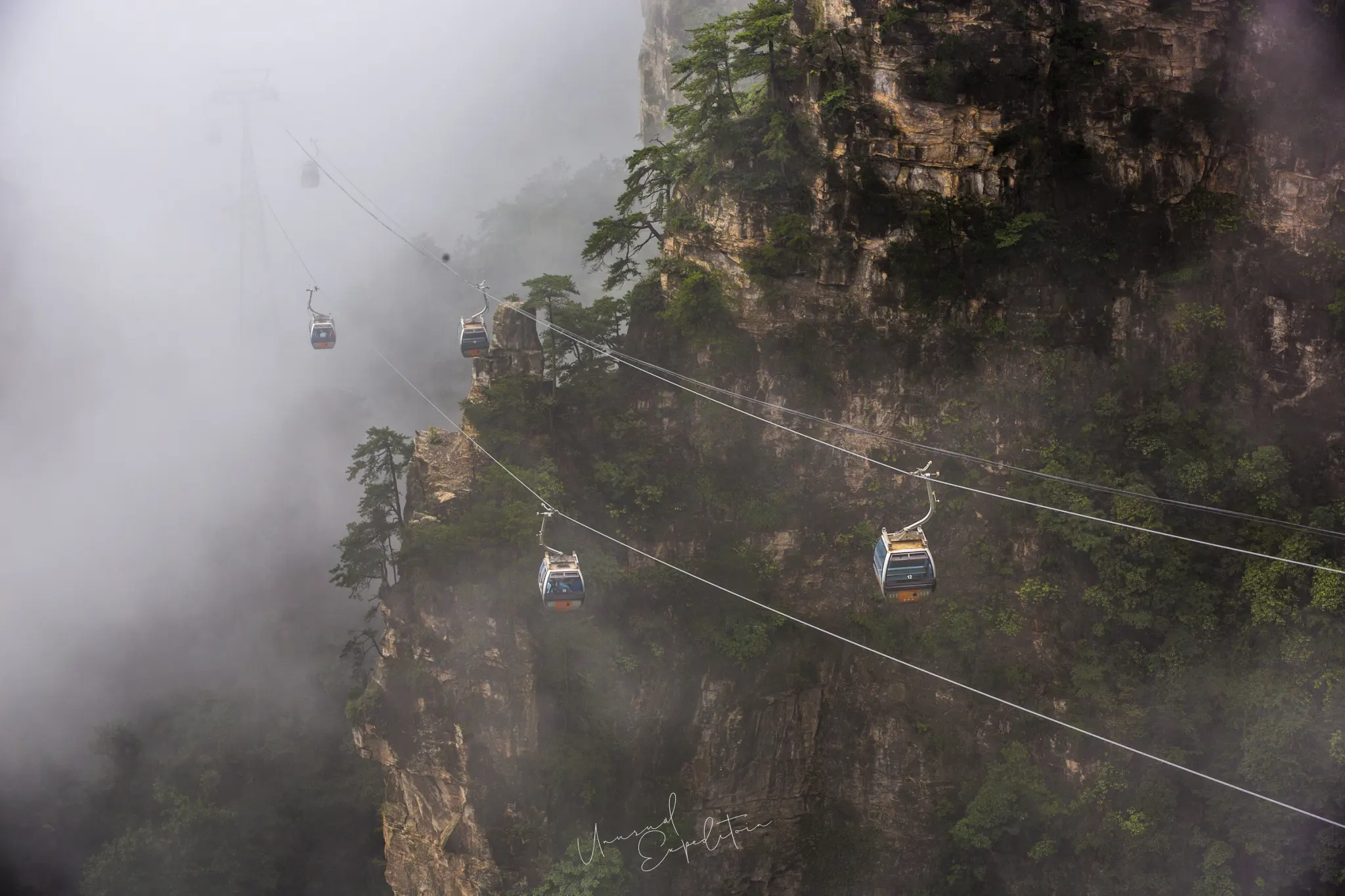
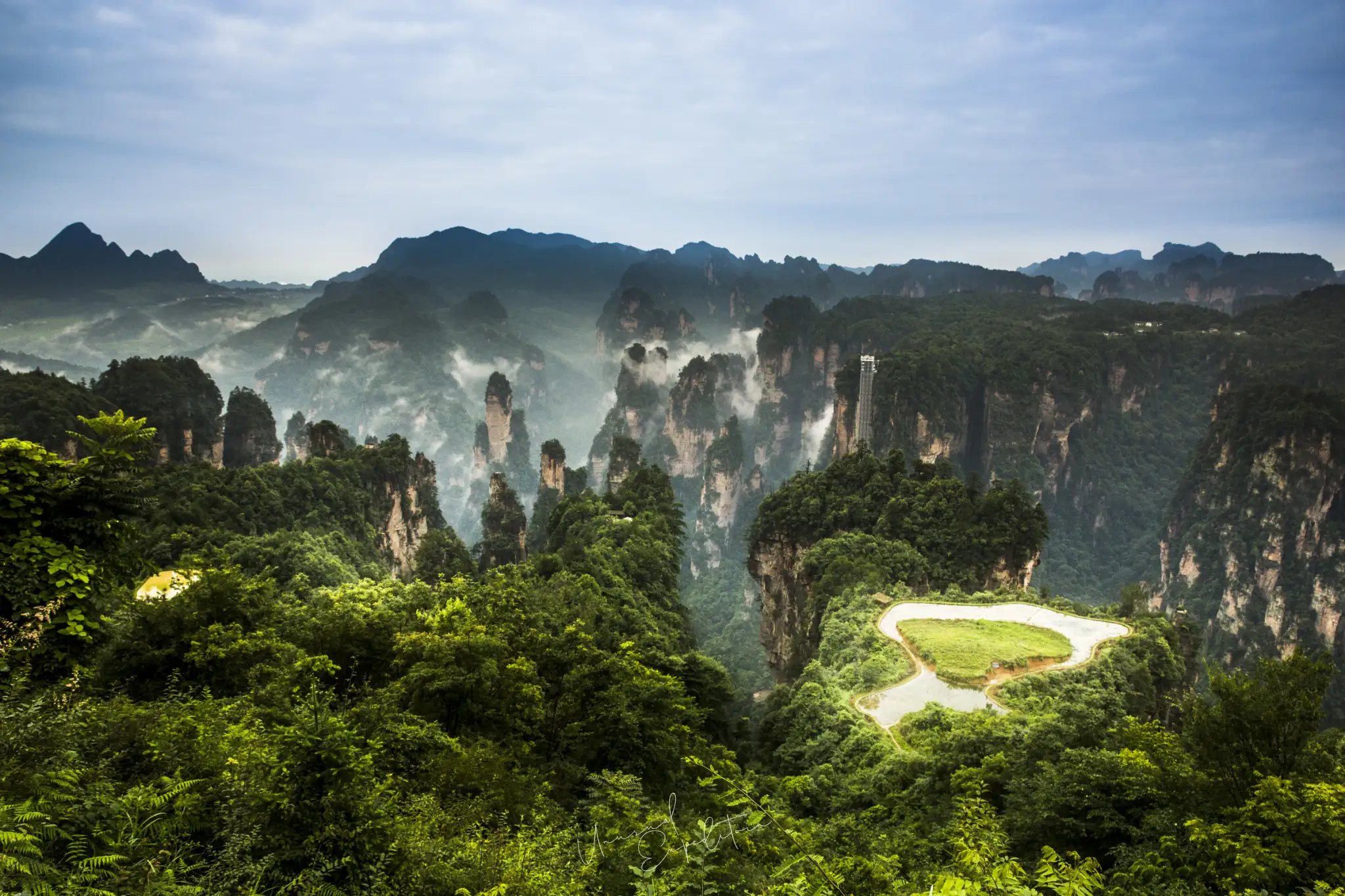
The park is large, and the views fall into a few areas. Yuanjiajie and Tianzi Mountain are the high plateaus with the classic look-out points over the pillars. Golden Whip Stream runs along the valley floor, where you look up at the columns through the trees. The Bailong Elevator and the cable cars lift visitors between the valley and the rim, and they are part of the picture as well as the way up. Tianmen Mountain, with its cableway and the arch through the cliff, is a separate site in Zhangjiajie city, outside the national park.
| Area | Best for | Lens |
|---|---|---|
| Yuanjiajie | Pillars rising from cloud, the Avatar view | 24-70mm and 70-200mm |
| Tianzi Mountain | Wide panoramas of the peak forest, sunrise and sunset | 16-35mm and 24-70mm |
| Golden Whip Stream | Looking up at the columns, forest and water | 16-35mm |
| Cable cars and lifts | A sense of scale, cabins in mist | 70-200mm |
The plateau viewpoints give the famous frames; the valley gives the scale you cannot feel from above.
Best weather for Zhangjiajie photography
The best days are the ones just after rain, when cloud still sits in the valleys and slowly lifts between the pillars. Full sun flattens the scene, and thick cloud hides everything; what you want is the in-between, which can change minute by minute, so stay at a viewpoint rather than rushing to tick off the next. Summer brings green forest, heat, humidity and frequent cloud, along with the biggest crowds. Autumn colours the forest and often has clearer air. Winter can bring snow on the pillars, which is rare and beautiful, with fewer people. Spring is misty and wet.
Zhangjiajie sunrise and sunset
A clear evening with broken cloud gives the pillars as dark shapes against a coloured sky, and a sunrise above a sea of cloud is the picture everyone hopes for. Both depend on luck with the weather. Check the forecast the night before, be at the viewpoint early, and take a tripod for the low light. The park has opening hours and the last ways down by lift or cable car close in the evening, so check them on the day, or stay near the rim if you want the late light.
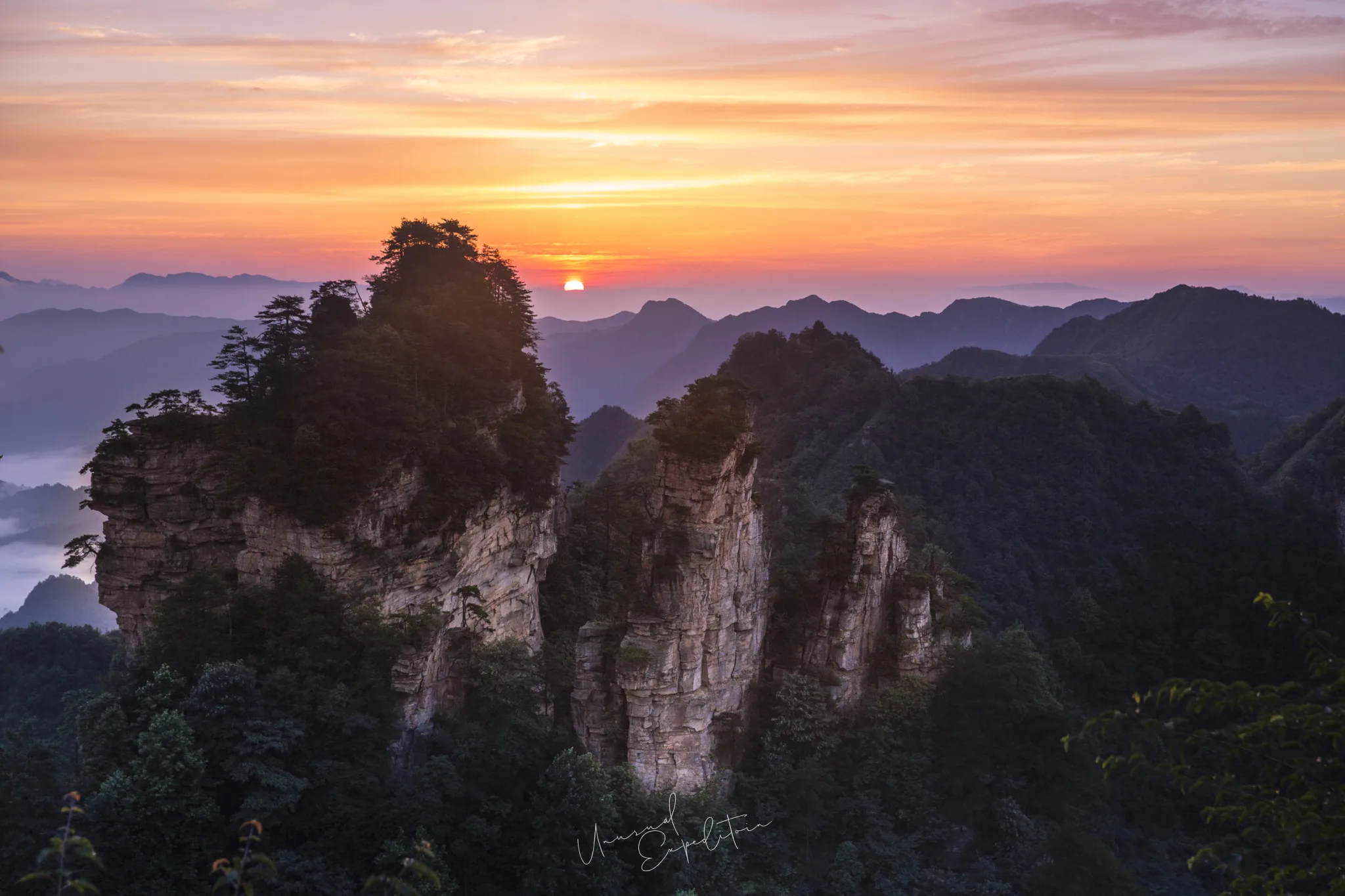
In Zhangjiajie you wait for the cloud, not the sun. We sat at one viewpoint for an hour while the peaks came and went, and every few minutes it was a different picture.
Joseph Mak, tour leader, Unusual Expedition
Tips for Zhangjiajie photos
- Bring a long lens. The 70-200mm isolates single pillars in cloud, which is often stronger than the wide view.
- Expose for the cloud. Bright mist fools the meter into underexposing; add some exposure and check the histogram.
- Look for layers. Three or four pillars at different distances, each paler in the mist, give the depth the scene needs.
- Protect the camera. Rain and drizzle are normal; carry a rain cover and a cloth.
- Expect people. The main viewpoints are crowded at peak times. Patience and a long lens let you crop them out.
How to get to Zhangjiajie
Zhangjiajie has its own airport and a high-speed railway station, and most visitors stay in Wulingyuan town by the park entrances or in Zhangjiajie city. It is at the opposite end of Hunan from Xiaodongjiang, so combining the two needs a longer trip. Singapore passport holders can currently enter China visa-free for up to 30 days; the details are in our Xiaodongjiang photography FAQ. Tickets are sold under your real name, so carry your passport, and a park ticket is usually valid for more than one day; check the current terms on the official park information before you go.
Zhangjiajie or Xiaodongjiang?
They are different kinds of photography. Xiaodongjiang is a set piece: a small river, a known scene, boatmen and mist, all in the first hour of light. Zhangjiajie is a mountain landscape on a huge scale, where you hike, ride lifts and wait for weather. If you want reliable, crafted pictures in a short trip, go to Xiaodongjiang first; see Xiaodongjiang photos and the best time for the mist. If you want the grand view and have more days, add Zhangjiajie.
Is Zhangjiajie worth it for photographers?
Yes, with time and the right expectations. The landscape is unlike anywhere else, and in moving cloud it is one of the great mountain scenes in Asia. But it is a busy national park with set paths, lifts and queues, and the weather decides your pictures. Give it at least two full days so that one good spell of cloud and light falls inside your visit, and treat the crowds as part of the place rather than a reason to stay away.
Photograph Hunan with us
We run Xiao Dong Jiang as a scheduled trip and can build Zhangjiajie in as a private extension. See our current departures on the China photography tours page.
Join the Xiao Dong Jiang photography tour
Inner Mongolia Winter Owl Photo Tour – China departs 01 Jan 2027 To 04 Jan 2027, led by Joseph Mak. Small group, photography first. All Xiao Dong Jiang photography tours.
Explore Xiao Dong Jiang in depth
- Xiaodongjiang Photography Tour Guide: Mist, Fishermen and Dongjiang LakeChina
- Xiaodongjiang Photography FAQ: Getting There, Crowds and KitChina
- Best Time for Xiaodongjiang Mist: Season, Weather and LightChina
- Xiaodongjiang Photos: Where to Stand for the Mist and the Net CastersChina
Upcoming Photo Tours
- Egypt Photo Tour – EgyptEgypt 12 Dec 2026 To 20 Dec 2026
- Inner Mongolia Winter Owl Photo Tour – ChinaChina 01 Jan 2027 To 04 Jan 2027
- Inner Mongolia Winter Photo Tour – ChinaChina 05 Jan 2027 To 11 Jan 2027
- Mekong And Central Highland Vietnam Photo Tour - VietnamVietnam 16 Jan 2027 To 24 Jan 2027