
African Penguin Breeding Season: What You Can Photograph and When
African penguin breeding season at Boulders Beach: courtship, nesting, chicks and moult, and how to photograph each stage.
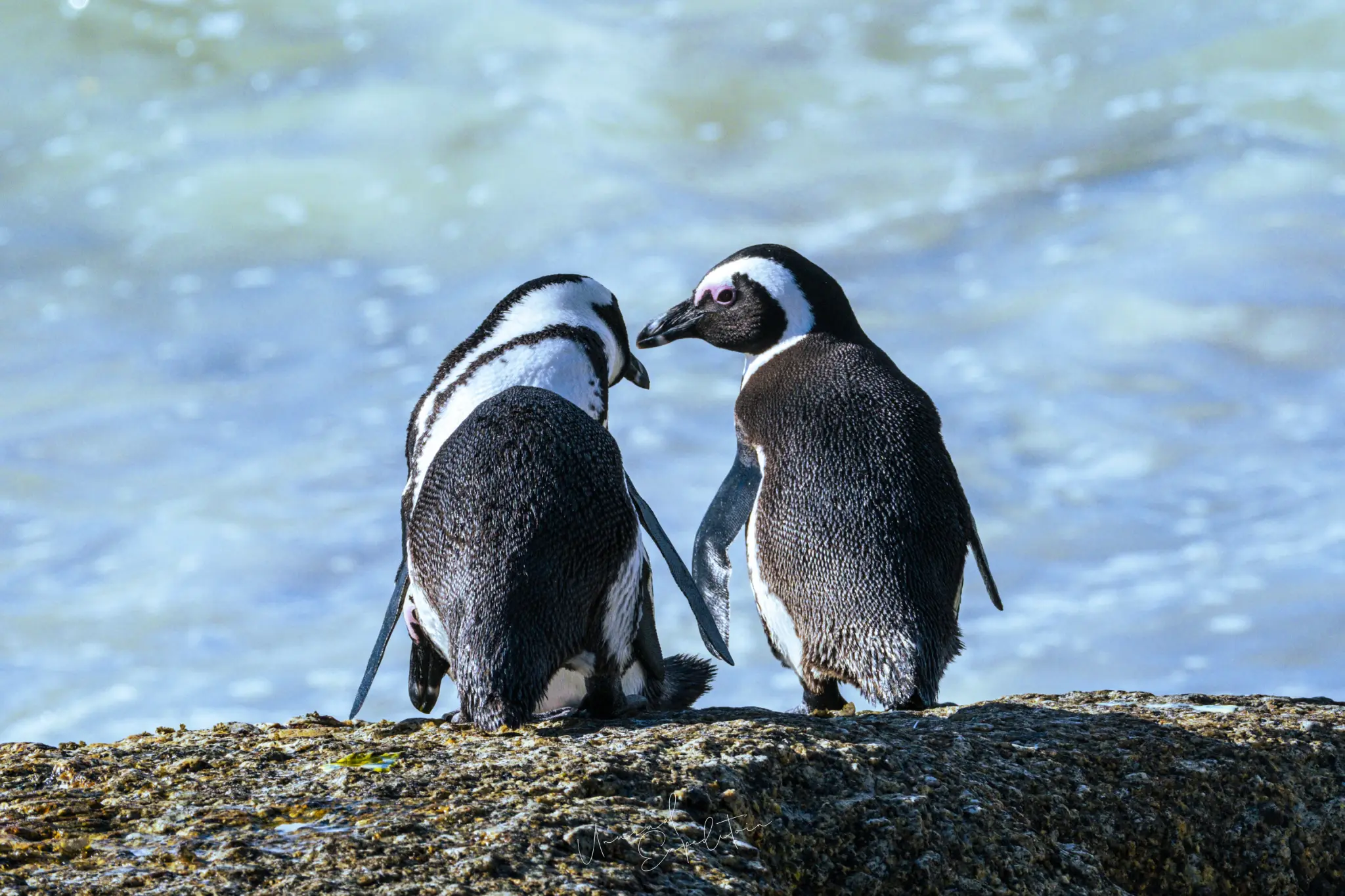
The African penguin breeding season in South Africa usually peaks from about March to May, according to BirdLife South Africa and other conservation sources, though pairs can nest outside that window, so the colony at Boulders Beach has activity to photograph for much of the year. In the weeks around the peak you can expect courting pairs, nest building under rocks and bushes, and later the first chicks. Each stage, and how to photograph it without disturbing the birds, is set out below.
It belongs to our Boulders Beach penguins guide, which is part of the Cape Town photography tour guide and the South Africa photography tour guide. The young birds have their own piece: African penguin chicks at Boulders Beach.
When is the African penguin breeding season?
There is no single start date. Sources describe nesting in South Africa as usually peaking from about March to May, with pairs breeding at other times as well, and the colony at Boulders can look different from one visit to the next. If you can choose, plan around the peak and the weeks after it, but treat it as a likelihood and not a promise. SANParks, which manages Boulders as part of Table Mountain National Park, and the seabird charity SANCCOB are the places to check before you travel.
What does courtship look like?
Pairs bow, call, preen each other and stand close together on the rocks, and these quiet moments make the strongest pictures of the season. Look for two birds facing each other with their bills almost touching, or one preening the other's neck. Use a 100-400mm lens from the boardwalk, wait for the pair to settle, and shoot at eye level where the walkway allows. A short burst catches the exact moment the bills meet.
Nesting, chicks and the pairs in the water
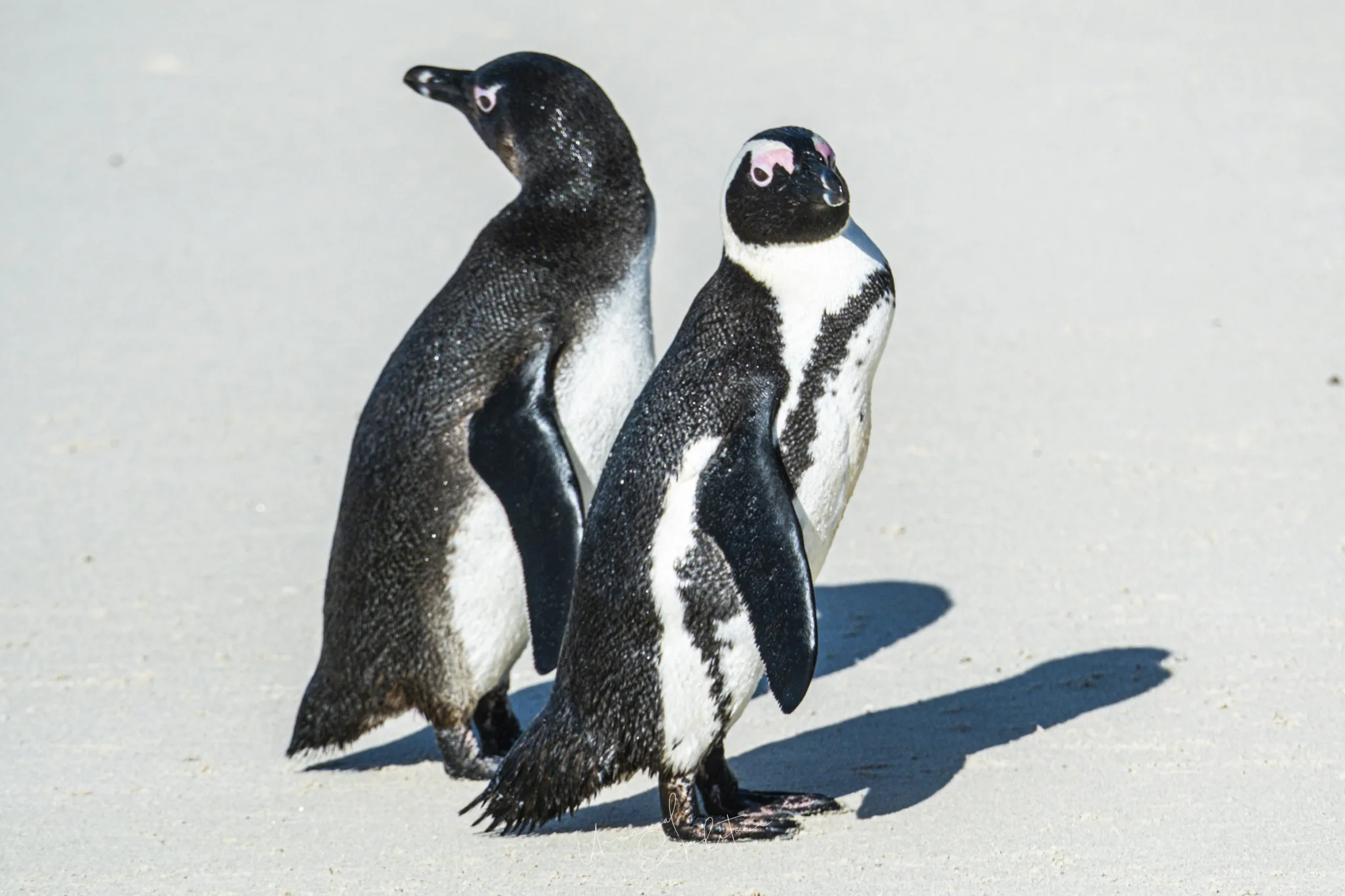
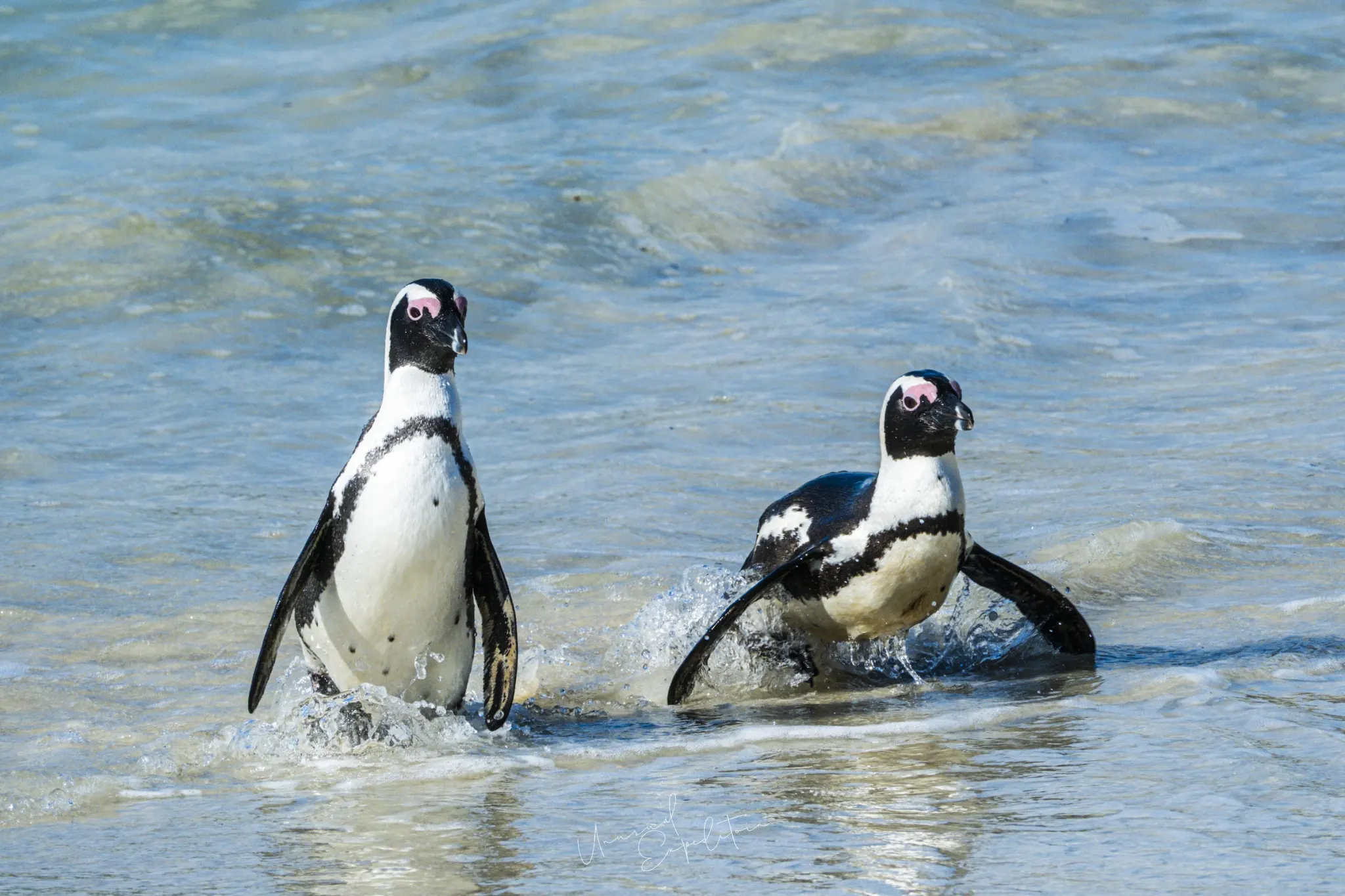
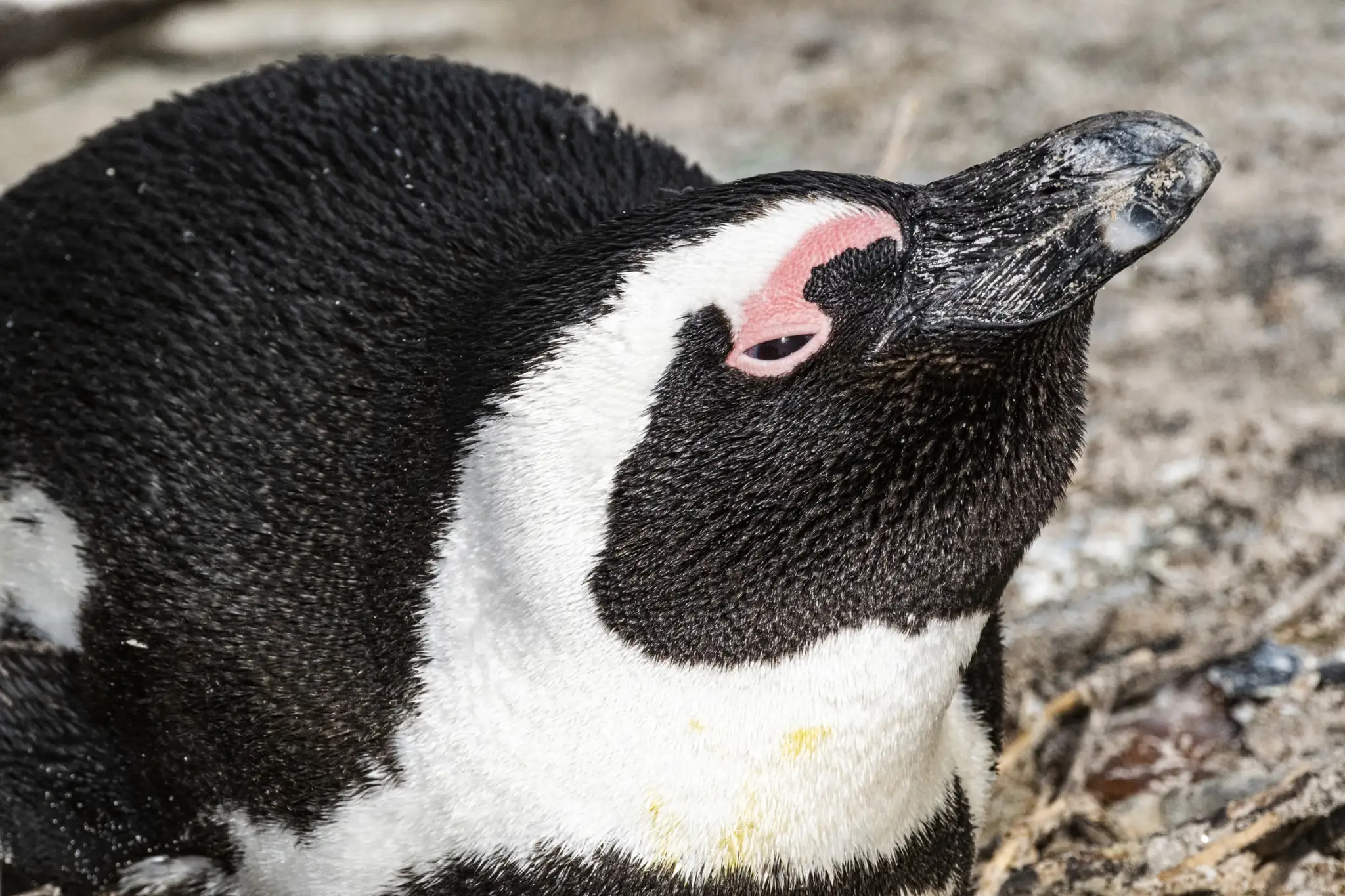
Nests are hollows under rocks, bushes and fallen branches, so you will see a bird apparently sitting under cover for hours: it is incubating or guarding. Do not step off the boardwalk to see more. Away from the nests, pairs walk into the sea together, and a frame of two birds side by side in the shallows tells the same story from the outside. For the young, see the chicks guide above, where the restraint rules are set out.
What is the moult, and can you photograph it?
After breeding, adult African penguins come ashore to moult for about three weeks and cannot feed at sea during that time, because the new feathers are not yet waterproof, according to the conservation summaries from BirdLife South Africa. Moulting birds look scruffy, with patches of old feather standing out, and they stand still and hungry. They are a legitimate subject, and often a moving one, but they are stressed, so keep your distance and do not use flash. The sight is a reminder that the colony's year has hard parts as well as pretty ones.
Breeding stages at a glance
| Stage | What you see | Photograph it with |
|---|---|---|
| Courtship | Bowing, calling, mutual preening | 100-400mm, eye level |
| Nesting | Birds under rocks and bushes | 100-400mm, from the boardwalk only |
| Chicks | Fluffy brown and grey down | Soft light, no flash |
| Moult | Scruffy adults standing still | Long lens, keep your distance |
Do not time a trip to a single stage: Boulders usually has more than one going on.
Is the African penguin endangered?
Yes. The IUCN moved it from Endangered to Critically Endangered in October 2024, according to BirdLife South Africa's press release, and the breeding population has fallen sharply over decades; published estimates differ, so we quote no figure. That is why access at Boulders is controlled and why it matters how you behave. Follow every sign, keep to the boardwalks, and treat the colony as a place the birds live, not a stage set. Our South Africa photography trip FAQ covers the rest of the planning questions.
How should you behave at the colony?
Treat the boardwalk as the edge of the birds' home. Keep your voice low, keep your lens at or above the rail, never lean over a fence and never use flash, which startles birds that are already stressed. If a bird is on the path, wait for it to move; do not step round it onto the sand. If you see an injured penguin, or one that is not moving, tell a SANParks ranger and let the experts decide. These habits cost you nothing, and they decide whether the birds stay relaxed enough for the quiet behaviour pictures this article describes.
Which month should you pick for photography?
If you can only travel in one window, choose by subject. Aim for the peak months, usually about March to May, for courtship and nests. Aim for the months just after them for chicks. Moulting adults follow breeding, according to the conservation summaries, so late in the cycle you will find scruffy, still birds. Because the cycle is not fixed, call SANParks or SANCCOB shortly before you go. Plan for at least one early morning on the boardwalk, when the light is soft and the crowd is thin.
Our photographs of the African penguins
The photographs in this guide are our own, taken at Boulders on our trip to the Cape; we hold the rights to them, and the notes come from knowing the place first hand.
I like the quiet pictures best: two birds, one rock, no drama. You get them by staying put and letting the colony carry on around you.
Joseph Mak, tour leader, Unusual Expedition
Plan a Cape penguin trip with us
There is no scheduled departure at the moment. We run South Africa as a private trip on request, at your own pace, with the logistics arranged around you, and it can cost less than a group tour because no tour leader travels. A photographer or coach can be added at extra cost. Ask at least two months ahead; last-minute requests can often be arranged. See private tours and the South Africa photography tours page.
Ask us about the Cape penguins
Cape Town photography tours
The next Cape Town departure is announced on the Cape Town photography tours page, with previous expeditions and all the planning guides.
Explore Cape Town in depth
- Cape Town Photography Tours: Waterfront, Bo-Kaap, Camps Bay and PenguinsSouth Africa
- Boulders Beach Penguins: Where to Stand, Light and LensesSouth Africa
- African Penguin Chicks at Boulders Beach: How to Photograph ThemSouth Africa
Upcoming Photo Tours
- Egypt Photo Tour – EgyptEgypt 12 Dec 2026 To 20 Dec 2026
- Inner Mongolia Winter Owl Photo Tour – ChinaChina 01 Jan 2027 To 04 Jan 2027
- Inner Mongolia Winter Photo Tour – ChinaChina 05 Jan 2027 To 11 Jan 2027
- Mekong And Central Highland Vietnam Photo Tour - VietnamVietnam 16 Jan 2027 To 24 Jan 2027