
African Penguin Chicks at Boulders Beach: How to Photograph Them
African penguin chicks at Boulders Beach: what they look like, when to see them and how to photograph them without disturbing them.
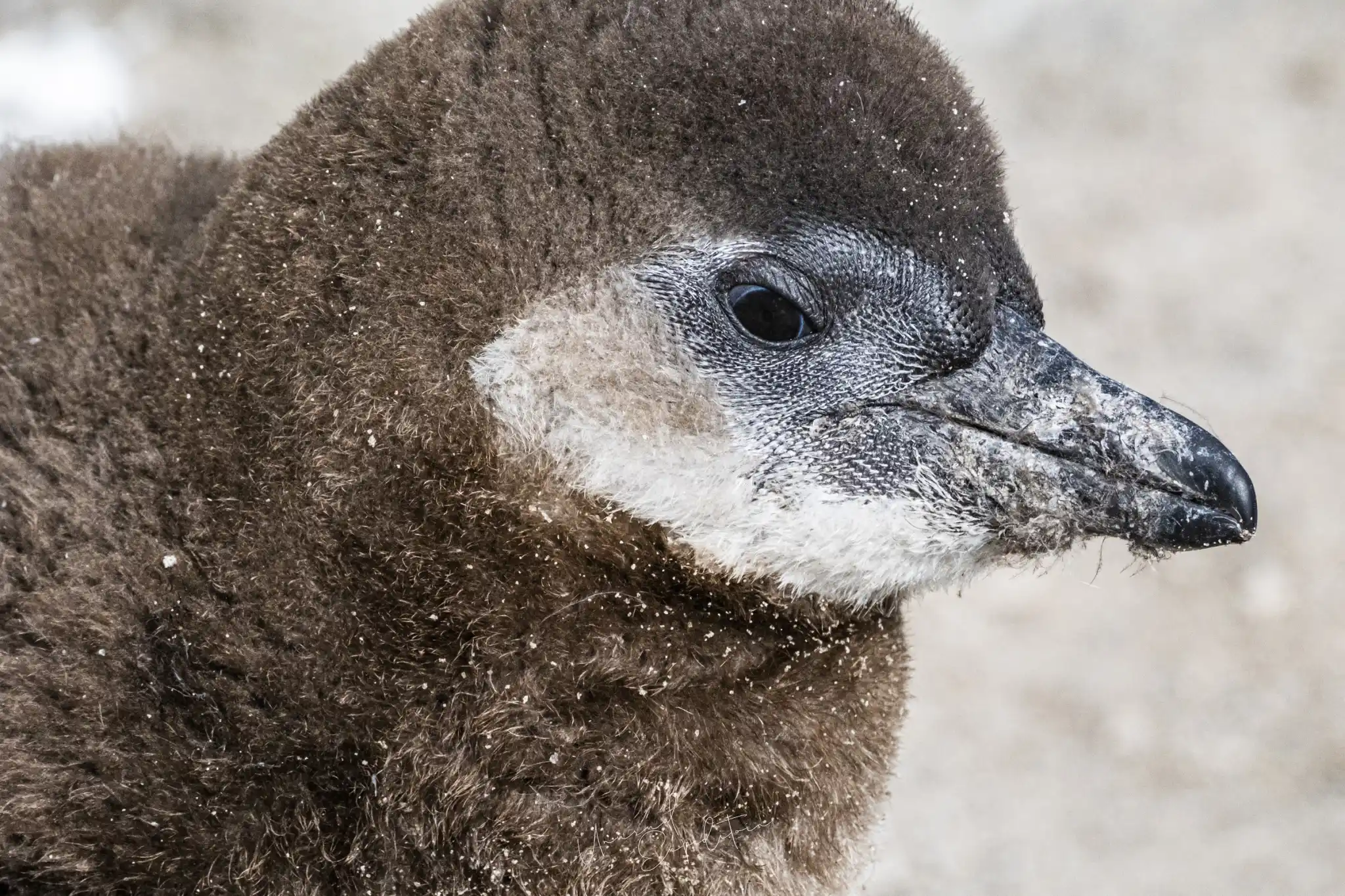
African penguin chicks at Boulders Beach hatch under rocks and bushes, grow a thick coat of brown and grey down, and spend long hours asleep beside a parent or a sibling before they take to the sea. For a photographer they are the most rewarding subject on the beach and the one that asks the most restraint, because they cannot be approached and should never be disturbed. Below: what chicks look like, how to photograph them from the walkways and which lens to bring.
Chicks are one part of the Boulders Beach penguins guide, which sits inside our Cape Town photography tour guide and the wider South Africa photography tour guide. Timing is covered in African penguin breeding season.
What do African penguin chicks look like?
A newly hatched chick is small and covered in pale down. As it grows the down thickens into a dense brown and grey coat that looks far too big for the bird, and the dark face and bill become more defined. The black-and-white adult pattern only appears after the chick moults into its first waterproof feathers, which is why you can tell chicks from adults at once. Chicks stay near the nest while their parents take turns to feed at sea, so most of the time you see them resting, preening or waiting.
When can you see African penguin chicks at Boulders Beach?
Breeding in South Africa usually peaks from about March to May, according to BirdLife South Africa and other conservation sources, and chicks are around for some months after that. The cycle is not fixed, and penguins can nest outside the peak, so a visit in almost any season has a chance of chicks while a visit in autumn has the best one. Check SANParks or the charity SANCCOB for what is happening at the colony before you travel. Do not plan a trip around a single month.
How to photograph chicks without disturbing them
Stay on the boardwalks and behind the fences. Chicks are often tucked into gaps between boulders or under vegetation, and a long lens turns a distant bird into a portrait without a step off the path. Turn the flash off and keep movements slow and quiet. If a chick is alone, that is normal: parents are feeding at sea. Never pick one up or move it. If a bird looks injured or abandoned, tell a SANParks ranger or contact SANCCOB, which rescues and hand-rears penguin chicks, and let them decide.
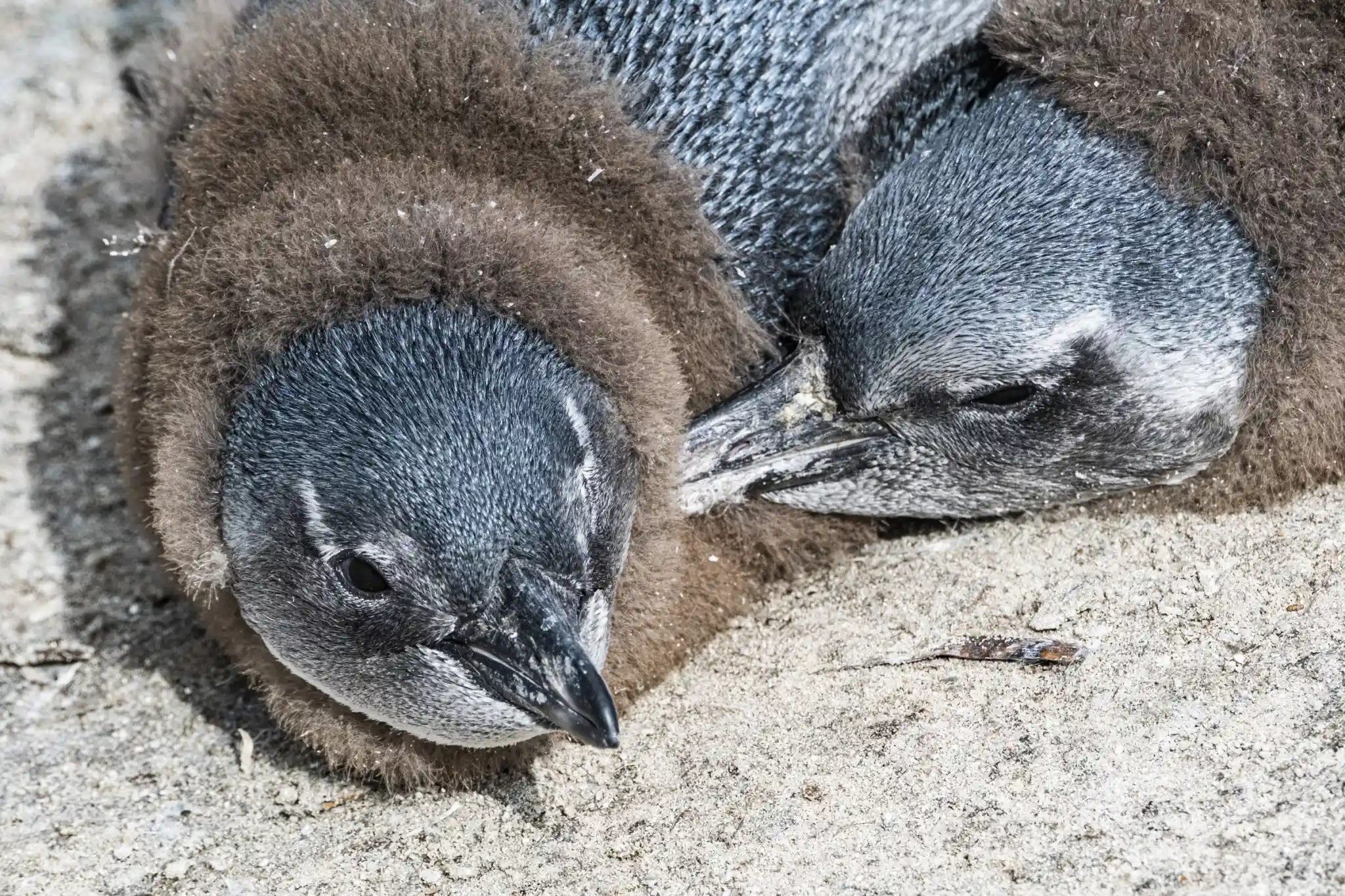
Camera settings and lens for penguin chicks
Down is fine detail, and it rewards sharp focus on the eye. Choose a 100-400mm or a 70-200mm with a teleconverter, set the aperture around f/5.6 to f/8 so the face stays sharp, and use a shutter speed fast enough to freeze a head turn. Overcast light works best, because the dark bill and pale chest do not burn or block as they do in hard sun. Soft winter light and no flash, as in these frames, keeps the texture of the down.
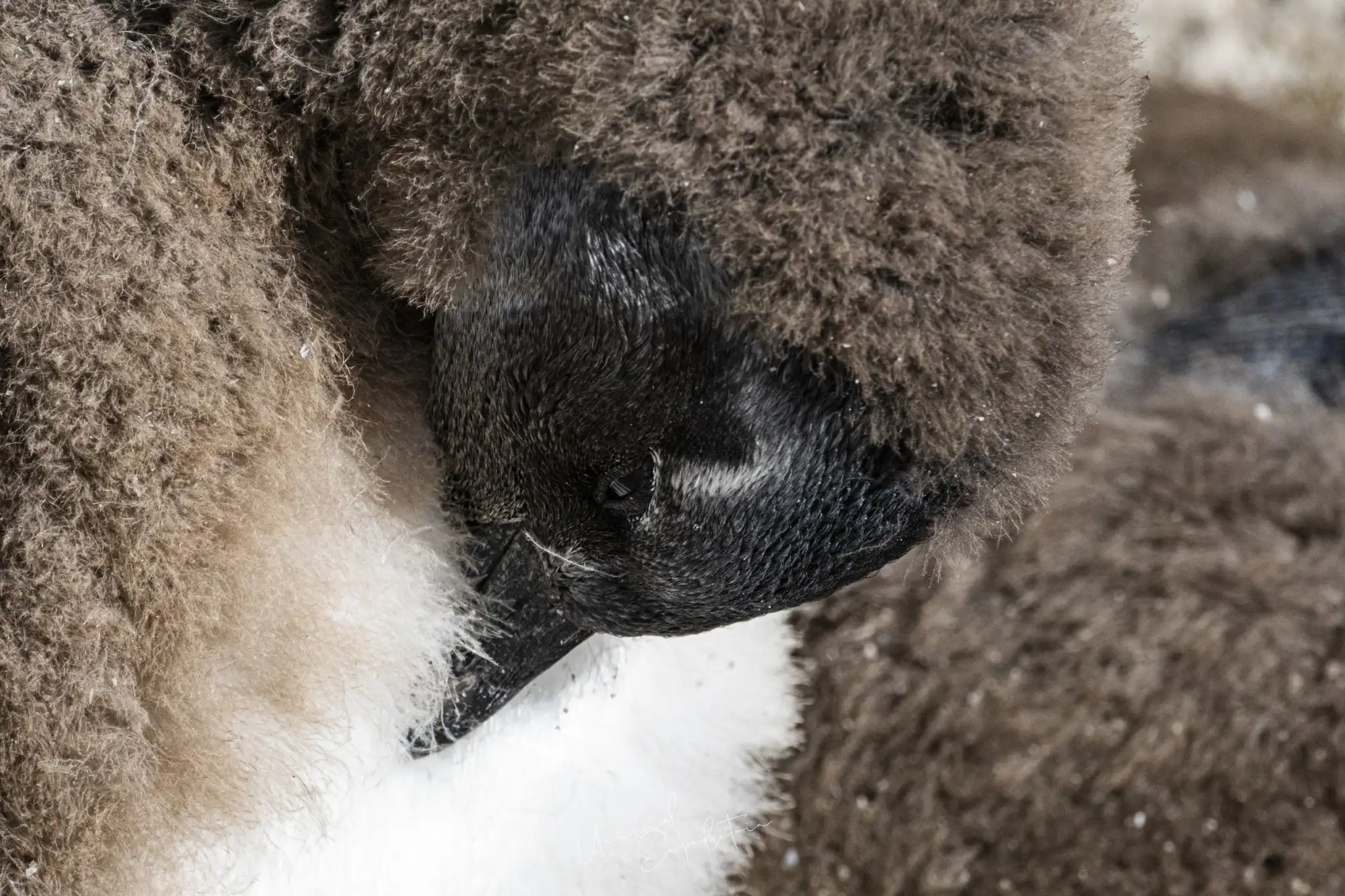
Black and white or colour for chicks?
Both work, for different reasons. Colour shows the warm brown of the down against the cool grey of the sand, while a monochrome conversion drops that and shows form: the fluff, the bill, the closed eye. Shoot colour and decide later; a flat grey day often gives you a good black-and-white file anyway. Whatever you choose, keep the tone natural and do not push the contrast until the down loses its softness.
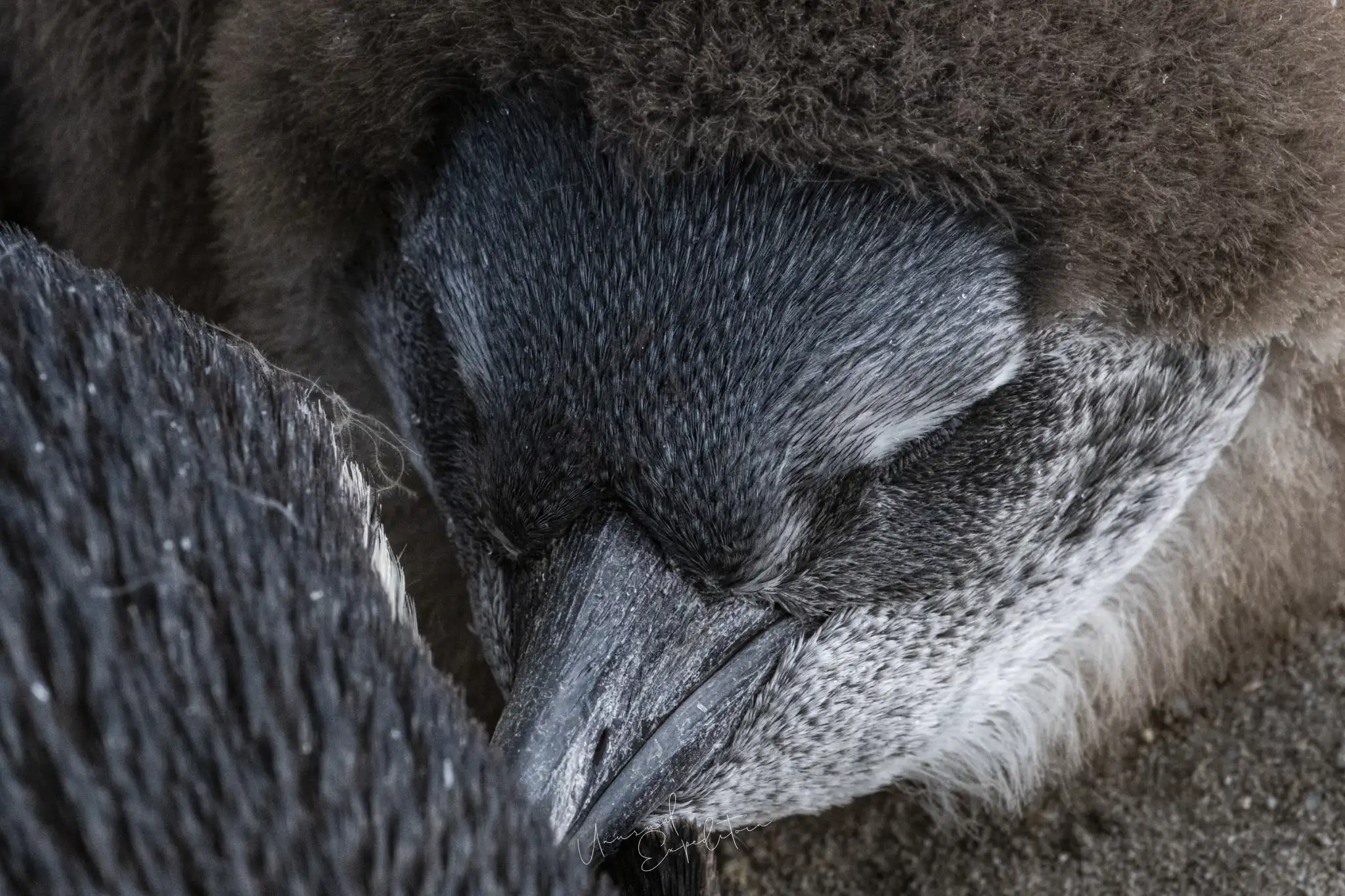
Why the chicks matter to the colony
The African penguin is listed as Critically Endangered by the IUCN since October 2024, according to BirdLife South Africa, and sources give different figures for how many breeding pairs remain, so we give no number here. A healthy breeding season is the colony's future. That is a good reason to behave carefully, to follow SANParks' rules and to treat a picture of a chick as a privilege. Our South Africa photography trip FAQ has the broader planning questions.
What should you leave at home?
Leave the flash in the bag, and leave the idea of the perfect close-up at the gate. A chick that looks directly at the lens is rare, and chasing it means leaving the boardwalk. Also leave the habit of cropping hard to fake a close position: a 100-400mm lens and a sharp file give you a tight portrait without anyone stepping closer. If your lens is shorter, choose a wider picture of a pair or a family, which tells a better story than a distant, soft head anyway. A small towel or lens cloth is worth carrying, because sea spray reaches the lens on windy days.
Our photographs of African penguin chicks
The photographs in this guide are our own, taken at Boulders Beach on our trip to the Cape; we hold the rights to them, and the notes come from knowing the place first hand.
Chicks make you go quiet. I put the long lens on, found a gap between two rocks and just watched for a long time before I pressed anything. The best pictures came when the bird had stopped noticing me.
Joseph Mak, tour leader, Unusual Expedition
Photograph the Cape penguins with us
We run South Africa as a private trip on request, with no scheduled departure at the moment. A private trip suits an individual, a couple, a family or a photographer who wants their own pace, and every piece of logistics is arranged around you. It can cost less than a group tour because no tour leader travels, and a photographer or coach can be added at extra cost. Ask at least two months ahead; last-minute requests can often be arranged. See private tours and the South Africa photography tours page.
Ask us about the Cape penguins
Cape Town photography tours
The next Cape Town departure is announced on the Cape Town photography tours page, with previous expeditions and all the planning guides.
Explore Cape Town in depth
- Cape Town Photography Tours: Waterfront, Bo-Kaap, Camps Bay and PenguinsSouth Africa
- Boulders Beach Penguins: Where to Stand, Light and LensesSouth Africa
- African Penguin Breeding Season: What You Can Photograph and WhenSouth Africa
Upcoming Photo Tours
- Egypt Photo Tour – EgyptEgypt 12 Dec 2026 To 20 Dec 2026
- Inner Mongolia Winter Owl Photo Tour – ChinaChina 01 Jan 2027 To 04 Jan 2027
- Inner Mongolia Winter Photo Tour – ChinaChina 05 Jan 2027 To 11 Jan 2027
- Mekong And Central Highland Vietnam Photo Tour - VietnamVietnam 16 Jan 2027 To 24 Jan 2027