
Best Photo Spots in Athens: Where to Stand and When
Best photo spots in Athens: Monastiraki rooftops, Philopappos and Areopagus hills, the Acropolis, Olympian Zeus and Lycabettus.
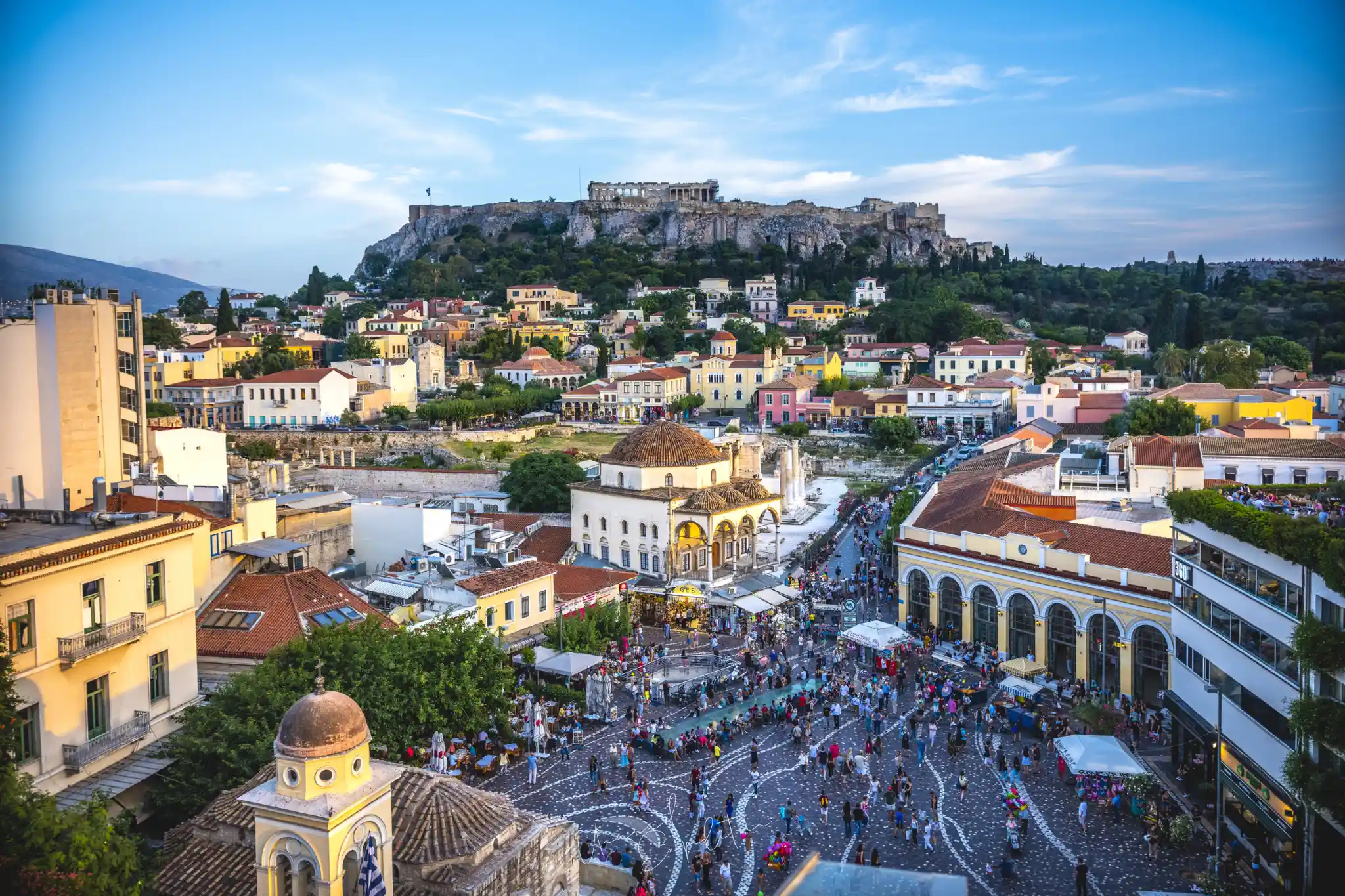
The best photo spots in Athens are the hills and rooftops that look at the Acropolis rather than the rock itself: Philopappos Hill to the south west, Areopagus Hill below the entrance, the rooftops over Monastiraki Square, Lycabettus Hill across the city, plus the Propylaia and the Parthenon inside the site and the columns of the Temple of Olympian Zeus. Morning belongs on top of the Acropolis; evening belongs on the hills facing it.
This is the spot-by-spot companion to our Athens photography tour guide. The photographs are our own, and the notes on light come from standing at these places at different hours. For timing the Acropolis itself, read the best time to visit the Acropolis.
Best photo spots in Athens at a glance
| Spot | Direction from the Acropolis | Subject | Best light |
|---|---|---|---|
| Monastiraki rooftops | North | The square, the old mosque and the Acropolis above | Late afternoon into blue hour |
| Philopappos Hill | South west | The whole Acropolis through the pines | Sunset and blue hour |
| Areopagus Hill | West and north west | The Propylaia and the entrance side | Late afternoon |
| On the Acropolis | On top | Propylaia, Parthenon, Erechtheion | First hour after opening |
| Temple of Olympian Zeus | South east | Columns with Lycabettus behind | Blue hour |
| Lycabettus Hill | North east | The city with the Acropolis and the sea beyond | Sunset |
The hills fill the evenings and the site fills the mornings, which is why we spread them across several days.
Monastiraki rooftops: the Acropolis over the square
Monastiraki Square sits north of the Acropolis at the bottom of the old town, with the domed Tzistarakis mosque and a small church in the middle of it and the metro station on one side. Several hotel and bar terraces around the square face south, and from them you get the busiest view in Athens: the crowd in the square, the tiled roofs of Plaka rising behind, and the Acropolis on top of it all.
From the north the Acropolis is lit side on in the late afternoon and turns gold before sunset. Stay for blue hour, when the floodlights come on and the square fills with lights; a slow shutter turns the crowd into movement, which keeps faces out of the picture. A 24-70mm covers the scene. Most terraces belong to bars, so expect to buy a drink and to ask before setting up a tripod. For dinner after the light has gone, our list of the best restaurants in Athens starts a few streets away.
Philopappos Hill: the Acropolis sunset view
Philopappos Hill, the Hill of the Muses, is a pine-covered hill south west of the Acropolis, free to walk up, and Lonely Planet and most photographers name it as the sunset view of the rock. From the paths near the top you see the whole length of the Acropolis with the Parthenon on the crest.
At sunset the west and south-west faces of the Acropolis take the last light, and after it the floodlights come on while the sky still has colour. At dawn the same view is backlit against the sunrise glow, a different picture with fewer people. Use the pines and the rocks as a frame. Paths are rough, so carry a torch for the walk down.
Areopagus Hill below the entrance
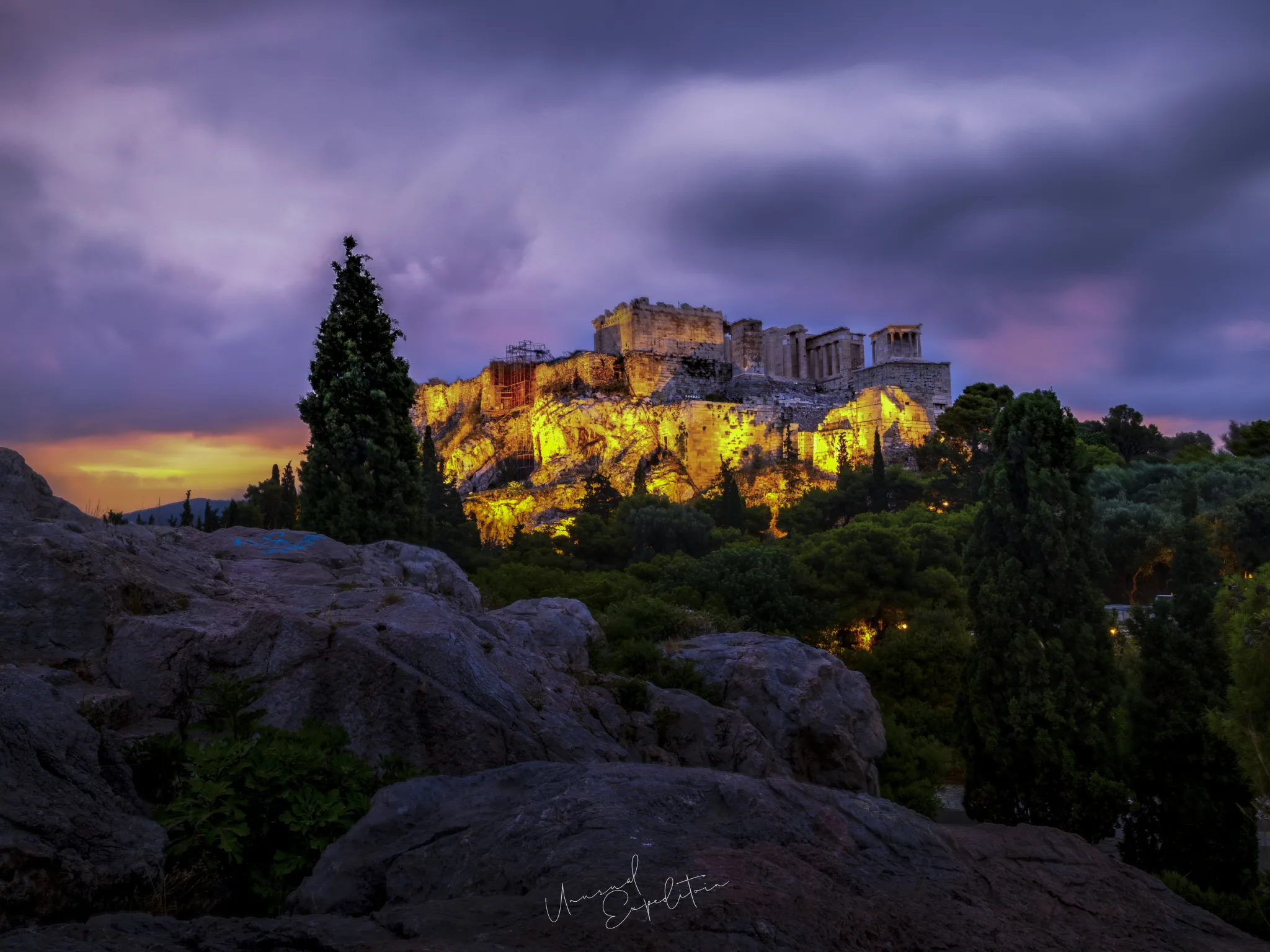
Areopagus Hill is the bare limestone outcrop just below the Acropolis entrance, open and free. It looks up at the Propylaia and the west side of the rock, and over the Ancient Agora and the roofs to the north. Lonely Planet warns that the rock is worn smooth and slippery, and it is, so wear shoes with grip.
The west side of the Acropolis faces the afternoon sun, and Areopagus lies west and north west of the entrance, so in the late afternoon the setting sun is behind you and the gateway is lit front on. It gets crowded at sunset; arrive early and find an edge with nothing in front of you.
Inside the Acropolis: the Propylaia and the Parthenon
The Acropolis has been a UNESCO World Heritage Site since 1987. Entry is by timed ticket through the Hellenic Ministry of Culture's e-ticket system, and each hour has its own visitor limit, so book the first slot of the day. That first hour is the only time the top is quiet.
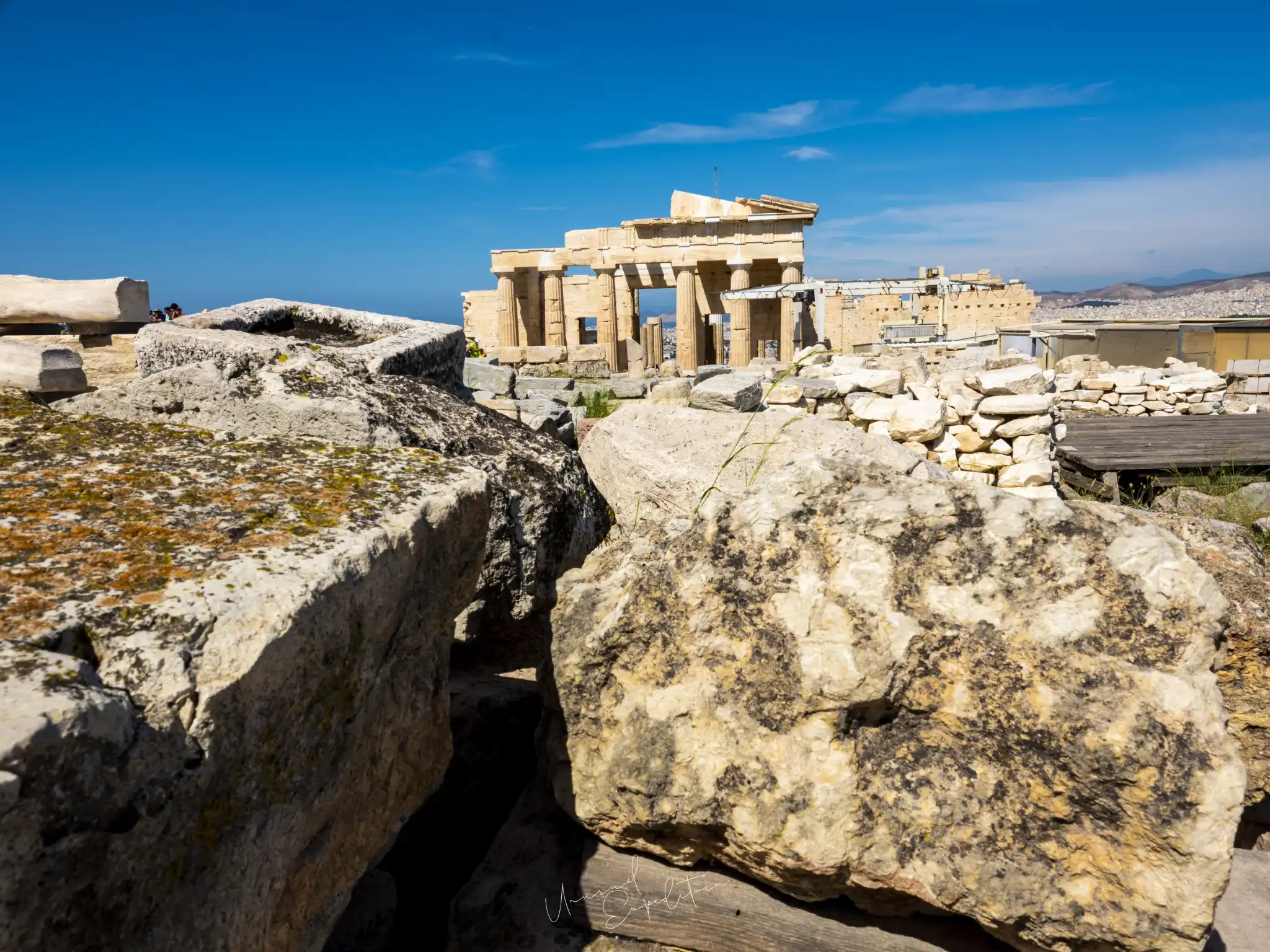
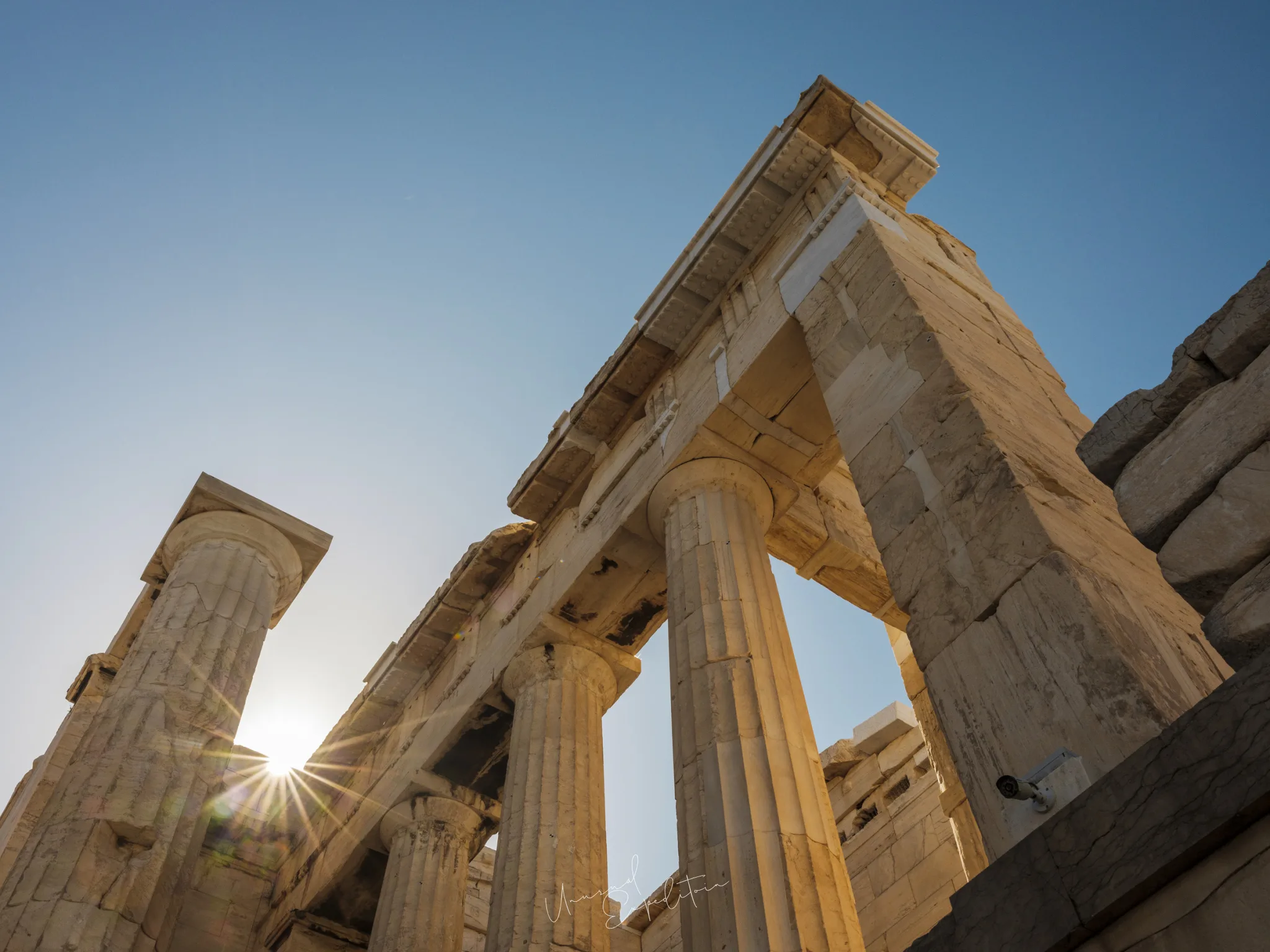
The Parthenon's main front and the Erechtheion's porch face east and take the morning light; the Propylaia and the west side face west. Inside the site we like the gateway seen across the fallen marble blocks, and the columns of the Parthenon from close in with the sun just clipping an edge. Handheld personal photography is free; a tripod counts as professional equipment, so ask before you bring one. In recent summers AP and Al Jazeera have reported closures through the hottest hours during heatwaves, so check before you go.
Temple of Olympian Zeus and Lycabettus
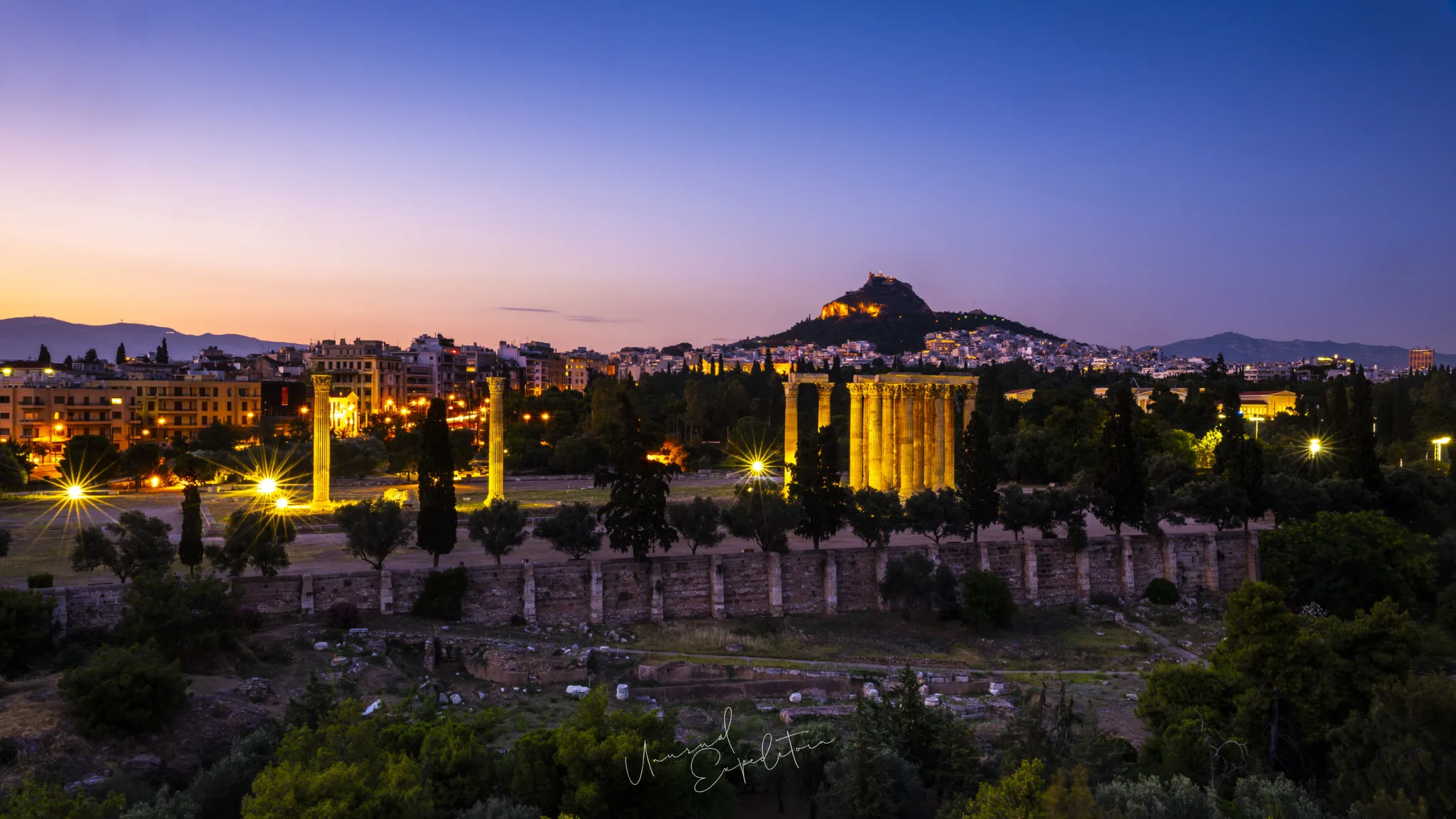
The Temple of Olympian Zeus stands south east of the Acropolis, a field of very tall Corinthian columns, and from its north side Lycabettus Hill rises behind them across the city. We photographed it at blue hour, when the columns are floodlit and the top of Lycabettus shows as a point of light against the sky. A longer focal length pulls the hill closer to the columns.
Lycabettus Hill: the best views in Athens
For the best views in Athens as a whole city, Lycabettus Hill is the high point north east of the centre. From the top the city runs to the sea, with the Acropolis standing up out of it. At sunset the sun goes down beyond the Acropolis and the sea, so the rock is a silhouette against the glow; the view is at its strongest as the city lights come on. It is a popular sunset spot, so arrive with time to find a place at the wall.
Plaka and Anafiotika
Plaka is the old quarter on the north and east slopes of the Acropolis, and Anafiotika above it is a small cluster of whitewashed houses built against the rock. The pictures here are small ones: stairs, painted doors, bougainvillea, cats. They work in soft light early in the morning, before the shops open and the lanes fill. Be considerate: people live in these houses.
"People queue for hours to stand on the Acropolis and then photograph the crowd. The rock looks best from the hills around it. Pick one hill for each evening you have in Athens and you come home with a different Acropolis every night."
Joseph Mak, tour leader, Unusual Expedition
Photograph Athens with us
Athens is part of how we photograph Greece, with the Acropolis timed for the first hour and the hills for the evening. See our Greece photography tours or ask us about a private trip.
Athens photography tours
The next Athens departure is announced on the Athens photography tours page, with previous expeditions and all the planning guides.
Explore Athens in depth
- Athens Photography Tour Guide: the Acropolis, Rooftops and Photo SpotsGreece
- 5 Best Restaurants in Athens, Greece, Near the Photo SpotsGreece
- Best Time to Visit the Acropolis: Light, Time Slots and Summer HeatGreece
Upcoming Photo Tours
- Egypt Photo Tour – EgyptEgypt 12 Dec 2026 To 20 Dec 2026
- Inner Mongolia Winter Owl Photo Tour – ChinaChina 01 Jan 2027 To 04 Jan 2027
- Inner Mongolia Winter Photo Tour – ChinaChina 05 Jan 2027 To 11 Jan 2027
- Mekong And Central Highland Vietnam Photo Tour - VietnamVietnam 16 Jan 2027 To 24 Jan 2027