
Best Time to See Mount Fuji: Visibility by Month for Photographers
Best time to see Mount Fuji: winter mornings. Visibility by month, the snow cap, winter conditions and the February blossom on Izu.
The best time to see Mount Fuji is winter, from about December to February, and the best time of day is early morning. Dry, cold air clears the haze, the snow cap is full, and the summit is out far more often than in summer, when cloud can hide it for days. Late autumn and early spring are good too. For photographers, winter also brings fresh snow at the foot of the mountain and, from February, the early Kawazu cherry blossom on the Izu Peninsula.
This is one of our destination guides to the mountain; for the sides, the spots and how we plan a trip, start with the Mount Fuji photography tour guide.
Best month to see Mount Fuji
The best month to see Mount Fuji is usually December, January or February. LiveJapan, summarising Fuji City's year-round observation records, puts winter as the clearest season, with mornings clearer than afternoons, and names May to September as the months when the mountain is most often hidden by haze or cloud, even on sunny days. Which winter month wins changes from year to year, and the figures published by different sources disagree, so we do not quote percentages. What does not change is the pattern: cold, dry, high-pressure days give the sharpest views, and they come most often in winter.
Mount Fuji visibility by month
| Months | How often the summit is clear | Snow cap | What else to photograph |
|---|---|---|---|
| December to February | Best of the year, especially mornings | Full | Fresh snow in Fujiyoshida, Yaizu port at dawn, Kawazu blossom from February |
| March to April | Good, with more haze | Full, thinning | Cherry blossom around the lakes and along the Oigawa Railway |
| May to September | Poorest, often hidden | Little or none by midsummer | Green tea fields, the summer climbing season |
| October to November | Improving, clearer by late autumn | First snow returns | Autumn colour in the hills and around the lakes |
Summer is the only season we would not plan around the mountain itself.
When can you see Mount Fuji during the day?
When can you see Mount Fuji on a given day? Most often at dawn and in the first hours after it. As the ground warms, moisture rises and cloud builds around the cone, and by afternoon the summit is often wrapped even in winter. That is why our mornings start in the dark at a viewpoint, and why afternoons on our trips go to subjects that do not need the summit: markets, tea, blossom, railways. Evenings can clear again as the air cools, which is when the Nihondaira outlook above Shizuoka is worth a second visit.
Mount Fuji in winter: what it is like for photographers
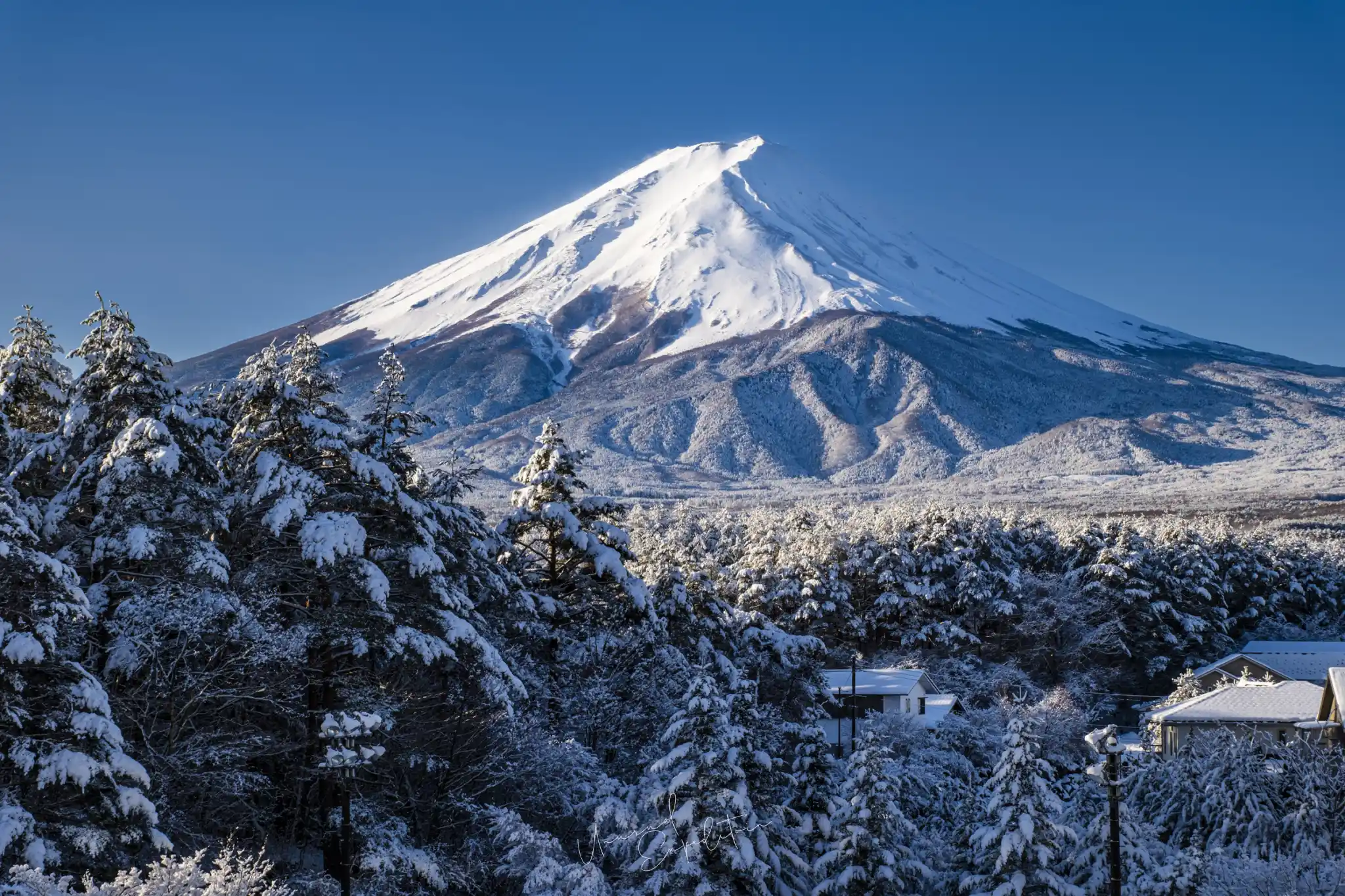
Mount Fuji in winter is cold, clear and quiet at dawn. On the Yamanashi side, around Fujiyoshida and the lakes, mornings after a snowfall are well below freezing, and the forest at the foot of the mountain turns white for a day or two before the sun clears the branches. That window is short, so a flexible plan matters more than a fixed one. On the Shizuoka side and on the Izu coast, winter is milder and the mountain sits above green hills and blue sea. Dress in layers, keep batteries warm, and wear shoes with grip: shrine steps and pavements ice over.
Mount Fuji with snow: when is the cap fullest?
Mount Fuji with snow is the picture most people want, and the cap is fullest from late autumn to spring. The first snow of the season usually dusts the summit in autumn, the cap spreads down the slopes through winter, and it melts back through spring. By midsummer there can be little or no snow at all, which surprises visitors who know the mountain only from prints. If the white cone matters to your picture, travel between December and April. For snow at your feet as well as on the mountain, you need a fresh fall on the Yamanashi side, which comes and goes within days.
Falling snow and shrines
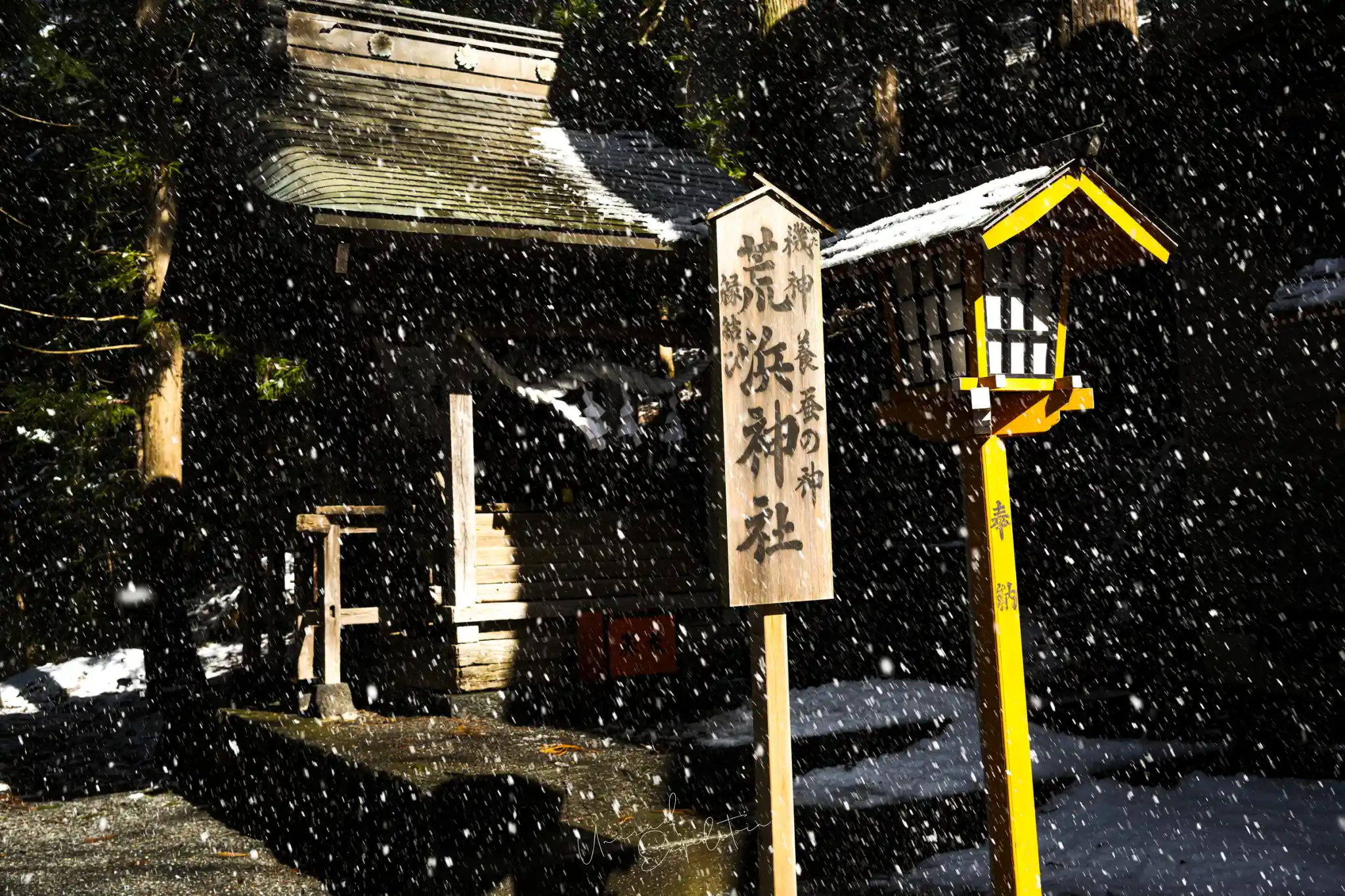
A day when Mount Fuji is hidden by snow cloud is still worth having. On our snowy morning in Fujiyoshida, a flurry drifting down over a small shrine gave us a frame we like as much as any view of the mountain. UNESCO lists the Sengen shrines around the base as part of the Fujisan World Heritage property, so they belong in the story of the place. Shoot falling snow against a dark background, such as a shrine roof or a stand of cedars, at a shutter speed that freezes the flakes.
Is February a good time for Mount Fuji?
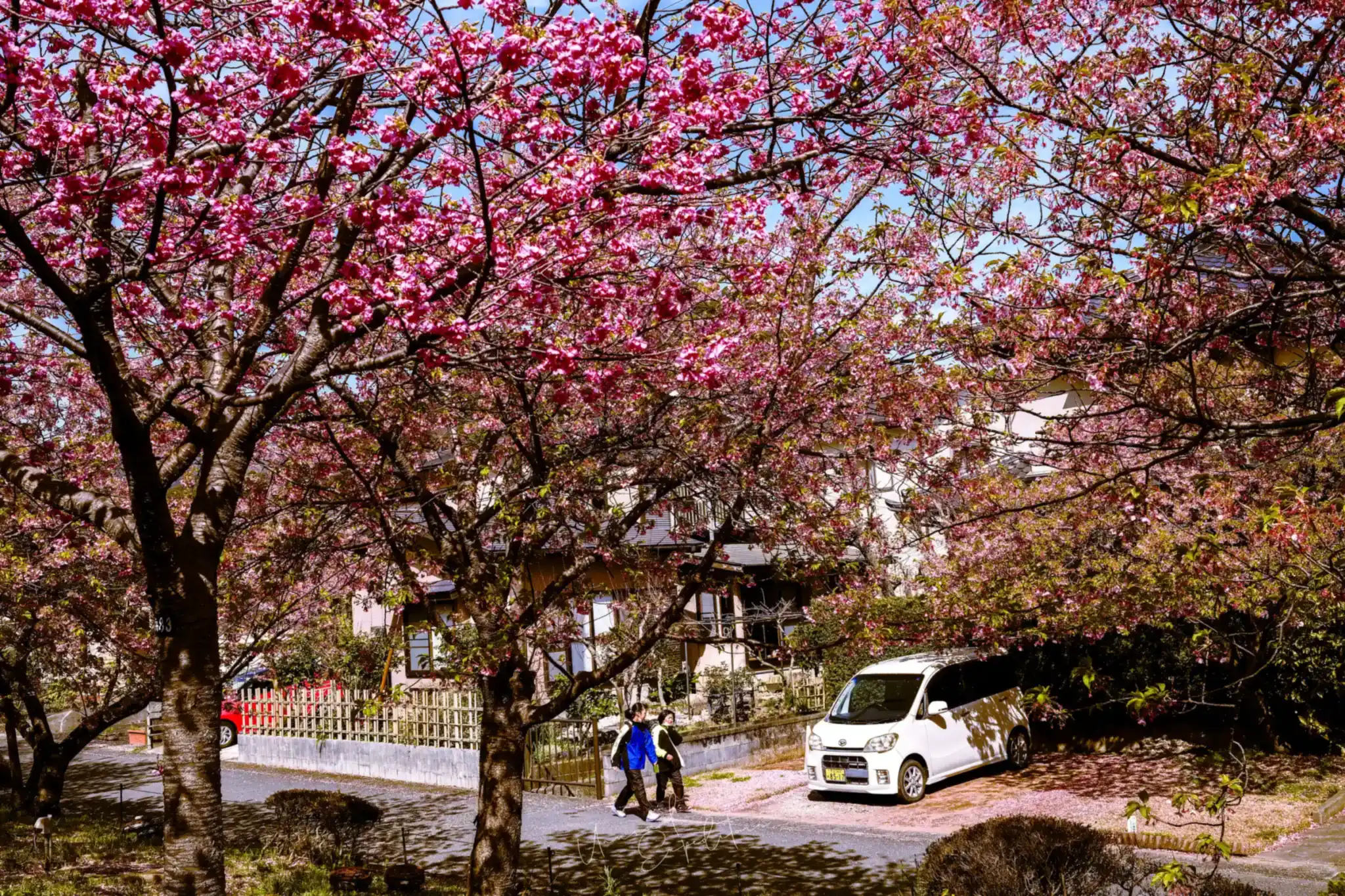
February is one of the best months. The mountain is often clear, the snow cap is full, and the Izu Peninsula has its own event: the Kawazu cherry trees, which JNTO describes as the earliest blooming cherry in eastern Japan, flower about a month before most of Honshu, with a festival along the Kawazu River through February. A trip that combines a clear morning on Fuji with a pink riverbank on Izu is only possible at this time of year. Our Kawazu cherry blossom festival guide covers the blossom in detail.
Spring and autumn: the shoulder seasons
Spring is the season of cherry blossom around the Fuji Five Lakes and along the Oi River, where the Oigawa Railway runs beside a tunnel of cherry trees at Ieyama. It is also the season of crowds, and Fujiyoshida has had to manage visitor numbers at its famous pagoda view. Haze is more common than in winter. Autumn brings colour to the hills and the return of the snow cap, and the air clears again as the season turns cold. Both work well, as long as you accept that the summit will be hidden on more mornings than in winter.
We plan Fuji trips for winter because the mountain shows itself more often then. But I always keep the afternoon for something else. The mountain gives you the morning, and Shizuoka gives you the rest of the day.
Joseph Mak, tour leader, Unusual Expedition
Best time to see Mount Fuji: a short answer
For the clearest views and the fullest snow cap, go from December to February and be at a viewpoint at dawn. For blossom with the mountain, go in February for Kawazu or in spring for the lakes, and accept more haze. Avoid planning a short trip in summer around the summit. Wherever you stand, keep two or three alternatives within reach; the Mount Fuji photo spots guide lists ours on each side.
Time your Mount Fuji trip with us
We arrange Mount Fuji as a private trip on request, timed for winter clarity or for the blossom. Private trips suit individuals, couples, families and photographers who want their own pace; we arrange all the logistics to your needs, the cost can be lower than our group tours because no tour leader travels, and a photographer or photography coaching can be added at extra cost. Ask at least two months ahead, though last-minute trips can be arranged. See private tours and the Japan photography tours page.
Ask us about the best time for Mount Fuji
Join the Mount Fuji photography tour
Kyushu, Shikoku And Setouchi Photography Journey departs 25 Sep 2027 To 05 Oct 2027, led by Joseph Mak. Small group, photography first. All Mount Fuji photography tours.
Explore Mount Fuji in depth
- Mount Fuji Photography Tour Guide: Shizuoka, Izu and FujiyoshidaJapan
- Yaizu Fish Market: Photographing the Ogawa Fish Market at DawnJapan
- Tea Fields in Shizuoka, Japan: Sunrise Terraces, Tea Farms and Mount FujiJapan
- Oigawa Railway: Photographing the Oi River Valley, Bridges and TeaJapan
- Mount Fuji Photo Spots: Fujiyoshida, Nihondaira and the Izu CoastJapan
- Kawazu Cherry Blossom Festival: Photographing Kawazu-zakura on IzuJapan
- Japanese Tea Ceremony Experience in Shizuoka: Sencha with a Tea MasterJapan
Upcoming Photo Tours
- Egypt Photo Tour – EgyptEgypt 12 Dec 2026 To 20 Dec 2026
- Inner Mongolia Winter Owl Photo Tour – ChinaChina 01 Jan 2027 To 04 Jan 2027
- Inner Mongolia Winter Photo Tour – ChinaChina 05 Jan 2027 To 11 Jan 2027
- Mekong And Central Highland Vietnam Photo Tour - VietnamVietnam 16 Jan 2027 To 24 Jan 2027