
Best Time to Visit Inner Mongolia for Photography: Autumn or Winter
Best time to visit Inner Mongolia: late September for gold, January for snow, horses and owls, with a month-by-month table.
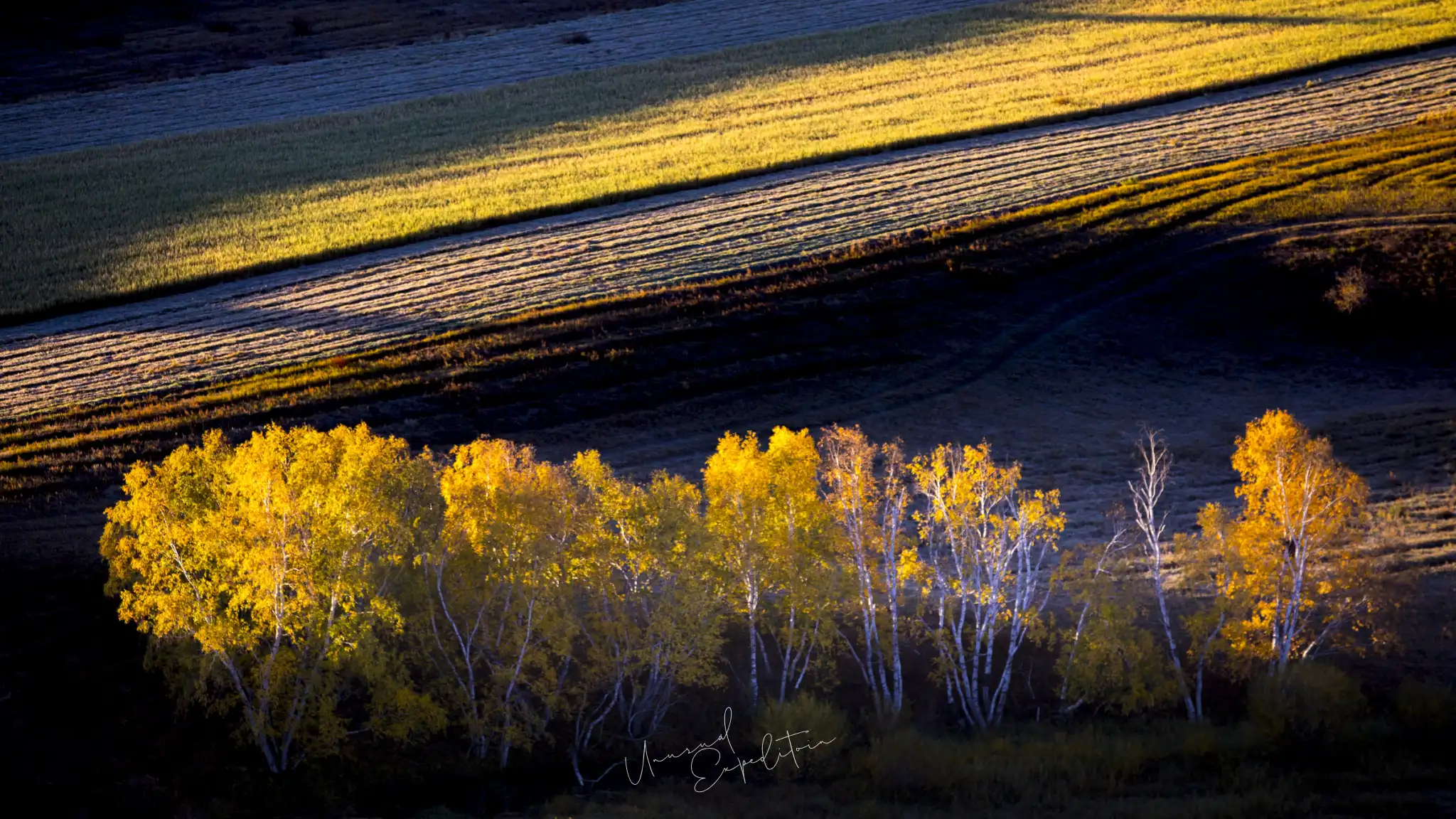
The best time to visit Inner Mongolia for photography is late September to early October for autumn colour, or January for snow, horses in powder and owls. Autumn gives gold poplars, misty mornings and comfortable temperatures. January gives reliable snow, low light all day and severe cold. Summer is green and busy with domestic tourists, and spring is brown and windy. If you can only go once, pick the season whose pictures you want; they are two different places.
This guide is part of our Inner Mongolia photography tour guide.
Best month to visit Inner Mongolia
The best month to visit Inner Mongolia depends on the picture. For autumn on the Bashang grassland, the second half of September into the first days of October is the window, and the exact peak moves by a week or so each year with the first frosts. For winter, January is the most dependable month: the snow cover is usually complete on the Ulan Butong grassland, the herders are free to work with photographers, and the owls are hunting on the Hulunbuir grassland further north. December can work but snow is less certain; February brings longer days and the snow starts to thin on south-facing slopes.
Inner Mongolia month by month for photographers
| Month | Grassland looks like | Photography |
|---|---|---|
| January | Full snow, rime on clear mornings | Horses and camels in snow, owls in Hulunbuir, fireworks over yurts |
| February | Snow thinning, longer days | Still good for snow work, less reliable |
| March to May | Brown, windy, dust | Weak; not a photography season |
| June to August | Green, flowers, busy | Green hills and lakes, crowded viewpoints |
| September | Frost, first colour, mist | Peak autumn starts in the second half |
| Early October | Gold poplars, then bare | Peak or just past; first snow possible |
| November and December | Bare, early snow | Transitional; snow not guaranteed |
The two photography seasons are short, so book the dates rather than the month.
Inner Mongolia autumn: colour, mist and horses in water
Inner Mongolia autumn on the Bashang plateau is about colour and water. The poplars and birches along the streams turn yellow, the grass turns tawny and red, and cold nights put mist in the valleys at dawn. The signature frame is a herd of horses splashing through a river with gold trees behind and the sun low enough to light the spray. Mornings are cold, close to freezing, and afternoons are pleasant. The risk is timing: a windy week can strip the leaves early.
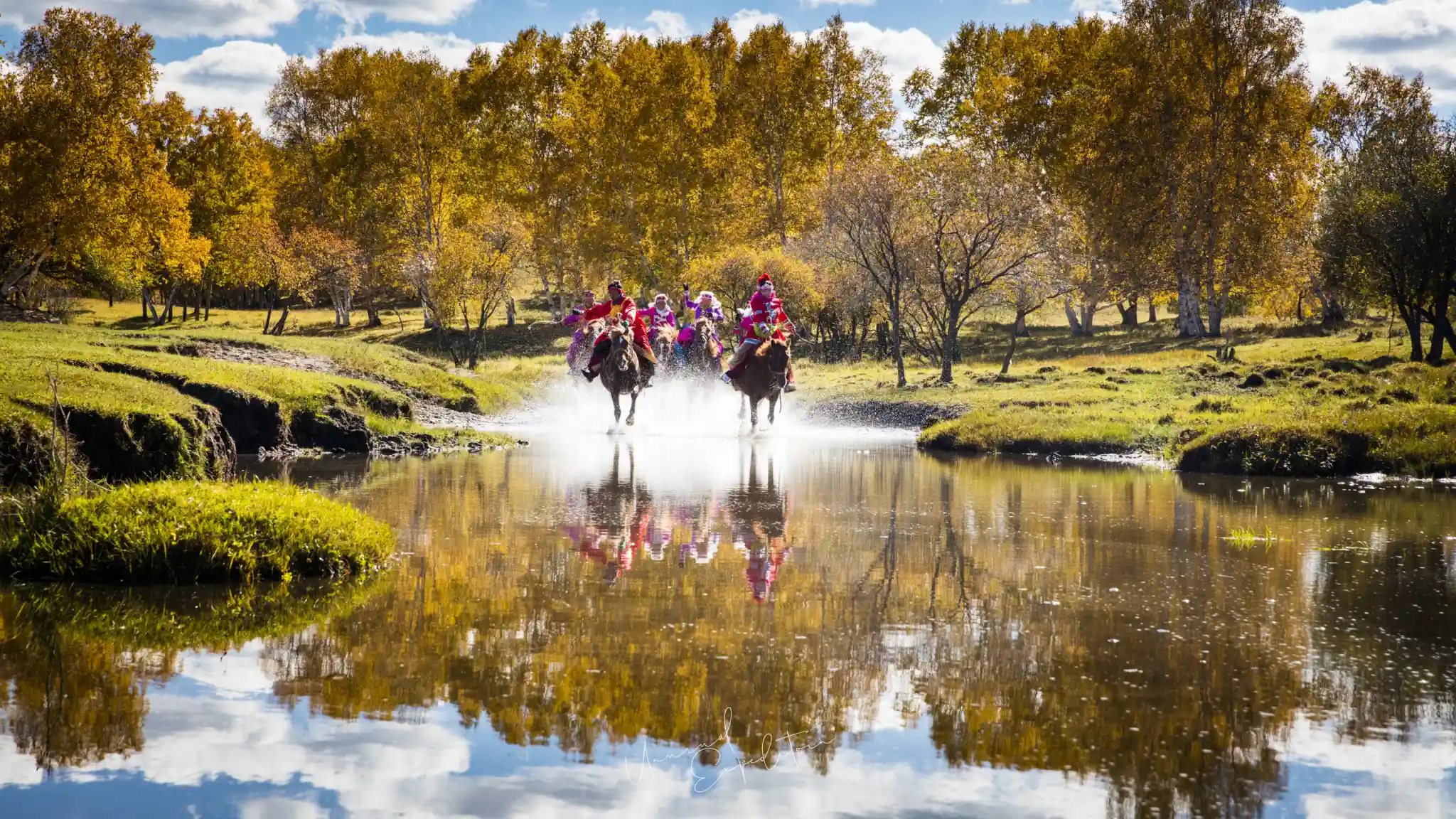
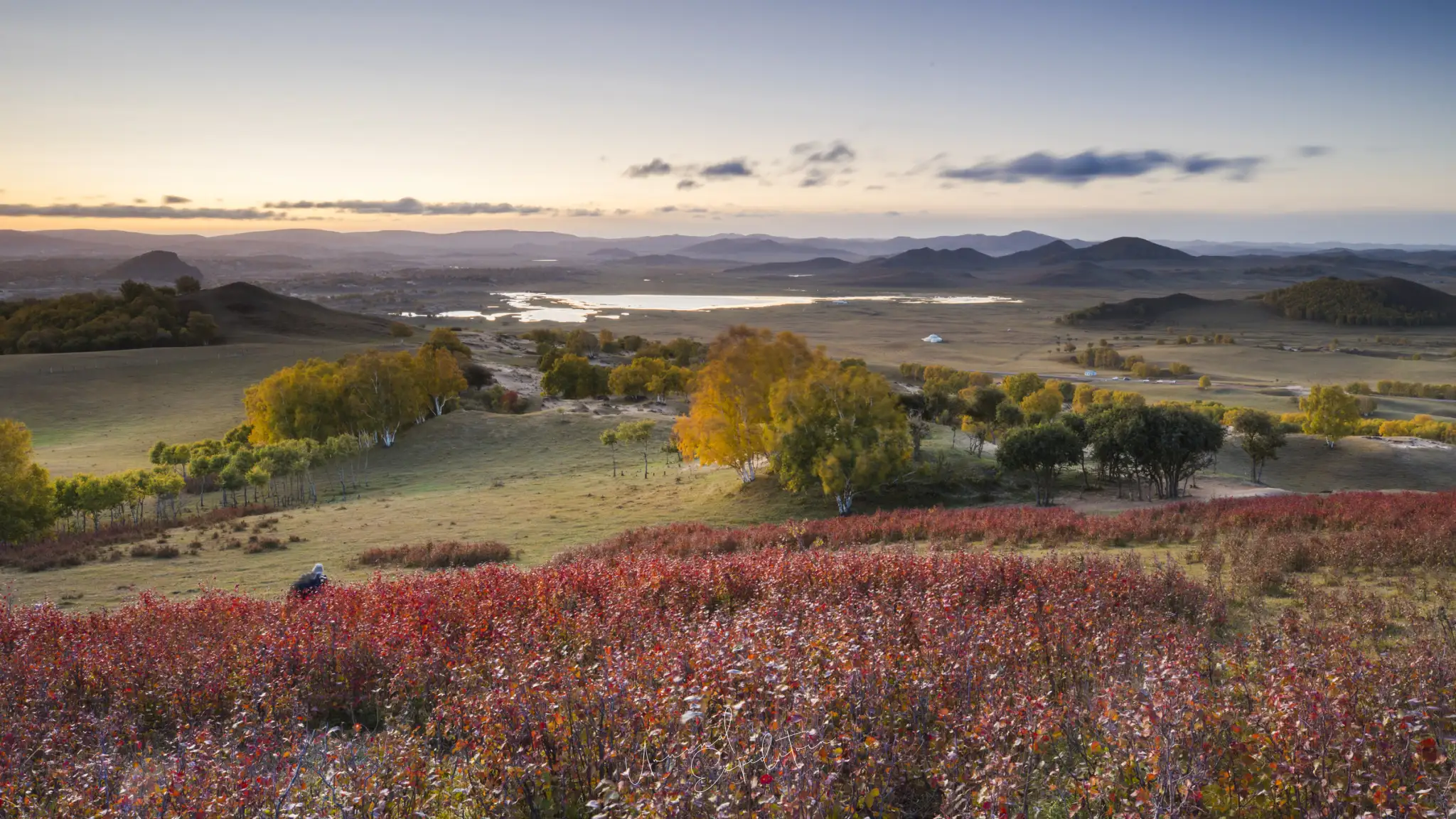
Autumn also has the best sunrises over the lakes. Low shrubs turn deep red around the water, and on a calm morning the hills reflect perfectly.
Is June a good time to visit Inner Mongolia?
Is June a good time to visit Inner Mongolia? For a holiday, yes: the grassland is green, the weather is mild and the camps are open. For photography it is the weakest of the open seasons. The light is hard from early in the morning, the grass is a uniform green, and the popular areas fill with tour coaches and horse-riding groups. July and August are similar, with more rain. If you go in summer, work the first and last hour of light and look for flowers and storm skies rather than the classic views.
When does snow arrive?
The first snow can arrive at the end of September or in early October, while some trees are still yellow. We have been caught by it: one autumn trip woke to a white grassland with horses on it, which turned into some of the best frames of the trip. It does not last, and it cannot be planned for. Lasting snow comes from December, and January is when it is complete.
Inner Mongolia winter temperature
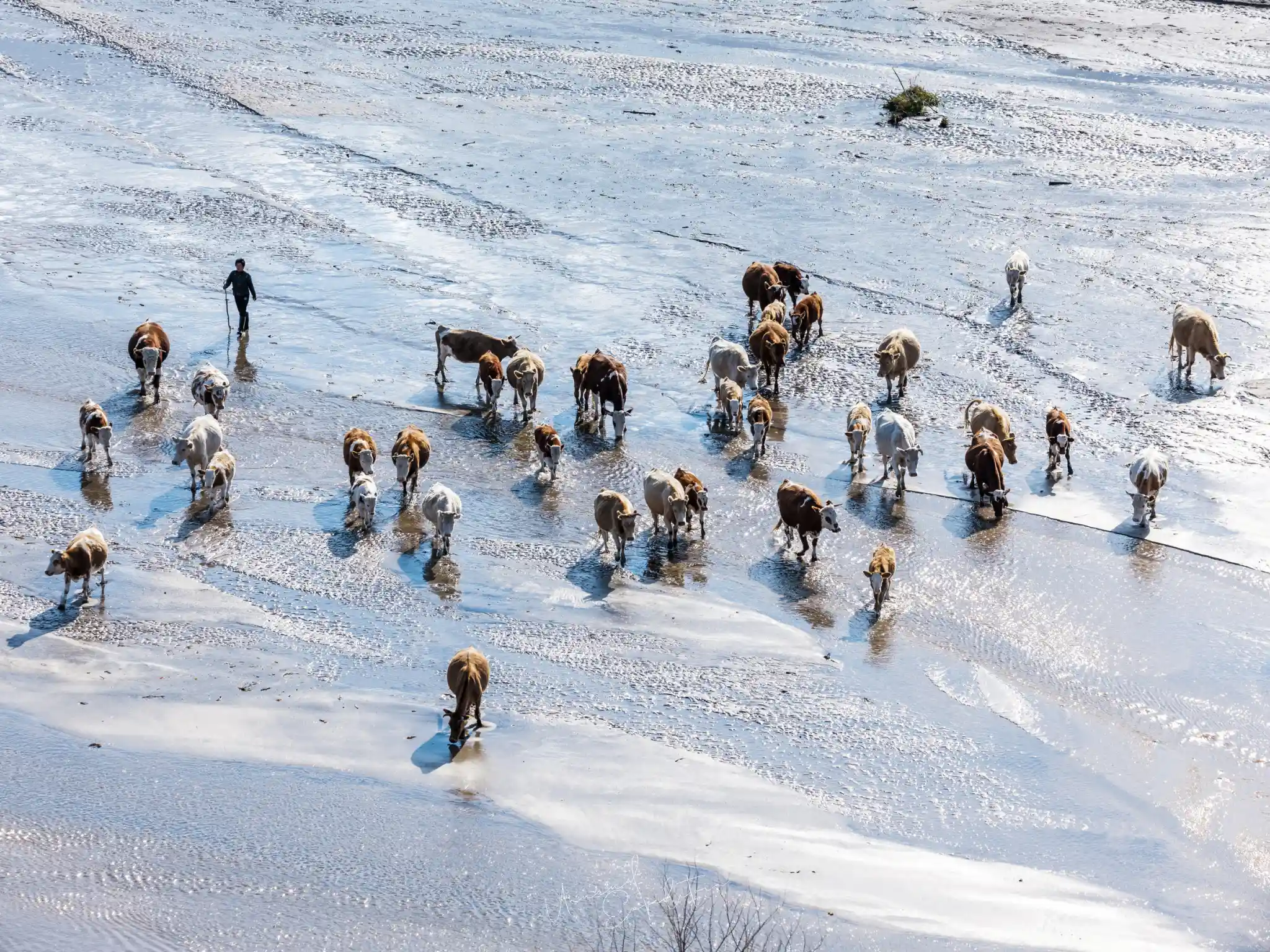
The Inner Mongolia winter temperature is the main thing to plan around. On the Ulan Butong grassland in January, clear mornings can fall below minus 20 degrees Celsius, and the wind makes it feel colder; on the Hulunbuir grassland around Hailar it is colder again. Daytime in the sun is more bearable than the number suggests, because the air is dry. What it means in practice: layered clothing with a down outer layer, insulated boots, liner gloves under mittens, spare batteries kept warm inside your jacket, and a sealed bag for the camera when you go indoors, so condensation forms on the bag and not on the lens.
In January I tell everyone the same thing on the first evening: the cold will not stop you photographing, but a frozen battery or a fogged lens will. Keep the batteries next to your body and the camera in a bag when you come inside.
Joseph Mak, tour leader, Unusual Expedition
Inner Mongolia winter: rime, horses and owls
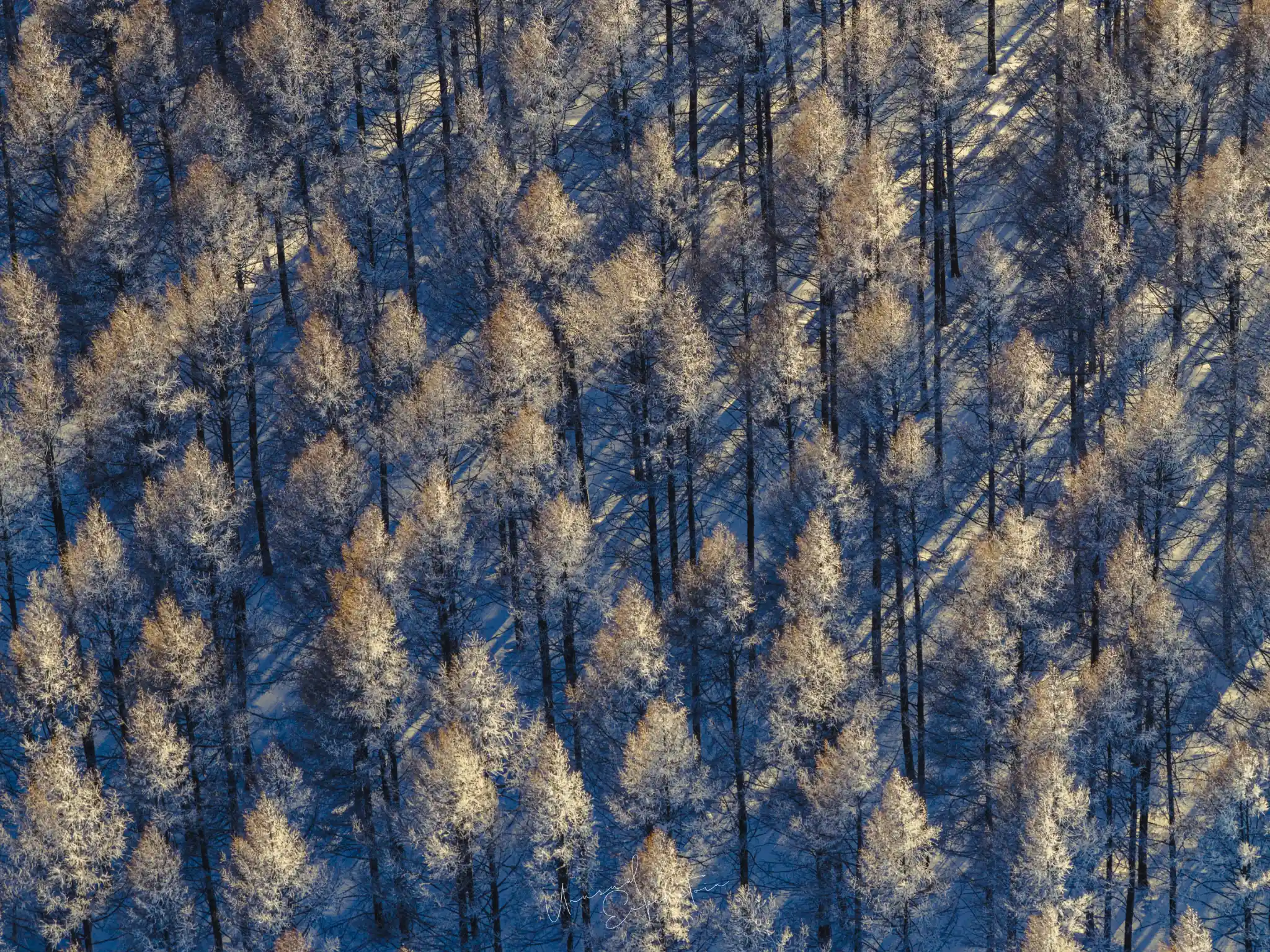
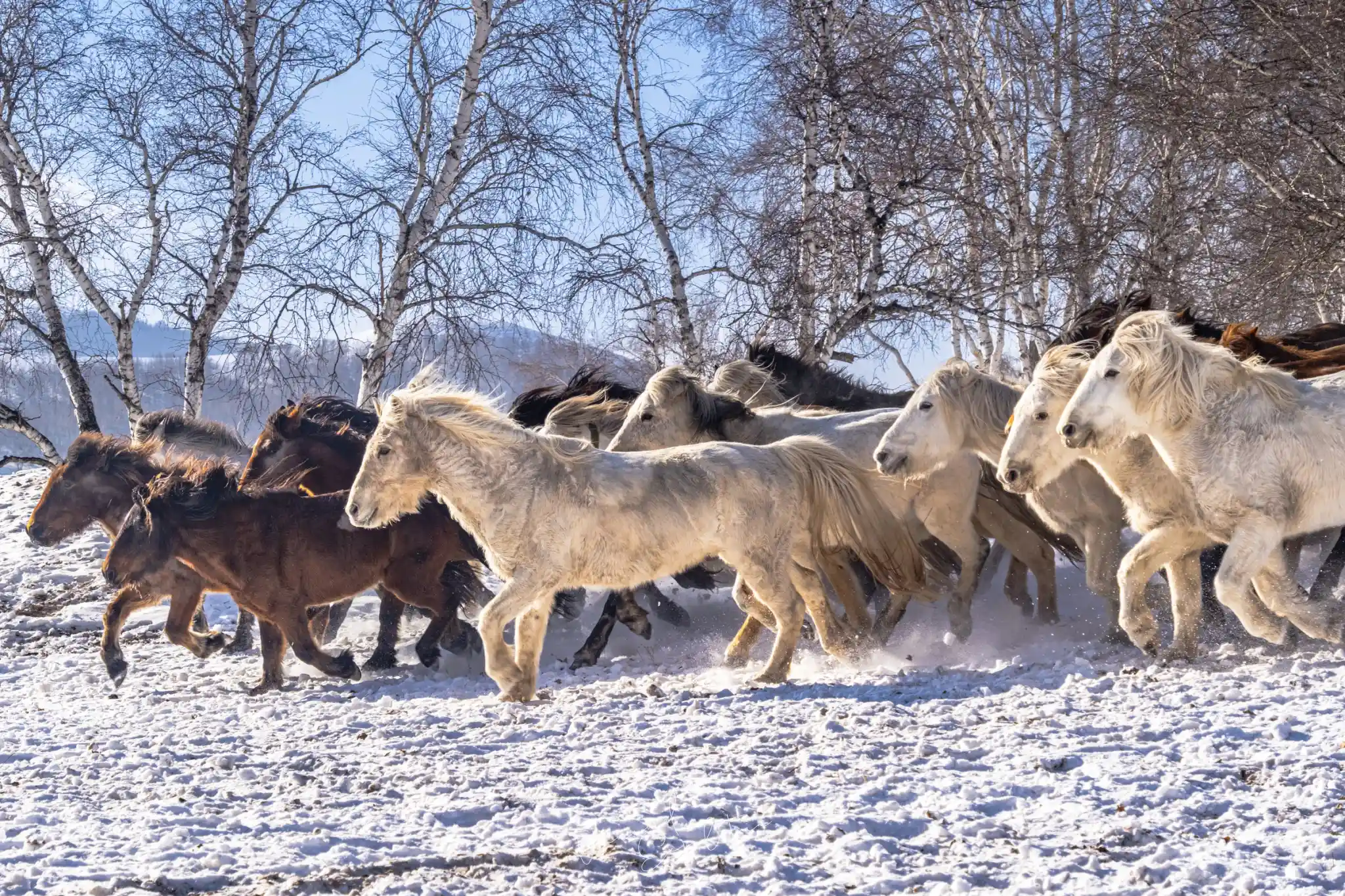
Winter is our main season. On still, cold mornings rime coats the birch and larch trees, which from the air look like frosted brushes. The horses run in powder snow, camels walk the snowfields, and the owls hunt over the Hulunbuir grassland in the north; we cover those in Inner Mongolia owl photography. The low winter sun means the light stays good longer each day than in autumn, which helps when the cold limits how long you can stay out.
Best season to visit Inner Mongolia: autumn or winter?
Choose autumn if you want colour, comfortable mornings and horses in water. Choose winter if you want snow, cleaner compositions, owls and the feeling of a place few visitors see. Winter is more reliable for its main subject, since snow in January is close to certain, while autumn colour can be early or late. Many of our guests do one and come back for the other; the Inner Mongolia photos article shows both side by side.
Plan your season with us
Our January winter and owl departures are listed on the China photography tours page with current fares. For an autumn trip, write to us early: the colour window is short and the best camps fill quickly.
Join the Inner Mongolia photography tour
Inner Mongolia Winter Owl Photo Tour – China departs 01 Jan 2027 To 04 Jan 2027, led by Joseph Mak. Small group, photography first. All Inner Mongolia photography tours.
Explore Inner Mongolia in depth
- Inner Mongolia Photography Tour: The Complete GuideChina
- Inner Mongolia Tour from Singapore: Flights, Visa, Cold and What to WearChina
- Inner Mongolia Photos: What the Grassland Looks Like Through the YearChina
- Inner Mongolia Owl Photography: Great Grey Owls and Snowy Owls in HulunbuirChina
Upcoming Photo Tours
- Egypt Photo Tour – EgyptEgypt 12 Dec 2026 To 20 Dec 2026
- Inner Mongolia Winter Owl Photo Tour – ChinaChina 01 Jan 2027 To 04 Jan 2027
- Inner Mongolia Winter Photo Tour – ChinaChina 05 Jan 2027 To 11 Jan 2027
- Mekong And Central Highland Vietnam Photo Tour - VietnamVietnam 16 Jan 2027 To 24 Jan 2027