
Inner Mongolia Photography Tour: The Complete Guide
Inner Mongolia photography: horses in snow and water, Ulan Butong, camels, herders, Hulunbuir owls, seasons and getting there.
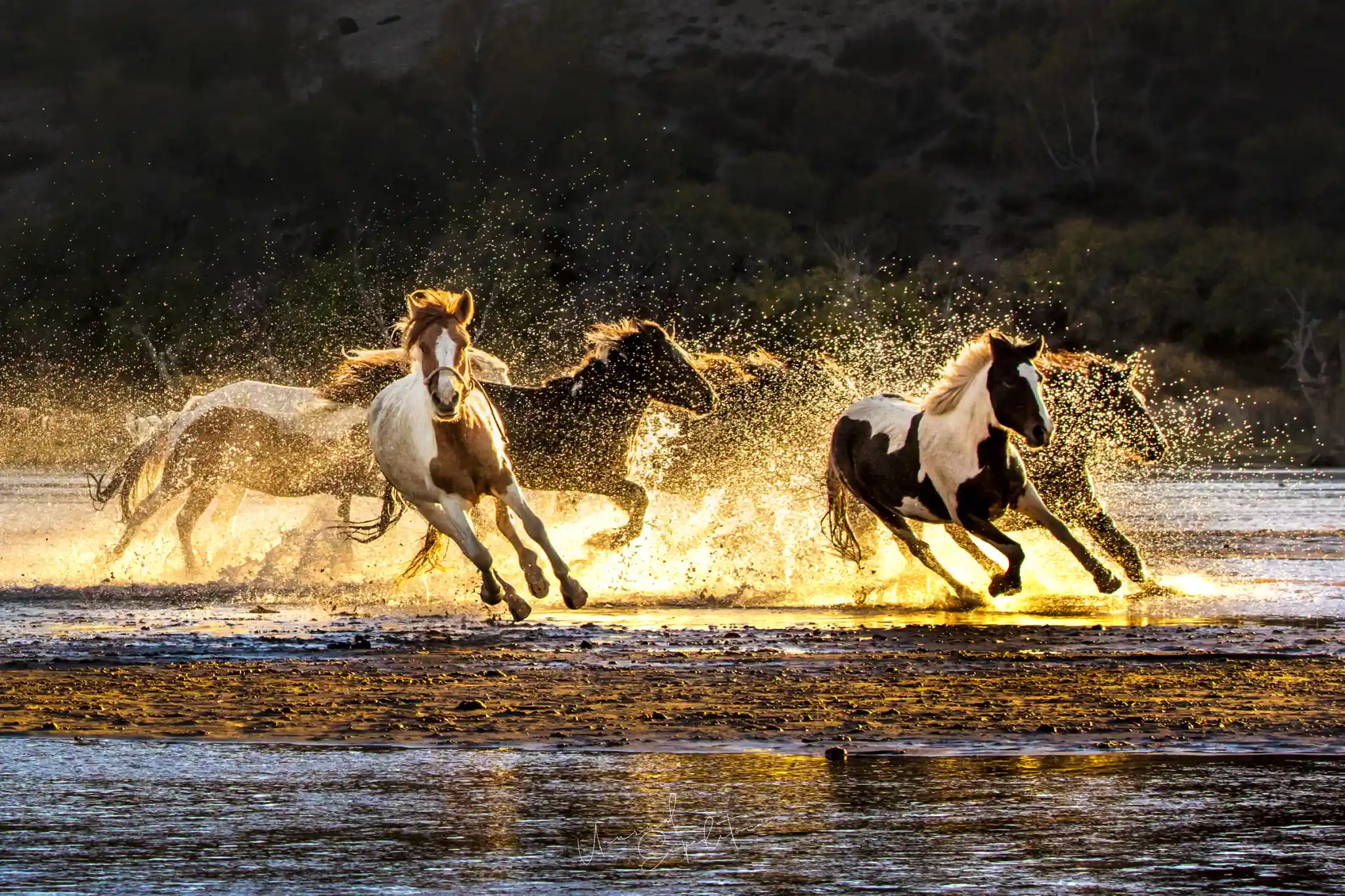
Inner Mongolia photography is about horses, open grassland and weather. Herds gallop through river shallows in the golden poplar country of autumn and through powder snow in winter. Bactrian camels cross dunes and snowfields, herders work in traditional dress, and owls hunt over the frozen grassland of Hulunbuir. We have led photography trips here in autumn and winter for more than ten years. Below: what you photograph, where and when, and how a trip works.
Inner Mongolia is one region in our wider China photography tour guide, which also covers entry, money and payment apps for the whole country.
Is Inner Mongolia part of China?
Yes. Inner Mongolia is an autonomous region of the People's Republic of China, a long band of grassland, desert and forest running along the border with Mongolia and Russia. It is not the same place as the country of Mongolia, and the entry rules are China's. For a photographer the distinction matters because the two places are reached differently: Inner Mongolia is a short domestic flight or a road journey from Beijing, with Chinese roads, Chinese payment apps and Chinese weather forecasts. The Mongol culture is very much alive, in the herders, the horses, the felt yurts and the long songs at dinner.
Inner Mongolia horses: the subject most people come for
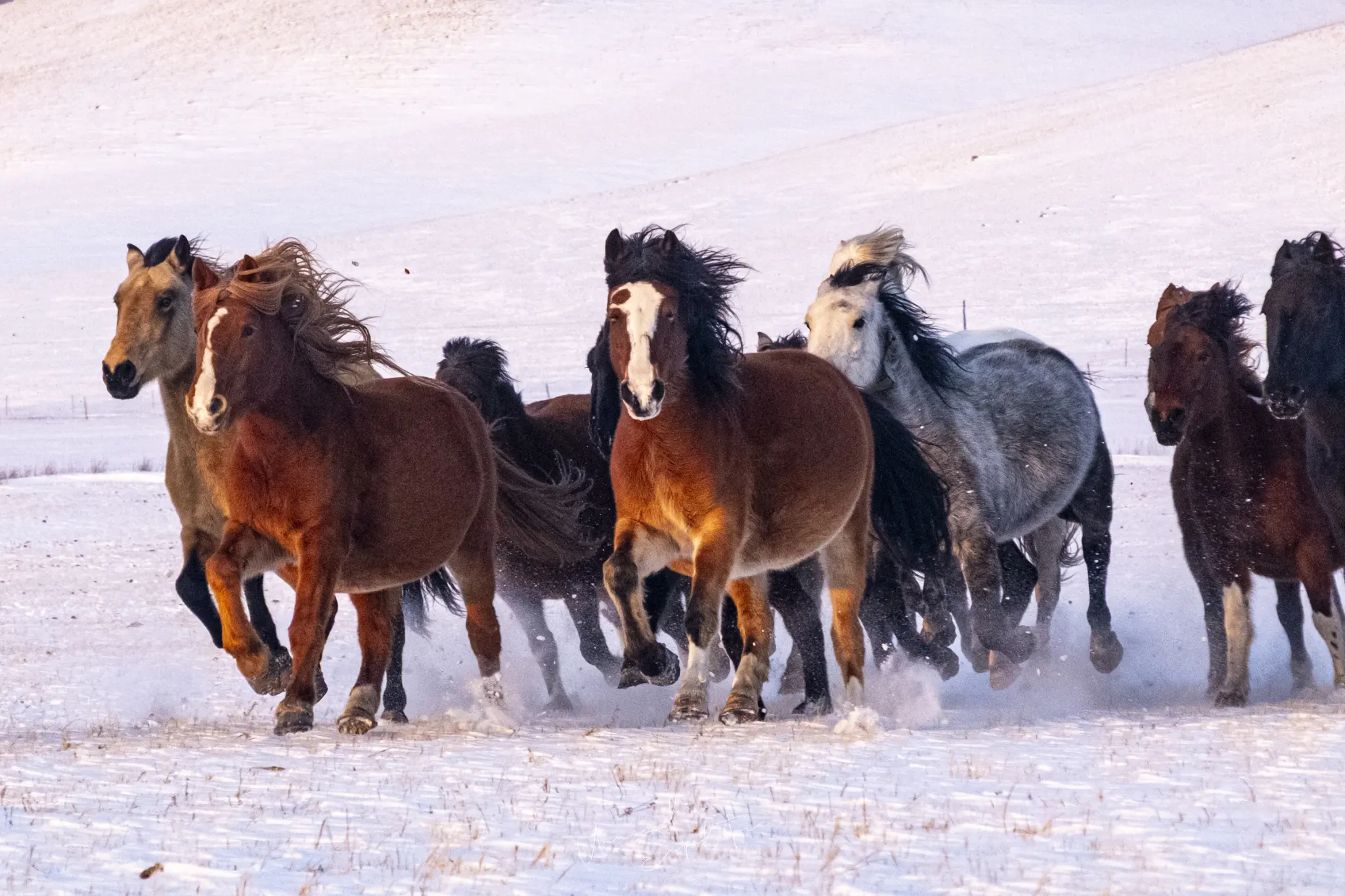
The Inner Mongolia horses are the reason most of our guests book. Local herders bring a herd across a river or a snowfield while you stand at a chosen spot with the light behind or beside the animals. In autumn the water throws up spray that glows in backlight; in winter the hooves lift powder snow and the breath of the horses hangs in the air. It is set up with the herders, which means you can plan a frame, choose a focal length before the run starts and ask for the run again when the light improves.
Two approaches work. A fast shutter, 1/2000s or quicker, freezes legs and spray. A slow pan at 1/30s to 1/60s turns the herd into streaks of colour with one sharp head if you are lucky. Most guests do both over a session. We cover technique in more detail in the Inner Mongolia photos article.
Ulan Butong grassland: where we photograph
The Ulan Butong grassland, also written Wulan Butong, sits on the Bashang plateau at the southern tip of Hexigten Banner in Chifeng, north of Beijing. China Daily describes it as hilly grassland between the Greater Khingan Range and the Yinshan Mountains, and that shape is what makes it photogenic: rolling slopes, birch and poplar groves, small lakes and rivers, and long views to the next ridge. In autumn the poplars turn gold and the grass goes tawny. In winter the same slopes are white, the birches carry rime on cold mornings, and the camels and horses stand out against the snow.
Ulan Butong is a large area. Herders, guides and photographers use a handful of named valleys and lakes, and the best spot changes with the wind, the snow and where the herds are kept that season. That is why we never publish a stop list: on the day we choose by light.
Camels, sheep and herders
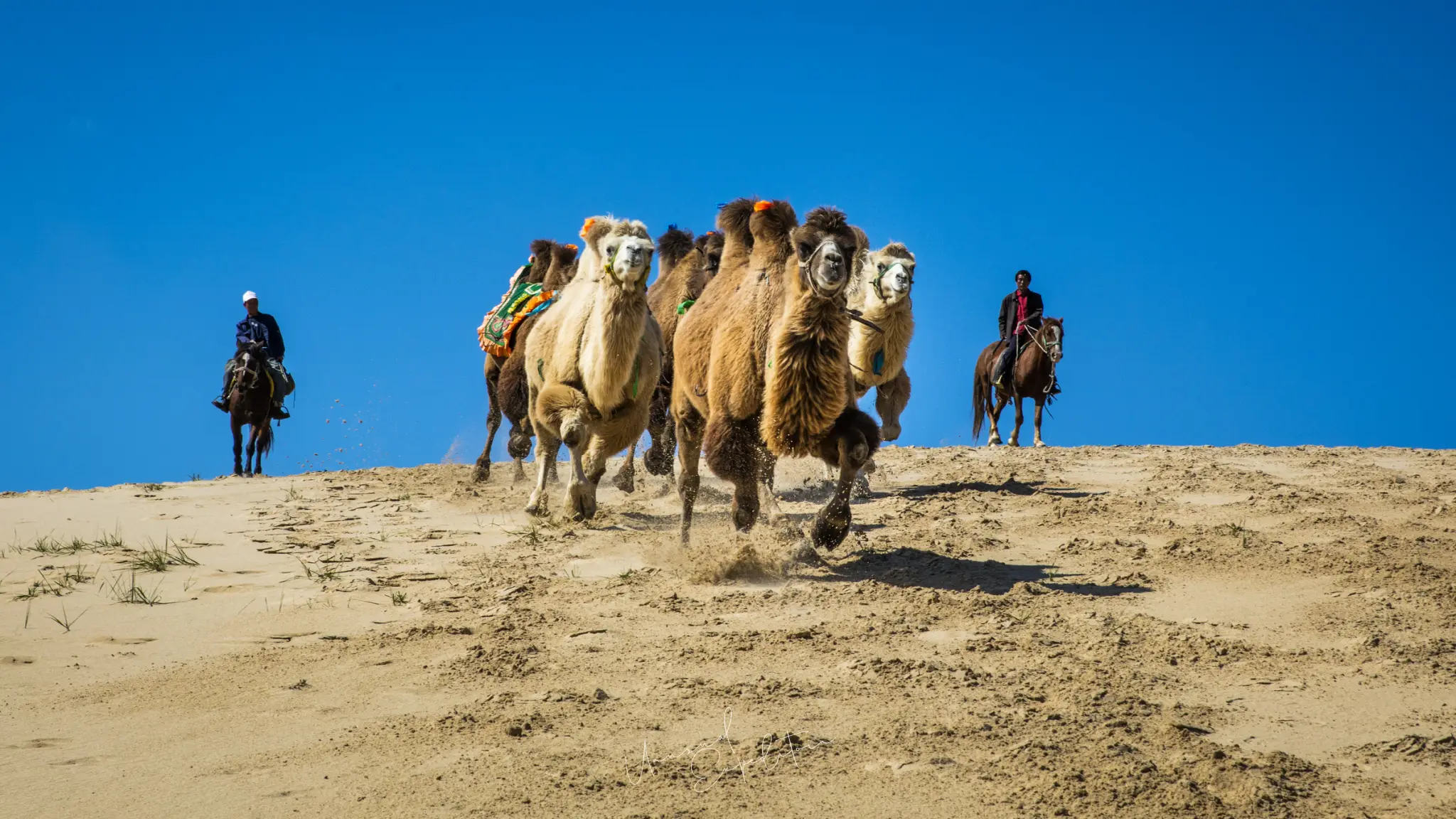
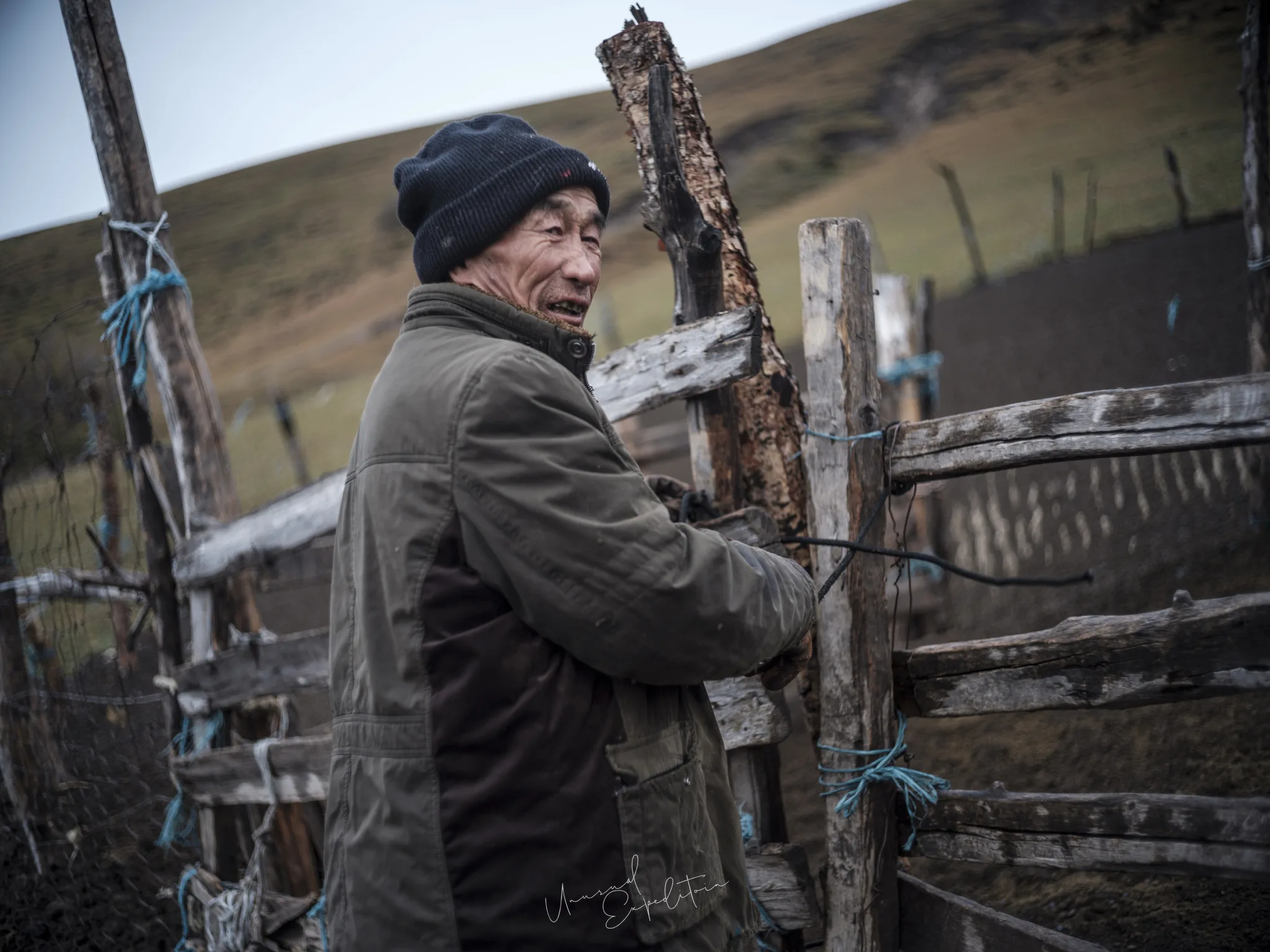
Bactrian camels, the two-humped kind, are the second subject. A string of camels crossing a ridge line against blue sky, or walking through snow with long shadows, gives calmer pictures than the horses and suits a longer lens. Sheep flocks moving across snow make graphic shapes from higher ground, and the herders themselves, in fur hats and long robes, sit for portraits when asked. Respect matters here: we ask before we photograph anyone close, and we pay the families who work with us.
Inner Mongolia winter tour: snow, cold and fireworks
An Inner Mongolia winter tour is our longest-running winter product. The grassland is quiet, the light is low all day, and snow simplifies every frame. Expect cold that is far below freezing; on clear January mornings it can fall below minus 20 degrees Celsius. Batteries drain, fingers stop working and lenses fog when you go back indoors, so the trip is built around short, well-planned sessions in the best light and long warm breaks in between. One evening usually ends with fireworks over a yurt, a long-exposure exercise in balancing the light on the snow with the burst above it.
Our January departures run on the Ulan Butong grassland and include a spare day so that a blizzard costs nothing. When the Inner Mongolia winter tour is running, the fare is indicatively S$2,400 to S$2,600 per person depending on the room; the destination page carries the current rate.
Owls on the Hulunbuir grassland
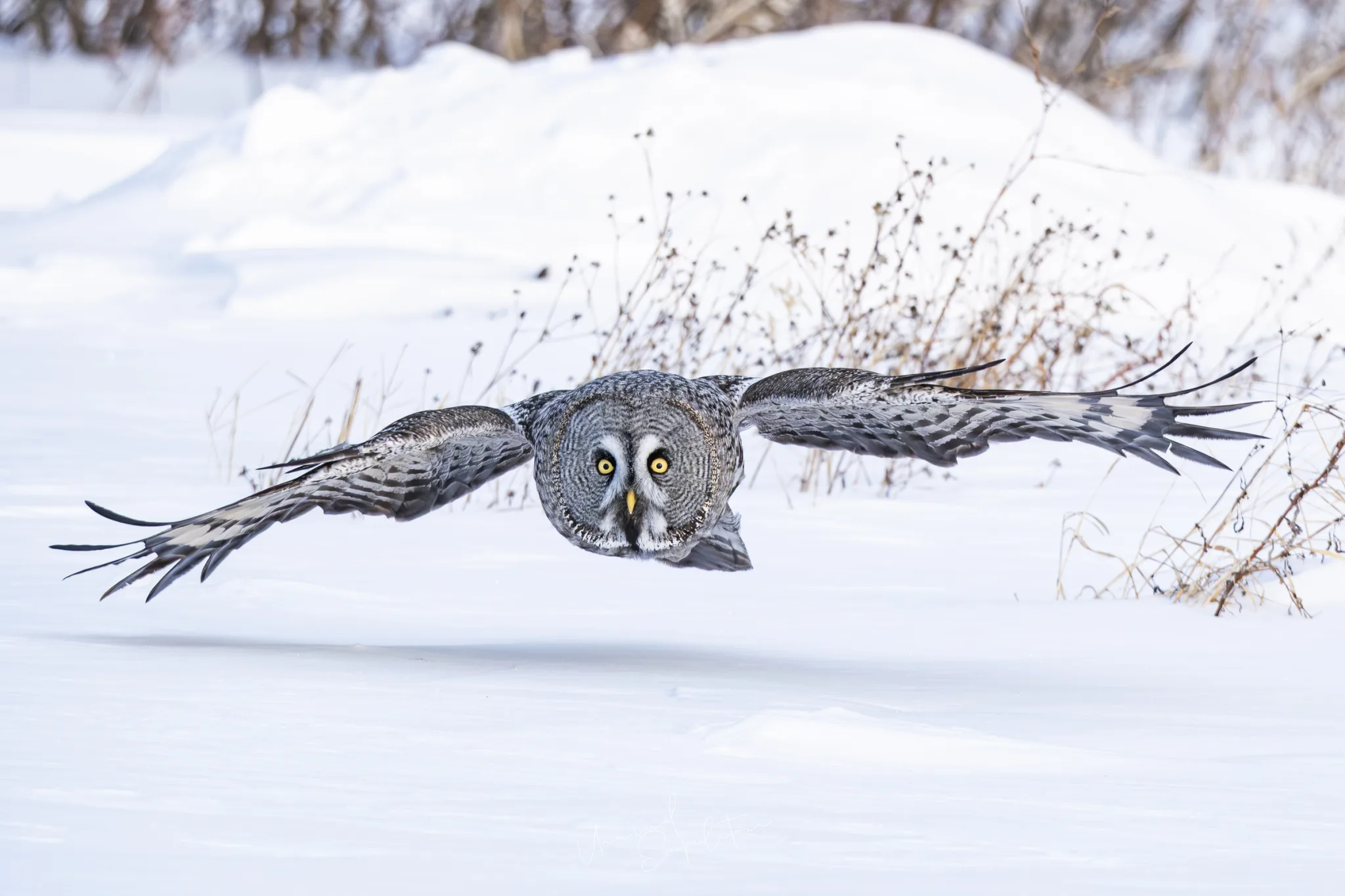
Further north, around Hailar, the Hulunbuir grassland in January is one of the few places where great grey owls and snowy owls hunt over open snow. CGTN and China Daily have both carried photographers' pictures of these birds hunting there. It is wildlife photography in the strict sense: long lenses, patience and the birds' own timing. We run it as a short owl trip that joins straight on to the horse tour. Read the Inner Mongolia owl photography guide for what to expect.
Autumn on the Bashang grassland
Autumn is the other season. From the second half of September the poplars and birches on the Bashang grassland turn yellow, frost appears on the grass at dawn and mist sits in the valleys. Horses running through a river under gold trees is the signature picture, and the evenings bring lakes at sunset and clear night skies over the yurts. Autumn is shorter and less predictable than winter: the colour can peak and drop within a couple of weeks. Our best time to visit Inner Mongolia guide compares the seasons month by month.
Is Inner Mongolia worth visiting?
Is Inner Mongolia worth visiting for a photographer? If you like animals in motion, wide landscapes and weather, yes. Few places let you photograph a running herd in good light, then camels, then a portrait, all in one morning, with a guide who can ask the herders for the exact run you want. It is less suited to people who want to stay warm, sleep late or see many sights; the grassland rewards staying put.
On my first winter trip I spent the whole morning freezing every hoof. By the second day I had the shutter at a thirtieth of a second, panning, and those blurred horses are still the pictures I like best from Inner Mongolia.
Joseph Mak, tour leader, Unusual Expedition
How to get there from Singapore
Singapore passport holders currently enter China visa-free for stays of up to 30 days, under the mutual arrangement announced by Singapore's ICA and MFA in 2024; check ICA or the Chinese embassy before you travel. Flights go nonstop from Singapore to Beijing, and the Ulan Butong grassland is reached by road from there. The owl trip flies on from Beijing to Hailar. Our Inner Mongolia tour from Singapore article covers flights, clothing and what a package includes.
Explore Inner Mongolia in depth
- Inner Mongolia photos: what the grassland looks like through the year
- Best time to visit Inner Mongolia for photography
- Inner Mongolia owl photography: great grey owls and snowy owls in Hulunbuir
- Inner Mongolia tour from Singapore
Many guests pair the grassland with northeast China's ice and snow; see our Harbin photography tour guide.
Photograph Inner Mongolia with us
Our winter horse trip and the owl trip that runs before it are listed with current dates and fares on the China photography tours page. Autumn trips run when there is demand; write to us if you would like one.
Join the Inner Mongolia photography tour
Inner Mongolia Winter Owl Photo Tour – China departs 01 Jan 2027 To 04 Jan 2027, led by Joseph Mak. Small group, photography first. All Inner Mongolia photography tours.
Explore Inner Mongolia in depth
- Inner Mongolia Tour from Singapore: Flights, Visa, Cold and What to WearChina
- Inner Mongolia Photos: What the Grassland Looks Like Through the YearChina
- Inner Mongolia Owl Photography: Great Grey Owls and Snowy Owls in HulunbuirChina
- Best Time to Visit Inner Mongolia for Photography: Autumn or WinterChina
Upcoming Photo Tours
- Egypt Photo Tour – EgyptEgypt 12 Dec 2026 To 20 Dec 2026
- Inner Mongolia Winter Owl Photo Tour – ChinaChina 01 Jan 2027 To 04 Jan 2027
- Inner Mongolia Winter Photo Tour – ChinaChina 05 Jan 2027 To 11 Jan 2027
- Mekong And Central Highland Vietnam Photo Tour - VietnamVietnam 16 Jan 2027 To 24 Jan 2027