
Buenos Aires at Night: Photographing Avenida Corrientes, Neon and Colectivos
Buenos Aires at night for photographers: Avenida Corrientes, the pizzeria neon, colectivo buses, the Obelisco, settings and safety.
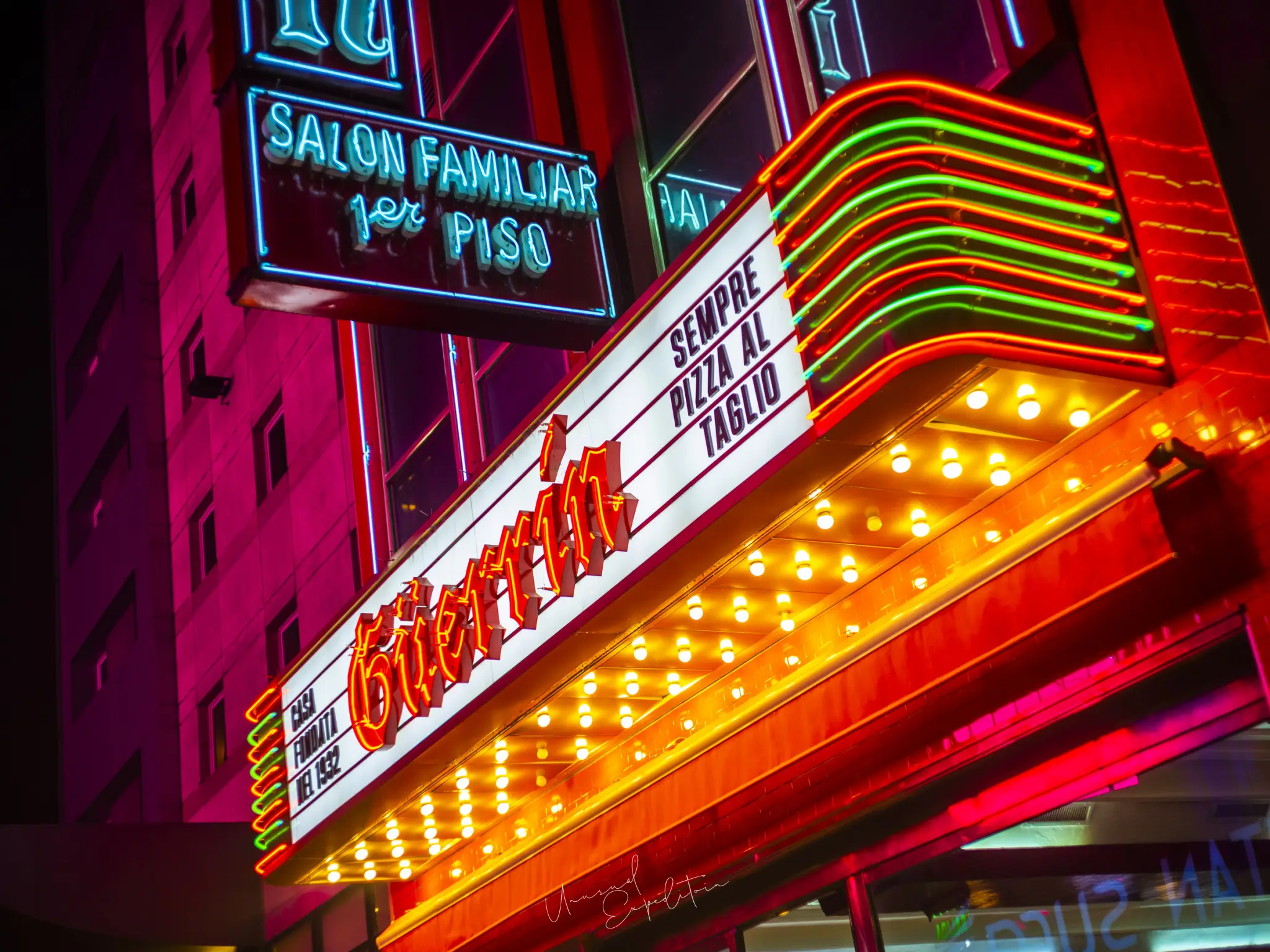
Buenos Aires at night is one of the best street subjects in South America, and the place to start is Avenida Corrientes around the Obelisco. The old pizzerias and theatres light the avenue in neon, colectivo buses and black and yellow taxis stream past, and the city stays out late, so the pavements are busy long after dark. Bring a fast lens or a 24-70mm, raise the ISO before you reach for a tripod, keep one camera and nothing else, and let the colour of the signs set the mood.
This is one of the destination guides in our Argentina photography tour guide. The photographs here are our own, taken on Corrientes and the streets around it after dark; we hold the rights to them, and the notes come from photographing these streets first hand.
Buenos Aires at night: why Avenida Corrientes
Avenida Corrientes is the avenue of the theatres, the bookshops and the pizzerias, the stretch residents call the street that never sleeps. For a photographer it has three things that are hard to find together in one place: signs that were made to be seen at night, a steady flow of traffic and people, and long straight sightlines to the Obelisco, the white needle on Avenida 9 de Julio that anchors the view down the avenue. You do not need a plan beyond walking it. Start near the Obelisco when the sky still holds some blue, then work slowly along the pavements as the signs take over.
Avenida Corrientes Buenos Aires: the neon of the old pizzerias
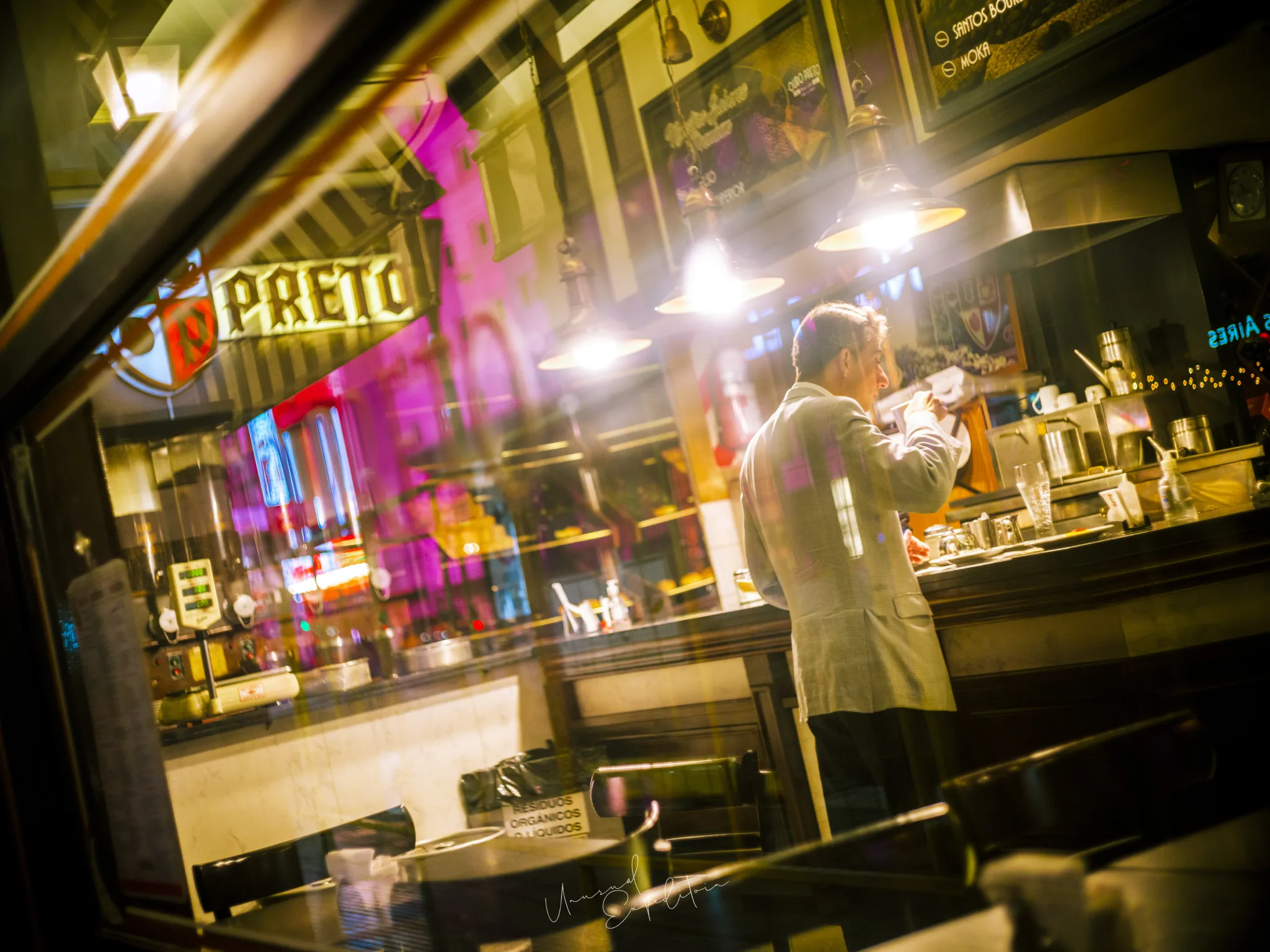
The pizzerias are the heart of Corrientes at night. Pizzeria Guerrin, founded in 1932 by two Italian immigrants and still at the same address on the avenue, is listed by the city tourism site among the oldest pizzerias on Corrientes, and its marquee, a curve of red and green neon with rows of bulbs underneath, is the picture in the feature photograph at the top of this guide. Shoot it from an angle, close, and let the lettering run diagonally across the frame. The windows are a second subject: the counters, the bright lamps and the waiters at work, seen through the glass with the street reflected over them. Keep the reflections; they put the street into the picture.
Photos of Buenos Aires: colectivos, taxis and street life
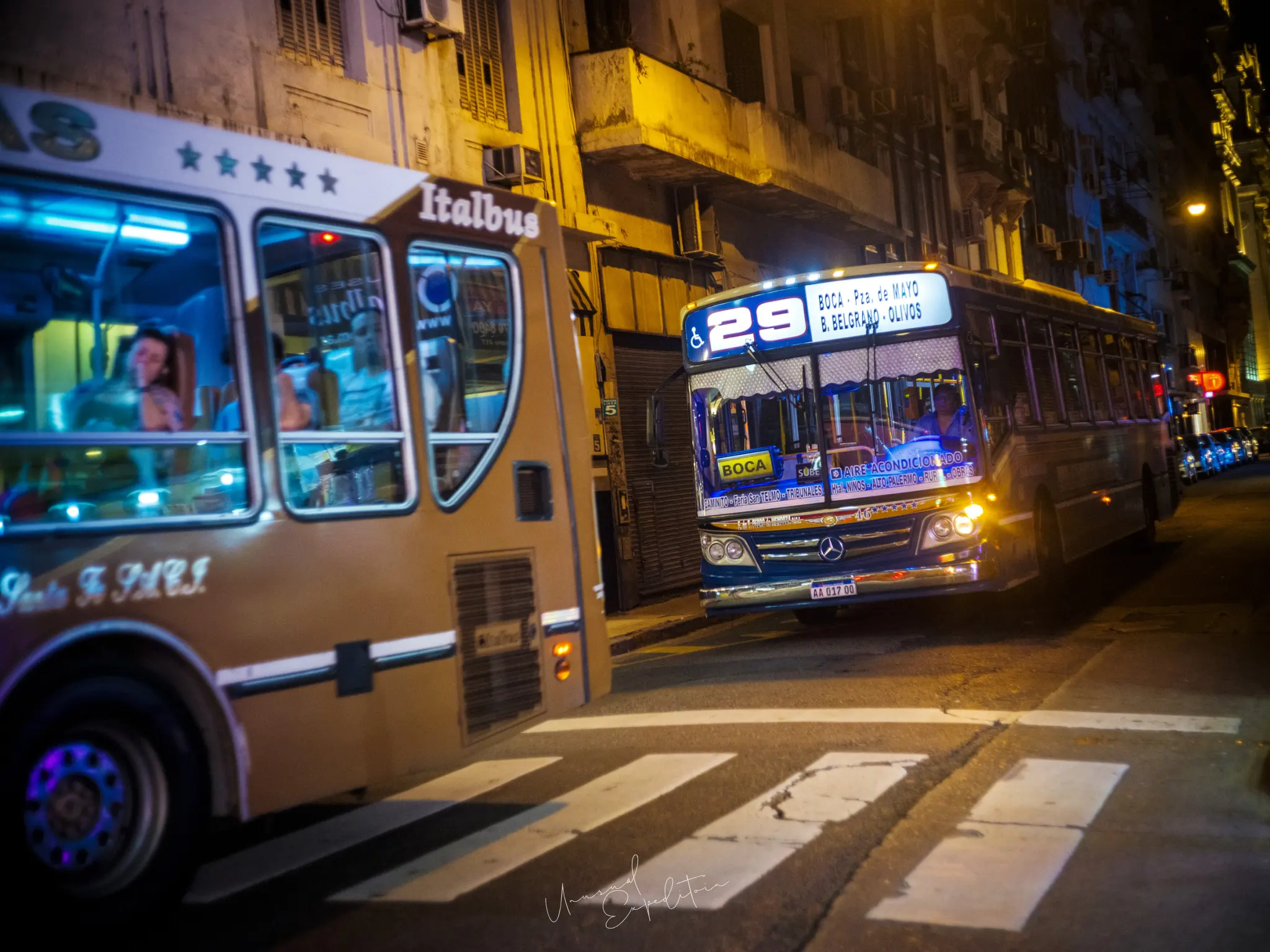
The colectivos, the city buses, are some of the most photogenic vehicles in Latin America. Many carry painted lettering, coloured route numbers lit above the windscreen and interior lights that glow blue or green at night. Stand at a crossing and wait for one to swing round the corner: a shutter around 1/30s keeps the bus readable while the background blurs, and a faster one freezes the driver at the wheel. The black and yellow taxis are the other constant of the avenue; their roofs catch the neon from the signs above. People are part of it too. The pavements stay busy late, and a wide lens at waist height records the flow without stopping anyone.
Corrientes at night is the easiest street work I know. The signs light the faces for you, the buses keep coming, and nobody minds a camera because everyone is out to eat.
Joseph Mak, tour leader, Unusual Expedition
Camera settings for Buenos Aires at night
Neon is brighter than it looks. Expose for the signs, not the shadows, or the letters burn out into white blobs; underexposing by a stop and lifting the shadows later keeps the colour in the tubes. Mixed light is the norm on Corrientes, with warm tungsten in the windows, magenta and green neon on the signs and cold LED street lamps, so shoot raw and set white balance by eye afterwards. Most of this work is handheld. A modern camera at ISO 3200 to 6400 with a lens at f/2 or f/2.8 gives shutter speeds fast enough for people. A tripod on a busy pavement gets in everyone's way; save it for a quiet corner if you want long light trails from the traffic.
| Subject | Shutter | Approach |
|---|---|---|
| Pizzeria neon signs | Fast, 1/250s or more | Expose for the tubes, shoot at an angle, fill the frame |
| Windows and counters | 1/60s to 1/125s | Keep the street reflections, focus through the glass |
| Colectivos at a corner | Around 1/30s | Pan with the bus, let the background streak |
| The avenue to the Obelisco | 1/15s handheld or a long exposure | Shoot at blue hour, then again when the signs dominate |
Start with the avenue in the last blue of the sky and leave the close neon work for full dark, when the signs carry the frame on their own.
When to photograph Buenos Aires at night
Any night of the year works, because the signs do not change with the season. The difference is comfort and crowds. Buenos Aires summer, which the city tourism office gives as running from late December to late March, brings warm, humid nights and the busiest pavements; autumn and spring evenings are mild and many visitors find them the most pleasant. Weekend nights are usually the liveliest on Corrientes, with theatre crowds on the pavements and queues outside the pizzerias. Blue hour is short in any season: arrive early, be in position near the Obelisco, and shoot the avenue before the sky goes black.
Is Buenos Aires safe at night with a camera?
The centre of Buenos Aires is busy at night, and that helps, but the UK Foreign, Commonwealth and Development Office lists phone snatches, bag snatches from motorbikes, pickpocketing and distraction thefts as the main risks, and names Avenida 9 de Julio among the areas where visitors should be particularly careful. Carry one camera on a strap across your body, keep spare batteries and cards in an inside pocket, and do not leave a phone on a cafe table. Stay on the lit, busy stretches of Corrientes and take a taxi or a booked car back to your hotel. The trip planning guide has more on safety and getting around.
Day and night in one trip
Buenos Aires rewards pairing the two moods. By day, the painted walls and the dancers of La Boca, which our Caminito, La Boca tango guide covers in detail; by night, Corrientes and the centre. The two sets of pictures sit well together, one full of hard sun and primary colour, the other of neon and shadow, and they tell you more about the city than either does alone.
Photograph Buenos Aires at night with us
We run Buenos Aires as a private trip on request, for individuals, couples, families and photographers who want the night streets and La Boca at their own pace. We arrange all the logistics to your needs, a photographer or photography coaching can be added at extra cost, and because no tour leader travels, the cost can be lower than our group tours. Ask at least two months ahead; last-minute trips can be arranged. See our private tours page and every Argentina guide on the Argentina photography tours page.
Ask us about Buenos Aires at night
Argentina photography tours
The next Argentina departure is announced on the Argentina photography tours page, with previous expeditions and all the planning guides.
Explore Argentina in depth
- Argentina Photography Tour Guide: Buenos Aires Tango, Night Streets and BeyondArgentina
- How to Plan a Photography Trip to Argentina: Entry, Seasons, Money and SafetyArgentina
- Caminito, La Boca: Photographing Tango in Buenos AiresArgentina
Upcoming Photo Tours
- Egypt Photo Tour – EgyptEgypt 12 Dec 2026 To 20 Dec 2026
- Inner Mongolia Winter Owl Photo Tour – ChinaChina 01 Jan 2027 To 04 Jan 2027
- Inner Mongolia Winter Photo Tour – ChinaChina 05 Jan 2027 To 11 Jan 2027
- Mekong And Central Highland Vietnam Photo Tour - VietnamVietnam 16 Jan 2027 To 24 Jan 2027