
Caminito, La Boca: Photographing Tango in Buenos Aires
Caminito La Boca and tango in Buenos Aires: the painted street, the dancers, hard sun and shadow, lenses, tipping and staying safe.
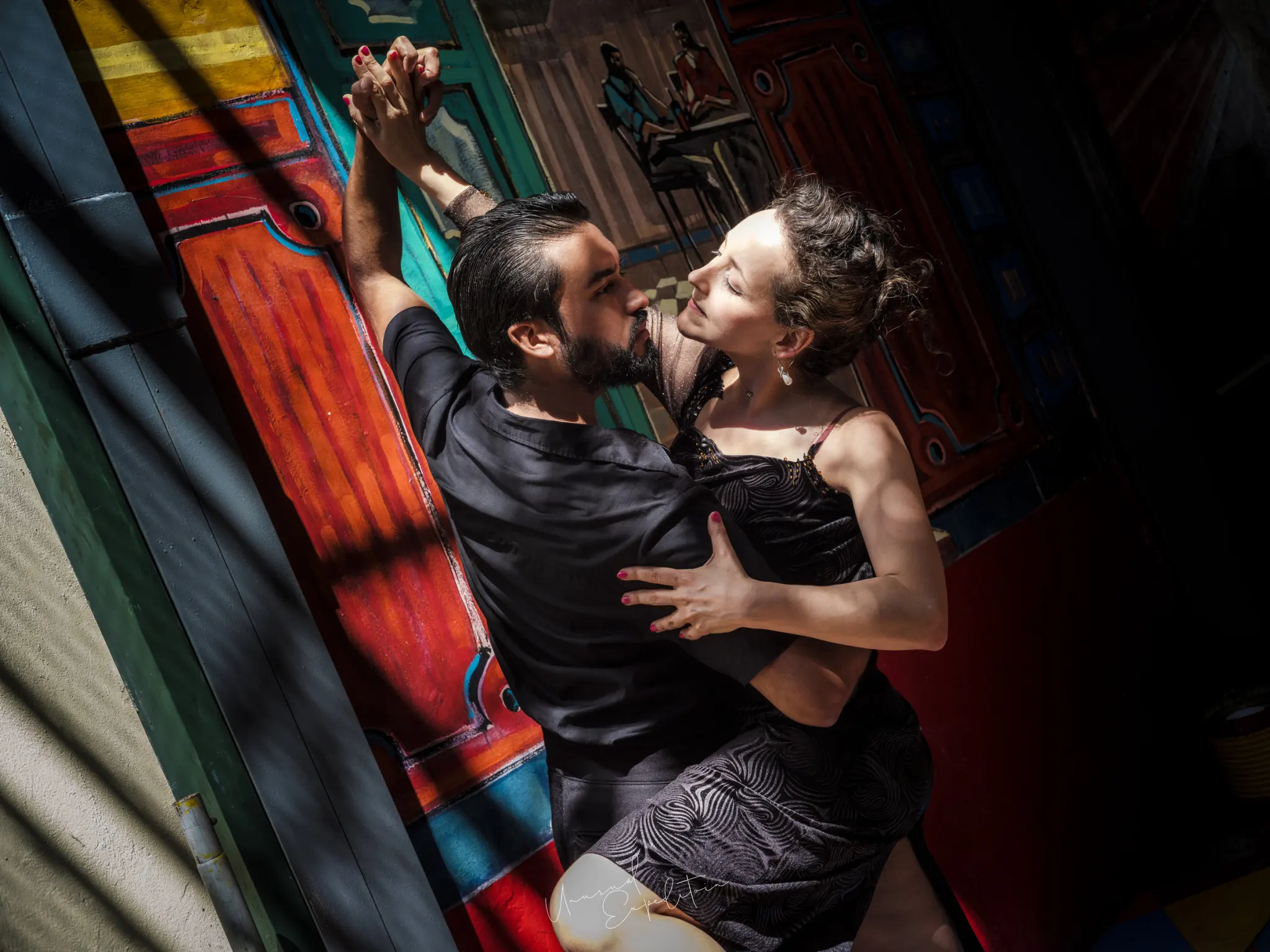
Caminito, La Boca, is the painted street in the old port district of Buenos Aires where tango meets colour: houses in red, yellow, green and blue, art stalls hung with paintings, and dancers in black who pose and dance for visitors. For a photographer it is a day subject. Go when the sun is out, use the hard shadows on the walls as part of the frame, agree a tip with the dancers before you start, and stay inside the tourist area, where the police are visible.
This guide belongs to our Argentina photography tour guide. The photographs in it are our own, taken when we photographed tango in La Boca; we hold the rights to them, and the notes come from knowing the street first hand.
Caminito La Boca: where it is and what you photograph
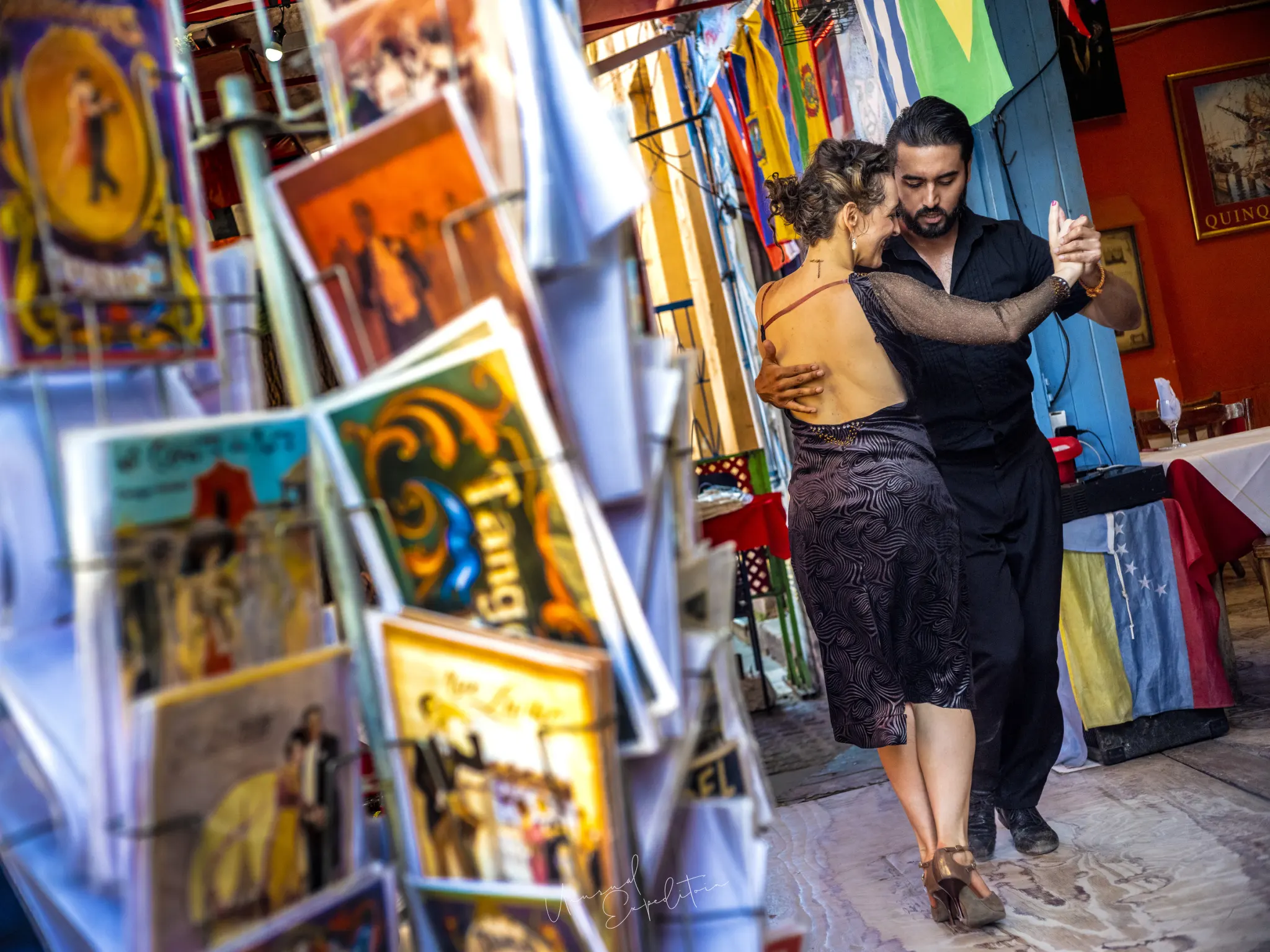
La Boca is the neighbourhood at the mouth of the Riachuelo, south of the city centre, where the city's old port grew up and where many immigrant families settled. Caminito is its short pedestrian street. The Buenos Aires city tourism office calls it a street museum: the houses are the kind of tenements immigrant families lived in, built of timber and corrugated iron and painted in bright colours, and the street was brought back to life from the 1950s by the painter Benito Quinquela Martin and his neighbours. Today the subjects are the walls themselves, the art stalls, the souvenir racks of tango posters and, above all, the dancers. A small area holds a lot of backdrops, which is why a few hours here can fill a card.
Tango Buenos Aires: photographing the dancers
Tango was born on the Rio de la Plata, and in 2009 UNESCO inscribed it on its list of the Intangible Cultural Heritage of Humanity, on a joint nomination from Argentina and Uruguay. In La Boca you meet it as street performance. Couples dance outside the cafes and pose with visitors, and many are happy to pose for a photographer for a few minutes in return for a tip. Agree it before you begin, in pesos, and agree what you want: a few figures in front of one wall, or a short walk to two or three backdrops. Ask for the dramatic poses tango is known for, the lean, the hook of a leg, the woman's head thrown back, and then ask them simply to dance, because the moments between poses are often the better pictures.
Light in La Boca: use the hard sun
Much of the colour in La Boca sits in narrow passages and doorways, and on a sunny day the light comes in as hard stripes through roofs, railings and balconies. You can wait for cloud, or you can use it. The frame at the top of this page is the second approach: the dancers placed in a band of sun against a red door, with the shadow stripes falling across the wall beside them. Meter for the brightest skin tone and let the shadows go black, which makes the colours of the door glow and hides the clutter behind. A small reflector or a white card held by a friend lifts a face that falls into shadow. When the sun is high and the contrast is too much for colour, think in black and white: the same doorway, the same dancers, and a picture about shape and gesture.
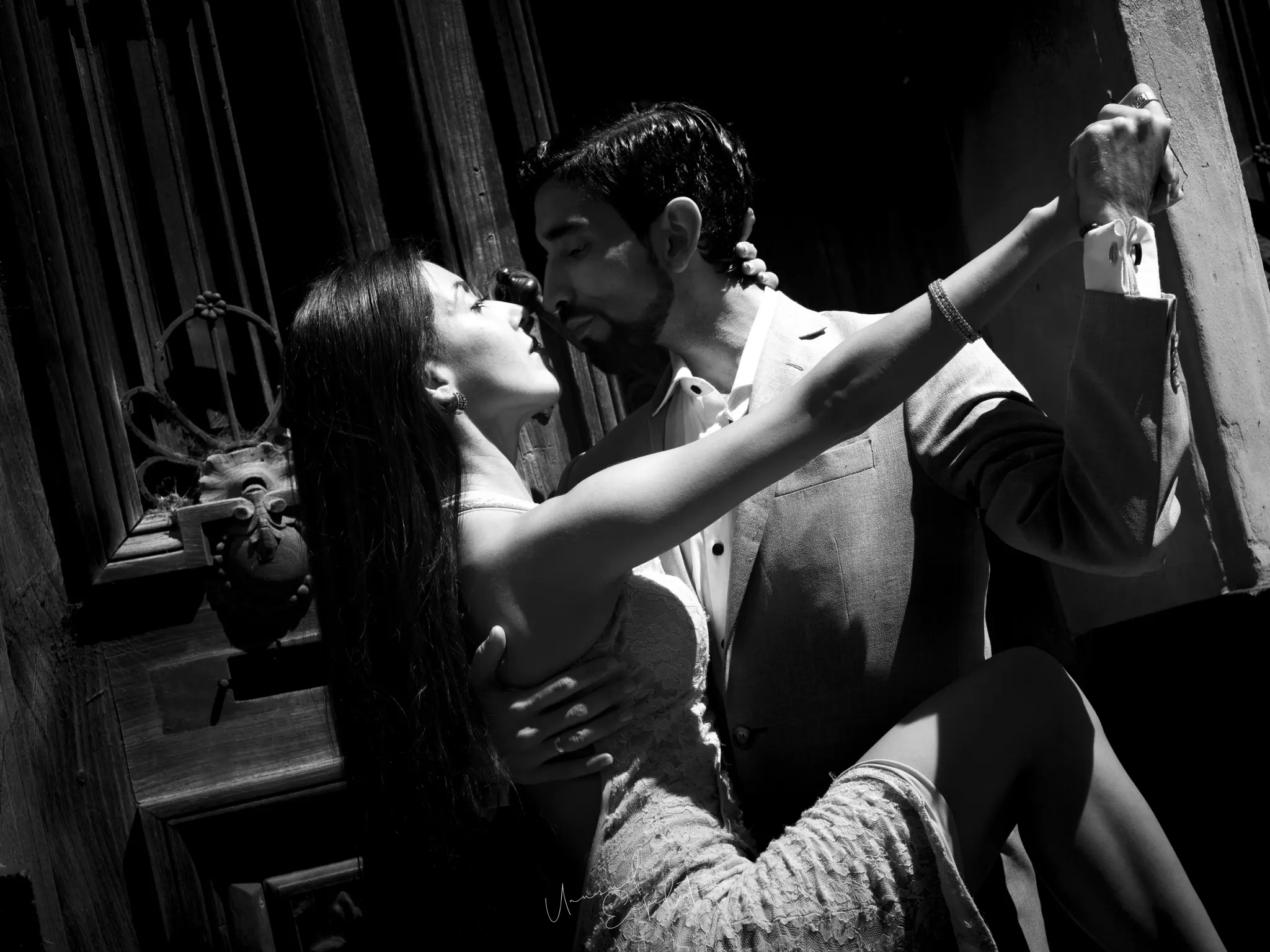
The colour in La Boca is so loud that the first frames all look like postcards. Once I put the dancers in the shadow lines and let the walls go dark around them, the street started to look like tango.
Joseph Mak, tour leader, Unusual Expedition
Lenses and settings for tango in the street
A 24-70mm covers almost everything at Caminito: the wide end for a couple in front of a whole painted facade, the long end for faces and hands. A fast prime is the second lens worth carrying, for the shaded doorways and for separating the dancers from a busy background. Tango moves fast in the turns, so keep the shutter at 1/500s or quicker when they dance, and slow down only for the held poses. Shoot in bursts during the figures; the feet and the line of the bodies rarely line up in a single frame. The table sums up the main backdrops.
| Backdrop | Light it suits | Lens | Picture |
|---|---|---|---|
| Painted doors and walls | Hard sun and shadow stripes | 24-70mm | Couple in a band of light, colour behind |
| Art stalls | Open shade | 24-70mm | Dancers framed by paintings of tango |
| Souvenir racks and posters | Bright overcast | 24-70mm wide | The street as it is, busy and colourful |
| Dark doorways | Sun at the edge of a doorway | Fast prime | Black and white, gesture and shape |
Work the walls in the brightest hours and leave the doorways for when the sun has moved off the street.
La Boca Buenos Aires: is it safe with a camera?
Caminito itself is busy with visitors and patrolled by police. The UK Foreign, Commonwealth and Development Office advises being vigilant in La Boca, particularly on the streets outside the Caminito tourist area, and staying within the designated tourist area. In practice that means arriving and leaving by taxi or a booked car, keeping to Caminito and the streets next to it, going by day, and carrying one camera, not a bag of lenses. Keep the camera strap on, keep your phone in a front pocket, and if someone tells you there is something on your clothes, walk away: distraction thefts are the main risk the FCDO describes for Buenos Aires.
Best places for tango in Buenos Aires beyond Caminito
Street tango in La Boca is staged for visitors, and it is the easiest tango to photograph. Two other kinds are worth knowing. Tango shows, many with dinner, are performed in theatres and restaurants around the city; photography rules differ from venue to venue, and many allow none during the performance, so ask when you book. Milongas are the social dances where Buenos Aires residents dance tango themselves, often late into the night; they are a place to watch and to dance, and a camera needs the organiser's permission and the dancers' goodwill. For photography, La Boca by day and a show for the music give you both sides of it. In the evening, the neon of Avenida Corrientes is a short ride away, and our Buenos Aires at night guide picks up from there.
Caminito Buenos Aires: practical notes
Keep a supply of small notes for tips and for the stalls. Respect the stallholders: their paintings are for sale, and a frame built around a stall is a reason to buy a postcard or ask first. Faces in La Boca belong to people who live or work there; photograph the dancers who have agreed, and keep others wide or out of frame. Sun cream and water matter more than you think on a summer afternoon in the narrow streets. For entry, money and how to get around the city, see how to plan a photography trip to Argentina.
Photograph tango in Buenos Aires with us
Buenos Aires runs as a private trip on request, for individuals, couples, families and photographers who want time in La Boca and on the night streets at their own pace. We arrange the logistics to your needs, a photographer or photography coaching can be added at extra cost, and because no tour leader travels, the cost can be lower than a group tour. Ask at least two months ahead; last-minute trips can be arranged. Read more on our private tours page and see every Argentina guide on the Argentina photography tours page.
Argentina photography tours
The next Argentina departure is announced on the Argentina photography tours page, with previous expeditions and all the planning guides.
Explore Argentina in depth
- Argentina Photography Tour Guide: Buenos Aires Tango, Night Streets and BeyondArgentina
- How to Plan a Photography Trip to Argentina: Entry, Seasons, Money and SafetyArgentina
- Buenos Aires at Night: Photographing Avenida Corrientes, Neon and ColectivosArgentina
Upcoming Photo Tours
- Egypt Photo Tour – EgyptEgypt 12 Dec 2026 To 20 Dec 2026
- Inner Mongolia Winter Owl Photo Tour – ChinaChina 01 Jan 2027 To 04 Jan 2027
- Inner Mongolia Winter Photo Tour – ChinaChina 05 Jan 2027 To 11 Jan 2027
- Mekong And Central Highland Vietnam Photo Tour - VietnamVietnam 16 Jan 2027 To 24 Jan 2027