
Cape Cross Seal Colony Photography: Fur Seals, Surf and Close Frames
Cape Cross seal colony photography: Cape fur seals, surf and spray, when the colony is busiest, and lens and motion tips.
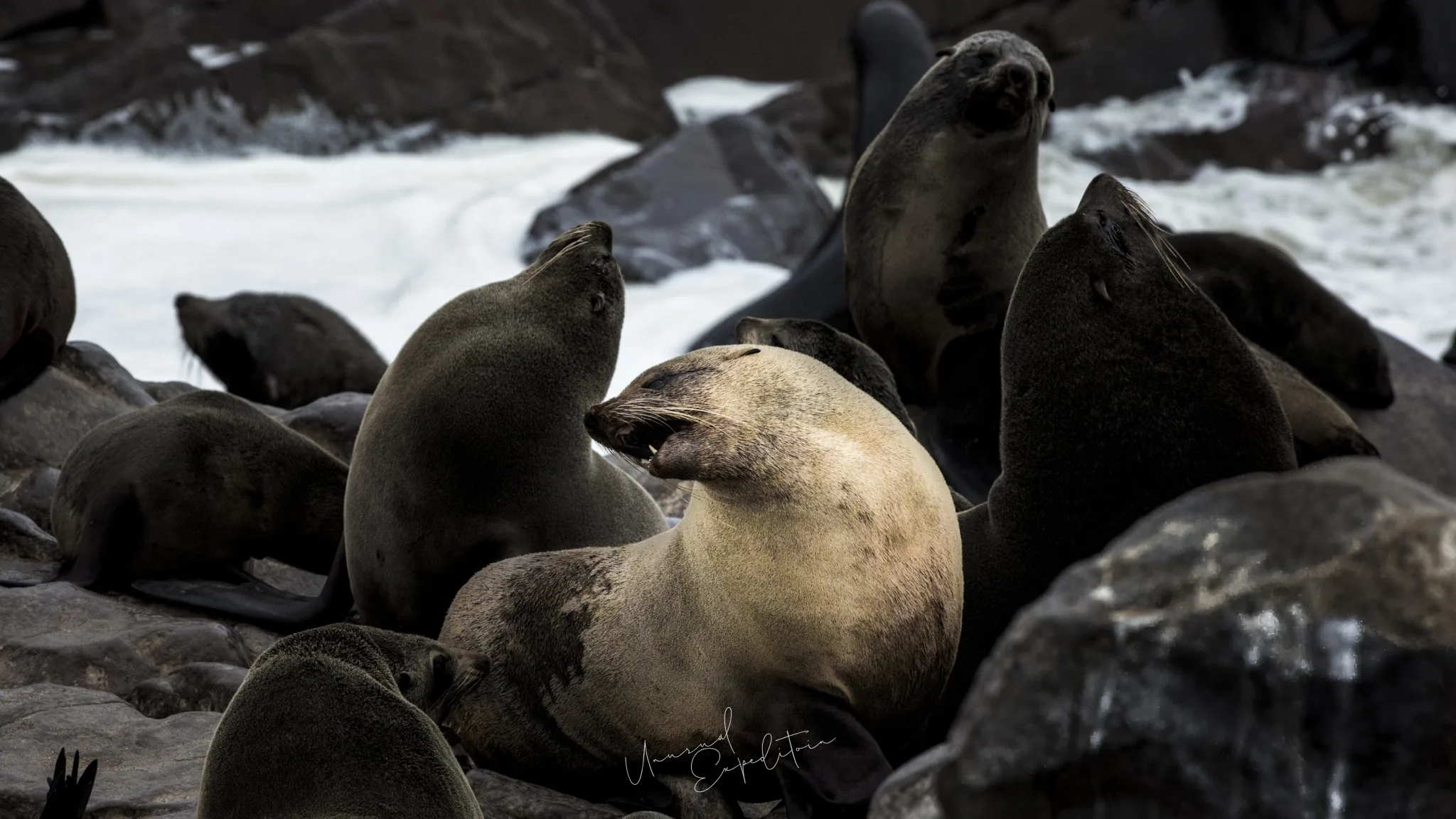
The Cape Cross seal colony is a rocky headland on Namibia's Atlantic coast where Cape fur seals pack the shore and the surf pours over them. It is a noisy, smelly and endlessly photogenic place. For a photographer the pictures are close, quick and physical: a seal looking up at the lens, a group huddled as white water floods over the rocks, a slow shutter turning surf into a blur.
Cape Cross is one of the three subjects in our Skeleton Coast photography tour guide, which also covers the shipwrecks and Walvis Bay, and it belongs to the wider Namibia photography tour guide. The photographs here are our own, taken on our trips to the reserve; we hold the rights to them, and the notes come from knowing the place first hand.
What is the Cape Cross Seal Reserve?
Cape Cross Seal Reserve is a protected area on the coast north of Swakopmund. The Ministry of Environment, Forestry and Tourism describes it as a breeding colony of Cape fur seals, with the main breeding season in November and December, when the numbers are at their highest. Seals are present at other times of the year too, though numbers vary. A path and viewing walkway run beside the rocks, so you can work from a safe and legal position, close enough for a 70-200mm to fill the frame.
Cape Cross seal colony: when is it busiest?
According to the ministry, the colony peaks in November and December, with the pups born in that period. Other sources give a slightly wider window, and note that the timing varies from year to year, so treat any month as approximate. Outside the peak the colony is smaller but still active, and the light and sea may be better. If your priority is pups and the full colony, plan for the breeding season, and if it is cleaner pictures and fewer visitors, consider another month.
Cape fur seal photography: how do you get a portrait?
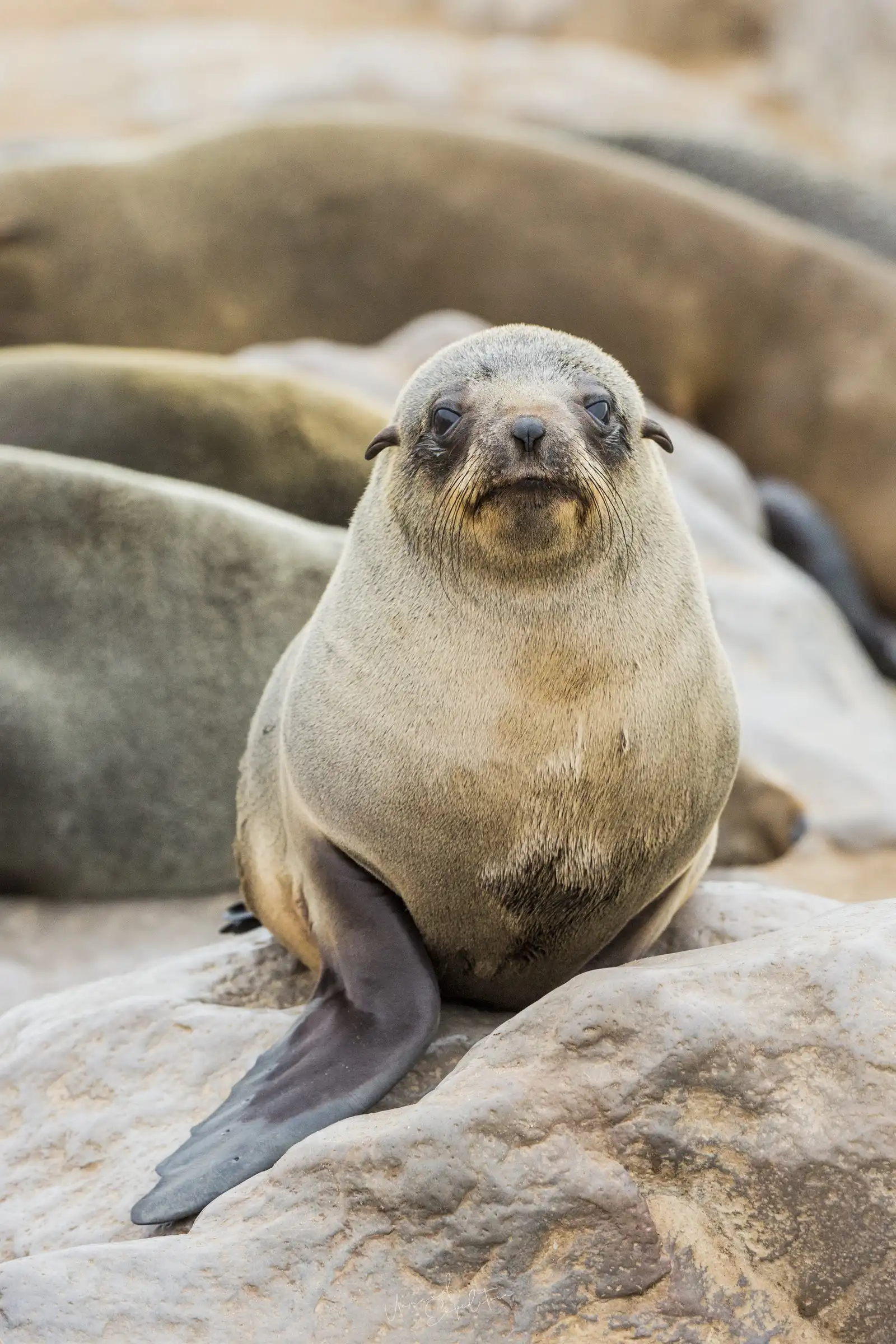
Look for a seal that has turned toward you and has clean space behind it. A 70-200mm lets you fill the frame from the walkway, and a wide aperture isolates the animal against the crowd. Shoot at eye level where you can, and wait for the moment when the animal looks up, which gives the picture its character. In a huge colony, the individual is easy to lose, so isolate one or two animals instead of trying to cover the whole shore. Stay on the path and never approach the animals.
How do you photograph seals in surf?
The action is where the waves meet the rocks. A fast shutter of 1/1000 second or more freezes the spray and the animals' movements, while a slower one around 1/30 second turns the water to cloud. Both work, and it is worth shooting both. Watch for the moment a wave breaks over a group of seals, and be ready to take a burst as it washes back. Keep the horizon level, and wipe the lens if spray reaches it. Cloud and fog soften the light, which suits wet rocks and dark fur.
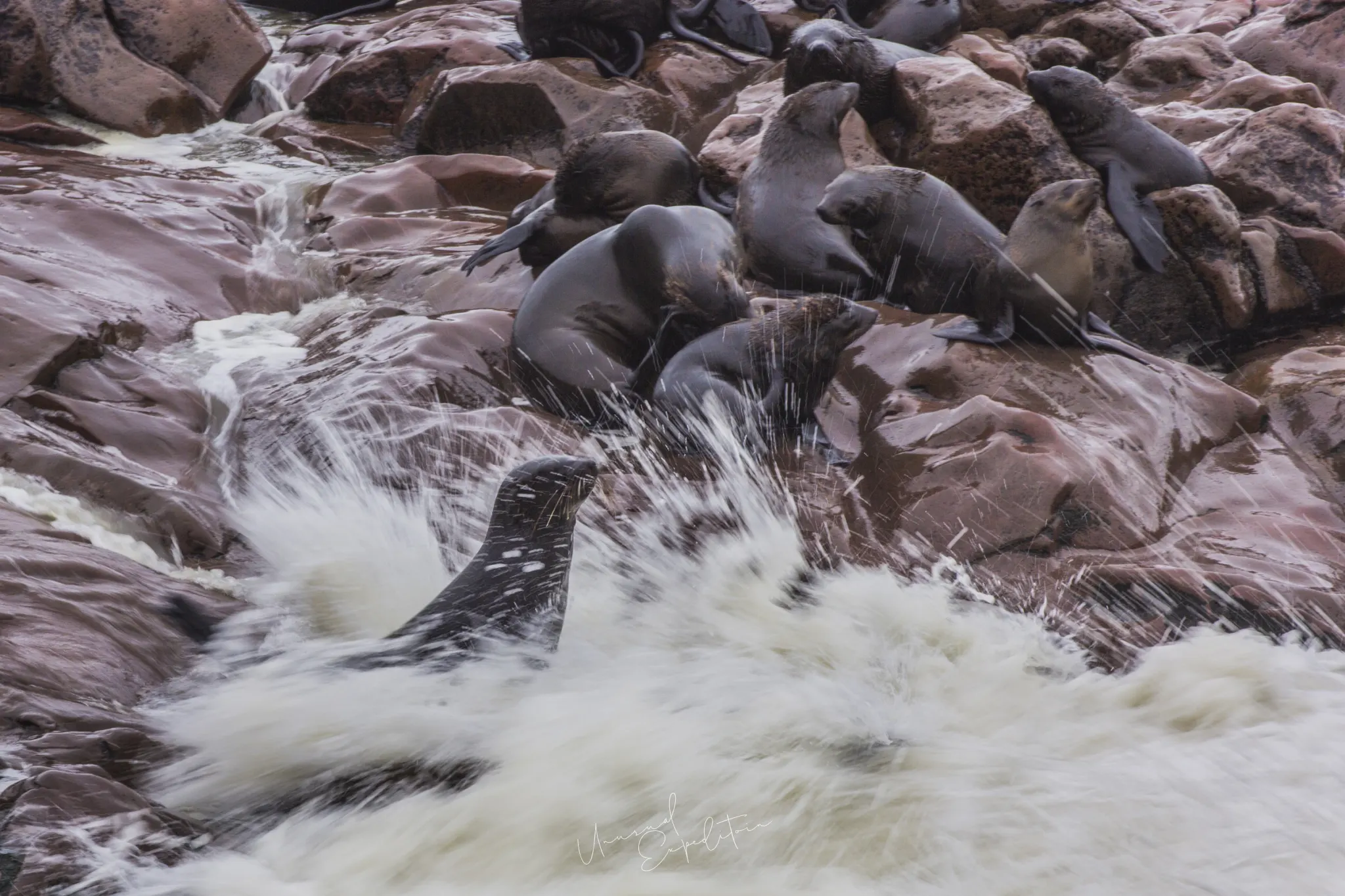
At Cape Cross I stopped counting seals and started following the water. The wave is the picture: where it breaks, where it washes back, and which animals it catches.
Joseph Mak, tour leader, Unusual Expedition
Motion blur at the colony
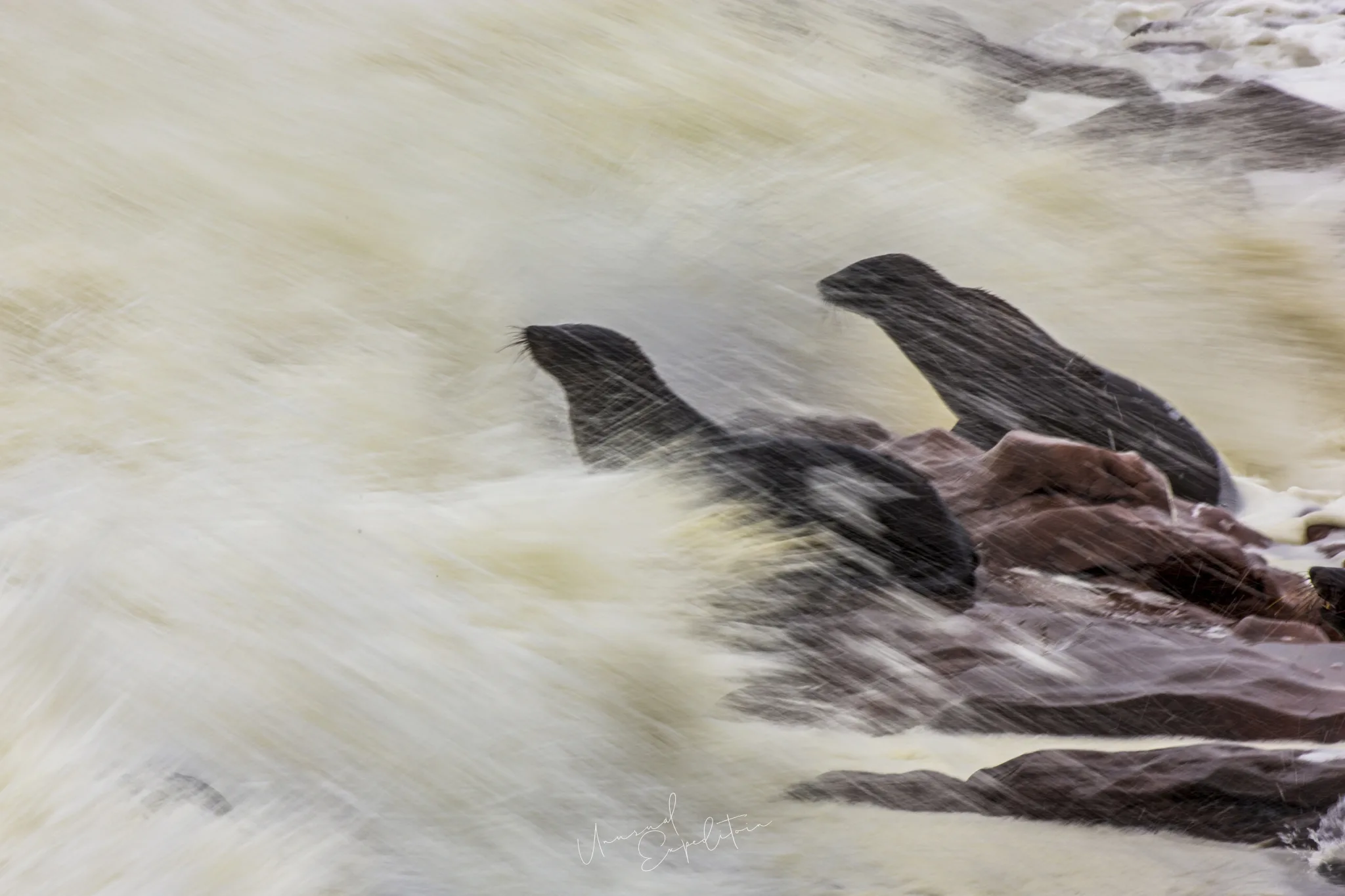
A slow shutter changes the character of the scene. With a tripod or a steady rest, 1/15 or 1/30 second blurs the surf into a pale veil while the more static seals stay readable, and moving animals turn to streaks. The effect is abstract and quiet, and it counters the noise of the place. Use a neutral density filter if the light is bright, and take many frames, since only a few will have the right balance of blur and sharpness. It is a good way to make something fresh from a heavily photographed subject.
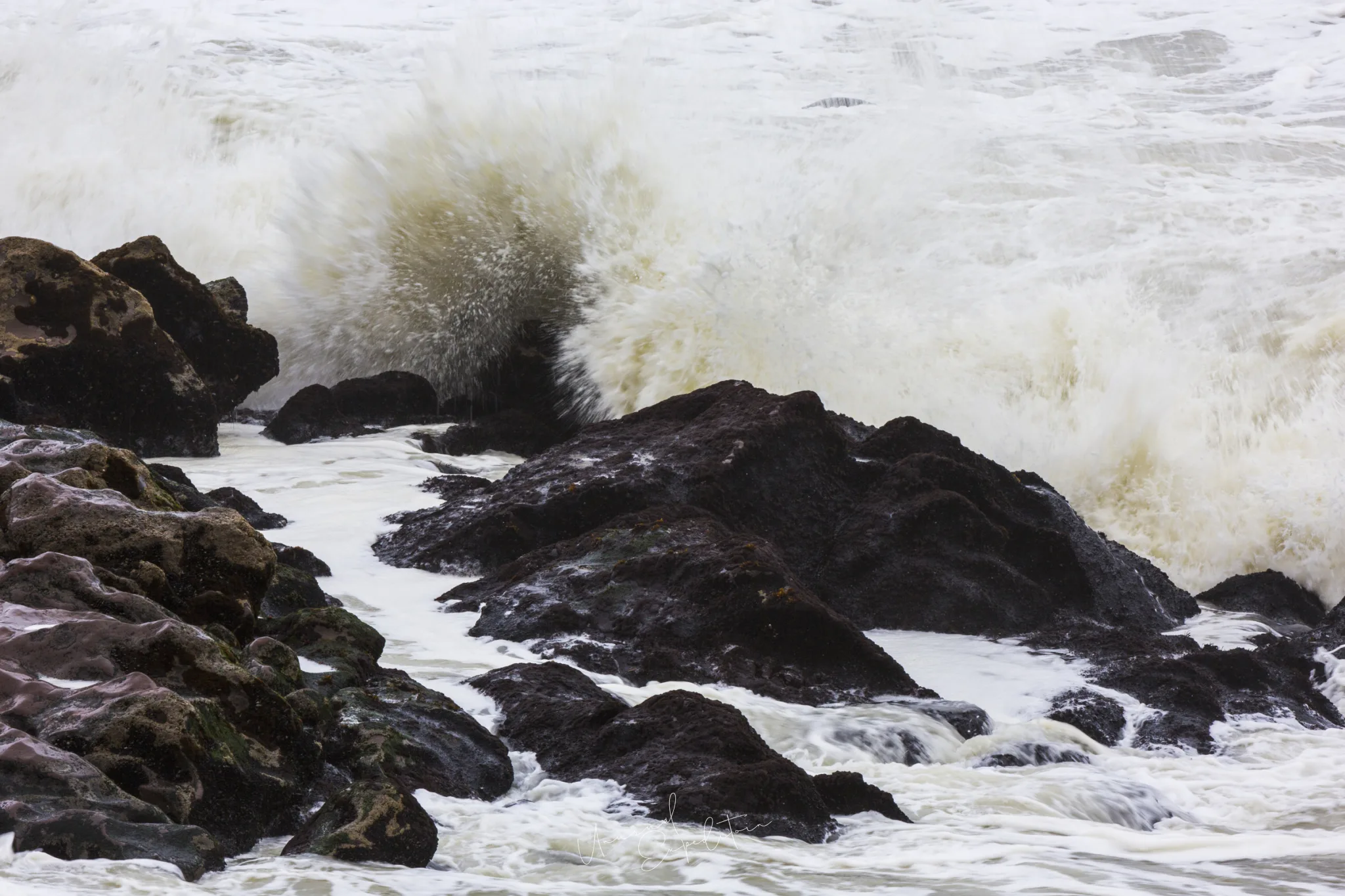
Waves against the rocks
When the swell is up, the bigger waves explode against the dark rocks beside the colony. Put the lens on a rock edge and wait for the burst, then shoot a series. Watch your own safety, because the waves can reach farther than they look, and keep to the viewing walkway. This frame needs no animals at all: a wave, black rock and a grey sky are enough, and they set the mood of the whole coast. Use a long lens to compress the spray against the sea.
Which lens and settings for the colony?
A 70-200mm is the workhorse, and a 100-400mm lets you pick out single animals from across the rocks. A 24-70mm is useful for the setting, with the rocks, the sea and the long coast behind. Shoot in aperture priority at f/5.6 to f/8 for sharpness across the animal, raise the ISO to keep the shutter fast and use continuous autofocus for moving seals. The dark fur and bright surf make a contrasty scene, so expose for the animal and check the highlights on the foam. Keep a cloth ready for spray.
What should you know before you go?
Expect strong smells and loud calls, and wear sensible shoes. Wind off the sea is cold, so bring a windproof layer. Stay on the paths, keep a respectful distance and do not touch or feed the animals. Opening hours and fees are set by the authorities and change, so check the official source before you travel; we do not quote them. For the other subjects on this coast, see Skeleton Coast shipwrecks.
Photograph Cape Cross with us
We run Namibia as a private trip on request, with the coast and Cape Cross between the dunes and Etosha. The pace and dates are yours, we arrange the logistics, and a photographer or photography coaching can be added at extra cost. Ask at least two months ahead. See private tours and the Namibia photography tours page.
Ask us about the Skeleton Coast
Skeleton Coast photography tours
The next Skeleton Coast departure is announced on the Skeleton Coast photography tours page, with previous expeditions and all the planning guides.
Explore Skeleton Coast in depth
- Skeleton Coast Photography Tour: Seals, Wrecks and Walvis BayNamibia
- Skeleton Coast Shipwrecks: How to Photograph the WrecksNamibia
Upcoming Photo Tours
- Egypt Photo Tour – EgyptEgypt 12 Dec 2026 To 20 Dec 2026
- Inner Mongolia Winter Owl Photo Tour – ChinaChina 01 Jan 2027 To 04 Jan 2027
- Inner Mongolia Winter Photo Tour – ChinaChina 05 Jan 2027 To 11 Jan 2027
- Mekong And Central Highland Vietnam Photo Tour - VietnamVietnam 16 Jan 2027 To 24 Jan 2027