
Fujian Countryside Photography: Misty Rivers, Villages and Crafts
Fujian countryside photography: misty rivers and sailboats, hillside villages, blacksmiths and village opera inland from Xiamen.
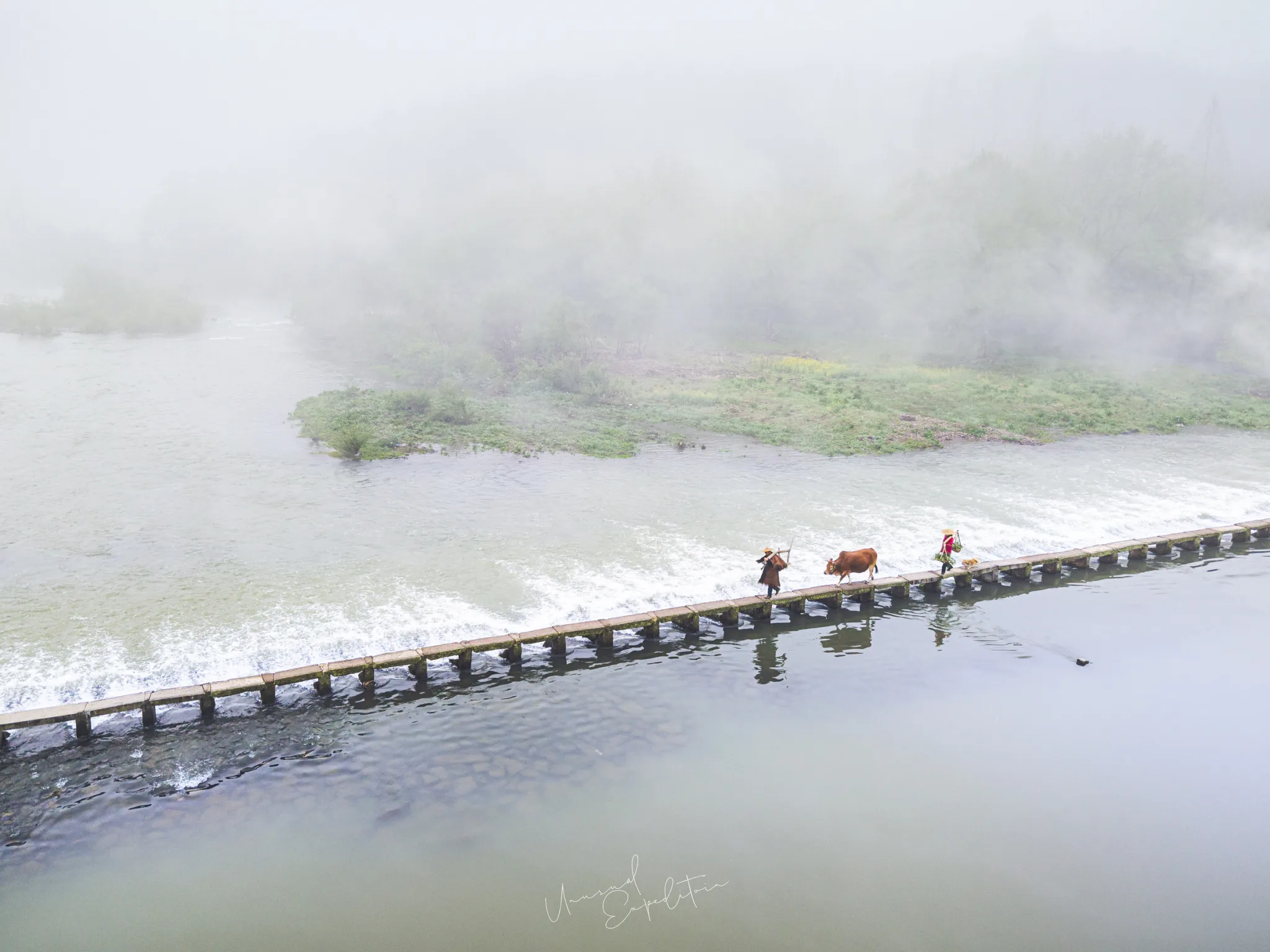
Fujian countryside photography means misty rivers with wooden sailboats, villages stacked above terraced fields, old stone bridges, and crafts such as blacksmithing and village opera that still survive in the hills. Away from Xiamen and the coast, most of the province is mountain, and its villages are among the best preserved in southern China. Spring brings the most mist and the freshest green. This article is part of our Xiamen photography tour guide and covers what to photograph inland.
The shape of rural Fujian
A traditional saying describes Fujian as eight parts mountain, one part water and one part farmland, and the countryside looks exactly like that. Steep green hills run almost to the sea, rivers wind between them, and villages sit wherever there is a little flat land, with fields terraced up the slopes behind. The mountains kept the villages apart for centuries, which is why each valley has its own dialect, its own food and often its own style of building. For a photographer this means a great variety in a small area: Hakka villages and tulou in the south-west, timber and stone villages in the north, tea country around the Wuyi mountains, and river valleys full of morning mist almost everywhere.
Misty rivers and stone bridges
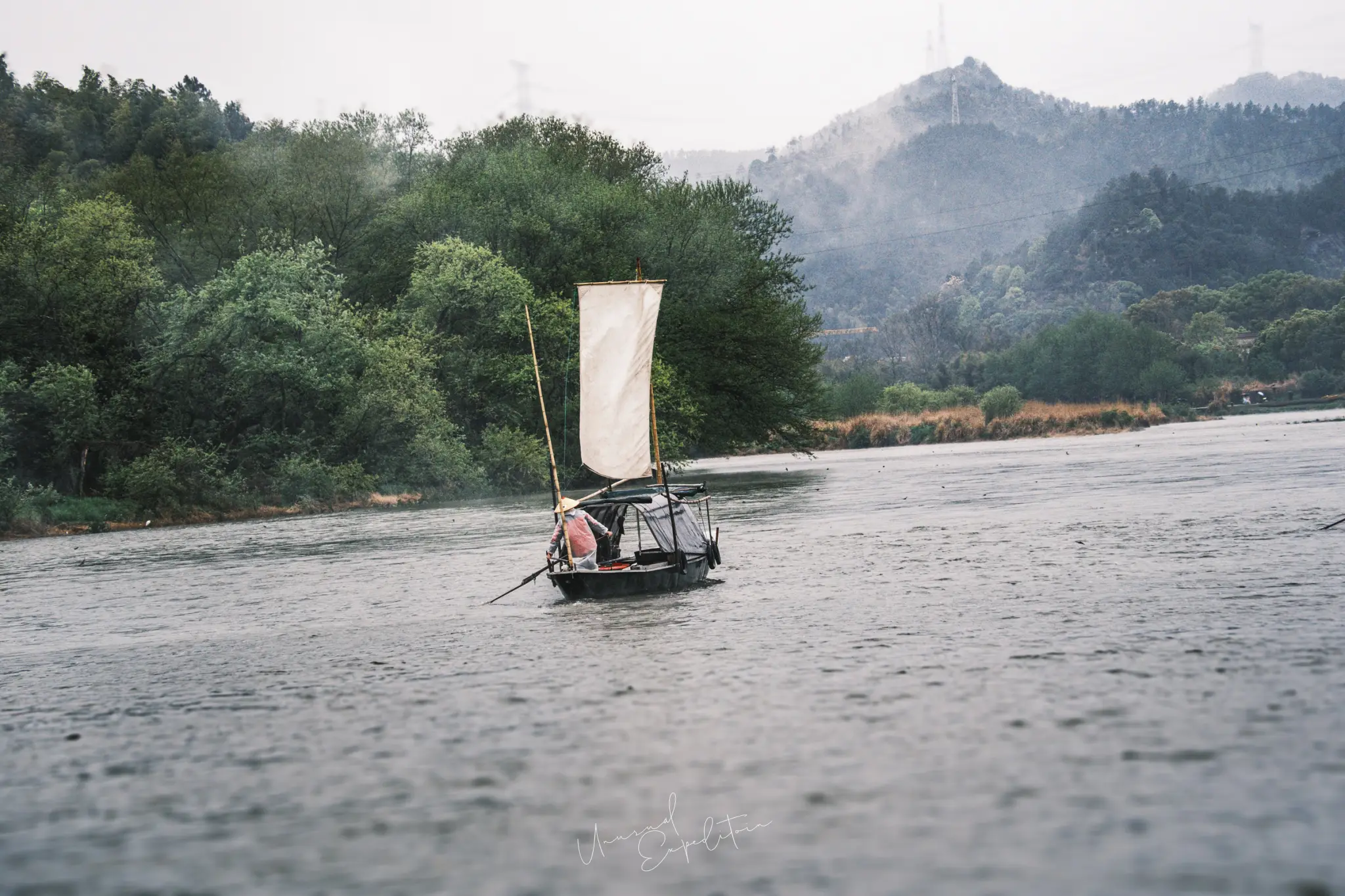
The signature scene of the Fujian countryside is a river at first light, with mist lying on the water and the hills fading behind. Old stepping-stone bridges and low weirs cross many rivers, and farmers still lead their cattle over them. Some of these river scenes are now arranged for visiting photographers, with villagers paid to cross with oxen or to sail traditional wooden boats with square sails; it is a small local business, and it is fine to take part, but describe the pictures honestly when you share them. Either way, the light is real, and a calm, damp spring morning gives the soft layers of mist that make these frames.
Fujian villages worth photographing
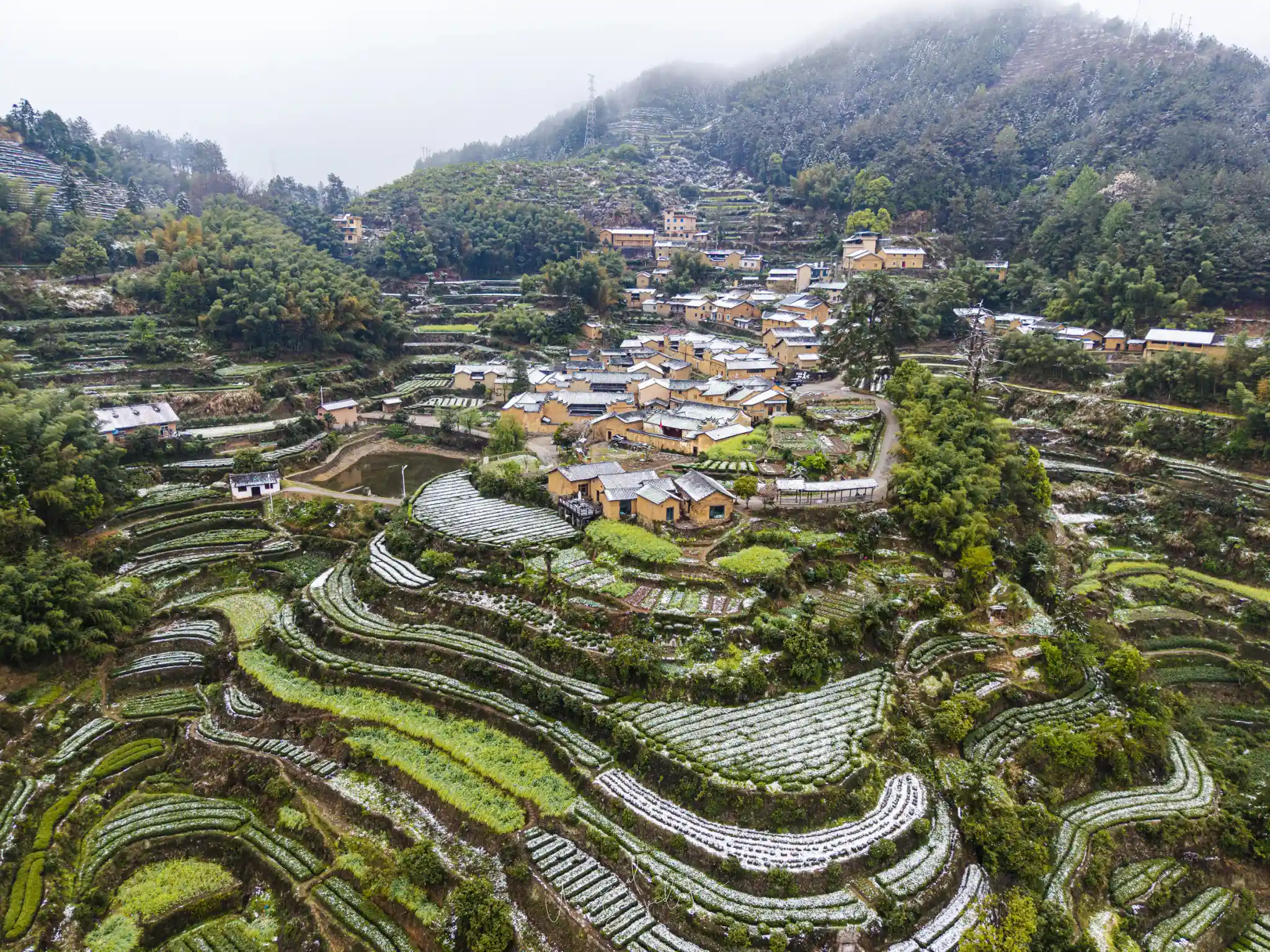
Fujian villages range from Hakka strongholds to timber mountain hamlets. In Pingnan county, inland from Ningde, the village of Longtan was revived from 2017 through a county programme that brought artists and new residents into its old houses, according to Xinhua; it and the nearby villages are known for persimmon trees in autumn. In Liancheng county, the Hakka village of Peitian has a large group of well-preserved Ming and Qing dynasty mansions at the foot of the hills, and People's Daily has featured its spring scenery after rain. These are only a few examples. The most rewarding villages are often unnamed hamlets above terraced fields, reached by narrow roads, where a drone or a hillside shows the houses packed together on the slope.
Crafts in the hills
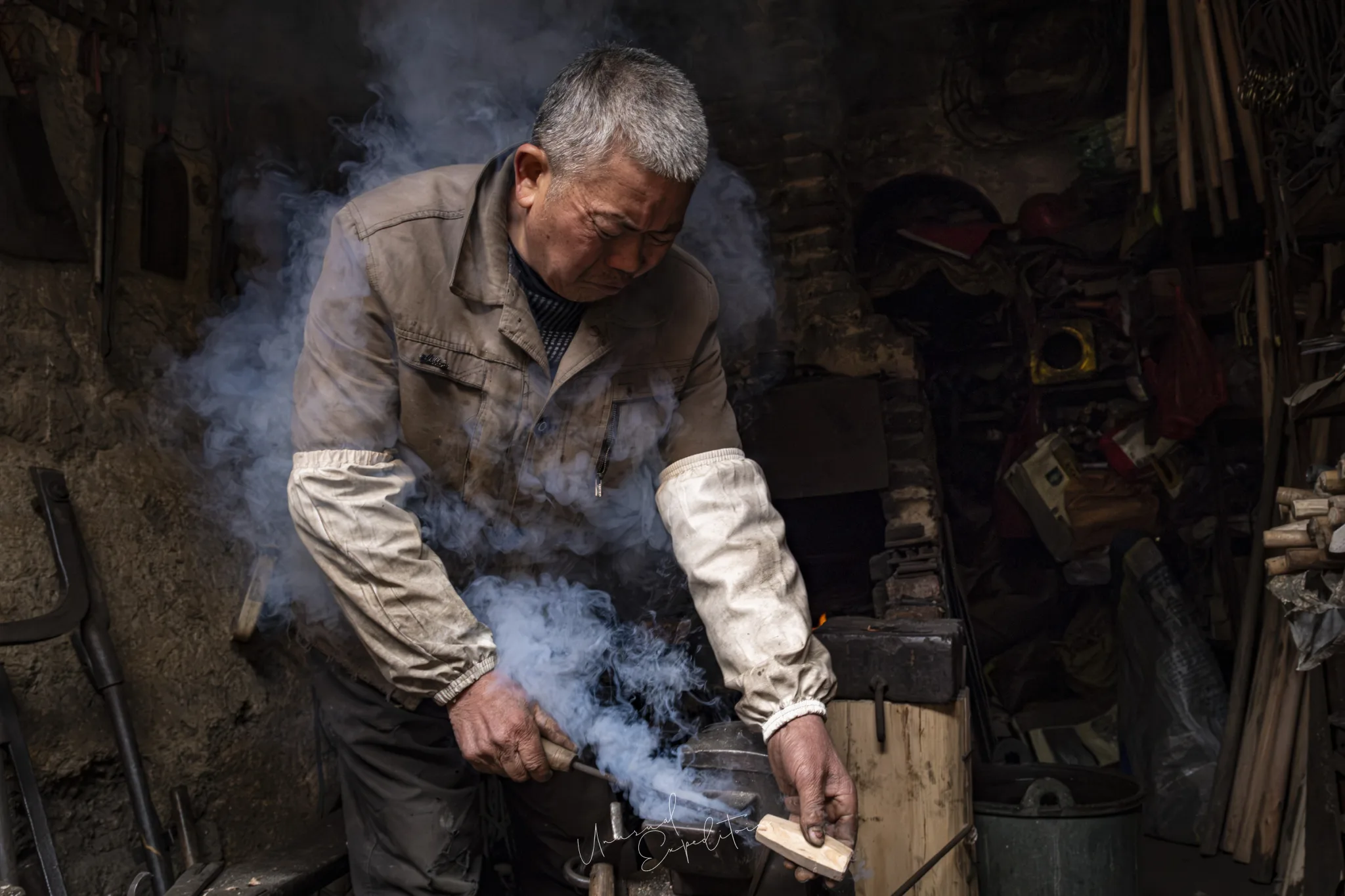
Rural Fujian still has working craftspeople. In small towns you may find a blacksmith forging knives and farm tools in a dark workshop lit by the fire, a carpenter shaping boat parts, or women weaving bamboo baskets in a doorway. These workshops make some of the strongest portraits of a trip, because the light is dramatic and the work gives people something to do other than look at the camera. Ask first, offer to buy something small, and keep clear of the forge. A fast lens such as a 35mm f/1.4 lets you work by the light of the fire and the doorway without flash, which would destroy the mood.
"Everyone goes to Fujian for the tulou and the mudflats, and they are right to. But some of my favourite pictures from the province come from a river crossing in the fog, or a blacksmith who let us stand in his workshop for an hour. The countryside is where Fujian is still itself."
Joseph Mak, tour leader, Unusual Expedition
Village opera and festivals
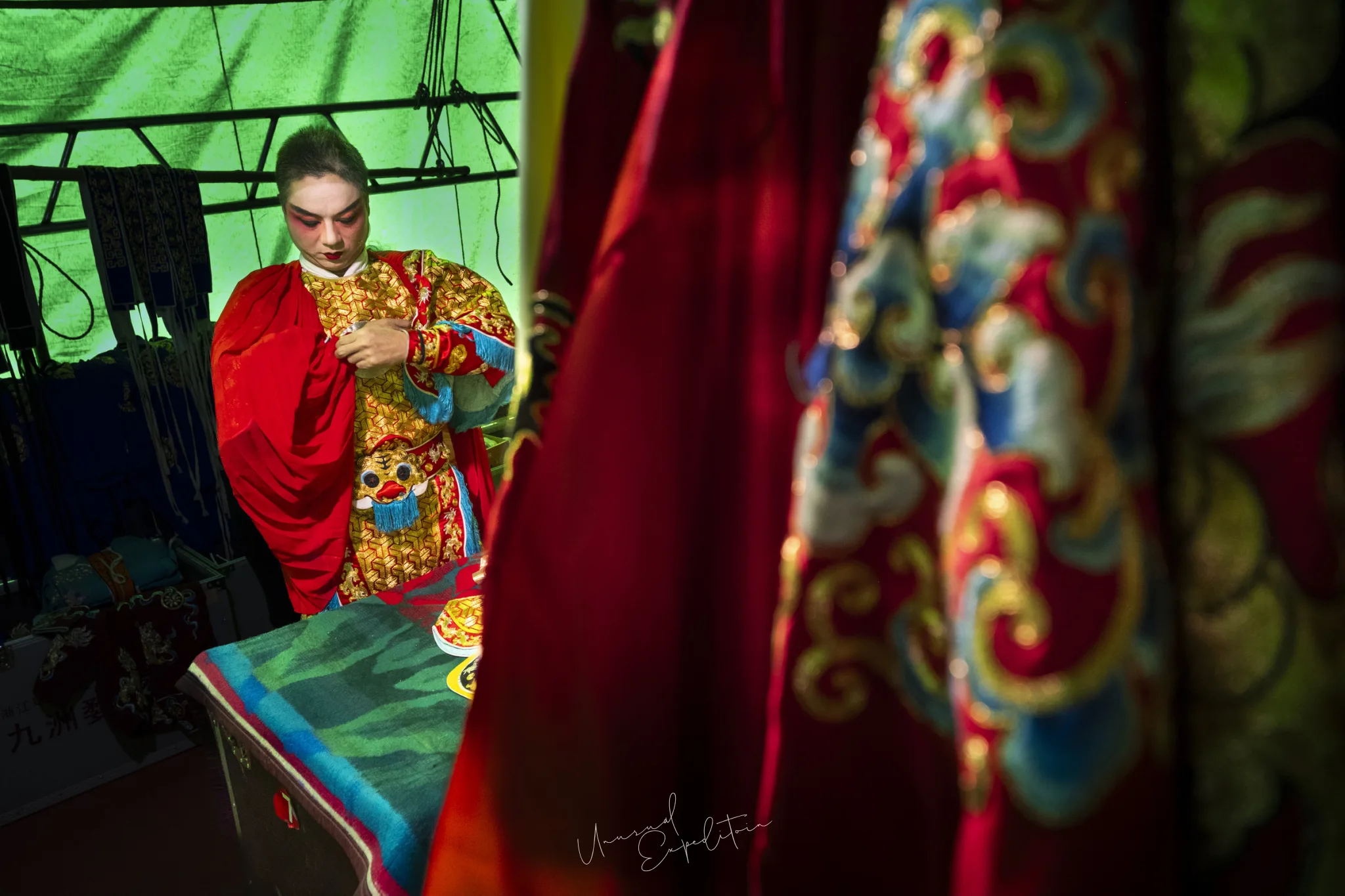
Traditional opera is alive in the Fujian countryside, performed by travelling troupes on temporary stages in front of village temples during festivals and temple anniversaries. Backstage, performers paint their faces and dress in embroidered costumes surrounded by trunks, mirrors and lights, and many troupes allow a respectful photographer to watch. The performances themselves are long and full of colour, and the audience of villagers on stools is as good a subject as the stage. Ask the troupe manager before going backstage, stay out of the performers' way, and never use flash during the show.
Fujian countryside at a glance
| Subject | Where to look | Best time | Lens |
|---|---|---|---|
| Misty rivers and sailboats | River valleys inland | Spring mornings | 70-200mm |
| Stone bridges and cattle | Village rivers | Early morning mist | 24-70mm |
| Hillside villages and terraces | Mountain counties | Morning, after rain | 24-70mm, drone |
| Craft workshops | Small market towns | Any, by available light | 35mm fast prime |
| Village opera | Temple squares | Festival days | 24-70mm, 85mm |
| Persimmons and autumn colour | Pingnan villages | Autumn | 24-70mm |
Light and weather in the hills
Rural Fujian is humid, and the hills make their own weather. The mist that gives the river scenes their softness forms on still, damp mornings and usually burns off as the sun climbs, so the first light of the day is precious. Rain is frequent in spring, but a morning after rain is often the best of the trip, with clouds lifting off the ridges and every terrace shining. Pack a rain cover for the camera, a towel and dry bags, and keep a lens cloth in your pocket for condensation when you step out of an air-conditioned car.
Combining the countryside with the coast and the tulou
The countryside fits naturally between the other parts of a Fujian trip. From Xiamen, the road inland leads to the tulou, described in our best Fujian tulou to visit guide; from the Xiapu coast in the north-east, the hill counties of Ningde are close by. Weather is the main planning factor: spring gives mist and green, summer brings heat, storms and typhoons, and autumn is the clearest season, as our Xiamen tour from Singapore article explains. Wherever you go, the villages are homes and farms, so keep to paths, close gates and ask before photographing people.
Photograph rural Fujian with us
We add a day or two in the countryside to our private Fujian photography trips. Current China departures are on the China photography tours page.
Join the Xiamen photography tour
Inner Mongolia Winter Owl Photo Tour – China departs 01 Jan 2027 To 04 Jan 2027, led by Joseph Mak. Small group, photography first. All Xiamen photography tours.
Explore Xiamen in depth
- Xiamen Photography Tour: The Complete GuideChina
- Best Fujian Tulou to Visit: Nanjing, Yongding and Dadi ComparedChina
- Hakka Tulou Architecture: Inside a Fujian TulouChina
- Xiamen Tour from Singapore: Flights, Visas and the Best Time to VisitChina
- Xiamen Photo Spots: The Night View, the Twin Towers and the Moonlight RingChina
- Gulangyu Island Photos and How to Get ThereChina
- Fujian Tulou Photos: Tianluokeng and the Roundhouses from XiamenChina
Upcoming Photo Tours
- Egypt Photo Tour – EgyptEgypt 12 Dec 2026 To 20 Dec 2026
- Inner Mongolia Winter Owl Photo Tour – ChinaChina 01 Jan 2027 To 04 Jan 2027
- Inner Mongolia Winter Photo Tour – ChinaChina 05 Jan 2027 To 11 Jan 2027
- Mekong And Central Highland Vietnam Photo Tour - VietnamVietnam 16 Jan 2027 To 24 Jan 2027