
Hakka Tulou Architecture: Inside a Fujian Tulou
Hakka tulou architecture explained: walls, gate, galleries and courtyard life inside a Fujian tulou, and how to photograph it.
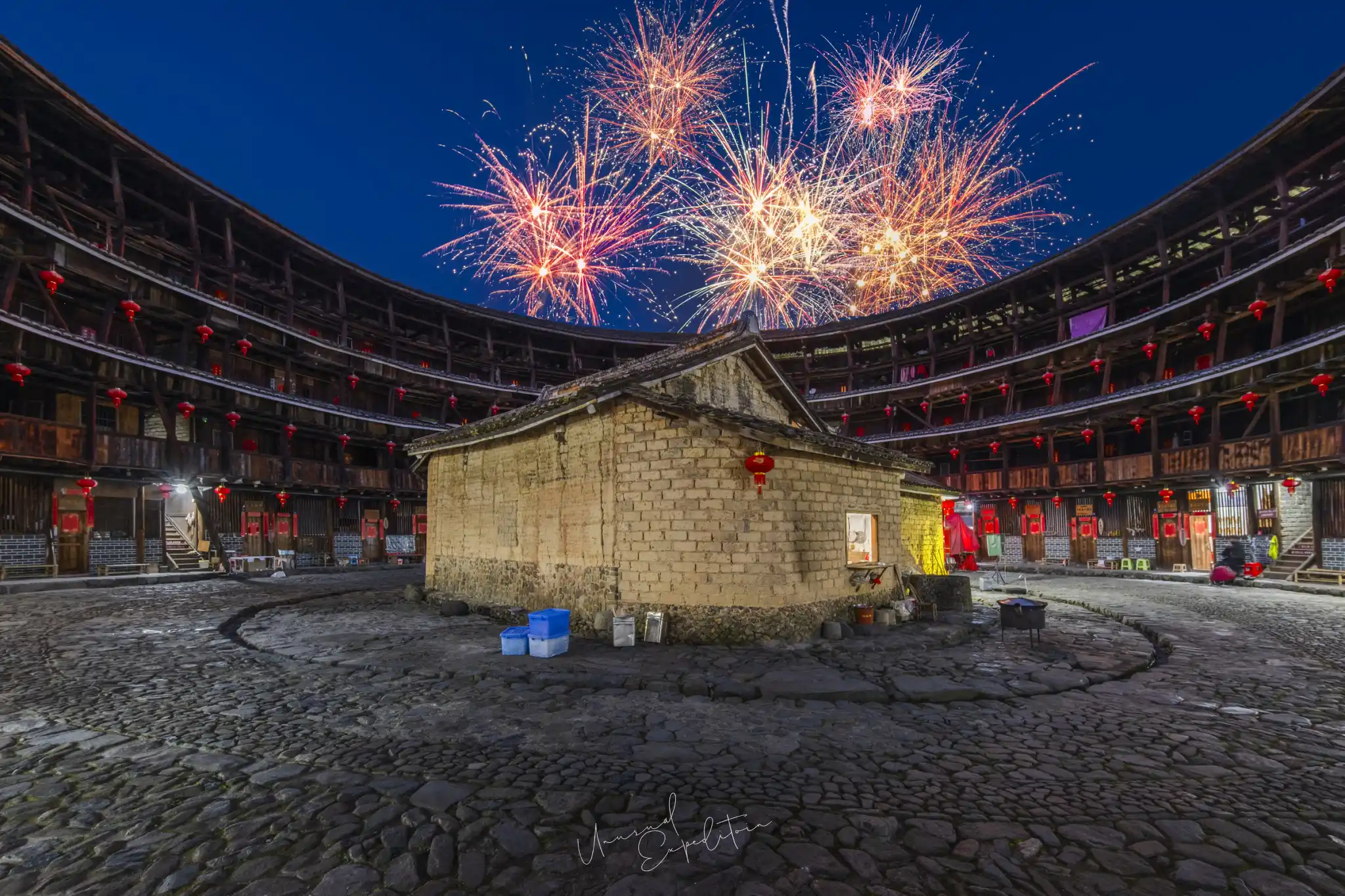
A Hakka tulou is a fortified communal house of rammed earth, built round or square around an open courtyard, where a whole clan once lived behind one gate. Inside a Fujian tulou you find rings of wooden galleries, family rooms facing inwards, wells and an ancestral hall in the courtyard, and in many of them families still living today. This article explains the architecture and how to photograph it, and is part of our Xiamen photography tour guide.
Hakka people and the tulou
The Hakka are a Han Chinese people whose ancestors migrated south over many centuries and settled in the hills where Fujian, Guangdong and Jiangxi meet. In the mountains of south-west Fujian they, and their Minnan-speaking neighbours, built tulou, literally earth buildings, to house extended families and to defend them against bandits and feuds. UNESCO inscribed 46 of these buildings in 2008 as the Fujian Tulou, dating them from the fifteenth to the twentieth centuries and describing them as an exceptional example of communal living and defensive organisation. National Geographic notes that the largest once housed up to 800 people. Many Hakka tulou are still homes, though the younger generation has mostly moved to the cities.
Fujian tulou architecture: walls, gate and rings
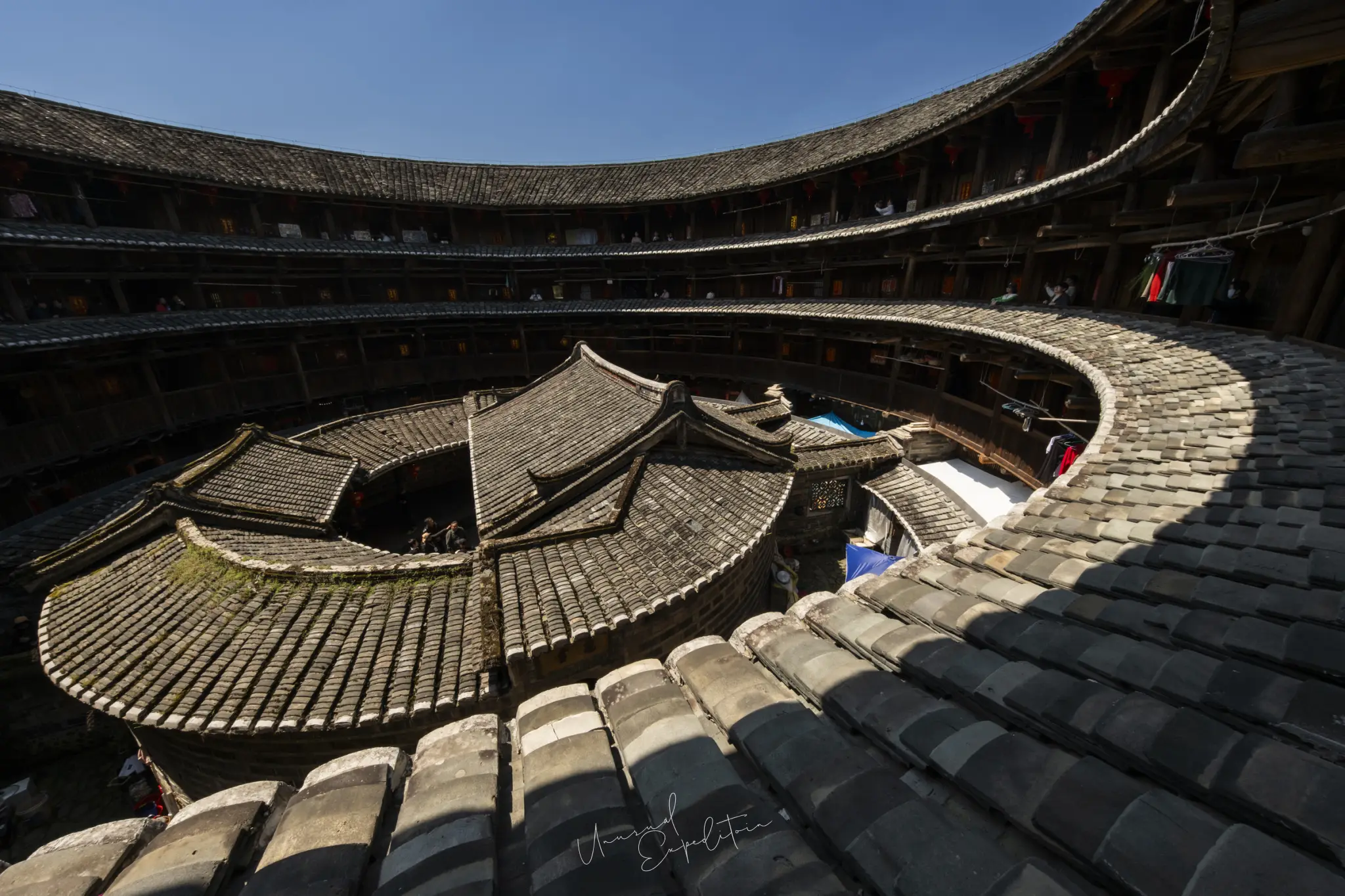
The outer wall of a tulou is rammed earth, mixed with sand and lime and, by local accounts, sometimes glutinous rice and brown sugar, built up in layers between wooden boards. It is thickest at the base, and in the classic design the lower floors have no outward windows at all. There is usually a single main gate, faced with stone and fitted with heavy wooden doors. Inside, a timber frame carries floors of rooms that open onto continuous galleries facing the courtyard. In the classic arrangement of a round tulou, the ground floor holds kitchens and dining rooms, the floor above stores grain, and the upper floors are bedrooms. The largest round tulou have one or more inner rings of lower buildings, and at the centre a hall for the ancestors.
Inside a Fujian tulou: the layout
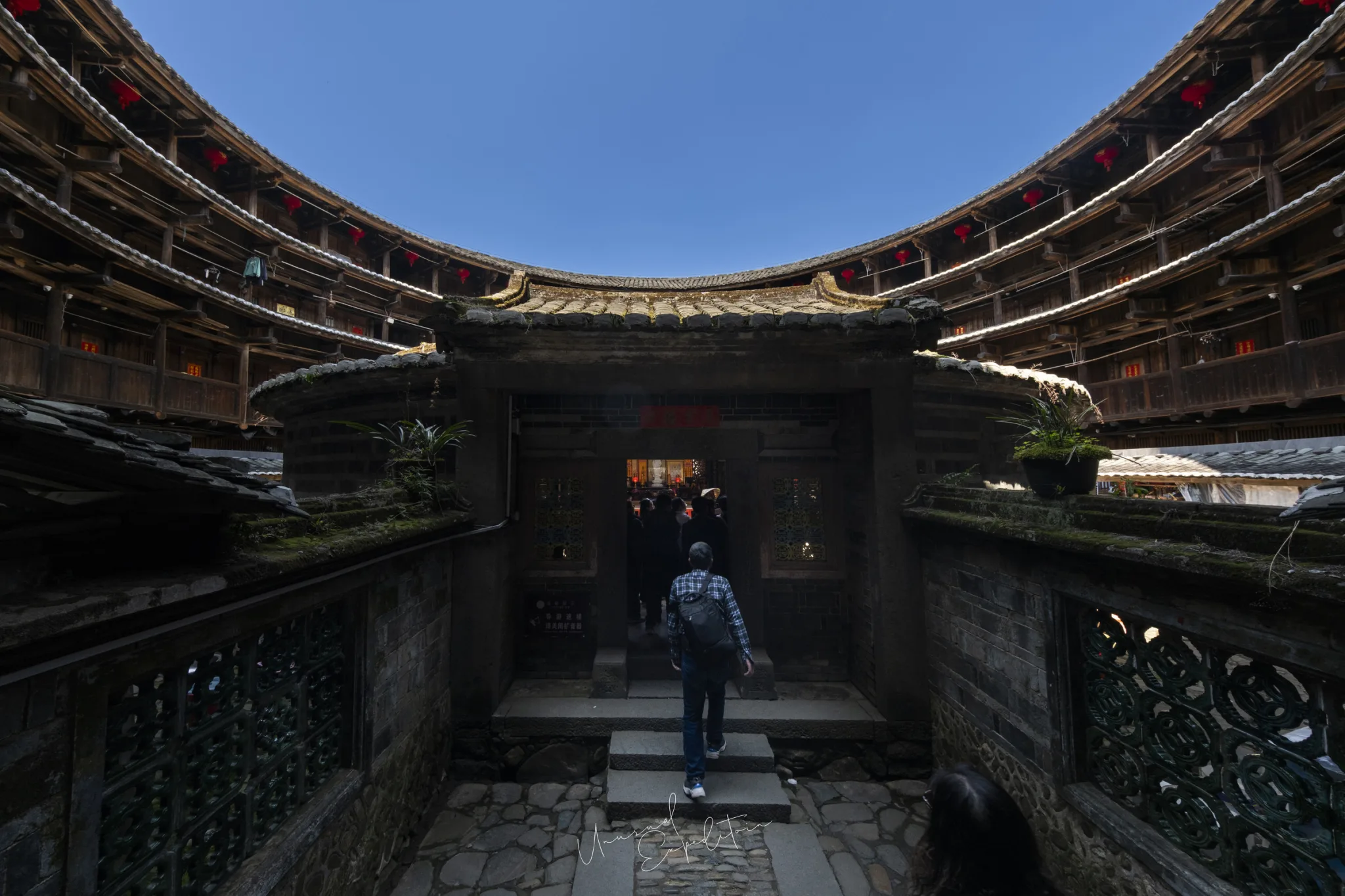
Walking through the gate of a round tulou is one of the great architectural experiences in China. The noise of the outside world drops away, the courtyard opens up, and the galleries rise around you to a circle of sky. Each family traditionally owned a vertical slice of the building, from a kitchen on the ground to a bedroom at the top, with the courtyard, wells and hall shared by everyone. Look for the details that make the system work: drains in the cobbles, the shared wells, carved beams over the doors, couplets in red paper, and the stairways that connect the galleries at regular intervals. In a square tulou the same plan is laid out on four sides, with corners that are darker and more enclosed. Builders and historians give several reasons for the round form: every family gets rooms of the same size, there are no dark corners, and a circle encloses the most space for the length of wall.
Life in the courtyard
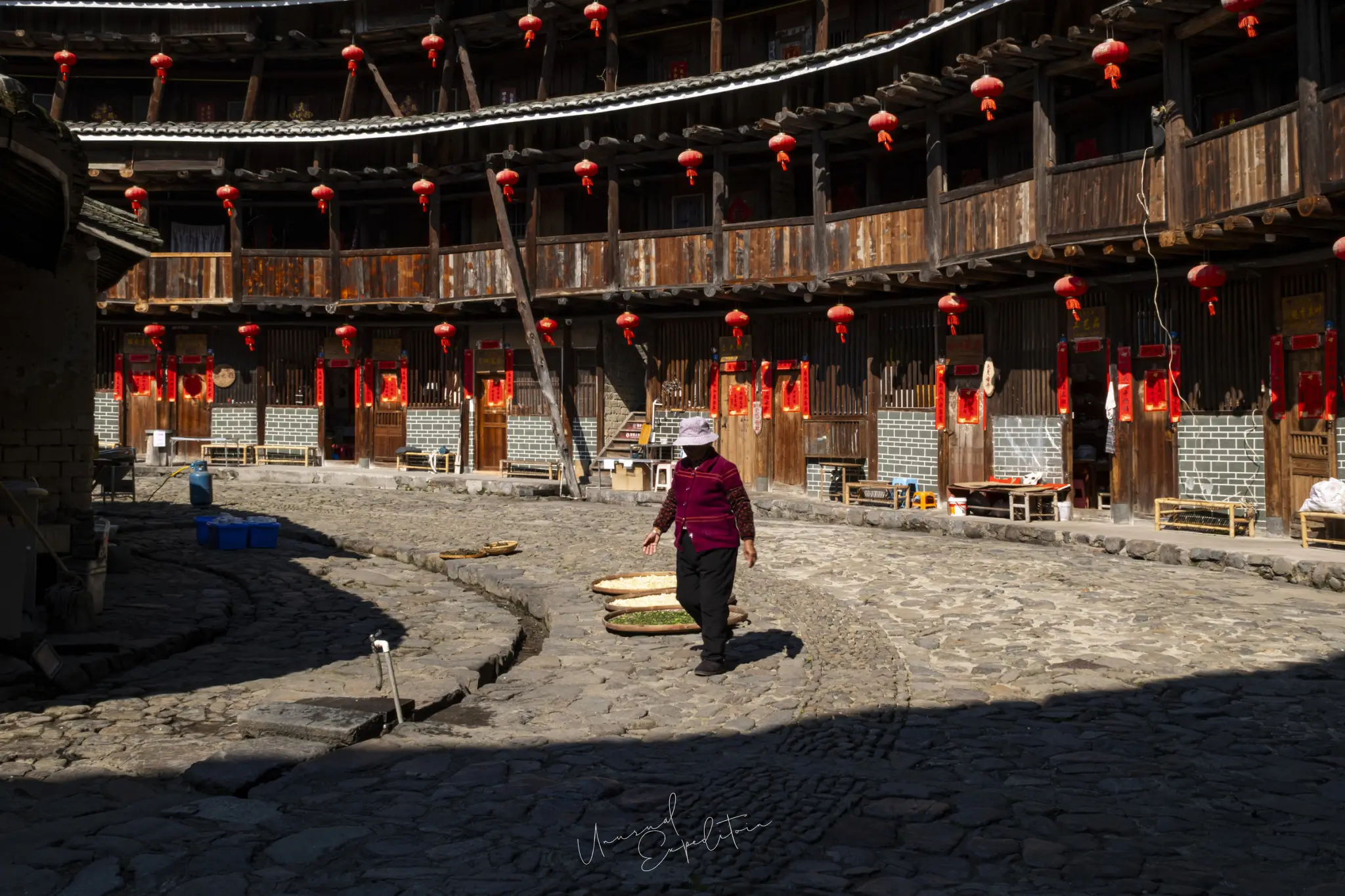
A lived-in tulou is busy in a quiet way. Residents dry vegetables, tea and bamboo shoots on wide flat baskets in the sun, hang laundry along the galleries, cook over wood stoves, and sit in the doorways to talk. Red lanterns hang along the galleries, and around festivals the whole courtyard is decorated. These everyday scenes are the most honest pictures you can take in a tulou, and they need patience rather than a special lens. Stand back with a 24-70mm, let people cross your frame, and choose a moment when one figure sits clearly against the cobbles. Ask before you photograph anyone closely, and remember that the rooms behind the doors are private homes.
"A tulou is one building, but it works like a village. When you sit in the courtyard you can hear a baby, a radio, someone chopping vegetables and two old men arguing over tea, all at once. That is the picture I try to make: the life, not only the walls."
Joseph Mak, tour leader, Unusual Expedition
How to photograph tulou architecture
The geometry of a round tulou rewards a wide lens. From the centre of the courtyard, a 16-35mm turns the galleries into a ring around the frame; from an upper gallery, looking across and down, the inner roofs and the courtyard make a pattern of curves. Keep the camera level, or the walls will lean in, and use the stairways to find different heights. The sun reaches the courtyard floor only when it is high, so midday is good for interiors, while the outer walls glow at sunrise and sunset. After dark, with the lanterns lit, a tripod lets you hold detail in the galleries and the sky together, and some tulou set off fireworks for visitors on special evenings.
| Feature | Round tulou | Square tulou |
|---|---|---|
| Plan | Rings around a central courtyard | Four sides around a square courtyard |
| Best viewpoint | Upper gallery looking across | Corner of an upper gallery |
| Light inside | Even around the ring at midday | Strong shadow on one side |
| Lens | 16-35mm, 24-70mm | 24-70mm |
| From above | A ring of dark roofs, like a target | A hollow square |
Visiting a tulou with respect
Most tulou in the scenic areas charge an entrance fee and some are run partly as museums, but people still live in them. Stay on the ground floor and in the courtyard unless a resident invites you up, do not use a drone inside the courtyard, and keep your voice down in the evenings. Buying tea or local snacks from a family shop is welcome, and it often opens the door to conversation and better pictures. For the famous tulou groups seen from outside, read our Fujian tulou photos guide; to choose which cluster to visit, see best Fujian tulou to visit.
Photograph the tulou with us
We include the tulou in our private Fujian photography trips from Xiamen. Current China departures are on the China photography tours page.
Join the Xiamen photography tour
Inner Mongolia Winter Owl Photo Tour – China departs 01 Jan 2027 To 04 Jan 2027, led by Joseph Mak. Small group, photography first. All Xiamen photography tours.
Explore Xiamen in depth
- Xiamen Photography Tour: The Complete GuideChina
- Fujian Countryside Photography: Misty Rivers, Villages and CraftsChina
- Best Fujian Tulou to Visit: Nanjing, Yongding and Dadi ComparedChina
- Xiamen Tour from Singapore: Flights, Visas and the Best Time to VisitChina
- Xiamen Photo Spots: The Night View, the Twin Towers and the Moonlight RingChina
- Gulangyu Island Photos and How to Get ThereChina
- Fujian Tulou Photos: Tianluokeng and the Roundhouses from XiamenChina
Upcoming Photo Tours
- Egypt Photo Tour – EgyptEgypt 12 Dec 2026 To 20 Dec 2026
- Inner Mongolia Winter Owl Photo Tour – ChinaChina 01 Jan 2027 To 04 Jan 2027
- Inner Mongolia Winter Photo Tour – ChinaChina 05 Jan 2027 To 11 Jan 2027
- Mekong And Central Highland Vietnam Photo Tour - VietnamVietnam 16 Jan 2027 To 24 Jan 2027