
How to Plan a Trip to Greece: Visa, Flights, Time and What to Know
How to plan a trip to Greece: Schengen visa rules by passport, EES and ETIAS, flights to Athens and the islands, time zone and safety.
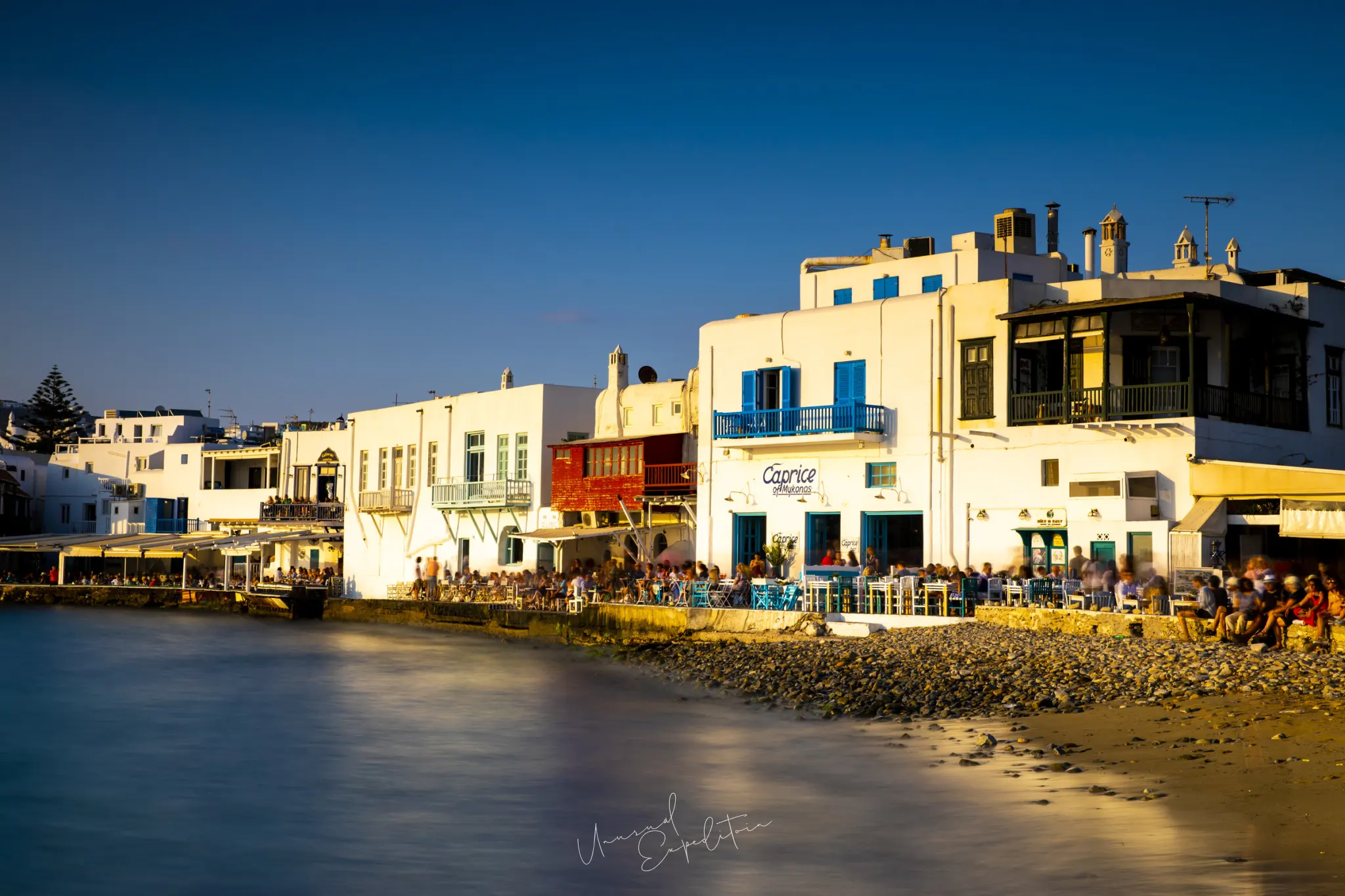
How to plan a trip to Greece comes down to four things: the entry rules for your passport, a flight into Athens, the season, and the order of the places you want to photograph. Greece is in the Schengen Area, so EU citizens travel freely and many other passports need no visa for a short stay. Athens is the main gateway, and the main photography places, Athens, Santorini, Mykonos and Meteora, connect easily by domestic flight, ferry and road. This is the practical companion to our Greece photography tour guide.
Do you need a visa for Greece?
For a short tourist trip, many passports do not. Greece follows the Schengen rules: EU and EEA citizens move freely, and many other passports, including those of the UK, the US, Canada and Australia, can visit without a visa for short stays. The UK Foreign, Commonwealth and Development Office gives the rule for British citizens as up to 90 days in any 180-day period across the whole Schengen Area, with a passport issued less than ten years before you arrive and valid at least three months after the day you leave. The Embassy of Greece in Singapore confirms the same for Singapore passports. Days in Italy, France or any other Schengen country count towards the same total. Check your own government's advice for your passport before you book.
Two newer EU systems are worth knowing. The Entry/Exit System (EES) has been fully running at Schengen borders since April 2026: on your first entry your fingerprints and a photo are taken instead of a passport stamp, at no cost, so allow a little more time at Athens airport. ETIAS, the online travel authorisation for visa-free visitors, is not yet in operation, and the European Commission says it will announce the start date several months ahead. Check the official EU ETIAS site before you travel.
How to plan a trip to Greece: getting there
Athens International Airport is the main gateway to Greece, with nonstop flights from all over Europe and the Middle East and from some long-haul cities in Asia and North America. Many travellers from further away connect once, through Istanbul, a Gulf hub such as Dubai or Doha, or a European hub, which can mean a better arrival time or a cheaper fare. In summer some islands, Santorini and Mykonos among them, also receive international flights from Europe, so you can fly in to one island and out of Athens. From Athens, Santorini and Mykonos are reached by short domestic flights or by ferry from the ports of Piraeus and Rafina, and Meteora by train or road to Kalambaka.
On a low-cost long-haul fare, the ticket covers the seat and little else: checked bags, meals and seat choice are paid extras, and a photographer with a camera bag should check the cabin baggage weight before packing. Keep lenses and bodies in the cabin bag and put the tripod in the hold.
Time in Greece
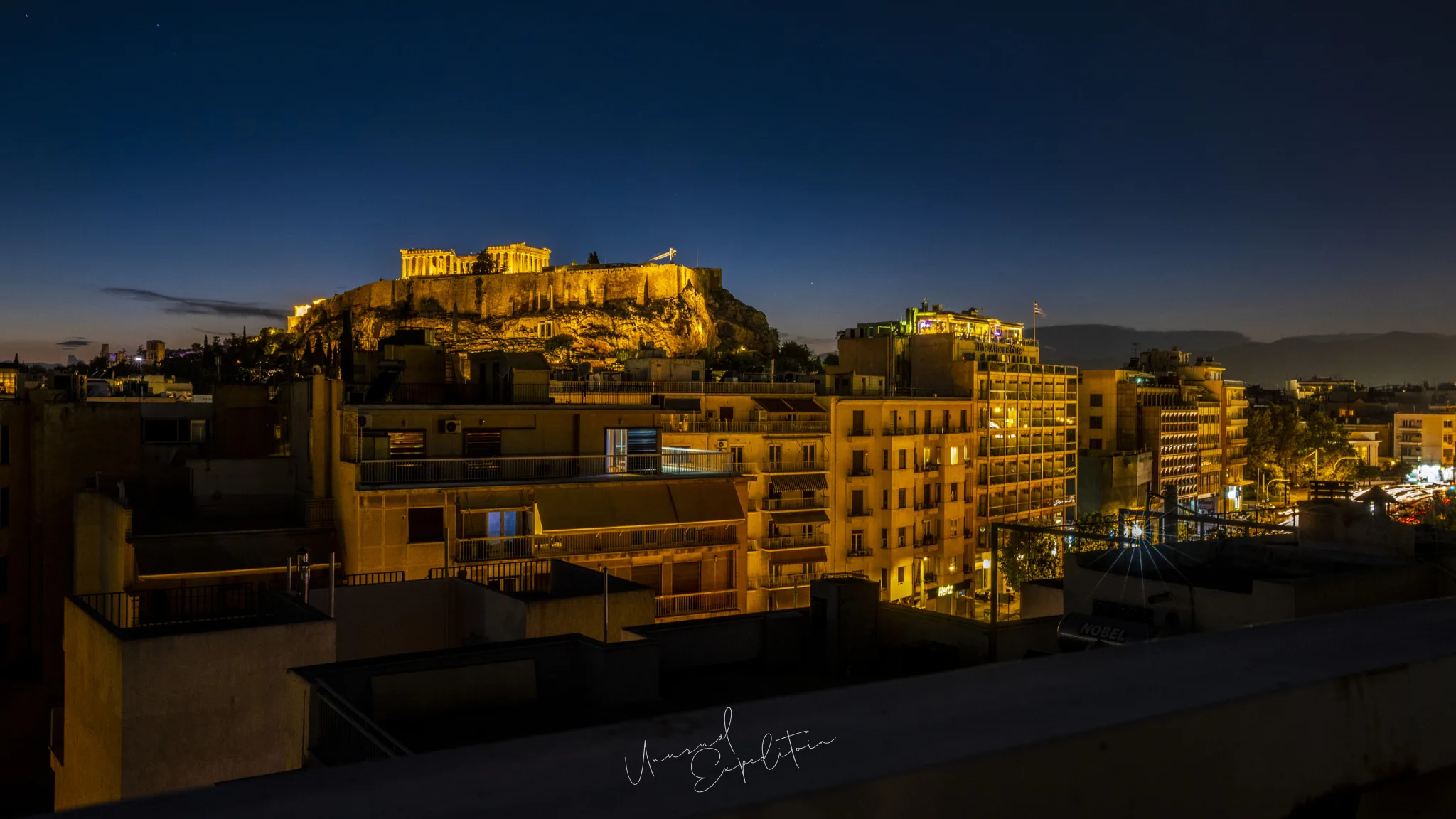
Greece uses UTC plus 2 in winter and UTC plus 3 during the European summer, when the clocks go forward, so it is an hour ahead of Central Europe all year. If your flight lands in the morning, keep the first evening for a rooftop view of the Acropolis at blue hour: a gentle start that also helps with any jet lag.
| Question | Short answer |
|---|---|
| Visa | Schengen rules; many passports visa-free for short stays (check your government's advice) |
| Border checks | EES fingerprints and photo on first entry; ETIAS not yet running |
| Main gateway | Athens; some islands have summer flights from Europe |
| Time zone | UTC plus 2 in winter, UTC plus 3 in summer |
| Money | Euro; cards widely taken, some cash for islands and tavernas |
| Plugs | European two-pin, 230 V |
For most visitors none of this needs paperwork in advance beyond a valid passport, which is why Greece works well as a first European photography trip.
Things to know before going to Greece
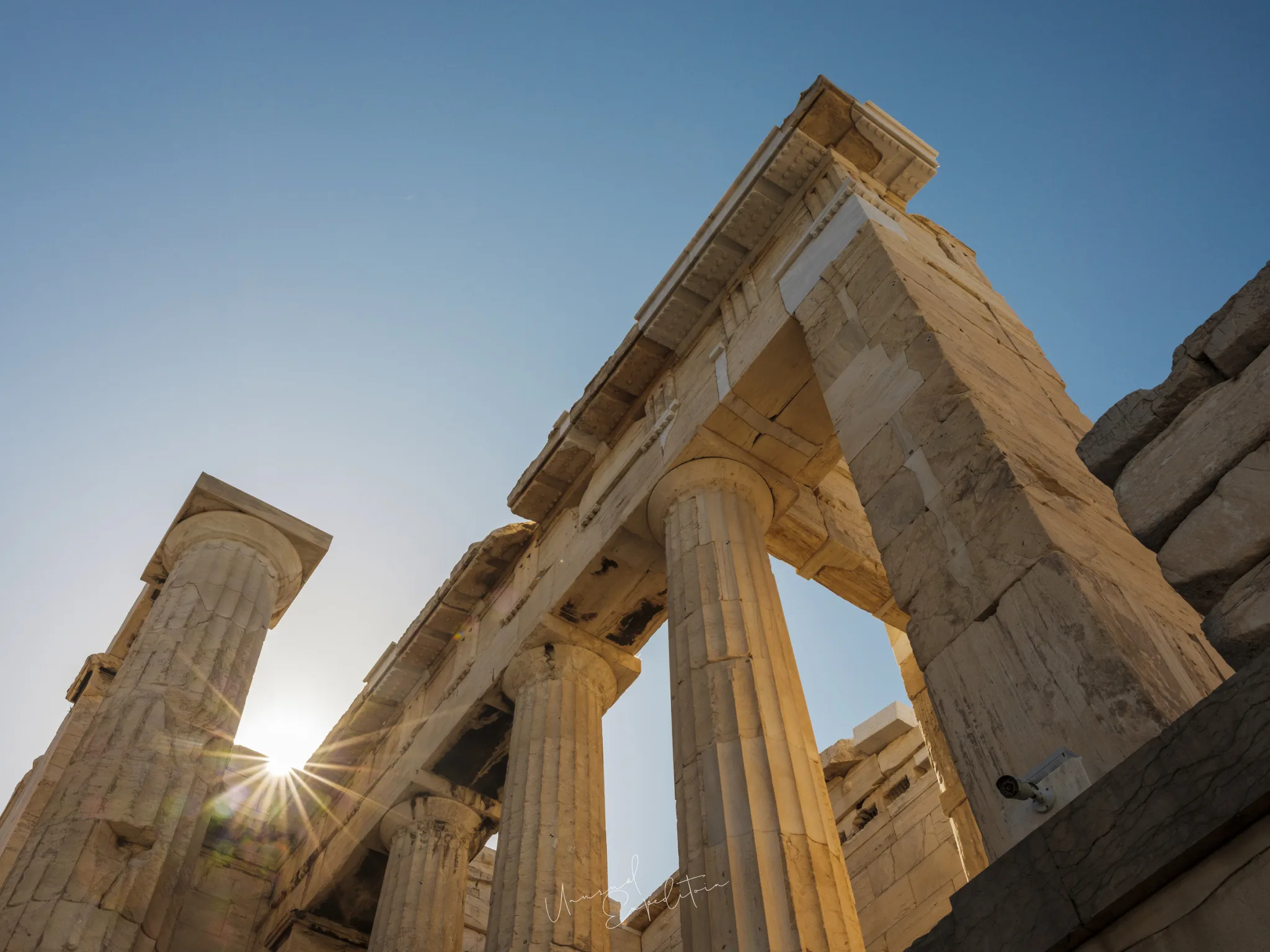
A few things to know before going to Greece make the photography easier. Ancient sites open early and the first hour is the quietest; in recent summers the Ministry of Culture has closed the Acropolis through the hottest hours on very hot days, so go early. The Greek Ministry of Foreign Affairs notes that filming at archaeological sites, museums and monuments needs a special permit, and that drone flights need permission from the civil aviation authority, so leave the drone at home for the sites and ask before you set up a tripod. Monasteries and churches ask for covered shoulders and knees: carry a light scarf and long trousers. On the islands, many lanes are steps, and wheeled cases are hard work. The UK Foreign, Commonwealth and Development Office also warns that winter storms can bring flash flooding, so keep an eye on the forecast if you travel between November and March.
Is Greece safe to visit?
Is Greece safe to visit? For most travellers, yes; the usual city care applies, especially with phones and cameras in crowded places such as Monastiraki and on the Athens metro. Governments publish their own advice for Greece, so read your own shortly before you go and buy comprehensive travel insurance. An earthquake swarm near Santorini and Amorgos in early 2025 prompted official notices and is reported to have eased later that spring. Summer heat is the more common problem: carry water, wear a hat and keep the long walks for the morning and evening.
"From Singapore, Greece is one of the easiest long trips to set up. No visa, one long flight, and the first evening you can already be on a rooftop with the Acropolis lit up in front of you."
Joseph Mak, tour leader, Unusual Expedition
A Greece group tour, or a private trip?
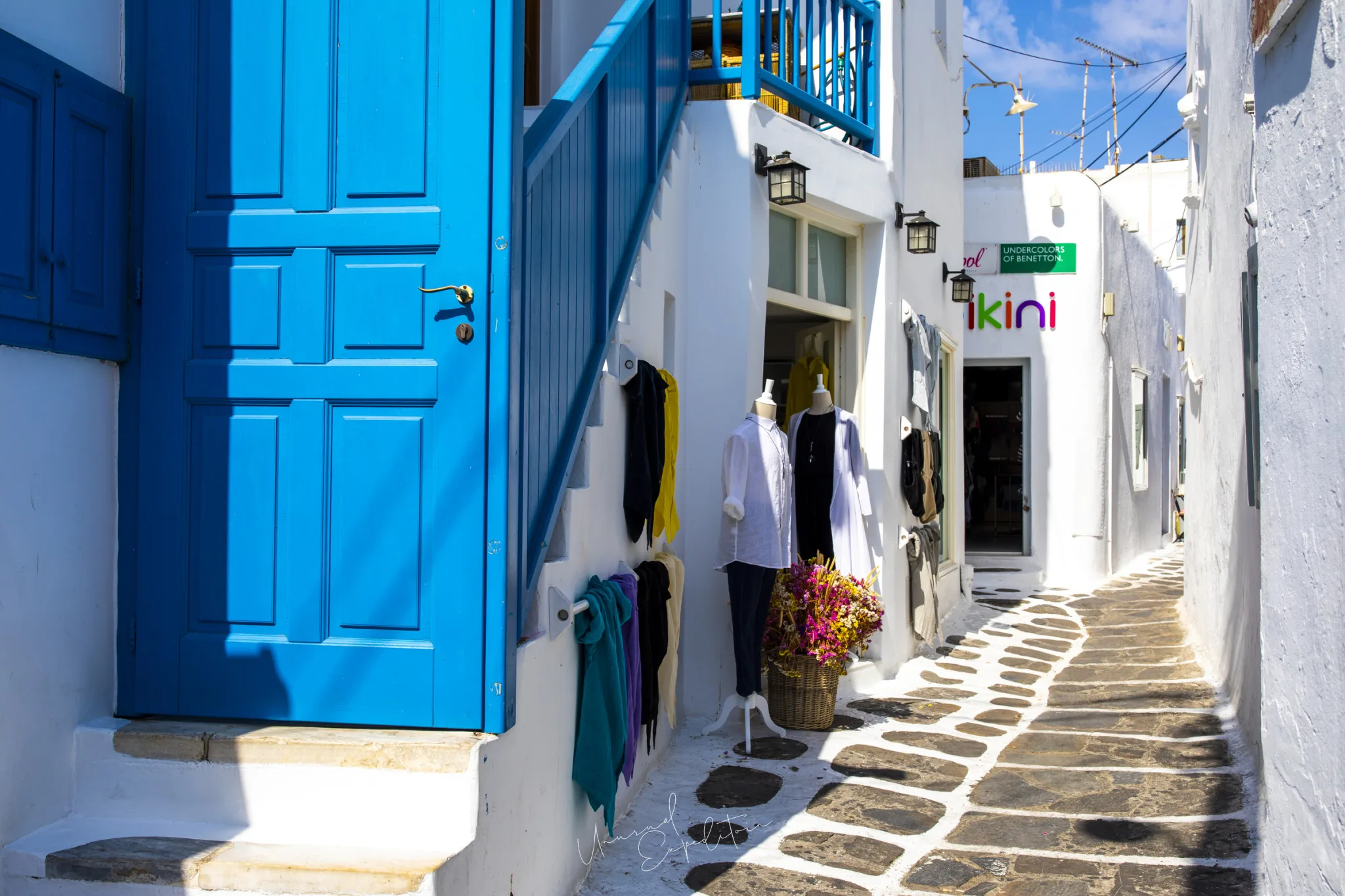
A group tour to Greece usually follows the same well-worn line through Athens and two islands at a fixed pace. A photography trip is built around the light instead: dawn on the hills of Athens, sunset and blue hour on the caldera in Santorini, a misty morning at Meteora. That is easier to do as a private trip, where the order of places and the pace follow the season and what you want to photograph. Mykonos fits well between Athens and Santorini, with its windmills and old lanes best before the day-trippers arrive. For the island most people come for, read our Santorini photography tour guide, and for the season, best time to photograph Greece.
Plan a Greece trip with us
We run Greece as a private trip on request, for individuals, couples, families and photographers joining from any country at their own pace, and we arrange all the logistics to your needs. Because no tour leader travels, the cost can be lower than our group tours, and a photographer or photography coaching can be added at extra cost. Ask at least two months ahead if you can; last-minute trips can be arranged. See private tours and our Greece photography tours page.
Greece photography tours
The next Greece departure is announced on the Greece photography tours page, with previous expeditions and all the planning guides.
Explore Greece in depth
- Greece Photography Tour Guide: Athens, Santorini, Meteora and MykonosGreece
- Best Time to Visit Greece for Photography: Month by MonthGreece
Upcoming Photo Tours
- Egypt Photo Tour – EgyptEgypt 12 Dec 2026 To 20 Dec 2026
- Inner Mongolia Winter Owl Photo Tour – ChinaChina 01 Jan 2027 To 04 Jan 2027
- Inner Mongolia Winter Photo Tour – ChinaChina 05 Jan 2027 To 11 Jan 2027
- Mekong And Central Highland Vietnam Photo Tour - VietnamVietnam 16 Jan 2027 To 24 Jan 2027