
Hagia Sophia and Blue Mosque: Photographing Inside and Out
Hagia Sophia and Blue Mosque for photographers: the gallery route, the dome, the Blue Mosque at night, dress code and prayer times.
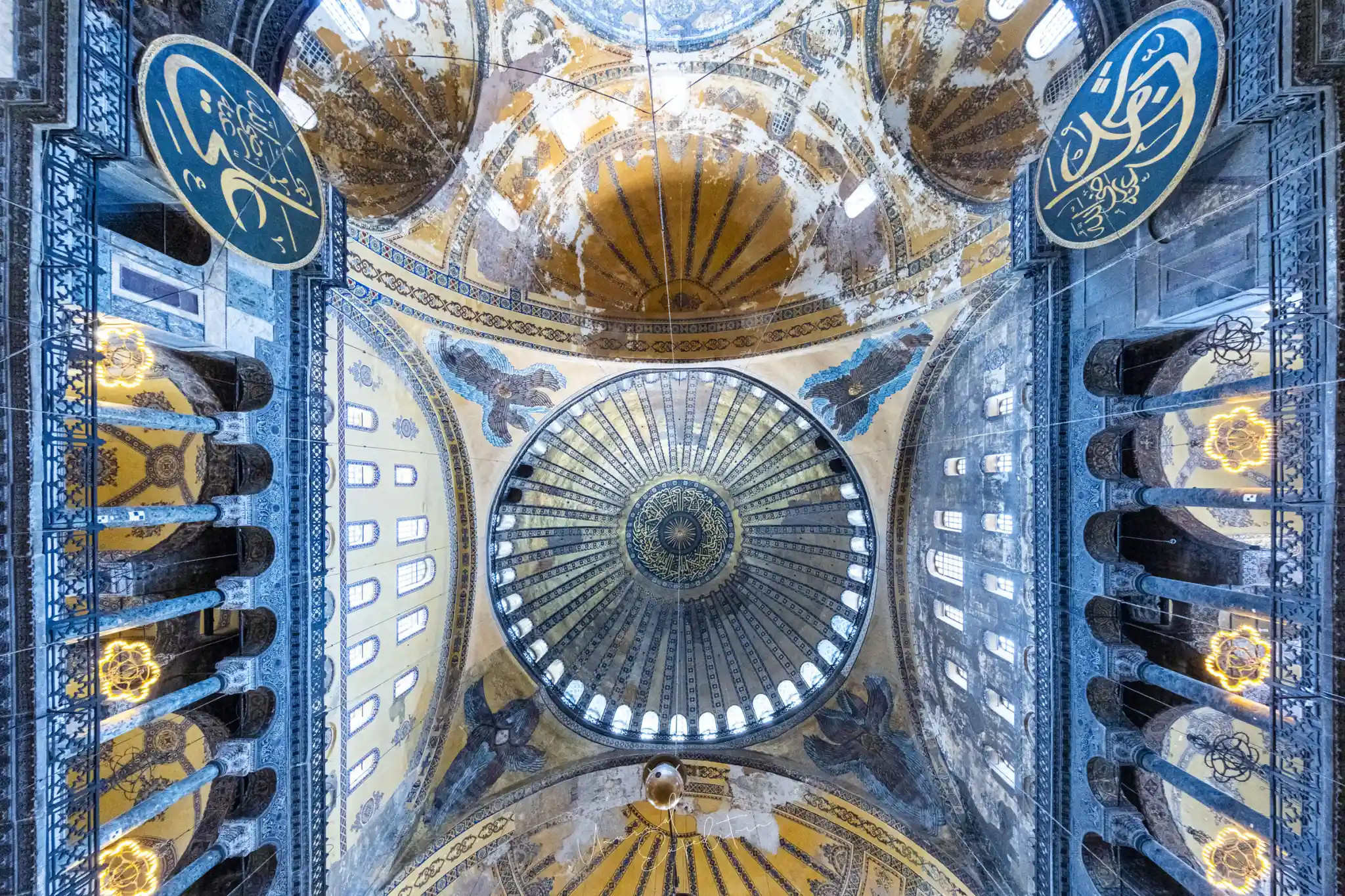
Hagia Sophia and the Blue Mosque face each other across Sultanahmet, the two great domed buildings of old Istanbul, and both can be photographed in one day. Hagia Sophia is a sixth-century church that is a mosque again, seen today by foreign visitors from its upper gallery with a paid ticket. The Blue Mosque is free outside prayer times and at its finest from outside after dark. Both are working mosques with a dress code. This is part of our Istanbul photography tour guide.
Hagia Sophia and Blue Mosque: which to photograph first
Hagia Sophia and the Blue Mosque stand a short walk apart on either side of a garden and fountain, inside the area that UNESCO lists as the Historic Areas of Istanbul. Hagia Sophia is older by more than a thousand years: built as a cathedral under the emperor Justinian, turned into a mosque after 1453, a museum for most of the last century and a mosque again since 2020. The Blue Mosque, properly the Sultan Ahmed Mosque, was built in the early seventeenth century on the other side of the square, with six minarets and a cascade of domes. For photography, go inside Hagia Sophia in the daytime, when light pours through the windows under the dome, and keep the Blue Mosque for the evening, when it is floodlit against a deep blue sky.
Hagia Sophia inside: what you can photograph today
Hagia Sophia inside is a vast single space under a dome that seems to float on its ring of windows. Since January 2024, according to Lonely Planet and the city's visitor information, foreign visitors buy a ticket and follow a separate route to the upper gallery, while the ground floor is kept for worshippers, who enter free. Several of our interior frames, including the view up into the dome at the top of this page, were taken from the ground floor before that change, so do not expect those exact viewpoints. From the gallery you look across and down into the nave, at the calligraphy roundels at eye level and at the dome above, which is arguably the better position for the scale of the building. Ticket prices and hours change; check the official source before you travel.
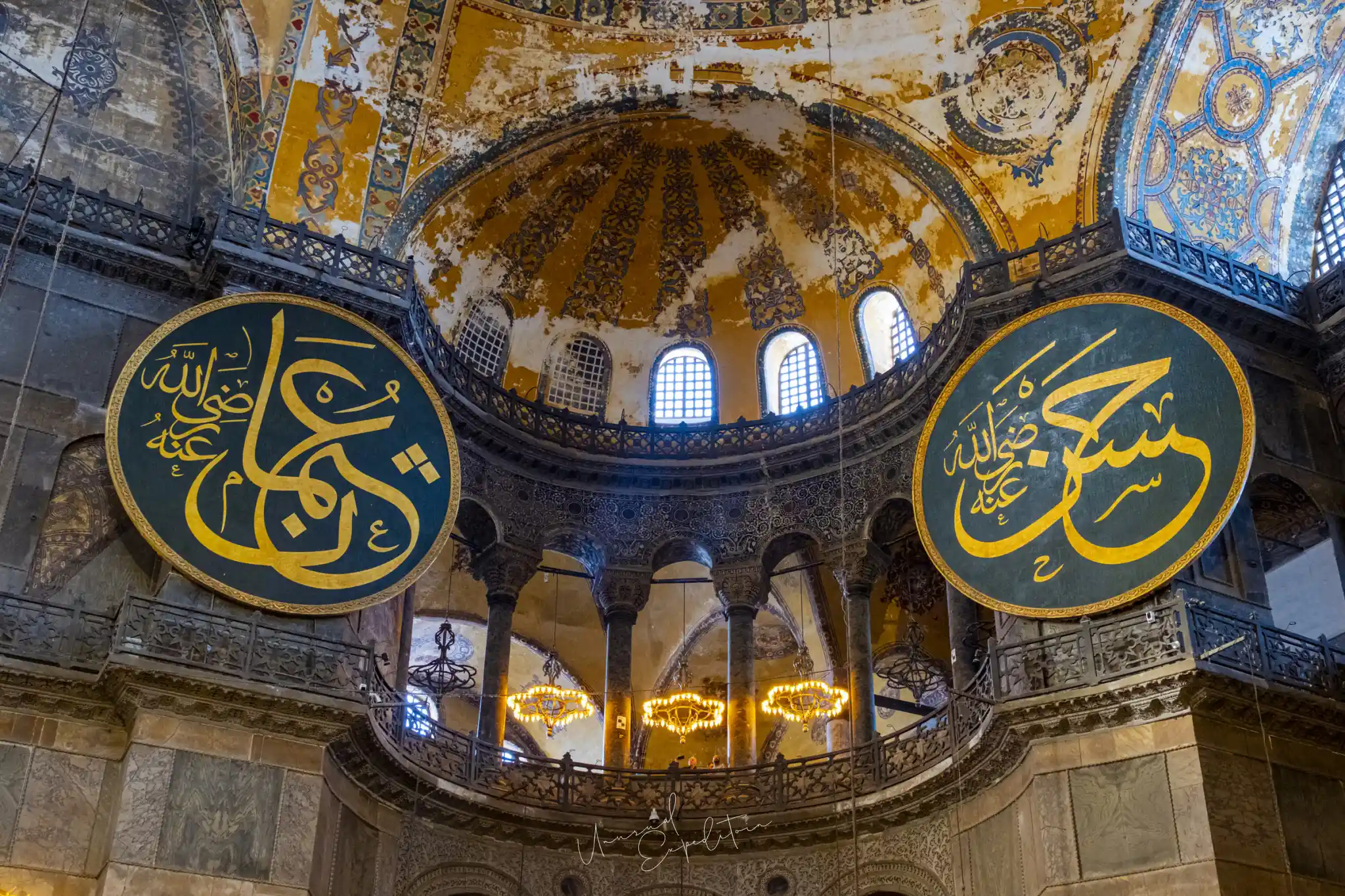
The Hagia Sophia dome
The Hagia Sophia dome is ribbed, ringed with forty windows at its base and carried on four pendentives, each with the figure of a winged seraph. Under it hang the great calligraphy roundels added in the Ottoman period, with the names of God, the Prophet and the first caliphs. To photograph the dome, use the widest lens you have, a 16-35mm at the least, and line up the centre of the frame with the centre of the dome so the ribs radiate evenly. Expose for the windows and lift the shadows later; the gold mosaics and the painted plaster hold detail if you do not clip the highlights. A fisheye works beautifully here and suits the curve of the space.
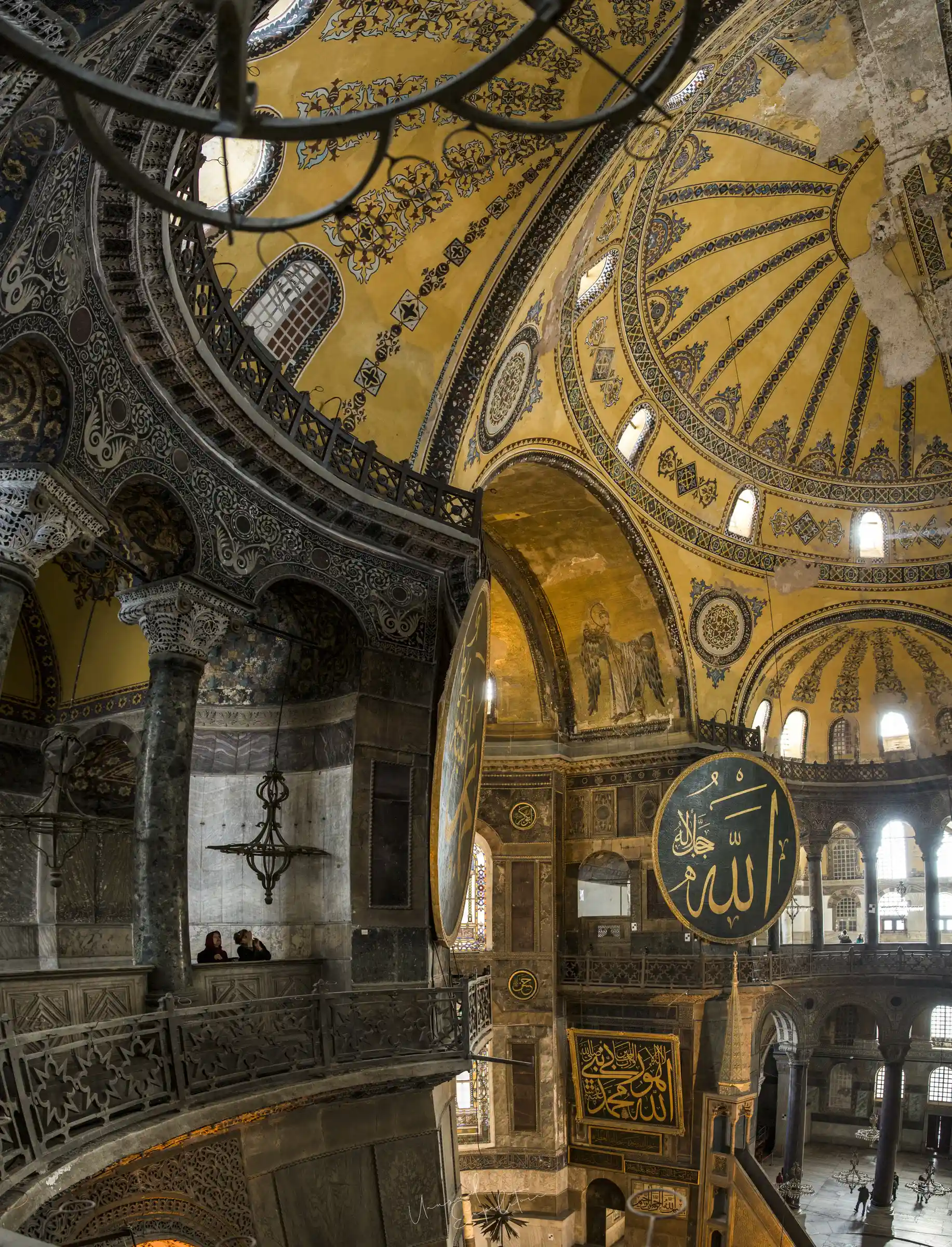
Hagia Sophia from the gallery
The upper gallery of Hagia Sophia runs round three sides of the building, with marble columns, Byzantine mosaics and windows over the square. It is the place for long views across the nave, with the semi-domes stacked behind the main dome, and for details such as the carved capitals and the marble balustrades. On an earlier visit, when the building was a museum and scaffolding filled part of the nave, we photographed from the gallery, and the frame above comes from there. The gallery can be crowded at the top of the stairs; walk to the far side, where it is quieter, and wait for a gap in the crowd at the rail.
"Look up first and photograph later. People walk into Hagia Sophia with the camera already at the eye, and they miss the moment when the dome takes hold. Give it a minute, then find the frame."
Joseph Mak, tour leader, Unusual Expedition
Blue Mosque Istanbul: the outside at night
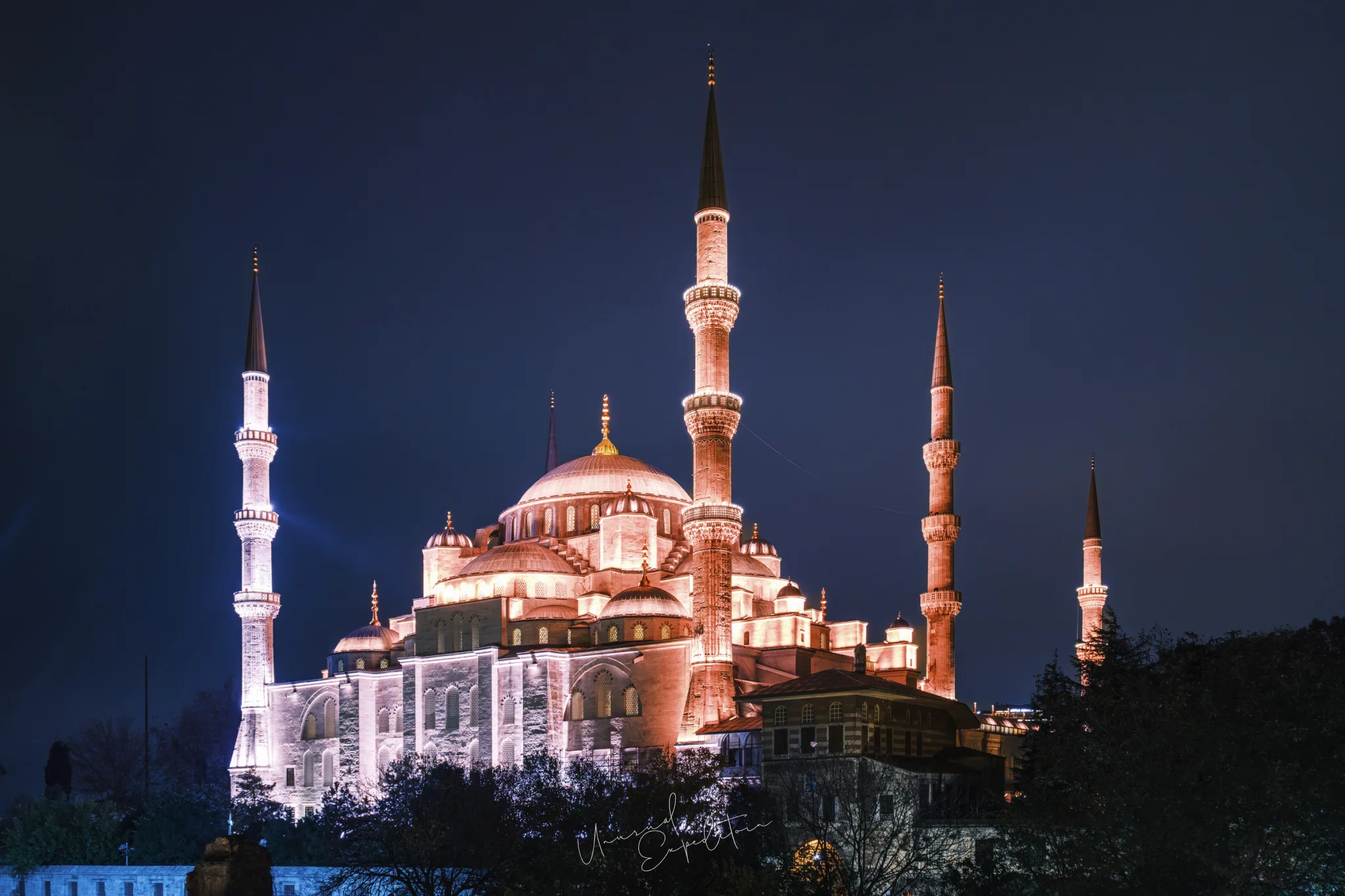
The Blue Mosque in Istanbul is named for the blue tiles inside, but its best photograph is from outside, at blue hour, when the floodlights catch the domes and the six minarets stand white against the sky. Walk round to the park side or stand at the edge of the Hippodrome; a 24-70mm takes in the whole building, and a tripod or a steady rail helps once the sky darkens. The square between the two buildings, with its fountain, also works in the day, as our best time to visit Istanbul guide shows. For more on evening positions across the city, read Istanbul sunset and night.
Blue Mosque Istanbul dress code
The Blue Mosque Istanbul dress code applies to every visitor, and Hagia Sophia follows the same rules. Women cover their hair; scarves are lent at the entrance. Shoulders and knees are covered for everyone, so no shorts or sleeveless tops. Shoes come off and are carried in a bag. Inside, keep to the visitors' area, speak quietly and do not photograph people at prayer at close range. Flash and tripods have no place in a prayer hall.
| Hagia Sophia | Blue Mosque | |
|---|---|---|
| Entry for foreign visitors | Paid ticket, upper gallery route | Free |
| Prayer times | Gallery stays open, movement may be limited | Closed to visitors during each prayer |
| Best photographs | Interior, dome and nave from the gallery | Exterior at blue hour |
| Dress | Hair covered for women, shoulders and knees covered | Same |
The two buildings complement each other: one is an interior, the other an evening exterior.
How to visit the Blue Mosque Istanbul
How to visit the Blue Mosque Istanbul comes down to timing. The mosque closes to visitors for each of the five daily prayers, and for longer at the Friday noon prayer; Diyanet, the religious affairs directorate, publishes the prayer times for Istanbul, and any prayer app shows them. Arrive soon after a prayer ends, when the queue moves quickly. Visitors use a separate entrance from worshippers. Inside, the light is soft and even, the carpet is wide and the tiles reward a short lens. Combine it with Hagia Sophia, the Basilica Cistern and the Hippodrome in one walk; the Istanbul photos article covers the cistern.
Photograph Sultanahmet with us
We know Sultanahmet in daylight, at blue hour and in winter rain, and we plan a visit around the prayer times so you spend your time photographing, not queuing. There is no scheduled Turkey departure, so we run Istanbul as a private trip on request, at your own pace, with photography coaching available at extra cost. See private tours and the Turkey photography tours page.
Ask us about Hagia Sophia and the Blue Mosque
Istanbul photography tours
The next Istanbul departure is announced on the Istanbul photography tours page, with previous expeditions and all the planning guides.
Explore Istanbul in depth
- Istanbul Photography Tour Guide: Mosques, Bridges and Old StreetsTurkey
- How to Travel to Istanbul: Flights, Visa, Money and PlanningTurkey
- Istanbul Sunset and Night: Where to Watch the Light GoTurkey
- Istanbul Street Photography: Trams, Markets and WorkshopsTurkey
- Istanbul Photos: What the City Looks Like Through the LensTurkey
- Best Time to Visit Istanbul for PhotographyTurkey
- Balat Istanbul: Colourful Houses, Steep Lanes and an Iron ChurchTurkey
Upcoming Photo Tours
- Egypt Photo Tour – EgyptEgypt 12 Dec 2026 To 20 Dec 2026
- Inner Mongolia Winter Owl Photo Tour – ChinaChina 01 Jan 2027 To 04 Jan 2027
- Inner Mongolia Winter Photo Tour – ChinaChina 05 Jan 2027 To 11 Jan 2027
- Mekong And Central Highland Vietnam Photo Tour - VietnamVietnam 16 Jan 2027 To 24 Jan 2027