
Harbin Ice Festival Photography: Harbin Ice and Snow World at Night
Harbin ice festival photography: Ice and Snow World opening dates, best time, blue hour, lenses, settings and the cold.
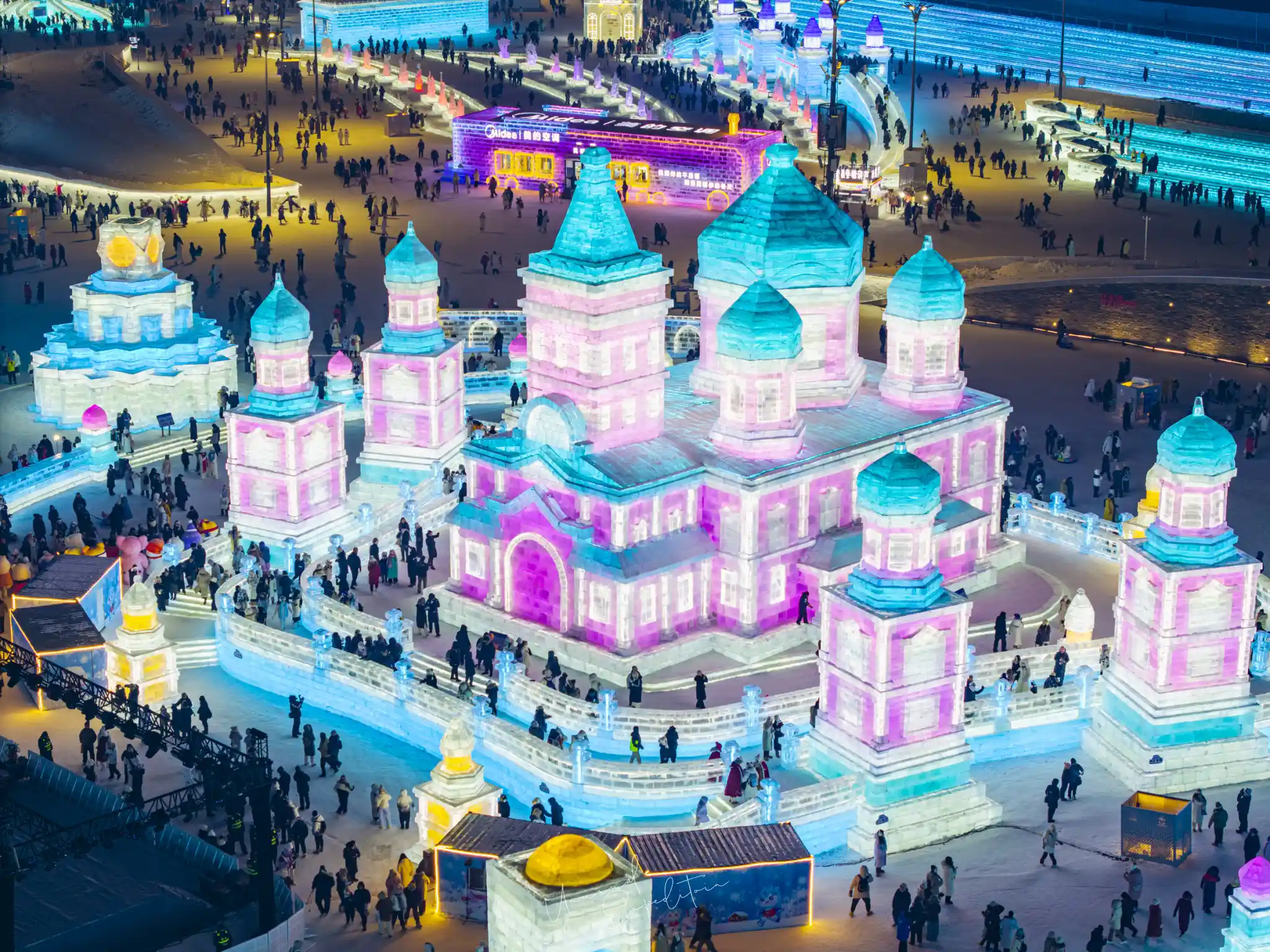
Harbin ice festival photography means photographing Harbin Ice and Snow World at night: castles, towers and slides built from Songhua River ice and lit from inside in shifting colours. The park opens in mid to late December and runs to late February, and the best light is blue hour, when the sky still holds colour and the ice is already glowing. You need a wide lens, a fast standard zoom, warm hands and a plan for the crowds. Here is how we photograph it.
The ice festival is one part of a Harbin winter; the Harbin photography tour guide covers the rest.
Harbin ice festival or Harbin Ice and Snow World?
The names get mixed up. The Harbin International Ice and Snow Festival is the city's winter festival as a whole, with an opening ceremony on 5 January, and it includes several sites: Harbin Ice and Snow World, the big park of lit ice architecture on the north bank of the Songhua River; Sun Island's snow sculpture exhibition; and ice lantern displays in the city. When photographers say "the Harbin ice festival" they almost always mean Ice and Snow World, and that is what this article is about.
Harbin ice and snow world opening date
The Harbin ice and snow world opening date moves a little each year with the weather and construction. The 27th edition opened on 17 December 2025 and the outdoor park closed on 21 February 2026, when rising temperatures began to soften the ice, as People's Daily reported. For the 28th edition, announced in October 2026 with a record area of 1.25 million square metres, the official opening date had not been published when we wrote this; travel guides expect late December. Check the park's official channels before you book.
Harbin ice festival dates: when to go
For photography, the best Harbin ice festival dates are the first half of January. By then every structure is finished and lit, the ice is still clean and clear, and the deep cold keeps the edges sharp. Late December can mean some areas are unfinished. February brings longer evenings and smaller crowds after Chinese New Year, but the ice yellows and softens as the month goes on. Avoid the Chinese New Year holiday week itself if you can; the park is at its busiest then.
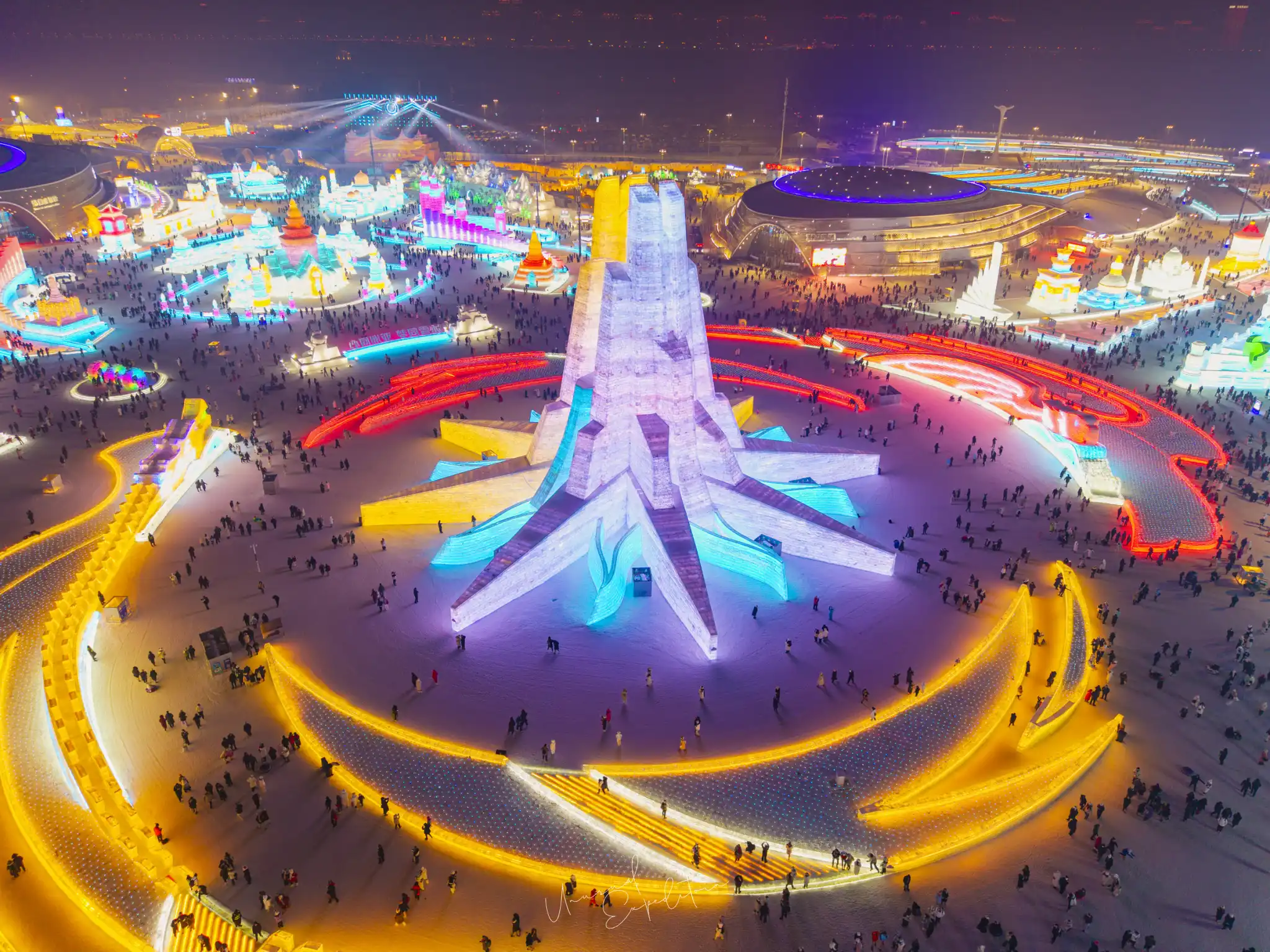
Best time of day at Harbin Ice and Snow World
Arrive in daylight. Walk the park in the afternoon, find your compositions while you can see the paths, and decide where you want to be at blue hour. The twenty to thirty minutes after sunset are the prime window: the sky is deep blue, the ice lights are on, and the exposure balance between sky and ice is easy. After full dark the ice is brighter than anything around it and the sky goes black, which still works for close details and light trails but loses the sense of place. In January the sun sets early in the afternoon, so blue hour comes earlier than visitors from Singapore expect.
Lenses and settings for ice festival photography
| Shot | Lens | Settings to start from |
|---|---|---|
| Whole castles with sky | 16-35mm | f/8, ISO 400 to 800, handheld or on a small tripod where allowed |
| Towers and details | 24-70mm | f/4 to f/5.6, ISO 800 to 1600, 1/60s |
| Compressed rows of towers | 70-200mm | f/4, ISO 1600, 1/125s |
| Crowd motion around the ice | 16-35mm | Tripod, 1 to 2 seconds, low ISO |
The lights change colour every few seconds, so shoot a burst of the same frame and choose the colour later.
Underexpose by about a third to two thirds of a stop to keep colour in the brightest ice, and set white balance by hand or shoot raw; auto white balance tends to neutralise the colours you came for. Tripods may be restricted in crowded areas, so a fast lens and good high-ISO technique are the safe plan.
The ice comes from the Songhua River
Every block in the park is cut from the frozen Songhua River. Before the park opens, crews saw the river ice into huge blocks and haul them out, and the cutting area makes a fine daytime subject: walls of translucent blue ice, workers in padded coats, steam from the open channel. Ask your guide where cutting is happening; it is usually done before the festival peaks.
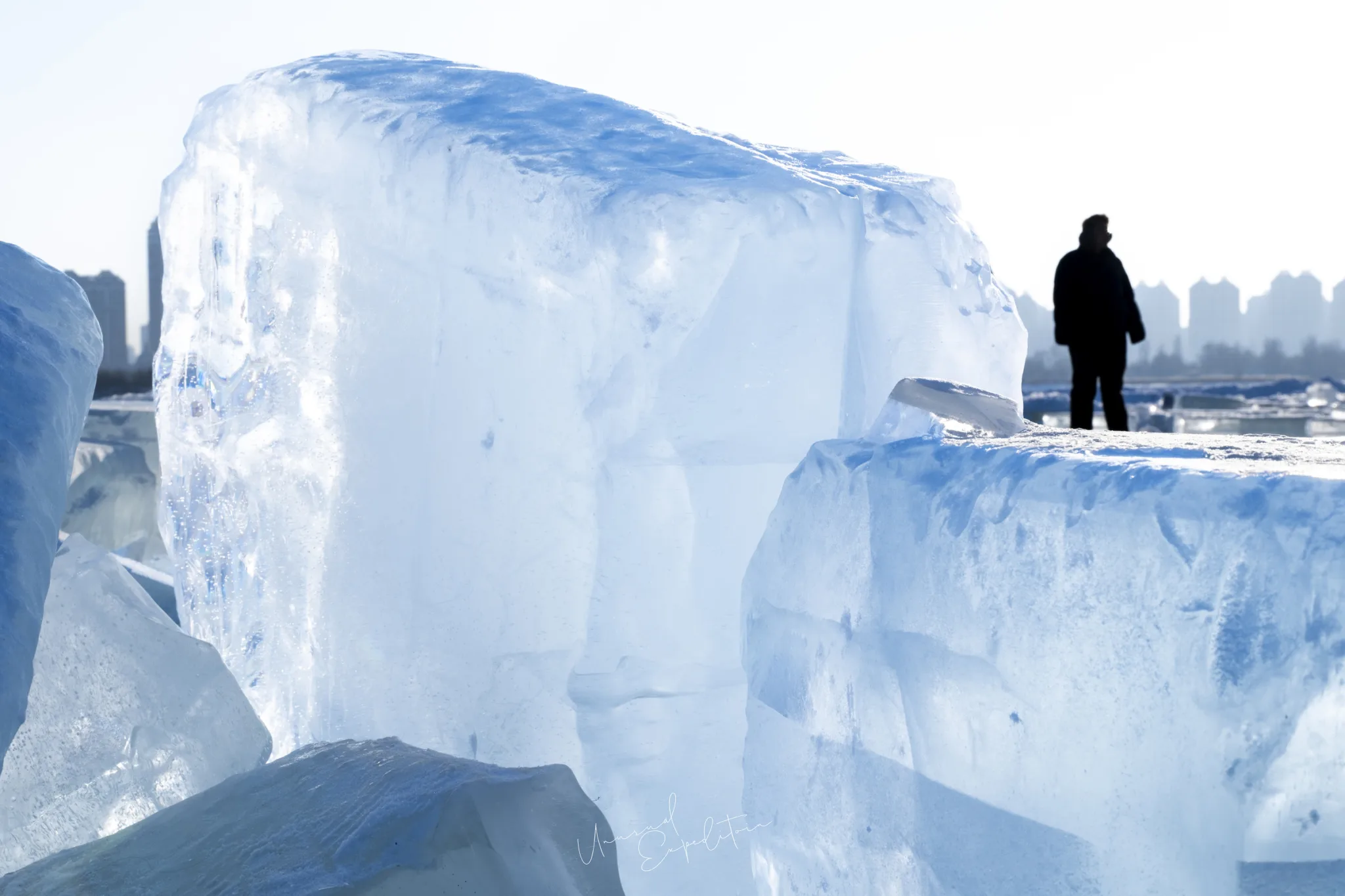
Stand next to a block of Songhua ice and you understand the park differently. It is a frozen river, sawn up and stacked into castles, and it melts back into the river every spring.
Joseph Mak, tour leader, Unusual Expedition
Daytime at the ice and snow sites
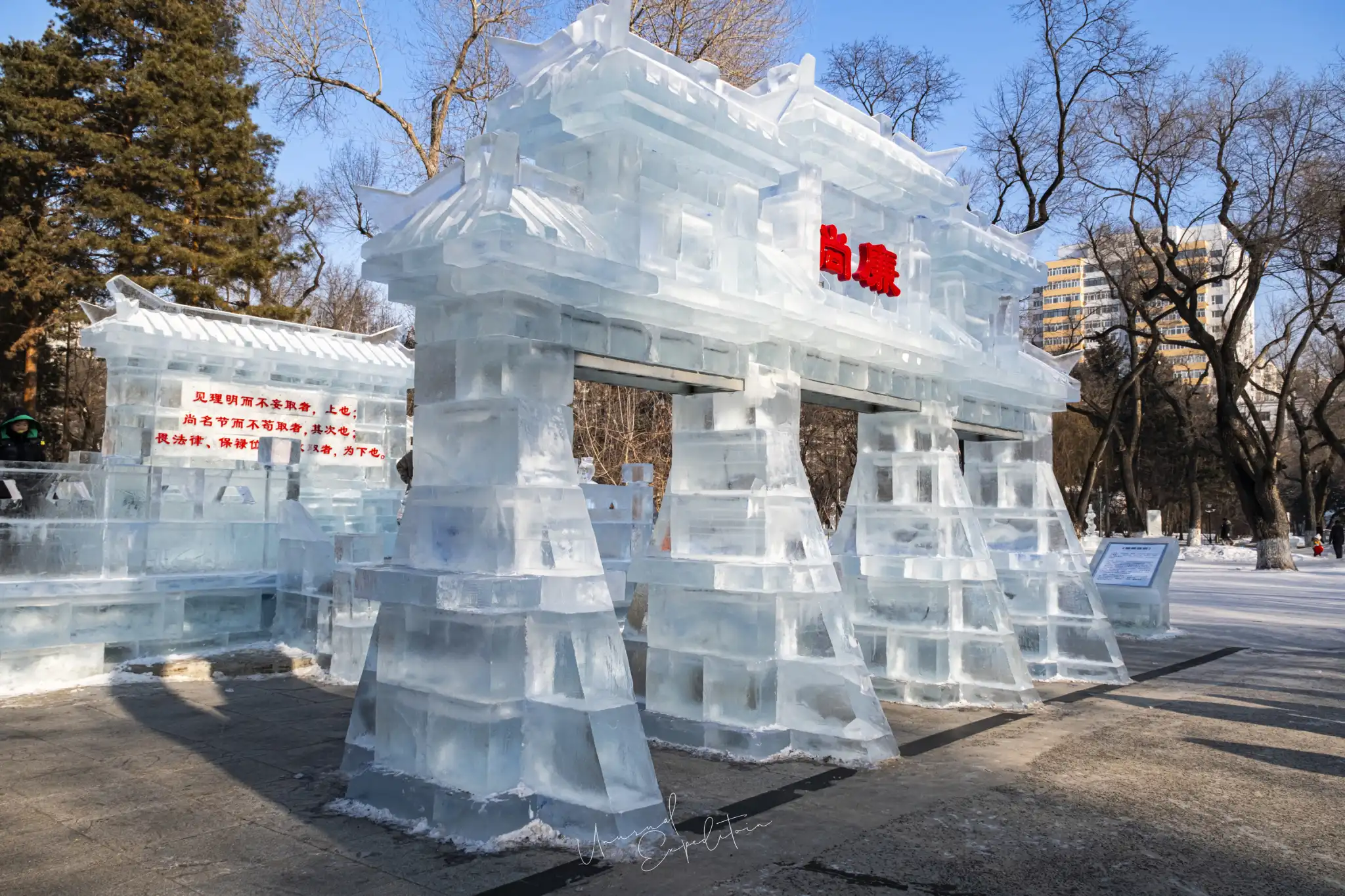
The lit castles are a night subject, but daylight has its own pictures. Clear ice sculptures in hard winter sun show their structure and the blue of the river ice; snow sculptures on Sun Island are best in soft side light. Use a polariser carefully on ice, since it can make it look grey. A daytime visit is also when you learn the layout for the evening.
Keeping cameras working at minus 20
Evening temperatures at the park are often below minus 20 degrees Celsius. Batteries are the first thing to fail: carry several, keep them inside your jacket, and swap often. Do not breathe on the viewfinder or the lens, because the breath freezes on the glass. When you leave the park, put the camera in a sealed bag before you go into the warm, and leave it there until it reaches room temperature. Our Harbin tour from Singapore article has the full clothing list.
Best time to visit Harbin ice festival
Put together: the best time to visit Harbin ice festival for photographs is early to mid January, on a clear evening, arriving in daylight and working through blue hour. Combine it with the rime mornings and the snow villages and you have the core of a northeast China winter; see best time to visit Harbin for how the rest of the season lines up, and China Snow Town photos for the villages.
Photograph the ice festival with us
We run Harbin as a winter photography trip and as private trips on request. Upcoming China departures are listed on our China photography tours page.
Join the Harbin photography tour
Inner Mongolia Winter Owl Photo Tour – China departs 01 Jan 2027 To 04 Jan 2027, led by Joseph Mak. Small group, photography first. All Harbin photography tours.
Explore Harbin in depth
- Harbin Photography Tour: The Complete GuideChina
- Harbin Tour from Singapore: Flights, Visa, What to WearChina
- China Snow Town Photos: Xuexiang at Night, Lanterns and SnowChina
- Best Time to Visit Harbin: Ice Festival, Snow and Rime Month by MonthChina
Upcoming Photo Tours
- Egypt Photo Tour – EgyptEgypt 12 Dec 2026 To 20 Dec 2026
- Inner Mongolia Winter Owl Photo Tour – ChinaChina 01 Jan 2027 To 04 Jan 2027
- Inner Mongolia Winter Photo Tour – ChinaChina 05 Jan 2027 To 11 Jan 2027
- Mekong And Central Highland Vietnam Photo Tour - VietnamVietnam 16 Jan 2027 To 24 Jan 2027