
Harbin Photography Tour: The Complete Guide
Harbin photography: Ice and Snow World, St Sophia, rime trees, China Snow Town, Siberian tigers, the cold and when to go.
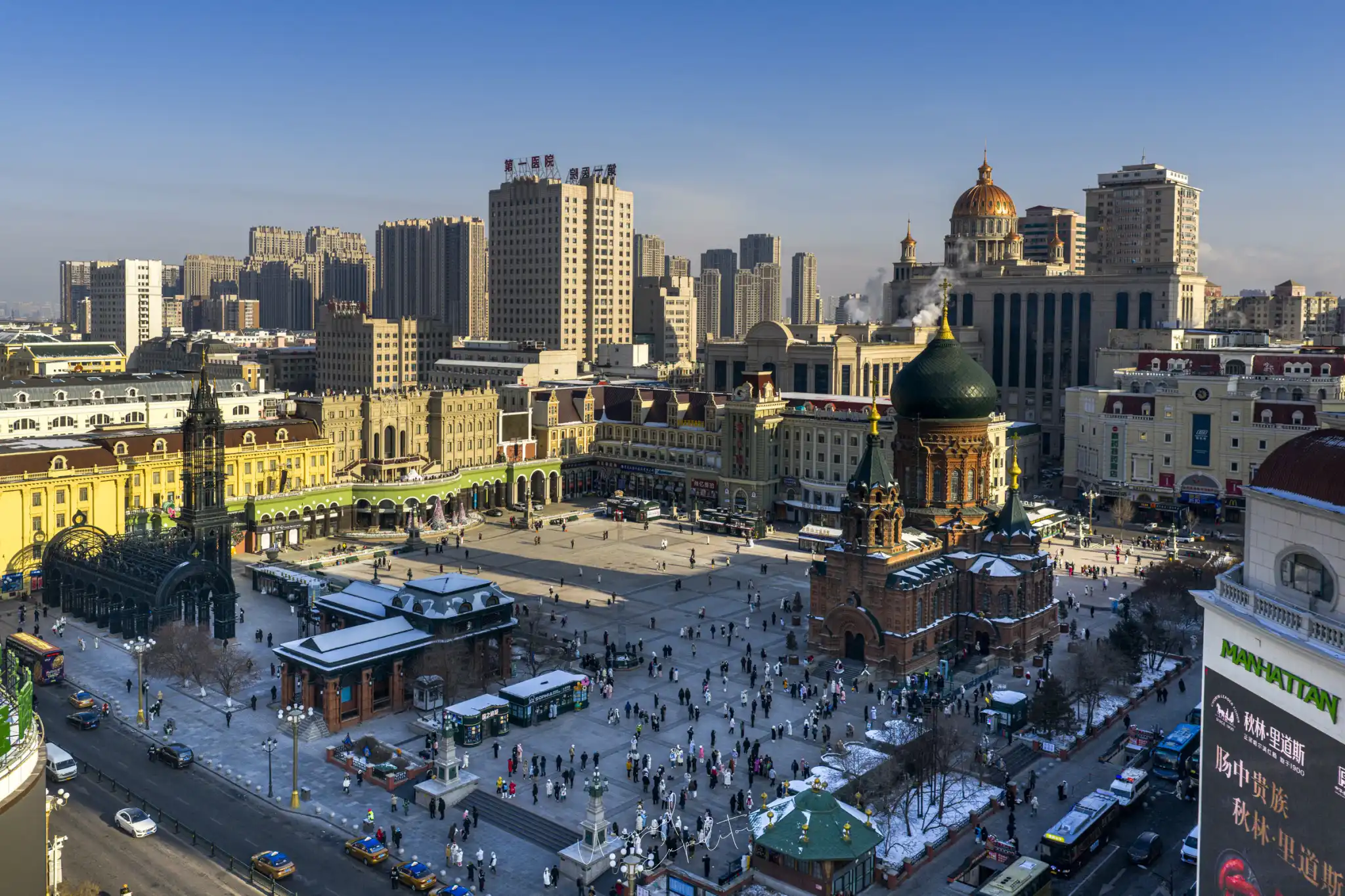
Harbin photography is winter photography: the lit ice castles of Harbin Ice and Snow World, Russian-era churches and streets under snow, rime-frosted trees along unfrozen rivers, the snow-buried cabins of China Snow Town, and Siberian tigers in deep snow. The season runs from late December to February, when the city sits far below freezing and the light stays low all day. Here is what to photograph in and around Harbin, when, and how our winter trips work.
Harbin is one region in our China photography tour guide, which covers entry, money and apps for the whole country.
Harbin photos: what the city is known for
Harbin photos usually show three things: ice, snow and Russian architecture. The city grew around the Chinese Eastern Railway at the start of the twentieth century, and Russian engineers, merchants and refugees left churches, a long pedestrian street of European facades, and a taste for bread and sausage. In winter the Songhua River freezes, its ice is cut into blocks, and those blocks become the castles of the ice festival. For a photographer it is an unusual mix: European domes in Chinese street life, at temperatures that freeze your breath on your scarf.
Is Harbin near Russia?
Is Harbin near Russia? Closer than most Chinese cities. Harbin is the capital of Heilongjiang, China's northeasternmost province, which shares a long border with Russia along the Amur River. The city itself is a few hundred kilometres from the border, and its history is tied to Russia through the railway. You see it in St Sophia Cathedral, the green-domed Russian Orthodox church in the old town, now a museum and the city's most photographed building, and in Volga Manor on the outskirts, a park of Russian-style buildings that photographs beautifully at sunset after snow.
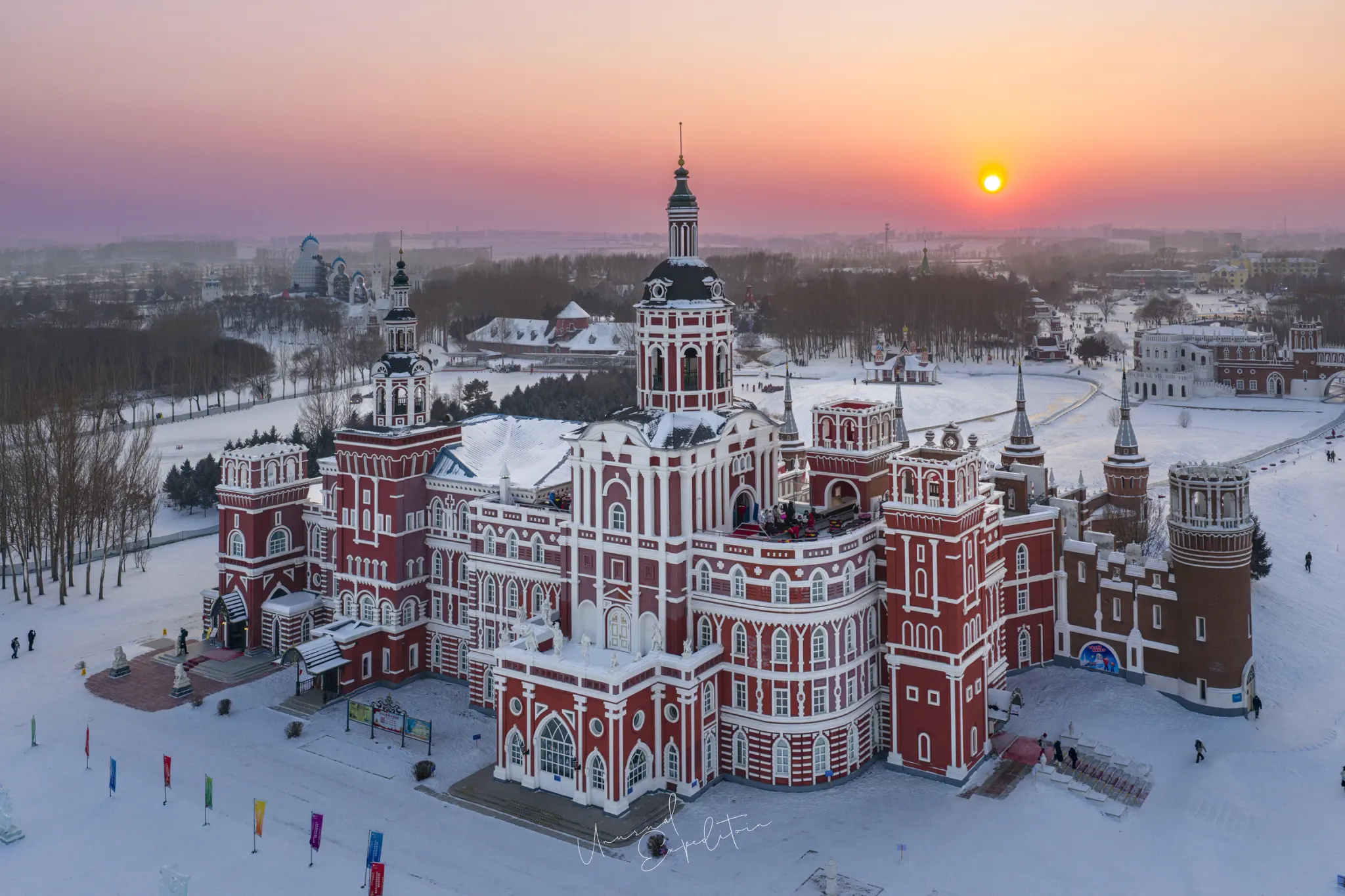
Harbin Ice and Snow World
Harbin Ice and Snow World is the reason most visitors come. Each winter a park of castles, towers and slides is built from ice blocks and lit from inside in changing colours. It opens in mid to late December and closes in late February; the 27th edition opened on 17 December 2025 and closed on 21 February 2026. Night is the time to photograph it, from blue hour onward. We cover lenses, positions and timing in Harbin ice festival photography.
Rime on the Songhua River
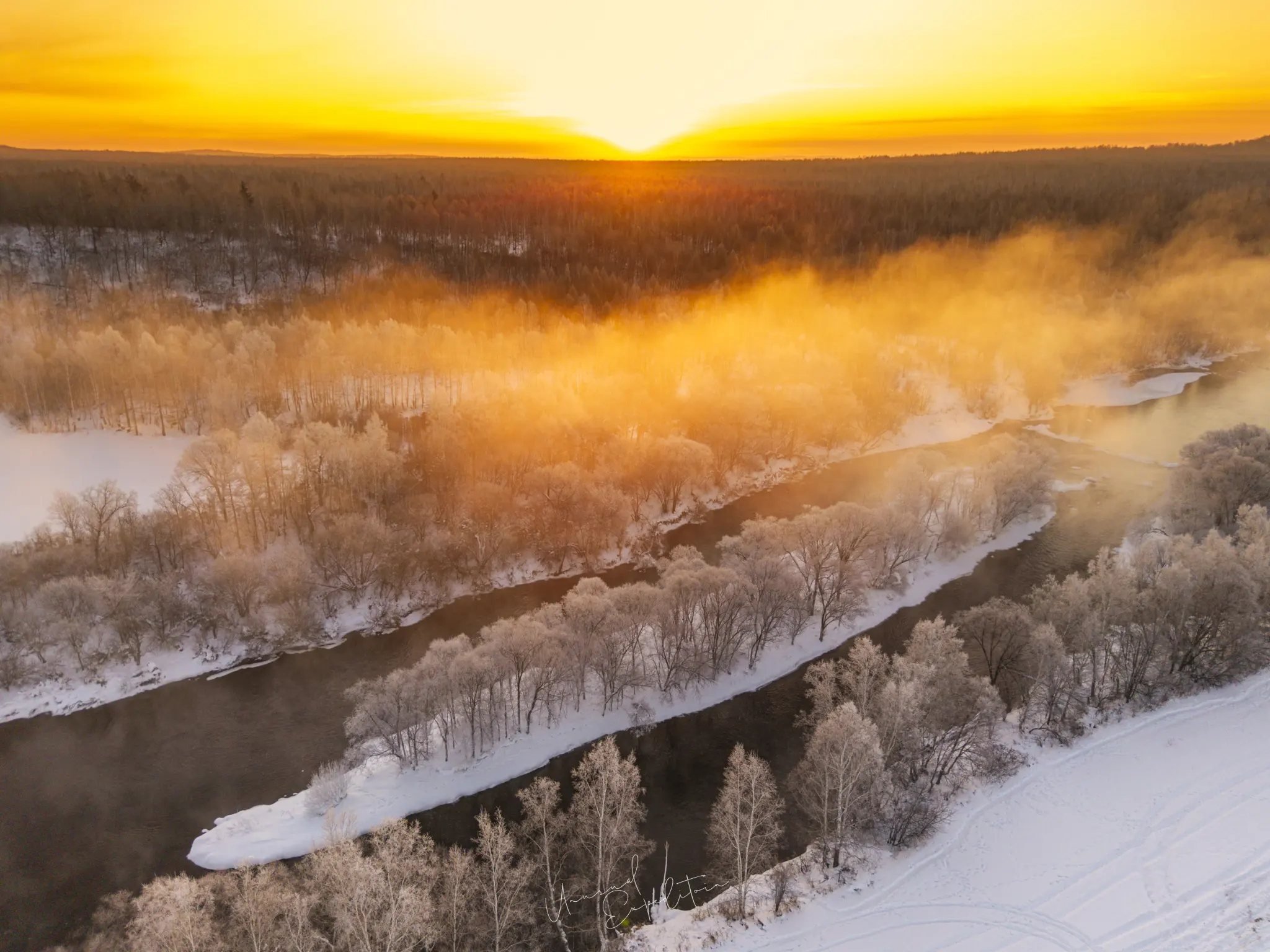
Rime, the feathery frost that grows on branches when water vapour freezes onto them, is the most delicate subject of a northeast China winter. The best-known place is Wusong Island on the Songhua River near Jilin City, in neighbouring Jilin Province, where the river below the Fengman hydropower station stays open in winter. On the coldest mornings, mist rises from the water and coats the willows along the banks. At sunrise, with the mist lit gold, it is one of the loveliest scenes in China. See best time to visit Harbin for when rime forms.
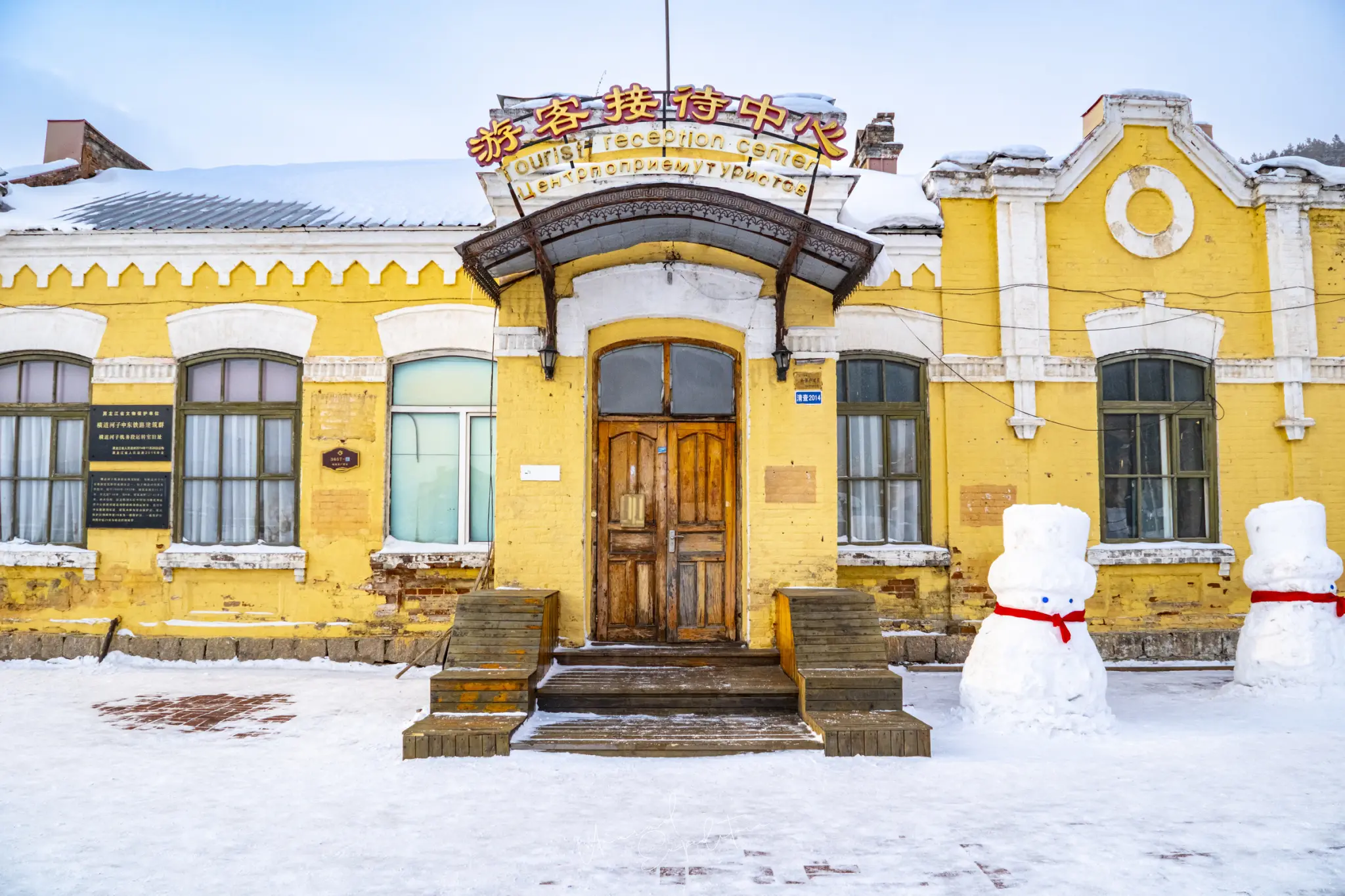
China Snow Town and Hengdaohezi
China Snow Town, or Xuexiang, sits in a forest park in Hailin, Mudanjiang, in the southeast of Heilongjiang. Heavy, sticky snow piles on its wooden roofs in soft rounded shapes, and at night red lanterns and coloured lights turn the village into something between a fairy tale and a theme park. On the way, the small railway town of Hengdaohezi keeps yellow-brick buildings and old wooden houses from the Russian railway era. Both are covered in China Snow Town photos.
Siberian Tiger Park Harbin
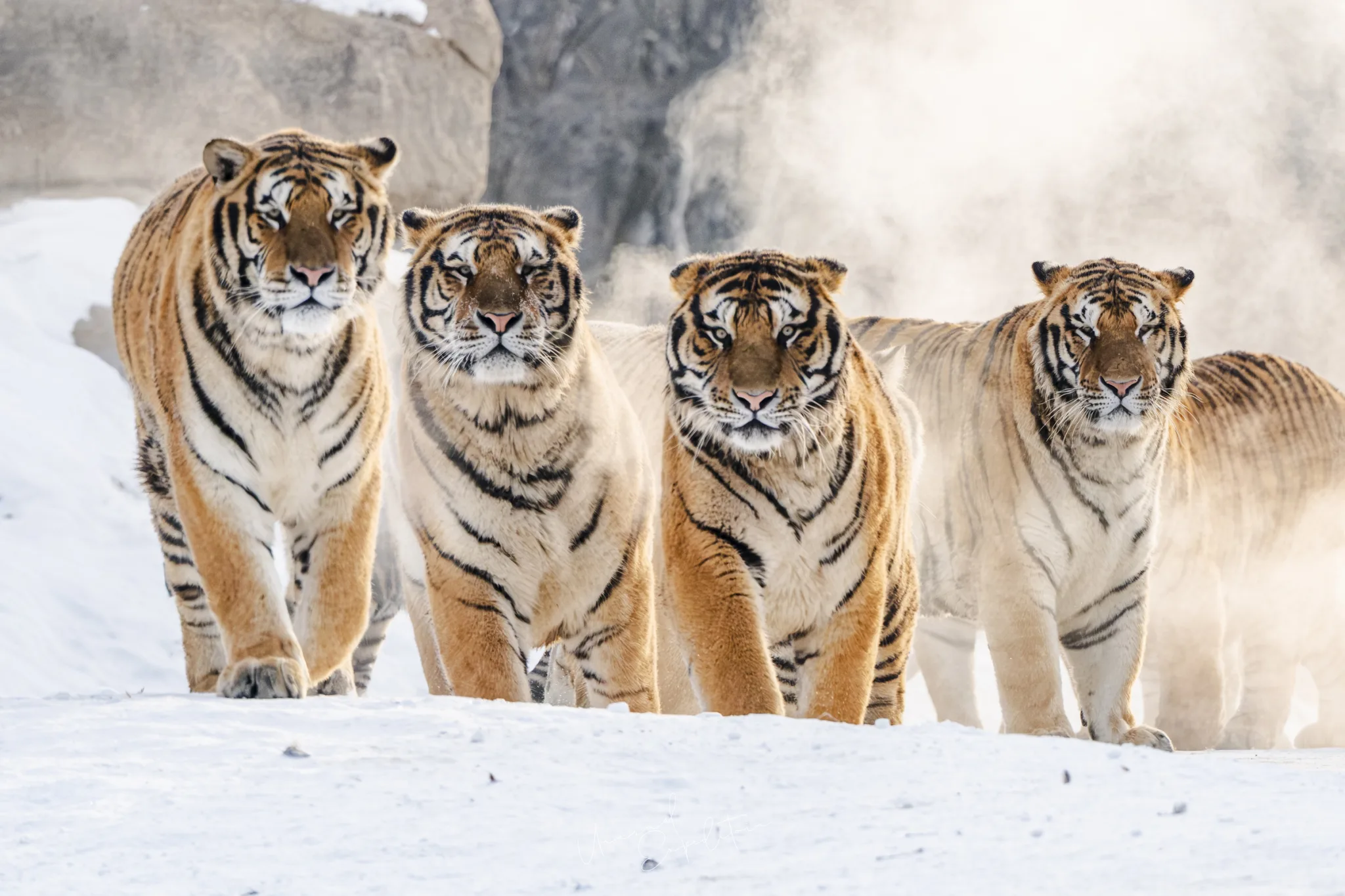
The Siberian Tiger Park in Harbin, north of the Songhua River, is a breeding and rescue centre for Amur tigers, the big cats of northeast China and the Russian Far East. Visitors tour the enclosures in park vehicles. For photographers the attraction is tigers in deep snow, with their breath steaming in the cold, though you shoot through vehicle windows or from fenced platforms and should expect a managed setting, not wild animals. A 100-400mm lens and a fast shutter do the work.
Is Harbin worth visiting?
Is Harbin worth visiting in winter? For photographers, yes, if you accept the cold. Within a short distance you have night architecture, festival lights, frozen rivers, forest villages and wildlife, and the low winter sun keeps the light soft through the middle of the day. It also pairs well with Inner Mongolia's horses and owls, which run in the same weeks; see the Inner Mongolia photography tour guide. It is less worth it if you dislike crowds: the ice park and Central Avenue are packed on festival evenings.
People come for the ice castles, but the pictures they show me afterwards are the rime trees at sunrise. That morning by the river, with the mist turning gold, is the one I would not skip.
Joseph Mak, tour leader, Unusual Expedition
Harbin winter: how cold is it?
Harbin winter is severe. Climate summaries put the January mean at about minus 17 to minus 18 degrees Celsius, with lows often below minus 20 and cold spells below minus 30. Cameras work, but batteries drain in minutes, lenses fog when you come inside, and skin freezes quickly in wind. Our Harbin tour from Singapore article has a clothing list and the travel practicalities.
What a Harbin photography trip looks like
| Subject | Where | Best light |
|---|---|---|
| Ice castles | Harbin Ice and Snow World | Blue hour and night |
| Russian architecture | St Sophia, Central Avenue, Volga Manor | Sunset and blue hour |
| Rime trees and river mist | Wusong Island area, Jilin | Sunrise on the coldest mornings |
| Snow-buried cabins | China Snow Town, Hailin | Blue hour and night |
| Siberian tigers | Siberian Tiger Park, Harbin | Morning sun on snow |
Most of the best frames are made at the edges of the day, so a Harbin trip is a trip of early mornings and late evenings.
Explore Harbin in depth
- Harbin ice festival photography: Harbin Ice and Snow World at night
- China Snow Town photos: Xuexiang and Hengdaohezi
- Best time to visit Harbin for ice, snow and rime
- Harbin tour from Singapore
Photograph Harbin with us
We run Harbin as a winter photography trip, often next to our Inner Mongolia departures, and as private trips on request. Upcoming China departures are on our China photography tours page; write to us if you would like Harbin in a coming winter.
Join the Harbin photography tour
Inner Mongolia Winter Owl Photo Tour – China departs 01 Jan 2027 To 04 Jan 2027, led by Joseph Mak. Small group, photography first. All Harbin photography tours.
Explore Harbin in depth
- Harbin Tour from Singapore: Flights, Visa, What to WearChina
- Harbin Ice Festival Photography: Harbin Ice and Snow World at NightChina
- China Snow Town Photos: Xuexiang at Night, Lanterns and SnowChina
- Best Time to Visit Harbin: Ice Festival, Snow and Rime Month by MonthChina
Upcoming Photo Tours
- Egypt Photo Tour – EgyptEgypt 12 Dec 2026 To 20 Dec 2026
- Inner Mongolia Winter Owl Photo Tour – ChinaChina 01 Jan 2027 To 04 Jan 2027
- Inner Mongolia Winter Photo Tour – ChinaChina 05 Jan 2027 To 11 Jan 2027
- Mekong And Central Highland Vietnam Photo Tour - VietnamVietnam 16 Jan 2027 To 24 Jan 2027