
Huangshan Sunrise: Photo Spots, Sea of Clouds and Winter Rime
Huangshan sunrise spots, the sea of clouds, winter rime and composition tips for photographing the Yellow Mountain in Anhui.
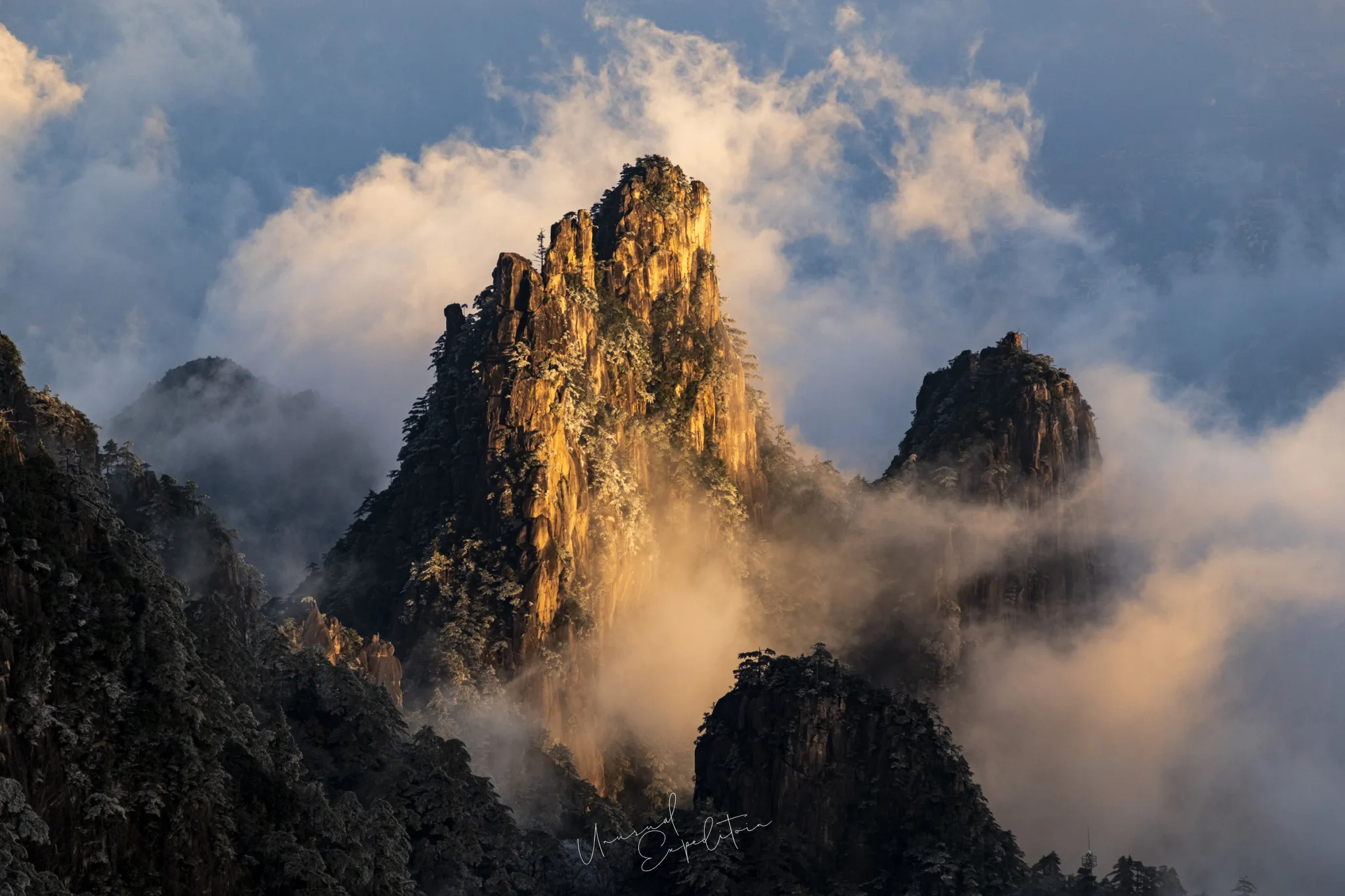
Huangshan sunrise is the reason most photographers climb the Yellow Mountain: the sun comes up over a sea of clouds that fills the valleys, and the granite peaks and their twisted pines stand out of it like islands. To photograph it you need to be on the summit area before dawn, at an east-facing viewpoint, on a morning when cloud sits below the peaks rather than on them. In late autumn and winter a cold night can also coat every pine in white rime.
This article is part of our Wuyuan and Huangshan photography tour guide.
Huangshan mountain photos: what makes the place
Huangshan in southern Anhui is a granite massif of steep spires, listed by UNESCO as a World Heritage site for both its natural scenery and its cultural importance. Three elements make the pictures: the rock, weathered into columns and blades; the Huangshan pine, which roots in cracks and grows flat against the wind; and the cloud, which comes and goes in minutes. The classic Chinese painting of mountains floating above mist is not an exaggeration of this place. It is a description.
Huangshan sunrise spots
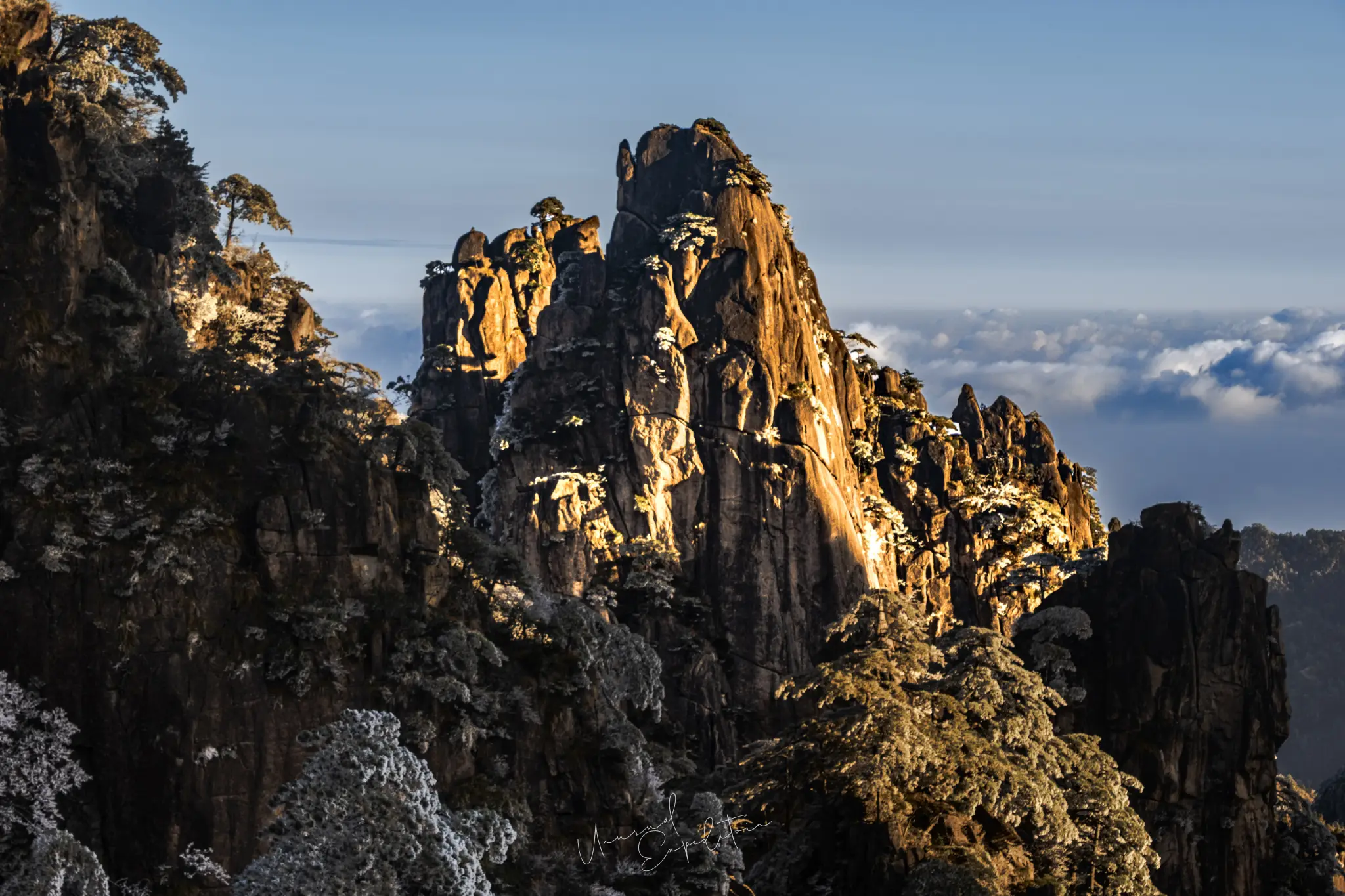
The summit area has several established sunrise viewpoints, all in the northern and eastern parts of the mountain near the top stations of the cable cars. Refreshing Terrace (Qingliang Tai) is the most famous and the most crowded. Lion Peak and the area around Beihai face east over open valleys. Bright Summit (Guangming Ding), one of the highest points, gives a wide view in every direction and is good for both sunrise and sunset. The Lotus Peak and Celestial Capital routes are steeper and sometimes closed in rotation for conservation, so check what is open with the scenic area before planning a shot.
| Viewpoint | Good for | Note |
|---|---|---|
| Refreshing Terrace | Classic sunrise over the sea of clouds | Very crowded, arrive early for a rail position |
| Lion Peak area | Sunrise, layered peaks to the east | Several platforms, more room |
| Bright Summit | Sunrise and sunset, wide panorama | Exposed and cold, wind |
| West Sea Grand Canyon rim | Sunset, deep side light on spires | Long stairs, not for sunrise |
Pick your viewpoint the evening before, after checking the sky, and walk the route in daylight so you know it in the dark.
Huangshan sunrise time and how early to be there
Huangshan sunrise time moves by more than an hour between summer and winter, and the scenic area and any weather app publish the exact time for each day. Be at your spot at least half an hour before it, because the best colour is in the sky before the sun clears the horizon, and the platforms fill. This is only realistic if you sleep on the mountain. Coming up from the foot in the dark is possible by the stairs but not by cable car, which starts later.
Huangshan sea of clouds: when it happens
The sea of clouds forms when moist air settles in the valleys under a layer of warmer air, typically after rain followed by a clear cold night. It is most frequent from November through spring, though no month guarantees it. The trick is reading the forecast: rain in the afternoon, clearing overnight, and a still morning is the pattern. If the cloud is on the peaks instead of below them, you are inside it and will see nothing; wait, because it often drops an hour or two after sunrise.
Huangshan in winter: rime and snow
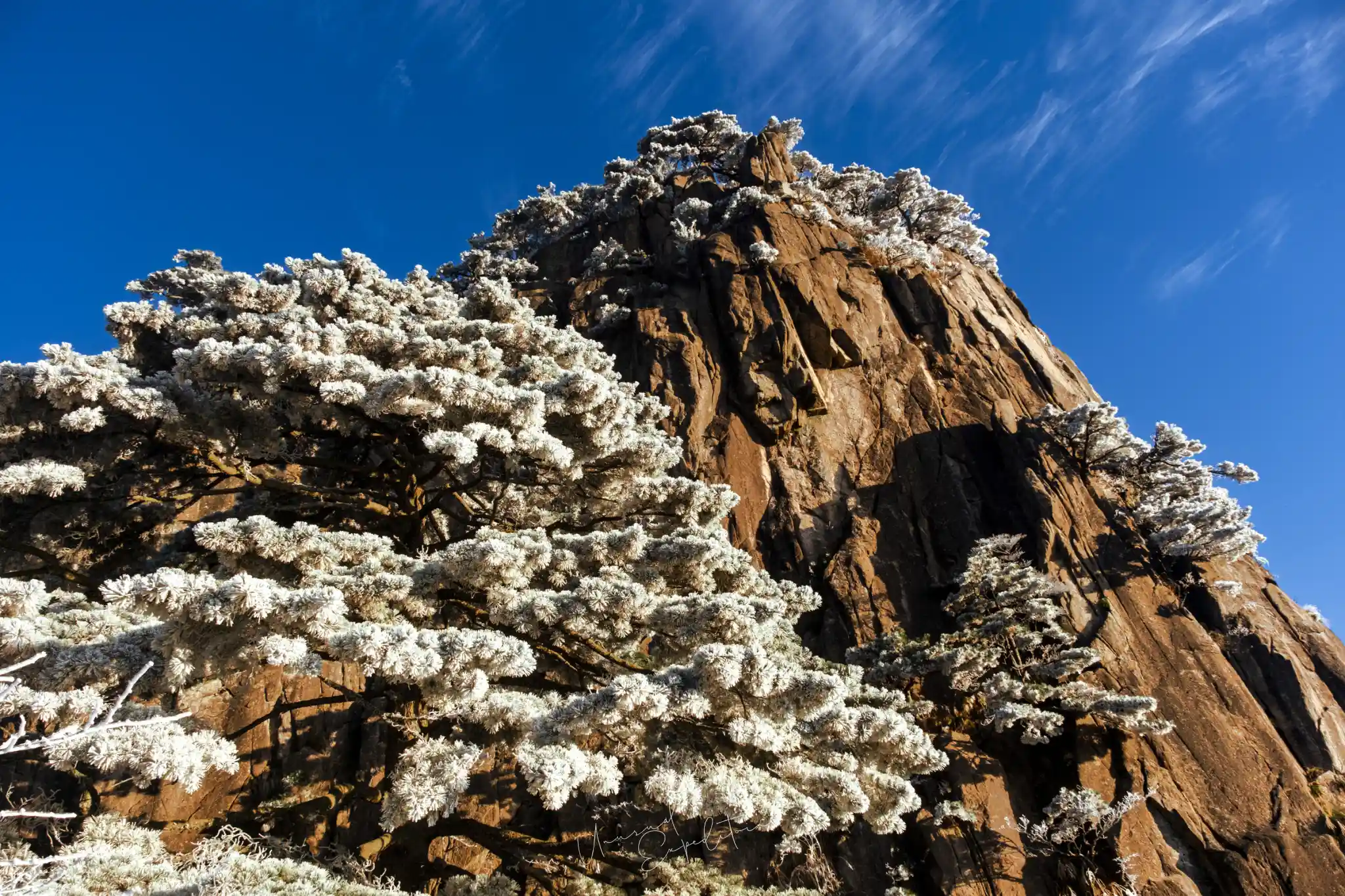
Huangshan in winter, and in cold snaps from November, brings rime: freezing fog that leaves a white crust of ice on every needle. The pines go from green to white overnight. It is the most striking condition the mountain has, and it rarely lasts beyond the morning once the sun is on it, so be out at first light. Snow adds more, but brings closures on some paths. On our November visit the rime came after a cold front and turned the same viewpoints we had seen the day before into a different place.
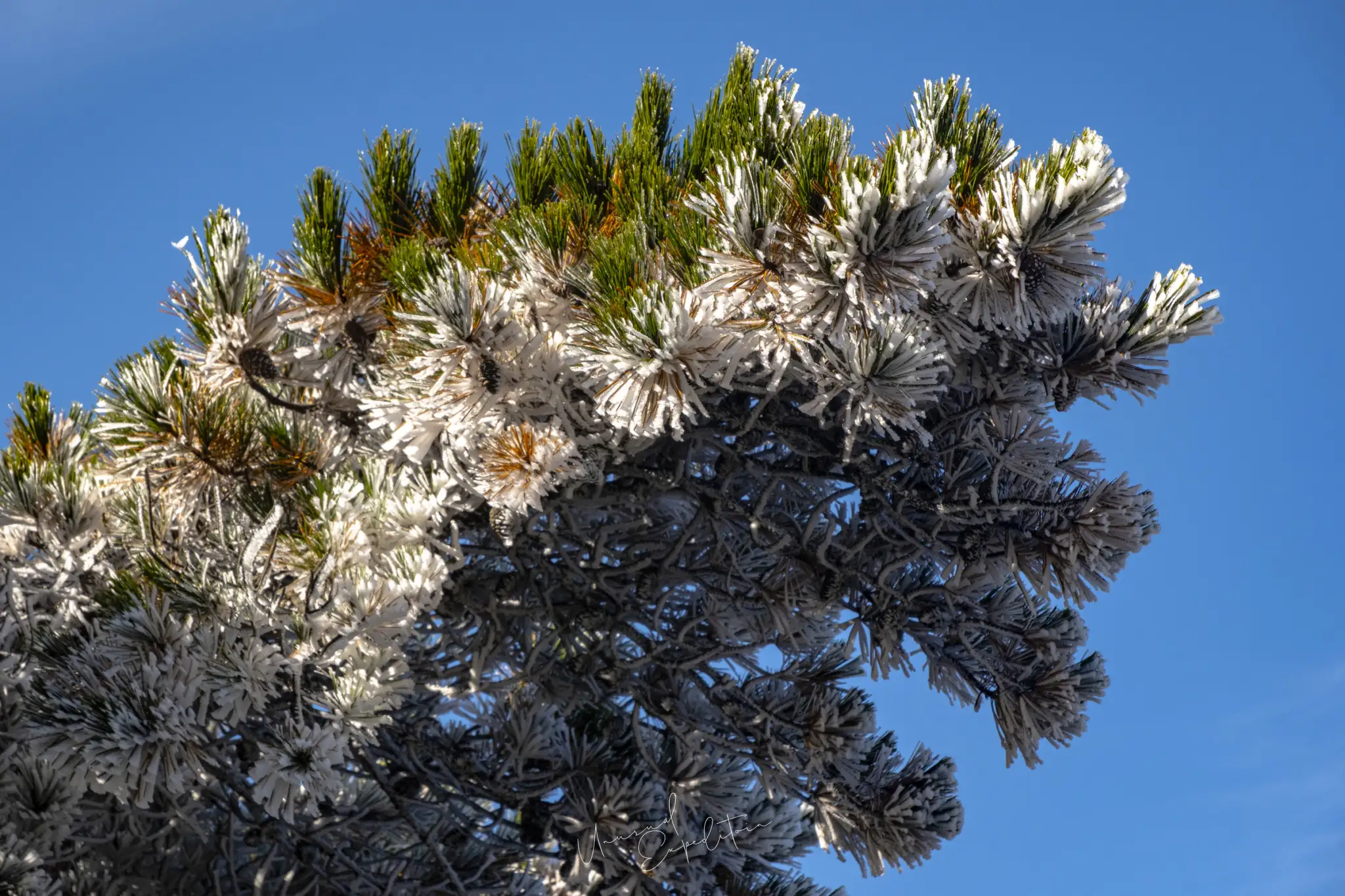
Winter temperatures at the summit regularly drop below freezing. Layer up, carry spare batteries in an inside pocket, and fit traction spikes to your boots if the steps are icy.
Huangshan photography: composition
The mountain rewards a long lens. A 70-200mm or 100-400mm lets you isolate a single spire with one pine on top against cloud, which is the strongest Huangshan picture there is. A 24-70mm covers the platforms and the near rock. Wide angles tend to include railings, people and a lot of empty sky. Watch the side light just after sunrise: it rakes across the granite and gives the spires their texture, and it lasts only a short while before it turns flat.
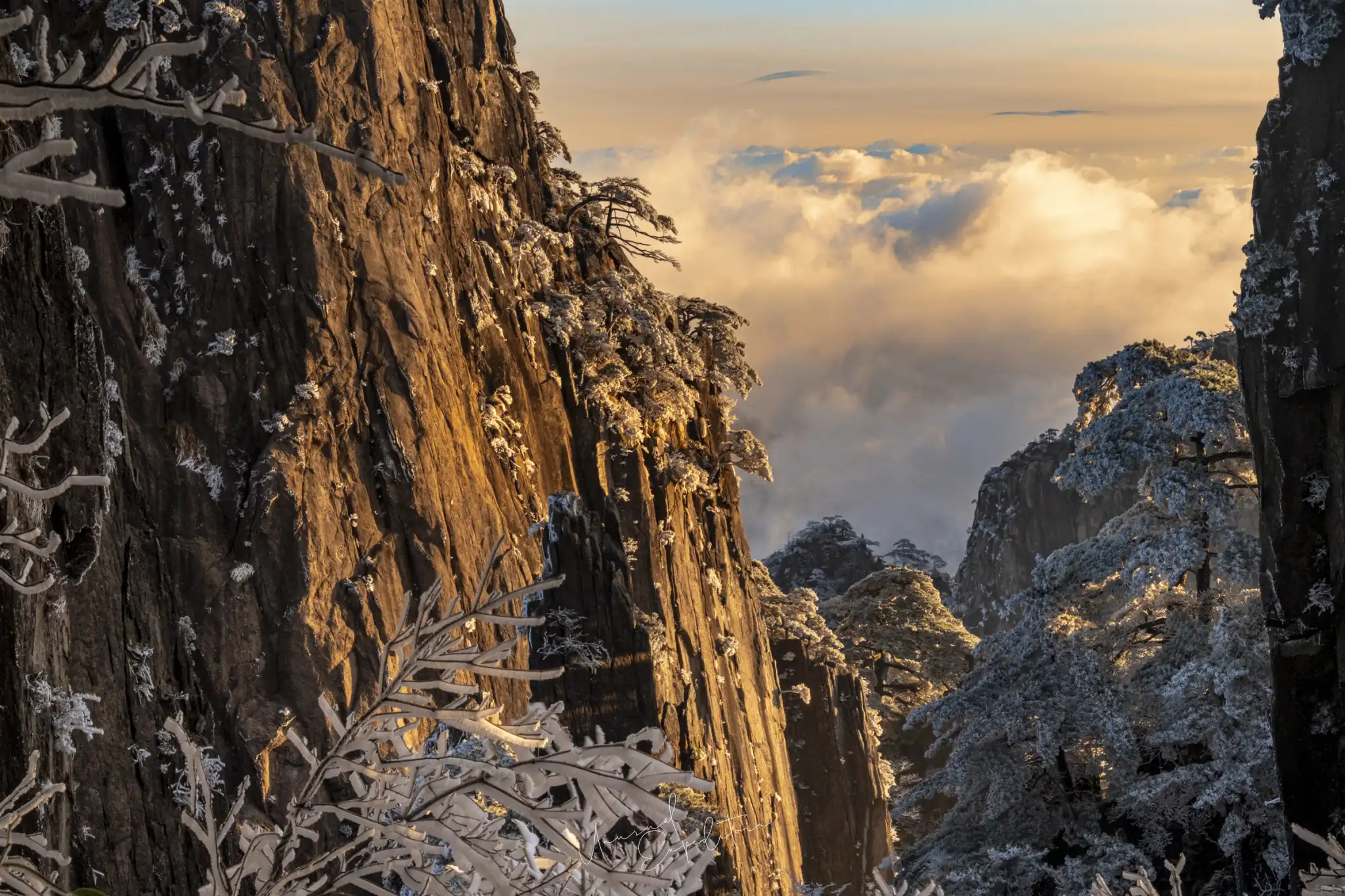
On Huangshan you are never photographing the mountain, you are photographing the weather on the mountain. The rock is the same every day. The pictures are not.
Joseph Mak, tour leader, Unusual Expedition
Huangshan altitude and fitness
The highest peaks are a little under 1,900 metres, so altitude sickness is not a concern, but the mountain is steep. Every route between viewpoints is stone steps, many of them, and carrying a tripod and long lens up and down them for two days is the real test. The cable cars take care of the climb from the foot. On the summit, plan on several hours of stairs each day.
Is Huangshan worth it for photographers
Yes, if you go in the right season and give it at least one night on top, ideally two, so you get two chances at sunrise. A day trip up by cable car in the middle of the day gives you hazy views and crowds. Combined with Wuyuan's villages and Hongcun, it makes one of the most varied short photography trips in China. See our Wuyuan best time to visit article to match the two, and how to get to Huangshan from Singapore for the travel.
Photograph Huangshan with us
We take small groups up Huangshan for rime and the sea of clouds as part of private Wuyuan and Huangshan trips. Scheduled China departures are on our China photography tours page.
Join the Wuyuan and Huangshan photography tour
Inner Mongolia Winter Owl Photo Tour – China departs 01 Jan 2027 To 04 Jan 2027, led by Joseph Mak. Small group, photography first. All Wuyuan and Huangshan photography tours.
Explore Wuyuan and Huangshan in depth
- Wuyuan and Huangshan Photography Tour GuideChina
- Wuyuan Photos: Huangling, Jiangling and the River VillagesChina
- How to Get to Huangshan and Wuyuan from SingaporeChina
- Wuyuan Best Time to Visit: Rapeseed in March or Shaiqiu in NovemberChina
Upcoming Photo Tours
- Egypt Photo Tour – EgyptEgypt 12 Dec 2026 To 20 Dec 2026
- Inner Mongolia Winter Owl Photo Tour – ChinaChina 01 Jan 2027 To 04 Jan 2027
- Inner Mongolia Winter Photo Tour – ChinaChina 05 Jan 2027 To 11 Jan 2027
- Mekong And Central Highland Vietnam Photo Tour - VietnamVietnam 16 Jan 2027 To 24 Jan 2027