
Kinderdijk Windmills: Where to Stand, and Is Kinderdijk Worth Visiting
Kinderdijk windmills: where to stand at sunset and dawn, is Kinderdijk worth visiting, Kinderdijk vs Zaanse Schans, tickets, transport.
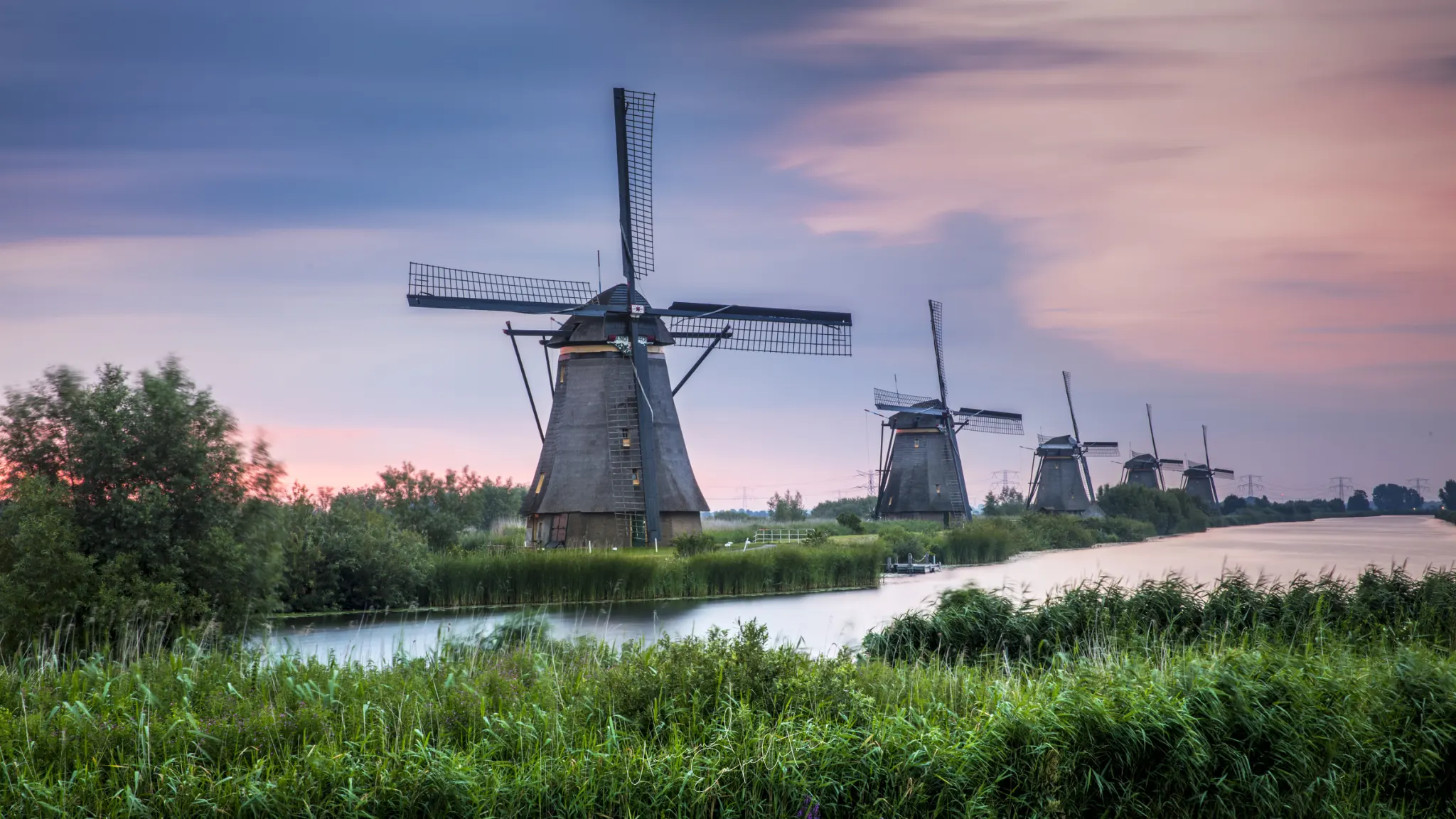
The Kinderdijk windmills are nineteen eighteenth-century drainage mills standing in rows along the polder canals east of Rotterdam, and they are the best place in the Netherlands to photograph traditional windmills in a working landscape. The pictures come from the canal banks: a line of mills receding into the distance, reeds and water lilies in the foreground, and a wide sky above. Dawn and sunset are the times to be there, before and after the day visitors.
Kinderdijk is one of the places in our Netherlands photography tour guide. The photographs in this guide are our own, taken on our trip to Kinderdijk at sunset and again at dawn; we hold the rights to them, and the notes come from knowing the place first hand.
Kinderdijk windmills, Netherlands: what you are photographing
The Kinderdijk windmills belong to the Mill Network at Kinderdijk-Elshout, inscribed on the UNESCO World Heritage List in 1997. UNESCO lists the whole water system, not only the mills: the mills, dykes, reservoirs and pumping stations together kept the low-lying Alblasserwaard polder dry. The Dutch World Heritage organisation says the basin mills were built between 1738 and 1740. They are drainage mills, which lifted water from the polder into higher basins so it could drain to the rivers; today pumping stations do most of that work. For photography the history matters because the landscape is still laid out for water: long straight canals, flat banks, reed beds and wide reservoirs, which give you the leading lines and reflections every good Kinderdijk frame relies on.
Is Kinderdijk worth visiting?
Kinderdijk is worth visiting if you want to see Dutch windmills in their real landscape. There are windmills all over Holland, but most stand alone, in a town or beside a road. At Kinderdijk so many mills stand together in an open polder, with no modern buildings behind them from the main viewpoints, that you can line them up one behind another, which no single mill can give you. The drawback is that it is a single subject, and at midday in summer it fills with tour groups and flat light. If windmills move you, plan an evening and a morning there; we did both, and the two sessions gave us completely different pictures.
Kinderdijk vs Zaanse Schans
Kinderdijk and Zaanse Schans are the two windmill sites most visitors weigh up, and they are quite different.
| Kinderdijk | Zaanse Schans | |
|---|---|---|
| Where | South Holland, east of Rotterdam | North Holland, north of Amsterdam |
| What it is | Drainage mills in a polder, UNESCO World Heritage | Industrial mills and wooden houses gathered on the Zaan |
| Best photographs | Rows of mills, reflections, dawn and sunset | Painted houses, mills on the river, details |
| Entry | Paths free, ticket for the museum mills and boat | Area free, paid entry to mills and some museums |
For landscape, choose Kinderdijk; for a village with crafts close to Amsterdam, read our Zaanse Schans photos guide.
Kinderdijk Netherlands photos: where to stand
The main path at Kinderdijk runs along the canals between the mills, and almost every good position is on that path or on the banks beside it. Walk out along the water until you can see a mill close to you with the rest of the row stepping away behind it; that is the line you want. A 24-70mm at the wide end catches a mill with the sky above, and the long end stacks the row together. Further out, where the canals widen into reservoirs, you can put the mills on the far bank with open water in front, which works beautifully at dawn when the water is still.
Kinderdijk at sunset
Our evening at Kinderdijk began in bright, breezy light, with high cloud and a strong wind moving the reeds. That wind is worth using: a slower shutter speed blurs the reeds in the foreground while the mills stay sharp. As the sun dropped, we turned to backlight, placing a mill between us and the setting sun and closing the aperture to make a sun star.
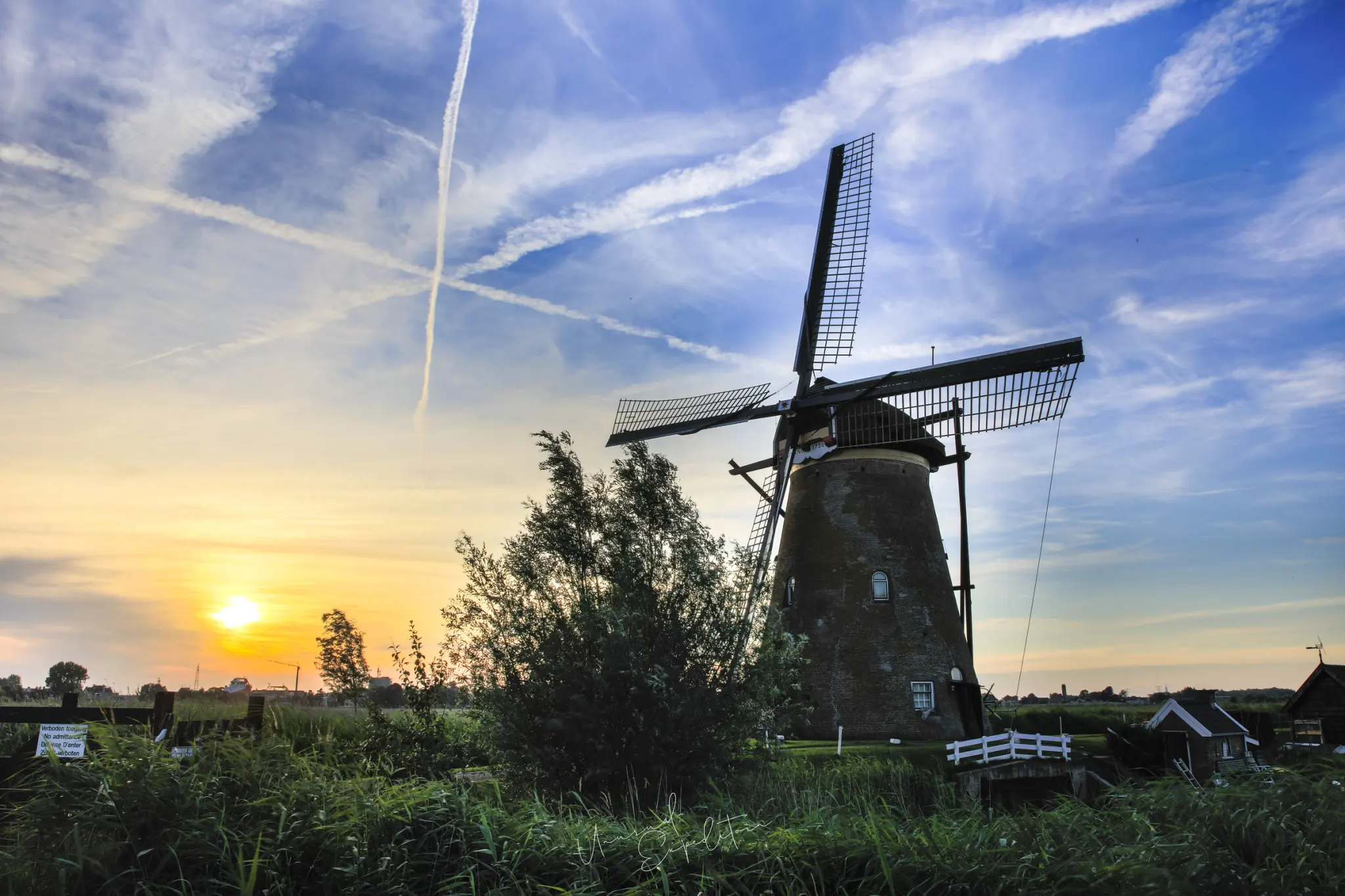
After sunset the water went still in the sheltered corners, and a single mill reflected in a canal full of lily pads, under a pink and blue sky, was the last frame of the night.
Kinderdijk at dawn
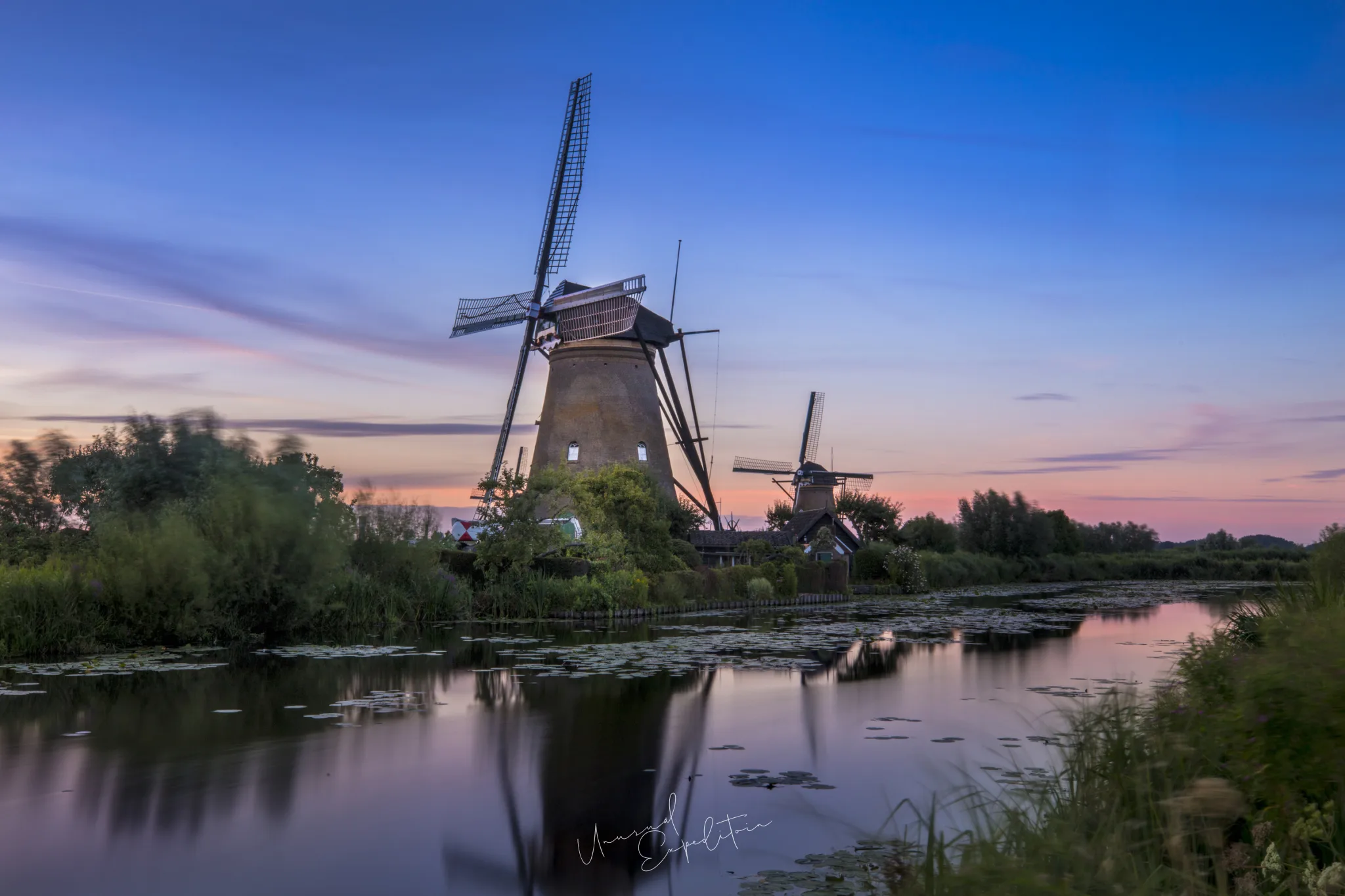
Dawn at Kinderdijk is quieter than sunset and, for us, better. In summer the sun rises very early, and you will have the canals almost to yourself. The sky behind the row of mills turned pink before sunrise, the canal reflected it, and there was no wind at all, so the water was a mirror. That calm is the main reason to get up: evening wind is common on the polder, and still water is what turns a mill picture into a reflection picture. Bring a tripod for the low light, and a lens cloth for the dew.
At sunset the wind was so strong that the reeds would not keep still, so I stopped fighting it and used it. At dawn it was the opposite, not a breath of wind, and every mill had its twin in the water.
Joseph Mak, tour leader, Unusual Expedition
Kinderdijk windmills: light and subjects
| Light | Subject | Approach |
|---|---|---|
| Before sunrise | Row of mills reflected in still canals | Tripod, low ISO, wide to mid focal length |
| Bright day with cloud | Mills across the meadow, wildflowers | Polariser for the sky, low angle in the grass |
| Windy evening | Moving reeds in front of a sharp mill | Slower shutter, mill in the centre of the frame |
| Sunset | Mill silhouette with a sun star | Small aperture, sun at the edge of the sails |
| Dusk | Single mill and reflection, lily pads | Tripod, a few seconds |
Plan two sessions if you can, one evening and one morning; the same mills give completely different pictures.
Kinderdijk tickets and how to get there
You can walk or cycle the paths along the Kinderdijk mills without a ticket; a ticket covers the inside of the museum mills, the pumping station exhibitions, the visitor centre film and the boat, as Lonely Planet describes. Prices and hours change, so check the official Kinderdijk site. The Rotterdam tourist office describes a waterbus that runs from the city to Kinderdijk in season, and you can bring a bicycle; check the line and timetable with the operator or the Dutch public transport planner 9292. A day trip from Amsterdam by train and waterbus is easy, but it lands you there at midday, so for photographs plan to be at the mills for the evening and the following dawn. Seasons change the picture; see best time to visit Holland.
Come and photograph Kinderdijk
We run Kinderdijk as part of a private Netherlands trip on request, with dawn and sunset sessions planned around the weather. Everything is arranged around you, a private trip can cost less than a group tour because no tour leader travels, and a photographer or photography coaching can be added at extra cost. Ask at least two months ahead if you can. See the private tours page and the Netherlands photography tours page.
Netherlands photography tours
The next Netherlands departure is announced on the Netherlands photography tours page, with previous expeditions and all the planning guides.
Explore Netherlands in depth
- Netherlands Photography Tour Guide: Amsterdam, Kinderdijk and Zaanse SchansNetherlands
- Zaanse Schans Photos: Windmills and Wooden Houses on the ZaanNetherlands
- Best Time to Visit Holland for Photography, Month by MonthNetherlands
- Best Photo Spots in Amsterdam: Canals, Bridges and the WesterkerkNetherlands
- Bikes in Amsterdam: Photographing the City on Two WheelsNetherlands
- Amsterdam at Night: Photographing the Canals at Blue HourNetherlands
Upcoming Photo Tours
- Egypt Photo Tour – EgyptEgypt 12 Dec 2026 To 20 Dec 2026
- Inner Mongolia Winter Owl Photo Tour – ChinaChina 01 Jan 2027 To 04 Jan 2027
- Inner Mongolia Winter Photo Tour – ChinaChina 05 Jan 2027 To 11 Jan 2027
- Mekong And Central Highland Vietnam Photo Tour - VietnamVietnam 16 Jan 2027 To 24 Jan 2027