
Netherlands Photography Tour Guide: Amsterdam, Kinderdijk and Zaanse Schans
Netherlands photography guide: Amsterdam canals and bikes, Kinderdijk and Zaanse Schans windmills, best seasons and travel from Singapore.
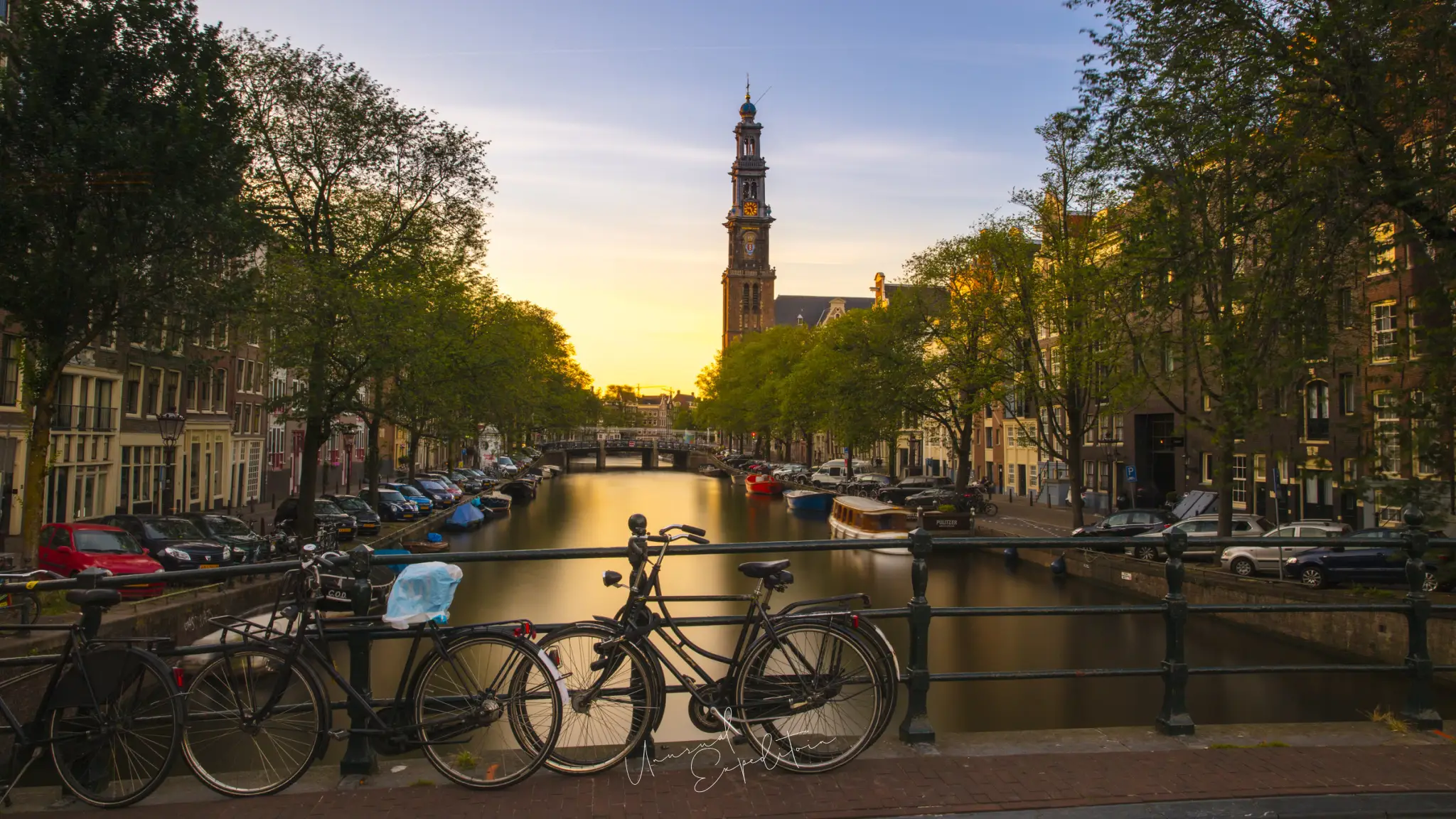
Netherlands photography comes down to three subjects that sit close together: the canals and bridges of Amsterdam, the working windmills of Kinderdijk in South Holland, and the green wooden village of Zaanse Schans on the river Zaan. Summer gives the longest light, with sunsets late in the evening and a blue hour that lingers over the water. Add the bikes, the flower boxes on every bridge and the flat polder skies, and Holland fills a week of photography with little travel between places.
This is the overview of our Netherlands destination guides, and every place below links to its own guide. The photographs in this guide are our own, taken on our trips here; we hold the rights to them, and the notes come from knowing these places first hand.
Netherlands photography: what to photograph
Most visitors say Holland when they mean the whole country, and in photography terms the name fits, because the pictures people want are in the two provinces of North Holland and South Holland. Amsterdam gives you seventeenth-century canal houses, hundreds of bridges and a street life that runs on bicycles. Kinderdijk gives you the classic Dutch landscape: a row of brick windmills along a drainage canal, reeds, water lilies and a huge sky. Zaanse Schans gives you the painted green houses and industrial mills of the Zaan region. Tulip fields are the fourth subject, but they belong to a few weeks in spring and we have not photographed them, so this cluster does not cover them. Our best time to visit Holland guide explains how the seasons change each subject.
Holland photography by region
The three areas suit different times of day, and planning around the light matters more here than the distances, which are small.
| Place | What you photograph | Best light | Destination guide |
|---|---|---|---|
| Amsterdam canal ring | Canal houses, bridges, boats, the Westerkerk tower | Sunset into blue hour | Photo spots, night, bikes |
| Amsterdam streets | Cyclists, terraces, rain on the cobbles | Low evening sun, wet afternoons | Bikes in Amsterdam |
| Kinderdijk | Nineteen windmills on the polder canals | Dawn and sunset | Kinderdijk windmills |
| Zaanse Schans | Green wooden houses, mills on the Zaan, crafts | Early morning before the crowds | Zaanse Schans photos |
Kinderdijk and Amsterdam both reward the two ends of the day, so they rarely fit on the same evening.
Amsterdam canals and bridges
Amsterdam's canal ring, the Seventeenth-Century Canal Ring Area inside the Singelgracht, has been on the UNESCO World Heritage List since 2010. For a photographer it is a grid of reflections: the Herengracht, Keizersgracht and Prinsengracht run in parallel arcs, and every crossing is a bridge with a view down the water. The tower of the Westerkerk, the tallest church tower in the city, rises at the end of several of those views, and at sunset it stands against the glow. Our best photo spots in Amsterdam guide lists the places we use, and Amsterdam at night covers the blue hour, when the bridge lights come on and the houseboats glow.
Bikes and street life in Amsterdam
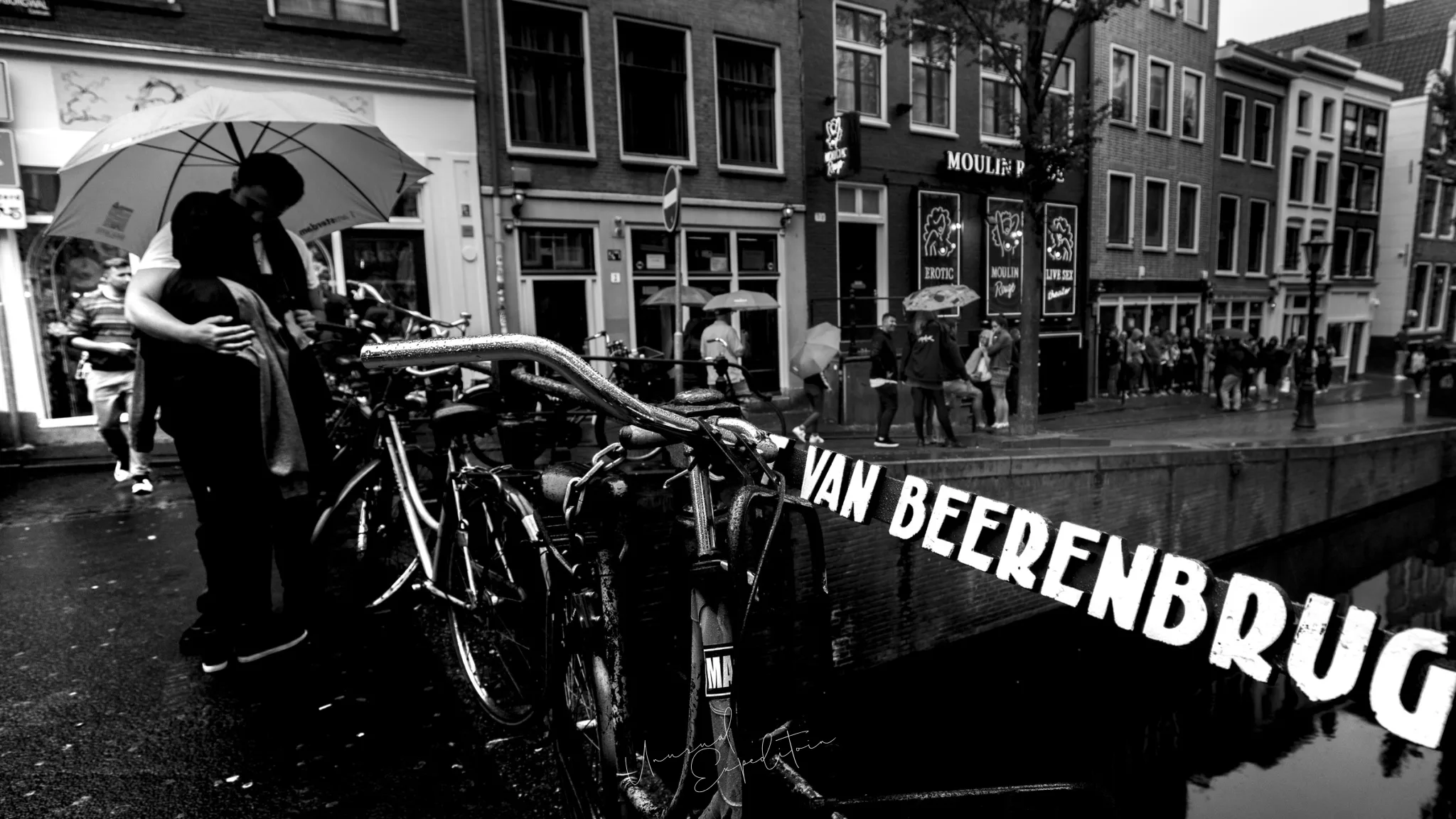
Amsterdam is reported to have more bicycles than residents, and you notice it the moment you step out of the station. Bikes lean on every bridge railing, cargo bikes carry the shopping, and the cycle lanes move faster than the cars. That makes the city one of the best places in Europe for street photography with a theme: a cyclist crossing a pool of low sun, a row of bikes under the flower boxes, a rider in the rain. Keep out of the red cycle lanes when you stand to shoot, because the riders will not stop for you. Bikes in Amsterdam is our guide to photographing them.
Kinderdijk windmills
The Mill Network at Kinderdijk-Elshout, east of Rotterdam, was inscribed by UNESCO in 1997. It is a working water-management landscape: nineteen monumental windmills, most of them built in the eighteenth century, together with dykes, reservoirs and pumping stations that kept the Alblasserwaard polder dry. The mills stand in two long rows along the canals, which is what makes the place so photogenic: from the bank you can line them up into the distance. We photographed Kinderdijk at sunset and again at dawn, and the two sessions looked like different places. Our Kinderdijk windmills guide covers the positions, the light, tickets and how Kinderdijk compares with Zaanse Schans.
Zaanse Schans and the Zaan
Zaanse Schans, north of Amsterdam, is a neighbourhood of green wooden houses and windmills on the bank of the Zaan. According to the official Zaanse Schans site, the Zaan district was the oldest industrial area of Western Europe and once had about six hundred windmills working at the same time; the mills you see now were saved and brought together here. The area is open to the public every day, with paid entry to the mills and some museums. It is busy by late morning, so the first hour is the one to use. Our Zaanse Schans photos guide covers the village, the mills and the details.
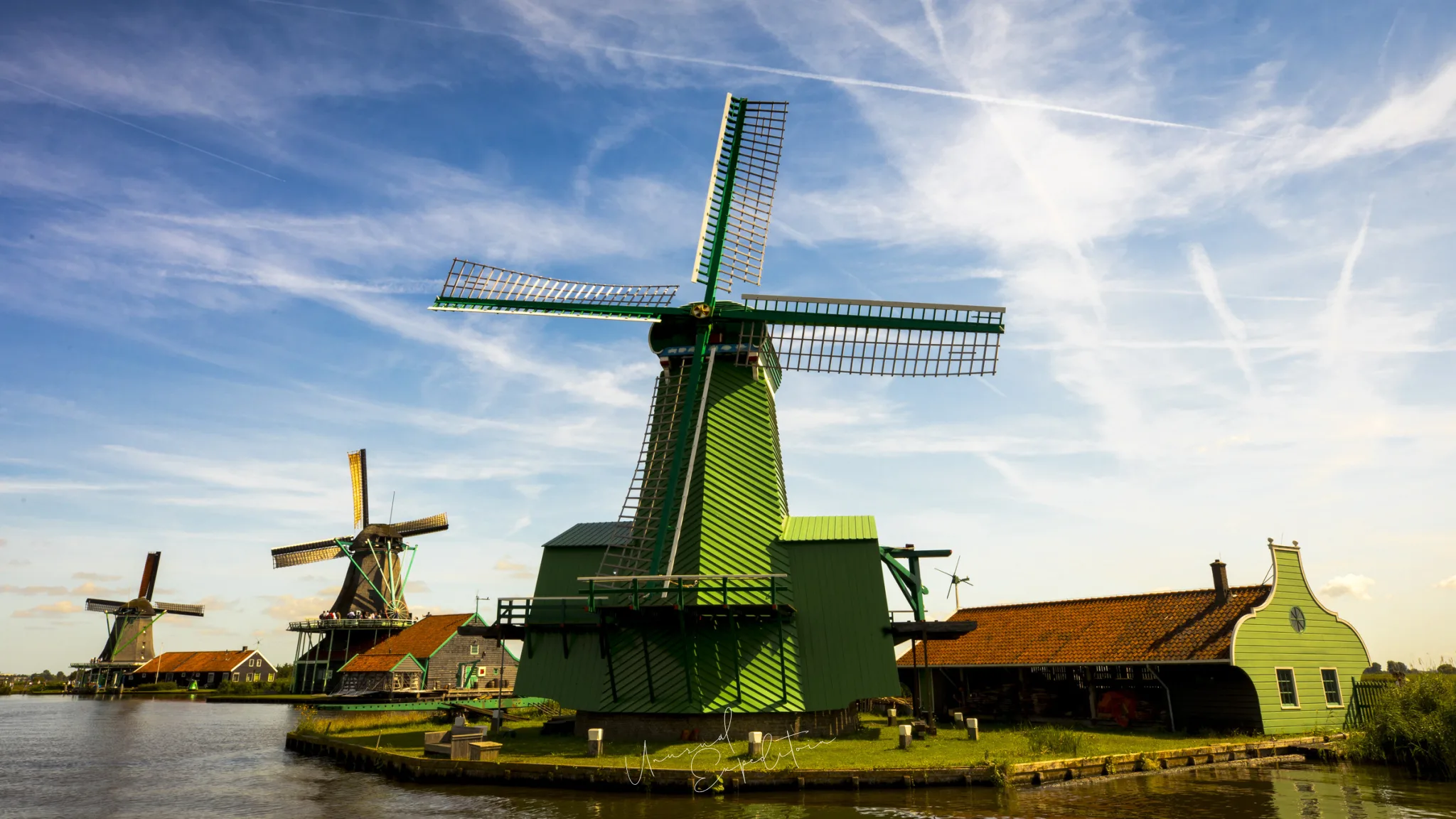
Holland looks flat on a map, but for a photographer the sky is the mountain. At Kinderdijk the clouds moved every minute, and I kept the 24-70mm low in the reeds so the windmills had all that sky above them.
Joseph Mak, tour leader, Unusual Expedition
When to go to the Netherlands for photography
Summer is the season we photographed, and it gives the longest days: around the June solstice Amsterdam has close to seventeen hours of daylight, according to timeanddate.com, so sunset and blue hour come late in the evening and dawn comes very early. Spring brings the tulip season at Keukenhof, which opens for about eight weeks from late March. Autumn is wetter and quieter, and winter gives low light and the chance of frost on the polders. The best time to visit Holland guide has a month-by-month table.
Entry, flights and practical notes from Singapore
Singapore passport holders do not need a visa to visit the Netherlands, according to NetherlandsWorldwide, the Dutch government's portal; short stays follow the Schengen rule of 90 days in any 180. The EU Entry/Exit System now takes fingerprints and a photo at your first Schengen border, and the ETIAS travel authorisation is not yet running, so check the official EU site before you travel. Singapore Airlines and KLM both fly nonstop between Singapore and Amsterdam Schiphol. The country uses the euro, cards are accepted almost everywhere, and the trains are good. One rule to know: most of central Amsterdam lies inside Schiphol's controlled airspace, so leave the drone at home unless you have checked the official Dutch drone map.
Explore the Netherlands in depth
- Best photo spots in Amsterdam: canals, bridges and the Westerkerk
- Amsterdam at night: blue hour on the canals
- Bikes in Amsterdam: photographing the city on two wheels
- Kinderdijk windmills: where to stand, is it worth visiting, and Kinderdijk vs Zaanse Schans
- Zaanse Schans photos: windmills and wooden houses on the Zaan
- Best time to visit Holland for photography
Photograph Holland with us
We run the Netherlands as a private trip on request, for individuals, couples, families or photographers who want to work at their own pace, with all the logistics arranged around you. A private trip can cost less than a group tour because no tour leader travels, and a photographer or photography coaching can be added at extra cost. Ask at least two months ahead if you can, though last-minute trips can be arranged. Read how it works on our private tours page, and see every Holland guide on the Netherlands photography tours page.
Netherlands photography tours
The next Netherlands departure is announced on the Netherlands photography tours page, with previous expeditions and all the planning guides.
Explore Netherlands in depth
- Zaanse Schans Photos: Windmills and Wooden Houses on the ZaanNetherlands
- Kinderdijk Windmills: Where to Stand, and Is Kinderdijk Worth VisitingNetherlands
- Best Time to Visit Holland for Photography, Month by MonthNetherlands
- Best Photo Spots in Amsterdam: Canals, Bridges and the WesterkerkNetherlands
- Bikes in Amsterdam: Photographing the City on Two WheelsNetherlands
- Amsterdam at Night: Photographing the Canals at Blue HourNetherlands
Upcoming Photo Tours
- Egypt Photo Tour – EgyptEgypt 12 Dec 2026 To 20 Dec 2026
- Inner Mongolia Winter Owl Photo Tour – ChinaChina 01 Jan 2027 To 04 Jan 2027
- Inner Mongolia Winter Photo Tour – ChinaChina 05 Jan 2027 To 11 Jan 2027
- Mekong And Central Highland Vietnam Photo Tour - VietnamVietnam 16 Jan 2027 To 24 Jan 2027