
Moustiers-Sainte-Marie Photos: The Star, the Chapel and the Village Under the Cliffs
Moustiers-Sainte-Marie photos: the village under its cliffs, the star and its legend, Notre-Dame de Beauvoir, faience and where to stand.
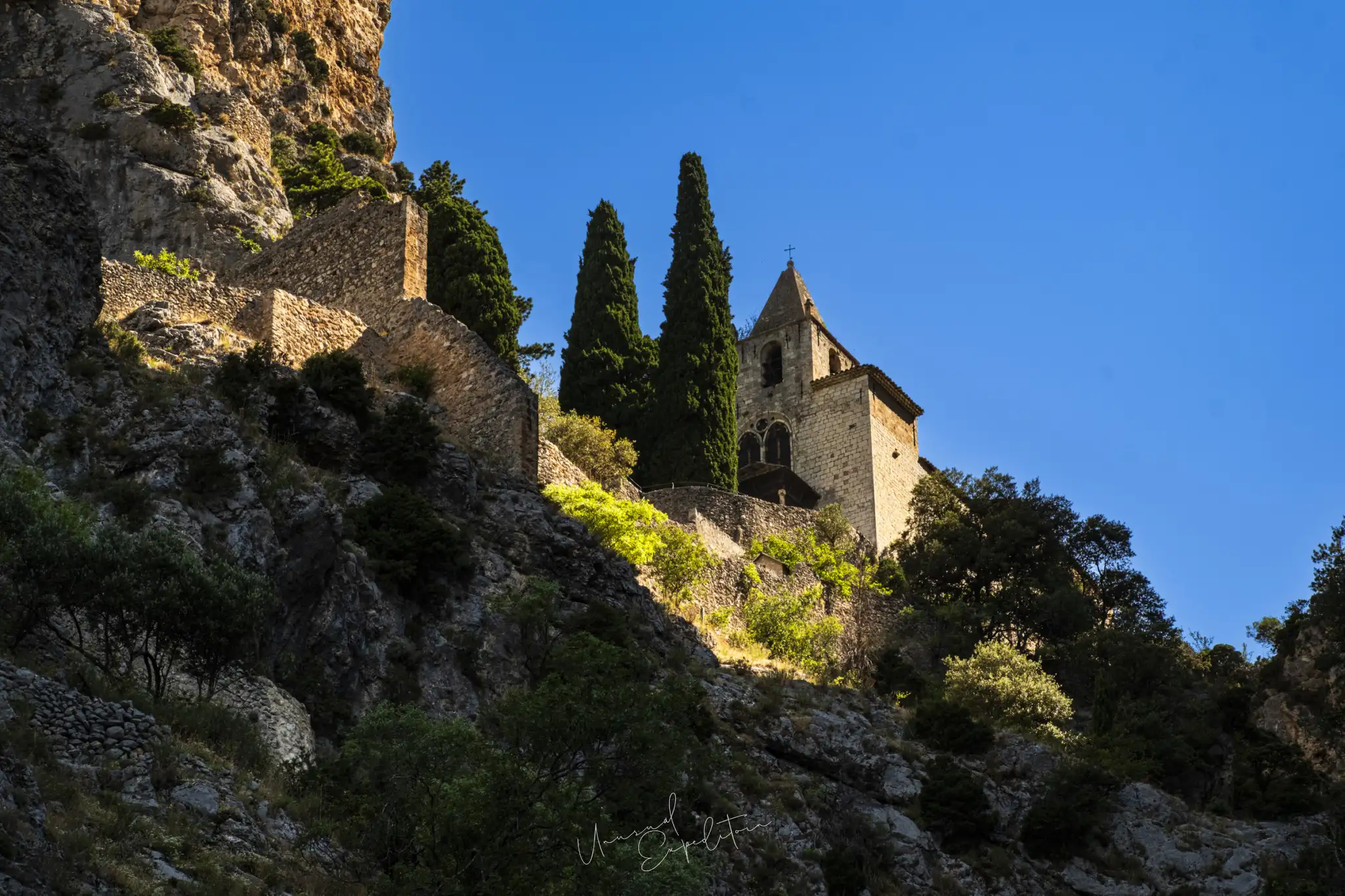
Moustiers-Sainte-Marie photos are pictures of a stone village wedged into a cleft in limestone cliffs at the edge of the Verdon, with a gilded star hanging on a chain high across the gap and the chapel of Notre-Dame de Beauvoir perched on a ledge above the roofs. The best views are the village from the road below, the lanes and bell tower inside, and the chapel path among the cypresses. Morning and evening light suit it best.
Moustiers is the last stop on the lavender side of our Provence photography tour guide, a short way from the Valensole plateau. These are our own Moustiers-Sainte-Marie pictures, the stories behind the star and the pottery, and where we stand to photograph the village.
Village de Moustiers-Sainte-Marie photos: the view from below
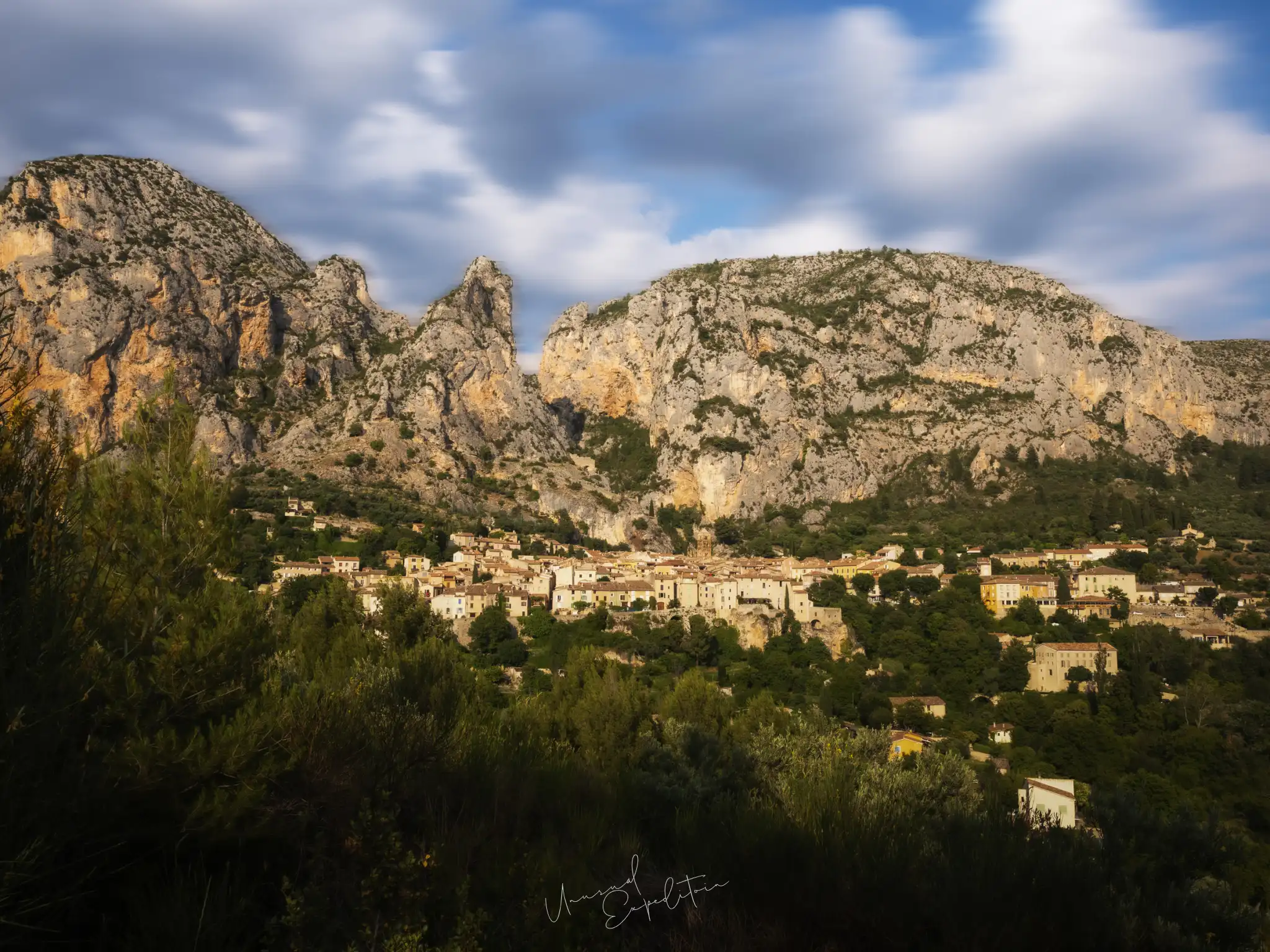
The first view of Moustiers-Sainte-Marie is the one most people remember: a band of honey-coloured houses at the foot of two great limestone walls, split by a ravine where a stream drops through the village. From the roads and fields below, the whole village fits into one frame with the cliffs towering behind it, and on a clear day the scale is hard to believe. A 24-70mm at the long end compresses houses and rock together; a 70-200mm picks out the church tower and the chapel above. Clouds moving over the cliffs make the best skies, and a slow shutter on a tripod turns them into streaks while the stone stays sharp.
The view from below works at both ends of the day. In the evening the cliffs glow warm and the village lights come on; that is the frame in our Provence villages photo spots guide. In the middle of a bright day the rock turns pale and flat, so we use those hours inside the lanes, where the shade is.
Moustiers-Sainte-Marie star: what it is and where to see it
The Moustiers-Sainte-Marie star is a gilded star hung on a long chain stretched between the two cliffs above the village, high over the chapel of Notre-Dame de Beauvoir. From the square it looks tiny against the sky, so look up from the lanes near the church, or follow the chapel path and it appears overhead, swinging slightly in the wind. To photograph the Moustiers-Sainte-Marie star, use a 70-200mm or longer, place it against open sky rather than rock, and include a sliver of cliff so the viewer understands how high it hangs. Both the star and the chain have been replaced over the centuries, and the present star is a modern replacement of the old one, according to the village tourist office.
Moustiers-Sainte-Marie star history
The Moustiers-Sainte-Marie star history is a legend rather than a record. The version told by the tourist office is that a knight of the Blacas family, held prisoner during the Crusades, vowed to hang a star over his village if he came home safely, and kept his word. The star is also linked to the Blacas coat of arms, and the Provençal poet Frédéric Mistral did much to make the story famous in the nineteenth century. Sources disagree on the knight's name and even on the century, so we tell it as the village does: a vow kept, and a star that has hung there, replaced and rehung, for many generations.
Notre-Dame de Beauvoir: the chapel above the village
Notre-Dame de Beauvoir is the chapel built on a ledge in the ravine above Moustiers-Sainte-Marie, reached by a stepped path that Lonely Planet counts at 262 steps, past the stations of the cross. The path is steep and the stones polish smooth, so wear shoes with grip. The chapel is the most photogenic part of the village: a small Romanesque building with a bell tower, a group of dark cypresses and the raw cliff behind. From the path just below it, a 24-70mm frames chapel, trees and rock together against the sky. From the terrace in front of the chapel, the view runs out over the roofs to the valley and towards the lake of Sainte-Croix.
Moustiers sainte marie things to do with a camera
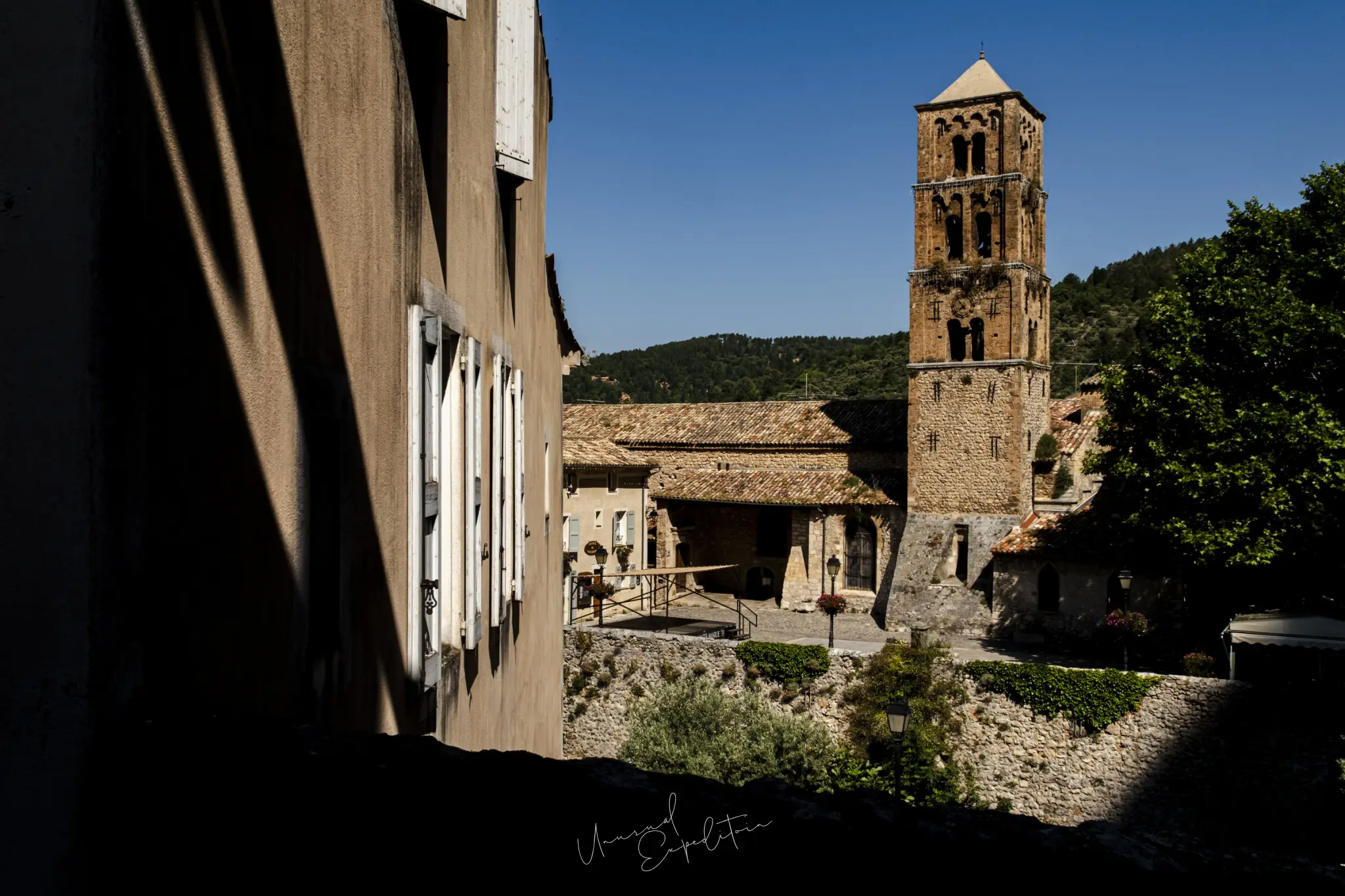
- The church bell tower. The square Romanesque tower of the parish church rises above the lanes. Look for it framed between two house walls, where the dark walls make a natural frame around a bright tower.
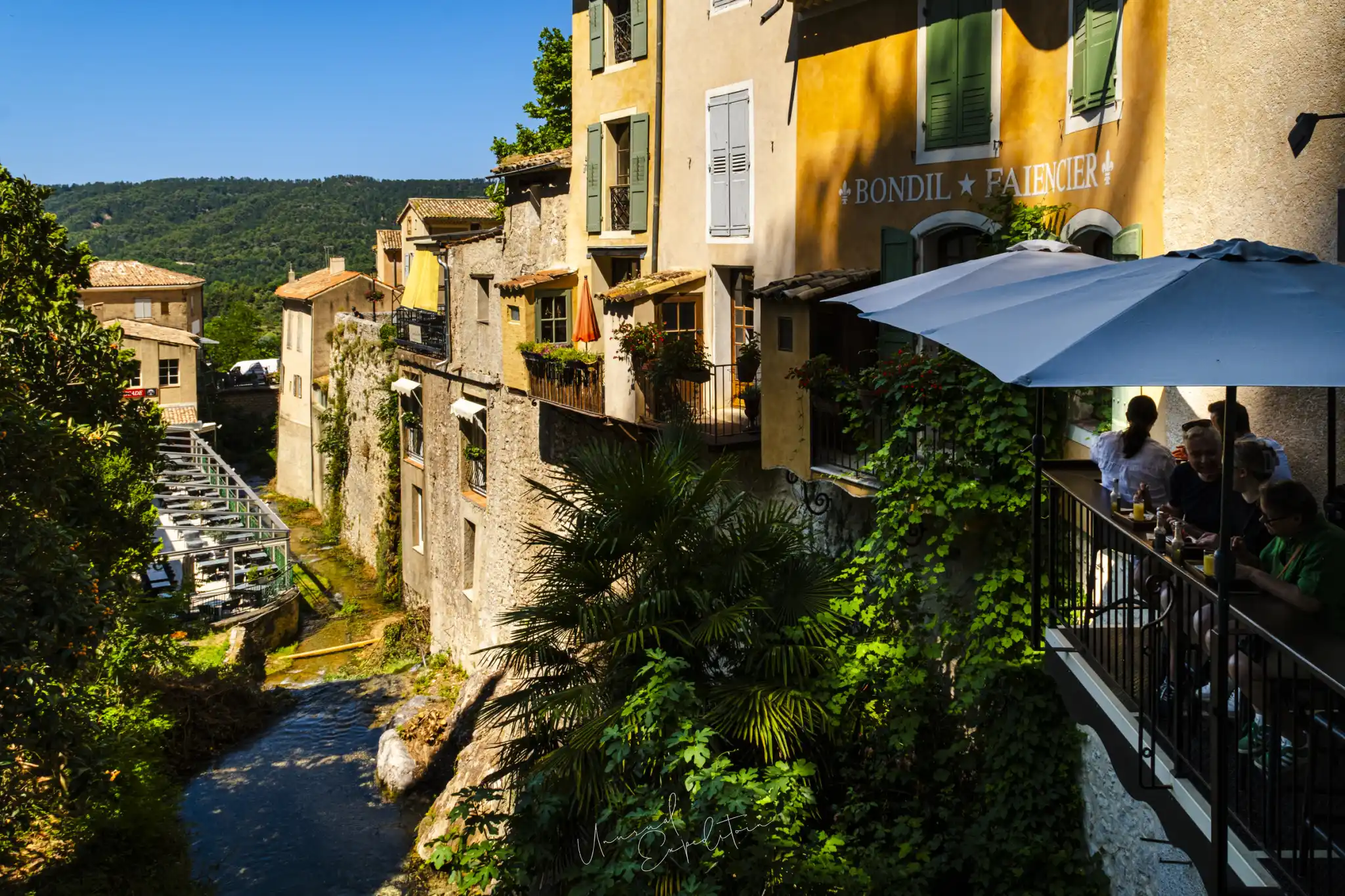
- The ravine and its bridges. The stream that splits the village falls under small stone bridges, with houses, terraces and plants hanging over the water. A slower shutter smooths the water; a polariser cuts the glare.
- The lanes and fountains. Stepped lanes, arches, faded shutters and potted geraniums give small details for a 24-70mm or a 35mm.
- The chapel path. The steps, the stations of the cross and the cypresses, with the star above.
- The view from below. The village under its cliffs, at the end of the day.
Moustiers-Sainte-Marie is small and busy in summer. The lanes are calmest early in the morning, before the shops open, which is also when the light comes into the ravine at a low angle.
"Everyone photographs Moustiers from the road and leaves. Climb to the chapel, turn round, and you get the village, the valley and the star in one place. Then come back down slowly through the lanes, because the small pictures are inside."
Joseph Mak, tour leader, Unusual Expedition
Moustiers sainte marie pottery: the faience
Moustiers sainte marie pottery is the faience, a fine tin-glazed earthenware with white enamel and painted decoration, which made the village famous across France from the late seventeenth century. Pierre Clérissy is remembered as the potter who founded the first workshop, and the style spread to royal tables. The craft died out in the nineteenth century and was revived in the 1920s, as Connexion France recounts, and today the village has several working ateliers and a faience museum. For photographers the workshops are an interior subject: hands painting a plate, rows of glazed pieces, kilns. Always ask before photographing inside a workshop, and buying a small piece is the polite way to say thank you.
Moustiers-Sainte-Marie pictures and the Verdon
Moustiers-Sainte-Marie sits at the western entrance of the Gorges du Verdon, inside the Verdon regional natural park, with the turquoise lake of Sainte-Croix just below. That makes it a natural pairing with the lavender: the Valensole fields lie on the plateau to the south-west, and in early summer it is possible to photograph lavender rows and the village in the same trip. The gorge itself is a different subject, with sheer walls and a green river far below, best photographed from the viewpoints along the rim road. Our Provence lavender fields photography article covers the plateau, and the bloom timing is in when is lavender season in Provence.
Practical tips for photographing Moustiers
| Subject | Light | Lens | Tip |
|---|---|---|---|
| Village under the cliffs | Evening and blue hour | 24-70mm, 70-200mm | Tripod for the village lights |
| The star | Any clear sky | 70-200mm or longer | Place it against sky, include a slice of cliff |
| Notre-Dame de Beauvoir | Morning sun on the chapel | 24-70mm | Shoot from the path just below |
| Ravine and bridges | Soft light or shade | 16-35mm, 24-70mm | Polariser, slower shutter for the water |
| Faience workshops | Window light | 35mm, 24-70mm | Ask first |
Moustiers-Sainte-Marie is a steep village: travel light, with one zoom and a small tripod, and leave the long lens for the star and the view from below.
Photograph Moustiers and the lavender with us
Moustiers-Sainte-Marie is part of our Provence and Camargue photo tour, with the lavender of the Valensole plateau, the Luberon villages and the white horses of the Camargue. The fare is indicatively S$7,500 to S$8,750 per person depending on the room; the current rate and the next departure are on our France photography tours page.
Join the Provence photography tour
Provence And Camargue Photo Tour – France departs 25 Jun 2027 To 03 Jul 2027, led by Joseph Mak. Small group, photography first. All Provence photography tours.
Explore Provence in depth
- Provence Photography Tour: The Complete GuideFrance
- Camargue Pink Salt Flats: Photographing the Pink Lakes of Aigues-Mortes and Salin-de-GiraudFrance
- Camargue Horses Photography: Where to See Them and HowFrance
- Provence Village Photo Spots: Gordes, Roussillon, MoustiersFrance
- When Is Lavender Season in Provence?France
- Provence Lavender Fields: Valensole, Sault and SénanqueFrance
Upcoming Photo Tours
- Egypt Photo Tour – EgyptEgypt 12 Dec 2026 To 20 Dec 2026
- Inner Mongolia Winter Owl Photo Tour – ChinaChina 01 Jan 2027 To 04 Jan 2027
- Inner Mongolia Winter Photo Tour – ChinaChina 05 Jan 2027 To 11 Jan 2027
- Mekong And Central Highland Vietnam Photo Tour - VietnamVietnam 16 Jan 2027 To 24 Jan 2027