
Northern Spain Photo Tour: Gaztelugatxe, Bilbao and the Cantabrian Coast
Northern Spain photo tour: Gaztelugatxe, the Guggenheim in Bilbao, the Cantabrian coast at sunset and the sea arches further west.
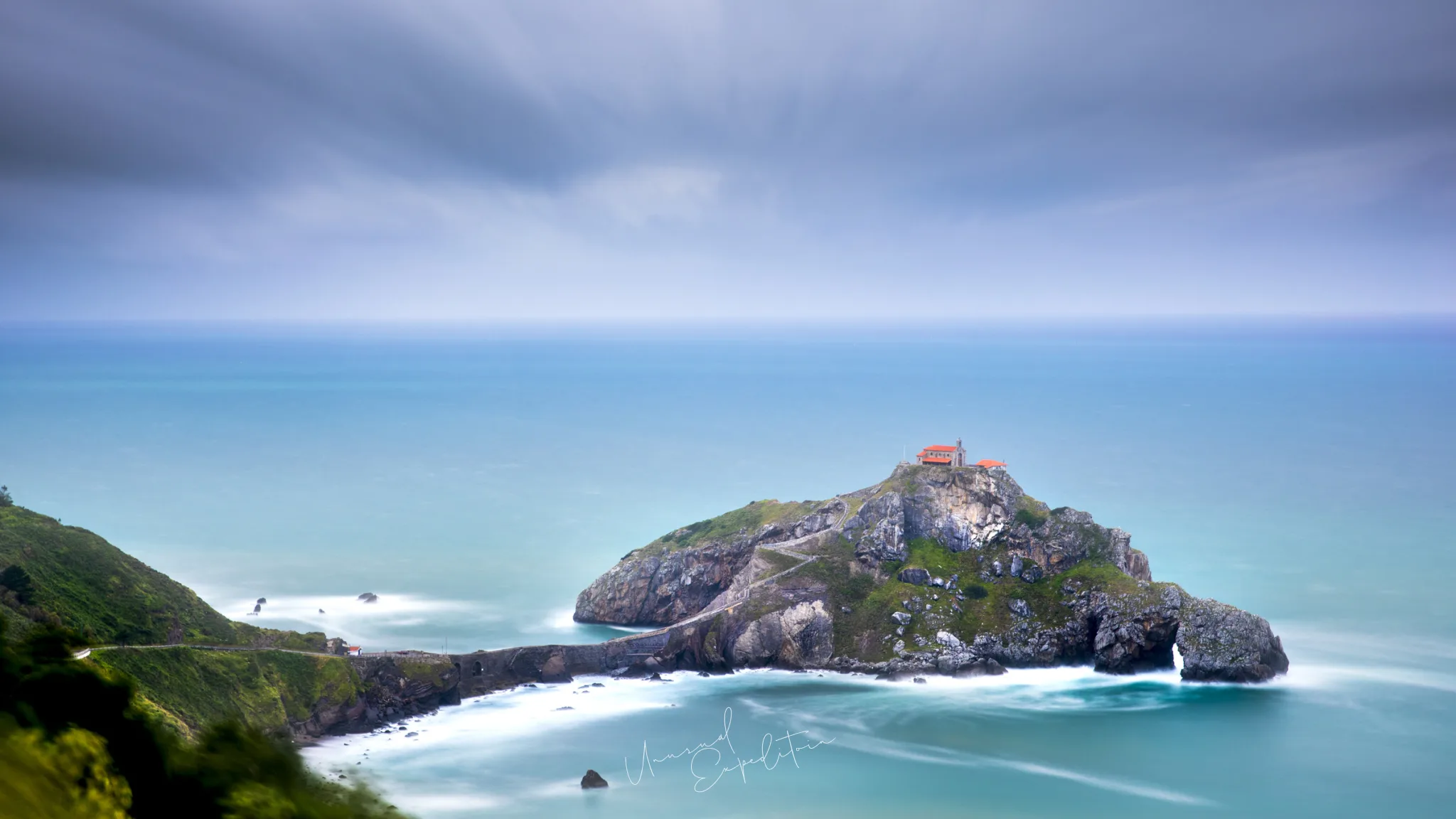
A northern Spain photo tour is a different country from the Spain of white villages and dry hills: green mountains running down to the Atlantic, a coast of cliffs, sea arches and rock platforms, the Basque city of Bilbao with its titanium museum, and fishing towns where the weather changes three times a day. We photographed the north around San Fermin, before and after the festival in Pamplona, and these are our frames and notes. For the country as a whole, start with our Spain photography tour guide.
Northern Spain photo tour: San Juan de Gaztelugatxe
San Juan de Gaztelugatxe, on the Bizkaia coast east of Bilbao, is a small hermitage on a rocky islet joined to the mainland by a narrow stone causeway and a long flight of steps that winds up to the chapel. It is one of the most photographed places in the Basque Country, and it became even more popular after appearing in Game of Thrones. The classic view is from the road and the viewpoints above, where the causeway snakes out to the islet with the open sea around it. In the busiest months access to the causeway is controlled with a free booking system, so check before you go. Late afternoon and sunset are the best times, when the islet is lit from the side. A 24-70mm from the viewpoint is enough; a drone is not allowed without permits.
Spain nature photos: the Bizkaia coast
The coast around Gaztelugatxe is all cliffs and green headlands, with the sea grey-green and often rough. Hilltop viewpoints along the road give views down to the islet and along the coast. The weather is Atlantic: rain and sunshine can follow each other within an hour, and the best pictures often come in the breaks, when a shaft of light hits the sea and the sky behind is still dark. Carry a rain cover, and be ready to wait.
"After Pamplona, the north was the quiet I needed. Green hills, cold sea, and the light changing every ten minutes. You stand at Gaztelugatxe in the wind, waiting for a gap in the cloud, and when it comes the whole islet lights up for a minute."
Joseph Mak, tour leader, Unusual Expedition
Bilbao: the Guggenheim and the river
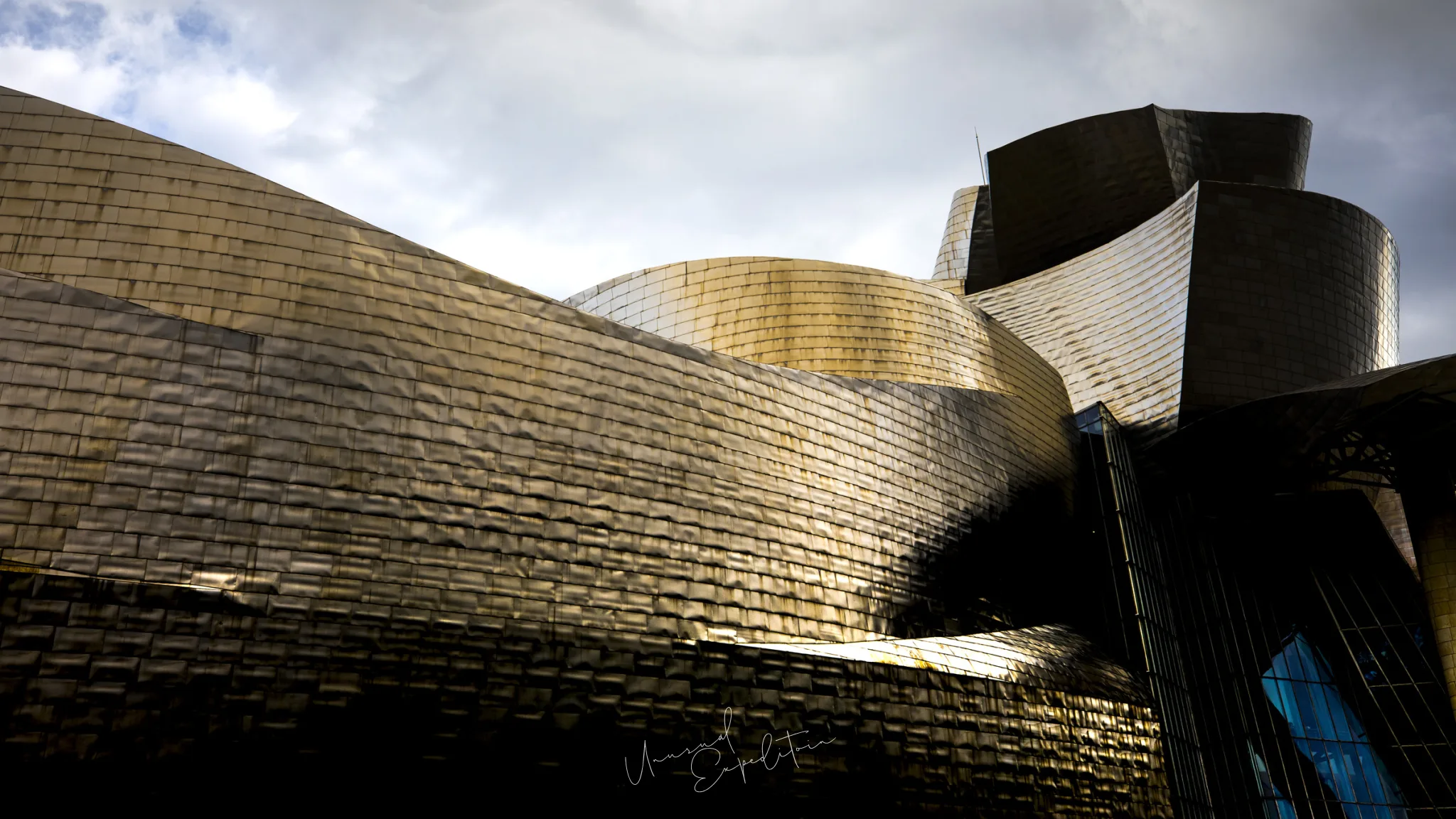
Bilbao was an industrial port that remade itself around the Guggenheim Museum, designed by Frank Gehry and opened in 1997. The building is a sweep of titanium curves on the bank of the Nervión river, and it photographs very differently through the day: silver and soft under cloud, gold in the evening sun, and dark against a stormy sky. Walk around it: the river side, the bridge above it, and the steps on the city side each give a different frame. Close up, the titanium panels make abstract patterns of reflected light, worth a longer lens. The old town, the Casco Viejo, with its seven streets and its covered market, is a short walk along the river.
The Cantabrian coast at sunset
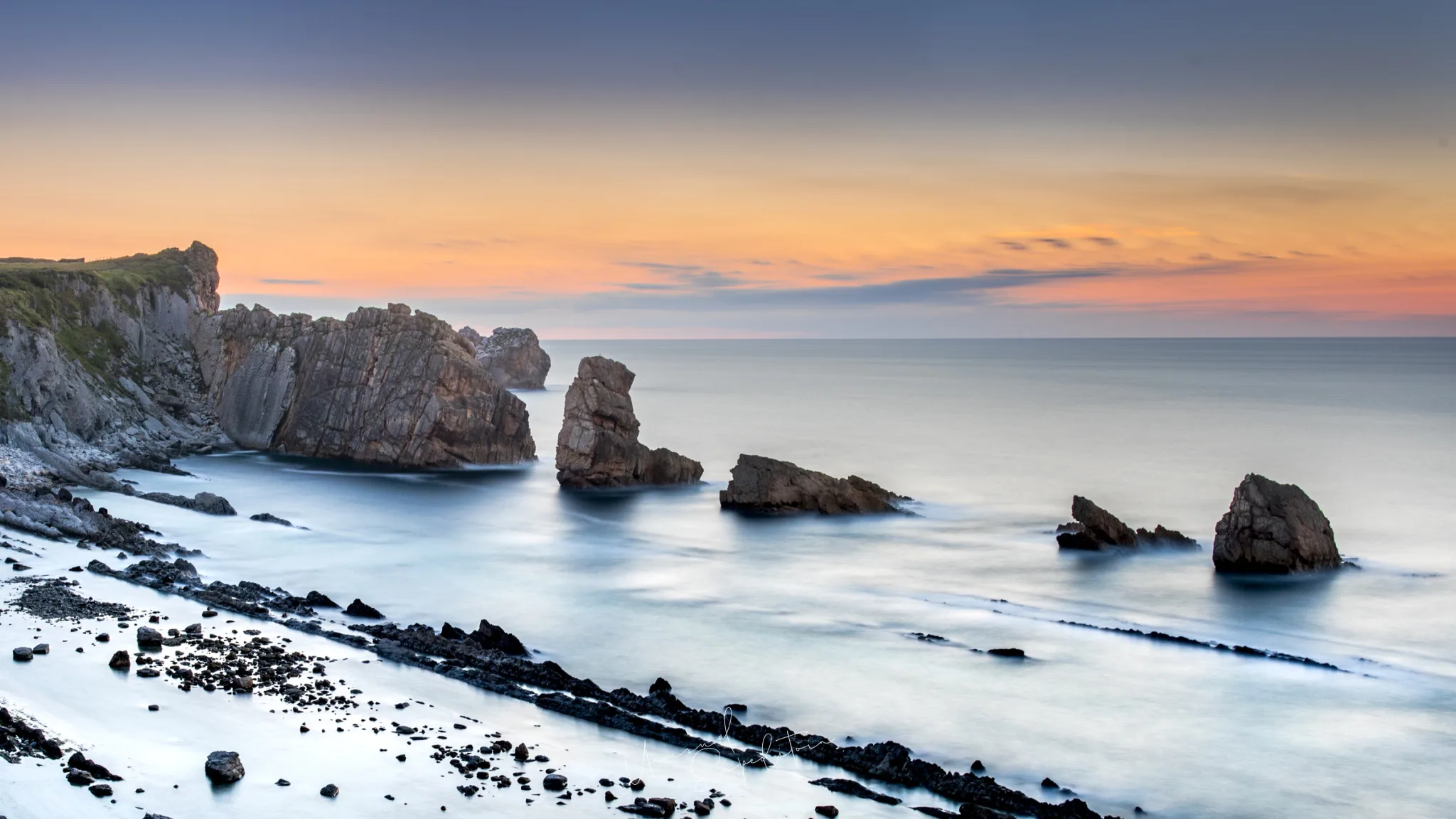
West of the Basque Country, the coast of Cantabria has some of the most dramatic seascapes in Spain. The Costa Quebrada, the broken coast west of Santander around Liencres, has layered rock platforms, stacks and arches carved out of tilted strata, and at sunset the low sun lights the rocks from the side across the water. A tripod, a neutral density filter and a few seconds of exposure soften the sea around the stacks and leave the rock sharp. Check the tide tables: low tide uncovers the platforms and the pools that make the foregrounds, and the incoming tide can cut you off on the rocks.
Sea arches and beaches further west
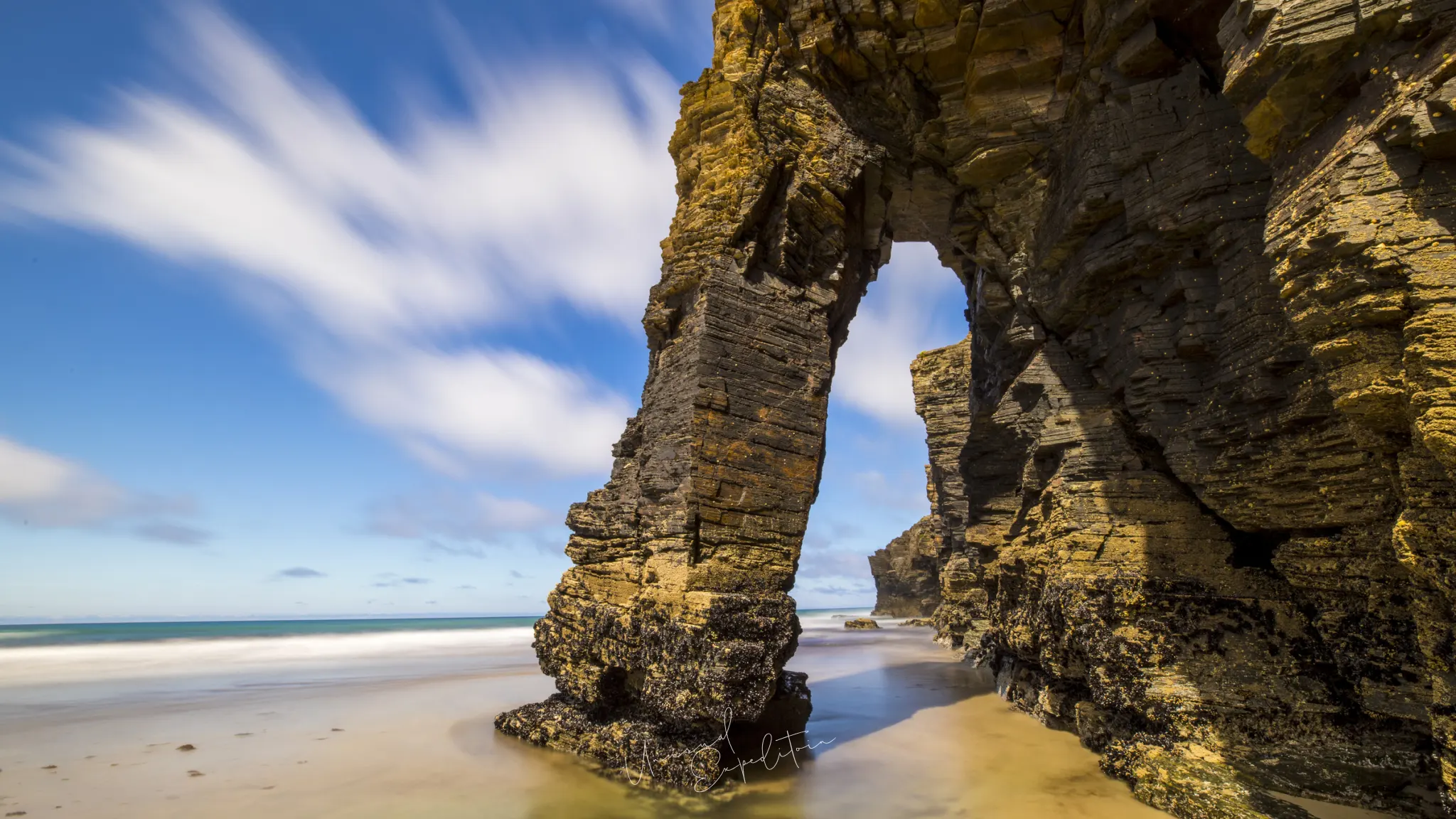
Further west, the coast of Asturias and Galicia continues with sea arches, caves and long beaches. The most famous is the Playa de las Catedrales in Galicia, where great rock arches stand on the sand at low tide; access to the beach in Easter week and summer requires a free advance booking from the regional government. The arches can only be walked through at low tide, so plan around the tide table and arrive early. Our frame below shows the kind of arch you find along this coast at low tide, with blue sky overhead.
Villages and churches of the north
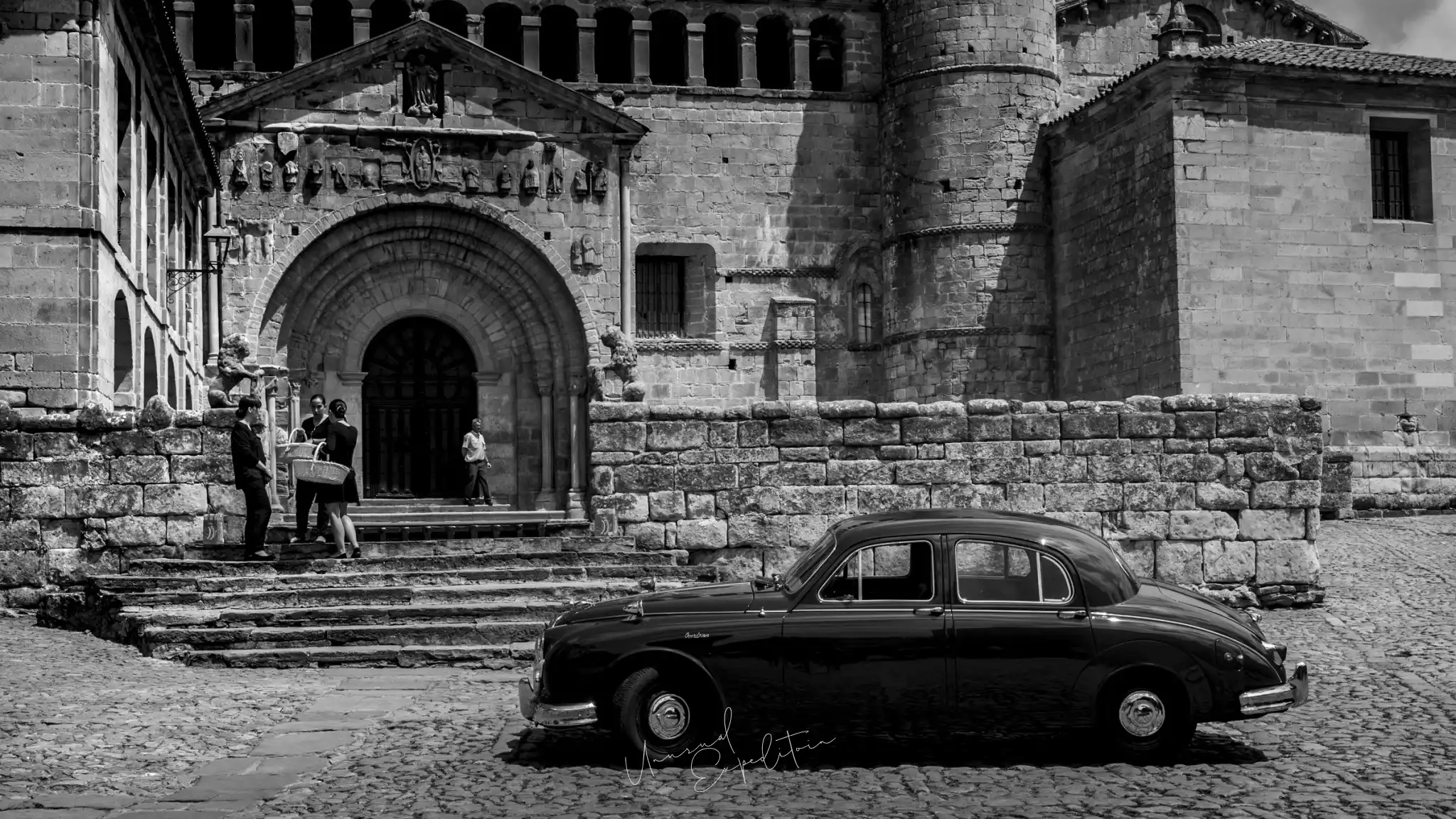
Inland from the coast, Cantabria and Asturias are green valleys with stone villages, Romanesque churches, and mountains behind, the Picos de Europa. The villages are made for black and white: stone, wood and slate under grey skies. Our frame below, an old car parked by a Romanesque church in Cantabria, is the kind of quiet scene you find when you leave the coast road.
Northern Spain photo spots at a glance
| Spot | Region | Best light | Notes |
|---|---|---|---|
| San Juan de Gaztelugatxe | Bizkaia | Late afternoon, sunset | Free booking in busy months |
| Guggenheim Museum Bilbao | Bizkaia | Evening sun, stormy skies | Walk all sides |
| Costa Quebrada, Liencres | Cantabria | Sunset | Check tides |
| Playa de las Catedrales | Galicia | Low tide | Booking in Easter and summer |
| Inland villages and churches | Cantabria, Asturias | Overcast | Black and white works |
Plan the coast around the tide table and the weather; plan the towns around the gaps between them.
When to photograph northern Spain
The north is green because it rains, in every season. Summer is the driest and the warmest, and the busiest at the famous sites; it is also when San Fermin brings people to Pamplona. Spring and autumn bring more dramatic skies and fewer people. Winter is wet and windy on the coast, with big seas that suit long exposures if you are careful. Our guide to the best time to visit Spain for photography compares the north with the south, and San Fermin festival photography covers the festival we combined with this coast.
Photograph northern Spain with us
We run northern Spain as a private photography trip, on its own or combined with San Fermin in Pamplona. When we schedule departures, they appear on our Spain photography tours page. Write to us with your dates.
Spain photography tours
The next Spain departure is announced on the Spain photography tours page, with previous expeditions and all the planning guides.
Explore Spain in depth
- Spain Photography Tour: The Complete GuideSpain
- Valencia Photos: the City of Arts and Sciences, Peñíscola and MorellaSpain
- Tenerife Photos: Mount Teide and the Best Photo SpotsSpain
- Spain Tour from Singapore: Flights, Entry and What to ExpectSpain
- Spain Photography Trip FAQSpain
- Spain's Castle Towns and Windmills: Toledo, La Mancha and AlbarracínSpain
- Seville Photos: Plaza de España, the Cathedral and the Old TownSpain
- San Fermin Festival Photography: Pamplona and the Running of the BullsSpain
- Granada Photos: the Alhambra and the Best Photo SpotsSpain
- The Best Time to Visit Spain for Photography, Region by RegionSpain
- Andalusia Photos: White Villages and CórdobaSpain
Upcoming Photo Tours
- Egypt Photo Tour – EgyptEgypt 12 Dec 2026 To 20 Dec 2026
- Inner Mongolia Winter Owl Photo Tour – ChinaChina 01 Jan 2027 To 04 Jan 2027
- Inner Mongolia Winter Photo Tour – ChinaChina 05 Jan 2027 To 11 Jan 2027
- Mekong And Central Highland Vietnam Photo Tour - VietnamVietnam 16 Jan 2027 To 24 Jan 2027