
San Fermin Festival Photography: Pamplona and the Running of the Bulls
San Fermin festival dates, the chupinazo, the running of the bulls, where to photograph from, safety and kit, with our own Pamplona photos.
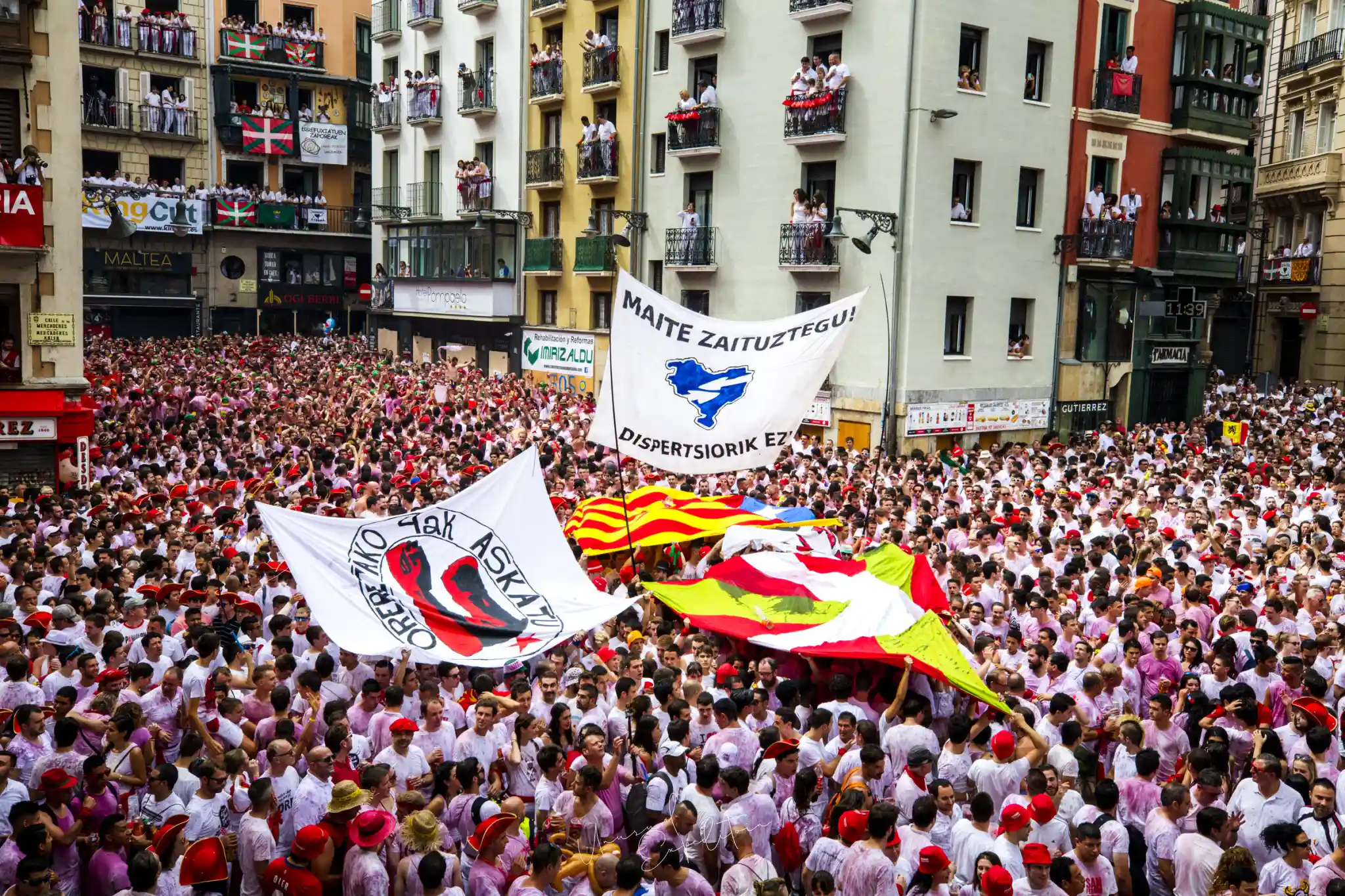
The San Fermin festival runs in Pamplona every year from 6 to 14 July, opening with a rocket fired from the town hall balcony at noon on the 6th and closing at midnight on the 14th. The running of the bulls happens each morning from the 7th to the 14th at 8 am. For a photographer it is nine days of crowds in white and red, processions and fireworks. This guide is part of our Spain photography tour guide.
What is San Fermin festival in Spain?
San Fermin, or the Sanfermines, is the festival of Pamplona's patron saint, held in the capital of Navarra in northern Spain. It is a religious feast, a town fiesta and a street party at the same time. The religious part centres on the procession on 7 July, when the statue of San Fermin is carried through the old town with the gigantes and cabezudos, the giant figures and big-headed dancers that the children follow. The party part runs day and night: bands, peñas (social clubs) marching with brass and drums, open-air dancing and a fireworks display every evening. Everyone dresses in white with a red sash and a red neckerchief, which is why every crowd photograph from Pamplona looks the same colour. The festival became famous abroad through Hemingway's novel The Sun Also Rises, and the bronze monument to the encierro near the bullring is one of the places visitors stop for a picture.
When is San Fermin festival in Pamplona?
The dates do not move. The chupinazo, the opening rocket, goes up from the town hall balcony at noon on 6 July. The encierro, the running of the bulls, starts at 8 am every morning from 7 to 14 July. The festival ends with the Pobre de mí at midnight on 14 July, when the crowd gathers in front of the town hall with candles and sings that the fiesta is over. If you are planning a photography trip, the two busiest days in the old town are the 6th, for the chupinazo, and the 7th, the saint's day, when the procession and the first run fall within a few hours of each other. Rooms in Pamplona for those nights are taken a long way ahead, and many visitors stay in towns nearby. The Pamplona city council publishes the official programme each spring; check it for procession and concert details.
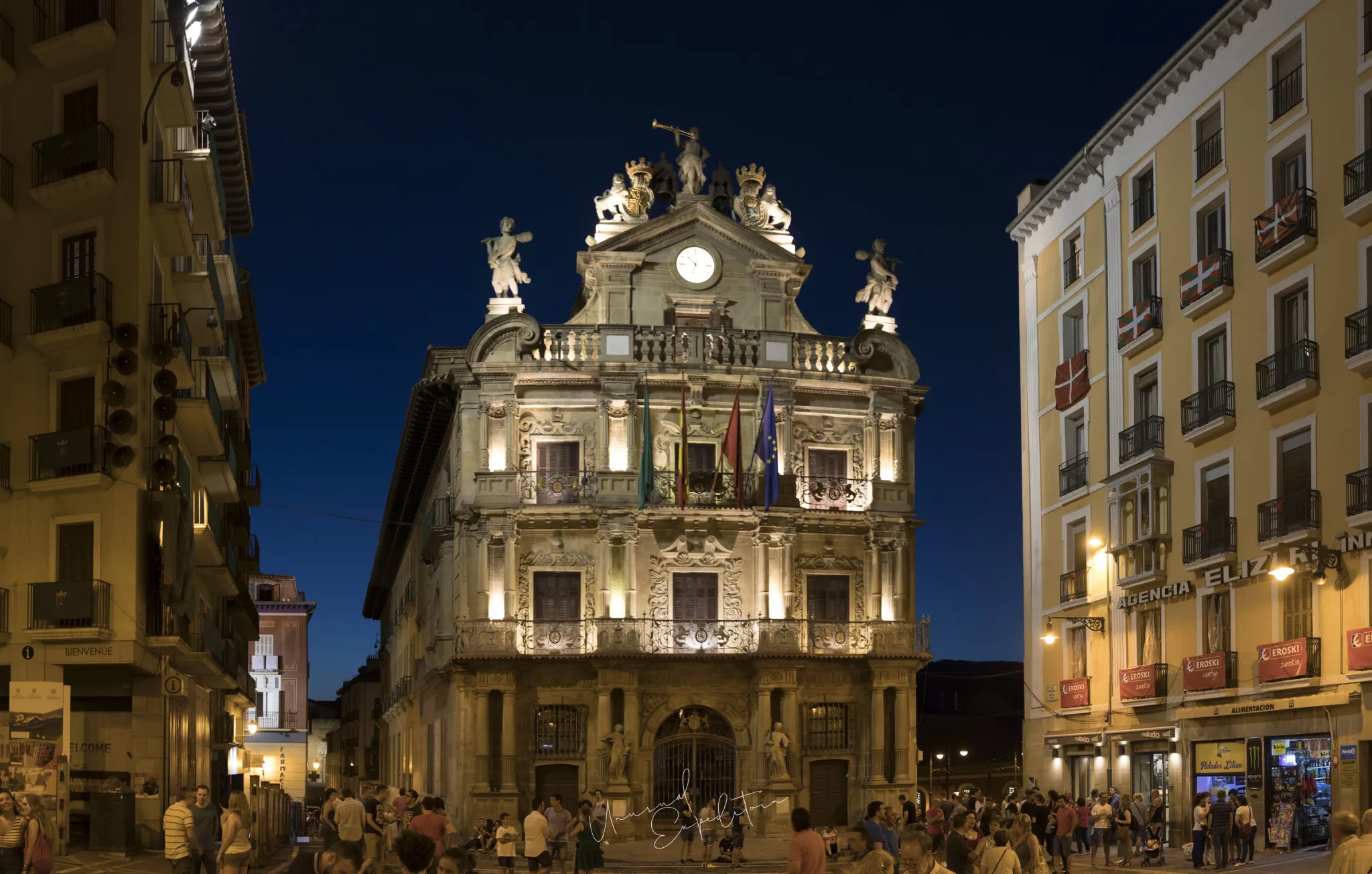
How is San Fermin celebrated: the chupinazo
The opening is the most photographed moment of the festival and the hardest one to work in. The Plaza Consistorial in front of the town hall fills hours before noon, so packed that you cannot lift a camera above your shoulders once you are in. When the rocket goes up, the red neckerchiefs come out of pockets, people tie them on, and the square turns from white to red in a few seconds. Cava and wine go into the air, and so do the people around you. A photographer on the ground gets faces and arms and very little else. The pictures that show the whole square are made from the balconies above it, which are rented to photographers and television crews. A wide lens, a rain cover against the spray and a strap you trust are the only kit worth carrying.
"The chupinazo looks like chaos in the pictures, and from inside it is. You choose a balcony a long time before the day, you get there early, and then you have a few seconds when the whole square goes red. If you miss that, there is no second take until next year."
Joseph Mak, tour leader, Unusual Expedition
San Fermin running of the bulls: what you actually see
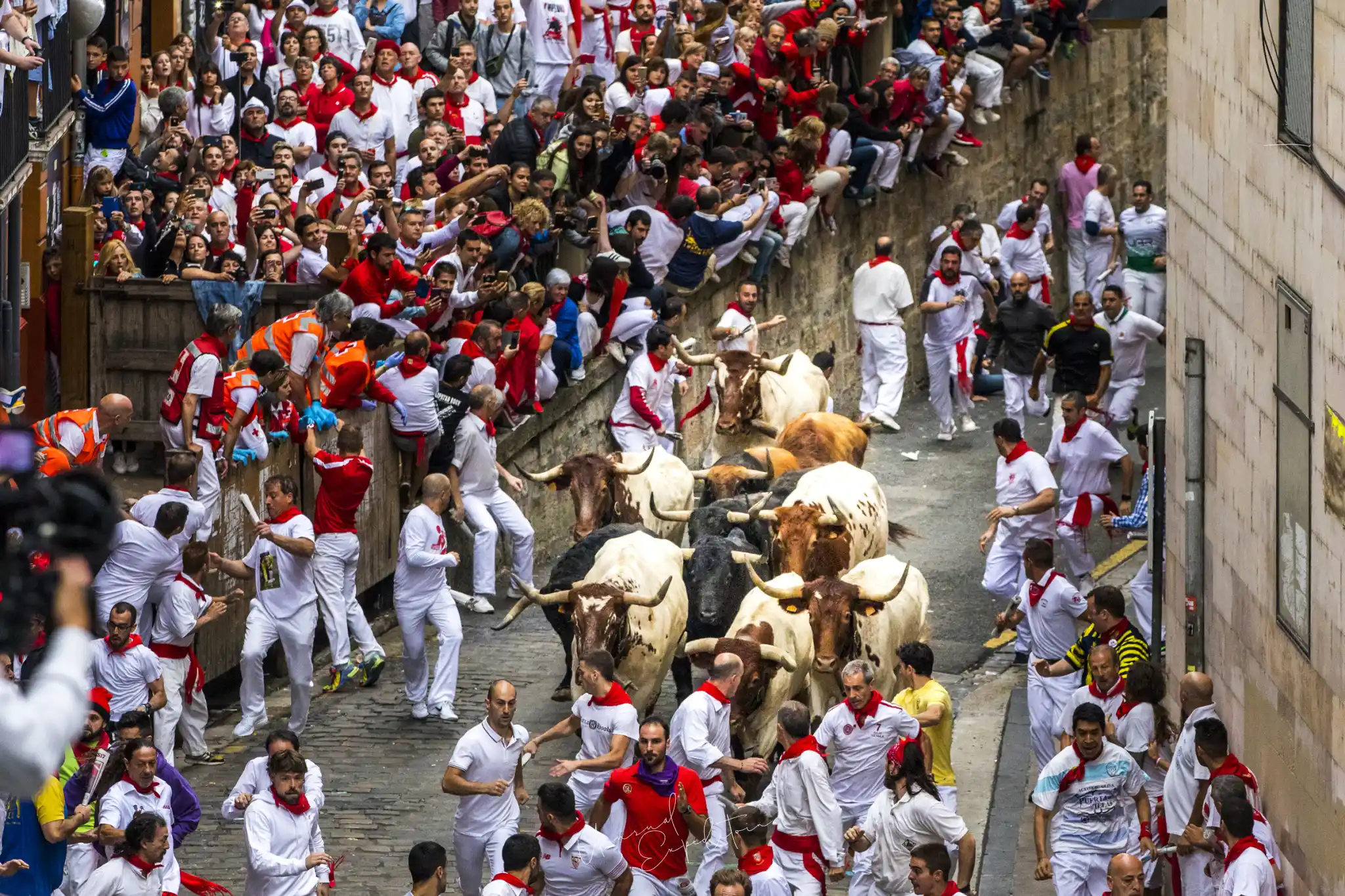
The encierro is short. The route runs from the corrals at the bottom of Santo Domingo, past the town hall square, along Mercaderes and down Estafeta into the bullring, a distance the city council measures at roughly 850 metres. A run usually lasts a few minutes. Six fighting bulls run with steers that guide them, and the runners, mostly men in white, try to stay in front of the horns for a few metres at a time. Spectators cannot stand in the street: the route is closed by double wooden barriers, and the space between them belongs to the police, medics and accredited press. The view for everyone else is from those barriers, from a balcony, or from a seat in the bullring where the run ends.
Where to photograph the bull run from
A balcony on the route is the only place where you can see the street, the runners and the bulls in one frame. Owners rent them by the morning, usually with a set arrival time well before the run, and the good ones on Estafeta and Mercaderes go first. From above, the run is over in seconds, so set a fast shutter, at least 1/1000 second, and pre-focus on a spot below you rather than trying to follow the bulls. Burst mode helps. A 24-70mm covers most balconies; a 70-200mm lets you pick out a runner further up the street. From the barriers, at street level, you will mostly photograph the backs of other spectators unless you arrive very early. Inside the bullring the light is better and the action continues as the bulls are led to the pens, followed by the release of young cows with padded horns into the ring.
Is San Fermin dangerous?
For runners, yes. Every year a number of people are injured, mostly by falls and crushes, and some are gored. By the most cited count about sixteen people have died in the runs since record-keeping began in the early twentieth century, the most recent in 2009, according to reporting by Euronews. For spectators and photographers on balconies or in the bullring the risk is the crowd rather than the bulls: crushes in the old town on the opening day, dehydration in July heat, and nights without sleep. We do not take guests into the run itself, and we do not recommend it to anyone who has not studied it and seen it from above first. The festival also includes bullfights in the evenings, which many visitors choose not to attend; there is plenty to photograph without them.
San Fermin pictures beyond the run
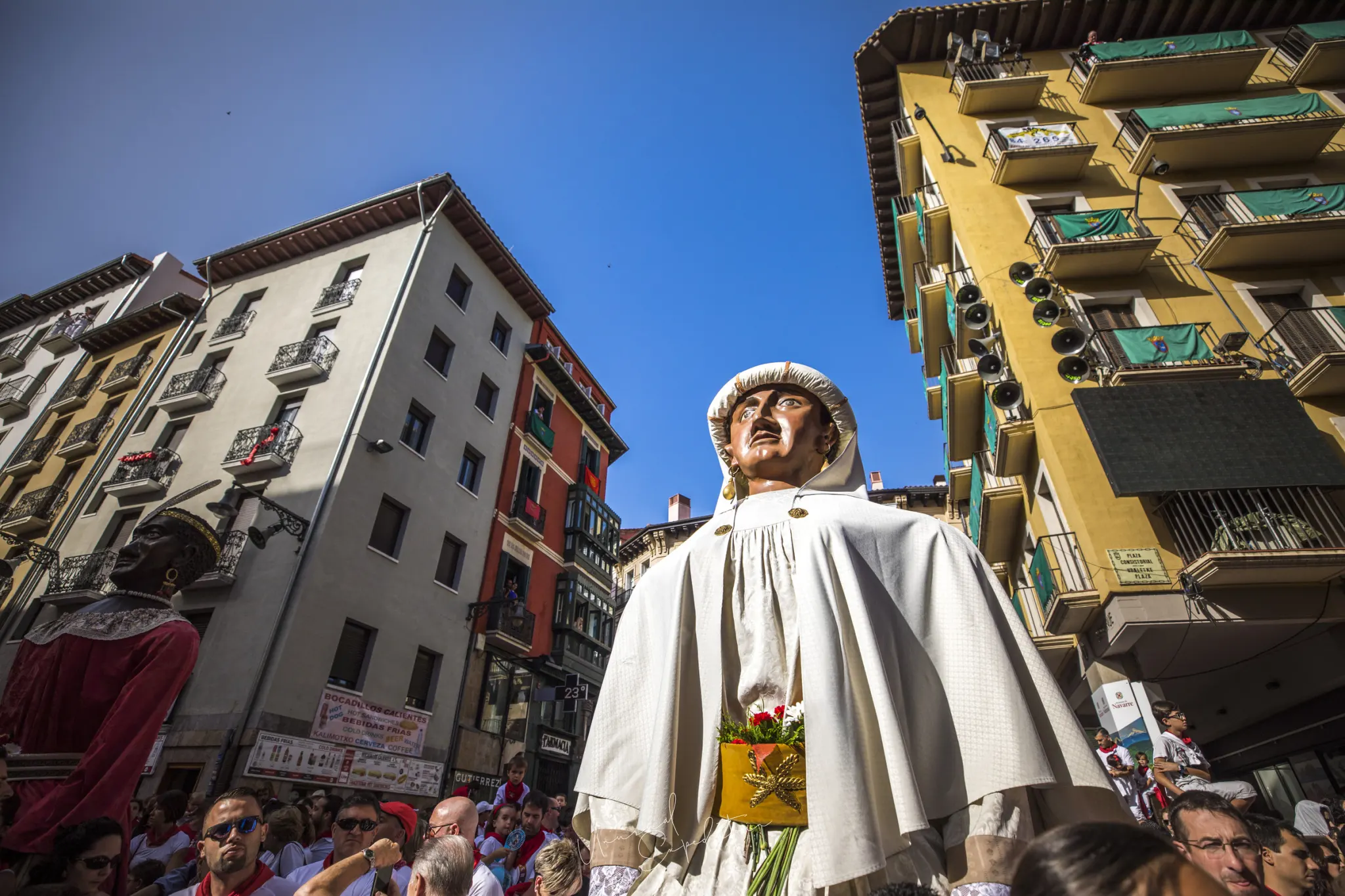
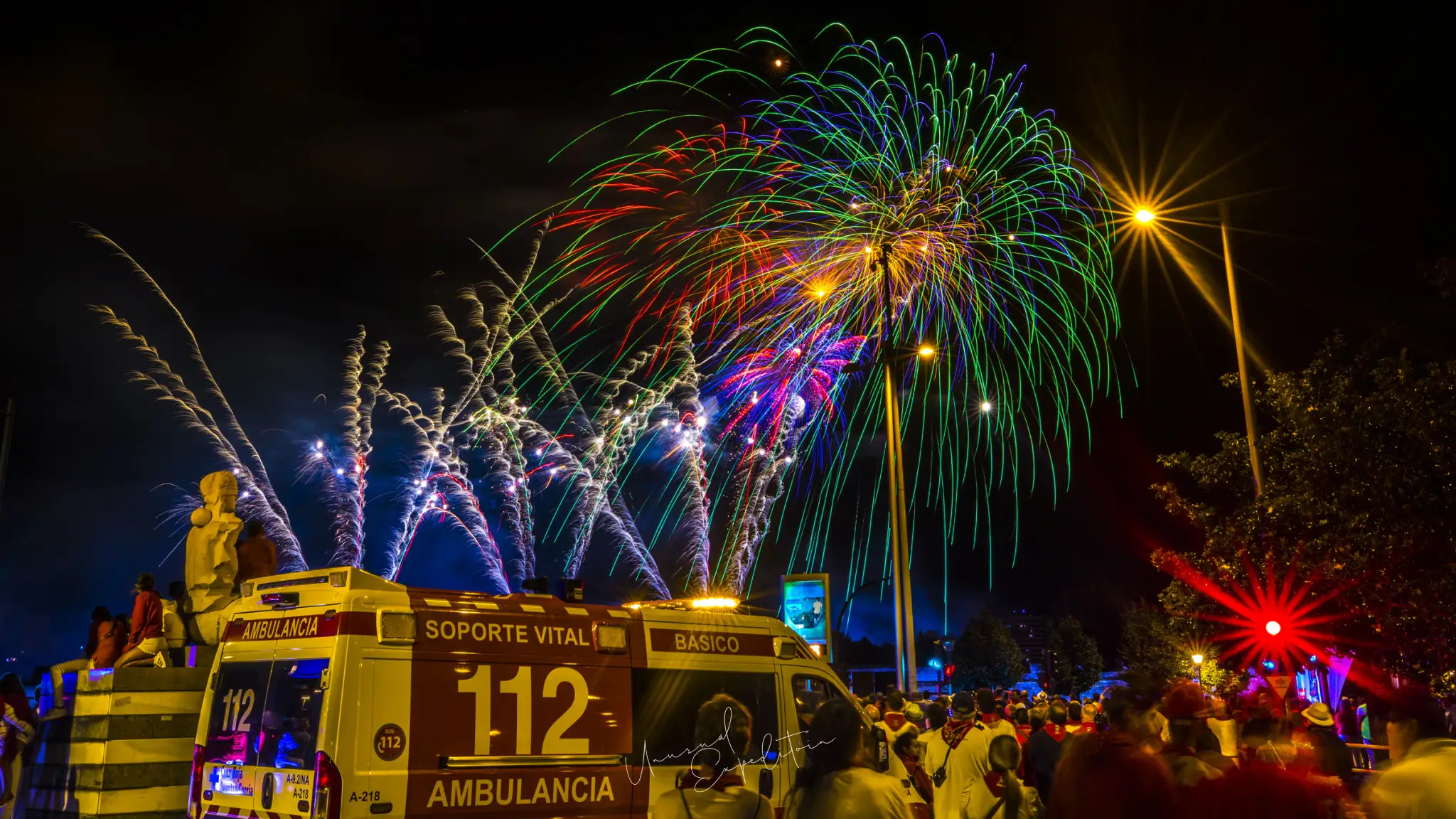
The festival is far more than eight short runs. The procession on 7 July is the most photogenic morning: the saint's statue, city officials in historic dress, dancers in red and white, and the gigantes swaying over the heads of the crowd in streets that are narrow enough to fill the frame. The peñas march to the bullring in the afternoons with banners and brass. Children ride on shoulders to see the cabezudos. In the evenings there is a fireworks display, and the old town stays busy until the early hours. Some of the best portraits we have made in Pamplona came from the hours in between, when people sit on doorsteps in their whites, tired and happy, and are glad to talk.
Camera settings and kit for San Fermin
| Subject | Where | Lens | Settings to start from |
|---|---|---|---|
| Chupinazo crowd | Balcony over the town hall square | 16-35mm or 24-70mm | 1/500 s, f/8, auto ISO |
| Bull run | Balcony on Estafeta or Mercaderes | 24-70mm, 70-200mm | 1/1000 s or faster, burst, pre-focus |
| Procession and gigantes | Old town streets near the cathedral | 24-70mm | 1/500 s, f/5.6 |
| Fireworks | Near the Ciudadela park | 24-70mm on a small tripod | Bulb or 4 to 8 s, f/8, ISO 100 |
| Portraits in whites | Side streets in the afternoon | 35mm or 50mm prime | Open aperture, ask first |
The fast shutter matters more than the lens: almost everything at San Fermin moves.
Etiquette: photographing people at San Fermin
People in Pamplona are used to cameras during the festival, but it is still their festival. Ask before close portraits, especially of children. Spain protects a person's right to their own image in commercial use, so if you plan to sell or publish a recognisable portrait, get permission at the time. Do not climb onto the barriers, do not step into the route, and do what the police tell you without argument. Keep your neckerchief in your pocket until the rocket goes up, as the locals do. Beyond Pamplona, the north is worth a week of its own; see our northern Spain photo tour for the coast, and the best time to visit Spain for photography for how July compares with the rest of the year.
Photograph San Fermin with us
We run San Fermin as a private photography trip, built around a balcony for the chupinazo and the runs, the procession on the saint's day, and quieter days on the Basque coast before or after. Scheduled departures, when we announce them, appear on our Spain photography tours page. Write to us early: the balconies go first.
Spain photography tours
The next Spain departure is announced on the Spain photography tours page, with previous expeditions and all the planning guides.
Explore Spain in depth
- Spain Photography Tour: The Complete GuideSpain
- Valencia Photos: the City of Arts and Sciences, Peñíscola and MorellaSpain
- Tenerife Photos: Mount Teide and the Best Photo SpotsSpain
- Spain Tour from Singapore: Flights, Entry and What to ExpectSpain
- Spain Photography Trip FAQSpain
- Spain's Castle Towns and Windmills: Toledo, La Mancha and AlbarracínSpain
- Seville Photos: Plaza de España, the Cathedral and the Old TownSpain
- Northern Spain Photo Tour: Gaztelugatxe, Bilbao and the Cantabrian CoastSpain
- Granada Photos: the Alhambra and the Best Photo SpotsSpain
- The Best Time to Visit Spain for Photography, Region by RegionSpain
- Andalusia Photos: White Villages and CórdobaSpain
Upcoming Photo Tours
- Egypt Photo Tour – EgyptEgypt 12 Dec 2026 To 20 Dec 2026
- Inner Mongolia Winter Owl Photo Tour – ChinaChina 01 Jan 2027 To 04 Jan 2027
- Inner Mongolia Winter Photo Tour – ChinaChina 05 Jan 2027 To 11 Jan 2027
- Mekong And Central Highland Vietnam Photo Tour - VietnamVietnam 16 Jan 2027 To 24 Jan 2027