
Petra Bedouin: Photographing the People of Petra
Petra Bedouin: the Bdoul and their caves, Umm Sayhoun, camels, music and tea, and how to photograph the people of Petra with respect.
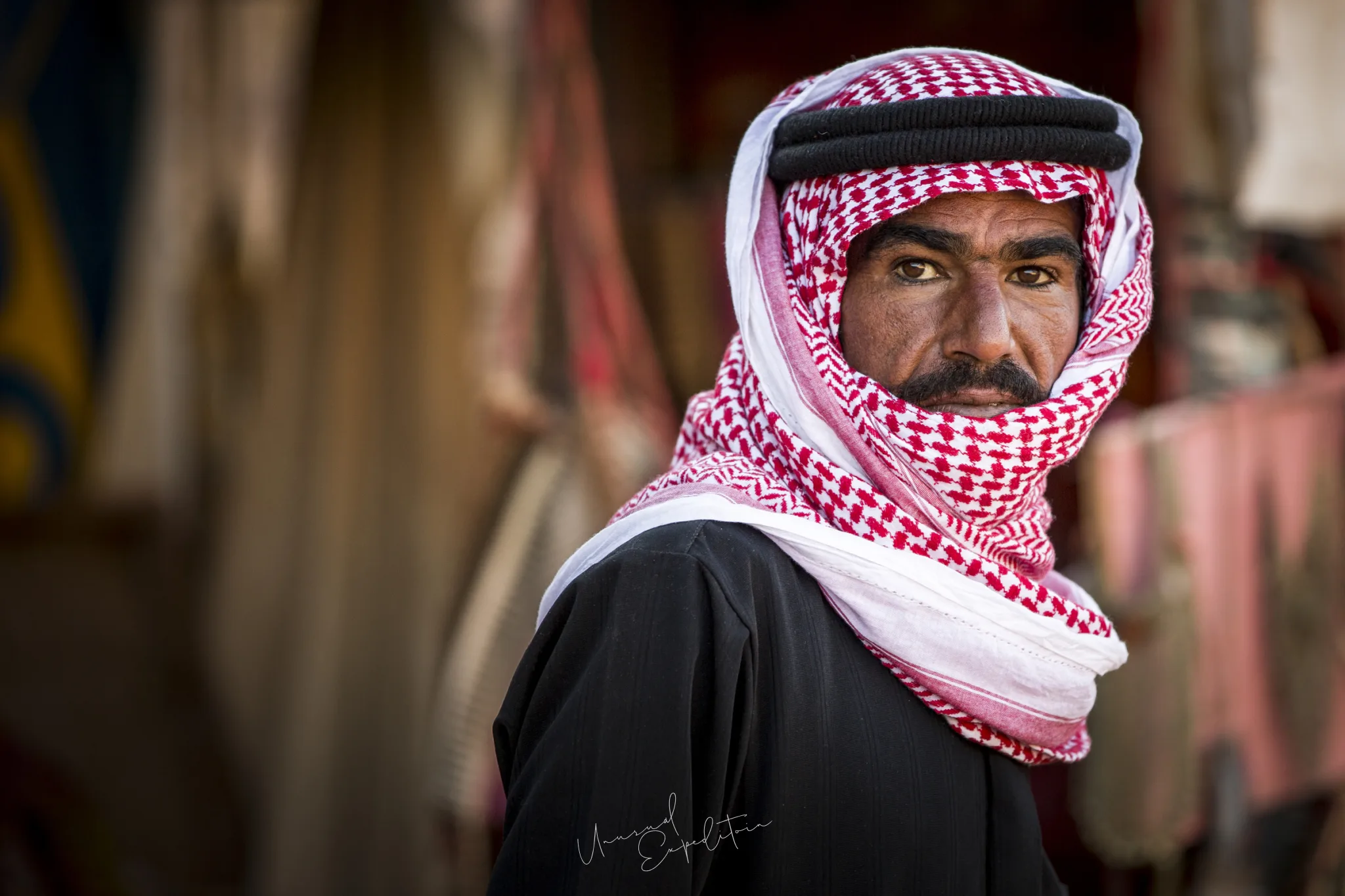
The Petra Bedouin are mainly the Bdoul, a tribe who lived in Petra's caves and tombs until the government built them the village of Umm Sayhoun, just north of the site, in 1985. Today they work inside the park as guides, camel and donkey handlers, tea makers, musicians and stall holders, and they are part of almost every picture of daily life there. Photographing them well starts with conversation and consent. This page belongs to our Petra photography tour guide.
Bedouin tribe Petra: who the Bdoul are
The Bedouin tribe Petra visitors meet most is the Bdoul, also written Bedul or Bidul. For generations they lived in and around the ancient city, using its caves and tombs as homes and grazing goats in the valleys. When Petra was inscribed as a World Heritage Site in 1985, the Jordanian government moved them to a purpose-built village, Umm Sayhoun, on the plateau above the northern edge of the park. Wikipedia and Cultural Survival both record that the move was resisted by many families and that some kept living in the caves for years afterwards; National Geographic has written about the families who still had ties to homes inside the park. Neighbouring tribes, such as the people of Wadi Musa, also work in Petra, and Bedouin from all of them run the camel rides, carriages and stalls.
Bedouin in Petra today
Bedouin in Petra today are working people in a tourist site, and it helps to see them that way, not as a picturesque backdrop. Men lead camels in bright saddle blankets through the Treasury square, guide visitors up the Monastery stair, play the rababa, the one-stringed Bedouin fiddle, and make tea on small fires in the shade. Women sell jewellery and embroidery from stalls along the paths. Others drive the carriages and the electric carts that now carry visitors along part of the main route. Older men often have stories about the years when their families lived in the caves, and tea is where you hear them.
Petra bedouin caves
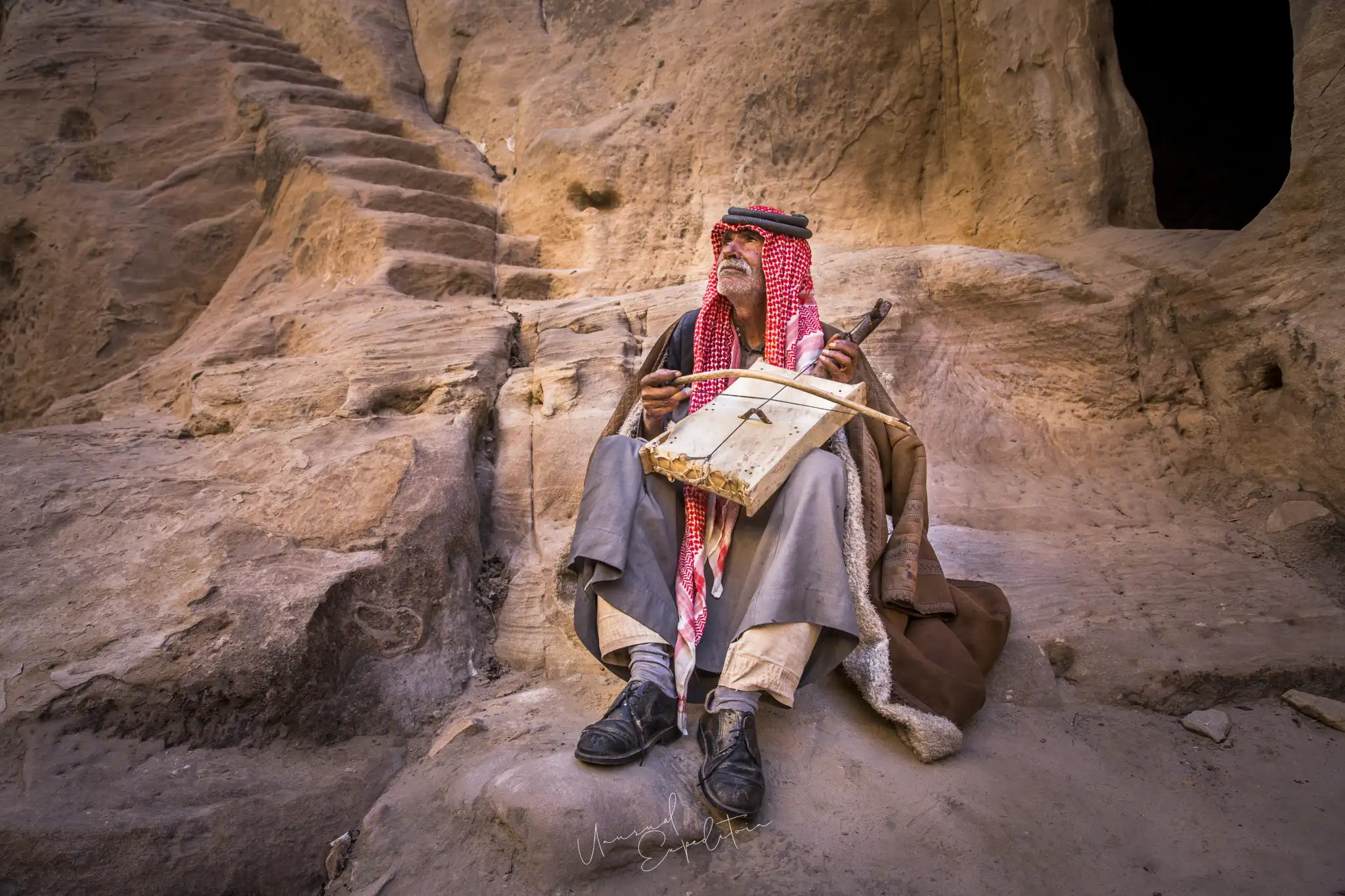
The Petra bedouin caves are rooms cut by the Nabataeans as tombs, workshops and houses, later lived in by the Bdoul. Most are empty now, but you will still see Bedouin resting in their shade in the middle of the day, using a cave mouth as a stall, or brewing tea against a smoke-blackened ceiling. These caves make some of the most beautiful light in Petra: a man sitting in a doorway, lit by sun bouncing off the sandstone outside, with the cave falling to black behind him. Expose for the face, not the bright rock, and keep the frame simple. Some caves are still private spaces, so do not walk into one uninvited.
How to photograph the people of Petra with respect
Petra Bedouin are photographed many times a day, and the ones who enjoy it will tell you. The approach we use is simple. Talk first, buy something or accept the tea, and then ask. If someone says no, put the camera down. We do not pay for poses, because it turns a meeting into a transaction and encourages children to work the paths, but we do buy from the stalls and hire local guides, which is how families here earn their living. Women are usually more reserved; ask through a guide, and expect the answer to be no more often than yes. Show people the picture on the back of the camera. A shared laugh at a portrait is worth more than the frame.
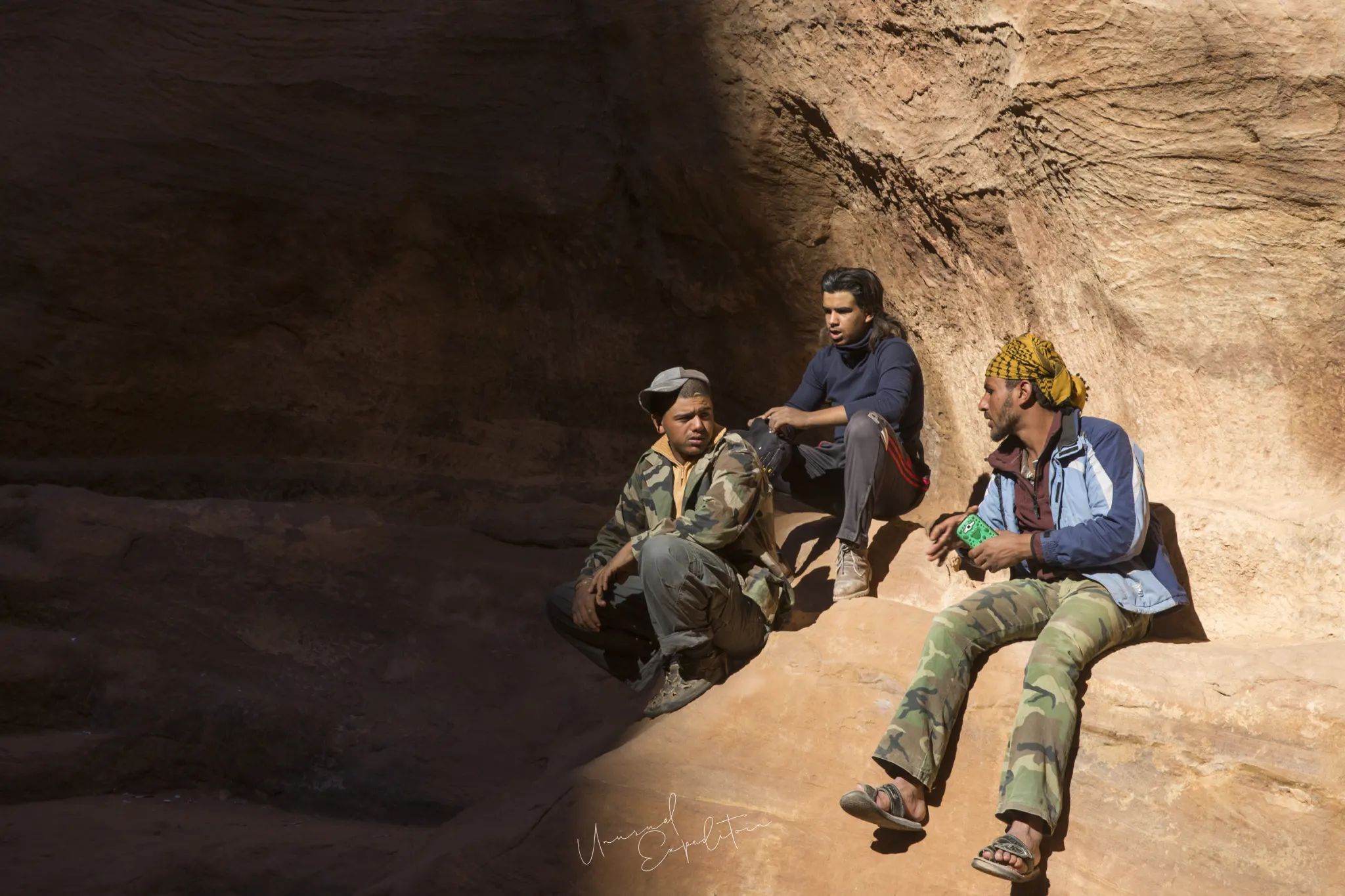
"The Bedouin at Petra have seen every kind of camera. What they remember is whether you sat down. The portraits I like most there came after the second glass of tea, when nobody was posing anymore."
Joseph Mak, tour leader, Unusual Expedition
Petra bedouin people: music and the rababa
Music is one of the easiest ways into a conversation with the Petra bedouin people. The rababa is a simple fiddle with a single string of horsehair, a skin-covered body and a bow, and older men still play it in the shade of the tombs and at the tea stops, singing long poems of the desert over the thin, rasping notes. Stop, listen, and the player will often invite you to sit. For photographs, a seated musician in the mouth of a cave or against carved stone makes a strong portrait; keep the bow and the hands sharp, and let the background fall away with a wider aperture. Leaving a tip for the music, and not for the picture, keeps the exchange fair on both sides.
Camels, donkeys and horses
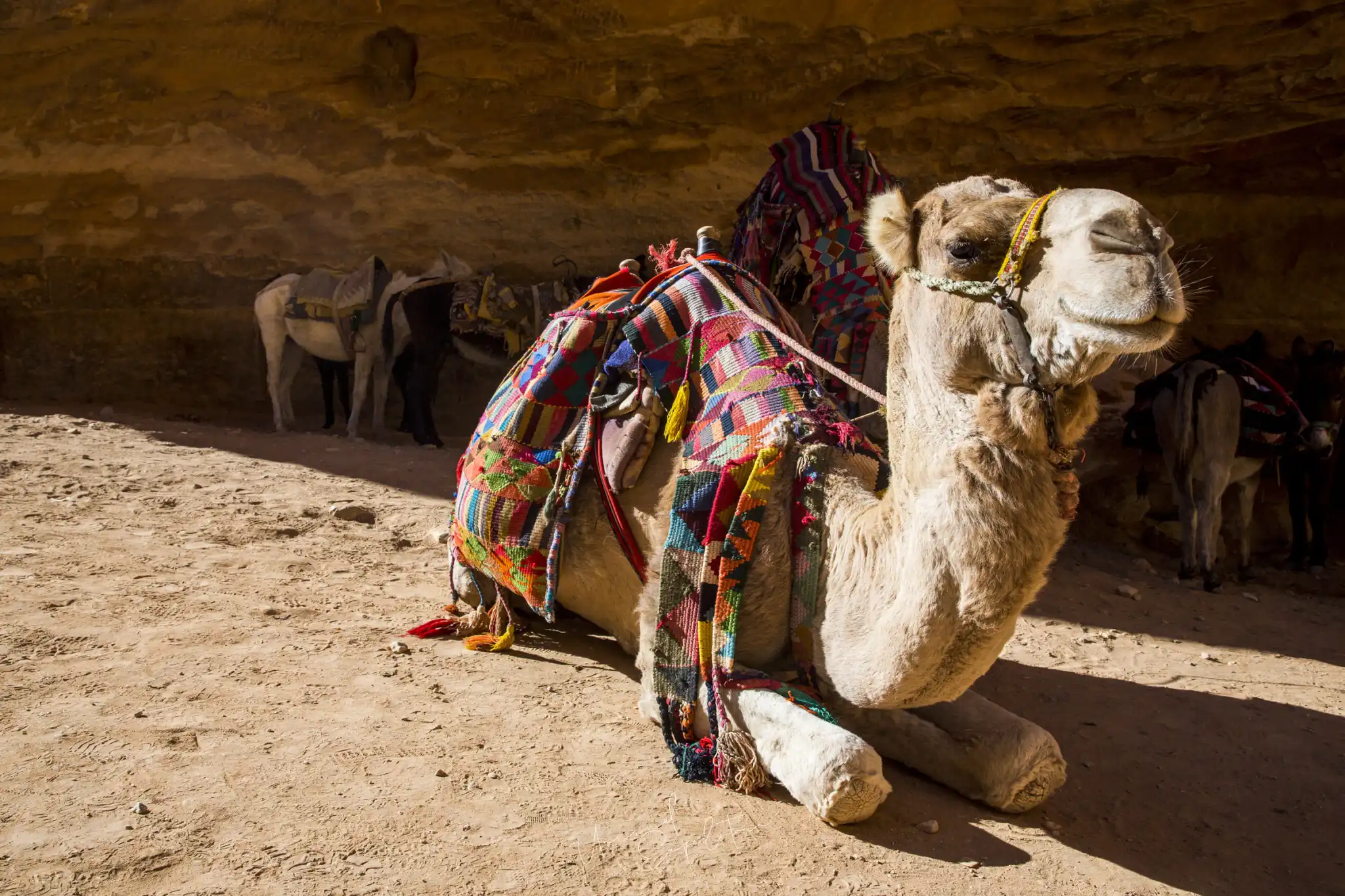
Camels, donkeys and horses work all through Petra, carrying visitors through the Siq, up the Monastery stair and across the valley. They are photogenic, especially the camels resting in the Treasury square or in the shade of the cliffs. Animal welfare groups such as PETA have campaigned for years about overworked donkeys and horses at Petra, and electric carts now carry some visitors along the main route. As visitors, the best thing we can do is walk where we can, choose handlers whose animals are well kept, and photograph the animals at rest rather than under strain.
| Subject | Where you find it | Approach |
|---|---|---|
| Camel handlers | Treasury square, the valley floor | Ask, chat, often happy to pose with the camels |
| Musicians | Shaded corners, tea stops, Little Petra | Listen first, then ask |
| Tea makers | Caves and stalls along the paths | Sit down for tea |
| Stall holders | Monastery stair, Royal Tombs | Buy something, then ask |
| Women and children | Stalls and paths | Ask through a guide; accept a no |
The table is a guide, not a rule: every person decides for themselves.
Bedouin tent Petra: camps and hospitality
Around Petra and Little Petra several Bedouin camps host visitors for meals and evenings around the fire, and in Wadi Rum the desert camps are the heart of the experience. A night in a camp is one of the easiest ways to photograph Bedouin hospitality: tea poured from a blackened pot, coffee with cardamom, the glow of a fire inside a goat-hair tent. Our Little Petra article covers the tea rooms in that canyon, and Petra photo spots shows where the Bedouin gather inside the main site.
Meet the people of Petra with us
We work with local Bedouin guides on our Petra trips. With no scheduled Jordan departure at present, we run Petra as a private trip on request, at your own pace, with all logistics arranged and photography coaching available at extra cost. See private tours and the Jordan photography tours page.
Petra photography tours
The next Petra departure is announced on the Petra photography tours page, with previous expeditions and all the planning guides.
Explore Petra in depth
- Petra Photography Tour Guide: The Siq, the Treasury and BeyondJordan
- Petra Photo Spots: Where to Stand in the Rose CityJordan
- Petra Monastery (Ad Deir): The Climb, the Light and the ViewsJordan
- Petra by Night: Is It Worth It, and How to Photograph ItJordan
- Little Petra (Siq al-Barid): Is It Worth Visiting?Jordan
- How to Get to Petra, and Is Petra Worth It?Jordan
- Best Time to Visit Petra: Season, Light and Time of DayJordan
Upcoming Photo Tours
- Egypt Photo Tour – EgyptEgypt 12 Dec 2026 To 20 Dec 2026
- Inner Mongolia Winter Owl Photo Tour – ChinaChina 01 Jan 2027 To 04 Jan 2027
- Inner Mongolia Winter Photo Tour – ChinaChina 05 Jan 2027 To 11 Jan 2027
- Mekong And Central Highland Vietnam Photo Tour - VietnamVietnam 16 Jan 2027 To 24 Jan 2027