
Petra Photography Tour Guide: The Siq, the Treasury and Beyond
Petra, Jordan for photographers: the Siq, the Treasury, the Monastery, Little Petra, Petra by Night, the Bedouin and the best light.
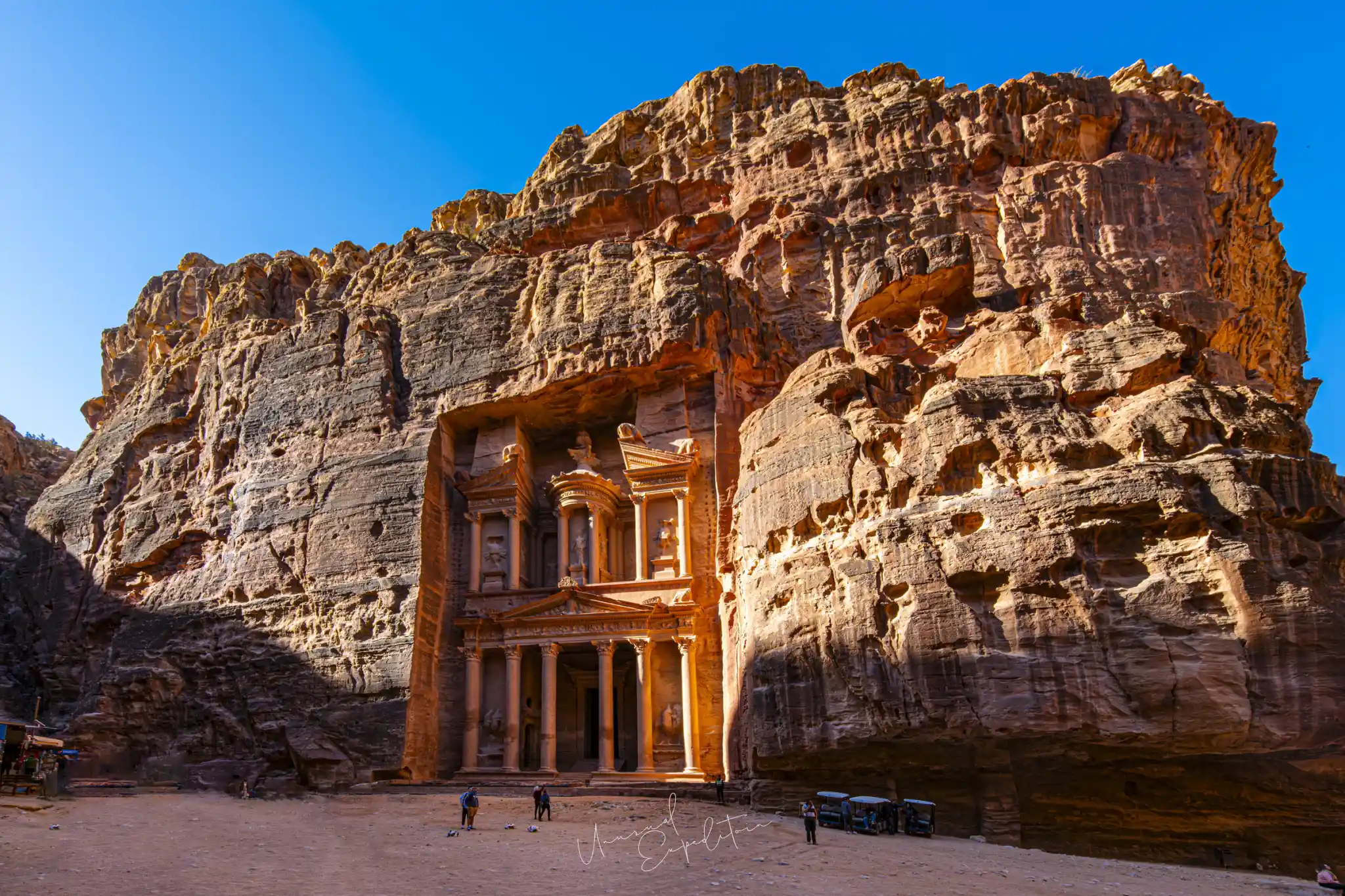
Petra, Jordan, is the rock-cut capital of the Nabataeans: a city of tombs, temples and facades carved into pink and orange sandstone, reached through a narrow gorge called the Siq. For a photographer it offers the Treasury in morning light, the Monastery in the afternoon, the Street of Facades, Little Petra, Petra by Night and the Bedouin who still live around it. This is the area guide for Petra within our Jordan photography tour guide.
The photographs in this guide are our own, taken on our trips to Petra; we hold the rights to them, and the notes come from knowing these places first hand. Each part of the site has its own article, listed at the end.
Petra Jordan: what it is and why it matters
Petra Jordan was the capital of the Nabataean kingdom, a trading people who controlled caravan routes for incense and spices, and its buildings mix their own style with Greek, Roman and Egyptian ideas. Most of what survives is cut straight into the cliffs: tomb facades, a theatre, temples, cisterns and channels that once brought water through the valley. Jordan's Department of Antiquities records Petra's inscription on the UNESCO World Heritage List in 1985. The site lies in mountains above the town of Wadi Musa in southern Jordan, and the Bdoul Bedouin, who lived in its caves until a village was built for them nearby, still work inside the park. For the photographer, Petra is an architecture subject, a landscape subject and a people subject at once, which is why we give it more time than any other place in Jordan.
Petra photography: the main places to photograph
| Place | What you photograph | Best light |
|---|---|---|
| The Siq | Curving walls of banded sandstone, the first view of the Treasury | Mid morning, when light bounces down the walls |
| The Treasury (Al-Khazneh) | The famous facade, camels and Bedouin in the square | Morning, when sun reaches the facade |
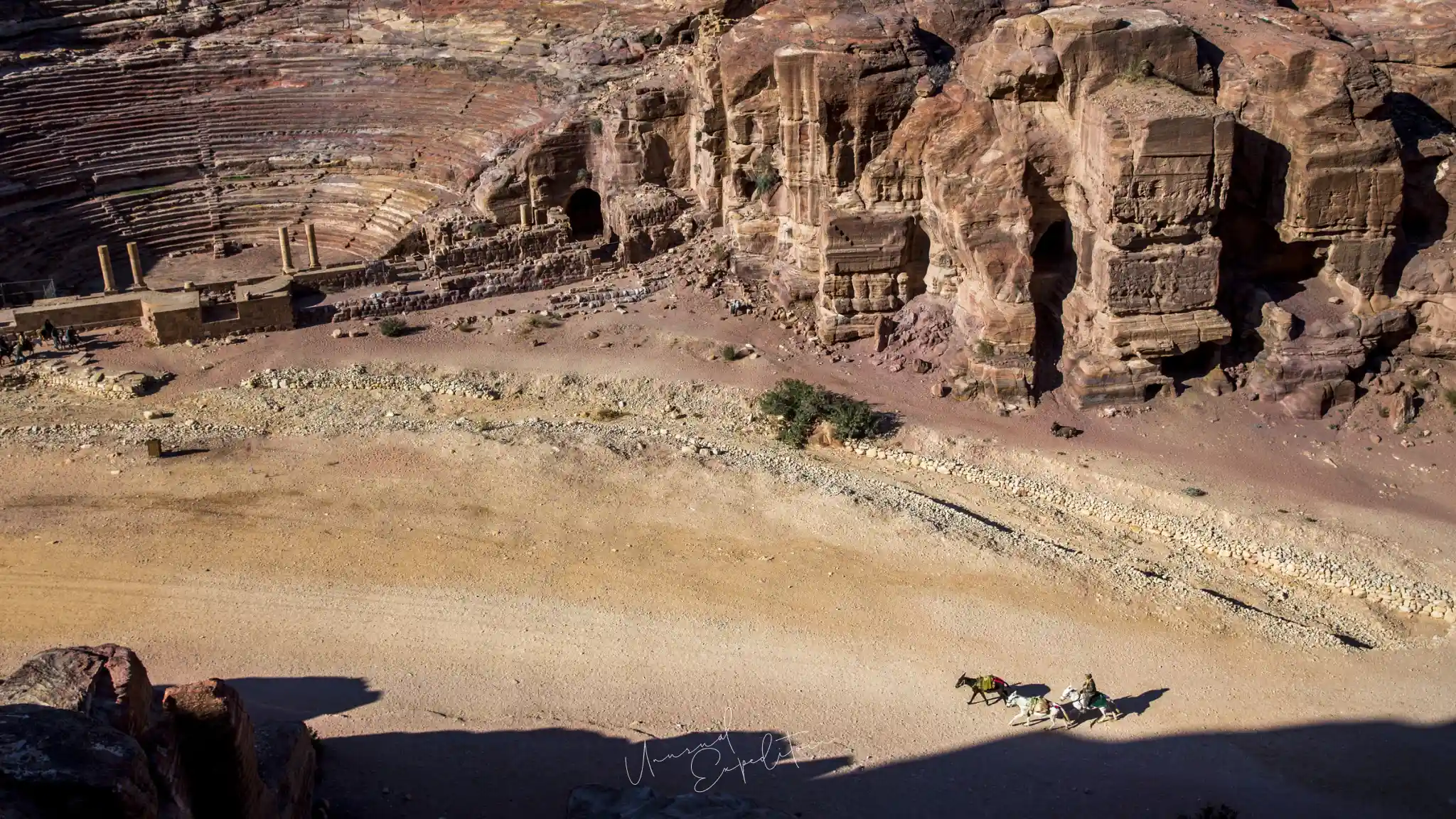
| Street of Facades and the theatre | Rows of tombs, the rock-cut theatre, riders below | Late morning to afternoon |
| Royal Tombs | Tall facades and swirling coloured stone inside the tombs | Afternoon, when they face the sun |
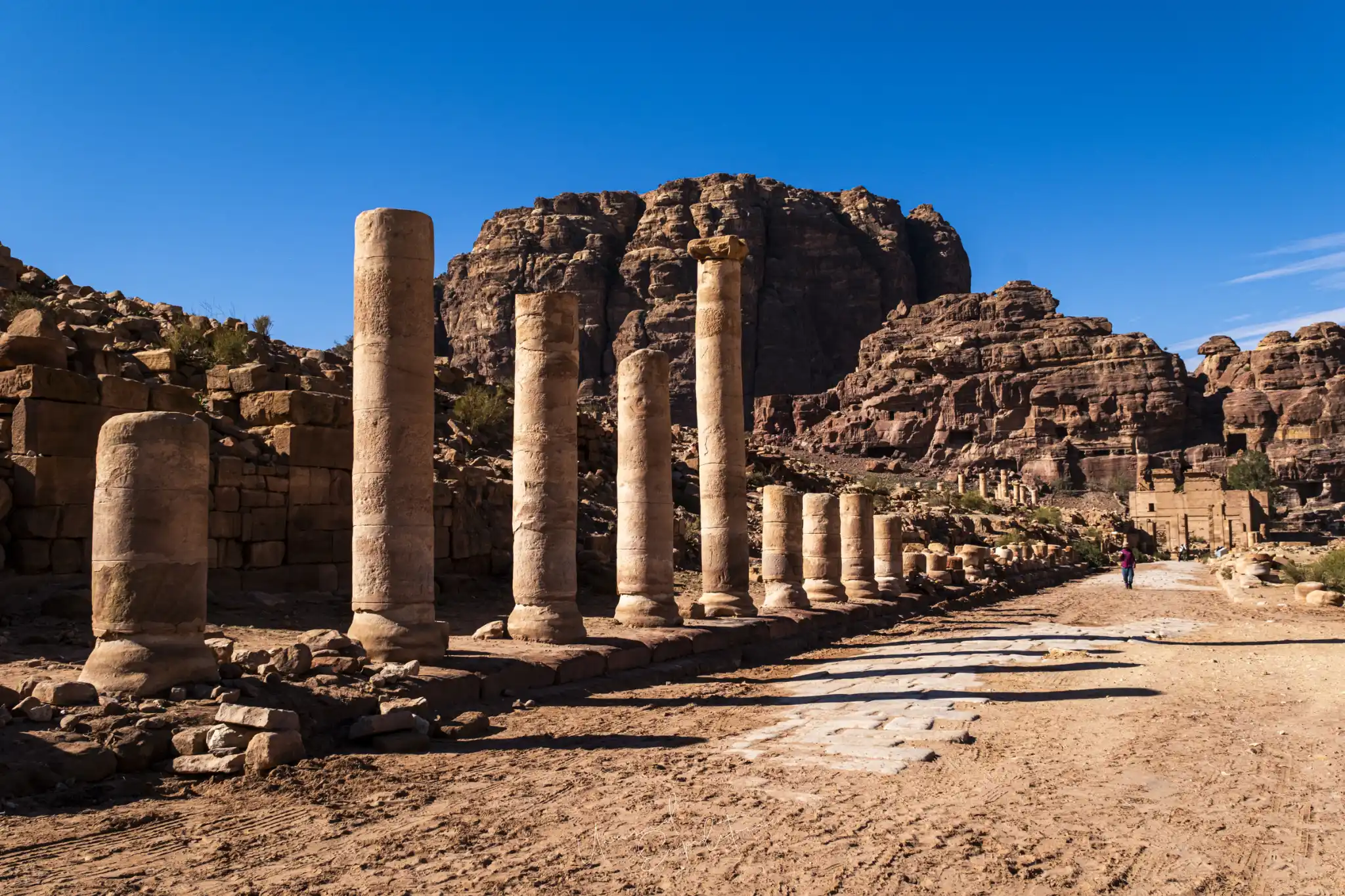
| Colonnaded Street | Roman columns with the mountains behind | Late afternoon |
| The Monastery (Ad Deir) | The largest facade, views over the mountains | Afternoon into sunset |
| Little Petra | Smaller carved facades in a quiet canyon | Morning or late afternoon |
Our Petra photo spots article goes through each place with the exact viewpoints.
The Siq and the Treasury
The Siq is the gorge of about 1.2 kilometres that leads from the entrance to the Treasury. Its walls rise high on both sides, and on a sunny morning the light that bounces between them turns the stone orange, red and violet. At its end the gorge narrows to a slot and the Treasury appears through it, the picture every visitor has in mind. The Treasury itself is a tomb facade, not a treasury; the name came from a legend of gold hidden in the urn at the top. It faces east, which is why the sun touches it in the morning and leaves it in shade by the afternoon. The square in front fills with camels, carriages and visitors as the day goes on, so we go early.
The Monastery, Little Petra and the rest of the valley
Beyond the Treasury the valley widens past the Street of Facades and the theatre to the Royal Tombs and the Colonnaded Street, the old main street of the Roman period. From its far end a long rock-cut stair climbs to the Monastery, Ad Deir, one of the largest facades in Petra and the reward for the most effort. We cover the climb and its light in Petra Monastery (Ad Deir). North of Wadi Musa, Little Petra, Siq al-Barid, is a smaller carved canyon with free entry and far fewer people; see Little Petra.
Petra by Night and the light through the day
Petra's light changes the place more than most sites. Mornings belong to the Siq and the Treasury, the middle of the day to the shaded tombs and the people, and the afternoon to the Royal Tombs, the Colonnaded Street and the Monastery. On some evenings of the week Petra by Night lines the Siq and the Treasury square with candles; it is a different subject altogether, covered in Petra by Night. Seasons matter too. Spring brings green to the valley floor, winter brings rain and quiet, and summer heat makes the middle of the day hard work. Our best time to visit Petra article covers both the month and the hour.
"Most people walk straight through the Siq to get to the Treasury. I tell our group to slow down in there. The walls change colour every few steps, and some of my favourite frames of Petra have no monument in them at all."
Joseph Mak, tour leader, Unusual Expedition
Petra tour: photographing the people of Petra
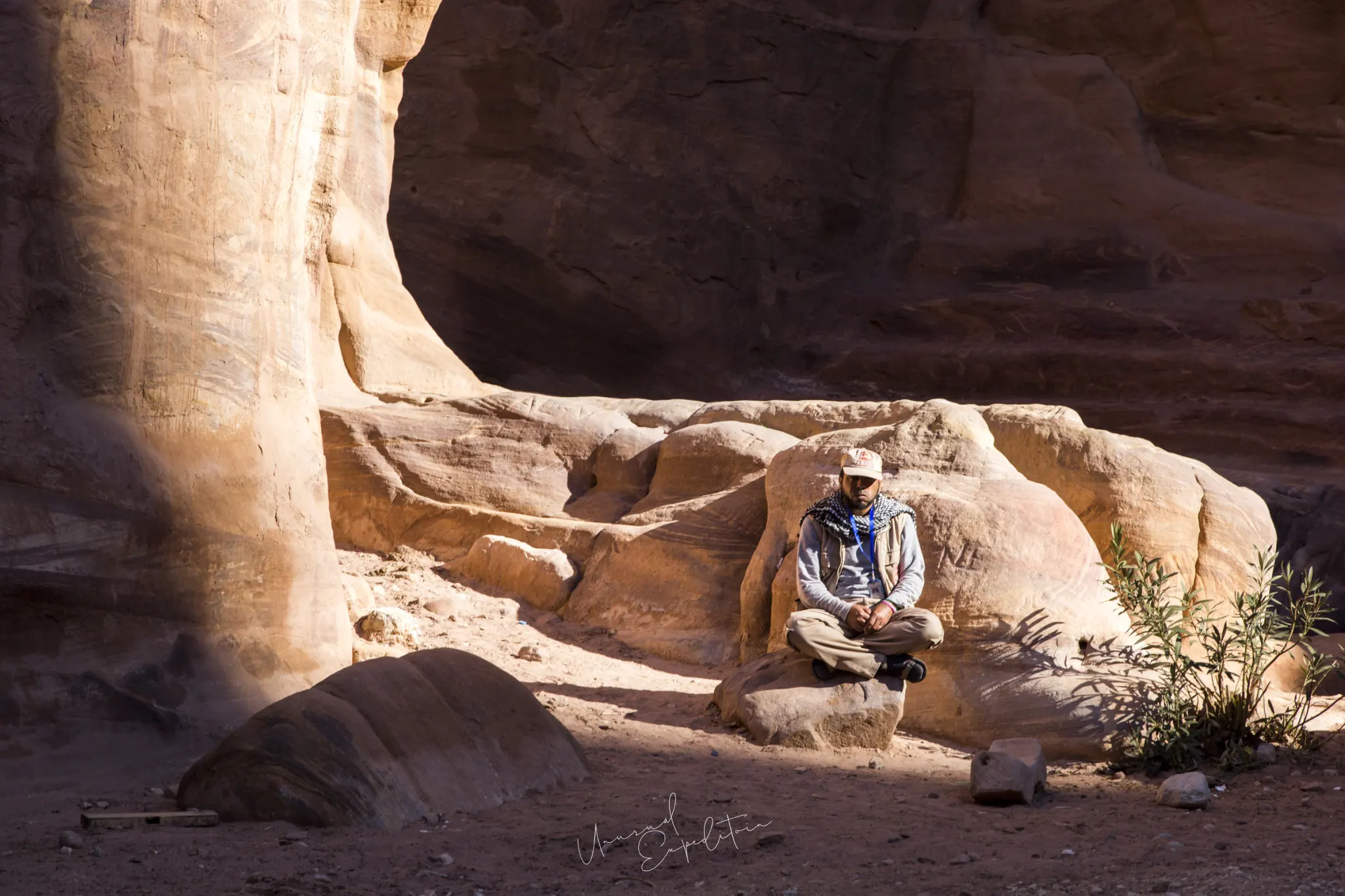
The Bedouin of Petra are part of the picture. Men lead camels and donkeys through the valley, sell tea and jewellery from stalls, play the rababa in the shade and rest in the caves their families once lived in. Many are happy to be photographed if you ask and take a moment to talk; some prefer not, and that is their right. We hire local guides, buy the tea and do not pay for poses. The history of the Bdoul and how we photograph them is in our Petra Bedouin article.
Getting to Petra, tickets and time needed
Petra is reached by road from Amman, Aqaba or Wadi Rum, and visitors stay in Wadi Musa, the town at the gate. Tickets are bought at the visitor centre or included in the Jordan Pass; according to the Jordan Tourism Board, multi-day tickets cost less per day, and Petra by Night needs its own ticket. For photography we want at least two full days in the park, one for the Siq, the Treasury and the valley, one for the Monastery and the places we missed. The details are in how to get to Petra.
Explore Petra in depth
- Petra photo spots: where to stand in the rose city
- Best time to visit Petra: season, light and time of day
- Petra by Night: is it worth it, and how to photograph it
- Petra Monastery (Ad Deir): the climb, the light and the views
- Little Petra (Siq al-Barid): is it worth visiting?
- Petra Bedouin: photographing the people of Petra
- How to get to Petra, and is Petra worth it?
- Jordan photography tour guide
Photograph Petra with us
We have photographed Petra on more than one trip and know where the light falls through the day. With no scheduled Jordan departure at present, we run Petra as a private trip on request, at your own pace, with all logistics arranged and photography coaching available at extra cost. See private tours and the Jordan photography tours page.
Petra photography tours
The next Petra departure is announced on the Petra photography tours page, with previous expeditions and all the planning guides.
Explore Petra in depth
- Petra Photo Spots: Where to Stand in the Rose CityJordan
- Petra Monastery (Ad Deir): The Climb, the Light and the ViewsJordan
- Petra by Night: Is It Worth It, and How to Photograph ItJordan
- Petra Bedouin: Photographing the People of PetraJordan
- Little Petra (Siq al-Barid): Is It Worth Visiting?Jordan
- How to Get to Petra, and Is Petra Worth It?Jordan
- Best Time to Visit Petra: Season, Light and Time of DayJordan
Upcoming Photo Tours
- Egypt Photo Tour – EgyptEgypt 12 Dec 2026 To 20 Dec 2026
- Inner Mongolia Winter Owl Photo Tour – ChinaChina 01 Jan 2027 To 04 Jan 2027
- Inner Mongolia Winter Photo Tour – ChinaChina 05 Jan 2027 To 11 Jan 2027
- Mekong And Central Highland Vietnam Photo Tour - VietnamVietnam 16 Jan 2027 To 24 Jan 2027