
Siti Khadijah Market, Kota Bharu: A Photographer's Guide to the Dome
Siti Khadijah market in Kota Bharu for photographers: the dome, the produce floor, stallholder portraits, lenses and manners.
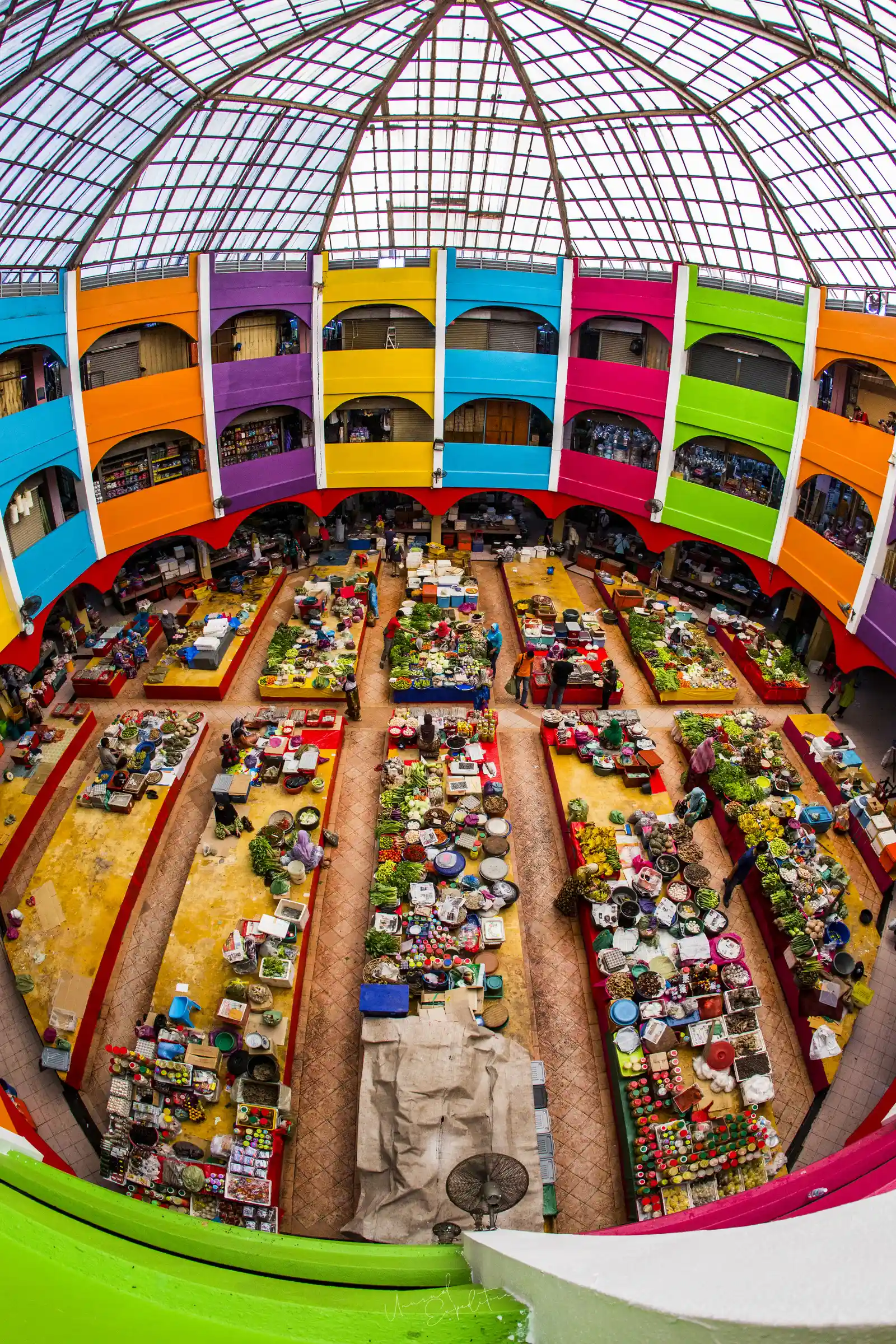
Siti Khadijah market is the central market of Kota Bharu, a domed hall where fruit, vegetables, spices, dried fish and household goods are sold by stallholders who have often worked the same pitch for decades. For a photographer it is the best single stop in the Kelantan capital: colour, people and architecture in one building. Below: where to shoot, what lens to use and how to work without getting in anyone's way.
It is one chapter of our Kelantan photography guide, which belongs to the Malaysia photography tour guide. The photographs are our own, taken on our trips here; we hold the rights to them.
Why Siti Khadijah market is worth it
Among the things to do in Kota Bharu, this market is the one that works for every kind of photographer. It is indoors, so the light is soft and steady; it is busy early; and it has height, so you can look down on it. Sources differ on how many floors the building has, and its upper levels are given over to non-food goods, so go in expecting the produce to be at ground level. Opening is generally from morning to late afternoon; check on the day, as hours shift around holidays.
Kelantan's weekend is Friday and Saturday, so markets and shops can keep different hours then. Go on a weekday if you can.
The dome from above
The upper gallery looks across to the dome, which is ringed with brightly coloured shutters, and down onto the floor. A wide zoom, a 16-35mm, makes the most of it. Shoot straight down for a pattern of baskets and heads, and keep the horizon level; the dome wants to curve. Fisheye frames work here too, though use them sparingly.
Produce and the floor
Look for the tiled floor spaces where sellers lay out greens, chillies, long beans and herbs on trays and mats. Shoot them from above with a 24-70mm for the colour and the geometry, and wait for a hand to enter the frame. The light from skylights is soft and does not create strong shadows, so exposure is easy. Keep the horizon straight and use a slightly higher ISO to keep your shutter speed up.
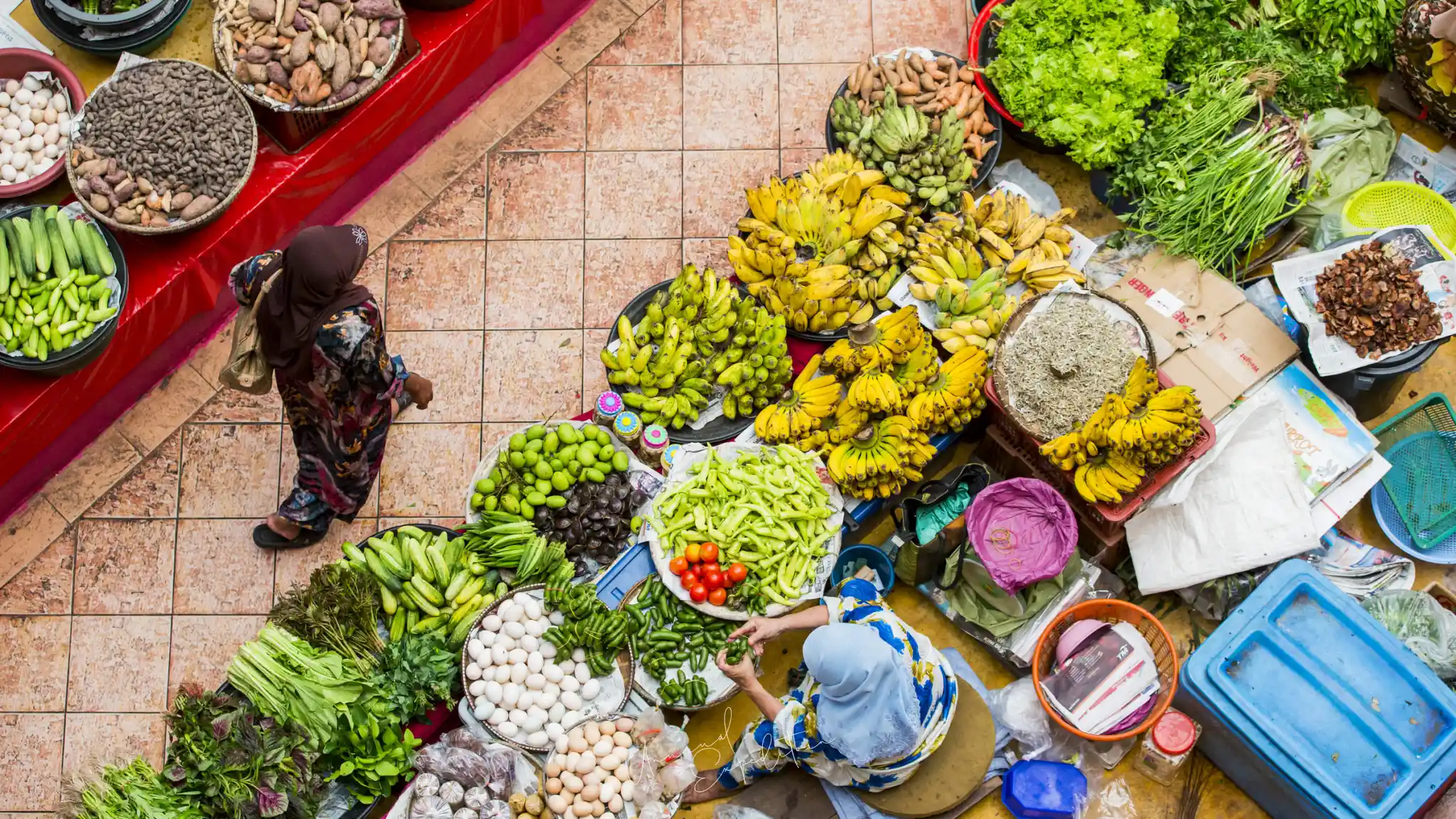
The aisles of spices and dry goods
The narrow aisles are the most atmospheric part of the market. Stalls are stacked with sacks of spice, packets of snacks and plastic baskets of dried fish, and the stallholders sit among them behind their scales. The aisles are tight, so a 24-70mm or a 35mm prime is ideal. Tilt your camera up slightly to take in the hanging goods and the ceiling lights. Watch your elbows and ask before you step into someone's pitch.
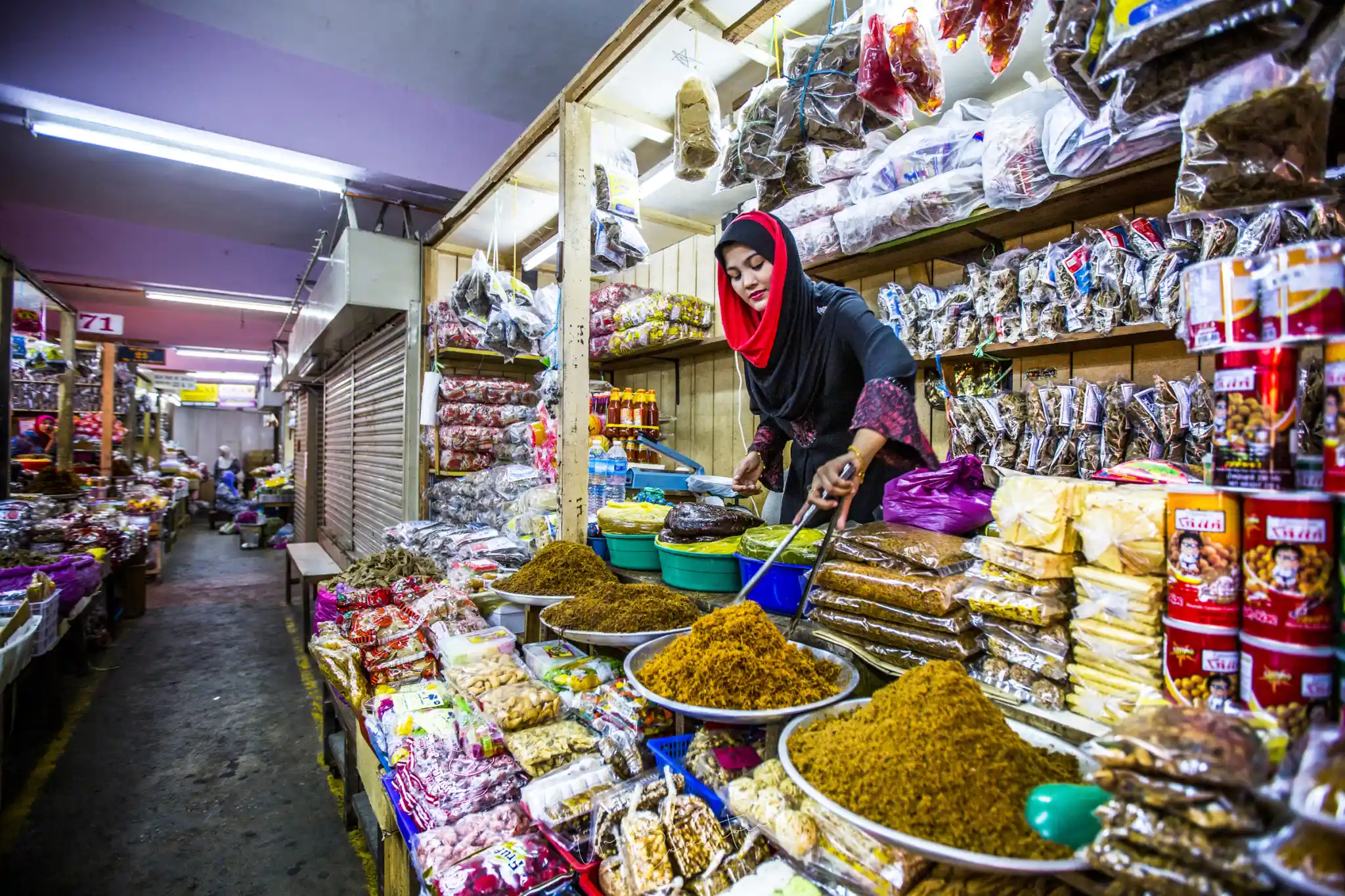
Portraits of stallholders
Many stallholders are women, and many are happy to be photographed once you have said hello. Buy something small, ask in Malay if you can ("boleh ambil gambar?"), smile and show the picture on the back of the camera. A portrait of a stallholder sitting in front of her shelves, hands in her lap, is a classic frame here. Keep your distance if someone shakes her head and do not argue.
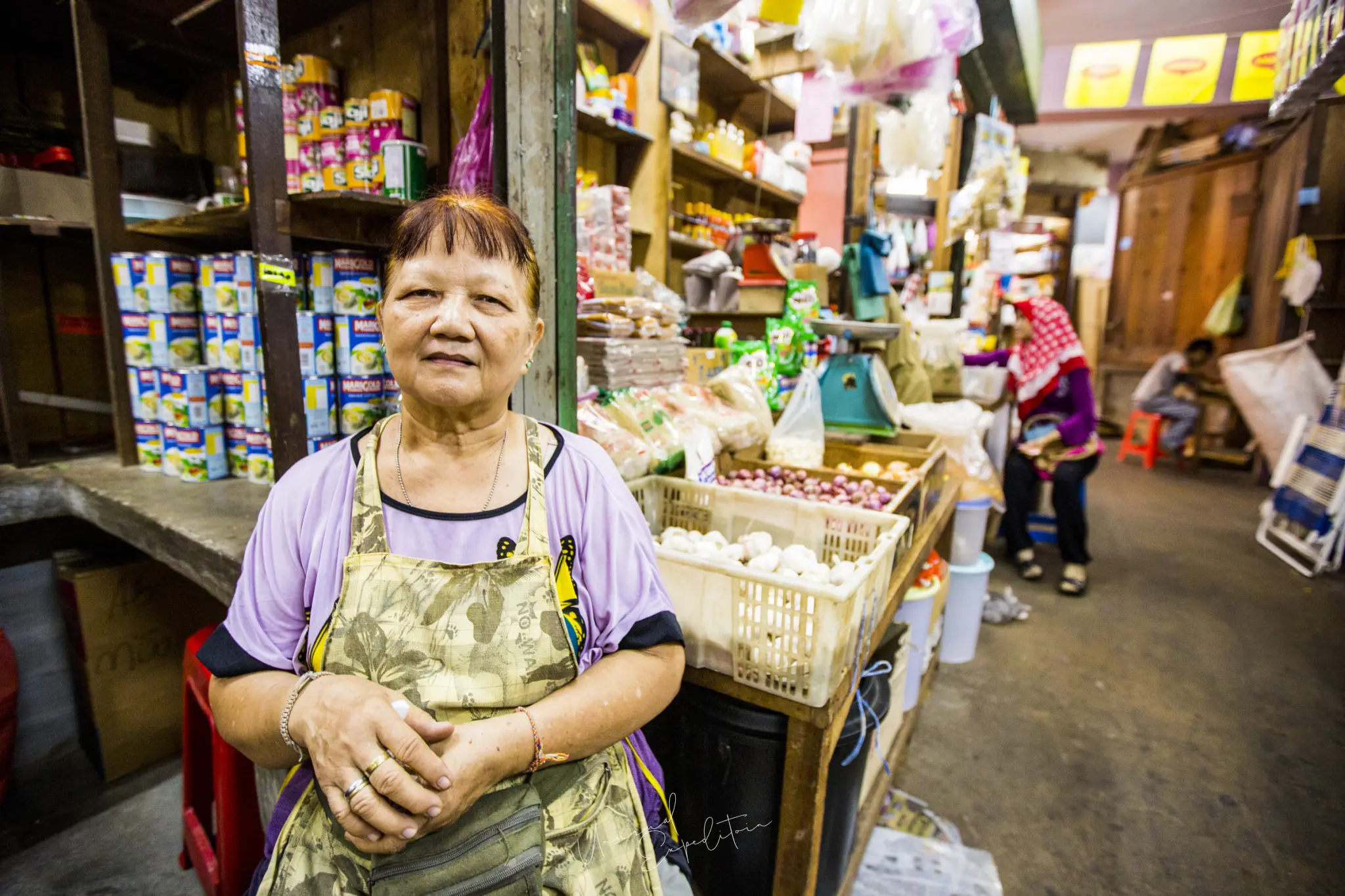
Kit and settings
| Subject | Lens | Settings to start from |
|---|---|---|
| Dome and gallery | 16-35mm | Small aperture, level horizon |
| Produce from above | 24-70mm | Even skylight, medium aperture |
| Narrow aisles | 24-70mm or 35mm | Wide aperture, moderate ISO |
| Stallholder portraits | 35mm or 50mm | Wide aperture, close focus |
A small bag and one camera body are better here than a full kit; aisles are tight and people move in them.
What you will see by subject
Fruit and vegetables are the staples: bananas, papayas, leafy greens, chillies, coconuts and bundles of herbs. Dry goods stalls sell sacks of rice, pulses and ground spice, together with biscuits and kitchen goods. Cooked food and snacks appear in places, and the colours of the kuih, the small sweet cakes of Malay cooking, are worth a close frame. Dried fish and salted fish are sold by weight and are best photographed in side light, where the surface glistens. If you are curious about what an item is, ask: the answer usually starts a conversation and a picture.
Timing your visit
Markets are busiest in the early part of the day, when stock is fresh and customers are many. That is also when the energy is best and the light from skylights is brightest. Late in the morning, the crowd thins and you can work more slowly. Pick one end of the market to start with, and walk through it twice: once with a wide lens for the scene and once with a short telephoto or a prime for faces and detail. If rain sets in during the monsoon, the market is one of the best places to be, since you are under a roof.
Getting good pictures without disturbing trade
Stand where you will not block a customer, never place your bag on a counter and do not photograph stock you are not interested in buying. Keep your lens cap in your pocket, not in your hand, so you are ready for a short moment. Keep a light touch on the flash button: it spoils the colour and startles people. Show appreciation: a nod, a thank-you ("terima kasih") and a small purchase mean you will be welcome back.
Manners and safety
Markets are working places. Greet people before photographing them, leave stalls as you found them and carry cash for small purchases. Many stallholders are Muslim, so cover your shoulders and knees. Keep children out of your photographs unless a parent invites you. Leave a gap in the aisle for people carrying heavy trays, and keep a hand on your bag in the crowd.
How it fits with the rest of Kelantan
A morning at the market combines well with an afternoon at the coast: see Kelantan fishermen and boats. For something quieter, kampung life in Kelantan shows the villages that supply the market.
If I have a morning in a Malaysian market I do not take the long lens. I take one wide zoom, one smile and enough patience to let the first five minutes go to waste.
Joseph Mak, tour leader, Unusual Expedition
Come and photograph the market with us
We offer Kelantan as a private trip on request, planned around you. We arrange the logistics and can add a photographer or coaching at extra cost, and a private trip can cost less than a group tour. Ask two months ahead. See private tours or the Malaysia photography tours page.
Ask us about Siti Khadijah market
Kelantan photography tours
The next Kelantan departure is announced on the Kelantan photography tours page, with previous expeditions and all the planning guides.
Explore Kelantan in depth
- Places to Visit in Kelantan: A Photography Guide to Malaysia's East CoastMalaysia
- Wayang Kulit in Kelantan: Shadow Puppets, the Dalang and How to Photograph ThemMalaysia
- Wau Bulan in Kelantan: Photographing Malaysia's Moon Kite and Its MakersMalaysia
- Kelantan Fishing Boats and Fishermen: Photographing the East CoastMalaysia
- Kelantan Batik and Gasing: Photographing Two Living CraftsMalaysia
- Kampung Life in Kelantan: Village Portraits, Roosters and Bamboo GrovesMalaysia
- Best Time to Visit Kelantan for Photography: Monsoon, Dry Months and DawnMalaysia
Upcoming Photo Tours
- Egypt Photo Tour – EgyptEgypt 12 Dec 2026 To 20 Dec 2026
- Inner Mongolia Winter Owl Photo Tour – ChinaChina 01 Jan 2027 To 04 Jan 2027
- Inner Mongolia Winter Photo Tour – ChinaChina 05 Jan 2027 To 11 Jan 2027
- Mekong And Central Highland Vietnam Photo Tour - VietnamVietnam 16 Jan 2027 To 24 Jan 2027