
Wau Bulan in Kelantan: Photographing Malaysia's Moon Kite and Its Makers
Wau bulan Kelantan for photographers: how the moon kite is made, where makers work, how to shoot it in flight and what lens to bring.
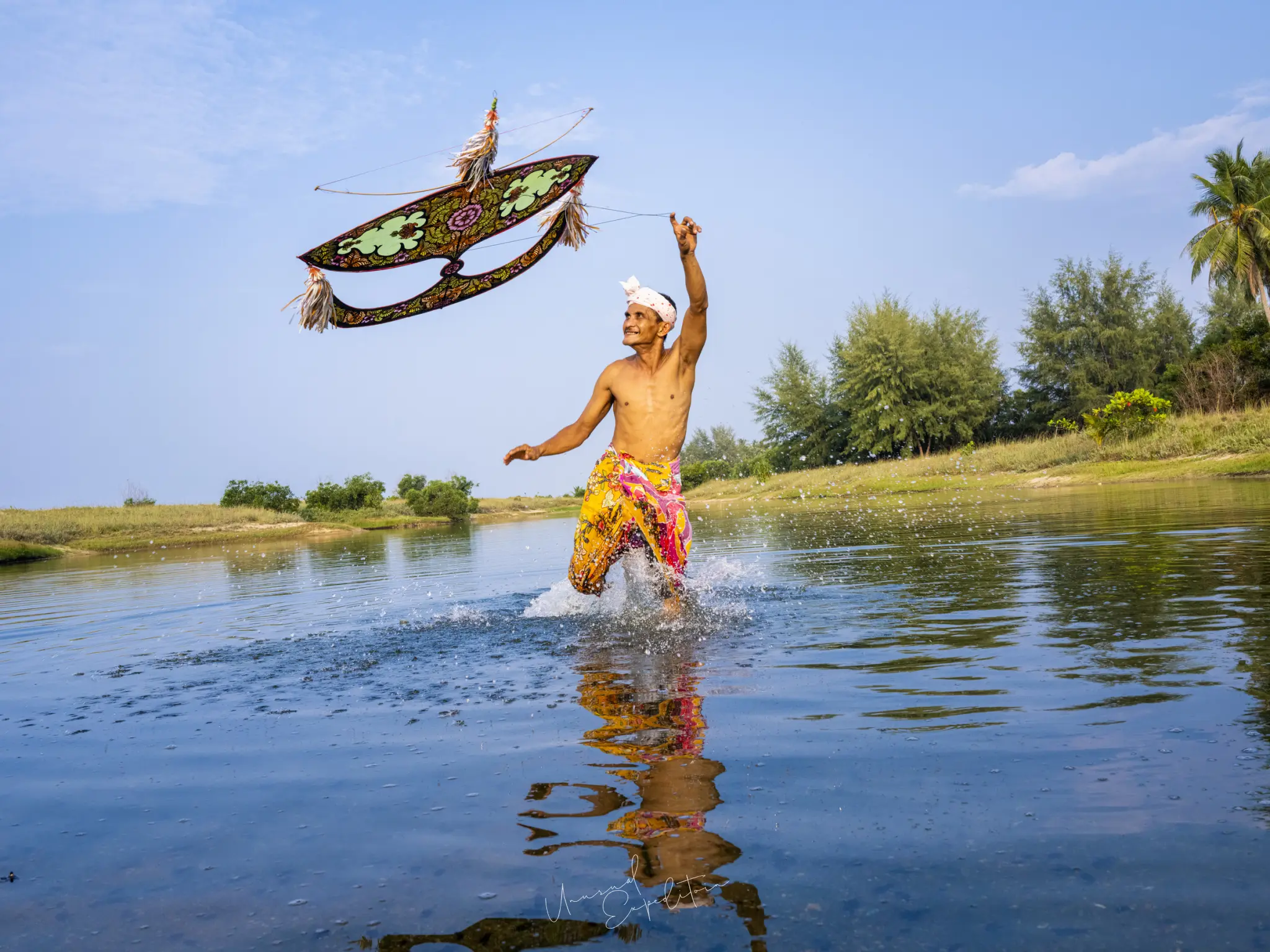
Wau bulan Kelantan, the moon kite, is the great traditional kite of Malaysia's east coast: a bamboo-framed kite, taller than a man, covered in cut paper and named for the crescent shape of its lower section. It is both a craft and a sport, and it gives a photographer three subjects in one place: the maker's hands, the finished kite and the flight. Below: how to find makers, where to shoot and what to bring.
It sits within our Kelantan photography guide and the wider Malaysia photography tour guide. The photographs are our own, taken on our trips to Kelantan, and we hold the rights to them.
What a wau bulan is
According to Wikipedia's entry on the kite, the wau bulan is the largest of Malaysia's traditional kites, typically around two and a half metres across and three and a half metres long, with a rounded top and a lower crescent that gives it its name. The surface carries floral patterns in layered coloured paper, and a taut bowed string, the dengung, hums in the wind. Kites of this size are made for display as much as for flying, and they are often seen in craft shops and cultural events across Kelantan.
The kite is closely tied to the east coast. AFP and Gulf News have both reported that only a few craftsmen still hold the full traditional knowledge, which is a good reason to spend time with the ones who do.
Where to find a kite maker
Makers work from open-sided sheds and house workshops, often in villages outside Kota Bharu. The easiest way to meet one is through a local guide, a cultural centre or a handicraft shop that will take you to the workshop behind it. Go with an invitation if you can: a maker who expects you will have materials laid out and will explain what he is doing. Arriving unannounced is possible, but the better pictures come from a planned visit.
Photographing the maker at work
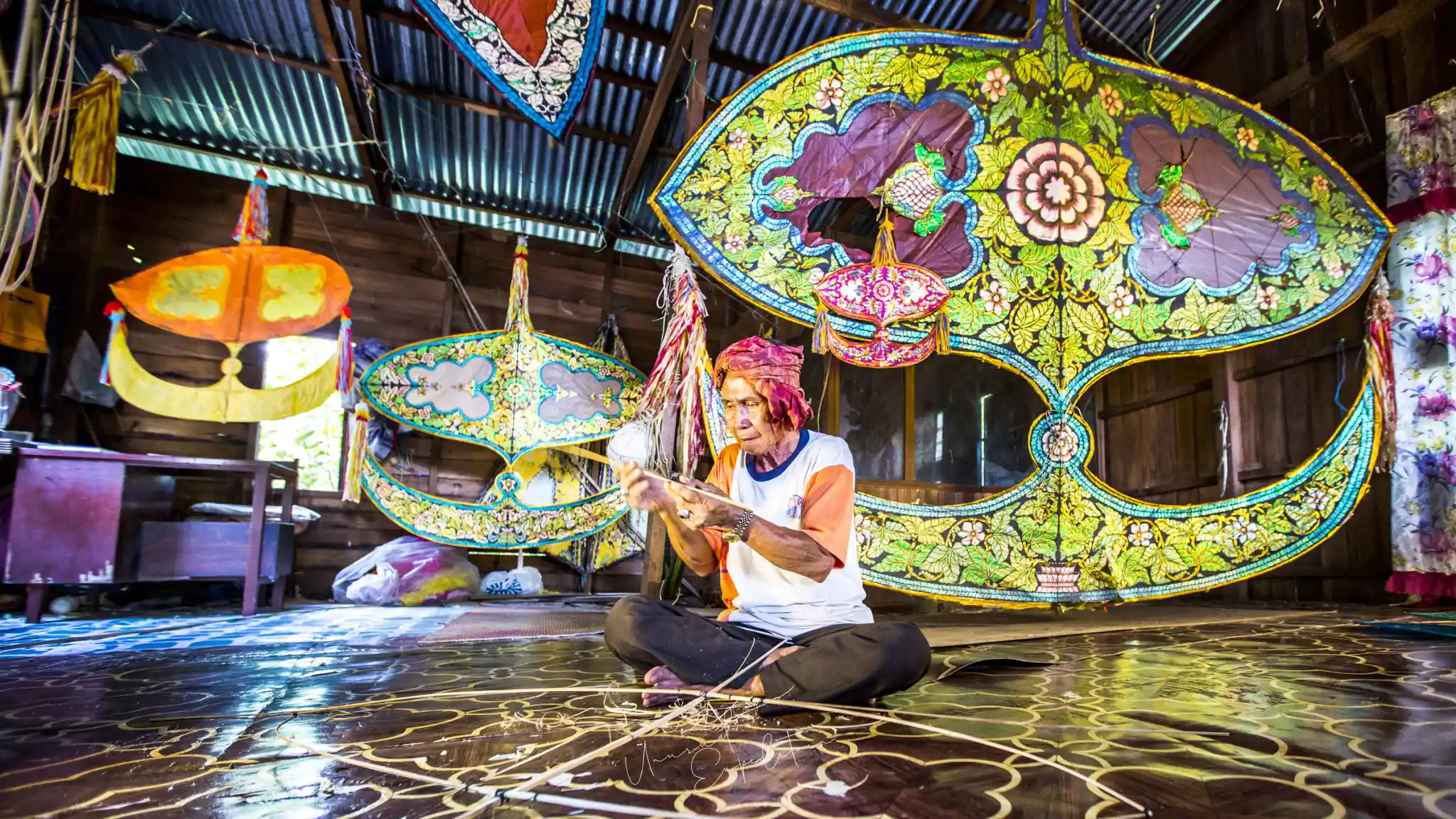
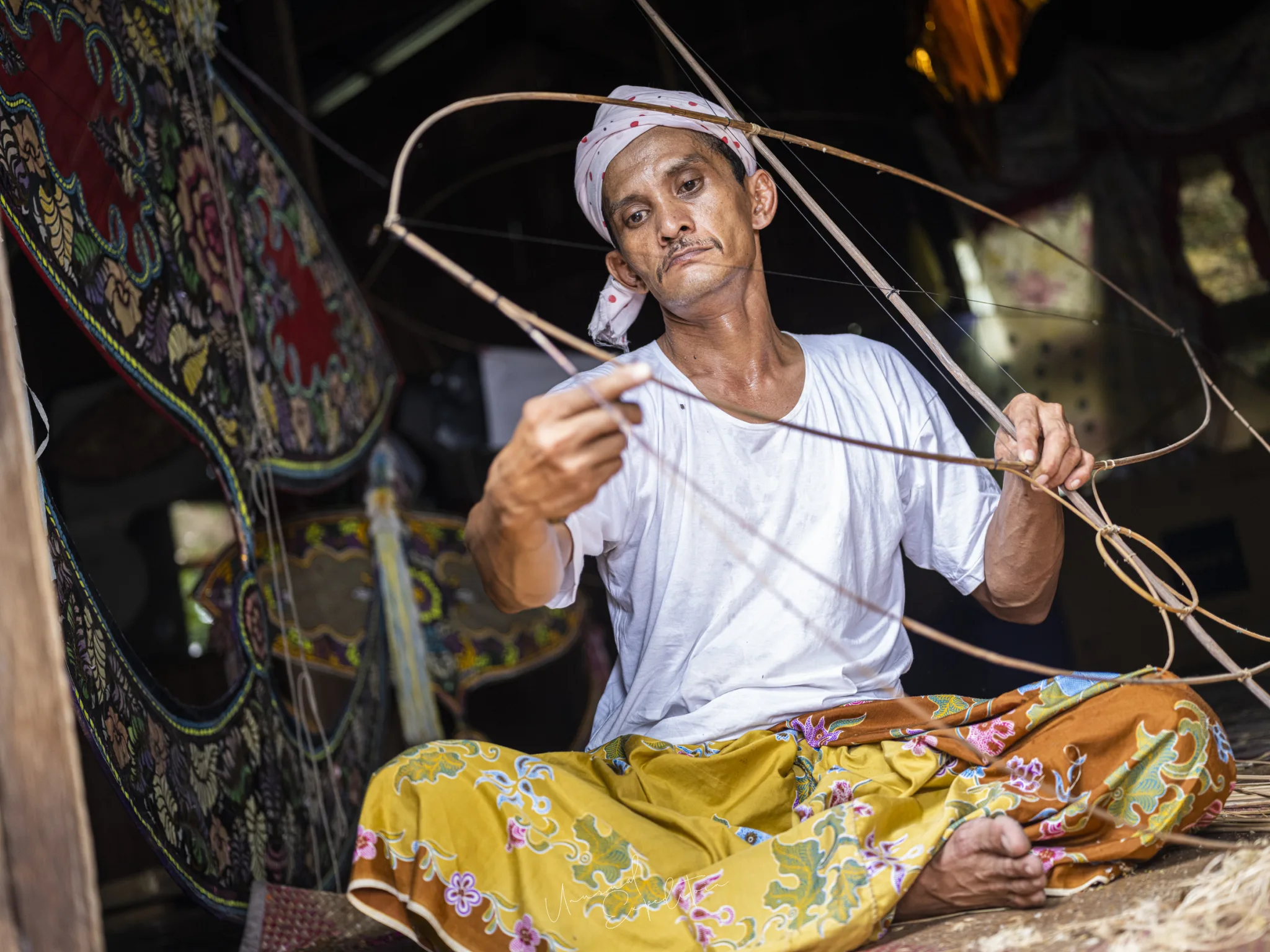
Start with the hands. A maker splits and shaves bamboo into slender ribs, bends them to a curve, ties the joints and pastes on the paper design. Move close with a 24-70mm and show the knife, the strip of cane and the grain of the wood. Natural light from the side of an open shed is flattering; avoid pointing the lens into bright sky.
For portraits, keep the kite in frame. A man sitting beside a finished wau, or framed through its ribs, tells the story of the craft without a caption. Shoot at eye level and give the maker a moment to relax before you press the shutter.
The finished kite
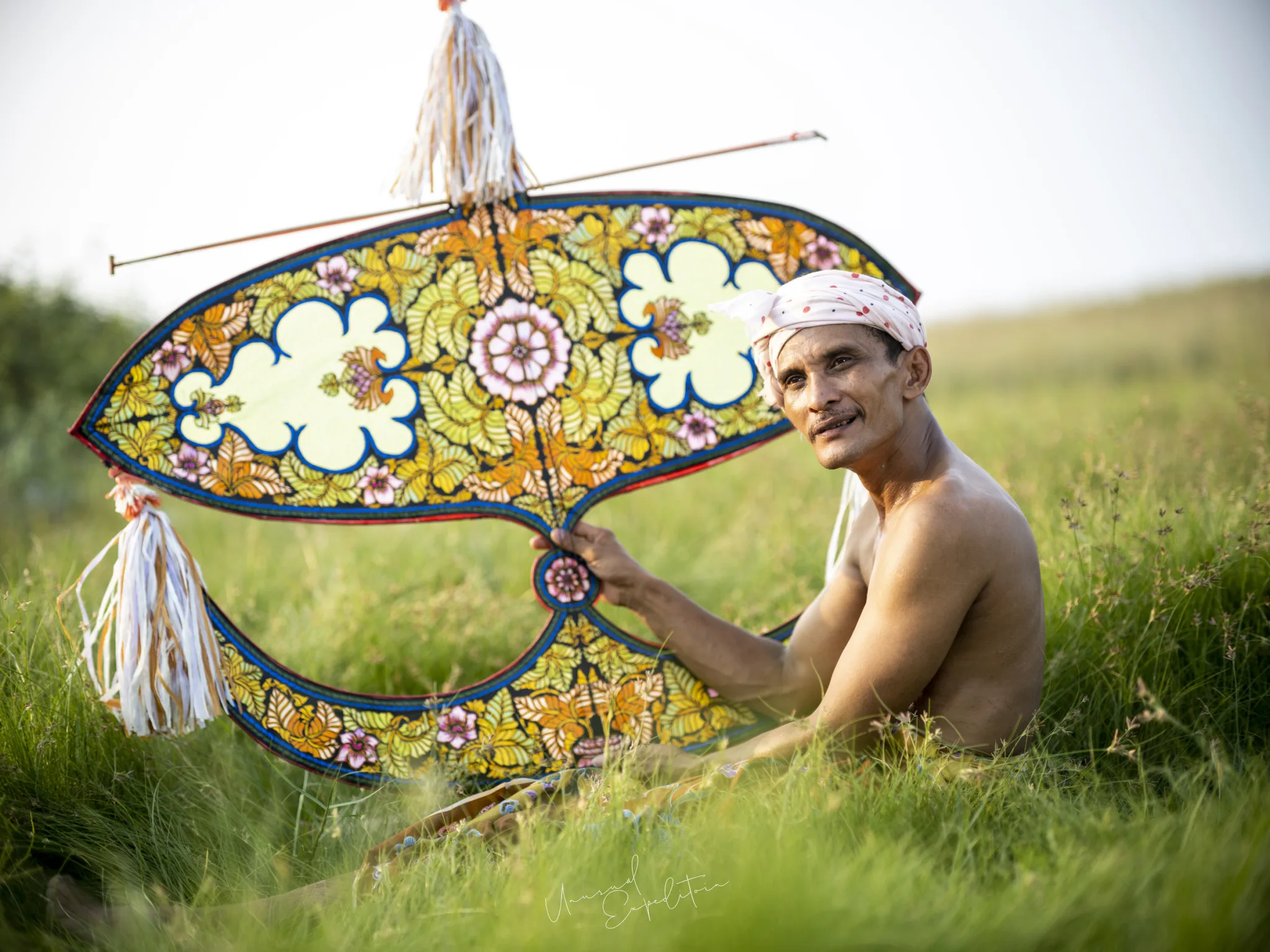
A completed wau is vivid but fragile, and shooting it well is mostly about the background. Against the sky it flattens into a pattern; against a green field or a wooden wall it takes on depth. A polarising filter cleans the sky and enriches the colour of the paper. Hold the kite up in open shade where the light is even, and keep the frame clear of clutter.
Kite in flight over water
The most striking photographs we have taken of the wau are over still water. The kite hangs in the air above its holder and the reflection doubles the pattern. The man who throws it works in a sarong and bare feet, so the frame also records how the kite is traditionally handled. Use a 70-200mm for the kite in flight and a 24-70mm when the holder and the reflection both matter. A fast shutter freezes the paper; a slower one catches the fabric of the sarong moving.
Wau bulan, wau kucing and the other kites
Kelantan has more than one traditional kite. The wau bulan is the moon kite described above, and local reports also mention the wau kucing, the cat kite, and a quail-shaped design. Each has its own outline, and each gives you a different silhouette against the sky. Ask the maker to name the pattern on his kite; the answer is often a flower or a vine with a story, and a caption in your notes will help later when you sort and title your pictures.
Do not confuse a workshop display kite with one made to fly. Display kites are large and delicate and are kept indoors; flying kites are smaller and tougher. If you want flight pictures, say so when you book the visit.
What to bring
| Kit | Why it helps |
|---|---|
| 24-70mm | Workshop, hands and portraits |
| 70-200mm | Kite in the air and reflections |
| Polariser | Cleaner sky, richer paper colour |
| Wide zoom | Huge kites in small sheds |
Choose clear, breezy afternoons for flying; a calm day gives the best reflections but a kite that will not stay up.
Seasons, festivals and monsoon
Kelantan has kite festivals, and the name "pesta wau" appears in local listings. We do not give dates; check with local tourism offices. For general weather, the north-east monsoon brings the heaviest rain in November and December on the east coast, according to MetMalaysia, so the dry months are safer for flying and for photographing outdoors. Our best time to visit Kelantan guide has the detail, and Kelantan batik and gasing covers two more crafts worth a visit while you are there.
Respect, permission and payment
A maker's time is his living. Offer to buy a small kite, or pay a fair fee for a demonstration, and do not photograph a customer's order without asking. Ask before you handle any frame or paper. Be careful with children who gather around a workshop: we keep them out of our frames, and we suggest you do too.
I always buy the smallest kite on the shelf before I raise my camera. The maker relaxes, the conversation starts, and the pictures that follow are of a man at work, not a man being photographed.
Joseph Mak, tour leader, Unusual Expedition
Come and photograph the wau with us
Kelantan is a private trip on request with us. We plan around your dates and pace, arrange all the logistics, and can add a photographer or photography coaching at extra cost. Ask at least two months ahead; last-minute can be arranged. Start with private tours or see the Malaysia photography tours page.
Ask us about wau bulan in Kelantan
Kelantan photography tours
The next Kelantan departure is announced on the Kelantan photography tours page, with previous expeditions and all the planning guides.
Explore Kelantan in depth
- Places to Visit in Kelantan: A Photography Guide to Malaysia's East CoastMalaysia
- Wayang Kulit in Kelantan: Shadow Puppets, the Dalang and How to Photograph ThemMalaysia
- Siti Khadijah Market, Kota Bharu: A Photographer's Guide to the DomeMalaysia
- Kelantan Fishing Boats and Fishermen: Photographing the East CoastMalaysia
- Kelantan Batik and Gasing: Photographing Two Living CraftsMalaysia
- Kampung Life in Kelantan: Village Portraits, Roosters and Bamboo GrovesMalaysia
- Best Time to Visit Kelantan for Photography: Monsoon, Dry Months and DawnMalaysia
Upcoming Photo Tours
- Egypt Photo Tour – EgyptEgypt 12 Dec 2026 To 20 Dec 2026
- Inner Mongolia Winter Owl Photo Tour – ChinaChina 01 Jan 2027 To 04 Jan 2027
- Inner Mongolia Winter Photo Tour – ChinaChina 05 Jan 2027 To 11 Jan 2027
- Mekong And Central Highland Vietnam Photo Tour - VietnamVietnam 16 Jan 2027 To 24 Jan 2027