
Tuscany Photography Tours: The Val d'Orcia, Crete Senesi, Abbeys and Hill Towns
Tuscany photography tours: Val d'Orcia mist, Crete Senesi cypress roads, San Galgano, Pienza and Florence, with light and lens notes.
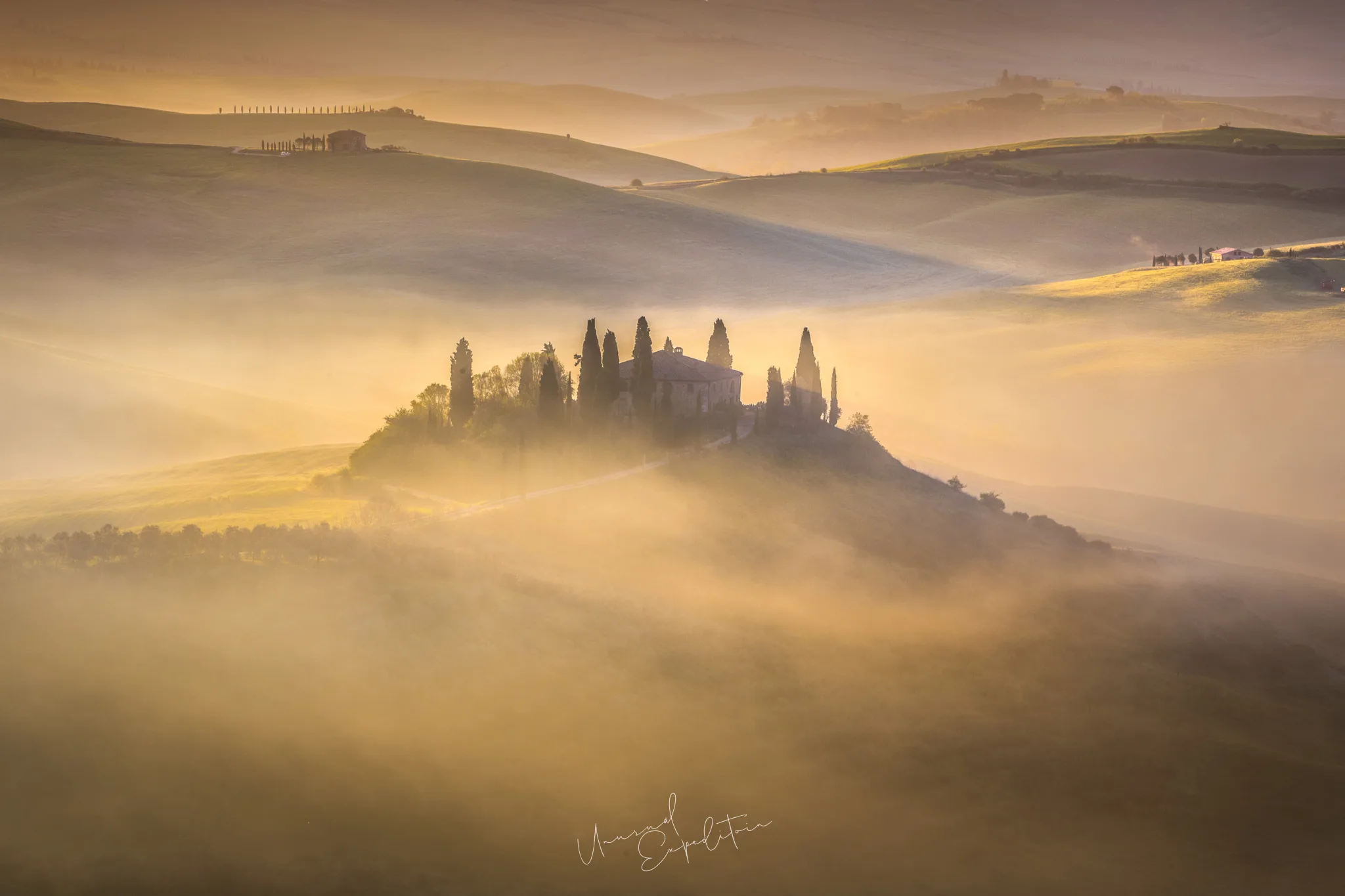
Tuscany photography tours are built around the soft hills south of Siena: the Val d'Orcia with its cypress roads and lone farmhouses, the grey clay ridges of the Crete Senesi, the roofless abbey of San Galgano, the Renaissance town of Pienza and, at the end, Florence on the Arno at blue hour. Spring brings green wheat and morning mist, early summer turns the same fields gold. Light, not distance, decides the day, and the best frames come at the edges of it.
This is the area guide for Tuscany inside our Italy photography tour guide, which covers entry, money and flights from Singapore for the whole country. The photographs in this guide are our own, taken on our trips to Tuscany; we hold the rights to them, and the notes come from knowing these places first hand.
Tuscany photography tours: what we photograph
A Tuscany photography trip is mostly landscape work, with towns and abbeys woven in. The core is the southern part of the province of Siena, where the hills are open, the farms sit on the crests and the roads curl between them lined with cypresses. Mornings are for mist in the valleys and long light across the slopes; middle of the day goes to stone towns, cloisters and church interiors where the hard sun does not matter; evenings go back out to a chapel, a cypress line or a field of wheat facing the sunset. The scenes are famous because they work, and the challenge is finding your own frame at places thousands of photographers have stood. Our Tuscany landscape photos article shows the kinds of pictures the region gives, and how each was made.
Val d'Orcia: the valley everyone pictures
The Val d'Orcia, between San Quirico d'Orcia, Pienza and the slopes of Monte Amiata, is the Tuscany of postcards. UNESCO inscribed it as a cultural landscape in 2004, describing farmland reshaped in the Renaissance under Siena and painted by the Sienese School. For a photographer that means a valley where almost every hill has a farmhouse, a line of cypresses or a white road placed as if for a painting. The cluster of cypresses near San Quirico, the chapel of the Madonna di Vitaleta and the farm on the knoll called Belvedere are the best known. Our Val d'Orcia viewpoints article goes through where to stand for each and what light suits it.
Crete Senesi: clay hills and cypress roads
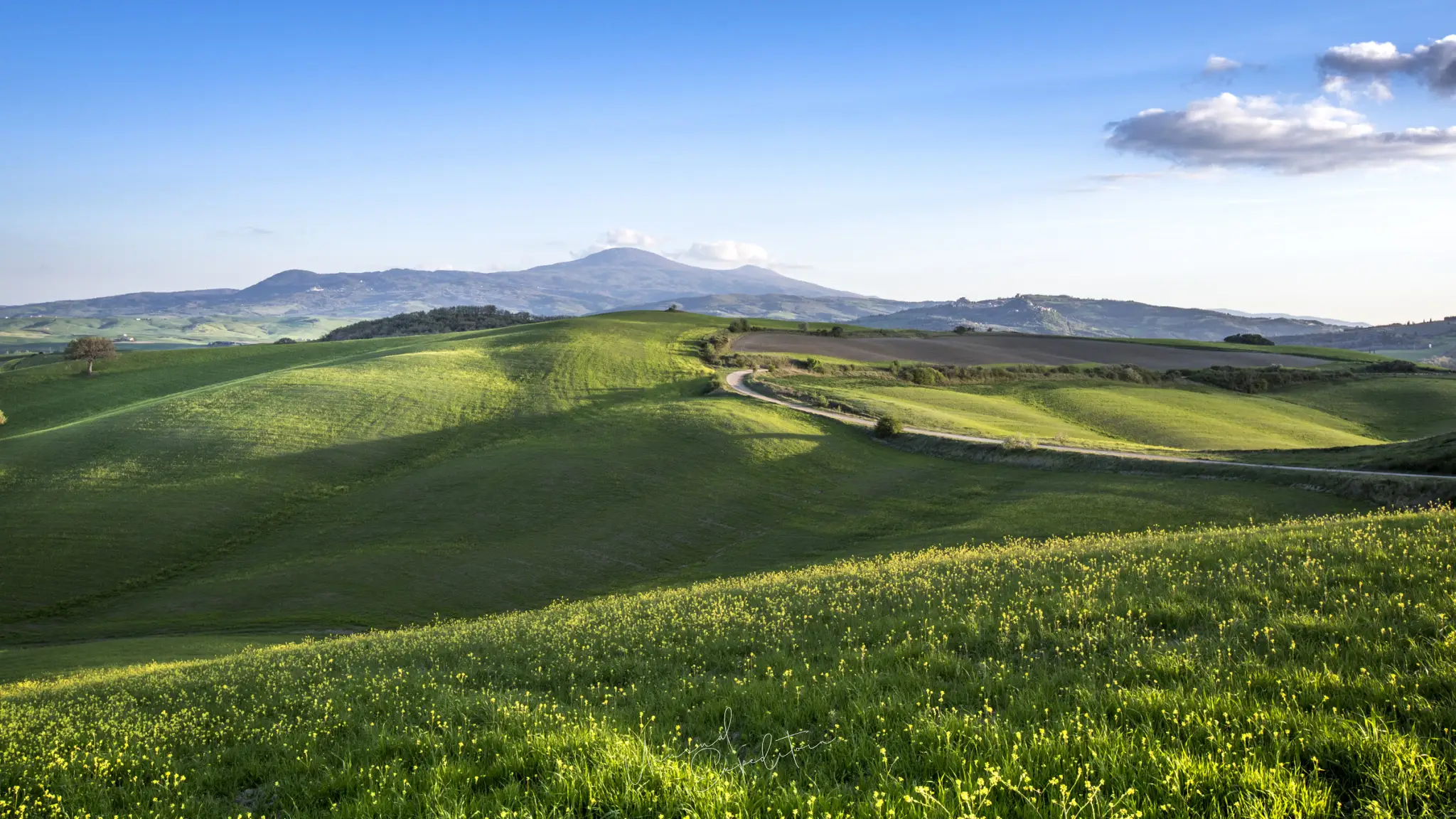
North of the Val d'Orcia, around Asciano, the land changes. The Crete Senesi are hills of grey clay, sea sediment millions of years old according to Visit Tuscany, ploughed and sown in long curves with almost no trees. In spring the wheat on them is a sheet of green; after the harvest they turn pale and bare, and the shapes stand out even more. This is where the famous winding cypress road to the Baccoleno farmhouse lies, the scene at the top of our cypress road Tuscany article. Long lenses are the tool here: a 70-200mm or a 100-400mm pulls the folds of the hills together into patterns of light and shadow.
Abbeys: San Galgano and Monte Oliveto Maggiore
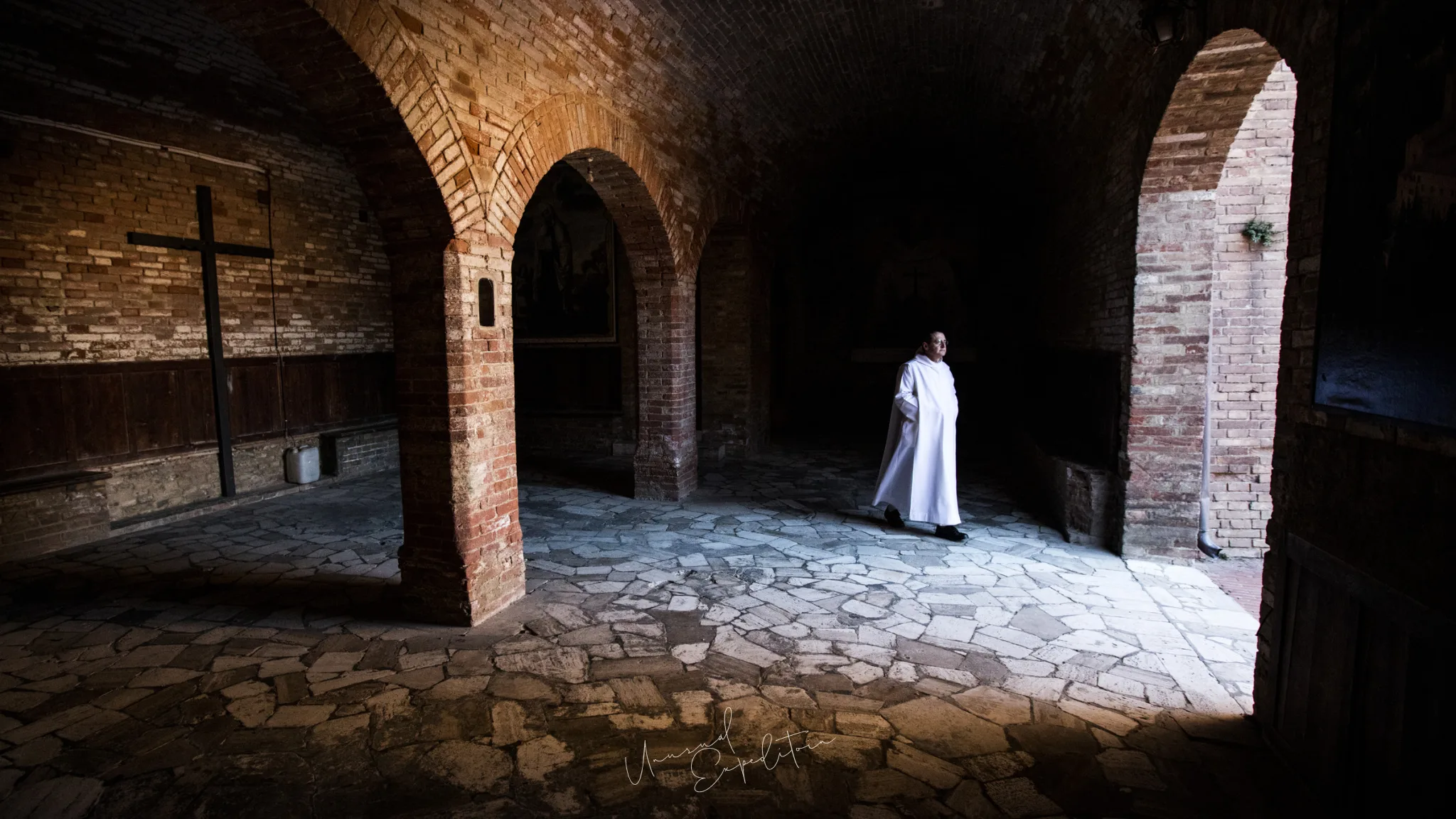
Two abbeys anchor the quieter side of a Tuscany trip. San Galgano, in the Val di Merse west of Siena, is a Cistercian church whose roof is long gone, so the nave is open to the sky and the rose window frames clouds. It photographs well inside with a wide lens and outside at sunset or under the moon; the San Galgano abbey article covers it in detail. Monte Oliveto Maggiore, in the Crete Senesi, is still a working monastery of the Olivetan Benedictines, who wear white. Its brick courtyards and cloisters, with a cycle of frescoes of the life of Saint Benedict by Luca Signorelli and Il Sodoma, are a place for quiet, respectful pictures.
Pienza, Siena and the hill towns
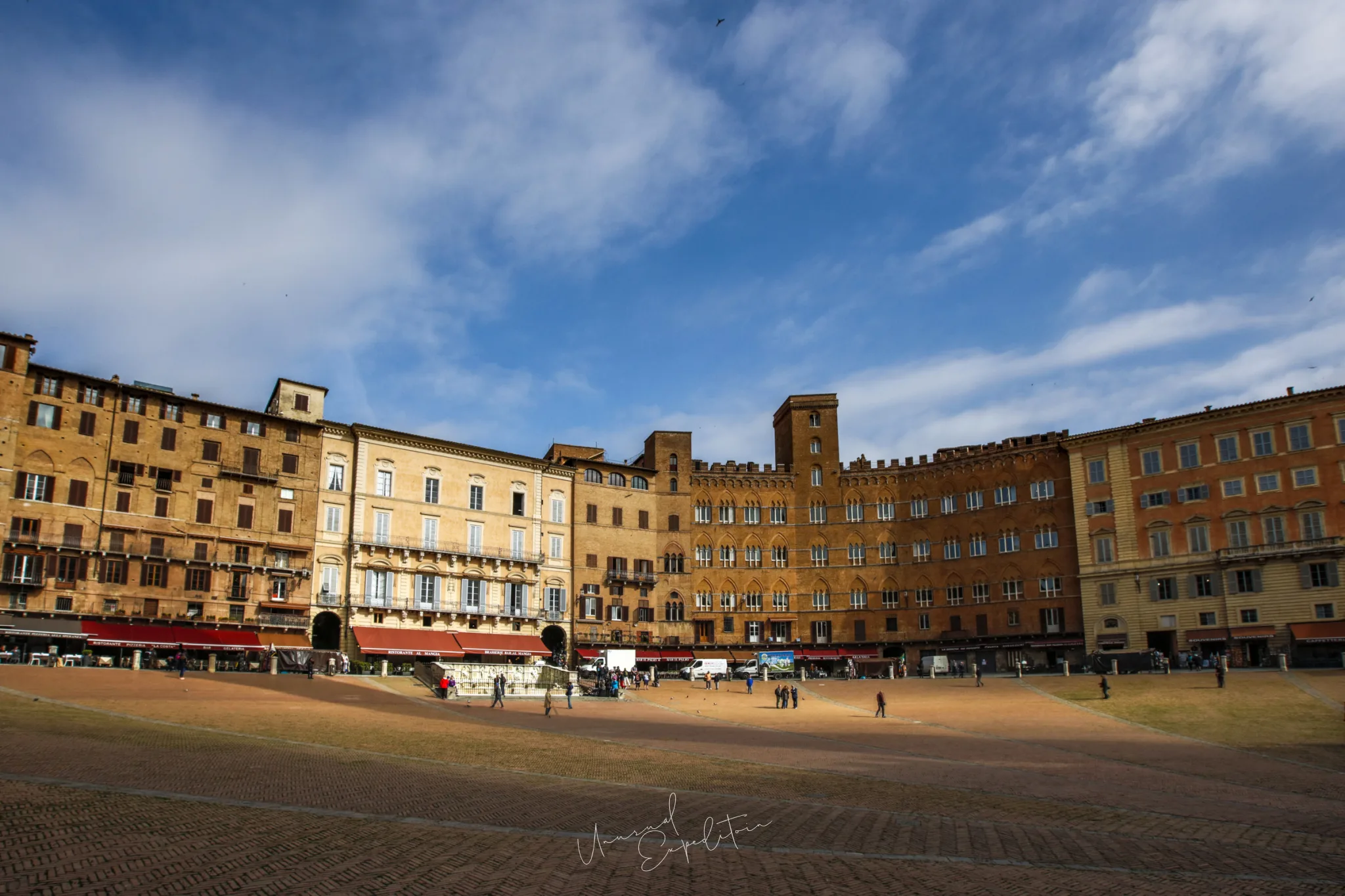
The towns give the landscape its scale. Pienza sits on a ridge above the Val d'Orcia and was rebuilt by Pope Pius II as a model Renaissance town; UNESCO listed its centre in 1996. From the valley floor it reads as one long line of walls and towers, and inside it is quiet lanes and a cathedral bell tower. Our Pienza, Italy article covers both views. Siena is bigger and busier, built around the shell-shaped Piazza del Campo and the Torre del Mangia. Arrive in the Campo early, before the cafes fill the edges, and use a wide lens low to the brick paving to show the curve of the square.
Florence at blue hour
Florence is a city trip of its own, but it fits at either end of a Tuscany photography tour, since most flights arrive there or in Pisa. The river Arno is the reason to bring a tripod: the Ponte Vecchio with its shops on the bridge, the embankment lamps and the reflections on still water all come together in the blue light after sunset. In the centre the challenge is crowds, so the best pictures come early or late, or from above. See best photo spots in Florence for the places we use.
Best photo locations Tuscany: a quick table
| Place | Subject | Best light | Lens |
|---|---|---|---|
| Belvedere, San Quirico d'Orcia | Farmhouse on a knoll above mist | Dawn in spring | 70-200mm |
| Cypresses of San Quirico | Round cluster of cypresses on a hill | Morning or late afternoon | 24-70mm |
| Vitaleta chapel | Small chapel between cypresses | Sunset and blue hour | 24-70mm |
| Crete Senesi near Asciano | Clay hills, cypress roads | Late afternoon, side light | 100-400mm |
| San Galgano | Roofless abbey nave | Late afternoon, night | 16-35mm |
| Pienza | Town on its ridge, lanes | Morning | 70-200mm, 24-70mm |
| Florence, the Arno | Ponte Vecchio and reflections | Blue hour | 24-70mm on a tripod |
The pattern is the same everywhere in the region: open country at the edges of the day, stone and brick when the sun is high.
When to go
Spring is the classic season. Through April and May the wheat is green, rapeseed and wild flowers mark the field edges, and cold clear nights give misty mornings in the valleys. In June the wheat turns gold and the first round bales appear after the harvest; by later summer the fields are cut and ploughed, and the colour goes out of the hills until autumn mist returns. The Tuscany in spring article compares the months in detail.
"In Tuscany the first morning is always the same. Everyone wants the Belvedere in the mist, and we get it. After that I ask people to look at the hills without the famous farmhouse. The patterns of light on the bare slopes are often the better pictures."
Joseph Mak, tour leader, Unusual Expedition
Photography etiquette on private land
Nearly every famous scene in the Val d'Orcia and the Crete Senesi is a working farm or a private home. The Belvedere farmhouse and the cypress-lined drives are private property, and the views are taken from the public road or the verge beside it. Do not walk up farm tracks, through standing wheat or past gates; a trampled line through a field shows in everyone's photographs for the rest of the season. Park only where a car is fully off the road, and keep drones in the bag unless you have checked the Italian rules and the landowner agrees.
Explore Tuscany in depth
- Tuscany landscape photos
- Val d'Orcia viewpoints
- Cypress road Tuscany
- Tuscany in spring
- San Galgano abbey
- Pienza, Italy
- Best photo spots in Florence
For the rest of the country, start from the Italy photography tour guide, and for the coast to the north-west, the Cinque Terre photography tour guide.
Photograph Tuscany with us
We run Tuscany as a private trip on request, for individuals, couples, families and photographers who want to work at their own pace. We arrange the logistics around your plans, and because no tour leader travels with you, the cost can be lower than a group tour; a photographer or photography coaching can be added at extra cost. Ask at least two months ahead if you can, though we can often arrange shorter notice. See private tours and our Italy photography tours page.
Tuscany photography tours
The next Tuscany departure is announced on the Tuscany photography tours page, with previous expeditions and all the planning guides.
Explore Tuscany in depth
- Val d'Orcia Viewpoints: Belvedere, the Cypresses, Vitaleta and the White RoadsItaly
- Tuscany Landscape Photos: Lone Trees, Farmhouses and Hills in Side LightItaly
- Tuscany in Spring: Green Wheat, Mist and When the Hills Turn GoldItaly
- San Galgano Abbey: Photographing Tuscany's Roofless Abbey and MontesiepiItaly
- Pienza, Italy: Photographing the Renaissance Town Above the Val d'OrciaItaly
- Cypress Road Tuscany: Photographing the Baccoleno Curve and Cypress AvenuesItaly
- Best Photo Spots in Florence: The Arno, Ponte Vecchio and Views From AboveItaly
Upcoming Photo Tours
- Egypt Photo Tour – EgyptEgypt 12 Dec 2026 To 20 Dec 2026
- Inner Mongolia Winter Owl Photo Tour – ChinaChina 01 Jan 2027 To 04 Jan 2027
- Inner Mongolia Winter Photo Tour – ChinaChina 05 Jan 2027 To 11 Jan 2027
- Mekong And Central Highland Vietnam Photo Tour - VietnamVietnam 16 Jan 2027 To 24 Jan 2027