
Xinjiang Ghost City: Photographing the Yardangs at Sunset
Xinjiang ghost city: what the yardangs are, Urho near Karamay, how to photograph the ghost town at sunset, and when to go.
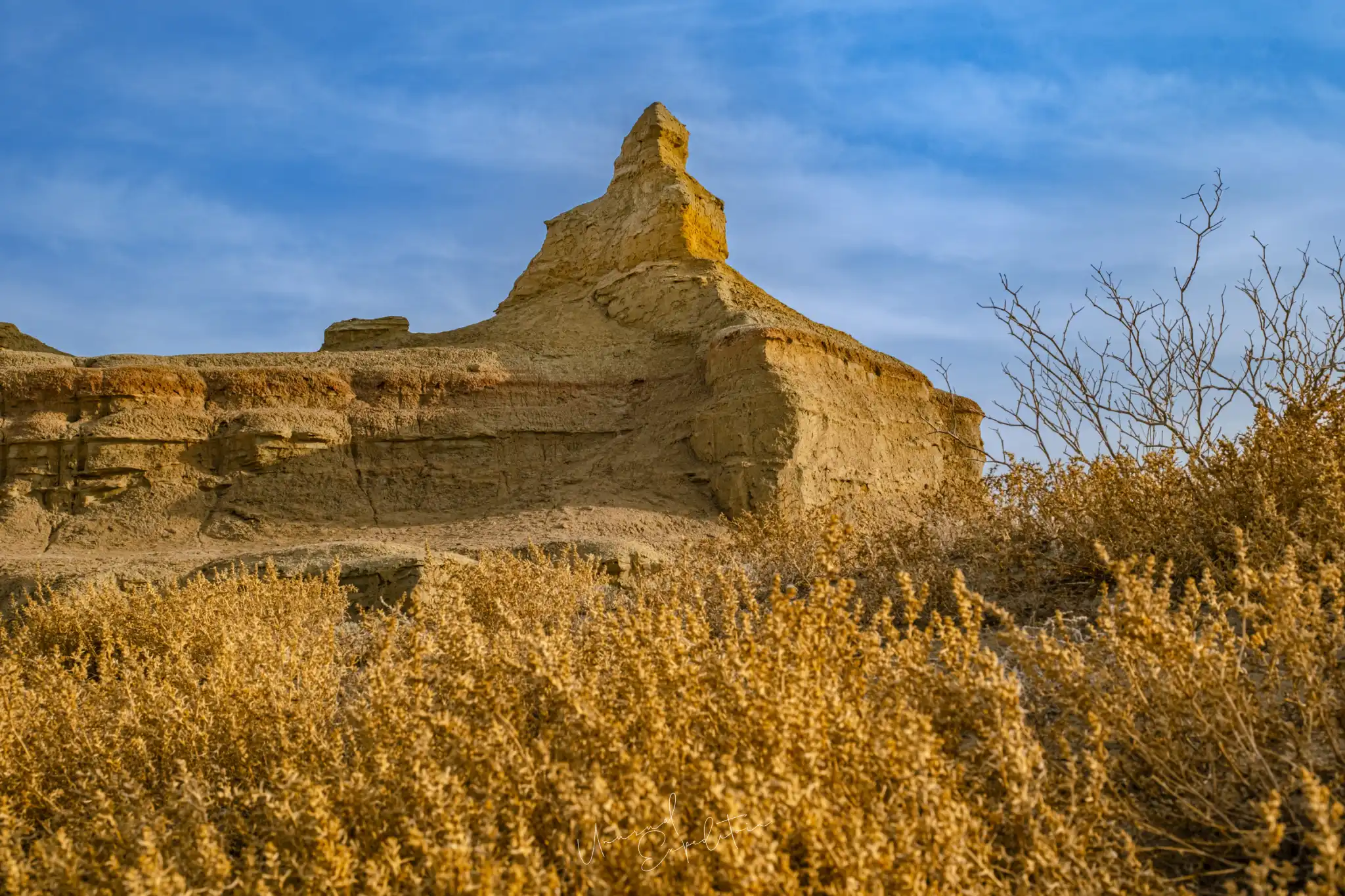
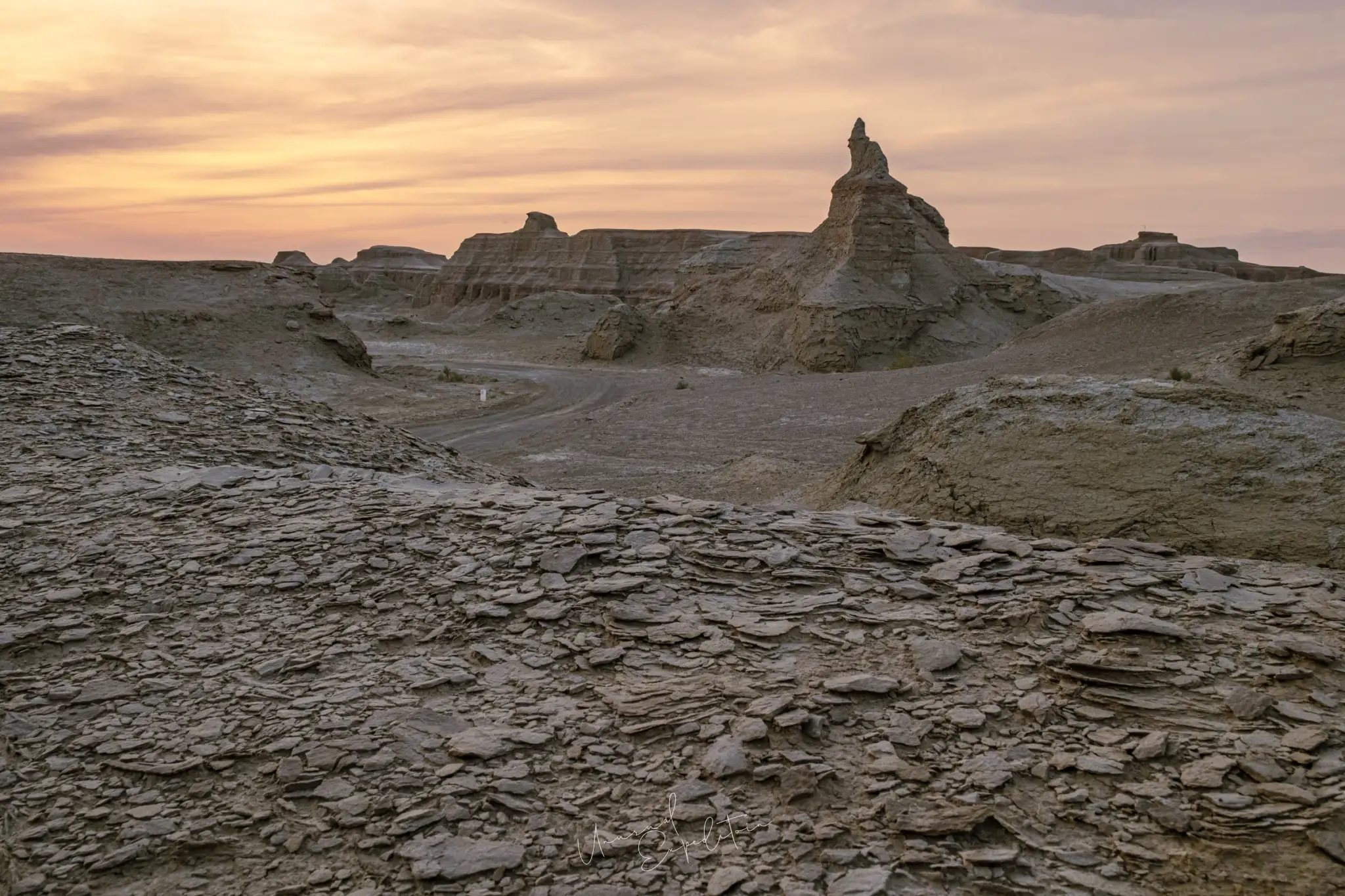
The Xinjiang ghost city is a landscape of yardangs: ridges, towers and walls of soft clay and sandstone carved by the wind into shapes that look like ruined castles. The best known is Urho, near Karamay on the edge of the Junggar Basin, but northern Xinjiang has several fields of these formations. They are best photographed in the last hour before sunset, when low light picks out every layer and the sky turns pink behind the towers.
The ghost city is one of the stranger stops in our Xinjiang photography tour guide, a dry, silent contrast to the green valleys and the herds of the Ili region.
Xinjiang ghost city: what a yardang is
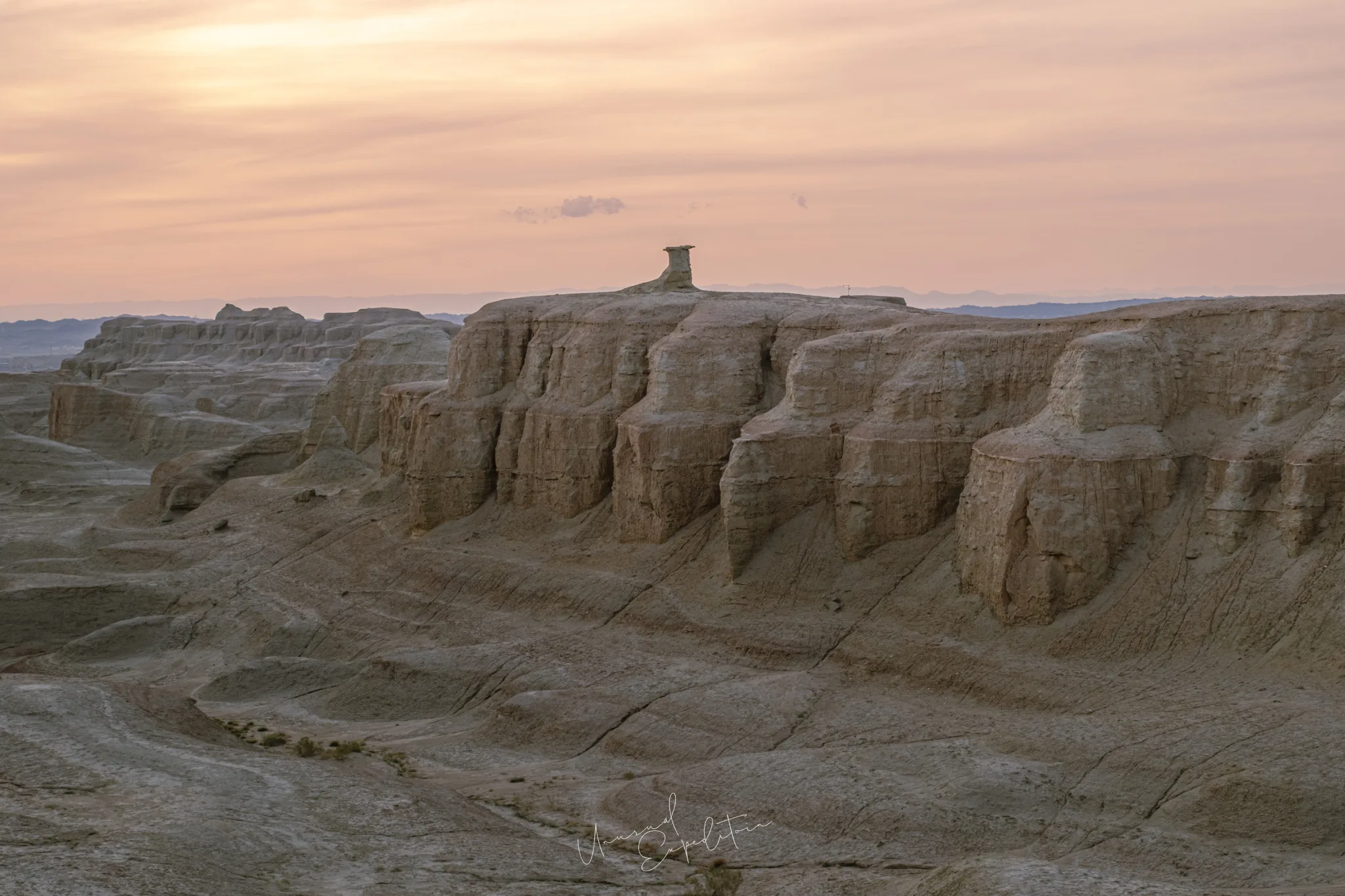
A Xinjiang ghost city is made of yardangs, long ridges of compacted lake and river sediment that the wind has scoured into streamlined shapes over thousands of years. Harder layers survive as caps and ledges, softer layers wear back underneath them, and the result looks like terraces, battlements and lone spires standing on a bare clay floor. The name comes from the sound: when strong wind blows through the gaps at night it moans and whistles, and local people called the place a city of ghosts or devils. There are no buildings and no people living there, only the formations. The colour of the clay shifts through the day from pale grey at noon to warm gold in the late afternoon, which is why photographers time their visit for the end of the day and stay until the light goes.
Xinjiang ghost city Urho and the other ghost towns
Xinjiang ghost city Urho, also written Wuerhe, is the famous one: a protected scenic area near the oil city of Karamay, signposted in English as the World Ghost Town. China Daily describes the whole yardang area as covering about 120 square kilometres, with a central scenic area of about 15 square kilometres, and visitors tour it on marked roads and paths. Smaller yardang fields lie elsewhere in the north and in the deserts of the south, and some see far fewer visitors. The yardangs in these photographs come from our own June trip in northern Xinjiang, and we choose the field each season with our local partners, by access and light. If you search for a Xinjiang ghost town devil city, you will meet both names for the same kind of landscape.
Ghost city Xinjiang China, not an empty new town
Ghost city Xinjiang China searches often turn up a different meaning. In news writing about China, a ghost city is a new district with many empty apartments, and that is not what this article is about. The ghost cities of Xinjiang are natural landforms, far older than any town, and the word ghost refers to the wind and the eerie silence among the towers. When you plan, use the yardang or scenic area name with your agency so nobody sends you to a half-built suburb. The landscape suits a trip that also takes in grasslands and mountains, because the drive from the Ili valleys to the dry basins shows how quickly northern Xinjiang changes from green to bare clay, a story our Xinjiang photos guide tells across the whole north.
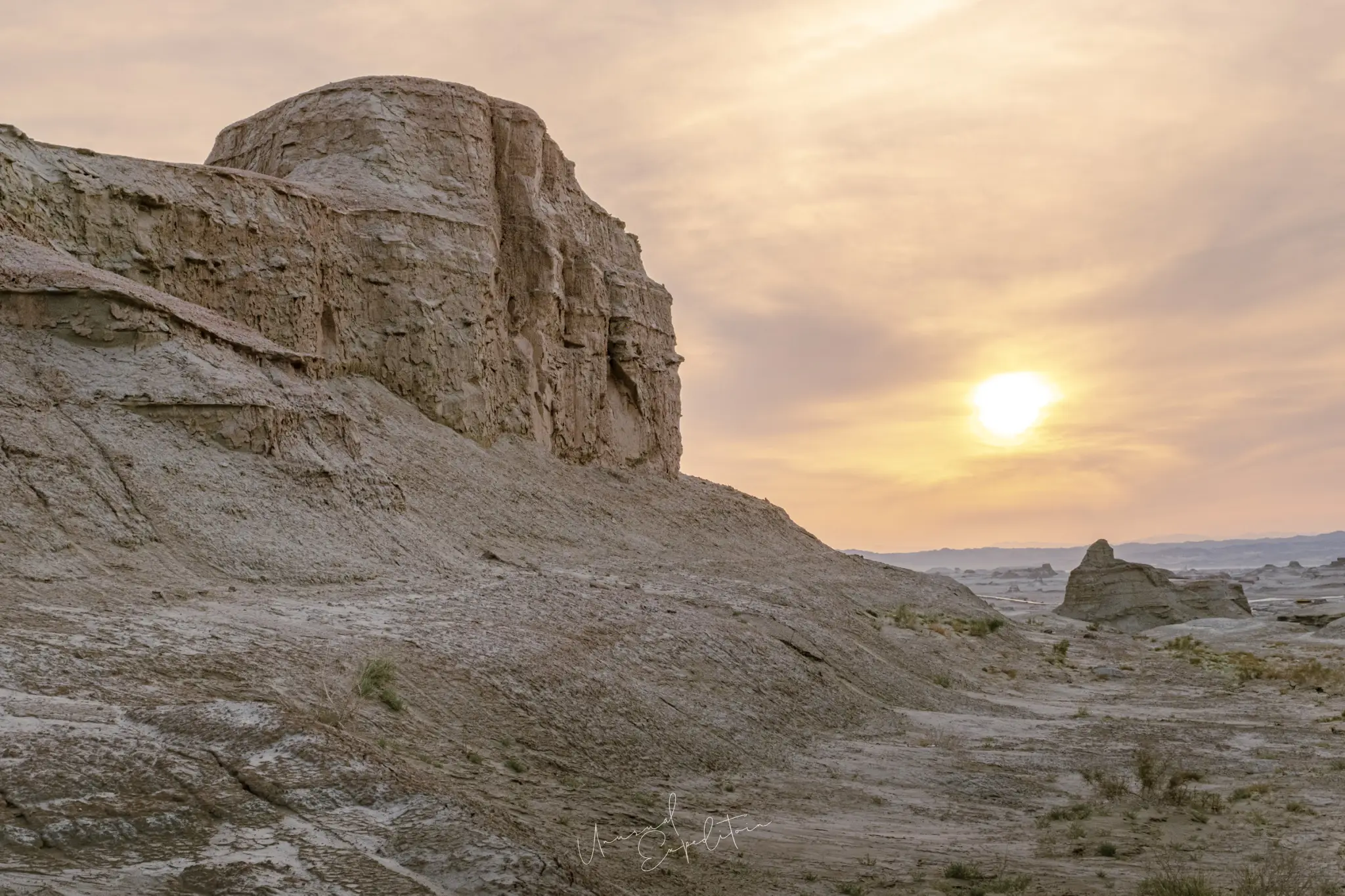
"In the ghost city I wait for the sun to touch the horizon and then work fast. For a short while every ridge has a lit edge and a dark side, and then it all goes flat and grey."
Joseph Mak, tour leader, Unusual Expedition
How to photograph the Xinjiang ghost town
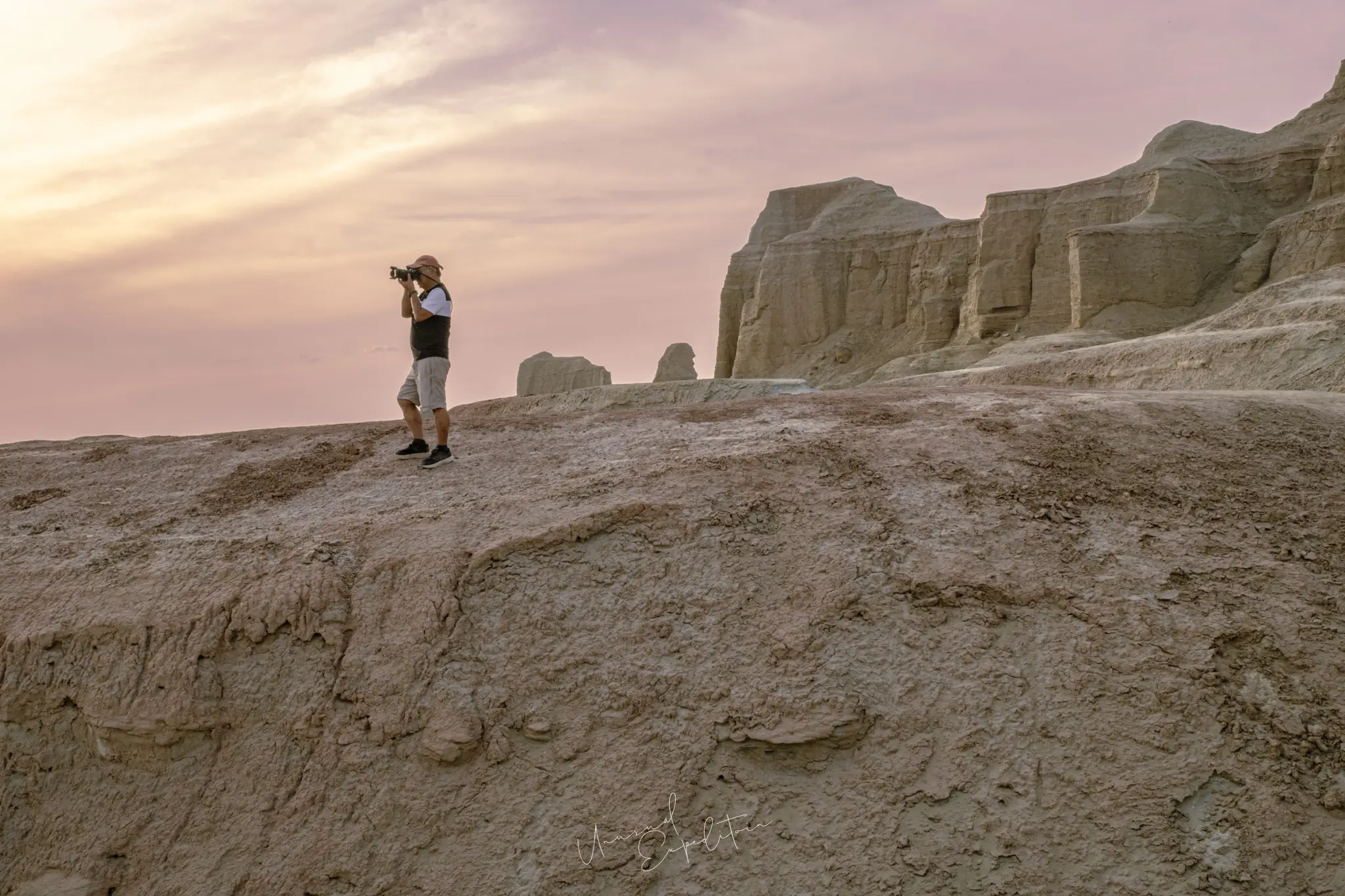
The Xinjiang ghost town rewards a slow walk before the light comes. Scout the towers that stand alone against open sky, because those are the ones that will read as silhouettes or catch side light later. A 24-70mm covers most compositions: wide for a tower with the cracked clay floor in front, longer for a row of battlements layered one behind another. A 70-200mm compresses the distant formations into a skyline. Low angles make the yardangs tower over you, and a person standing on a ridge far off gives the scale that photographs of empty desert often lack. Keep the horizon level, because the formations lean and the eye notices a tilted frame. After sunset the sky often glows pink and violet for a while, so stay on for the afterglow before walking back with a torch.
Light, weather and the season
| Season | What you get | Watch out for |
|---|---|---|
| Late spring and early summer | Long evenings, warm light on the clay, combines with green grassland trips | Heat in the middle of the day |
| High summer | Clear skies, very long days | Strong heat, harsh midday light, more visitors |
| Autumn | Softer light, cooler walking, golden poplars on the way | Shorter evenings |
| Winter | Occasional snow on the formations | Severe cold, wind, limited services |
Most of our ghost city frames come from a June evening, with dry grass glowing gold at the foot of the formations. Wind is the main hazard at any season: it lifts fine dust that gets into lenses and cameras, so change lenses inside the vehicle and carry a blower. When the wind is strong, the yardangs make the sound that gave them their name. Xinjiang runs on Beijing time officially while many people use local Xinjiang time two hours behind, so confirm which clock your sunset plan uses. Our Xinjiang best time to visit guide covers the seasons across the whole region.
Practical notes for the ghost city
The ghost city is remote and dry, so bring more water than you think, a hat, a scarf for the dust, and a warm layer for the evening, when temperatures fall quickly once the sun goes. The clay crust is fragile: stay on paths in managed areas, never climb on the formations, and leave no marks. Drones need registration and local permission in China and some scenic areas ban them outright, so ask us before you pack one. As anywhere in Xinjiang, do not photograph police, checkpoints or military sites, and carry your passport for the frequent ID checks. Singapore passports currently enter mainland China visa-free for short visits; check the official source, such as the ICA and the Singapore Ministry of Foreign Affairs, before you travel.
Photograph the Xinjiang ghost city with us
We run Xinjiang as a private trip that joins the ghost city to the grasslands, the horses and the herders of the north. See our China photography tours page for the departures we run across China, and ask us about Xinjiang.
Join the Xinjiang photography tour
Inner Mongolia Winter Owl Photo Tour – China departs 01 Jan 2027 To 04 Jan 2027, led by Joseph Mak. Small group, photography first. All Xinjiang photography tours.
Explore Xinjiang in depth
- Xinjiang Photography Tour: The Complete GuideChina
- Kazakh Herders in Xinjiang: Photographing Nomad Life in IliChina
- Xinjiang Grassland: Photographing the Green Valleys of the TianshanChina
- Xinjiang Photos: Valleys, Grassland and the Ghost CityChina
- Xinjiang Migration: Photographing the Kazakh HerdersChina
- Xinjiang Horse Photography: Zhaosu and the Ili HorsesChina
- Xinjiang Best Time to Visit for PhotographyChina
Upcoming Photo Tours
- Egypt Photo Tour – EgyptEgypt 12 Dec 2026 To 20 Dec 2026
- Inner Mongolia Winter Owl Photo Tour – ChinaChina 01 Jan 2027 To 04 Jan 2027
- Inner Mongolia Winter Photo Tour – ChinaChina 05 Jan 2027 To 11 Jan 2027
- Mekong And Central Highland Vietnam Photo Tour - VietnamVietnam 16 Jan 2027 To 24 Jan 2027