
Xinjiang Grassland: Photographing the Green Valleys of the Tianshan
Xinjiang grassland in June: Nalati, Kalajun and quieter Tianshan valleys, what to photograph, drones, and when the meadows are green.
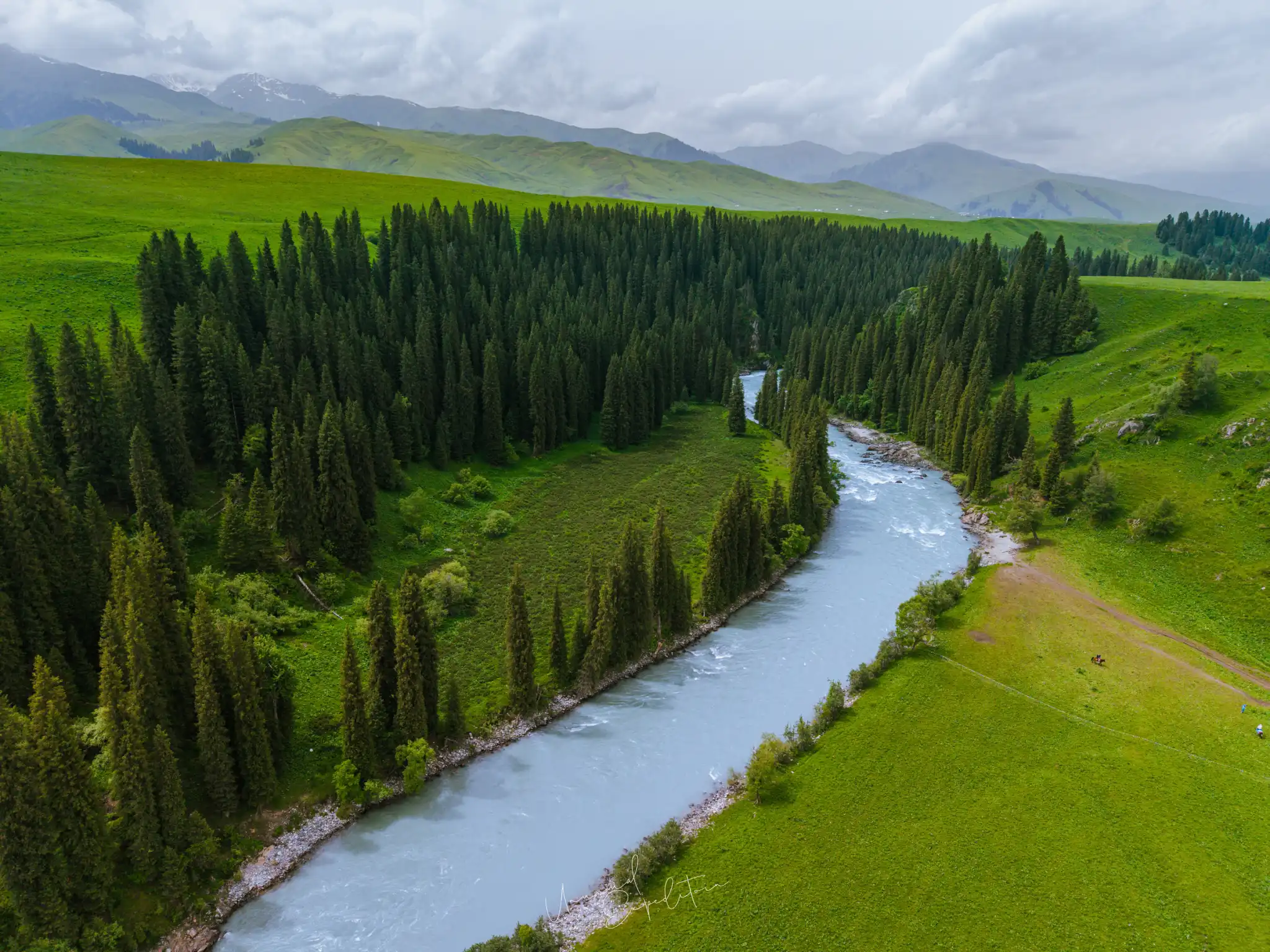
Xinjiang grassland is at its greenest from June into early July, when the meadows of the Tianshan valleys in the north fill with grass and wildflowers below dark spruce forest and snowy ridges. Famous names such as Nalati and Kalajun draw most visitors, but the same mix of meadow, forest and glacier river runs through many valleys of the Ili region. For photographers the grassland works best in soft morning and evening light, from a hillside or, with permission, from the air.
The grasslands are the green heart of our Xinjiang photography tour guide, the setting for the horses, the herders and the summer migration.
Xinjiang grassland: where it is
Xinjiang grassland in the sense most travellers mean lies along the Tianshan mountains in the north, above all in the Ili valley, which opens westward toward Kazakhstan and catches more rain than the deserts to the south. That moisture is why the Ili valleys look so different from the rest of Xinjiang: rolling hills of grass, Tianshan spruce on the north-facing slopes, rivers running milky blue with glacier melt. Further north, the Altai has its own summer pastures around Kanas and the lakes. Herders of the Kazakh community bring their animals up to these meadows each summer and move down again in autumn, so the grassland is a working landscape as well as a scenic one. In June the valleys are at their freshest, before the peak domestic holiday crowds of July and August arrive.
Xinjiang Nalati grassland and Kalajun
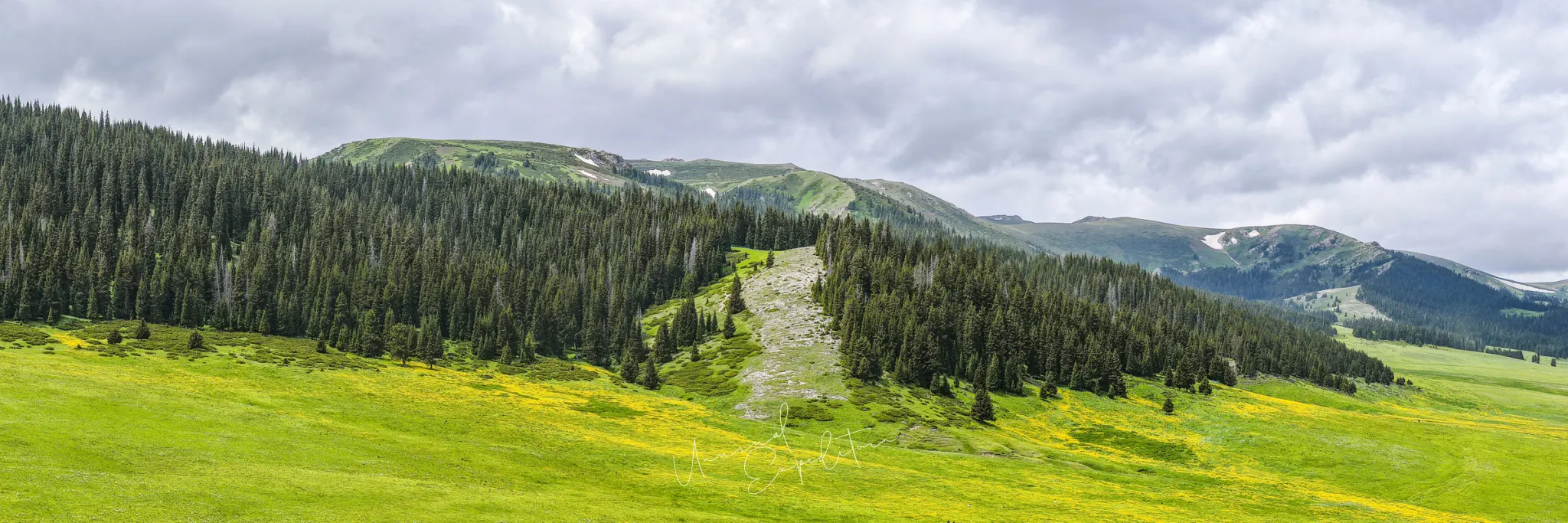
Xinjiang Nalati grassland, also written Narat, lies in Xinyuan county at the eastern end of the Ili valley. China Daily describes it at an average altitude of about 1,800 metres over more than a thousand square kilometres of meadow and forest, and it is one of the most visited grasslands in China, with roads, viewing points and shuttle buses inside the scenic area. Kalajun in Tekes county is higher and wilder, with wide summer pastures under the Tianshan peaks. Both are good, and both are busy in high summer. We do not tie our trips to a single scenic area: the valleys in these photographs are quieter places in northern Xinjiang that our local partners know, where the meadow, the forest and the river come together without coaches in the frame. If a famous name matters to you, tell us, and we will build it in.
Xinjiang China grassland from the air
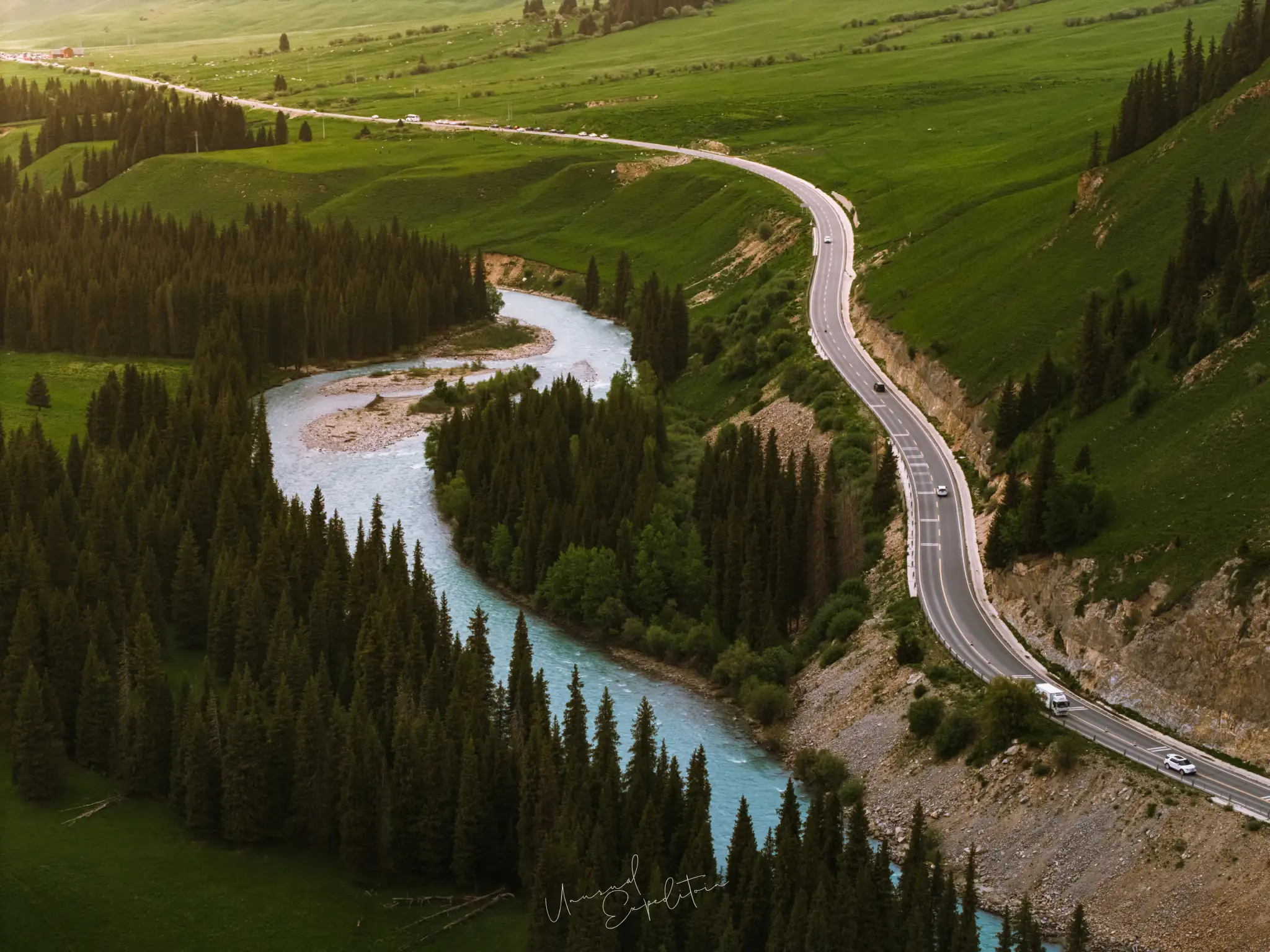
Xinjiang China grassland is one of the best drone subjects in Asia, because the patterns only make sense from above: rivers looping through meadow, lines of spruce following the slope, roads curling down the valley side. Drones in China must be registered and some scenic areas ban them, so ask us before you pack one, and we check with our local partners what is allowed in each valley. When you can fly, early morning gives calm air and long shadows from the trees, while flat midday light makes the green look like a carpet with no shape. Without a drone, climb a hillside above the river and use a 70-200mm to compress the bends of the water and the edge of the forest into one frame. Our Xinjiang photos guide shows more of the north from both angles.
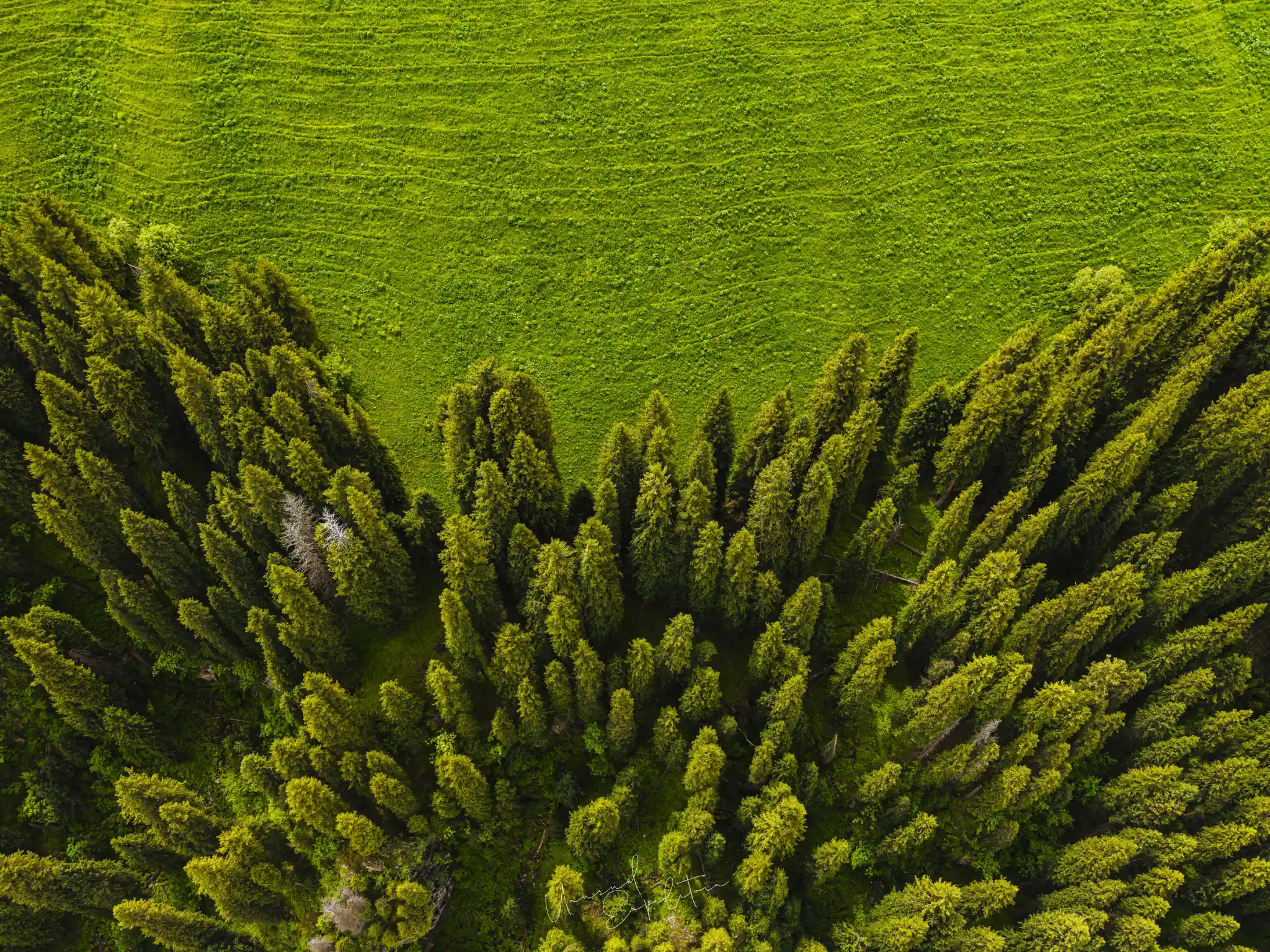
"The grassland looks endless until you get up high. Then you see the river, the road and the forest edge all drawing lines, and the picture suddenly has a shape."
Joseph Mak, tour leader, Unusual Expedition
Xinjiang endless grassland: what to photograph
Xinjiang endless grassland is a phrase that fits the view, but the best photographs give the eye somewhere to land. Look for a single subject against the green: a herder on horseback, a white yurt, a flock moving along a ridge, a lone tree. Horses are everywhere in the Ili valley, and the region is famous for them, as our Xinjiang horse photography guide explains. Wildflowers bloom in June, so a low angle with flowers in the foreground and forest behind gives depth. Weather changes quickly in the mountains: a storm building over the ridges with sun still on the meadow often makes the strongest frame of the day, so keep shooting when clouds roll in. Ask before photographing herders and their families up close; most are welcoming, some say no, and a smile and a wave keep the door open.
When the grassland is green
| Month | Grassland | For photographers |
|---|---|---|
| May | Turning green, snow on the ridges | Herders start moving up; cold nights |
| June | Fresh green, wildflowers | Our pick: migration, horses, quieter roads |
| July and August | Full summer pasture | Peak domestic travel, busy scenic areas |
| September and October | Grass turning gold, autumn poplars and birch | Herders move down; crisp light |
| November to April | Snow or brown grass | A different trip: horses in snow, very cold |
June is our month for the grassland, because the green, the flowers and the start of the herders' move up the valleys all come together. For the full year across the region, see our Xinjiang best time to visit guide.
Practical notes for the Xinjiang grasslands
The Xinjiang grasslands sit high enough to be cool at dawn even in summer, so bring layers, a rain shell and good shoes for wet grass. Distances in Xinjiang are long, about one sixth of China's land area, so plan fewer places and more time in each. Singapore passports currently enter mainland China visa-free for short visits; check the ICA and the Singapore Ministry of Foreign Affairs pages before you travel, and carry your passport for the frequent ID checks. Some border areas near Kazakhstan need a frontier pass that a local agency arranges. Do not photograph police, checkpoints or military sites. For gear, a 24-70mm and a 70-200mm cover almost everything on the ground; a longer lens helps for distant riders on a ridge.
Photograph the Xinjiang grassland with us
We run Xinjiang as a private trip timed for the green grass and the summer migration. See our China photography tours page for the departures we run across China, and ask us about Xinjiang.
Join the Xinjiang photography tour
Inner Mongolia Winter Owl Photo Tour – China departs 01 Jan 2027 To 04 Jan 2027, led by Joseph Mak. Small group, photography first. All Xinjiang photography tours.
Explore Xinjiang in depth
- Xinjiang Photography Tour: The Complete GuideChina
- Kazakh Herders in Xinjiang: Photographing Nomad Life in IliChina
- Xinjiang Ghost City: Photographing the Yardangs at SunsetChina
- Xinjiang Photos: Valleys, Grassland and the Ghost CityChina
- Xinjiang Migration: Photographing the Kazakh HerdersChina
- Xinjiang Horse Photography: Zhaosu and the Ili HorsesChina
- Xinjiang Best Time to Visit for PhotographyChina
Upcoming Photo Tours
- Egypt Photo Tour – EgyptEgypt 12 Dec 2026 To 20 Dec 2026
- Inner Mongolia Winter Owl Photo Tour – ChinaChina 01 Jan 2027 To 04 Jan 2027
- Inner Mongolia Winter Photo Tour – ChinaChina 05 Jan 2027 To 11 Jan 2027
- Mekong And Central Highland Vietnam Photo Tour - VietnamVietnam 16 Jan 2027 To 24 Jan 2027