
Places to Visit in Zanzibar with a Camera: Where to Take Photos
Places to visit in Zanzibar with a camera: Stone Town lanes and harbour, Darajani, Nungwi, north-coast flats and beaches.
The places to visit in Zanzibar with a camera are the lanes and carved doors of Stone Town, the Stone Town waterfront at sunset, the fish and meat halls of Darajani market, Nungwi with its dhows and morning market, the tidal flats and jetties of the north coast at sunrise, the north-coast beaches at dusk and the seaweed lagoons of the east coast. Stone Town gives you people and architecture, the coast gives you light and water, and the tide decides when each beach is worth the walk.
The spots belong to our Zanzibar photography tour guide, which covers the island, the seasons and how a trip works. Here we answer where to take photos in Zanzibar: for each place, where to stand, which way the light falls, the lens and what to respect. The photographs are our own, from our trip to Stone Town and the north of the island.
Places to visit in Zanzibar for photography: how the island works
Zanzibar's main island, Unguja, is small enough to cover the town and the coast in a few days, and the light tells you where to be. Stone Town faces west over its harbour, so its evenings are golden and its sunsets fall over the water. The east coast faces the sunrise and drains far out at low tide. The north, around Nungwi, catches both. In town and in the villages, cover shoulders and knees and ask before you photograph anyone, as Asilia Africa's Zanzibar travel guide advises; do not photograph military or government buildings. A 24-70mm does nearly everything here, with a 16-35mm for the lanes and a 70-200mm for boats and faces at a distance.
Stone Town lanes and carved doors
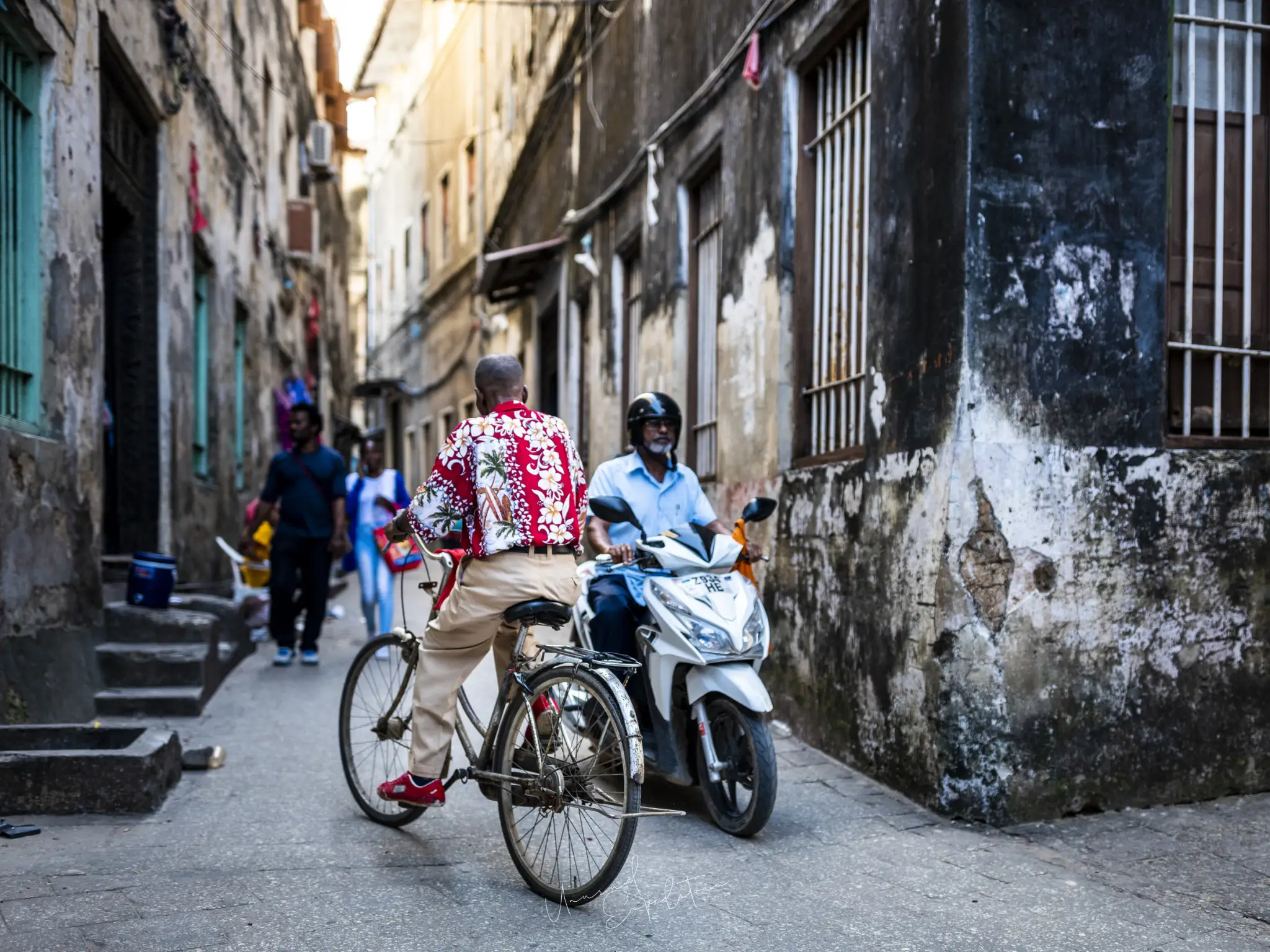
Stone Town has been a UNESCO World Heritage Site since 2000, listed as an outstanding example of a Swahili trading town, and its narrow lanes are the first place most photographers go. The carved wooden doors, the fretwork balconies, the scooters squeezing past, the people sitting on stone benches all make pictures. The lanes are deep and shaded, so the light arrives in slices: look for a lane where the sun falls across the far end and wait for someone to walk into it. Mornings are quieter. A 16-35mm or the wide end of a 24-70mm handles the tight spaces; stand back against a wall and let the lane lead the eye. More of the town is in our Stone Town Zanzibar photos.
The Stone Town waterfront at sunset
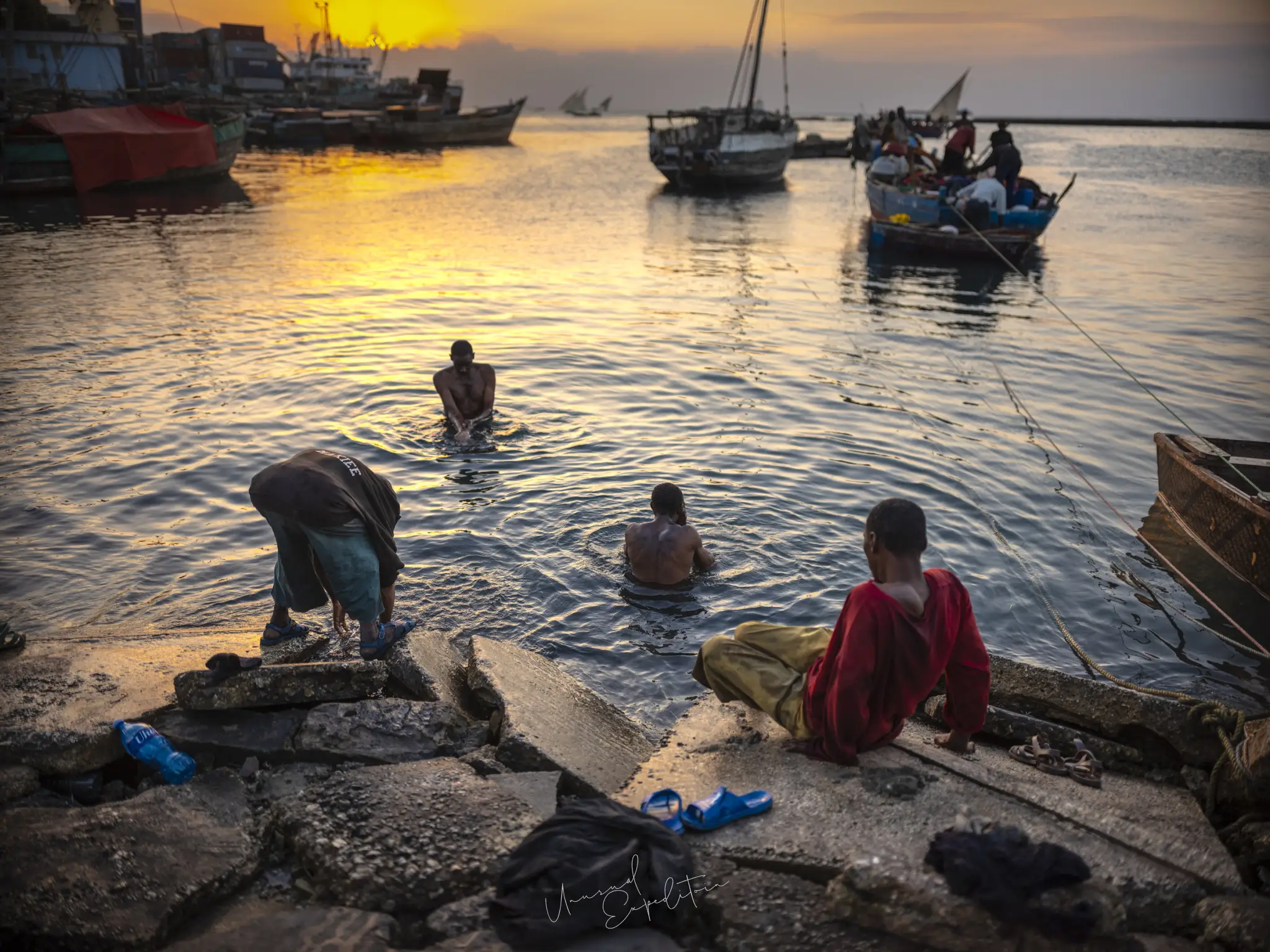
Because Stone Town faces west, the waterfront is where the day ends. Dhows and small boats sit in the harbour, men swim and wash on the steps, and the sun goes down over the water behind them. Shoot into the light and let the boats go to silhouette, exposing for the sky. A 24-70mm for the scene, a 70-200mm to stack the masts against the sun. The waterfront fills up toward evening, Forodhani Gardens most of all, so pick a spot on the harbour edge early. The sunset itself, and other places to watch it, are in our Zanzibar sunset photography guide.
Darajani market
Darajani is Stone Town's main bazaar, with fish and meat halls where the auction is busiest early in the morning, according to Lonely Planet. Inside the halls the light comes through doorways and gaps in the roof, so faces and fish catch it in pools against dark backgrounds, which suits a 24-70mm at a wide aperture. It is a working market: ask the sellers, buy something, and keep out of the way of the porters. Our Darajani market Zanzibar guide covers the halls in detail.
Nungwi: the dhows and the morning market
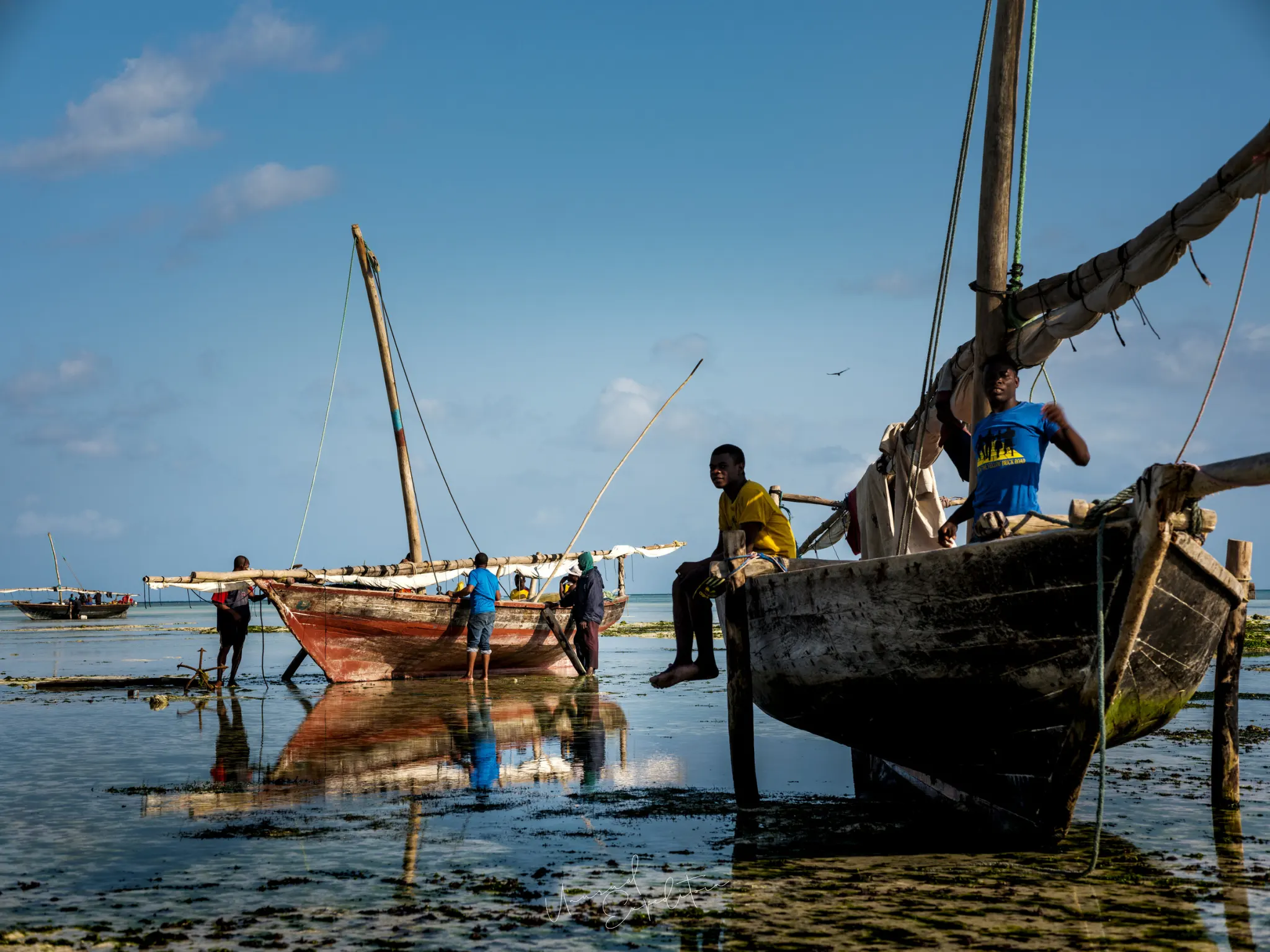
Nungwi, at the northern tip of the island, has long been a dhow-building and fishing village. In the morning the fishing boats come in, the market fills, and the dala dala trucks load by the road. At low tide the dhows rest on the sand and you can walk out among them, which gives you boats, hulls and fishermen at eye level with the sea behind. The low morning sun from the east lights the boats from the side. A 24-70mm, and patience with people at the market, who are working.
"Zanzibar is two places for a photographer. Stone Town in the afternoon and evening, when the light slides down the lanes and sets over the harbour, and the coast at first light, when the tide is out and the fishermen are working. Check the tide table before you plan anything."
Joseph Mak, tour leader, Unusual Expedition
The north coast at sunrise
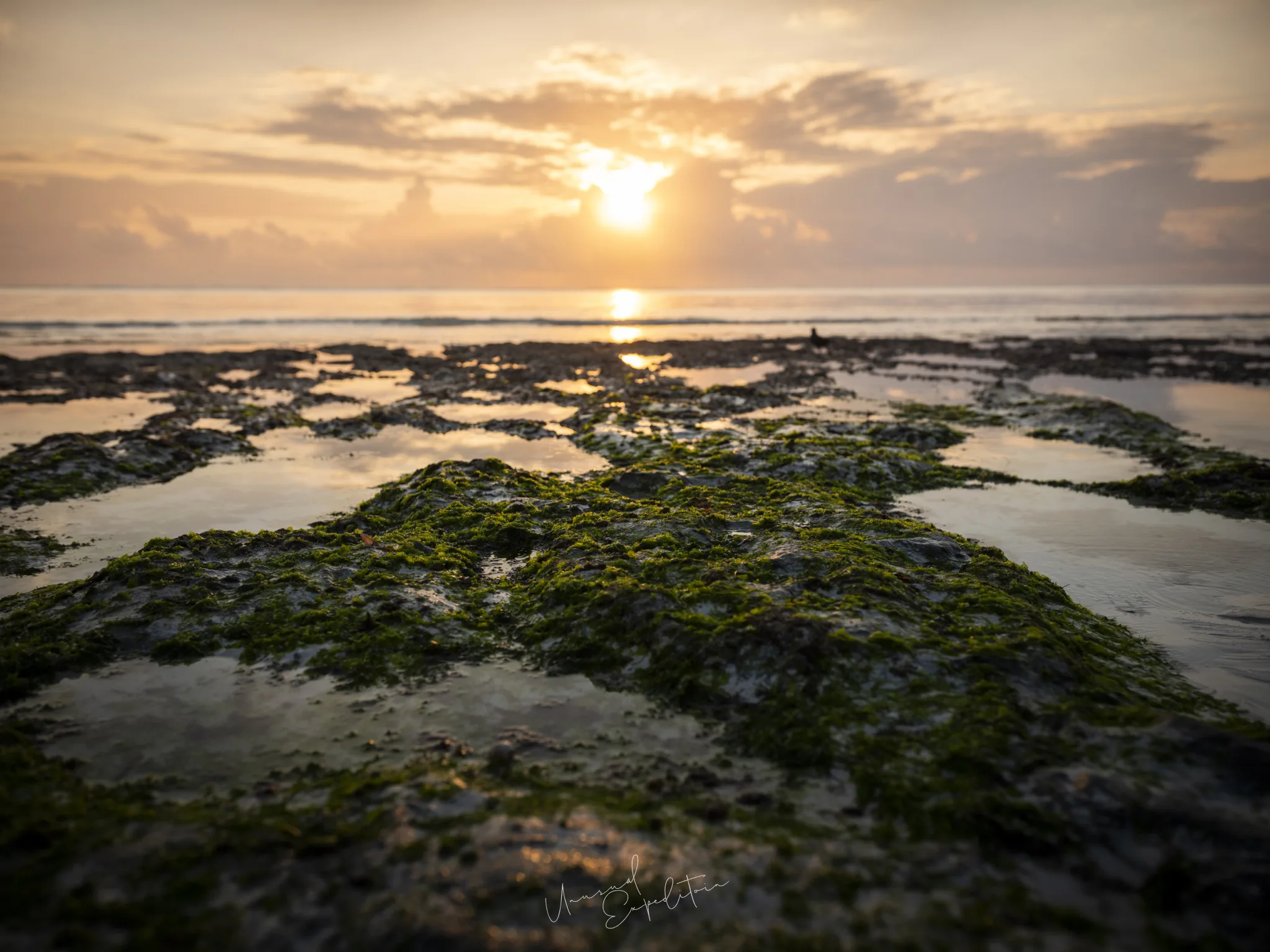
On the north coast the sun rises over the reef flats, and at low tide the rock and seaweed shelves run far out from the beach. Long wooden jetties stand on stilts above the flats, and at first light the sky, the pools and the jetty make one of the best pictures on the island. Get there before sunrise, set up low with a pool in the foreground, and use a 16-35mm or 24-70mm. Tide timing changes every day, so check a tide table: at high tide the same spot is open water.
The north-coast beaches at dusk
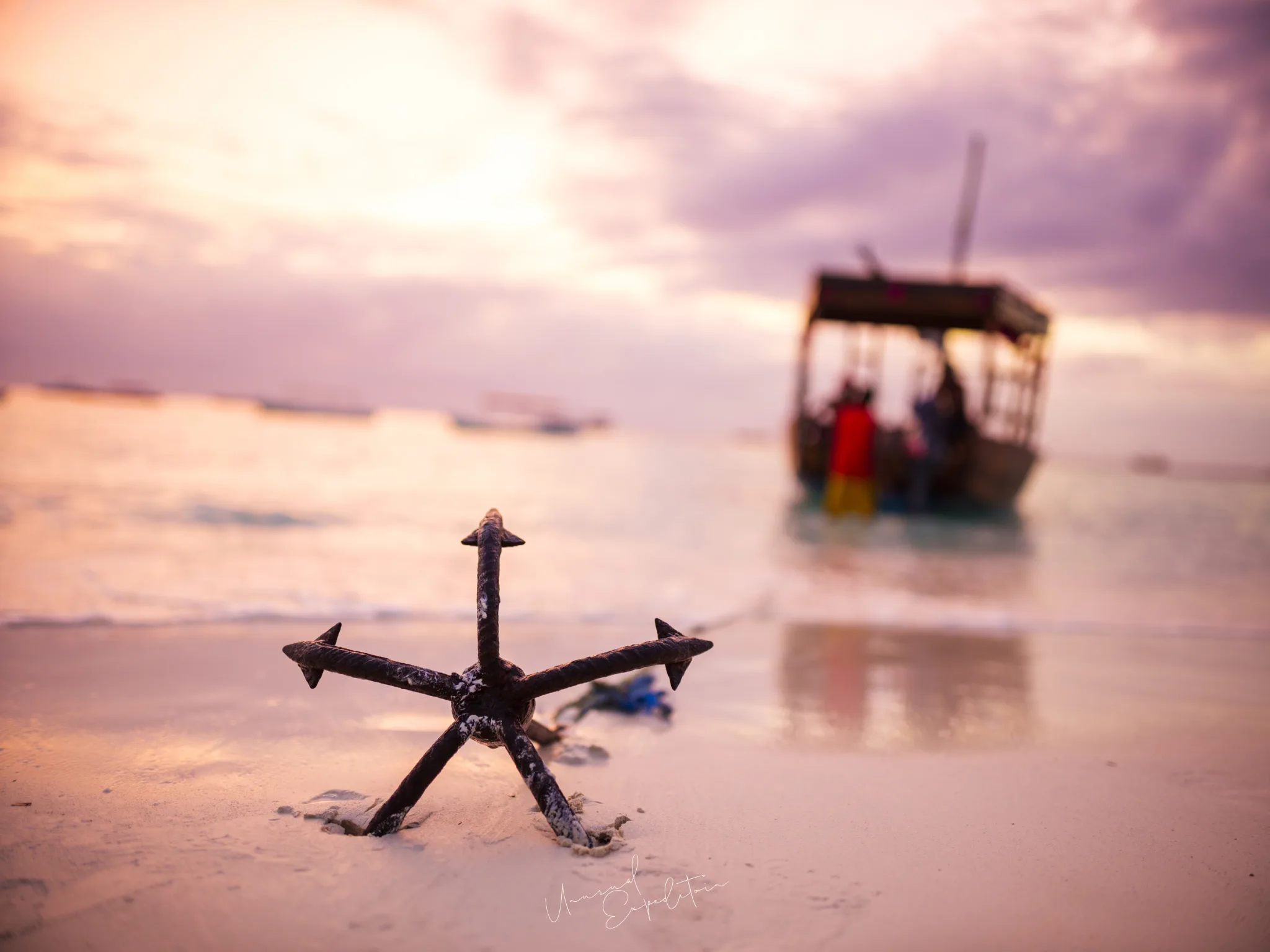
After sunset the north-coast beaches turn pink and violet, the water goes still in the shallows, and boats at anchor become shapes. This is the softest light on the island and suits slow, simple pictures: a boat, an anchor in the shallows, a figure at the waterline. Use a tripod or brace the camera, a 24-70mm, and stay after the crowd leaves, because the colour often comes late. The frame on our card is a boat and an anchor in that dusk light.
The east-coast lagoons and seaweed farms
The east coast faces the sunrise across a wide lagoon that drains far out at low tide. Women farm seaweed in the shallows, fishermen walk out to the reef, and the sand is white. We photographed the north and Stone Town on our trip and not the east coast, so take this as public information: it is the place for wide morning pictures of the flats and the farmers at work, with permission. Check the tide table here even more closely than in the north.
Which Zanzibar spot, when
| Spot | Main subject | Best light | Lens |
|---|---|---|---|
| Stone Town lanes | Doors, balconies, street life | Morning and late afternoon | 16-35mm, 24-70mm |
| Stone Town waterfront | Dhows, swimmers, sunset | Sunset | 24-70mm, 70-200mm |
| Darajani market | Fish and meat halls | Early morning | 24-70mm |
| Nungwi | Dhows at low tide, market | Morning | 24-70mm |
| North coast flats and jetties | Sunrise over the reef | Sunrise at low tide | 16-35mm, 24-70mm |
| North-coast beaches | Boats and shallows | Dusk | 24-70mm |
| East-coast lagoons | Seaweed farmers, flats | Morning at low tide | 24-70mm |
Plan the coast around the tide and Stone Town around the sunset, and the island falls into place.
Photograph Zanzibar with us
We arrange Zanzibar as a private photography trip on request, on its own or after a safari on the mainland. See the Tanzania photography tours page for every destination guide and how to ask us.
Join the Zanzibar photography tour
Serengeti Photo Tour – Tanzania 2027 departs 21 Aug 2027 To 01 Sep 2027. Small group, photography first. All Zanzibar photography tours.
Explore Zanzibar in depth
- Zanzibar Photography Tour Guide: Stone Town, Nungwi and the CoastTanzania
- 5 Best Restaurants in Stone Town, ZanzibarTanzania
- Best Sunsets in Zanzibar, and the Sunrise Most People MissTanzania
- Zanzibar Photos: Pictures of Zanzibar Island and Where We Took ThemTanzania
- Stone Town Zanzibar Pictures: Lanes, Doors and the HarbourTanzania
- Nungwi Village Photos: Fishermen, Dhows and Daily LifeTanzania
- Is Zanzibar Worth Visiting? Getting There, Entry, Insurance and SafetyTanzania
- Darajani Market Zanzibar: Photographing the Fish and Meat HallsTanzania
- Best Time to Visit Zanzibar for Photography, Month by MonthTanzania
Upcoming Photo Tours
- Egypt Photo Tour – EgyptEgypt 12 Dec 2026 To 20 Dec 2026
- Inner Mongolia Winter Owl Photo Tour – ChinaChina 01 Jan 2027 To 04 Jan 2027
- Inner Mongolia Winter Photo Tour – ChinaChina 05 Jan 2027 To 11 Jan 2027
- Mekong And Central Highland Vietnam Photo Tour - VietnamVietnam 16 Jan 2027 To 24 Jan 2027