
Jiangmen Travel Guide: Kaiping Diaolou, Li Garden and Heritage Villages
Things to do in Jiangmen, China: the Kaiping diaolou towers and villages, Li Garden, arcade streets and clan halls, and how to get there.

Jiangmen is the city in western Guangdong that most travellers know without knowing its name: it is home to the Kaiping diaolou, the fortified tower houses built by families of emigrants, and to Li Garden, the arcade-house market streets and the old clan villages around them. This Jiangmen travel guide covers what each heritage site looks like, when the light is best and how we photograph it, as part of our China photography tour guide.
Jiangmen sits on the western side of the Pearl River Delta, and the counties around it, Kaiping and Taishan above all, sent more people overseas than almost anywhere else in China. That history is what you photograph here. The money that came home from North America and Southeast Asia built towers, villas and whole market streets in a mix of Chinese and Western styles, and much of it still stands in working villages surrounded by rice fields and fish ponds.
Kaiping diaolou and villages: what the watchtowers are
The Kaiping diaolou and villages were inscribed on the UNESCO World Heritage List in 2007, and UNESCO's description explains the towers well: multi-storey fortified houses that mix Chinese and Western structure and decoration, built mostly in the early twentieth century by families whose sons worked abroad. The ground floors are thick-walled and nearly windowless, with iron doors and shuttered gun slits, because the region was troubled by bandits and floods. The top floors are where the money shows: columns, balconies, domes, pavilions and Romanesque arches. Four village groups make up the World Heritage property, Sanmenli, Zili, Jinjiangli and the Majianglong cluster, and more towers stand in villages all over Kaiping that are not on any ticket. For a photographer the towers work in two ways: as tall vertical subjects against the sky, and as punctuation marks in a flat landscape of paddies and bamboo.
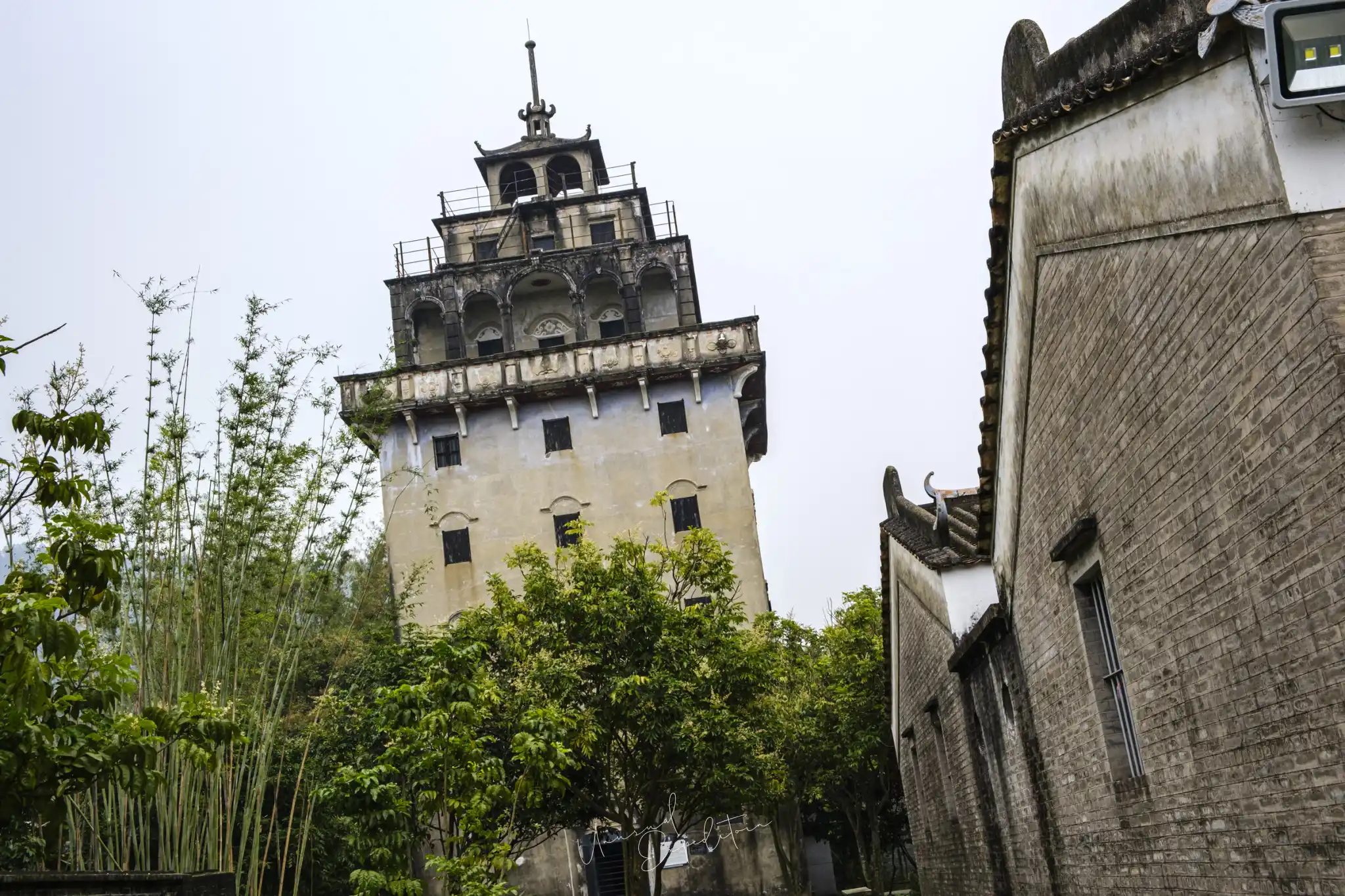
Kaiping diaolou watchtowers from the ground and from the air
From the ground, a diaolou looks best from a little distance, with the rice fields or a pond in front and the tower standing clear of the village roofs. Zili village is the most photogenic of the four groups because its towers stand apart across open fields, and the reflections in the ponds are best on a still morning. Up close, a 24-70mm at the wide end and a step back into a lane gives you the tower climbing out of the old brick houses. From the air the villages make sense: a grid of grey roofs, the towers rising out of it, the ponds and fields around. Our frames from above were made with a small drone; check the current rules for the village and the airspace before you fly, because some scenic areas restrict it. Overcast days, which are common in Guangdong, suit the grey brick and the pale render of the towers better than hard sun.
Jiangmen attractions beyond the towers: Li Garden
Li Garden, Liyuan, in Tangkou is the grandest of the emigrant houses: a walled estate of villas, a formal garden, canals and pavilions, begun in 1926 by Xie Weili, a returned emigrant. The villas are Western in outline and Chinese in their roofs and tiles, and the glazed planters stamped with the garden's name are a detail worth a frame of their own. The garden photographs best in the morning, before the tour groups arrive, and from the upper floors of the villas, where the formal beds and the pond make a pattern below. The pavilions in the inner garden are good in soft light under the trees.
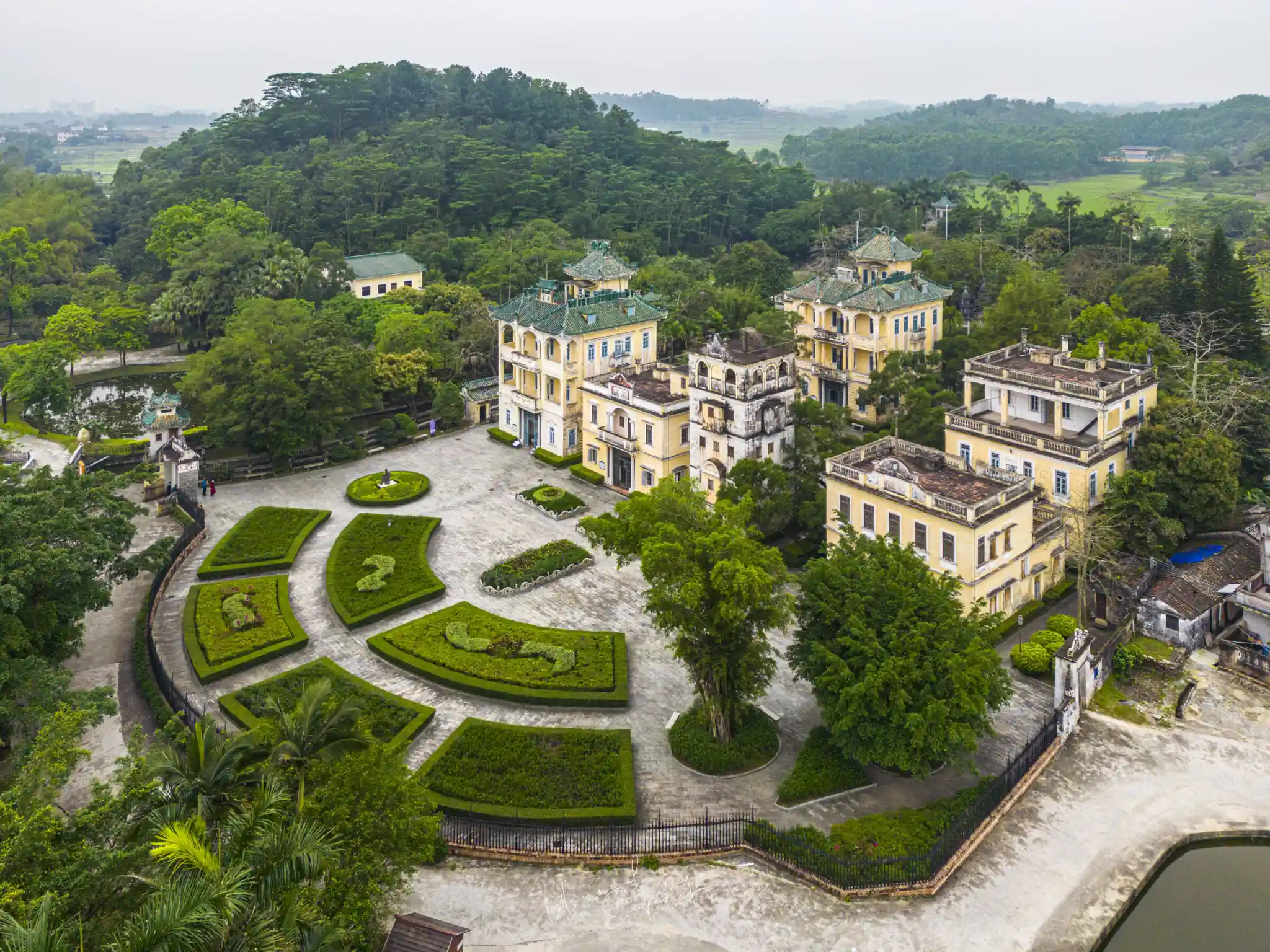
Arcade streets, clan halls and things to do in Jiangmen
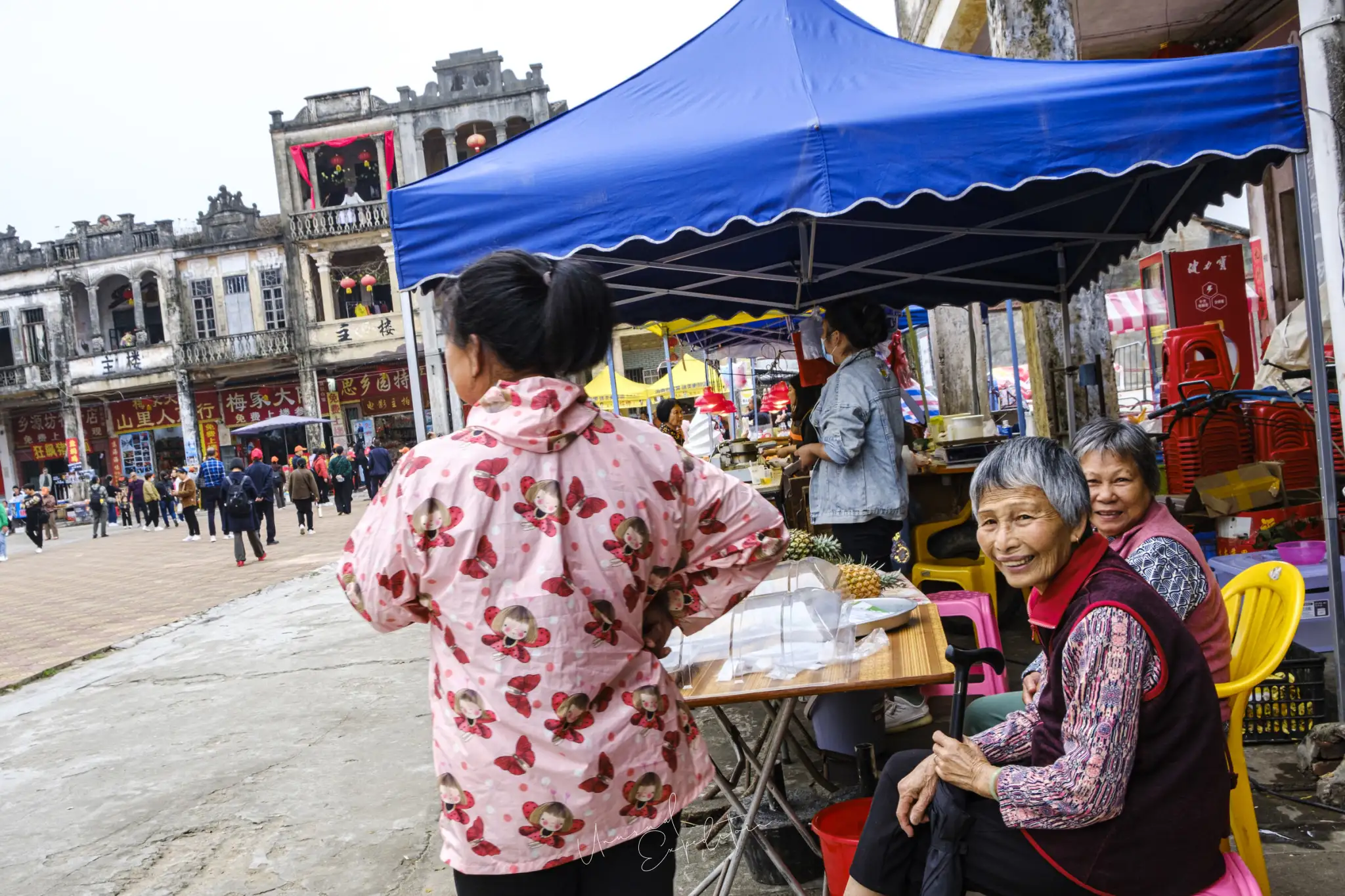
The arcade houses, qilou, are the other face of the emigrant towns. Rows of two and three storey shophouses with covered walkways line the old market streets of Chikan and the square of the Mei Family Mansion in Duanfen, Taishan, which returned emigrants of the Mei clan built in 1931 and which later served as a film set. From a high window or a drone the long lines of facades and the market stalls below read as a pattern; at street level the faded painted signs, shutters and balconies give detail. Every village also has its ancestral hall, with the clan name over the door and couplets on either side. Ask before you step inside a hall, keep your voice down and leave the altar out of the frame if anyone is praying.
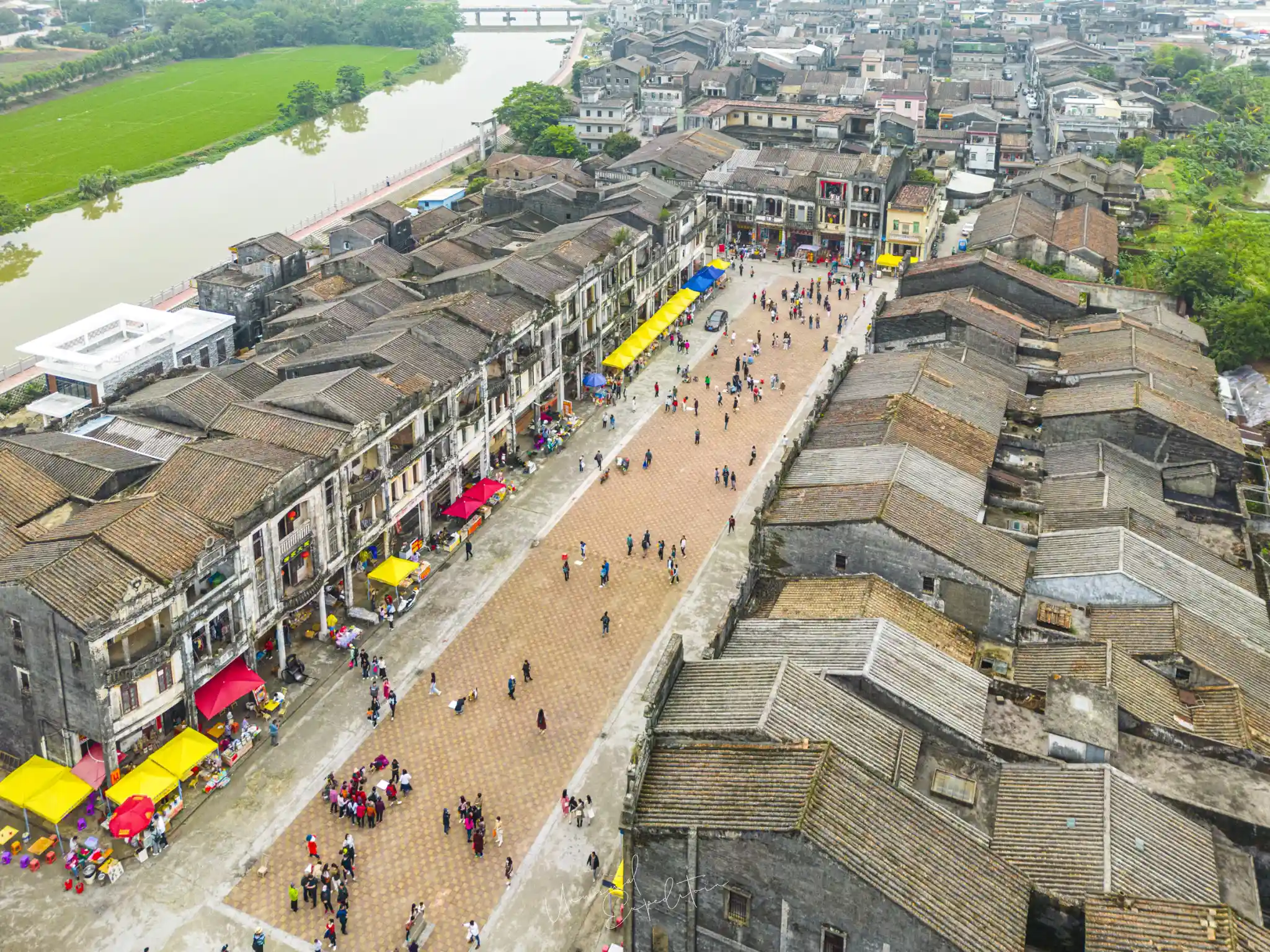
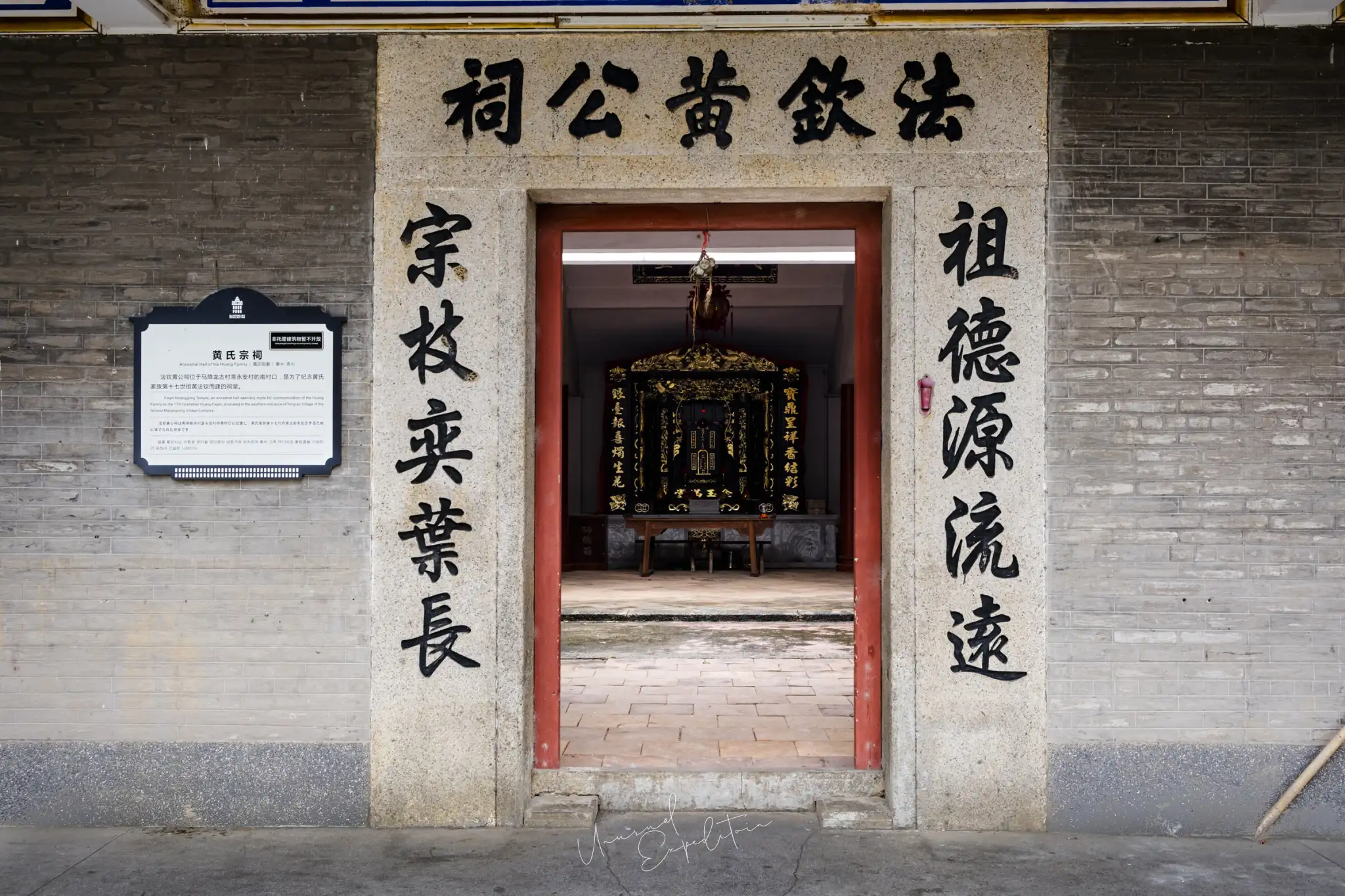
"Jiangmen surprised me. I came for the diaolou and stayed for the people who still live around them. An old lady selling snacks under a market umbrella in front of a 1920s arcade tells you more about this place than any tower on its own."
Joseph Mak, tour leader, Unusual Expedition
People and markets in the heritage villages
The heritage villages are not museums. Older residents still farm the fields, sit outside the halls and run small stalls on market days, and many families here still have relatives overseas. That connection makes conversation easy if you speak Cantonese or Taishanese, and a smile and a gesture work if you do not. Buy something before you raise the camera at a stall, ask before a close portrait, and show people the picture on the back of the camera. Market days and festivals bring the most life to the squares; ordinary weekdays are quieter and better for clean architecture.
| Jiangmen heritage site | What you photograph | Best light |
|---|---|---|
| Zili village, Kaiping | Towers across rice fields and ponds | Still early morning, overcast |
| Majianglong and Jinjiangli | Towers in bamboo groves along the river | Morning |
| Li Garden, Tangkou | Villas, formal garden, pavilions, details | Morning before the groups |
| Chikan and the Mei Family Mansion | Arcade houses, market stalls, painted signs | Market days, soft light |
| Village ancestral halls | Doorways, calligraphy, courtyards | Any time, ask first |
Two full days cover the main sites at a photographer's pace; a third gives you a second morning at the towers if the first one is grey and flat.
Best time to visit Jiangmen and how to get there
Jiangmen has a subtropical climate. October to December is the most comfortable season, with drier air and clearer skies; spring brings green paddies, mist and humidity; summer is hot and wet, with typhoon risk from July to September. Avoid Golden Week at the start of October and the Spring Festival holiday if you want the villages quiet. Our best time to photograph China guide sets Jiangmen against the other regions. There is no airport in Jiangmen itself: from Singapore you fly to Guangzhou, Shenzhen, Hong Kong or Macau and continue by train or road. Singapore passport holders currently enter mainland China visa-free for stays of up to 30 days under the mutual exemption that Singapore's ICA lists, and our China photo tour planning guide covers payment apps, the internet and drones. The tulou of southern Fujian are a similar story of clan architecture, in our Fujian tulou photos.
Photograph Jiangmen with us
We run Jiangmen and the Kaiping villages as a private photography trip on request, on its own or joined to Guangzhou, Chaoshan or the Pearl River Delta. Tell us when you would like to go, and see our China photography tours page for scheduled departures.
Join the China photography tour
Inner Mongolia Winter Owl Photo Tour – China departs 01 Jan 2027 To 04 Jan 2027, led by Joseph Mak. Small group, photography first. All China photography tours.
Explore China in depth
- China Photography Tour Guide: Every Region We PhotographChina
- China Private Tour: Your Dates, Your Pace, Our PlanningChina
- China Photo Tour Planning: Visa-Free Entry, Gateways and RegionsChina
- China Photography Trip FAQ: Photos, People, Drones and Travel TipsChina
- Best Time to Visit China for Photography, Month by MonthChina
Upcoming Photo Tours
- Egypt Photo Tour – EgyptEgypt 12 Dec 2026 To 20 Dec 2026
- Inner Mongolia Winter Owl Photo Tour – ChinaChina 01 Jan 2027 To 04 Jan 2027
- Inner Mongolia Winter Photo Tour – ChinaChina 05 Jan 2027 To 11 Jan 2027
- Mekong And Central Highland Vietnam Photo Tour - VietnamVietnam 16 Jan 2027 To 24 Jan 2027