
The Best Time to Photograph Lake Baikal Ice
When to photograph Lake Baikal ice: the season month by month, ice thickness, daylight, Olkhon weather and why late February works.
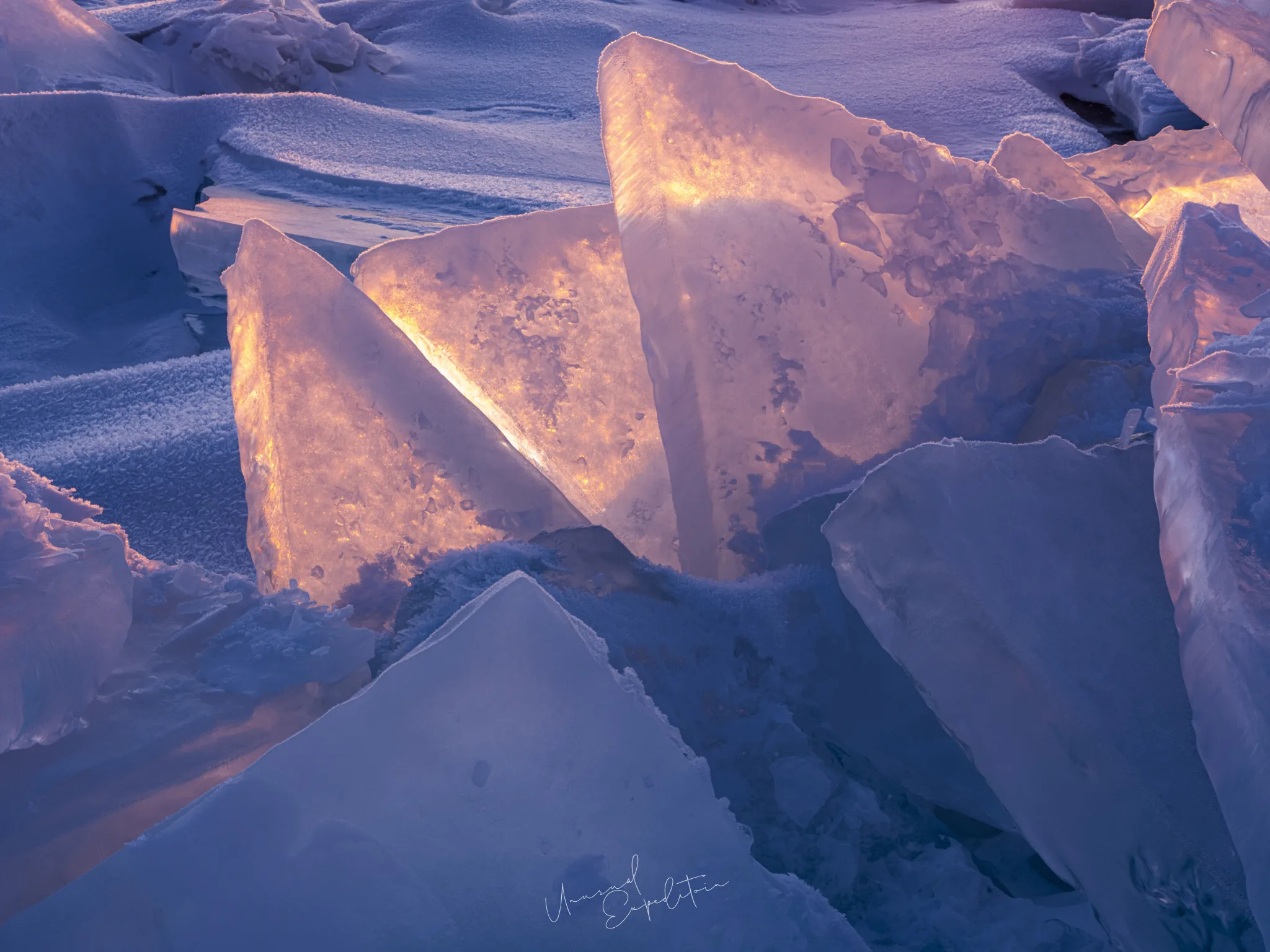
The best time to photograph Lake Baikal ice is late February into March, when the lake has been frozen for weeks, the ice is thick enough for the official crossings, the clear bays are still free of snow and the sun is low enough at both ends of the day to light the turquoise ridges. January is colder and darker, April brings thaw and white ice, and May is break-up. Both of our own winter trips onto the lake were in late February and early March.
Below is what each month gives you. For the full trip, see our Lake Baikal photography tour guide.
Lake Baikal winter tour: the ice season month by month
The figures below are approximate, for the southern half of the lake around Irkutsk and Olkhon, and every winter differs. Daylight is rounded from standard astronomical tables for the latitude; temperatures are typical ranges rather than records.
| Month | Ice | Approximate daylight | Typical cold | For photographers |
|---|---|---|---|---|
| December | Freezing begins in bays, open water elsewhere | About 8 hours | Very cold, unsettled | Steam fog over open water, no ice travel |
| January | Lake freezes over, crossings not yet open everywhere | About 8 to 9 hours | Coldest month | Clear new ice in places, short days |
| February | Thick, clear, crossings open | About 9 to 11 hours | Very cold nights, sunny days | Clear ice, ridges, ice caves at their best |
| March | Thick, beginning to whiten late in the month | About 11 to 13 hours | Cold nights, milder days | Long low light, ridges, last weeks of clear ice |
| April | Melting, crossings close | About 13 to 14 hours | Around freezing | White rotten ice, travel uncertain |
| May | Break-up | About 15 hours | Cool | Floating ice in the north, open water in the south |
February and March are the only months where thick, travelable ice, clear surfaces and good light all line up.
Does Lake Baikal freeze every winter?
Yes. Lake Baikal freezes over every winter, though the timing and the quality of the ice change from year to year. A warm spell or heavy snow can whiten the surface for days, and wind can sweep it clear again. The deep middle of the lake freezes last. Some patches near river mouths and springs stay open or thin all season. That variability is why we keep a few flexible days in every trip, and why our drivers check the ice each morning before deciding where we go.
Lake Baikal ice thickness through the season
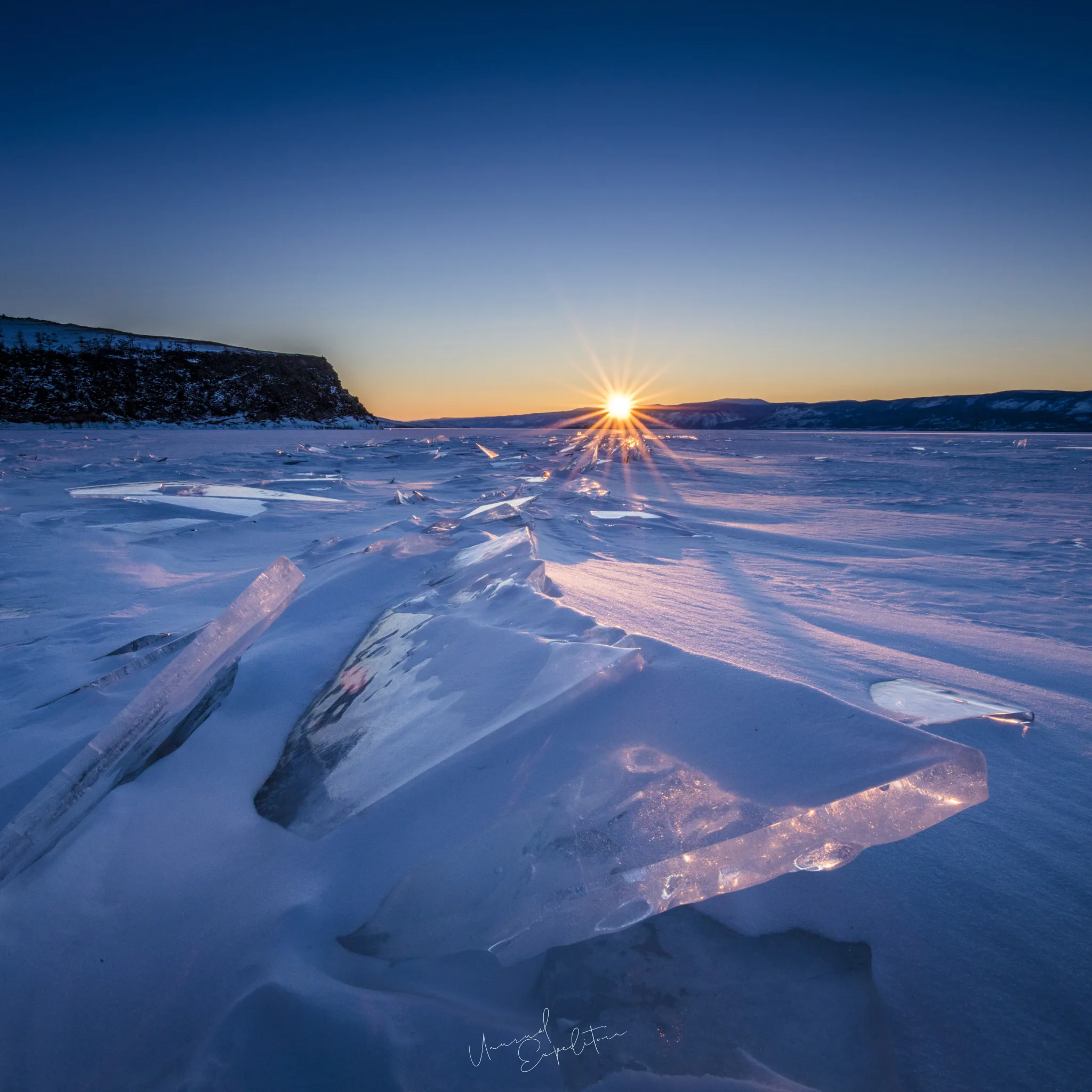
By late February the ice over much of the southern lake is commonly around a metre thick in places, which is why the authorities open official crossings for vehicles. It goes on thickening into March, then starts to weaken from the surface as the sun strengthens. The danger is never the average thickness, it is the exceptions: cracks, pressure ridges with water beneath them, and patches over springs. In practice this means two things for a photographer: plan your trip for the weeks when the crossings are open, and go out with a local driver who checks the ice daily.
"Both our trips were in the same window, the last days of February into March, and I would not move it. Go earlier and the days are short and brutal; go later and the clear ice turns white under your feet."
Joseph Mak, tour leader, Unusual Expedition
Olkhon Island weather in late winter
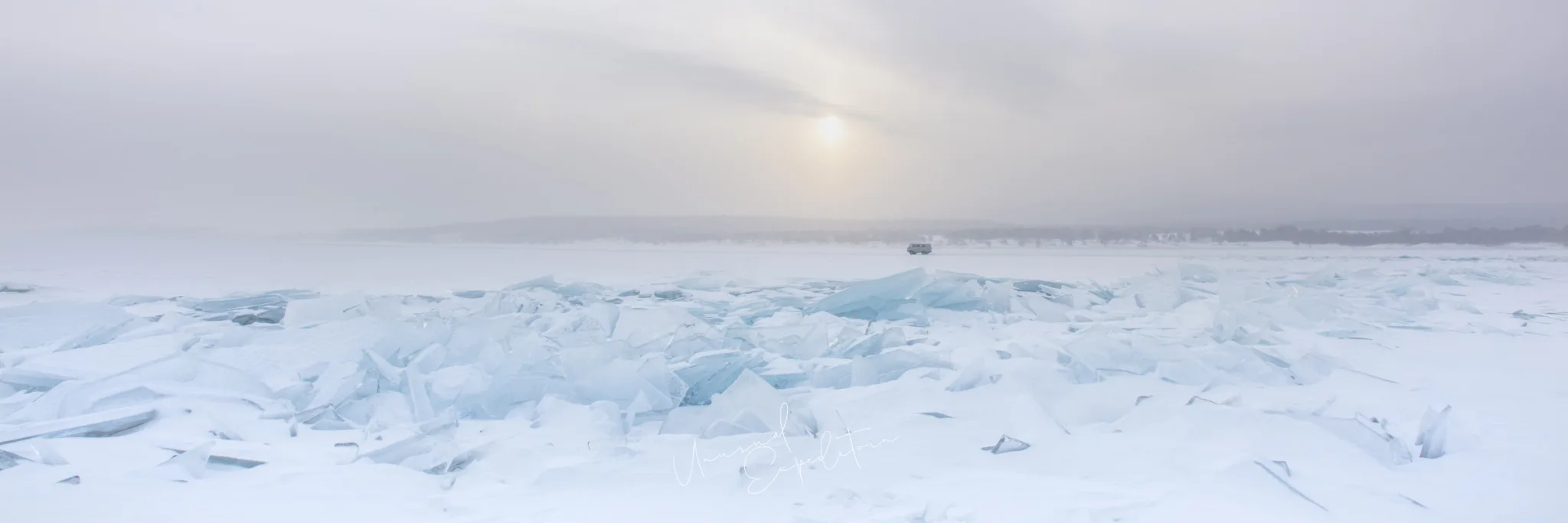
Olkhon Island weather in February and March is cold, dry and sunny more often than not. Nights fall well below minus fifteen, days can climb toward minus five in March sun, and the wind on the open ice changes everything: the same air temperature feels gentle in a sheltered bay and brutal on the open Small Sea. Snowfall is light but a single fresh fall can cover the clear ice. Whiteouts happen, when cloud and snow merge and the horizon disappears; they give a few minimalist frames and then it is time to go in.
The light: sunrise and sunset on the ice
In late winter the sun rises in the southeast and sets in the southwest and never climbs high, so the light is low and warm for a long stretch at both ends of the day. That is what lights the ridges from behind and turns broken ice gold, as in the feature photograph of this page. Midday light is hard on bare ice, but good for caves, where you want the sun to shine through the icicles, and for the clear black ice, which you photograph looking down. We plan each day as ridges early, caves and black ice in the middle, ridges or rock islands late.
Why we keep flexible days
Every Lake Baikal winter is different, and the weather inside a good week still changes day to day. One fresh snowfall can hide the clear ice in a bay for days until the wind clears it again, and a grey sky turns the ice caves flat. So we build a few unassigned days into each trip and move subjects around: ridges on the clear mornings, caves on the sunny middays, villages and culture when the sky is grey. The drivers' daily check of the ice decides the route. It is the single habit that most improves a Baikal set of pictures.
What about summer at Lake Baikal?
Summer is a different trip: open water, green steppe on Olkhon, wildflowers, boats, and swimming for the brave in water that stays cold. It is a fine landscape and the season most domestic tourists choose, but none of the ice subjects exist. We photograph Baikal in winter because the frozen lake is what you cannot see anywhere else. If you want both, go twice; they are two separate places in effect.
Plan your Lake Baikal dates with us
We set our private Lake Baikal trips in the late February and March window, and any scheduled departure is posted on our Russia photography tours page. The subjects that window gives you are shown in Lake Baikal photos and explained in Lake Baikal ice photography.
Lake Baikal photography tours
The next Lake Baikal departure is announced on the Lake Baikal photography tours page, with previous expeditions and all the planning guides.
Explore Lake Baikal in depth
- Lake Baikal Photography Tour: The Complete GuideRussia
- Olkhon Island Photos: Shaman Rock, Ice Caves and How to Get ThereRussia
- Lake Baikal Tour from Singapore: How to Get There and What to ExpectRussia
- Lake Baikal Photos: What the Frozen Lake Really Looks LikeRussia
- Lake Baikal Photography Trip FAQ: Cold, Safety, Cameras and IceRussia
- Lake Baikal Ice: Photographing the Blue, Clear and Cracked IceRussia
Upcoming Photo Tours
- Egypt Photo Tour – EgyptEgypt 12 Dec 2026 To 20 Dec 2026
- Inner Mongolia Winter Owl Photo Tour – ChinaChina 01 Jan 2027 To 04 Jan 2027
- Inner Mongolia Winter Photo Tour – ChinaChina 05 Jan 2027 To 11 Jan 2027
- Mekong And Central Highland Vietnam Photo Tour - VietnamVietnam 16 Jan 2027 To 24 Jan 2027