
Lake Baikal Ice: Photographing the Blue, Clear and Cracked Ice
Why Lake Baikal ice is so clear, how thick it gets, and how to photograph its cracks, bubbles and turquoise pressure ridges.
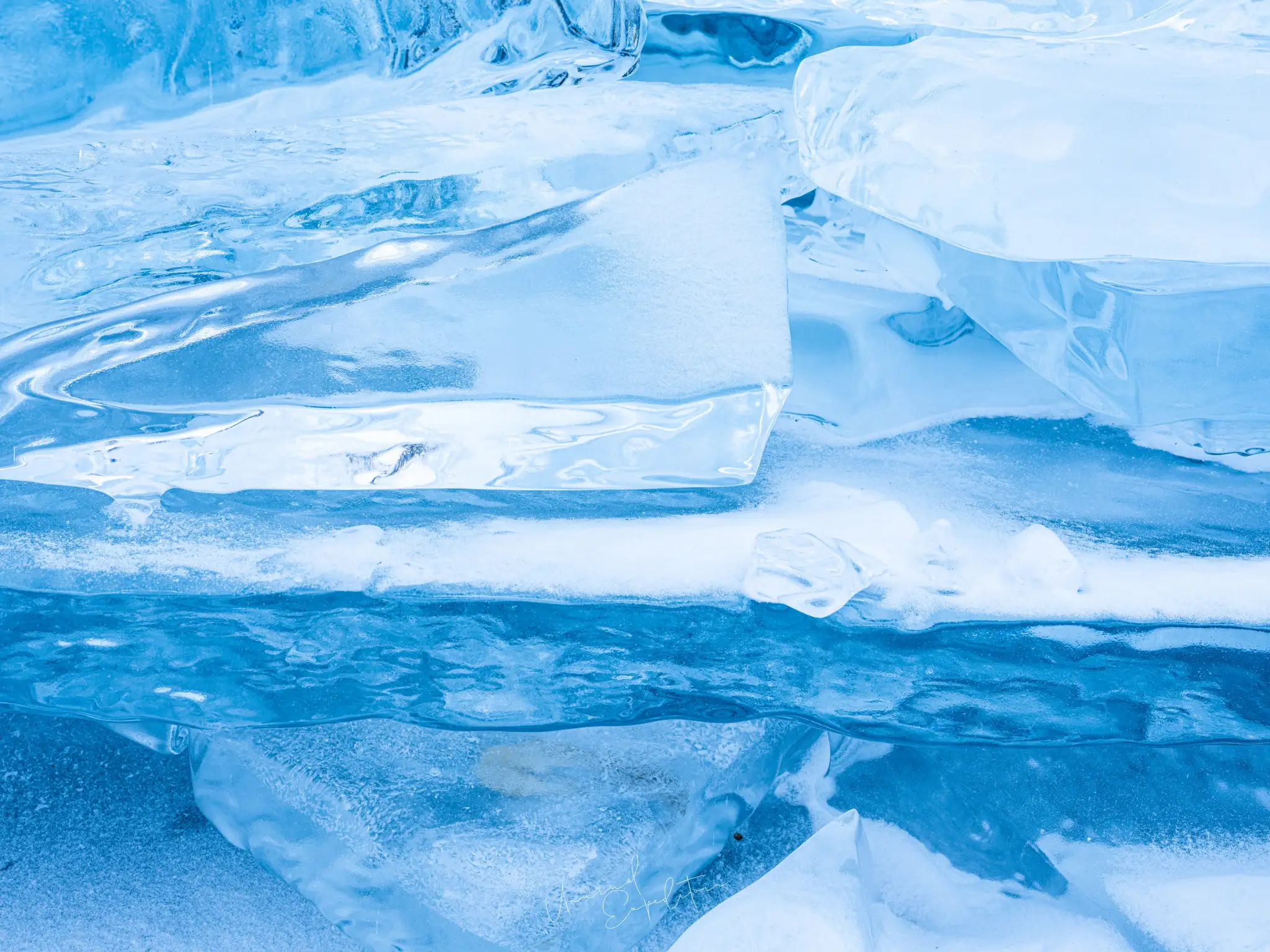
Lake Baikal ice is clear, blue and cracked because the water is unusually pure and the wind keeps snow off large parts of the frozen surface, so the ice grows like glass and shows its inside. To photograph it you need three things: a windswept stretch with little snow, low sun for the turquoise ridges, and the patience to get down on your knees. Here is why the ice looks the way it does, how thick it gets, and how we photograph each kind of Lake Baikal ice.
It is part of our Lake Baikal photography tour guide, and the landscape around the ice is shown in Lake Baikal photos.
Does Lake Baikal freeze?
Yes, almost entirely. Lake Baikal usually freezes over during January, the shallow bays first and the deep open water last, and the ice holds into spring. Break-up starts from late April in the south and runs into May further north. The water near some river mouths and springs stays open or thin all winter, which is one reason nobody drives onto the ice without a local driver. For photographers the useful season is shorter than the frozen season: the ice is at its clearest from around February into March, before late snow, sun and thaw cover it with a white skin.
Why is Lake Baikal ice so clear?
Two things work together. The water of Lake Baikal is very clean and carries little dissolved mineral or sediment, so it freezes without the cloudiness of most lake ice. And on large parts of the lake the winter is dry and windy, so snow blows off rather than settling. Where the surface stays bare, the ice is transparent enough to see the stones on the bottom in shallow bays and a green darkness over deep water. Fresh snow hides all of this in a few hours, which is why we watch the forecast and move to the bays the wind has swept.
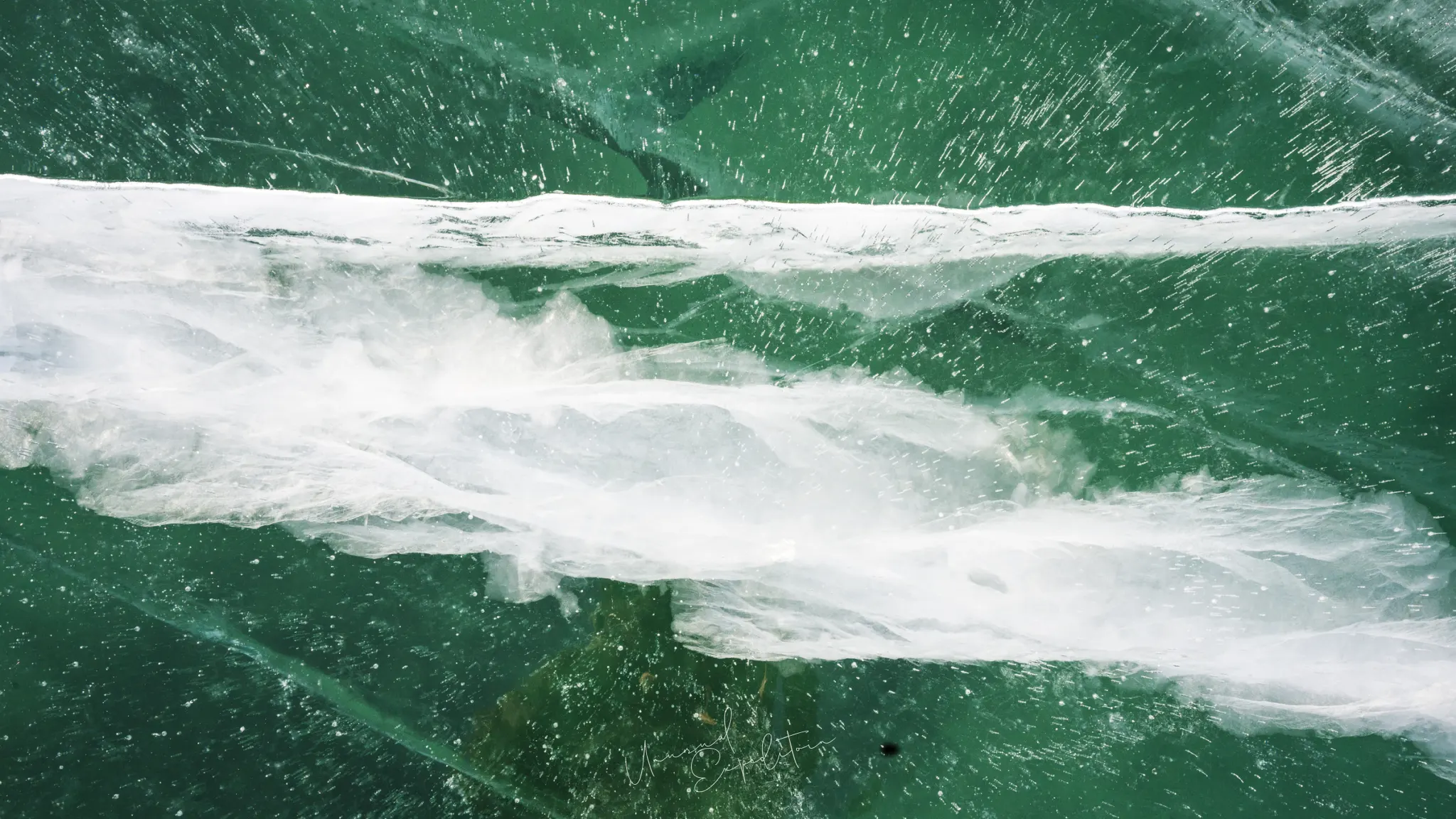
Lake Baikal ice cracking
The ice is never still. It expands and contracts with every change of temperature, and long cracks open across it with a boom or a whine that carries for kilometres. Inside clear ice those cracks are the subject: white planes that catch the light, crossing each other at angles, sometimes stacked several layers deep. Shoot them looking straight down with a wide lens, or kneel and use the cracks as lines running away from you. Overcast light shows the structure best; harsh sun bounces off the surface. The sound unnerves people the first time, but it is a normal part of thick ice moving.
Lake Baikal blue ice and the pressure ridges
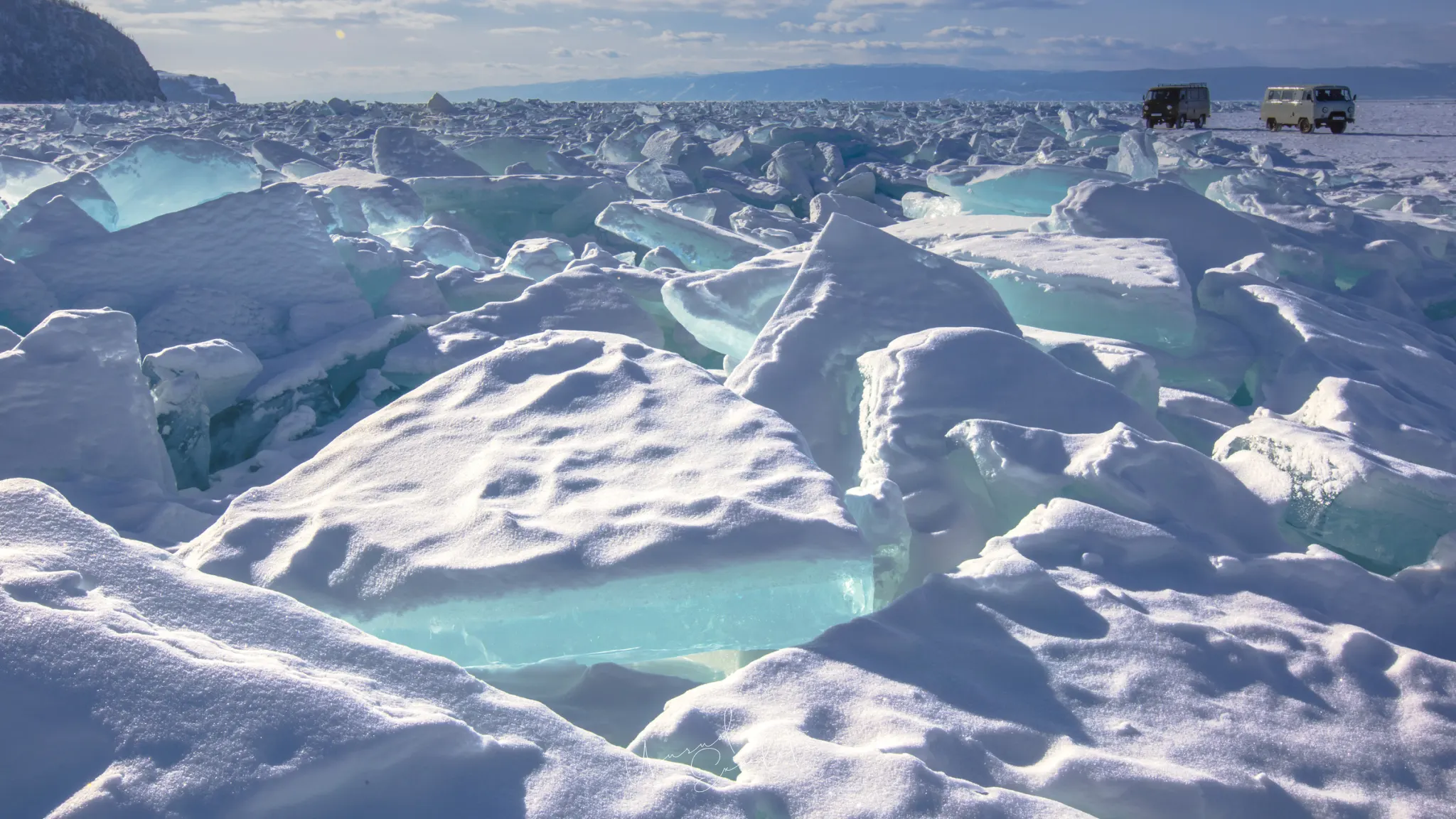
Lake Baikal blue ice is what most people mean when they search for the lake. It comes from pressure ridges, called torosy in Russian, where sheets of ice push against each other and break upwards into slabs. The edges of thick clear slabs show turquoise, and with the sun low behind them they glow. Ridges form along shores and island edges and across open stretches, and they change through the season. Work them at both ends of the day, put the sun behind a slab, and expose for the bright ice so the colour holds.
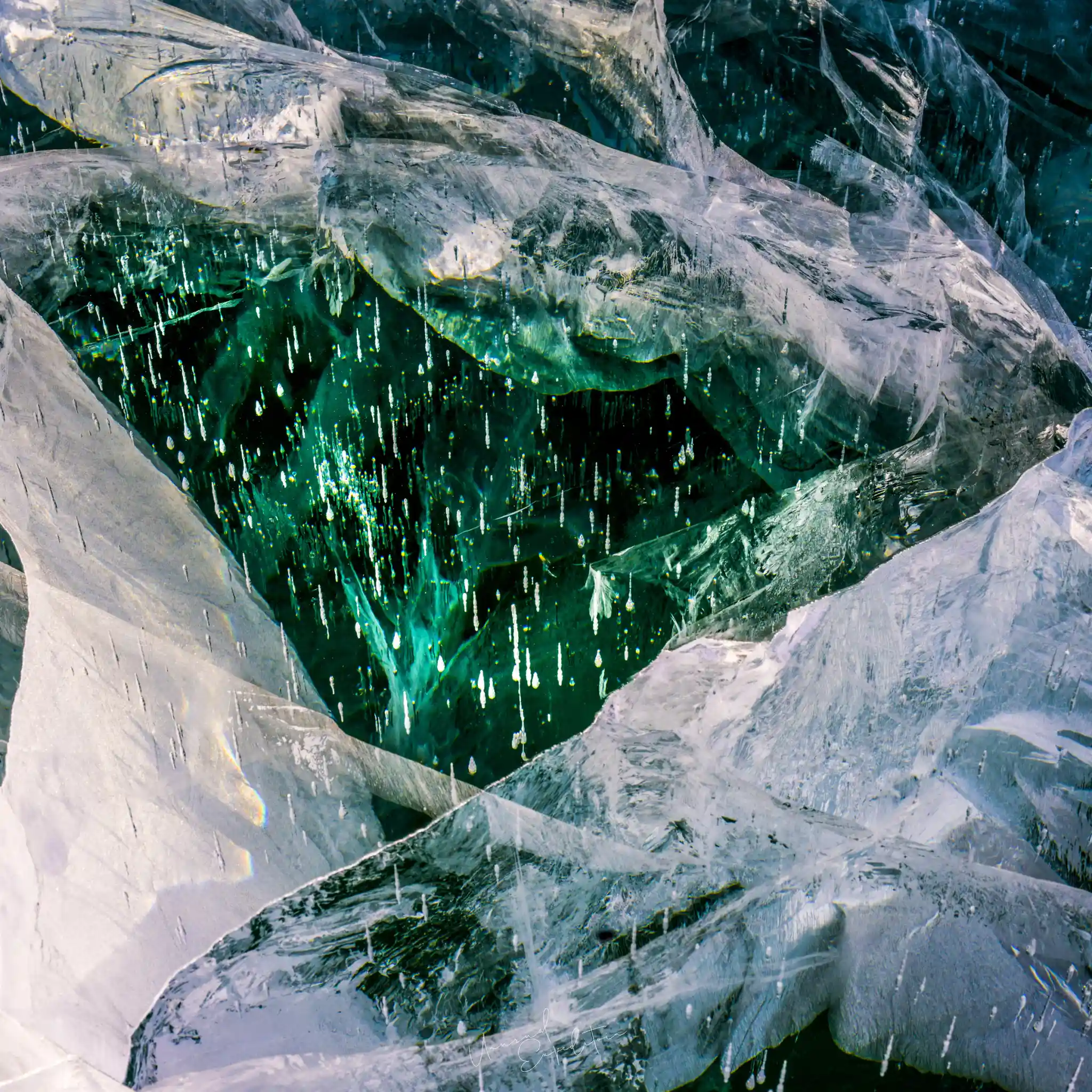
Lake Baikal ice bubbles
In some bays, gas rising from the lake bed is caught as the ice grows, and it freezes into white discs stacked one above another inside the ice. They are the most specific subject on the lake and the hardest to find: they need clear ice, no snow, and a bay where the gas rises, and local drivers know the places. Photograph them from directly above with a wide lens, or close with a macro for the layering. A polariser cuts reflection from the surface but can darken the ice unevenly, so check each frame.
"The trick with Baikal ice is to stop looking at the horizon. The best pictures are under your boots. I spend half of every morning on my knees, and the other half waiting for the sun to drop behind a slab."
Joseph Mak, tour leader, Unusual Expedition
How thick is Lake Baikal ice?
By late winter Lake Baikal ice is commonly around a metre thick in places, and the official ice crossings are opened only where the authorities have measured enough thickness to carry vehicles. But thickness varies a great deal: near river mouths and over springs the ice can stay thin, and fresh cracks open through the season. That is why we never walk out on our own and why our drivers choose the routes. For photographers it means one simple rule: go where the driver says, and step back from any crack with water in it.
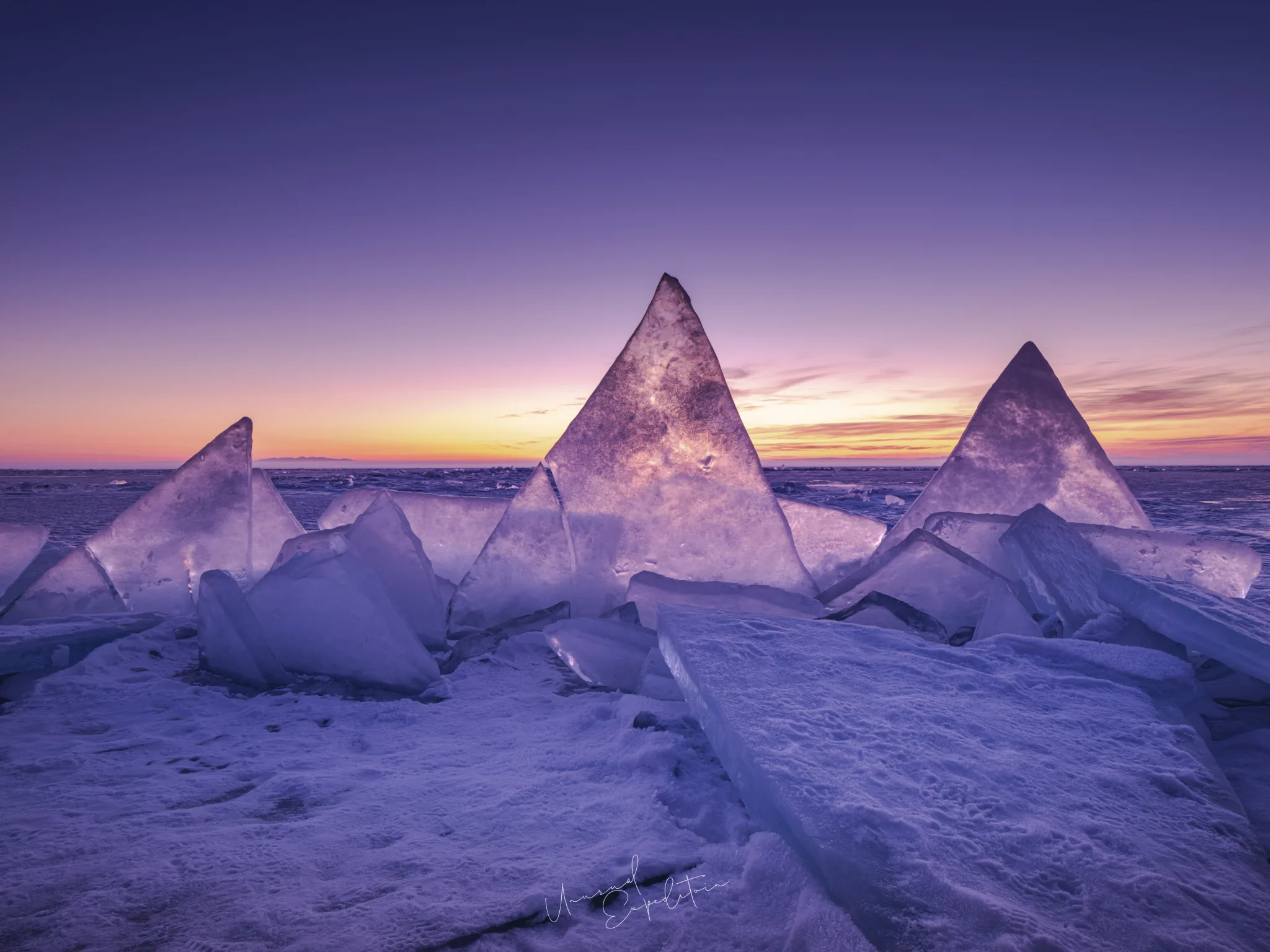
Ice caves: the ice that hangs
Not all of Lake Baikal's ice lies flat. Along the cliffs of Olkhon and the small islands, spray thrown up by autumn storms freezes into curtains of icicles, and by late winter some hide hollows you can step into. They are a sunny-day subject, because the light has to pass through the ice to make it glow, and the floors are polished and treacherous. We describe the best of them, and how we approach them safely, in Olkhon Island photos.
Which ice to photograph, and how
| Kind of ice | Where | Light | Technique |
|---|---|---|---|
| Clear black ice | Windswept bays | Overcast or high sun | Wide lens straight down, polariser with care |
| Cracks | Anywhere the ice is bare | Overcast | Low angle, cracks as leading lines |
| Pressure ridges | Shores and island edges | Low sun, backlit | Expose for the ice, sun behind a slab |
| Bubbles | A few local bays | Even light | Top-down wide, or macro |
| Ridge fields | Open stretches | Low sun, side light | Long lens to stack the slabs |
The bare-ice subjects work in any light; the ridges are the ones to save the low sun for.
Photograph Lake Baikal ice with us
We run Lake Baikal as a private late winter photography trip, with drivers who know where the clear ice is that week. Check our Russia photography tours for any scheduled departure and the best time to photograph Lake Baikal ice before you choose your dates.
Lake Baikal photography tours
The next Lake Baikal departure is announced on the Lake Baikal photography tours page, with previous expeditions and all the planning guides.
Explore Lake Baikal in depth
- Lake Baikal Photography Tour: The Complete GuideRussia
- Olkhon Island Photos: Shaman Rock, Ice Caves and How to Get ThereRussia
- Lake Baikal Tour from Singapore: How to Get There and What to ExpectRussia
- Lake Baikal Photos: What the Frozen Lake Really Looks LikeRussia
- Lake Baikal Photography Trip FAQ: Cold, Safety, Cameras and IceRussia
- The Best Time to Photograph Lake Baikal IceRussia
Upcoming Photo Tours
- Egypt Photo Tour – EgyptEgypt 12 Dec 2026 To 20 Dec 2026
- Inner Mongolia Winter Owl Photo Tour – ChinaChina 01 Jan 2027 To 04 Jan 2027
- Inner Mongolia Winter Photo Tour – ChinaChina 05 Jan 2027 To 11 Jan 2027
- Mekong And Central Highland Vietnam Photo Tour - VietnamVietnam 16 Jan 2027 To 24 Jan 2027