
Lake Baikal Photography Tour: The Complete Guide
A Lake Baikal photography tour in late winter: clear ice, turquoise ridges, ice caves, Olkhon Island, the light, the cold and the logistics.
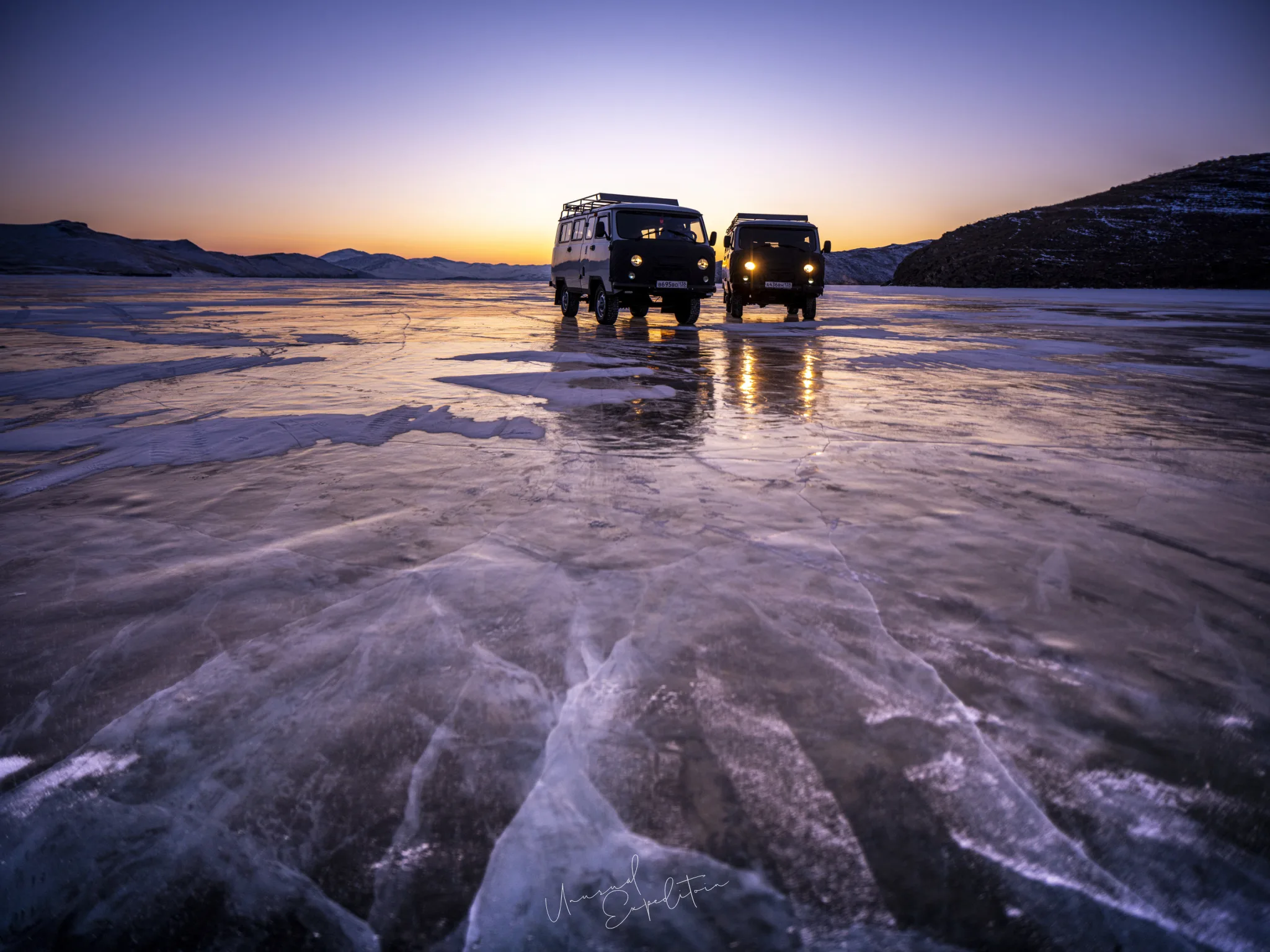
A Lake Baikal photography tour is a winter trip onto the ice of the oldest and deepest lake on earth, in southern Siberia, when the surface freezes clear enough to see through and the wind piles turquoise slabs into ridges along the shore. We go in late winter, when the ice is thick and the light is low, and we photograph ice caves, clear black ice, pressure ridges, Olkhon Island and the Buryat culture around it. Below is what you photograph, when, and how the trip works.
Everything below comes from our own two winter trips onto the lake, and it links to the detailed pages on photographing the blue and clear ice, Olkhon Island and its ice caves and the best time to go. For Russia as a whole, including entry and money, start with our Russia photography tour guide.
Lake Baikal photography: what the lake is
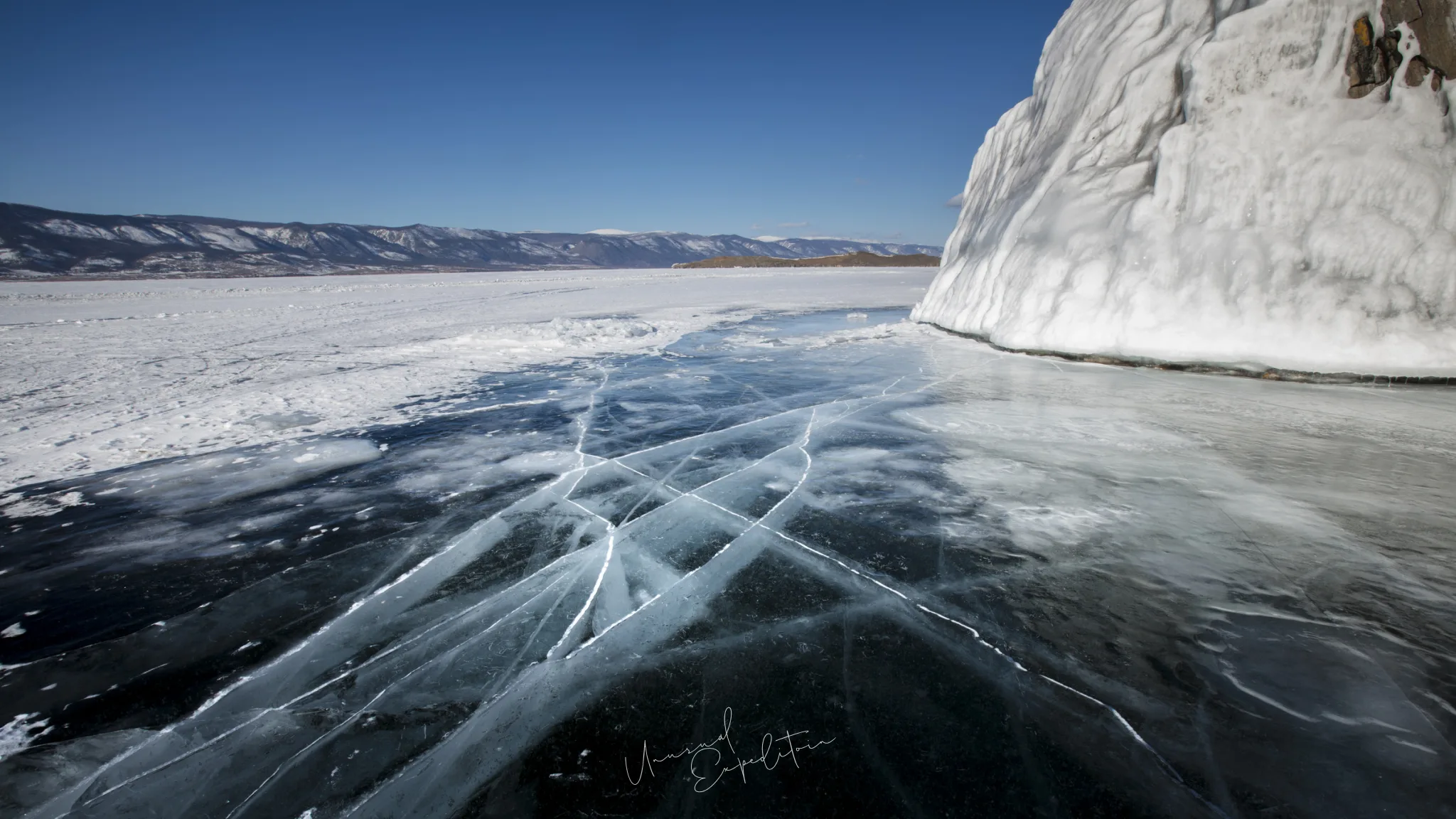
Lake Baikal lies in southern Siberia between Irkutsk Oblast and the Republic of Buryatia. It is roughly 25 million years old, about 636 kilometres long and, at its deepest point, about 1,640 metres deep. UNESCO listed it as a World Heritage site in 1996, and it holds something like a fifth of the world's unfrozen surface fresh water. For a photographer, the numbers matter less than one fact: the water is so clean and low in dissolved minerals that it freezes almost glass clear. Stand on the ice in a windswept bay and you look down through dark green ice to stones on the bottom. No other frozen lake we know gives you that.
Lake Baikal winter tour: what you photograph
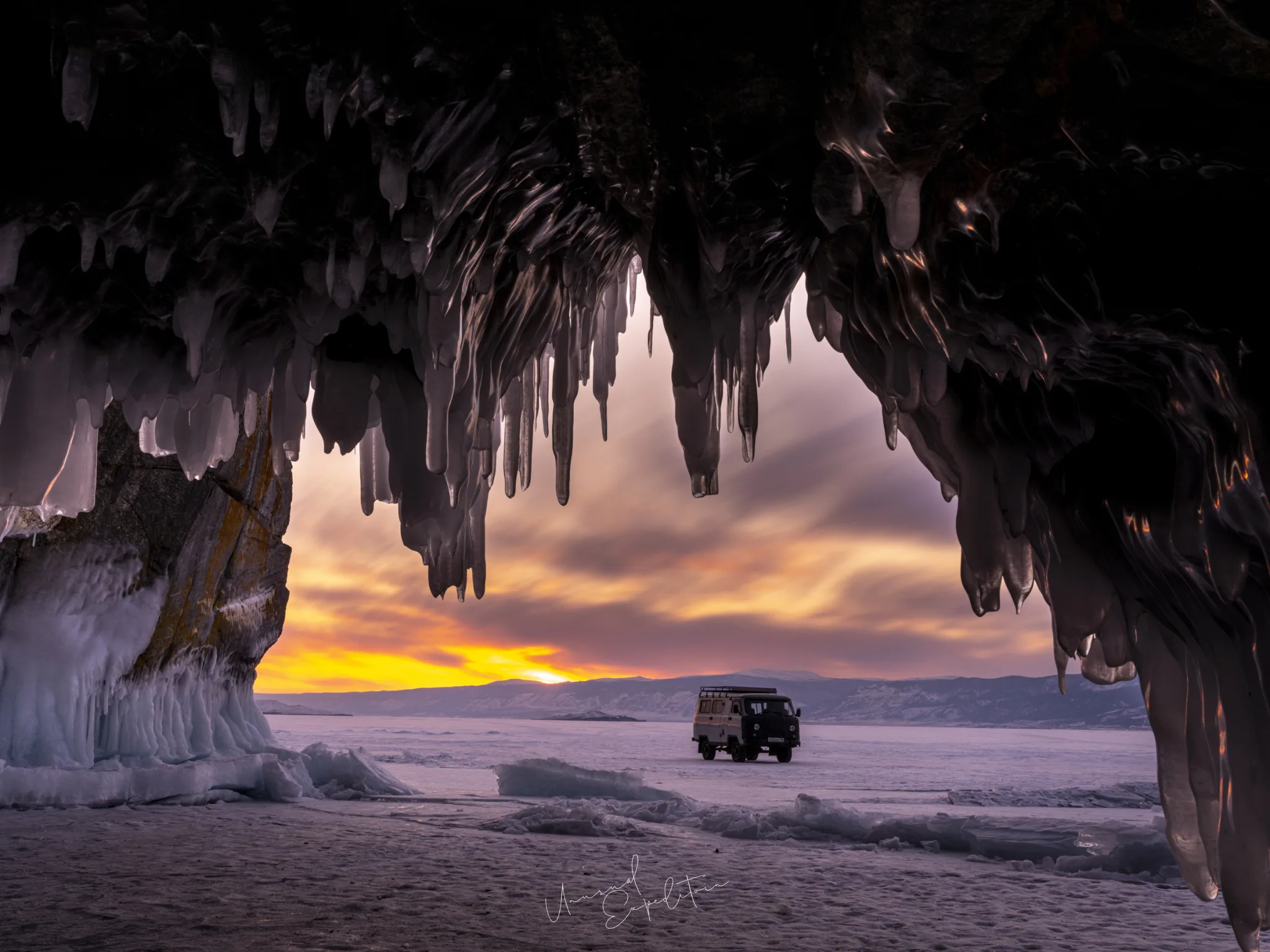
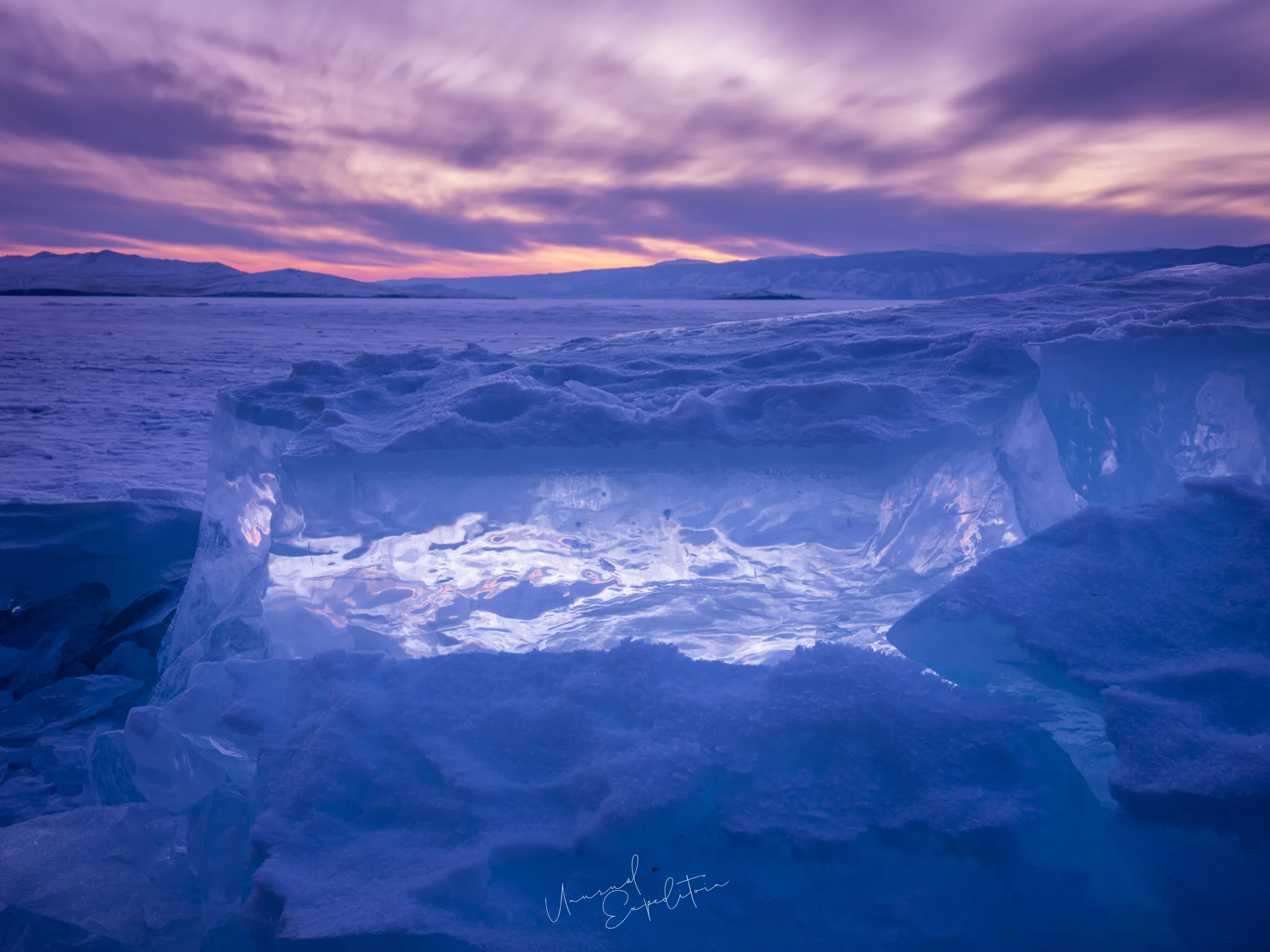
A Lake Baikal winter tour gives you five kinds of picture, and a good trip spends time on each. The first is the clear ice itself, cracked into white lines and sometimes holding frozen bubbles of methane. The second is the pressure ridges, where wind and temperature push the ice into slabs and pyramids of turquoise that glow when the sun is low. The third is the ice caves in the cliffs of Olkhon and the small islands, hung with icicles. The fourth is the landscape: rock islands, cliffs and a horizon of white. The fifth is people: ice fishermen, drivers, and the Buryat shamanic tradition around Olkhon.
| Subject | Where on the lake | Best light | Lens |
|---|---|---|---|
| Clear black ice and cracks | Windswept bays where snow does not settle | Overcast or midday, looking down | 16-35mm |
| Turquoise pressure ridges | Along shores and island edges | Low sun at both ends of the day, backlit | 16-35mm and 24-70mm |
| Ice caves and icicles | Cliffs of Olkhon and the small islands | Sunny days, sun behind the curtain of ice | 16-35mm |
| Rock islands and cliffs | The Small Sea, Ogoy, Shaman Rock | Clear mornings and late afternoons | 24-70mm and 70-200mm |
| People and culture | Khuzhir and the villages | Any, with permission | 24-70mm |
The ice subjects reward low sun, which is why we plan the days around the two ends of daylight and keep the middle for travel and caves.
How the ice is photographed safely
You do not walk out alone onto Baikal. We travel with local drivers in the UAZ vans that are the standard winter vehicle on the lake, and they read the ice for a living: where it is thick, where a fresh crack has opened, where the water stays open near river mouths. Official ice crossings open only when the authorities have measured enough thickness. On the ice you wear studded overshoes or crampons, keep cameras on straps and carry spare batteries inside your jacket. The cold is dry and the sun is strong, so the risk is less the temperature than the wind on open ice and the glare off it.
Olkhon Island and the Small Sea
Most Lake Baikal photography happens around Olkhon, the largest island in the lake, and the shallow strait between it and the western shore that locals call the Small Sea. The shallow water freezes early and clear, the shores are rocky, and the small islands of the strait, Ogoy among them, have cliffs that grow ice caves. Khuzhir, the main village on Olkhon, sits beside Shaman Rock, a pale outcrop sacred to the Buryat. We cover the island in its own page on Olkhon Island photos, including how to get there in winter.
"The first time I knelt on clear Baikal ice I forgot about the camera for a minute. You see straight down into green water with cracks running through it like lightning. Then the wind reminds you where you are, and you start working fast."
Joseph Mak, tour leader, Unusual Expedition
When to go for a Lake Baikal photography tour
The lake usually freezes over during January, and the window for clear ice photography runs roughly from February into March, before snow and thaw dull the surface and the ice starts to break up from late April. Both of our trips were in late February and early March, which is the period we recommend: the ice is thick, the days are getting longer, and the sun sits low enough at both ends of the day to light the pressure ridges from behind. The detail, including what each month looks like, is in the best time to photograph Lake Baikal ice.
Cameras in the cold
Siberian winter is hard on batteries and easy on sensors. At these temperatures a battery can lose most of its charge within the hour if it rides in an outside pocket, so carry three or four and rotate them against your body. Condensation is the real enemy: when you go from the ice into a warm van or guesthouse, seal the camera in a bag first and let it warm slowly. Snow and ice fool the meter into underexposure, so add exposure and check the histogram. A polariser helps with glare off the ice but can make the sky uneven with wide lenses. Gloves thin enough to work the dials, under a pair of mittens, make the difference between shooting and not.
Getting there and travelling in Russia
The gateway is Irkutsk, a city on the Angara river, which is the only river flowing out of Baikal. There are no direct flights from Singapore to Russia, so the route runs through a hub, and Singapore passport holders need a visa, usually Russia's e-visa. Bank cards issued outside Russia do not work there, so you travel with cash. These practical points apply to every Russian trip and are set out once, with sources, in our Russia photography tour guide, and the Baikal route itself is in Lake Baikal tour from Singapore.
Explore Lake Baikal in depth
- Lake Baikal photos: what the frozen lake really looks like
- Lake Baikal ice: photographing the blue, clear and cracked ice
- Olkhon Island photos: Shaman Rock, ice caves and how to get there
- The best time to photograph Lake Baikal ice
- Lake Baikal tour from Singapore
- Lake Baikal photography trip FAQ
Photograph the ice with us
We run Lake Baikal as a private winter photography trip for small groups, built around the late winter ice season, and we announce scheduled departures on our Russia photography tours page. Write to us with your dates and the kind of pictures you want, and we will tell you plainly whether the ice and the light will give them to you.
Lake Baikal photography tours
The next Lake Baikal departure is announced on the Lake Baikal photography tours page, with previous expeditions and all the planning guides.
Explore Lake Baikal in depth
- Olkhon Island Photos: Shaman Rock, Ice Caves and How to Get ThereRussia
- Lake Baikal Tour from Singapore: How to Get There and What to ExpectRussia
- Lake Baikal Photos: What the Frozen Lake Really Looks LikeRussia
- Lake Baikal Photography Trip FAQ: Cold, Safety, Cameras and IceRussia
- Lake Baikal Ice: Photographing the Blue, Clear and Cracked IceRussia
- The Best Time to Photograph Lake Baikal IceRussia
Upcoming Photo Tours
- Egypt Photo Tour – EgyptEgypt 12 Dec 2026 To 20 Dec 2026
- Inner Mongolia Winter Owl Photo Tour – ChinaChina 01 Jan 2027 To 04 Jan 2027
- Inner Mongolia Winter Photo Tour – ChinaChina 05 Jan 2027 To 11 Jan 2027
- Mekong And Central Highland Vietnam Photo Tour - VietnamVietnam 16 Jan 2027 To 24 Jan 2027