
Borobudur and Yogyakarta Photography Tour Guide: Temples, Waisak and Workshops
Yogyakarta photography guide: Borobudur at dawn, Waisak by candlelight, Prambanan at sunset and the workshops of central Java.
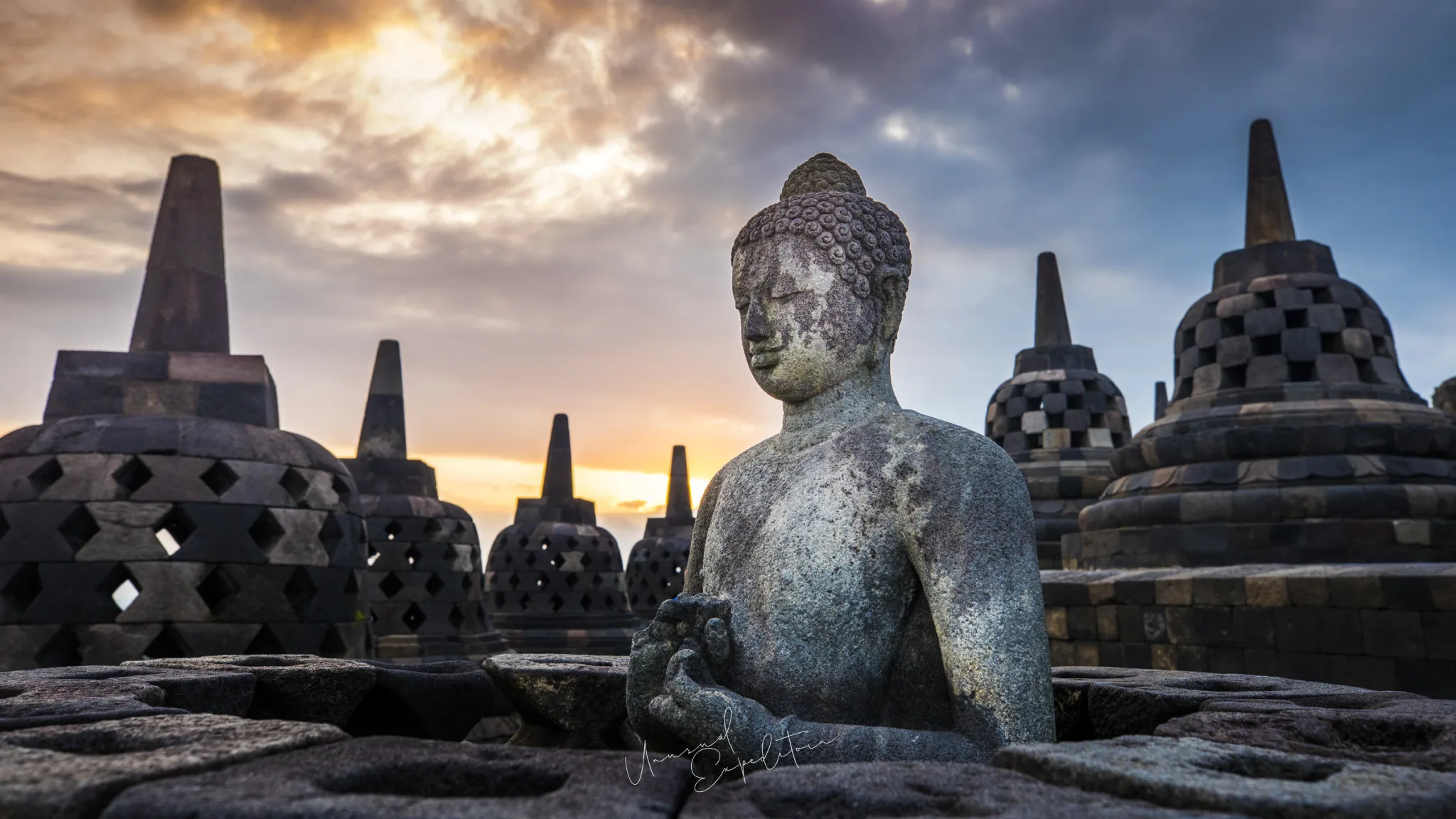
Yogyakarta photography means three things for us: Borobudur, which UNESCO counts among the greatest Buddhist monuments in the world, at dawn above a valley of mist; the Waisak festival, when monks and pilgrims fill the temple grounds by candlelight under the full moon; and the Hindu and Buddhist temples of the Prambanan plain at sunset. Around them sit the workshops of central Java, a gong forge, a tofu kitchen and a puppet maker's table, all within reach of one base in Yogyakarta.
Borobudur and Yogyakarta are the cultural heart of our Indonesia photography tour guide, which covers entry, money, flights and seasons for the whole country. Below is what the area offers a photographer, when to come and how the destination guides fit together. The photographs in this guide are our own, taken on our trips here; we hold the rights to them, and the notes come from knowing these places first hand.
What Yogyakarta photography looks like
Yogyakarta photography divides neatly by light. Before sunrise you are either on a hill west of Borobudur or on the temple's upper terraces, watching the stupas come out of the dark. Mid-morning belongs to people: the workshops are busy, the light falls through gaps in tiled roofs, and craftsmen are at their benches. Late afternoon is temple time again, at Prambanan, Plaosan or the hilltop gate of Ratu Boko. Night is for Waisak, if your dates allow, or for the floodlit stone of Borobudur itself. Our Borobudur temple photos page goes through the monument terrace by terrace, and things to do in Yogyakarta with a camera covers the workshops and Jomblang cave.
Why Borobudur is the centre of the trip
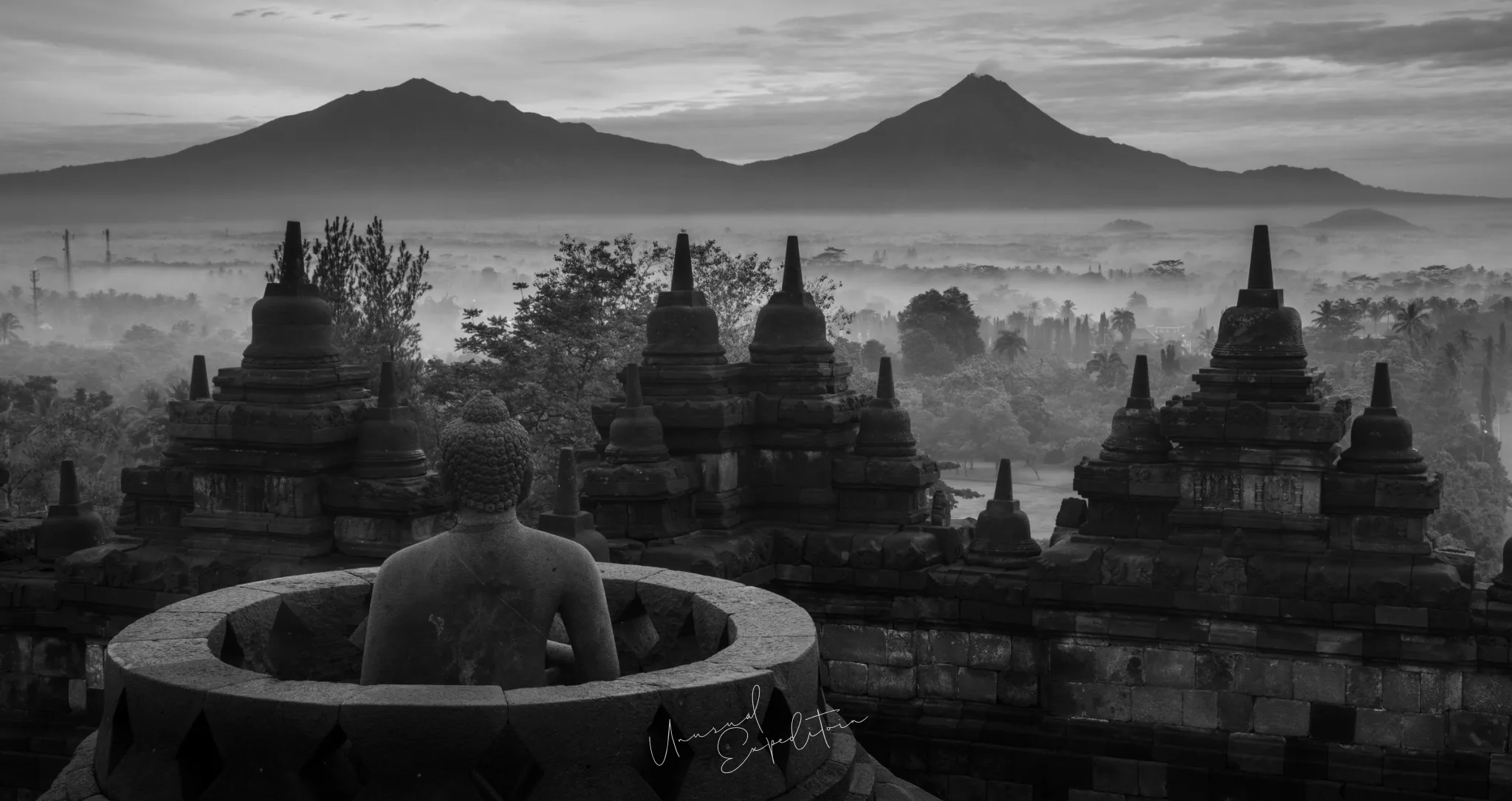
Borobudur was built in the 8th and 9th centuries under the Syailendra dynasty, and UNESCO, which listed the Borobudur Temple Compounds in 1991, describes it as a stupa raised in three tiers around a natural hill: five square terraces, three circular platforms and a great stupa on top. Around the circular platforms stand 72 openwork stupas, each holding a statue of the Buddha. For a photographer that structure is the gift. The square galleries give you relief panels and Buddhas in niches; the round terraces give you rows of bell-shaped stupas against the sky, with Merapi and Merbabu on the eastern horizon. The Borobudur sunrise page compares the temple terrace with the hill of Punthuk Setumbu.
Waisak at Borobudur
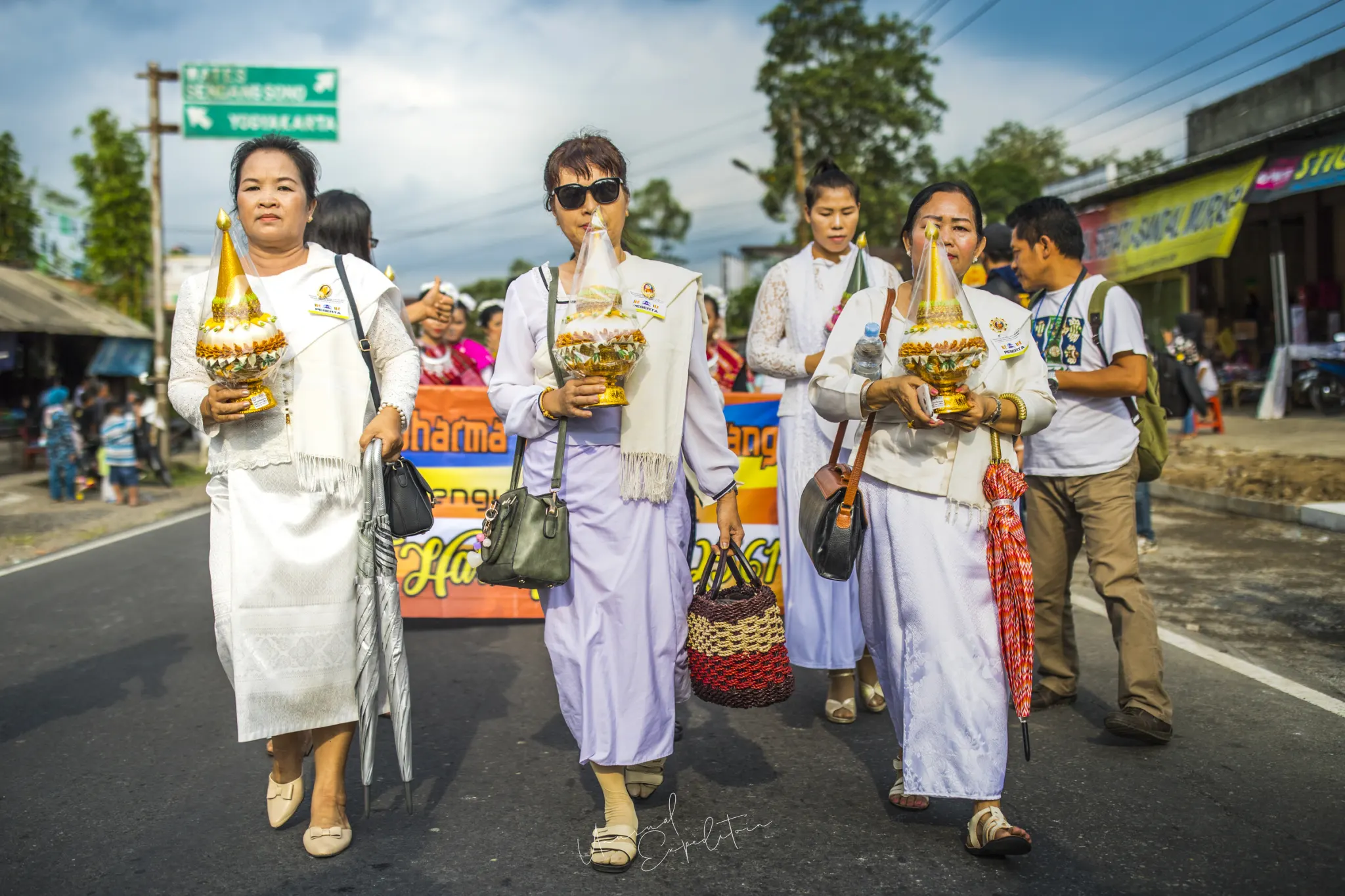
Waisak, the Buddhist festival of the Buddha's birth, enlightenment and passing, is celebrated nationally at Borobudur on the full moon of the month of Waisak, usually in May and sometimes in early June. We have photographed it on several trips: the procession of monks from Mendut, the candle ceremony on the temple grounds and the release of lanterns over the field. It is a religious day first, and it rewards photographers who behave like guests. The Waisak festival at Borobudur page explains the calendar and the rites, and the Borobudur lantern festival page sets out how the lantern release works now, because its rules have changed over the years.
Borobudur and Prambanan in one trip
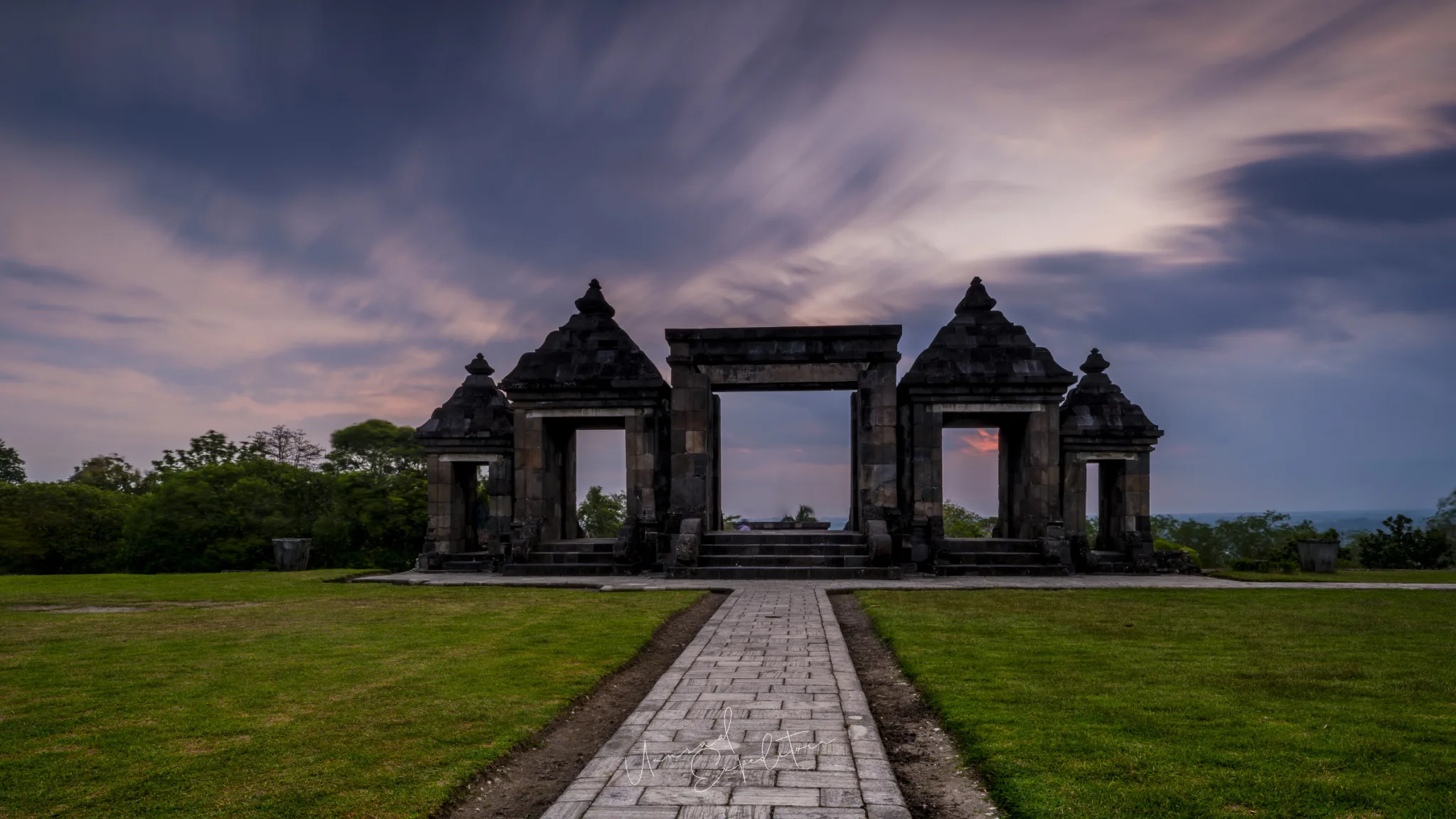
Borobudur and Prambanan sit on opposite sides of Yogyakarta, and photographing both is the natural shape of a trip here. Prambanan is Hindu, a 9th-century complex dedicated to Shiva whose tall, pointed towers read completely differently from Borobudur's round stupas, and UNESCO lists it with the Buddhist temples of Sewu, Lumbung and Bubrah nearby. Plaosan, a Buddhist complex a short way north, is quieter and often has the best afternoon light of the three. Ratu Boko, on a hill to the south, is known for its stone gateway at sunset. Our Prambanan sunset page compares them.
| Place | Faith | Best light for us | Main subject |
|---|---|---|---|
| Borobudur | Buddhist | Dawn, and night at Waisak | Stupas, Buddhas, reliefs, volcano skyline |
| Punthuk Setumbu | Viewpoint | Before and at sunrise | Borobudur in a sea of mist |
| Prambanan | Hindu | Sunset and blue hour | Pointed towers above a field of ruins |
| Plaosan | Buddhist | Late afternoon | Twin temples, carved guardians |
| Ratu Boko | Hilltop site | Sunset | The stone gateway against the sky |
Most photographers want two mornings at Borobudur and two evenings on the Prambanan side, which is why one base in between works best.
Borobudur tour from Yogyakarta
A Borobudur tour from Yogyakarta is how almost everyone arrives, because Yogyakarta International Airport, the city's railway and its hotels make it the obvious base, and the temple lies in the Magelang countryside to the north-west. You can also stay in the villages around Borobudur itself, which makes the early starts easier. Climbing the stone structure needs a separate climbing ticket booked through the official operator, with a guide and the woven upanat sandals the operator issues to protect the stone, so book ahead and check the current terms. Our Borobudur temple tips page answers the practical questions.
Best things to do in Yogyakarta with a camera
The best things to do in Yogyakarta with a camera are the ones where people are working. A gamelan gong forge throws showers of sparks every time a disc comes out of the fire. A family tofu workshop fills with steam, and shafts of morning light come through the roof. An elderly puppet maker carves and paints wayang kulit figures from leather under a single lamp, and dancers make up backstage before a village performance. These are working places, so we visit with someone who knows the families, keep the group small and ask before every close portrait.
The first time I stood on the top terrace before dawn, Merapi was smoking on the horizon and the whole valley was under mist. Then the light came and every stupa caught it at once. I have been back for Waisak and for the workshops since, but that is still the picture that brings me back.
Joseph Mak, tour leader, Unusual Expedition
When to come
Central Java has a wet season, roughly November to March, and drier months from about May to October, as the country's meteorology agency BMKG describes it. We have found mist over the Borobudur valley in both seasons, but clear skies at dawn are likelier in the drier months. Waisak falls in May or early June, so the festival and the drier weather usually coincide. Merapi has been at alert level III since late 2020; that does not affect Borobudur or Prambanan, but check the current level before planning anything on the volcano's slopes.
Explore Borobudur and Yogyakarta in depth
- Waisak festival at Borobudur
- Borobudur lantern festival
- Borobudur sunrise and Punthuk Setumbu
- Borobudur temple photos
- Prambanan, Plaosan and Ratu Boko at sunset
- Yogyakarta workshops, people and Jomblang cave
- Borobudur and Yogyakarta photography FAQ
Photograph Borobudur and Yogyakarta with us
We run Borobudur and Yogyakarta as a private trip on request, for individuals, couples, families and photographers who want to go at their own pace. We arrange all logistics to your needs, and with no tour leader travelling the cost can be lower than a group tour; a photographer or photography coaching can be added at extra cost. For Waisak, ask us at least two months ahead. Any scheduled departure will appear on our Indonesia photography tours page.
Ask us about Borobudur and Yogyakarta
Borobudur and Yogyakarta photography tours
The next Borobudur and Yogyakarta departure is announced on the Borobudur and Yogyakarta photography tours page, with previous expeditions and all the planning guides.
Explore Borobudur and Yogyakarta in depth
- Yogyakarta Photography: Gong Forge, Tofu Workshop, Puppet Maker and Jomblang CaveIndonesia
- Waisak Festival at Borobudur: Calendar, Procession and Night CeremonyIndonesia
- Prambanan Sunset: Photographing Prambanan, Plaosan and Ratu BokoIndonesia
- Borobudur Temple Photos: Stupas, Reliefs and the Monument at NightIndonesia
- Borobudur Sunrise: Punthuk Setumbu or the Temple TerracesIndonesia
- Borobudur Lantern Festival: How the Waisak Lantern Release Works NowIndonesia
- Borobudur and Yogyakarta Photography FAQ: Tickets, Monks, Drones and MerapiIndonesia
Upcoming Photo Tours
- Egypt Photo Tour – EgyptEgypt 12 Dec 2026 To 20 Dec 2026
- Inner Mongolia Winter Owl Photo Tour – ChinaChina 01 Jan 2027 To 04 Jan 2027
- Inner Mongolia Winter Photo Tour – ChinaChina 05 Jan 2027 To 11 Jan 2027
- Mekong And Central Highland Vietnam Photo Tour - VietnamVietnam 16 Jan 2027 To 24 Jan 2027