
Prambanan Sunset: Photographing Prambanan, Plaosan and Ratu Boko
Prambanan sunset for photographers: where to stand at Prambanan, the quiet Plaosan temple and the Ratu Boko gateway, with lenses and light.
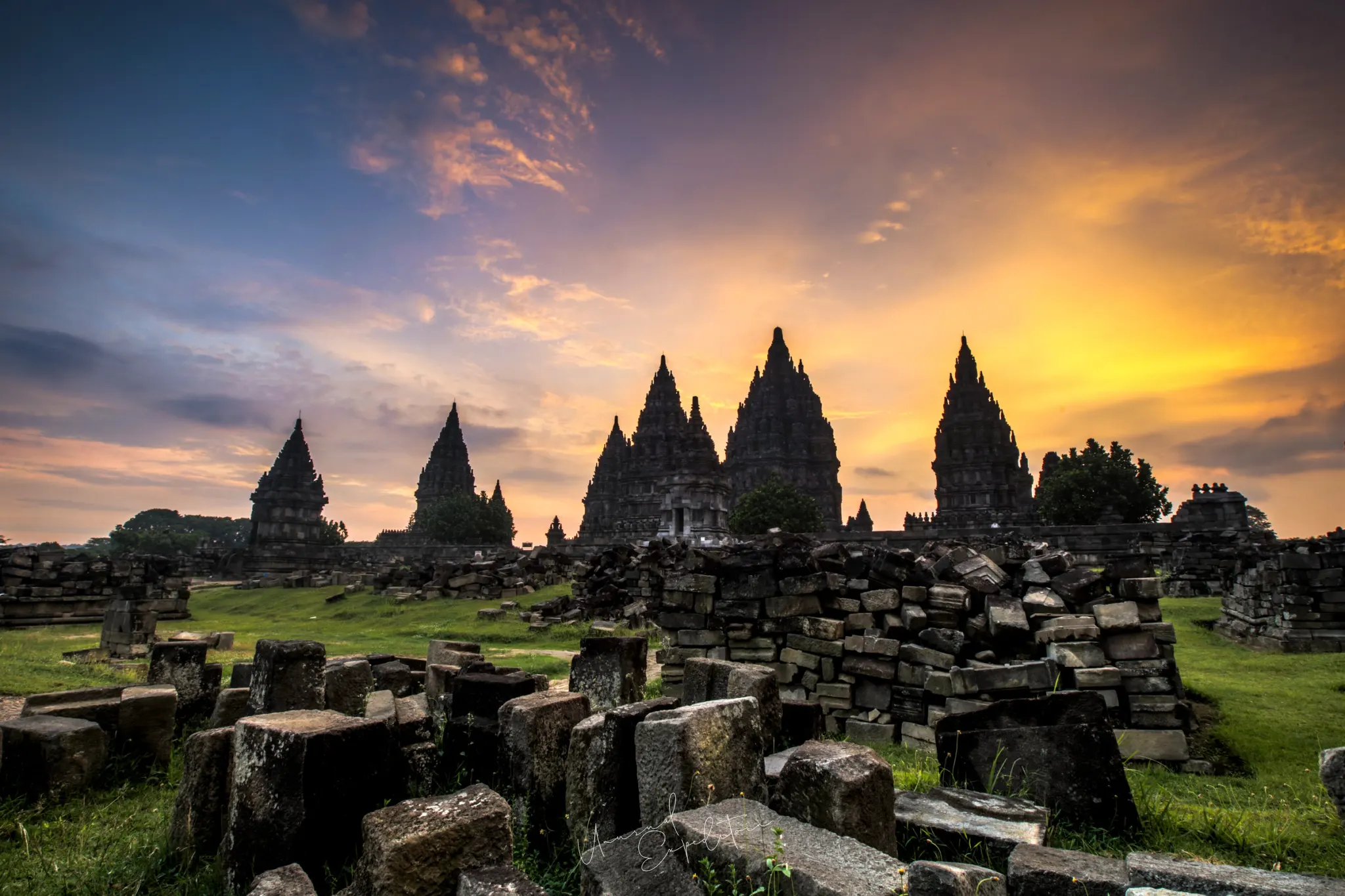
Prambanan sunset is the evening counterpart to dawn at Borobudur: the tall, pointed Hindu towers of Prambanan turn black against an orange sky above a field of fallen stone, and the light lasts long enough for a second site. Nearby Plaosan, a quieter Buddhist complex, has the best late afternoon light on its carvings, and the stone gateway of Ratu Boko on its hill catches the last colour. For a photographer the three make one long afternoon on the Prambanan side of Yogyakarta.
Here are all three, with where to stand and how they differ from Borobudur. It belongs to our Borobudur and Yogyakarta photography tour guide, which shows how the Prambanan side and the Borobudur side fit into one trip.
Prambanan temple: what you are photographing
Prambanan temple is a Hindu complex of the 9th century, and the contrast with Borobudur is the reason to photograph both. UNESCO, which listed the Prambanan Temple Compounds in 1991, describes Loro Jonggrang, the main group, as a brilliant example of Hindu religious reliefs, dedicated to Shiva and carved with the Indonesian version of the Ramayana. Around it, UNESCO counts hundreds of smaller shrines, and nearby Sewu, Lumbung and Bubrah are Buddhist. Where Borobudur is a single mountain of stone with rounded stupas, Prambanan is a cluster of steep, pointed towers, so it reads best as a skyline. The site lies on the border between Yogyakarta and Central Java, east of the city.
Prambanan sunset: where to stand
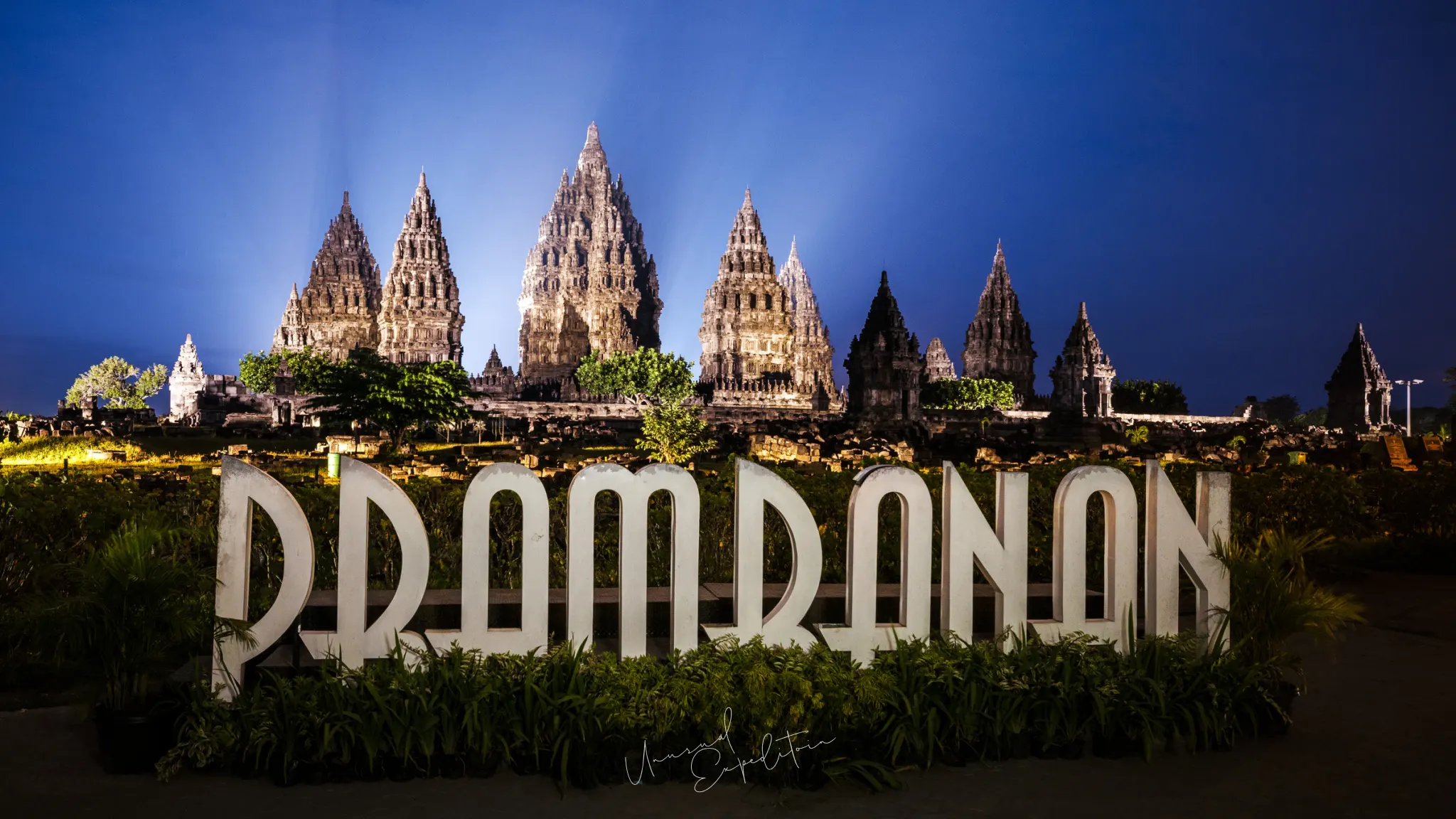
Prambanan sunset is best photographed from the field of ruined shrines around the main group, where the scattered blocks make a foreground and the towers line up against the western sky. UNESCO notes that the temples collapsed in the early 11th century through earthquake, eruption and the shift of power, and those fallen stones, part restored and part lying in the grass, are what give the picture depth. Walk around until the tallest tower stands clear of its neighbours, set the camera low, and wait: the best colour often comes after the sun has gone. Stay into blue hour if the park's hours allow, because the towers are lit after dark.
Plaosan temple
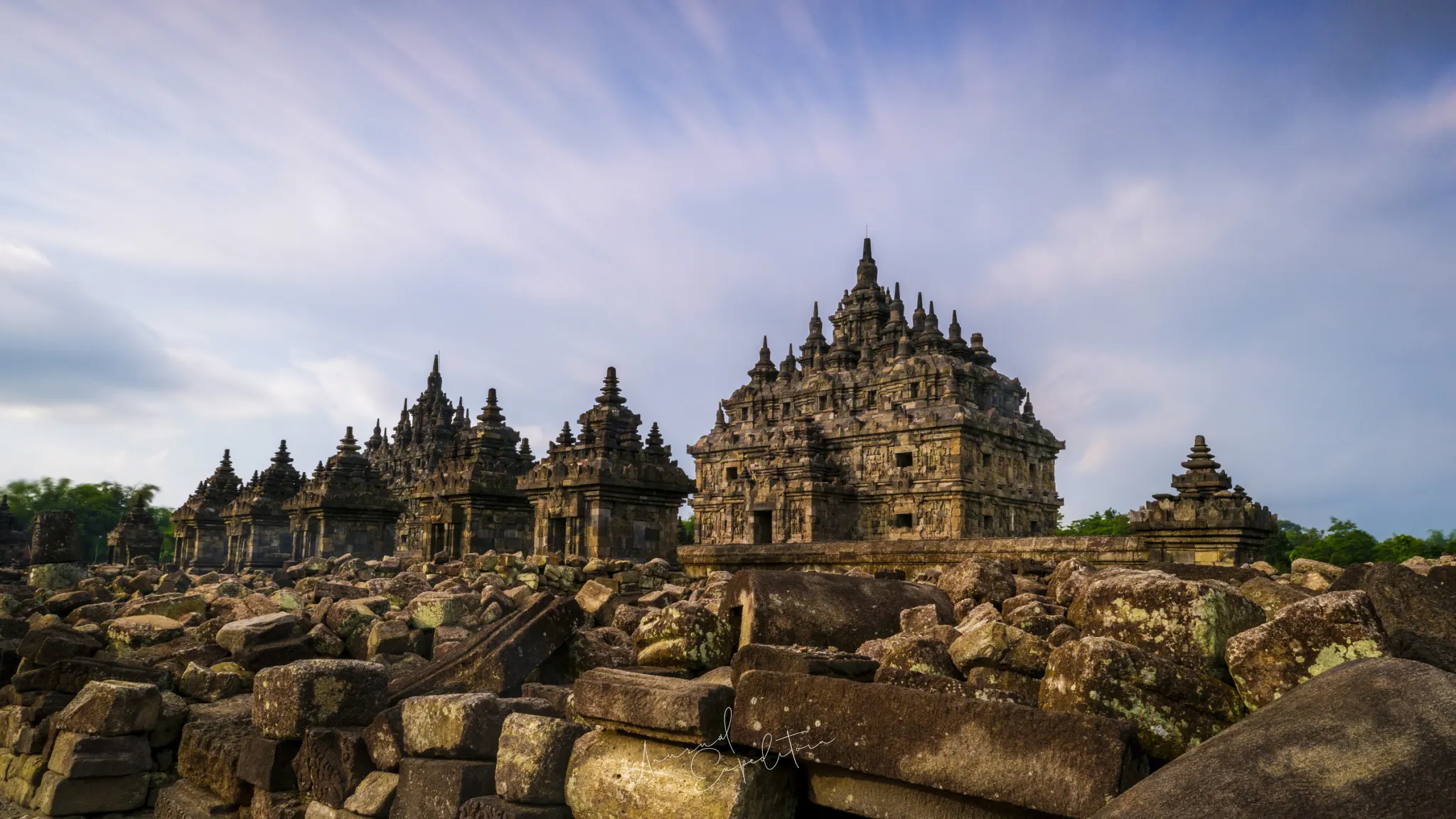
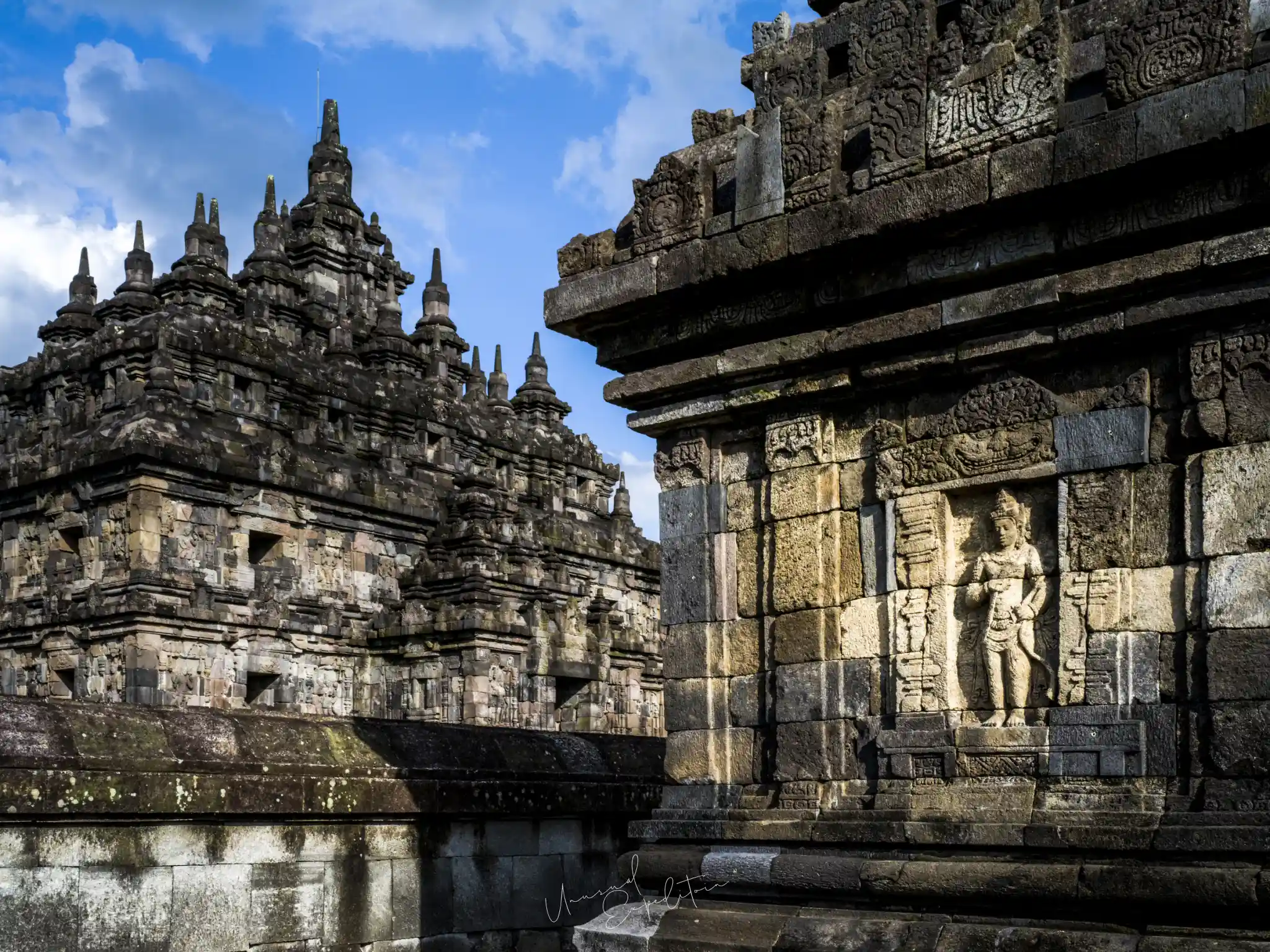
Plaosan temple is the one most visitors miss and the one many photographers like best. It is a Buddhist complex a short way north of Prambanan, with two main temples, Plaosan Lor and Plaosan Kidul. Indonesia's public broadcaster RRI tells the story behind it: inscriptions link Plaosan to a royal couple of two faiths in the 9th century, the Buddhist Pramodhawardhani and the Hindu Rakai Pikatan, which is why it is often described as a monument to tolerance. For photographers it means quiet grounds, finely carved guardian figures beside the doorways, and rows of small shrines and stupas in rubble that glow in the late sun. It is also a place where monks visit; ask before you photograph them.
Candi Ratu Boko sunset
Candi Ratu Boko sunset is the third choice, and a different kind of picture. Ratu Boko is an archaeological site on a hill south of Prambanan, managed with Borobudur and Prambanan by the same state tourism company, and it is known for a stone gateway of several arches standing on open lawn. There are no towers to silhouette, so the picture is the gateway itself: stand on the path in line with the central arch and let the evening sky fill the openings. The hilltop gives a wide sky and, on a clear evening, a view over the plain. Our pillar guide shows the gate at dusk.
| Site | Faith | Best time | Picture | Lens |
|---|---|---|---|---|
| Prambanan | Hindu | Sunset and blue hour | Pointed towers above fallen stones | 16-35mm, 24-70mm |
| Plaosan | Buddhist | Late afternoon | Twin temples, carved guardians, shrines in rubble | 24-70mm, 70-200mm for details |
| Ratu Boko | Hilltop site | Sunset | The arched stone gateway against the sky | 24-70mm |
With one afternoon, start at Plaosan in the warm light and finish at Prambanan for the sunset and the lit towers.
Everyone photographs Prambanan, and they should. But my favourite hour on that side of Yogyakarta is at Plaosan, with the sun low and nobody else there, and the guardians on the walls coming out of the stone.
Joseph Mak, tour leader, Unusual Expedition
Prambanan and Borobudur compared
Prambanan and Borobudur were built within about a century of each other, and they photograph almost as opposites. Borobudur is best at dawn, Prambanan at sunset; Borobudur rewards a wide lens among its stupas, Prambanan a wider view from the field. Borobudur's stone is grey and rounded, Prambanan's sharper and darker against the light. Our Borobudur temple photos and Borobudur sunrise pages cover the other half, and the Borobudur temple tips page covers tickets for both.
Lenses and settings for temple silhouettes
Temple silhouettes at Prambanan are an exposure problem more than a composition one. Meter on the bright sky beside the sun, not on the towers, and let the stone go black; if you want detail in the ruins in the foreground, bracket three or five frames and blend them later. A 16-35mm close to a fallen block makes the field of stones lead into the towers, while a 70-200mm from further back stacks the spires together and makes them look taller. After sunset, switch to a tripod, keep ISO low and let the exposure run for several seconds, so the floodlit towers stay sharp and the sky turns deep blue.
Practical notes for the Prambanan side
The Prambanan side is east of Yogyakarta, on the opposite side of the city from Borobudur, so these sites deserve an afternoon of their own, not a rushed visit after a Borobudur dawn. Each of the three sites has its own entry ticket, so check current terms before you go. Dress modestly at all three. After the 2006 earthquake, UNESCO notes, parts of Prambanan were restored again, and some areas may be fenced off; follow the signs and do not climb fallen stones for a viewpoint.
Photograph Prambanan with us
We run Borobudur, Prambanan and Yogyakarta as a private trip on request, with the afternoons planned around the light on the Prambanan side. Private trips suit individuals, couples, families and photographers at their own pace, and we arrange all logistics to your needs; photography coaching can be added at extra cost. Any scheduled departure appears on our Indonesia photography tours page.
Borobudur and Yogyakarta photography tours
The next Borobudur and Yogyakarta departure is announced on the Borobudur and Yogyakarta photography tours page, with previous expeditions and all the planning guides.
Explore Borobudur and Yogyakarta in depth
- Borobudur and Yogyakarta Photography Tour Guide: Temples, Waisak and WorkshopsIndonesia
- Yogyakarta Photography: Gong Forge, Tofu Workshop, Puppet Maker and Jomblang CaveIndonesia
- Waisak Festival at Borobudur: Calendar, Procession and Night CeremonyIndonesia
- Borobudur Temple Photos: Stupas, Reliefs and the Monument at NightIndonesia
- Borobudur Sunrise: Punthuk Setumbu or the Temple TerracesIndonesia
- Borobudur Lantern Festival: How the Waisak Lantern Release Works NowIndonesia
- Borobudur and Yogyakarta Photography FAQ: Tickets, Monks, Drones and MerapiIndonesia
Upcoming Photo Tours
- Egypt Photo Tour – EgyptEgypt 12 Dec 2026 To 20 Dec 2026
- Inner Mongolia Winter Owl Photo Tour – ChinaChina 01 Jan 2027 To 04 Jan 2027
- Inner Mongolia Winter Photo Tour – ChinaChina 05 Jan 2027 To 11 Jan 2027
- Mekong And Central Highland Vietnam Photo Tour - VietnamVietnam 16 Jan 2027 To 24 Jan 2027