
Borobudur Temple Photos: Stupas, Reliefs and the Monument at Night
Borobudur temple photos level by level: stupas and Buddhas on the terraces, reliefs in the galleries, the monument at night, climbing rules.
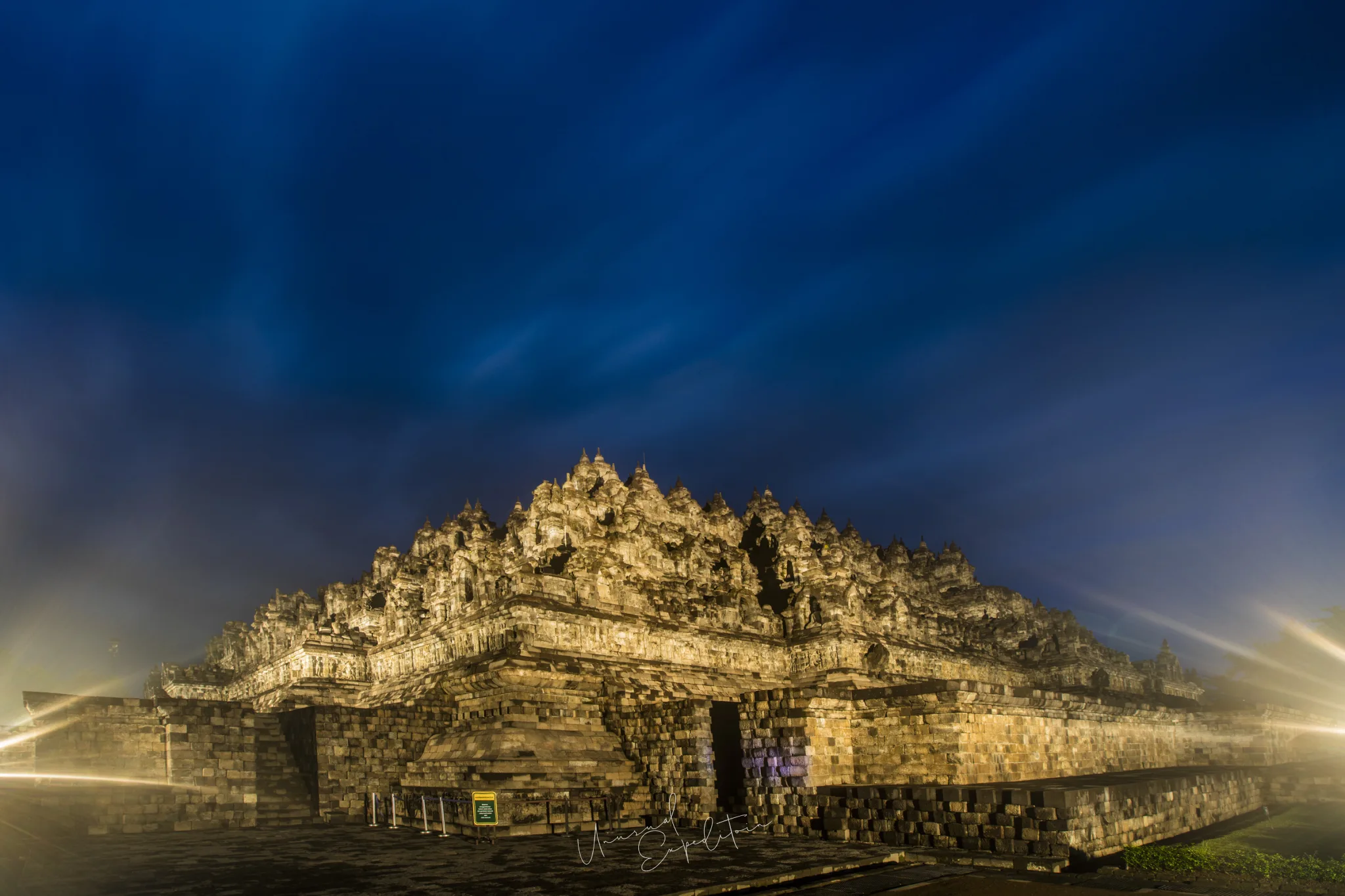
Borobudur temple photos work best when you treat the monument as three different subjects: the square galleries with their carved reliefs and Buddhas in niches, the round upper terraces with 72 bell-shaped stupas against the sky, and the whole stepped mountain of stone seen from the grounds. Each wants a different light and lens. Dawn suits the terraces, morning and late afternoon suit the reliefs, and the full monument is strongest at first light or lit at night.
This page walks through the monument level by level, with what to photograph on each and the rules that now shape a visit. It is part of our Borobudur and Yogyakarta photography tour guide. The photographs in this guide are our own, taken on our trips here; we hold the rights to them, and the notes come from knowing the temple first hand.
Borobudur temple photos: how the monument is built
Borobudur is built to be climbed in stages, and the photographs follow the same order. UNESCO describes it as a stupa in three tiers around a natural hill: a pyramidal base, five concentric square terraces, then three circular platforms crowned by a great central stupa. The vertical division matches the three realms of Buddhist cosmology, from the world of desire at the base to the formless world at the top. Pilgrims traditionally walk each gallery clockwise before climbing, and if you follow them you move from dense, shaded relief to open sky, which is also a move from detail lenses to wide ones.
| Level | What you photograph | Light | Lens |
|---|---|---|---|
| Grounds around the base | The whole stepped monument | Dawn, dusk, night | 16-35mm, 24-70mm |
| Square galleries | Relief panels, Buddhas in niches, gateways | Morning and late afternoon side light | 24-70mm, a short telephoto for panels |
| Circular terraces | Rows of openwork stupas, exposed Buddhas | Dawn and early morning | 16-35mm, 24-70mm |
| Top of the monument | The main stupa, the volcano skyline | Dawn | 24-70mm, 70-200mm for the volcanoes |
The upper levels lose their light first; plan the terraces early and the galleries for later.
Borobudur stupa: photographing the upper terraces
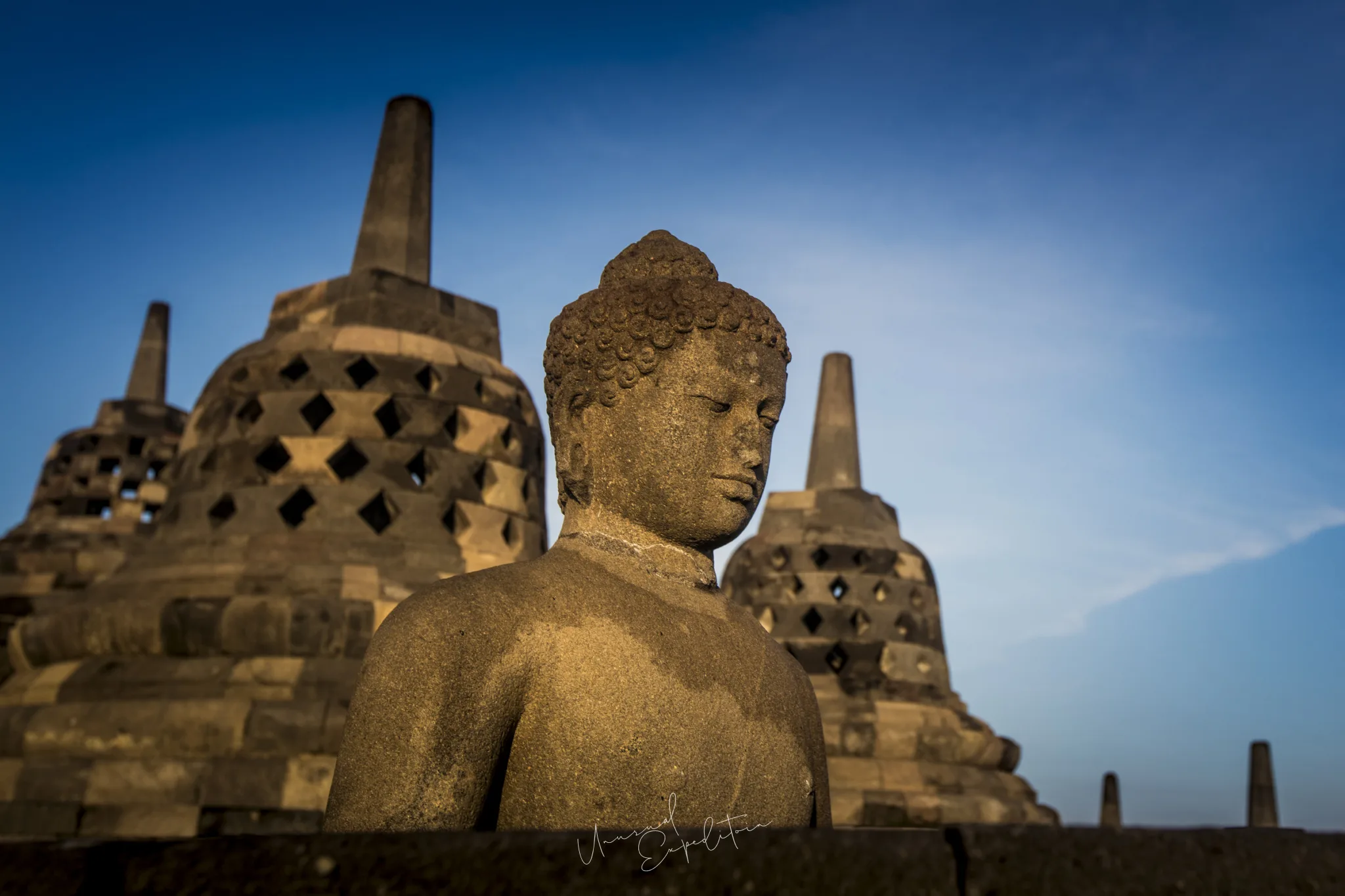
The Borobudur stupa is the image everyone carries home: a stone bell with diamond-shaped openings, a Buddha seated inside, and the volcanoes on the horizon. UNESCO counts 72 of these openwork stupas around the three circular platforms, each containing a statue of the Buddha. A few have lost their upper shell, leaving the Buddha sitting in the open, and those are the ones that photograph best against a clear blue or a dawn sky. Work low, so the stupa fills the frame and the sky stays clean, and let the next row of stupas repeat behind it. Do not lean on the stupas or reach inside them; the stone is a sacred object as well as a ruin.
Borobudur relief panels and Buddhas in niches
The Borobudur relief panels are the part most visitors walk past too quickly. UNESCO gives the relief surface on the walls and balustrades as 2,520 square metres, and the lower galleries are lined with carved scenes and with seated Buddhas in niches along the balustrades. Side light is everything here: in flat midday light the carving disappears, while in the morning or late afternoon each figure stands out from its panel. Frame a single Buddha with the receding wall behind it, or a short run of panels with a person for scale. A good guide knows which panels to look for, which is one reason to stay with the guide who climbs with you rather than rush ahead.
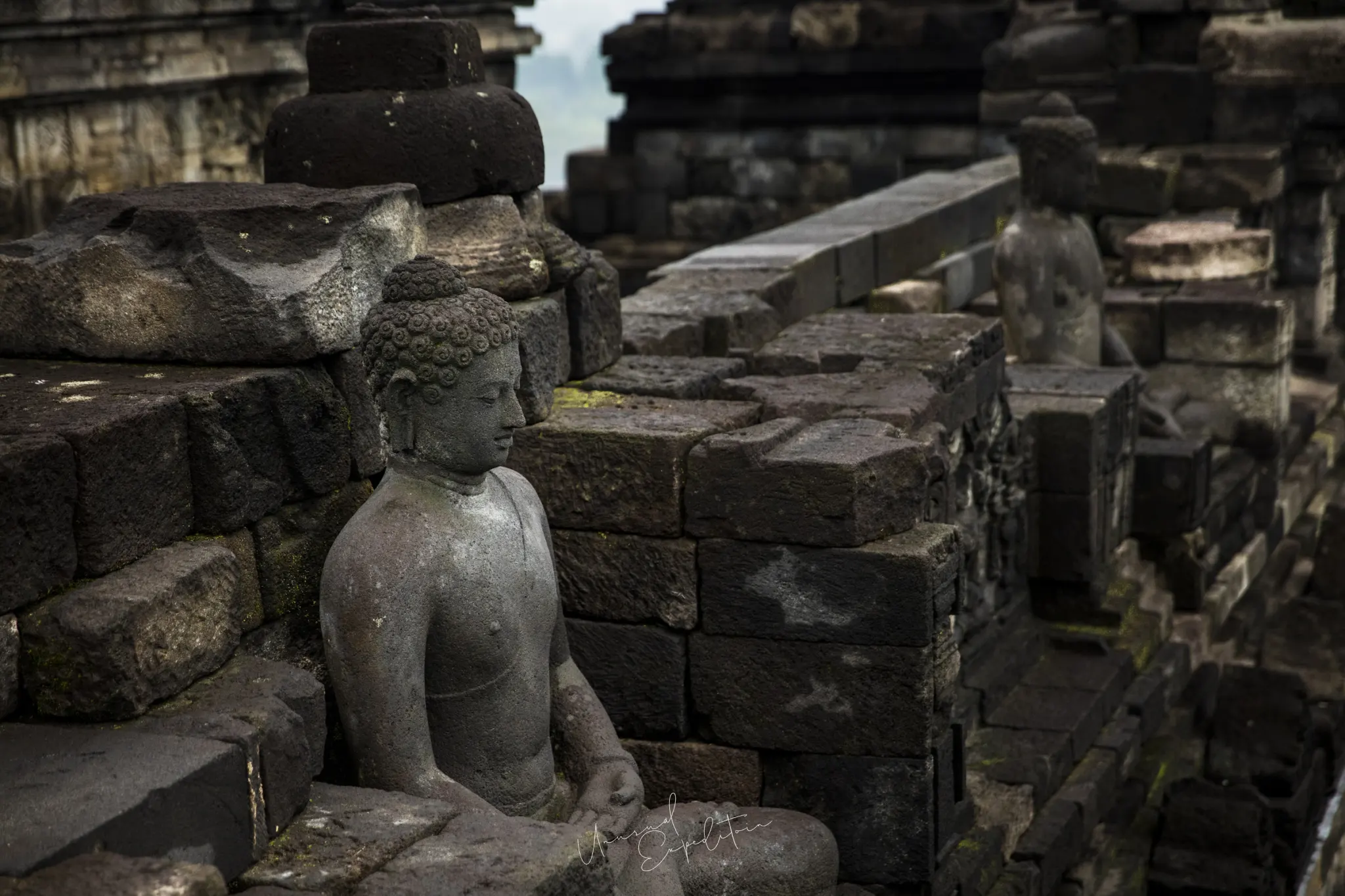
People go straight to the top for the stupas. I tell them to walk the galleries first, slowly, with the guide. The reliefs are where the temple tells its story, and the light down there in the morning is beautiful.
Joseph Mak, tour leader, Unusual Expedition
Climbing Borobudur: the rules that shape your photographs
Climbing Borobudur is now managed to protect the stone. Access to the structure needs a separate climbing ticket booked through the operator, InJourney Destination Management, and climbers go up with a guide and wear upanat, woven sandals the operator issues to reduce wear on the steps. Numbers on the structure are limited, so book online ahead, not at the gate; daily limits have been reported at different levels over the past few years, so check the current terms on the official ticket site. For photographers that means time on the monument is set and shared, and a tripod on the terraces is unlikely to be welcome. Plan the shots you want before you climb.
Borobudur at night and from the grounds
Borobudur at night, lit from the grounds below, shows the shape of the whole monument better than any view from the terraces. From the corners of the base the five square levels step back like a mountain, and the stupa on top sits against the sky. A wide lens, a tripod set on the paths of the park, and a long exposure will pull the stone out of the dark; on our frame a passing light left the streaks along the base. Daylight from the same corners works too, best early, before the stone flattens in high sun. On Waisak night the grounds fill with candles and the view changes again; see our Waisak festival at Borobudur page.
Where to go next
For dawn from the terraces and the misty view from the hills, see our Borobudur sunrise page. For tickets, dress and what to carry, our Borobudur temple tips page has the practical answers, and the Prambanan sunset page covers the Hindu temples on the other side of Yogyakarta, which make a natural pair with Borobudur.
Photograph Borobudur with us
We run Borobudur and Yogyakarta as a private trip on request, built around the light at the temple, not a fixed timetable. Private trips suit individuals, couples, families and photographers at their own pace, and we arrange all logistics to your needs. The cost can be lower than our group tours, because no tour leader travels. Any scheduled departure appears on our Indonesia photography tours page.
Borobudur and Yogyakarta photography tours
The next Borobudur and Yogyakarta departure is announced on the Borobudur and Yogyakarta photography tours page, with previous expeditions and all the planning guides.
Explore Borobudur and Yogyakarta in depth
- Borobudur and Yogyakarta Photography Tour Guide: Temples, Waisak and WorkshopsIndonesia
- Yogyakarta Photography: Gong Forge, Tofu Workshop, Puppet Maker and Jomblang CaveIndonesia
- Waisak Festival at Borobudur: Calendar, Procession and Night CeremonyIndonesia
- Prambanan Sunset: Photographing Prambanan, Plaosan and Ratu BokoIndonesia
- Borobudur Sunrise: Punthuk Setumbu or the Temple TerracesIndonesia
- Borobudur Lantern Festival: How the Waisak Lantern Release Works NowIndonesia
- Borobudur and Yogyakarta Photography FAQ: Tickets, Monks, Drones and MerapiIndonesia
Upcoming Photo Tours
- Egypt Photo Tour – EgyptEgypt 12 Dec 2026 To 20 Dec 2026
- Inner Mongolia Winter Owl Photo Tour – ChinaChina 01 Jan 2027 To 04 Jan 2027
- Inner Mongolia Winter Photo Tour – ChinaChina 05 Jan 2027 To 11 Jan 2027
- Mekong And Central Highland Vietnam Photo Tour - VietnamVietnam 16 Jan 2027 To 24 Jan 2027