
Etosha Elephants Photography: Herds, Water and Close Encounters
Etosha elephants photography: herds at the waterhole, close drinking, greetings and calves, with lens and behaviour tips.
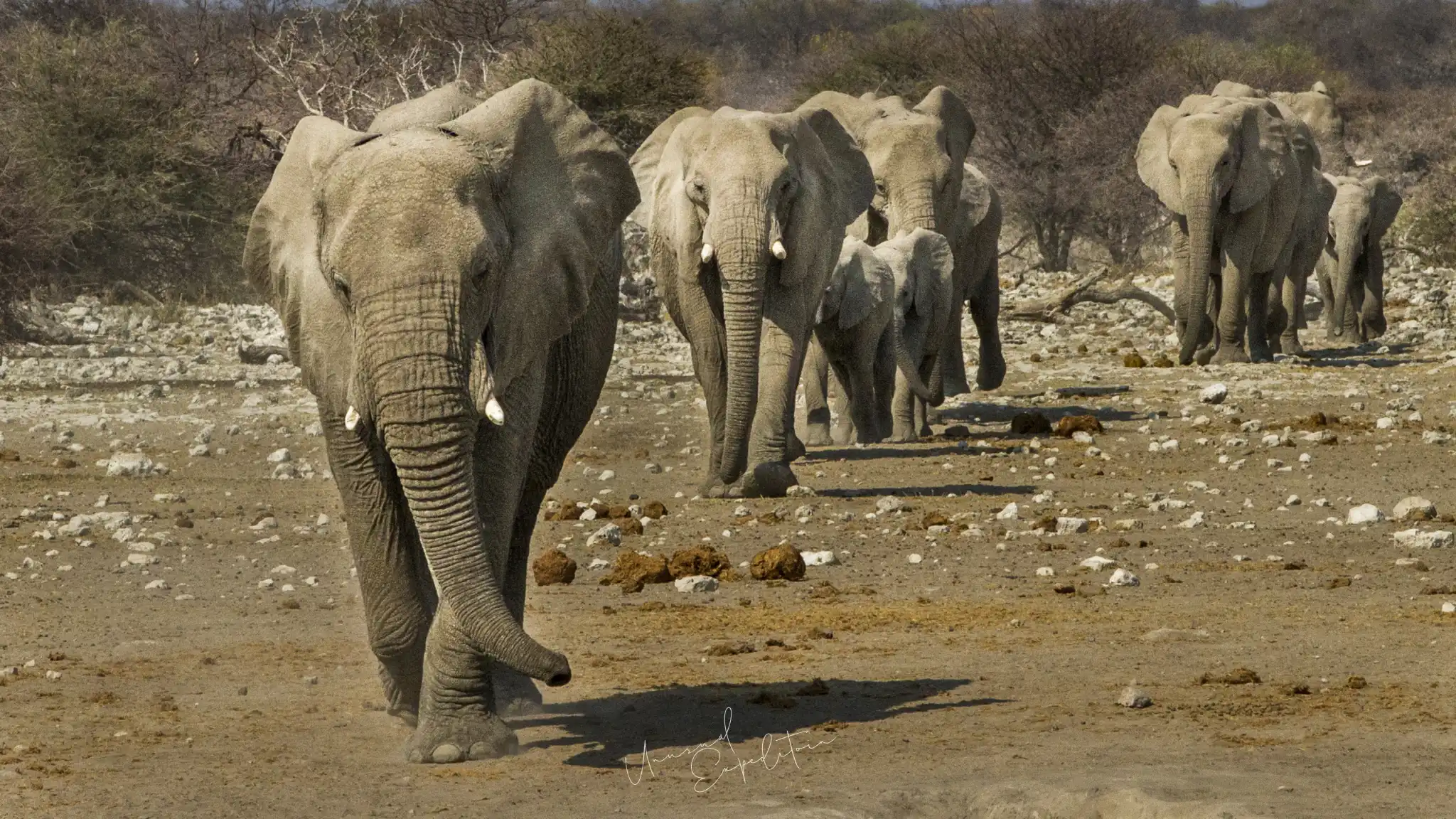
Etosha elephants photography is a matter of position and patience: choose a waterhole, switch off the engine and let the herd come to you. In the dry season, elephants walk in across the bare ground in family lines, wade into the water to drink and spray themselves, and meet each other with trunks and tusks. The pictures you want are all behaviour, and none of it can be hurried.
This article belongs to our Etosha photography tour guide and the wider Namibia photography tour guide. The photographs here are our own, taken on our trips to the park; we hold the rights to them, and the notes come from knowing these places first hand.
Where do you find elephants in Etosha?
You find them at water. Elephants need to drink daily in the dry season, so a waterhole is where a herd will arrive sooner or later. Ask at the rest camp office and other visitors about recent sightings; both are usually generous with them. A herd that is already walking toward the water will usually keep going, so position the vehicle beside its line of approach and not in front of it. Never block the animals' route to the water. They will not wait for you, and they can turn on a vehicle that is in the way.
Etosha elephants: how do you shoot a herd on the move?
The walking herd is one of the strongest frames in the park. A bull leads, the cows and calves follow in a line, and dry ground and dust give the picture its mood. Use a 70-200mm or longer, keep the shutter fast enough to freeze legs, and shoot from low in the vehicle window so the elephants rise above the horizon. Watch the gaps between animals: a line of elephants with clean separation reads better than a clump. Take several frames as the line moves, since the best one is the moment all the legs are in a good pattern.
What is the best lens for elephants in Etosha?
A 100-400mm zoom is the most flexible, because elephants come to different distances. A 70-200mm is enough when they walk close, and gives a more environmental frame with the ground and sky. A 24-70mm is useful for the waterhole setting and for the moments when elephants walk very close to the vehicle. A beanbag on the window frame makes a steady support, and a tripod is awkward inside a vehicle. Keep the second body ready with a different lens, because the best moments rarely give you time to swap.
How do you photograph elephants drinking?
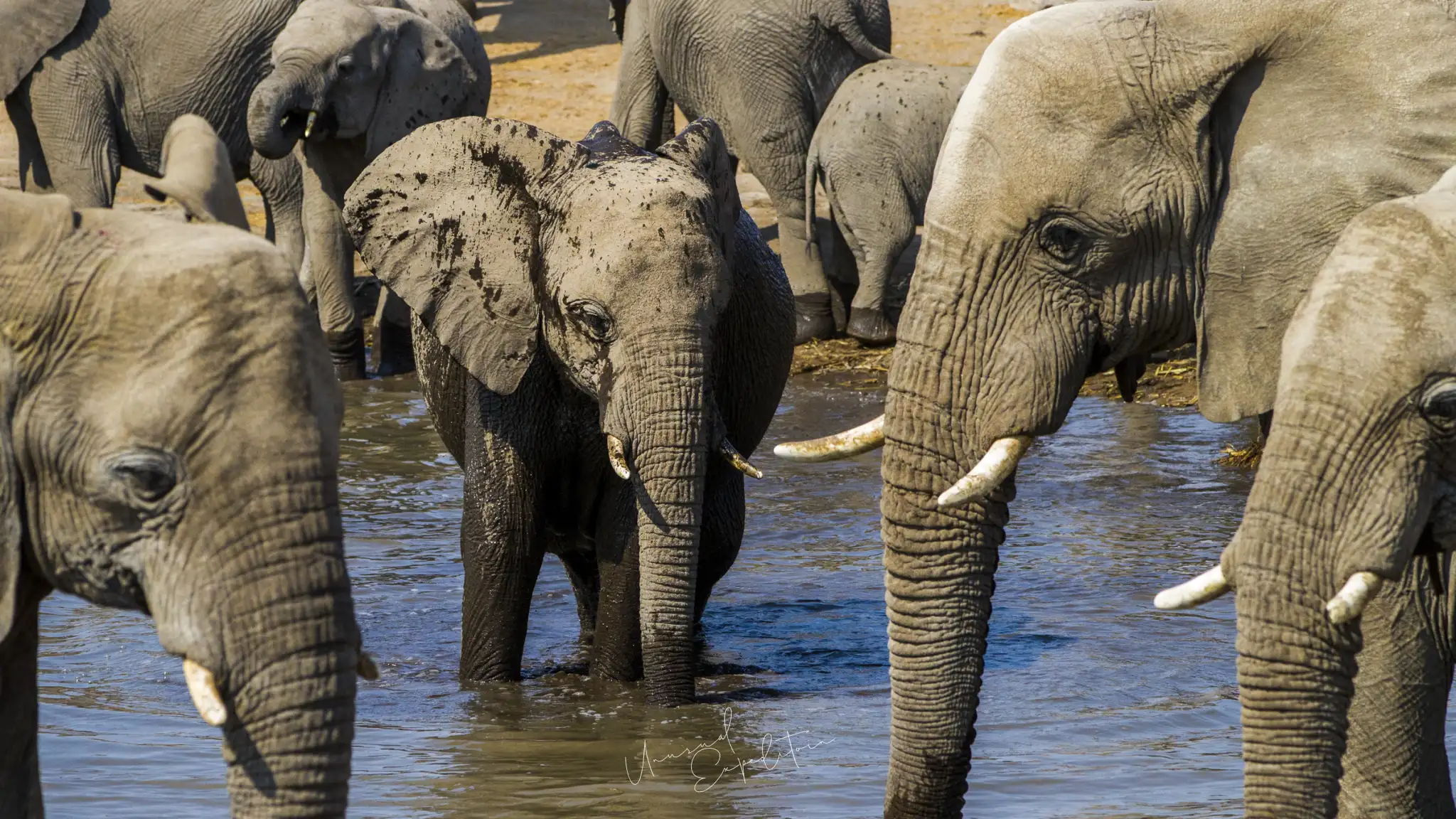
At the water the herd settles, and you can work closer to the action. Watch for the lead animals pushing in to the deepest part, for trunks curling to the mouth and for calves finding their place between legs. Close-up frames of tusks and trunks reward a long lens and a low point of view. Keep the horizon level, and look for splashes and spray, which freeze nicely at 1/1000 second or faster. Shoot in bursts when an animal is about to drink or throw water over its back.
Elephant greetings, sparring and social moments
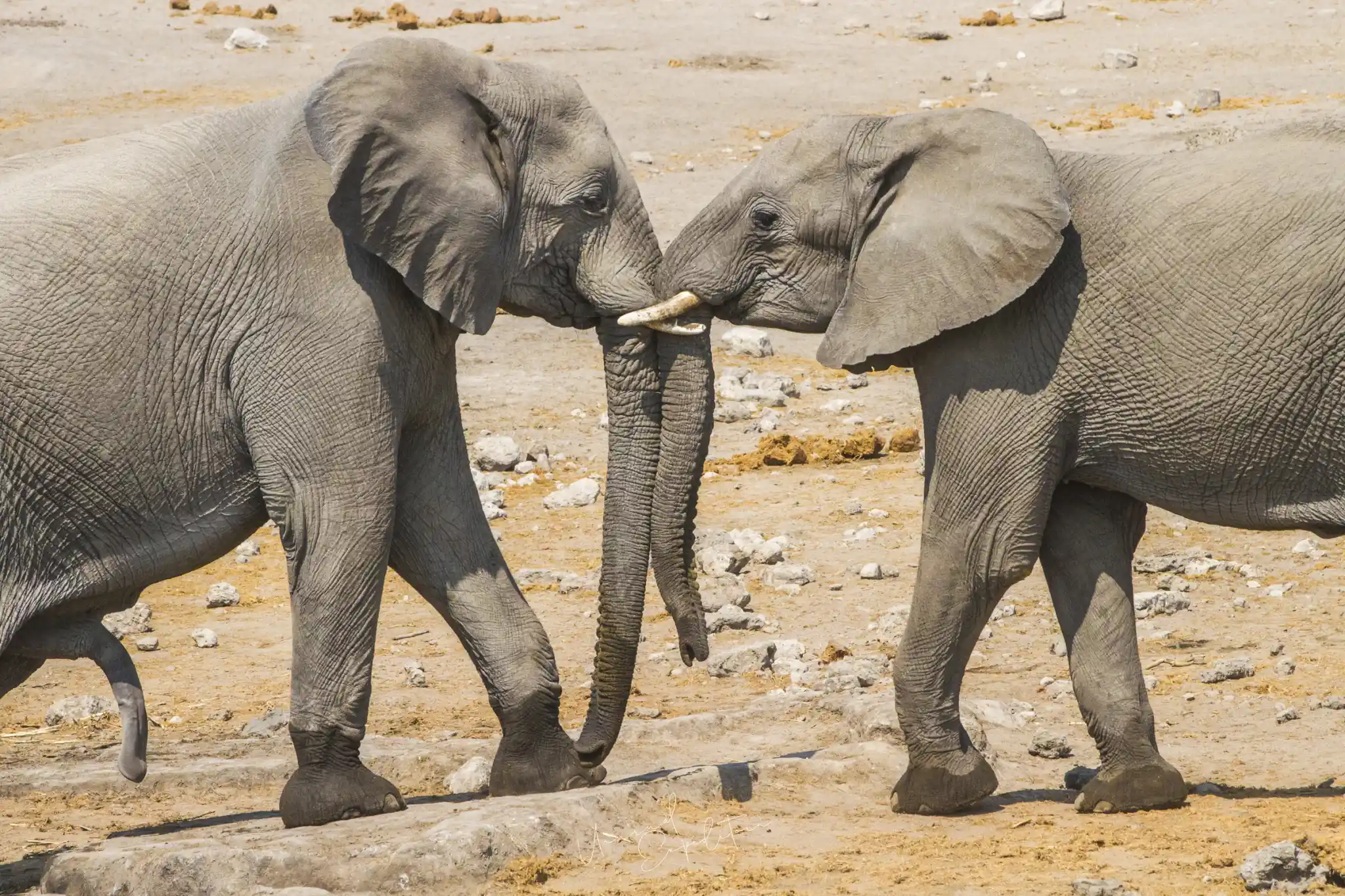
Elephants spend a lot of time touching each other. Two animals meeting on dry ground will often put trunks to each other's faces or tusks, and the moment is quiet and expressive, as in the frame here. Do not use the word fight for it unless you see one; most of it is greeting. These moments come at the edge of a herd as it arrives at the water or leaves it, and they last a few seconds. Keep the camera on the nearest pair, and shoot early, since they often end as quickly as they start.
Elephants in a waterhole are the one subject where I would rather have a long lens and no plan. Find the family you like, stay with them, and the frames take care of themselves.
Joseph Mak, tour leader, Unusual Expedition
Calves, giraffes and the wider waterhole picture
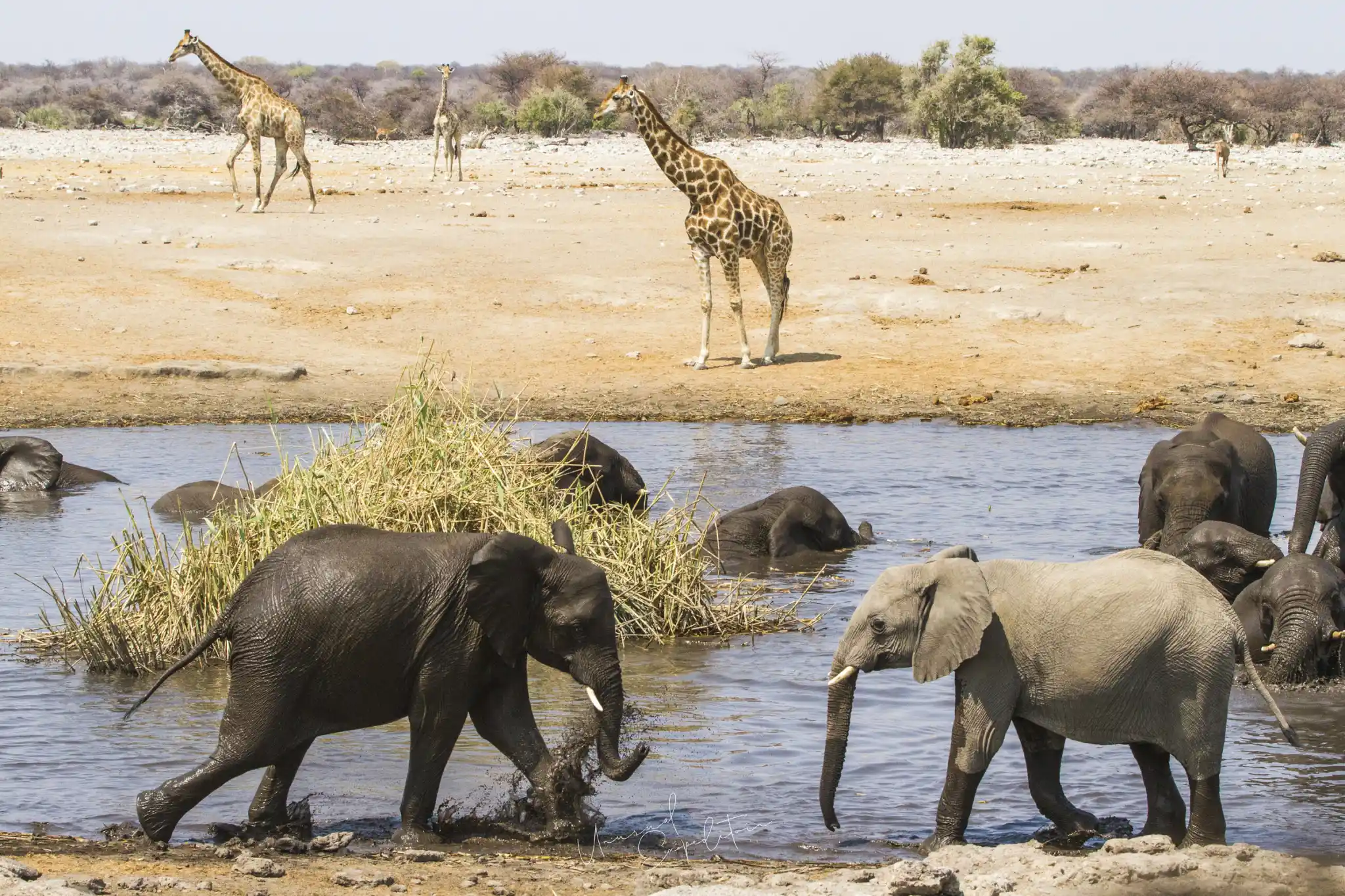
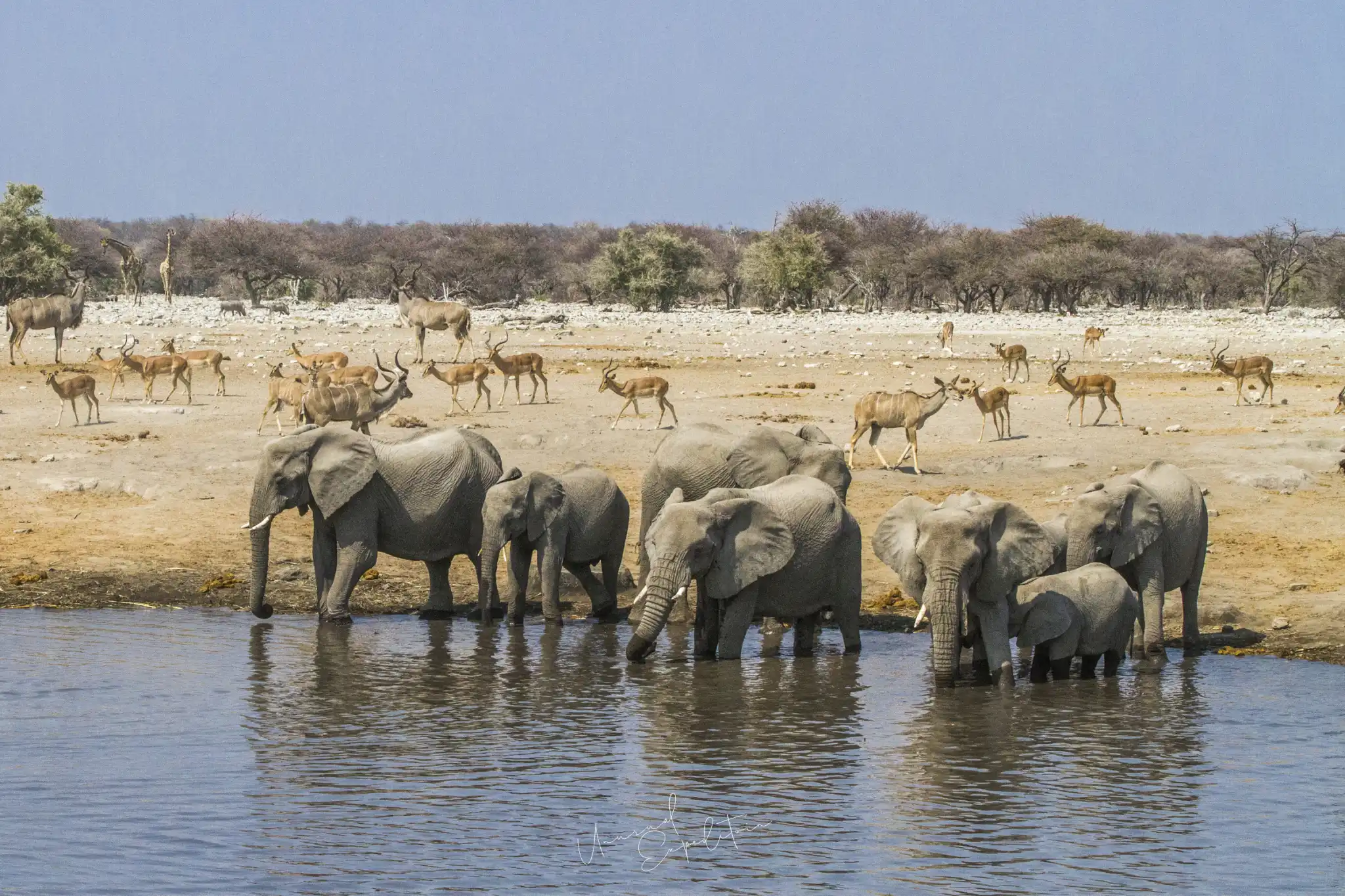
A small elephant in the water with an adult beside it is a picture that explains itself. Look for a frame that shows the setting too: reeds at the water's edge, a line of giraffes standing at the far bank, or a hazy sky. The waterhole is a stage, and elephants share it with other animals waiting at a distance. A 70-200mm often gives the right balance between subject and setting, with the long lens used when the elephants are far out.
Herds in the water, and the animals around them
On a hot dry-season day elephants wade deep into a waterhole and stay there, spraying themselves and each other, while smaller animals such as impala wait on the bank. This is when the frame opens up: you can show a whole family in the water, with a bank behind them, rather than one animal. Wait for a moment when the animals are spaced out and the light on the water is even. Watch the edges of the frame, because a stray tail or trunk can break a clean composition.
Etosha elephants: safety and rules
Stay in your vehicle outside the rest camps and the designated stops. Keep a respectful distance, turn off the engine and move away slowly if an elephant shows signs of annoyance: flapping ears, a raised head or a mock charge. Namibia Wildlife Resorts says park gates open at sunrise and close at sunset, and the times change weekly, so plan to be back in camp before the gate closes. Self-driving at night is not permitted. For the wider list of animals, return to the Etosha photography tour guide and Etosha waterholes.
Photograph Etosha elephants with us
We run Namibia as a private trip on request, with Etosha and its elephants as a central stop. The pace and dates are yours, we arrange the logistics, and a photographer or photography coaching can be added at extra cost. Ask at least two months ahead. See private tours and the Namibia photography tours page.
Etosha photography tours
The next Etosha departure is announced on the Etosha photography tours page, with previous expeditions and all the planning guides.
Explore Etosha in depth
- Etosha Photography Tour: Waterholes, Elephants and the PanNamibia
- Etosha Waterholes: Photographing Zebra, Oryx and SpringbokNamibia
Upcoming Photo Tours
- Egypt Photo Tour – EgyptEgypt 12 Dec 2026 To 20 Dec 2026
- Inner Mongolia Winter Owl Photo Tour – ChinaChina 01 Jan 2027 To 04 Jan 2027
- Inner Mongolia Winter Photo Tour – ChinaChina 05 Jan 2027 To 11 Jan 2027
- Mekong And Central Highland Vietnam Photo Tour - VietnamVietnam 16 Jan 2027 To 24 Jan 2027