
Etosha Photography Tour: Waterholes, Elephants and the Pan
Etosha photography tours: waterholes, elephants, zebra, rhino and the pan, with park rules and the dry-season light.
An Etosha photography tour is built around waterholes: pale, stony ground, a patch of water, and elephants, zebra, oryx and springbok arriving in turn to drink. Etosha National Park in northern Namibia is one of the best places in southern Africa for wildlife photography you can do from a vehicle, and in the dry season the animals come to you. The light is bright, the ground is white, and the pictures come from patience.
This destination guide is the starting point for everything we have written on Etosha, and it sits inside the Namibia photography tour guide. The detail is in Etosha elephants photography and Etosha waterholes. The photographs here are our own, taken on our trips to the park; we hold the rights to them, and the notes come from knowing these places first hand.
What is Etosha National Park, and what can you photograph?
Etosha is a national park in northern Namibia built around the Etosha Pan, a huge flat salt and clay depression that is dry for most of the year. Around the edge of the pan and across the surrounding woodland and grassland there are waterholes, some natural springs and some supplied by boreholes. The big subjects are elephants, rhinoceros, lion, giraffe, zebra, wildebeest, oryx, springbok and impala, plus ostrich and a long list of birds. For a photographer the strength is that animals concentrate at predictable places, and that you can shoot from a vehicle with a long lens.
Etosha waterholes: where do the pictures come from?
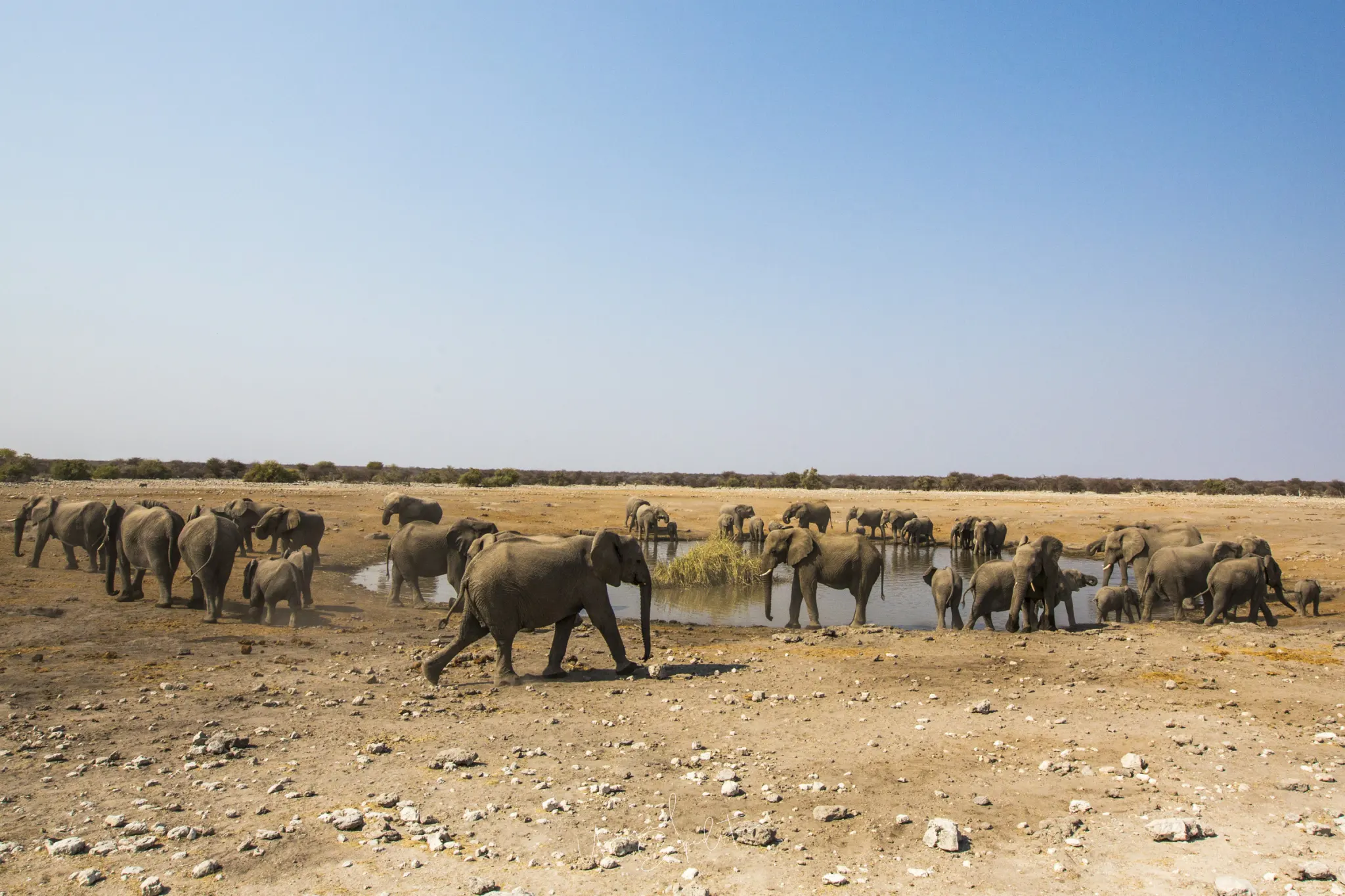
Almost everything good in Etosha happens at a waterhole. Animals arrive in waves: a line of zebra, a herd of elephants walking in across dry ground, a few oryx waiting on the edge until it is their turn. You learn to watch the approach, since the walking-in frame is often better than the drinking frame. We cover the practical side, from vehicle position to light, in Etosha waterholes, and the elephants have their own guide in Etosha elephants photography.
Etosha at a glance
| Subject | Where to look | Lens |
|---|---|---|
| Elephants | Waterholes, especially in the dry season | 70-200mm, 100-400mm |
| Zebra, oryx, springbok | Waterhole edges, open plains | 70-200mm, 100-400mm |
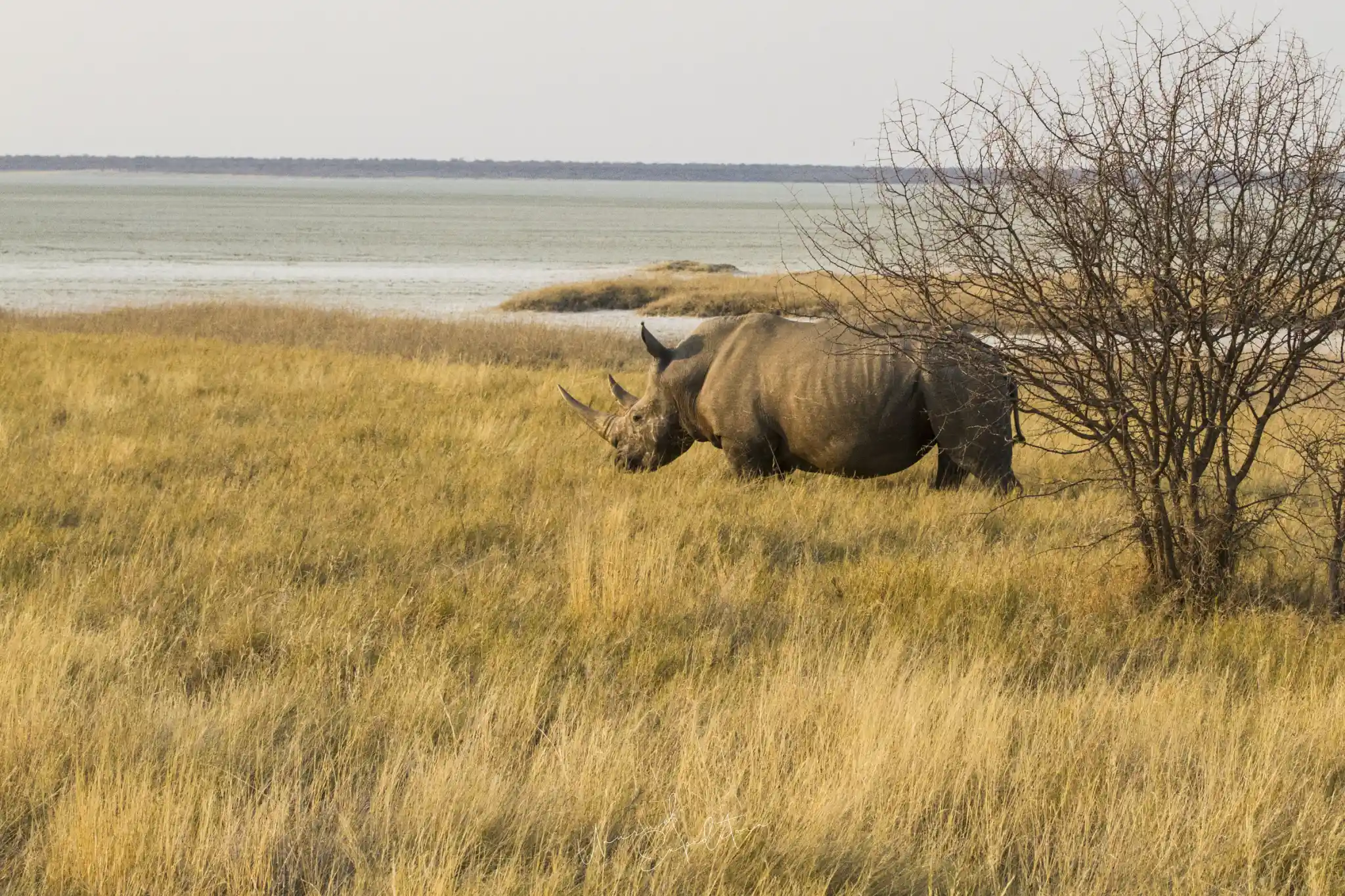
| Rhinoceros | Grassland and waterhole margins, at a distance | 400mm |
| Ostrich, impala, giraffe | Woodland edges and pans | 70-200mm |
| Waterhole landscape | Early and late light | 24-70mm |
A fast long lens is the core of the kit, with a 24-70mm for the setting.
Rhinoceros, ostrich and the rest of Etosha
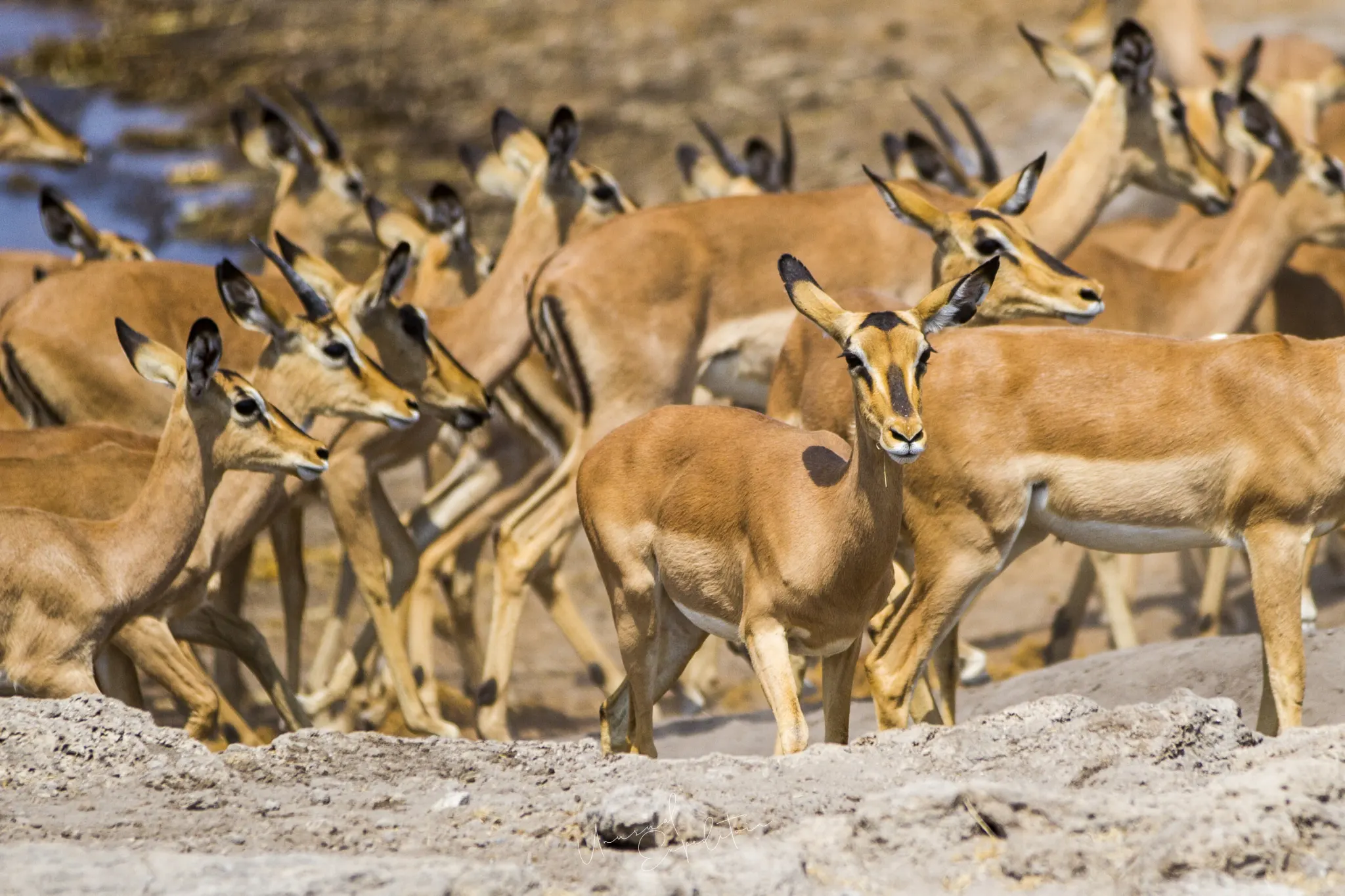
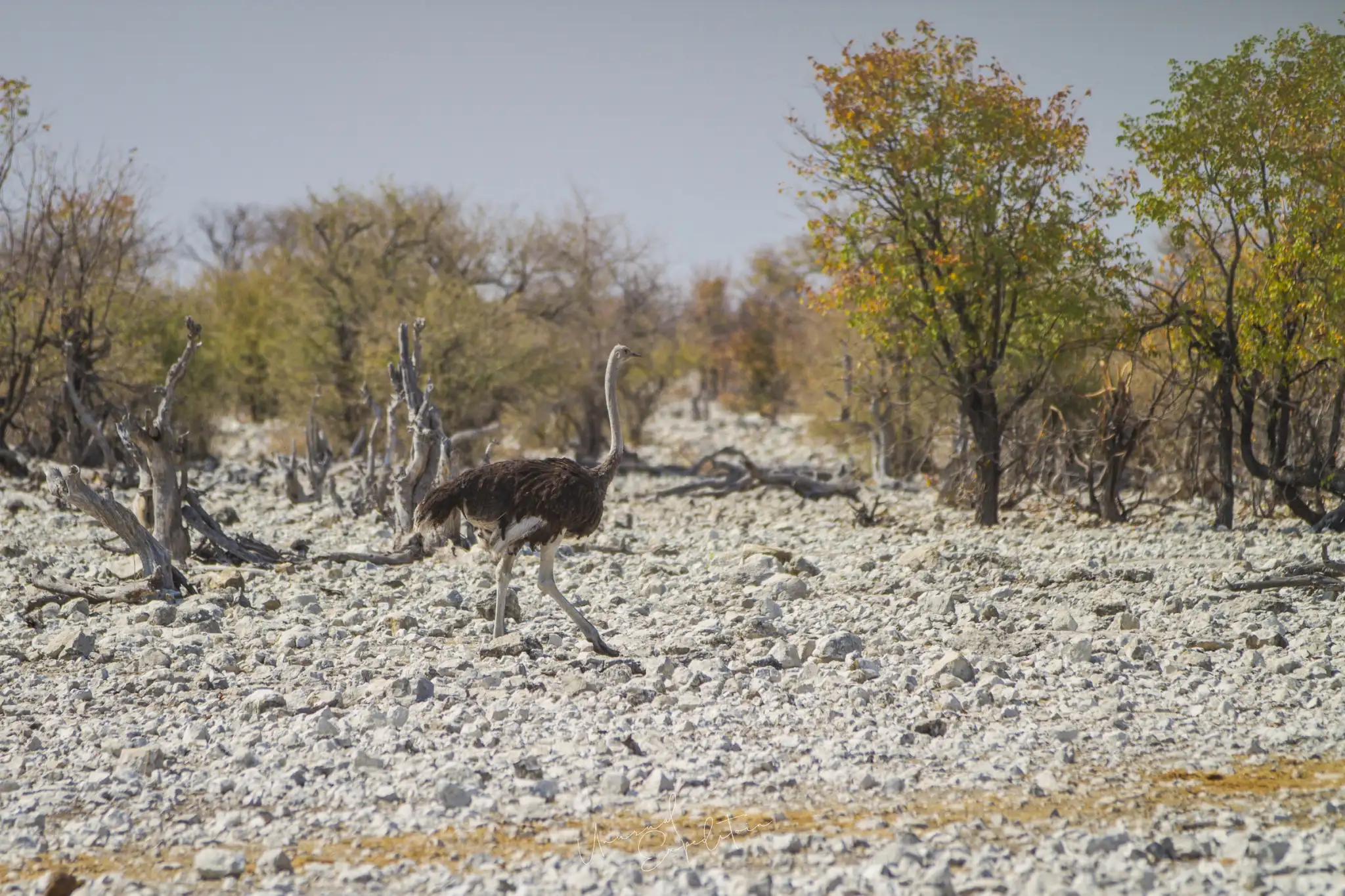
Rhino sightings are rare and rewarding, and they are usually distant, so the longest lens you have is the one to use. Rhino numbers are small and the animals are shy, so treat any sighting as luck. Ostrich and impala are easier. Impala gather in tight herds at the water's edge, and ostrich walk through the autumn-coloured woodland on stony ground, which gives a soft, earthy picture away from the pale waterholes.
Ostrich are the easiest large bird to photograph here. They walk through the autumn-coloured woodland on stony ground, which gives a soft, earthy picture away from the pale waterholes, and they usually ignore a stationary vehicle.
When is the best time to visit Etosha?
The dry season, roughly May to October by most climate summaries, is the classic window, because water elsewhere dries up and animals depend on the permanent waterholes. The rainy months bring green landscapes and young animals, but the animals spread out across the park and the waterholes are quieter. The best time to photograph Namibia sets Etosha beside Sossusvlei and the coast. The Namibia Wildlife Resorts site and the park itself are the source for current conditions.
Which lenses and kit do you need in Etosha?
A 100-400mm zoom is the most useful single lens, with a 70-200mm as a second option for animals that come close. A 24-70mm covers the landscape and the waterhole setting, and a 400mm prime suits the long rhino frame. Bring a beanbag for the vehicle window, which is steadier and faster than a tripod, plus a second body so that you do not have to change lenses in the dust. Dust is constant in the dry season, so carry lens cloths, a blower and a dust-proof bag.
How should you plan the light and the day?
Gates open at sunrise, and the first period of low sun is the best light of the day: warm, soft and with the animals most active. The middle of the day is harsh and the ground is white, so the pale pan reflects light back into the frame. Waterholes are still productive then, because animals arrive to drink in the heat. The late afternoon brings warm light again, and you must be inside a camp before the gate closes at sunset, so plan the last waterhole accordingly.
What are the Etosha park rules for photographers?
According to Namibia Wildlife Resorts, the park gates open at sunrise and close at sunset, with times that change through the year and are posted at the gates and the rest camps. Self-driving at night is not permitted, though the rest camps run organised night drives, and each of the four rest camps has a floodlit waterhole. Stay in your vehicle outside the camps and designated stops, keep your distance from animals and follow the instructions of park staff. The UK Foreign Office advises checking current Etosha access with your provider before travel.
Etosha safety: is it safe to visit?
Etosha is a managed national park, and visiting it is routine, with roads, camps and staff. The risks are the ordinary ones of wildlife country: do not get out of the vehicle, do not approach animals and drive carefully, since animals cross the roads. The UK Foreign Office advises avoiding driving outside towns at night because of wildlife and livestock. Use the advice of the Singapore Ministry of Foreign Affairs and your own government for the current situation in Namibia as a whole, and check your insurance before you go.
Etosha teaches you to wait. The pictures at a waterhole come in the pauses, when one group has left and the next is still walking in. Turn the engine off and stay put.
Joseph Mak, tour leader, Unusual Expedition
How do you get there and plan the trip?
Etosha is in the north of the country, and most visitors fly into Windhoek and travel north by road, often combining it with the dunes and the coast. We keep the planning detail in the how to plan a photography trip to Namibia article, and the questions we hear most are in the Namibia photography trip FAQ. For fees and bookings, check the official source before you travel.
Explore Etosha in depth
Photograph Etosha with us
We run Namibia as a private trip on request, and Etosha is one of the places we build around. The pace and dates are yours, we arrange the logistics, and a photographer or photography coaching can be added at extra cost. Ask at least two months ahead. See private tours and the Namibia photography tours page.
Etosha photography tours
The next Etosha departure is announced on the Etosha photography tours page, with previous expeditions and all the planning guides.
Explore Etosha in depth
- Etosha Waterholes: Photographing Zebra, Oryx and SpringbokNamibia
- Etosha Elephants Photography: Herds, Water and Close EncountersNamibia
Upcoming Photo Tours
- Egypt Photo Tour – EgyptEgypt 12 Dec 2026 To 20 Dec 2026
- Inner Mongolia Winter Owl Photo Tour – ChinaChina 01 Jan 2027 To 04 Jan 2027
- Inner Mongolia Winter Photo Tour – ChinaChina 05 Jan 2027 To 11 Jan 2027
- Mekong And Central Highland Vietnam Photo Tour - VietnamVietnam 16 Jan 2027 To 24 Jan 2027