
Giza Pyramids at Night: Sunset, Dusk and the Sound and Light Show
Giza pyramids at night: the Sphinx at sunset, rooftop views at dusk, the Sound and Light show and the Nile in Cairo after dark.
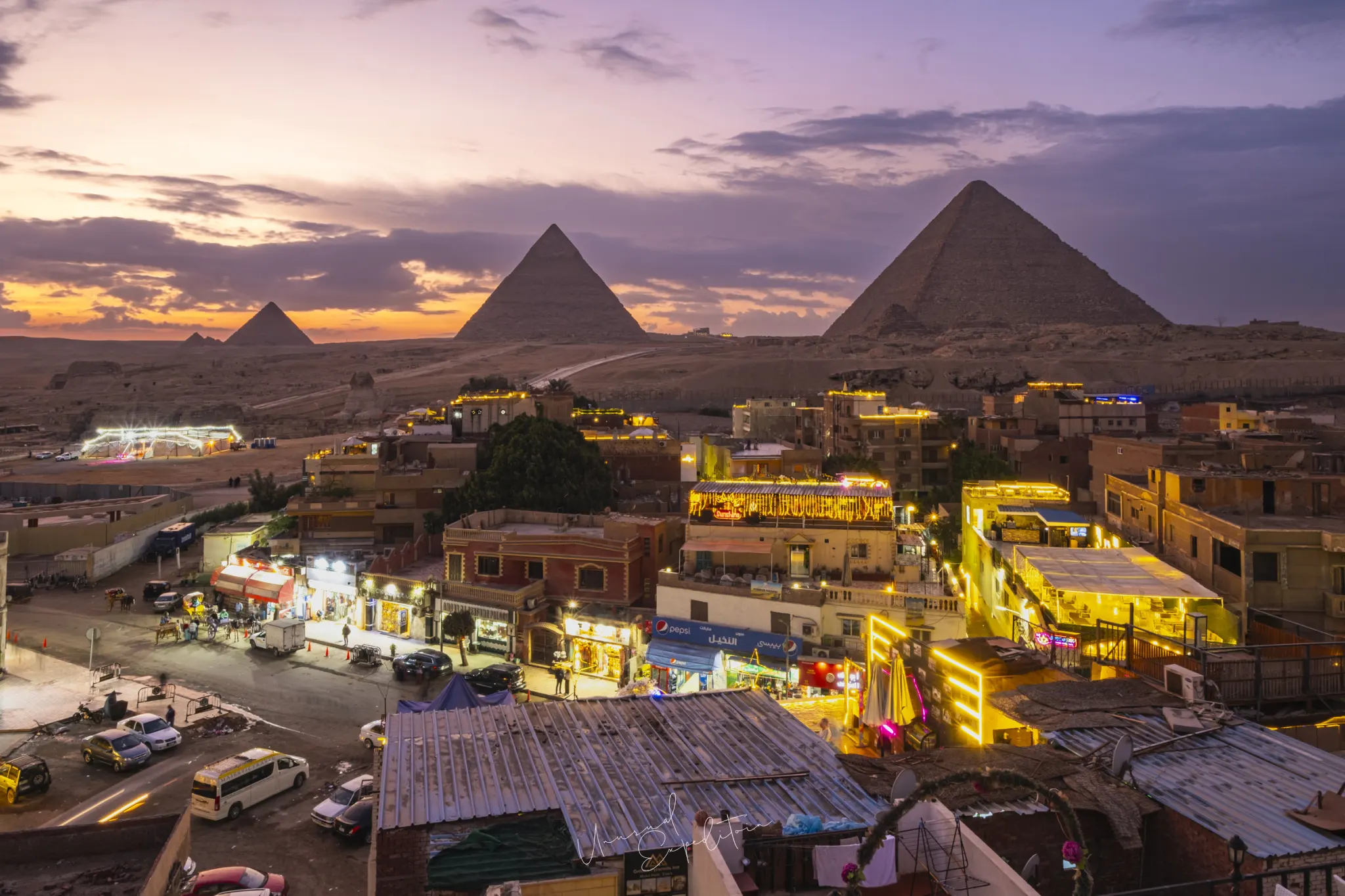
The Giza pyramids at night are best photographed in three stages: the Sphinx backlit at sunset from the viewing terrace inside the gates, the pyramids as dark triangles against a coloured sky from a rooftop in the village below at dusk, and the floodlit pyramids over the lit streets once the sky turns deep blue. The Sound and Light show adds coloured lighting later in the evening. Sunset comes early in winter, so the whole sequence fits into a single evening.
This is the evening chapter of our Cairo and Giza photography guide, with a short section on the Nile in central Cairo after dark.
Pyramids of Giza sunset: where the sun goes down
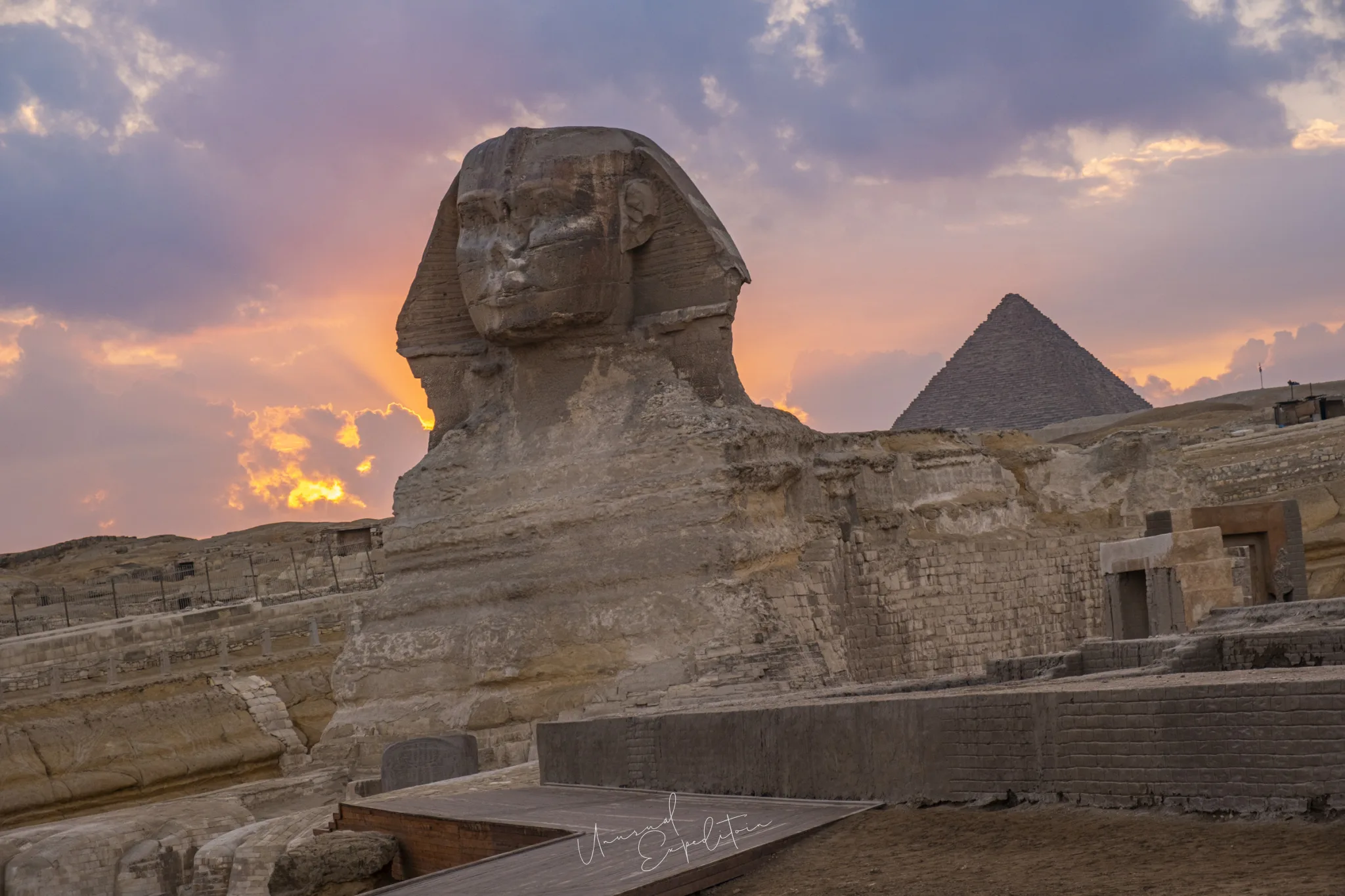
The Sphinx faces east, toward the sunrise and the city, which means that at sunset the light comes from behind it. From the terrace in front of the Sphinx enclosure you see the head in silhouette or rim light, with a pyramid rising behind it. On a clear evening the effect is graphic, almost black against orange; with high cloud, which winter often brings, the sky breaks into colour around the head and the frame becomes something else entirely. Expose for the sky and let the stone go dark, or bracket and blend if you want detail in the face. The plateau gates close in the late afternoon, so in midwinter the sun can set before closing and you watch it from inside; later in the year the rooftops below are the place to be.
Giza pyramids at night from the rooftops
For the classic night view you leave the plateau. Nazlet el-Samman, the village pressed against the eastern edge of the site, is full of rooftop terraces on cafes and small hotels that look straight across at the Sphinx and the three pyramids. At dusk the pyramids go flat and dark against the afterglow, a few minutes later the shop signs and fairy lights in the streets switch on, and for a short while the sky and the town are in balance. That is the moment for the photograph. A tripod is welcome on a private roof, unlike on the plateau, so use it: a 24-70mm for the wide view with the street, a 70-200mm to pull the pyramids up close. Our cover photograph was made from one of these roofs at the end of the afterglow.
Giza pyramids sound and light show
The Sound and Light show has played at the foot of the plateau for decades, with the Sphinx as narrator, coloured light washing across the pyramids and music echoing over the sand. It runs in the evening with narration in several languages on a rotating schedule, and the show is reported to have been redesigned recently with a new lighting and projection system. For photographers it is a mixed subject. The coloured light makes striking frames of the Sphinx, but the seating is fixed, the light changes constantly and tripods are not practical among the audience. We treat the show as an experience and photograph it handheld at a high ISO. Check the current language calendar with the operator before you book.
"Everybody packs up when the sun disappears behind the pyramids. Stay. The best ten minutes at Giza come after that, when the sky goes violet and the town underneath lights up."
Joseph Mak, tour leader, Unusual Expedition
Cairo night tour: the Nile after dark
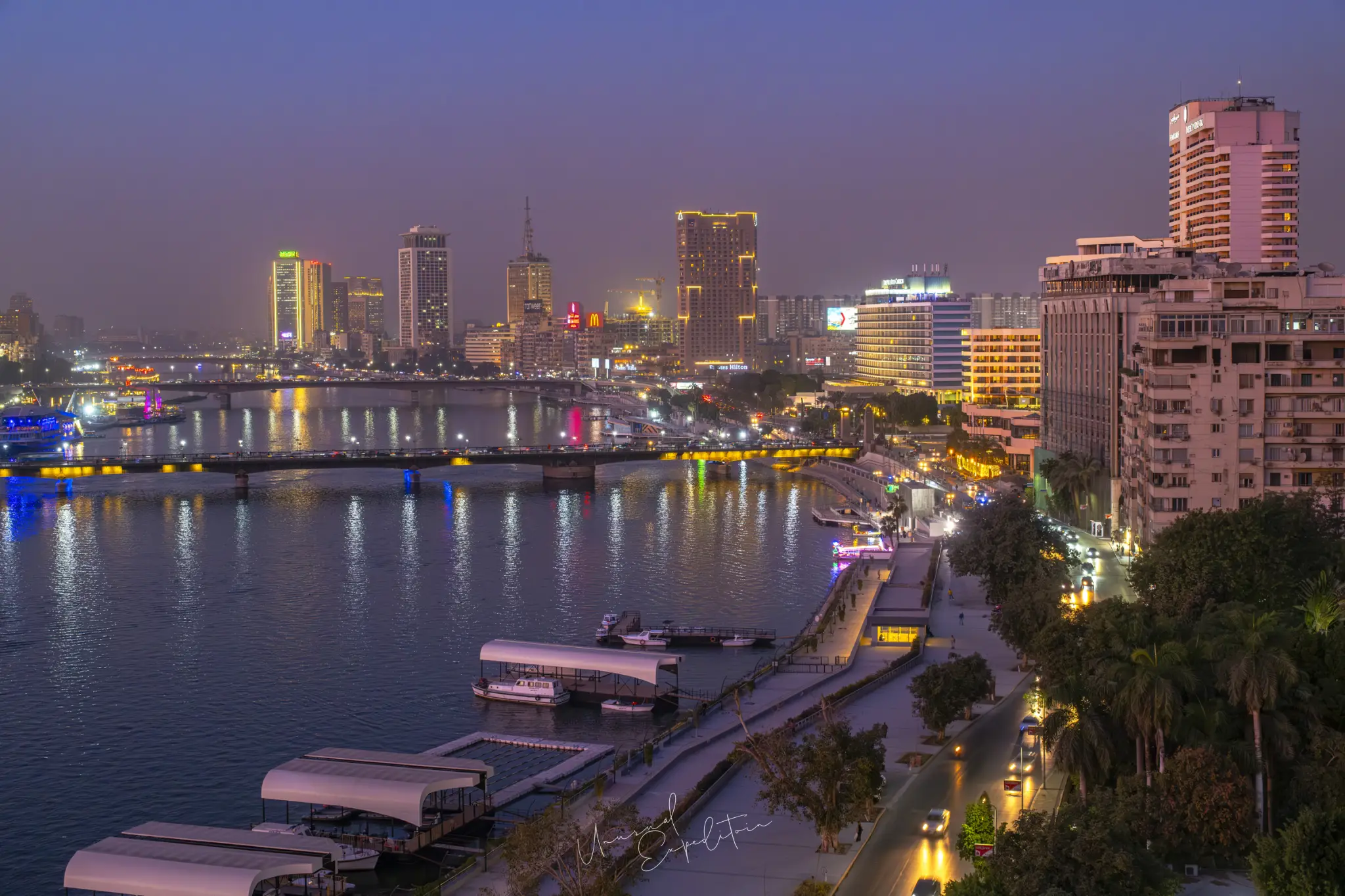
Back in the city, a Cairo night tour for photographers belongs on the river. The Nile corniche runs along the east bank past Garden City and Downtown, facing Zamalek on Gezira Island across the water, and in the evening the hotel towers, bridges and party boats light up and spill colour across the water. High viewpoints along the river, from hotel terraces to the Cairo Tower on Gezira Island, give the wide view; the bridges themselves are lively with families and vendors in the evening. Blue hour is short, so be in place before sunset. Keep the camera off police, soldiers and security posts on and around the bridges: Singapore's Ministry of Foreign Affairs and the UK Foreign, Commonwealth and Development Office both warn against photographing security personnel and infrastructure.
Night photography settings and kit
| Scene | Where | Kit | Approach |
|---|---|---|---|
| Sphinx at sunset | Terrace inside the gates | 24-70mm, handheld | Expose for the sky, bracket if needed |
| Pyramids at dusk | Rooftop in Nazlet el-Samman | Tripod, 24-70mm and 70-200mm | Shoot through the afterglow into blue hour |
| Floodlit pyramids | Same rooftop | Tripod, 70-200mm | Low ISO, a few seconds of exposure |
| Sound and Light show | Seating below the Sphinx | Fast lens, high ISO | Handheld, short bursts |
| Nile corniche | River terraces and bridges | Tripod where allowed | Blue hour, then lights on water |
Bring a head torch for the stairs of old buildings and a warm layer for winter evenings on an open roof.
Haze, wind and the moon over Giza
Cairo's air decides how the night pictures look. On many evenings a layer of haze and dust sits over the city, which softens the afterglow into pastel colours and hides the distant pyramid of Menkaure. After a windy day the air clears, the pyramids stand out sharply, and the floodlit stone looks almost white against a navy sky. A crescent moon setting behind the pyramids after sunset adds a strong element on the evenings when it sits in the right part of the western sky; a planning app shows where it will set as seen from your rooftop. Stars are another matter. The lights of Giza and Cairo wash out all but the brightest, so astrophotography is a desert subject, far from the city, not a Giza one.
Is Giza at night worth it?
Yes, more than the midday visit most tours offer. The pyramids by day are crowded, hazy and flat-lit for hours; at dusk they become shapes, and the town at their feet becomes part of the picture. Plan the evening around sunset, which in winter comes early, and allow time for the afterglow. Our Giza pyramids photos guide covers the daytime viewpoints, and the Islamic Cairo photography guide covers the old city, where the evening crowds on Al Muizz Street make a different kind of night picture.
See Giza after dark with us
On our Egypt Photo Tour we spend the end of the day at Giza and stay on for dusk, then continue south to Aswan, Abu Simbel and Luxor. The current departure is on the Egypt photography tours page; photographers from any country are welcome.
Join the Cairo and Giza photography tour
Egypt Photo Tour – Egypt departs 12 Dec 2026 To 20 Dec 2026, led by Joseph Mak. Small group, photography first. All Cairo and Giza photography tours.
Explore Cairo and Giza in depth
- Cairo and Giza Photography Tour Guide: Pyramids, the Old City and the NileEgypt
- Islamic Cairo Photography: Al Muizz Street and the CitadelEgypt
- Giza Pyramids Photos: Viewpoints, Camels and CameleersEgypt
- Cairo Street Photography: Coffeehouses, Markets and FacesEgypt
Upcoming Photo Tours
- Egypt Photo Tour – EgyptEgypt 12 Dec 2026 To 20 Dec 2026
- Inner Mongolia Winter Owl Photo Tour – ChinaChina 01 Jan 2027 To 04 Jan 2027
- Inner Mongolia Winter Photo Tour – ChinaChina 05 Jan 2027 To 11 Jan 2027
- Mekong And Central Highland Vietnam Photo Tour - VietnamVietnam 16 Jan 2027 To 24 Jan 2027