
Giza Pyramids Photos: Viewpoints, Camels and Cameleers
Giza pyramids photos: the Great Pyramid up close, the panoramic viewpoint, the Sphinx, camels and cameleers, with light and lenses.
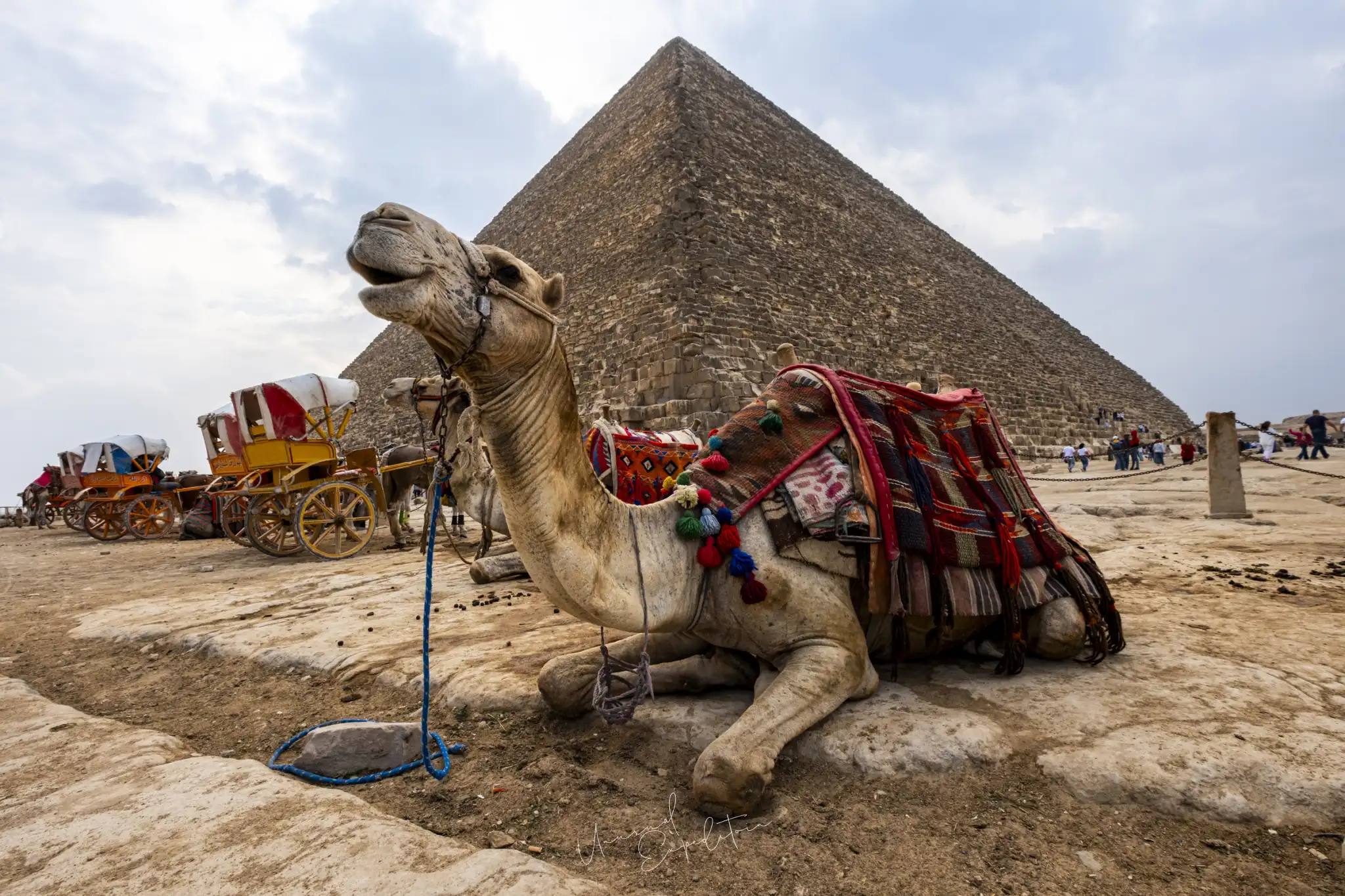
The best Giza pyramids photos come from four places: the base of the Great Pyramid looking up, the open desert to the south-west where the pyramids line up across the sand, the panoramic viewpoint where all of them stand in one row with the small queens' pyramids in front, and the camel station where the animals rest between rides. Late afternoon light is warmest, the panoramic viewpoint needs a short telephoto, and the cameleers make the scale of the stone readable.
This is the viewpoint guide in our Cairo and Giza photography guide. The photographs are our own, taken on our trips to the plateau; we hold the rights to them, and the notes come from knowing the place first hand.
Giza pyramids photos: what the plateau looks like
The Giza plateau is smaller and busier than most people imagine. The three great pyramids, of Khufu, Khafre and Menkaure, sit in a diagonal line on a limestone shelf above the city, with the Sphinx lower down to the east and the suburbs of Giza running right up to the edge. UNESCO includes the plateau in the World Heritage site of Memphis and its Necropolis, the Pyramid Fields from Giza to Dahshur. Pictures of pyramids of Giza tend to hide two things: the city, which you can see from almost every angle, and the life on the plateau itself, with cameleers, horses, carts and vendors moving between the monuments all day. We like to show both. A frame with a camel and its handler under the Great Pyramid says more about Giza today than an empty pyramid against the sky.
At the foot of the Great Pyramid
The Great Pyramid of Khufu was built about four and a half thousand years ago, and close up it stops looking like a smooth triangle and becomes a mountain of stepped blocks. The base of any face is the classic place for an upward view with a wide lens, 16-35mm or wider, with the courses of stone running up into the sky. Camels often rest here between rides, kneeling in their decorated saddles, and a low position with the camel's head against the pyramid makes a strong frame. The face of the pyramid is in shade for part of the day, so watch where the sun is. Going inside the pyramid needs a separate ticket, and the narrow passages are no place for camera bags.
The Giza pyramids view from the panoramic point
The panoramic viewpoint sits on higher ground to the south-west, and from there the three great pyramids stand together, with Menkaure's smaller queens' pyramids in front. It is the view on the postcards, and it works through the day; in the afternoon the sun comes from behind the photographer and lights the faces you see. A 70-200mm compresses the scene and lets you place a camel or a figure at the right size against the stone; a 24-70mm gives the wide version with the desert in front. Cameleers wait here to pose with their animals. Expect company: every tour bus stops at this point, so the minutes before closing are the quietest.
| Viewpoint | What you get | Lens | Best light |
|---|---|---|---|
| Base of the Great Pyramid | Scale, texture, camels close up | 16-35mm | Morning on the east face, afternoon on the west |
| South-west desert | Pyramids lined up over open sand | 24-70mm, 70-200mm | Late afternoon |
| Panoramic viewpoint | All the pyramids in one row | 70-200mm | Afternoon, front light |
| Sphinx terrace | Sphinx with a pyramid behind | 24-70mm | Sunset, backlit |
| Camel station | Camels, handlers, everyday life | 24-70mm | Any time, soft morning best |
If you only have one afternoon, the panoramic viewpoint and the Sphinx at sunset give the two essential frames.
Camel riding in Egypt: the cameleers of Giza
Camel riding in Egypt is part of the Giza experience, and for photographers the camels and their handlers are subjects in their own right. The cameleers dress in long robes and headscarves, decorate their animals with woven saddle blankets, tassels and bridles, and know exactly where to stand for a picture. Agree the price and what it includes before anyone climbs on, and agree a tip before you photograph a handler. Look at the animals too: we choose cameleers whose camels are well fed and calm. Since the plateau's new transport system, cameleers and horse carts are reported to work from set areas, and the electric buses carry visitors between the main stops. Our guide to Cairo street photography covers how we ask people for portraits.
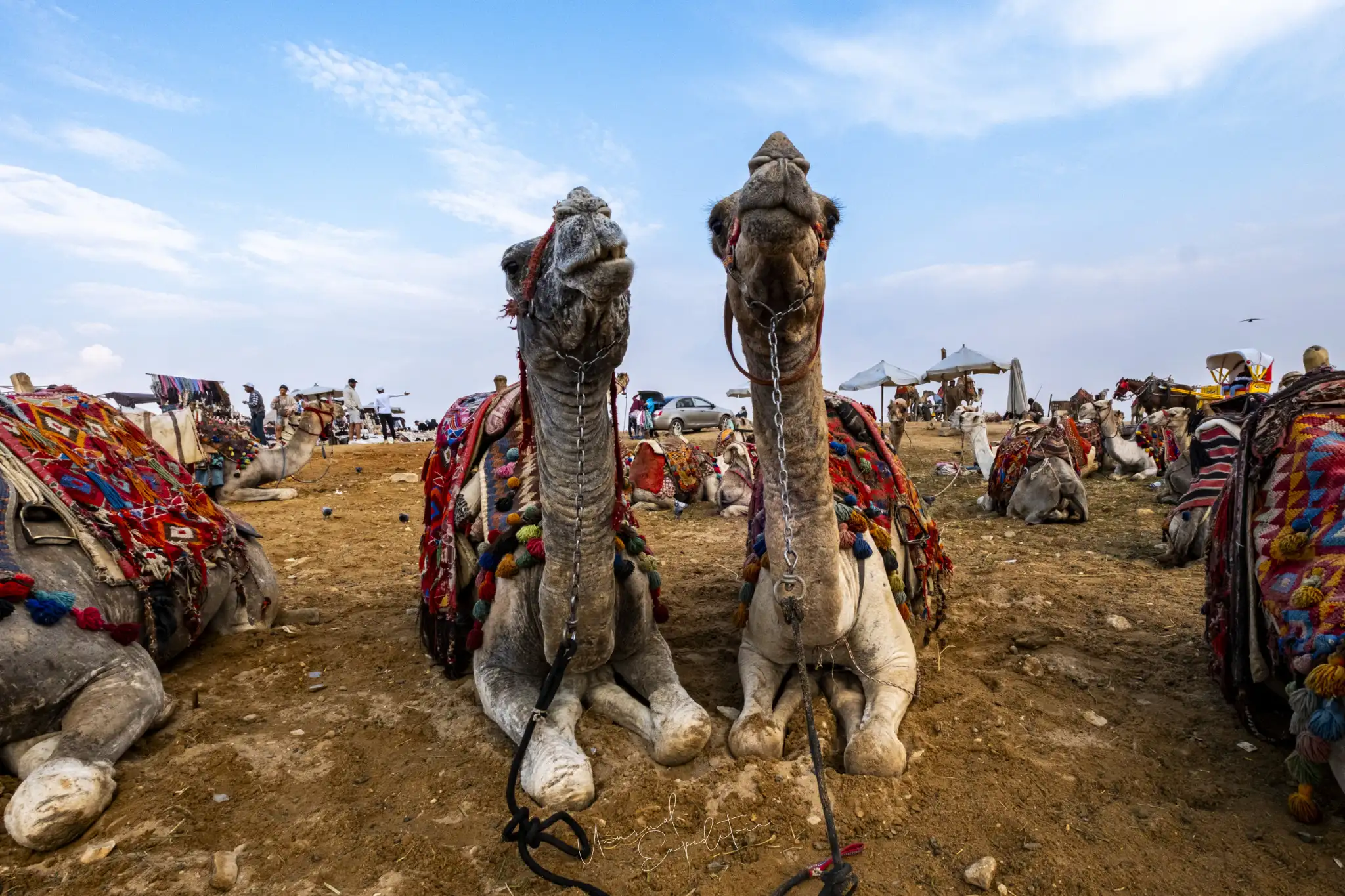
"At Giza I always look for a camel before I look for a pyramid. The pyramid will not move, but a camel turning its head at the right moment is the difference between a postcard and a photograph."
Joseph Mak, tour leader, Unusual Expedition
The camel station: everyday life on the plateau
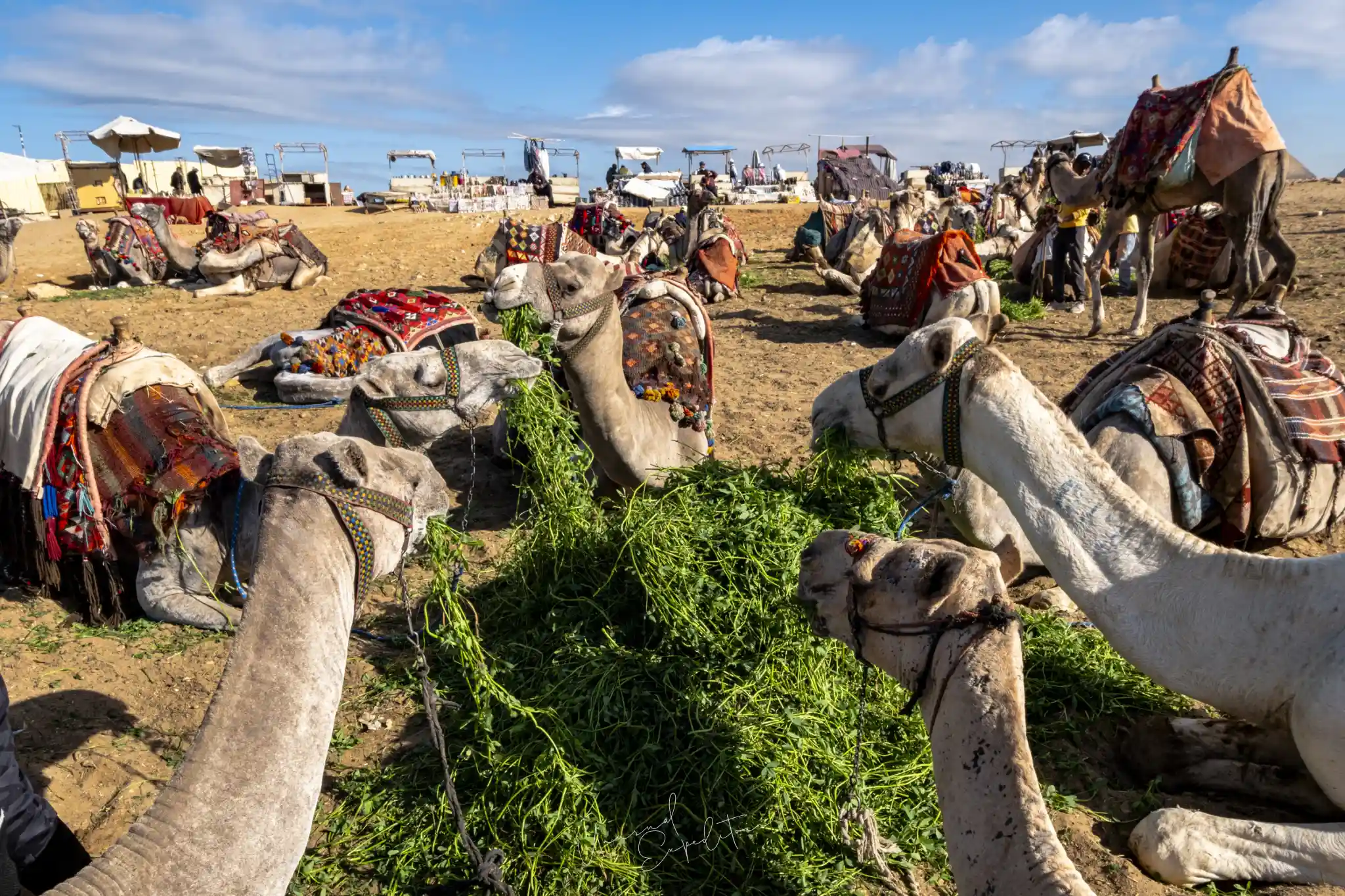
Behind the main viewpoints the cameleers keep their animals in loose groups on the sand, feeding them armfuls of green fodder between rides. It is one of the most photogenic corners of Giza and one of the least visited. The camels kneel in rows with their saddles on, chewing and grumbling, and the handlers move among them with feed and water. Shoot at camel height, with a 24-70mm, and let the heads overlap; the pyramids can sit small in the background or disappear altogether. Ask before you photograph the people working here, and keep a respectful distance from the animals' heads, since camels do bite.
Tips for better pictures of the pyramids
Three habits make the difference at Giza. Work the edges of the day: the plateau opens in the morning and closes late in the afternoon, and the last hour before closing has the warmest light and the fewest buses. Use people for scale, with permission: a cameleer, a camel or a lone walker turns a familiar shape into a picture. And go back after dark, from outside the gates, for the floodlit pyramids over the rooftops, which our Giza pyramids at night guide covers. Drones are not allowed without official permission, tripods are often stopped at the gate, and flash is pointless outdoors, so travel light. Check opening hours and tickets on Egypt's official monuments site before you go.
Photograph the pyramids with us
Giza is the first big subject of our Egypt Photo Tour, timed for the late light and the quiet corners of the plateau. See the Egypt photography tours page for the current departure, or ask about a private trip on your own dates.
Ask us about photographing Giza
Join the Cairo and Giza photography tour
Egypt Photo Tour – Egypt departs 12 Dec 2026 To 20 Dec 2026, led by Joseph Mak. Small group, photography first. All Cairo and Giza photography tours.
Explore Cairo and Giza in depth
- Cairo and Giza Photography Tour Guide: Pyramids, the Old City and the NileEgypt
- Islamic Cairo Photography: Al Muizz Street and the CitadelEgypt
- Giza Pyramids at Night: Sunset, Dusk and the Sound and Light ShowEgypt
- Cairo Street Photography: Coffeehouses, Markets and FacesEgypt
Upcoming Photo Tours
- Egypt Photo Tour – EgyptEgypt 12 Dec 2026 To 20 Dec 2026
- Inner Mongolia Winter Owl Photo Tour – ChinaChina 01 Jan 2027 To 04 Jan 2027
- Inner Mongolia Winter Photo Tour – ChinaChina 05 Jan 2027 To 11 Jan 2027
- Mekong And Central Highland Vietnam Photo Tour - VietnamVietnam 16 Jan 2027 To 24 Jan 2027